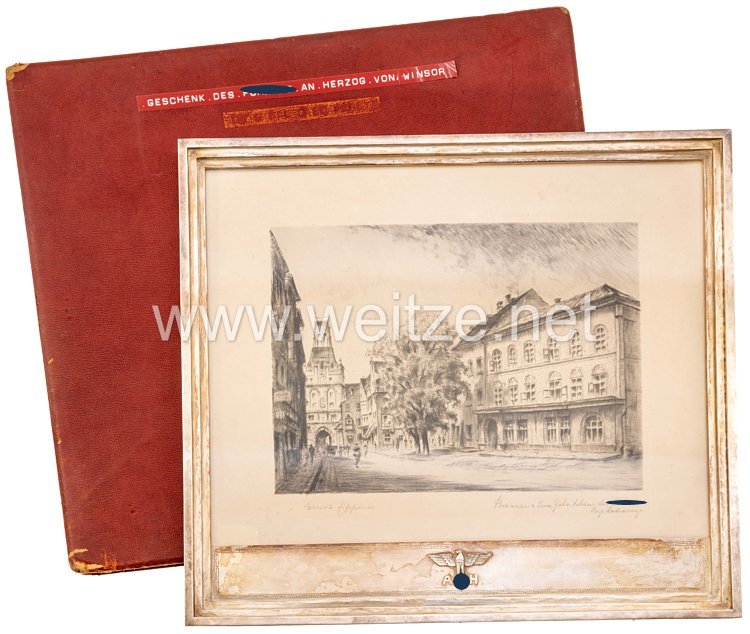
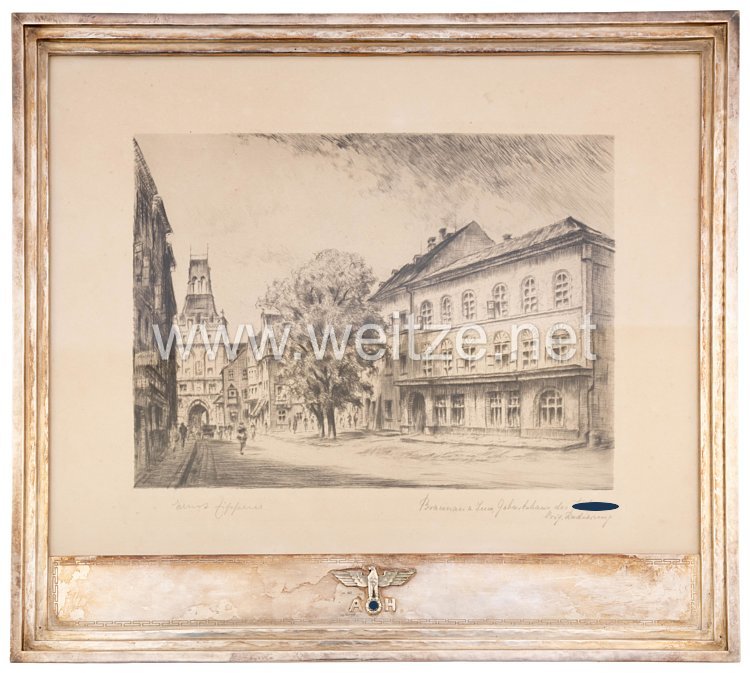
III. Reich: Adolf Hitler - persönlicher Silberrahmen mit Originialradierung seines Geburtshauses in Braunau am Inn, persönliches Geschenk Hitlers an den Herzog von Windsor
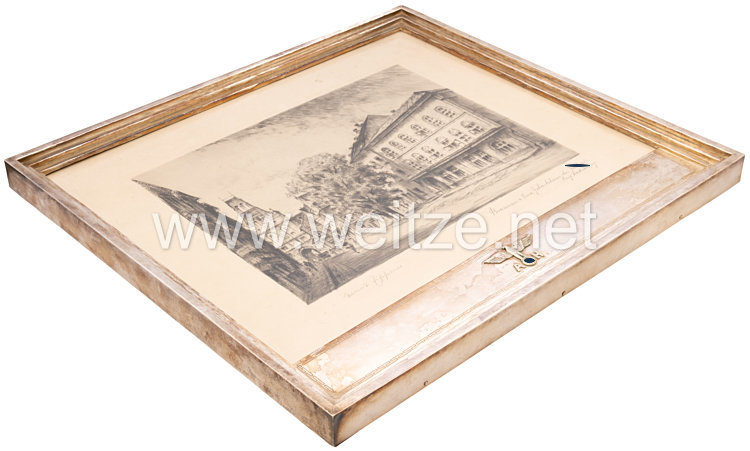
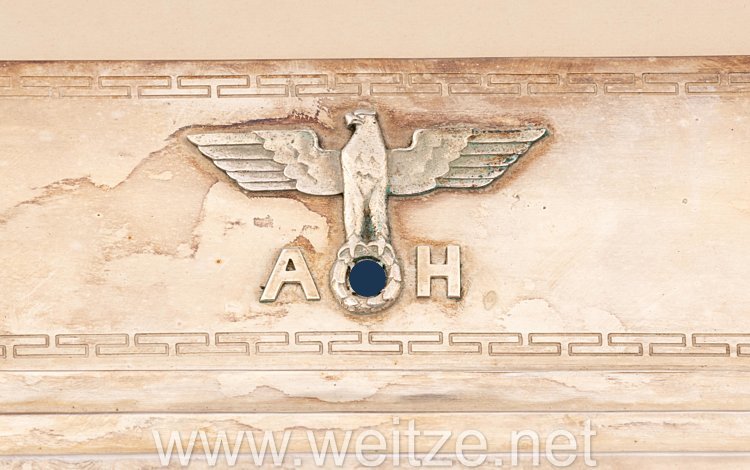
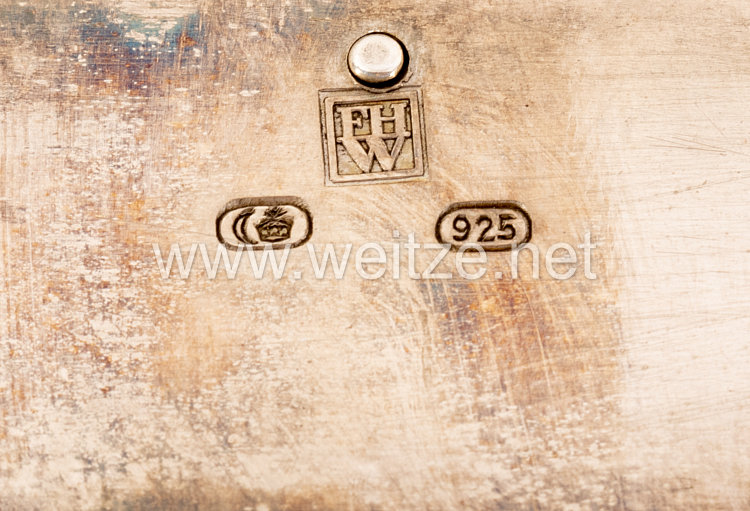
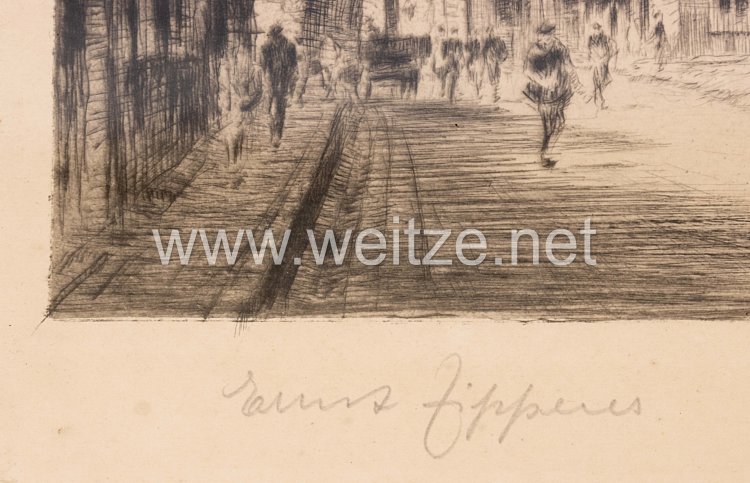
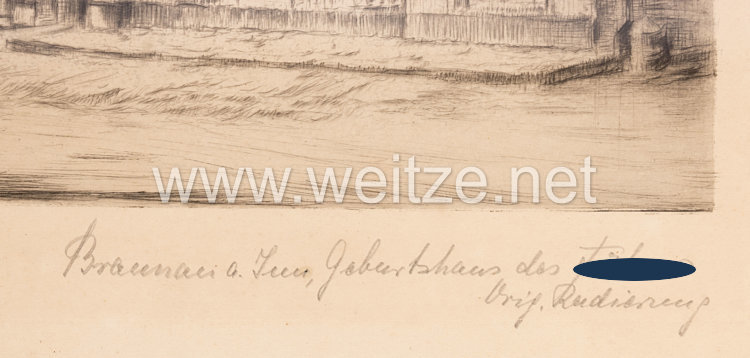
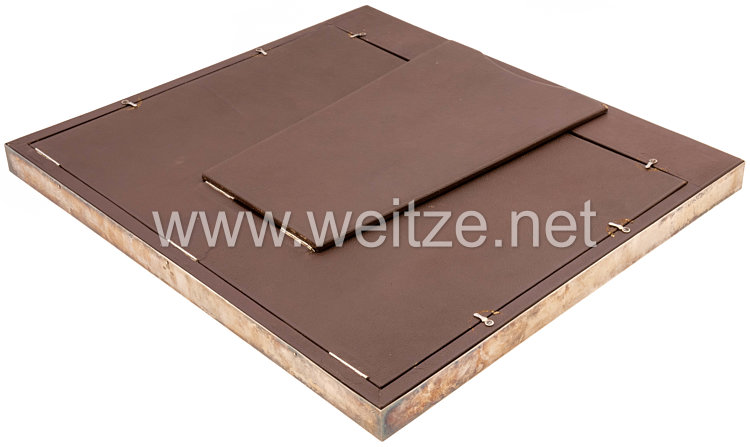
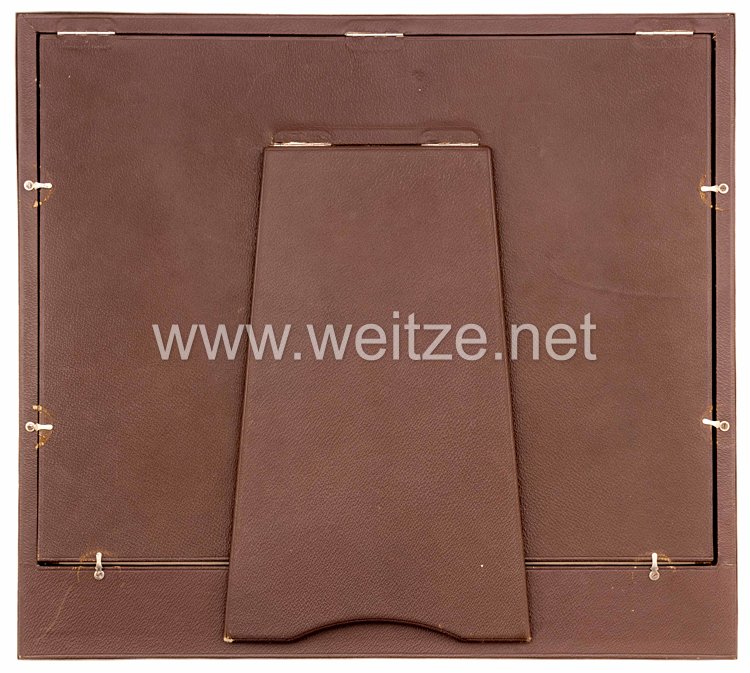
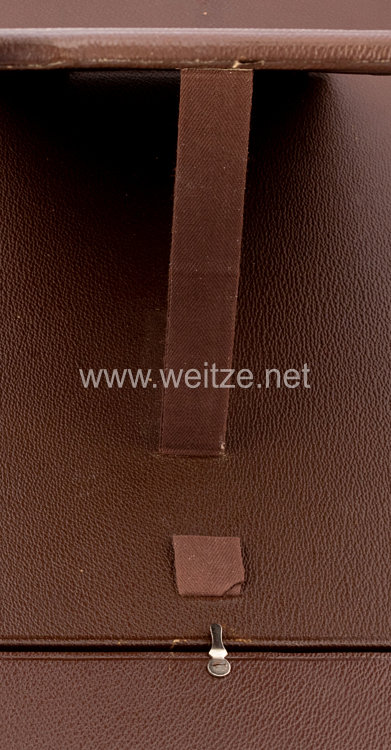
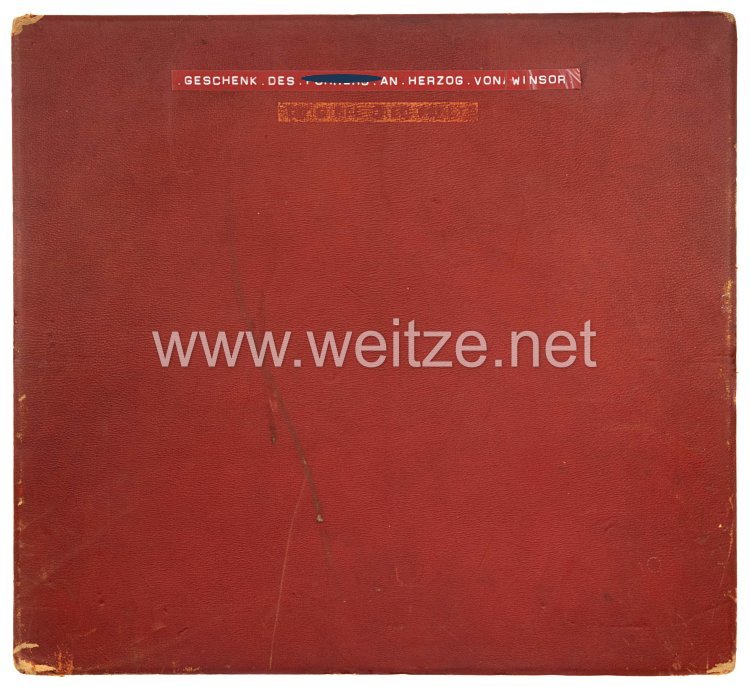
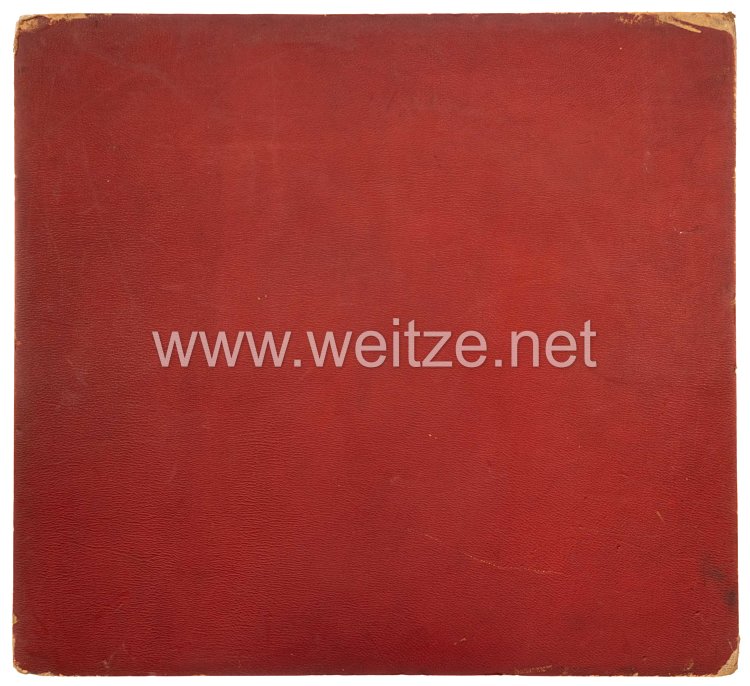
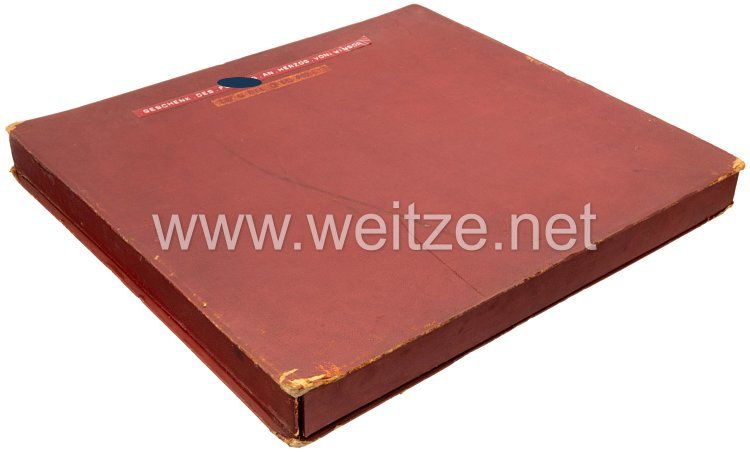
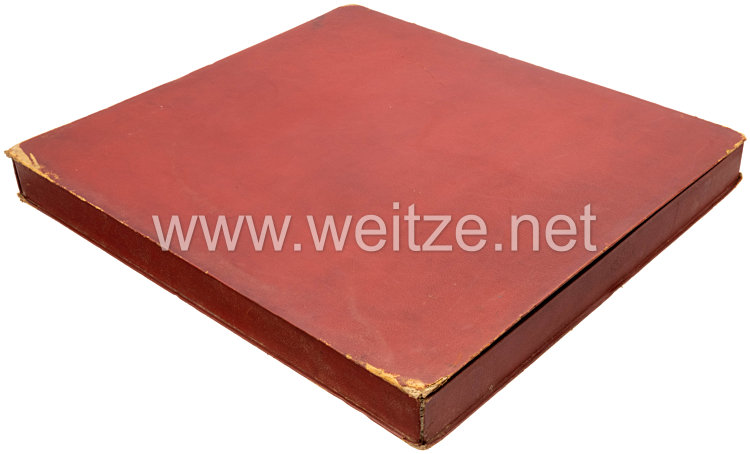
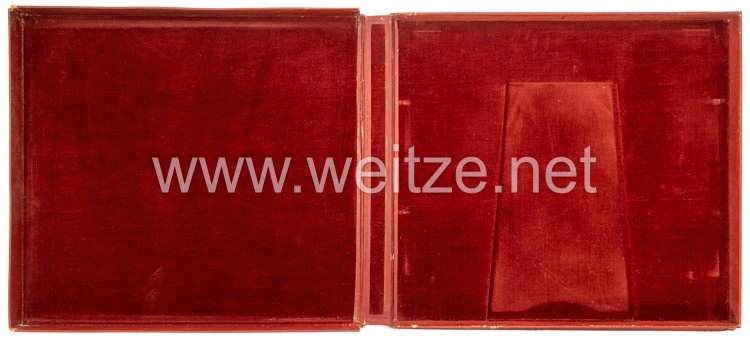
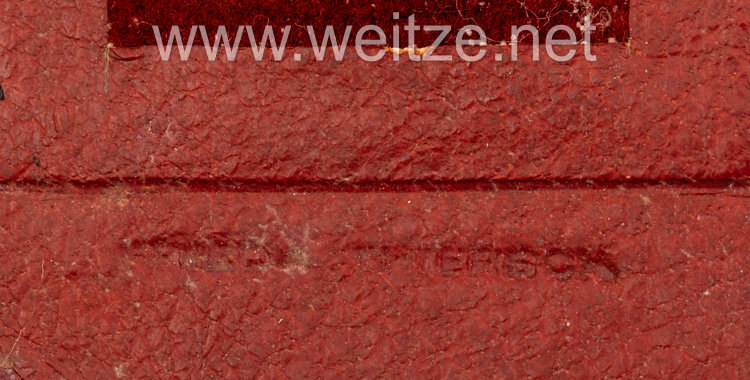
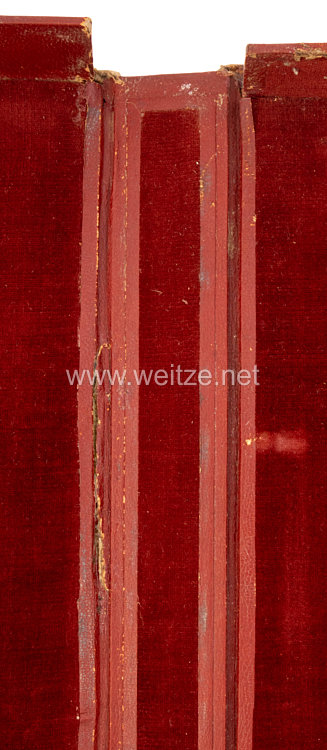
Repräsentativer handgefertigter gehämmerter Silberrahmen im Stil der silbernen Staatsrahmen Hitlers, allerdings im übergroßen Sonderformat, Maß 44 x 39,5 cm. Im Rahmen die Originalradierung des Geburtshauses Adolf Hitlers in Braunau am Inn. Am linken unteren Rand Künstlersignatur "Ernst Zippens". Am rechten Rand handschriftliche Bezeichnung: "Braunau a. Inn, Geburtshaus des Führers". Auf dem Dedikationsfeld des Silberrahmens unterhalb des Fotos innerhalb eines Mäanderbandes der aufgelegte Hoheitsadler und die Initialen "AH". Am Rand Herstellermarke der Goldschmiede Gebrüder Wandinger "FHW" sowie der Silberstempel "925", Krone und Halbmond. Rückseitig Lederständer und Abdeckung aus dunkelbraunem Saffianleder. In repräsentativer Kassette ohne Hoheitsadler aus rotem Saffianleder. Im Innenteil rotes Samtfutter. Im Rücken Künstlersignatur der Buchbinderin "FRIEDA THIERSCH" Maße: 420 x 460 x 40 mm. Auf dem Kasettendeckel befindet sich ein eingeklebtes Schriftband aus den 1970er Jahren mit der Bezeichnung "Geschenk des Führers. An Herzog von Windsor" (mit Schreibfehler), die 2. Zeile wurde entfernt. Zustand 2.
Die Gebrüder Wandinger stellten neben repräsentativen Geschenkobjekten im Auftrag Adolf Hitlers auch die silbernen Staatsrahmen sowie die vergoldeten Beschläge und Hoheitsadler für die Urkunden und Kassetten der höheren Stufen des Ritterkreuzes des Eisernen Kreuzes her.
Verschiedene Formate dieses Geschenkrahmens der Goldschmiede Gebrüder Wandinger aus gehämmertem Silber mit dem von den Initialen Adolf Hitlers flankierten Hoheitsadler wurde von Hitler mit seinem eigenhändig signierten und meist mit einer persönlichen Widmung versehenen Porträtfoto sowohl an bedeutende Persönlichkeiten aus Staat, Wehrmacht und Partei und ausländische Staatsgäste, als auch an bedeutende Persönlichkeiten aus Kultur und Gesellschaft zu besonderen Anlässen überreicht. Die künstlerische Gesamtkonzeption stammt von Professor Gerdy Troost, der Witwe des von Hitler hoch geschätzten Architekten Paul Ludwig Troost. Adolf Hitler nahm persönlichen Anteil an der Gestaltung dieser Art von repräsentativen Geschenken und wirkte auf deren künstlerischen Entwurf teilweise selbst ein. Ausweislich des Archivs Professor Gerdy Troosts wurden etwa 100 solcher Silberrahmen für Geschenk - Porträtfotos Adolf Hitlers zur Überreichung an hochgestellte Persönlichkeiten durch die Gebrüder Wandinger angefertigt. Mindestens ein Exemplar wurde in silbervergoldeter Ausführung hergestellt. Diese Foto - Geschenkrahmen wurden in durch die Werkstatt der Buchbinderin Frieda Thiersch angefertigten Präsentationskassetten aus rotem Saffianleder mit in Silber, bzw. Gold geprägtem Hoheitsadler auf den Deckeln überreicht. Die herkömmlichen Geschenkrahmen haben die Abmessungen 390 x 285 mm. Das hier vorliegende, mutmaßlich für Adolf Hitler selbst angefertigte Exemplar besitzt die Maße 400 x 440 mm. Es ist meines Wissens das einzige Sonderformat dieses kunsthandwerklich äußerst aufwendig gearbeiteten Präsentationsrahmens, das bisher bekannt geworden ist. Typisch für die Schlichtheit der von Adolf Hitler für den eigenen Gebrauch bestimmten Gegenstände ist auch, daß anders als bei den Geschenkrahmen, die Saffianlederkassette nicht mit einem Hoheitsadler versehen wurde. Bedeutendes historisches Sammlungsstück von imposanter Größe und in dieser Form mit Sicherheit ein Unikat.
Mit großer Wahrscheinlichkeit handelt es sich hierbei um ein persönliches Geschenk Adolf Hitlers an der Herzog von Windsor, der abgedankte englische König Edward VIII. anlässlich dessen Besuchs auf dem Berghof im Jahr 1937. Der Herzog von Windsor galt bis Kriegsbeginn als einer der großen Verehrer Hitlers.
Die Gebrüder Wandinger stellten neben repräsentativen Geschenkobjekten im Auftrag Adolf Hitlers auch die silbernen Staatsrahmen sowie die vergoldeten Beschläge und Hoheitsadler für die Urkunden und Kassetten der höheren Stufen des Ritterkreuzes des Eisernen Kreuzes her.
Verschiedene Formate dieses Geschenkrahmens der Goldschmiede Gebrüder Wandinger aus gehämmertem Silber mit dem von den Initialen Adolf Hitlers flankierten Hoheitsadler wurde von Hitler mit seinem eigenhändig signierten und meist mit einer persönlichen Widmung versehenen Porträtfoto sowohl an bedeutende Persönlichkeiten aus Staat, Wehrmacht und Partei und ausländische Staatsgäste, als auch an bedeutende Persönlichkeiten aus Kultur und Gesellschaft zu besonderen Anlässen überreicht. Die künstlerische Gesamtkonzeption stammt von Professor Gerdy Troost, der Witwe des von Hitler hoch geschätzten Architekten Paul Ludwig Troost. Adolf Hitler nahm persönlichen Anteil an der Gestaltung dieser Art von repräsentativen Geschenken und wirkte auf deren künstlerischen Entwurf teilweise selbst ein. Ausweislich des Archivs Professor Gerdy Troosts wurden etwa 100 solcher Silberrahmen für Geschenk - Porträtfotos Adolf Hitlers zur Überreichung an hochgestellte Persönlichkeiten durch die Gebrüder Wandinger angefertigt. Mindestens ein Exemplar wurde in silbervergoldeter Ausführung hergestellt. Diese Foto - Geschenkrahmen wurden in durch die Werkstatt der Buchbinderin Frieda Thiersch angefertigten Präsentationskassetten aus rotem Saffianleder mit in Silber, bzw. Gold geprägtem Hoheitsadler auf den Deckeln überreicht. Die herkömmlichen Geschenkrahmen haben die Abmessungen 390 x 285 mm. Das hier vorliegende, mutmaßlich für Adolf Hitler selbst angefertigte Exemplar besitzt die Maße 400 x 440 mm. Es ist meines Wissens das einzige Sonderformat dieses kunsthandwerklich äußerst aufwendig gearbeiteten Präsentationsrahmens, das bisher bekannt geworden ist. Typisch für die Schlichtheit der von Adolf Hitler für den eigenen Gebrauch bestimmten Gegenstände ist auch, daß anders als bei den Geschenkrahmen, die Saffianlederkassette nicht mit einem Hoheitsadler versehen wurde. Bedeutendes historisches Sammlungsstück von imposanter Größe und in dieser Form mit Sicherheit ein Unikat.
Mit großer Wahrscheinlichkeit handelt es sich hierbei um ein persönliches Geschenk Adolf Hitlers an der Herzog von Windsor, der abgedankte englische König Edward VIII. anlässlich dessen Besuchs auf dem Berghof im Jahr 1937. Der Herzog von Windsor galt bis Kriegsbeginn als einer der großen Verehrer Hitlers.