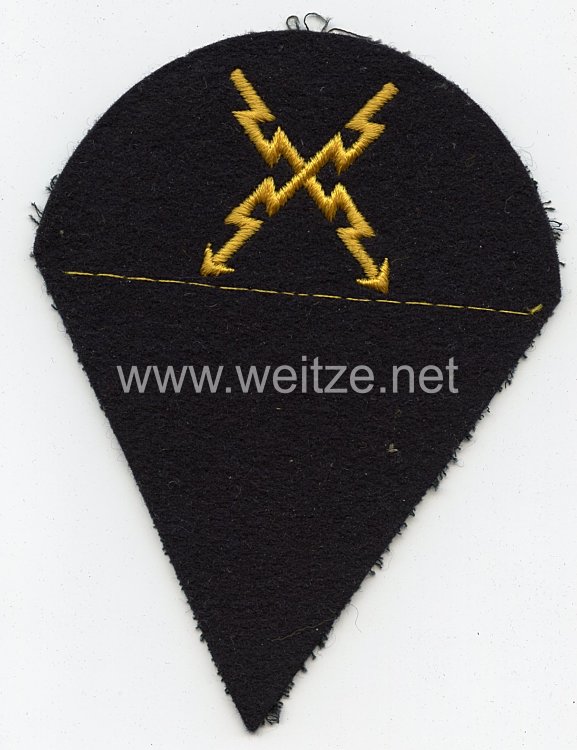
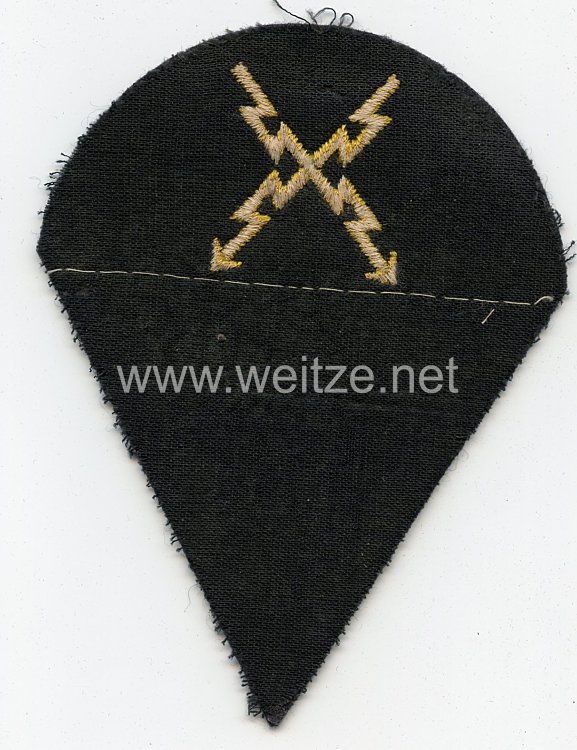
Kriegsmarine Career Insignia Enlisted Ranks Teleprinter Operator
The Kriegsmarine Career Badge for Enlisted Teleprinter Operators represents a fascinating testament to the specialized communication technology within the German Navy during World War II. These career badges formed an essential component of the complex system of rank insignia and specialization markings that reflected the organization and structure of the German naval forces.
The Kriegsmarine, as the official designation of the German Navy from 1935 to 1945, introduced an extensive system of career badges (Laufbahnabzeichen) to identify the various specializations and professional qualifications within its enlisted ranks. These badges were worn on the left upper arm of the uniform and enabled quick identification of a sailor's professional qualification. The system differed fundamentally from rank insignia and complemented them by displaying the respective technical or administrative specialization.
The teleprinter (Fernschreiber) played a central role in the Kriegsmarine's maritime communications. Teleprinter technology enabled rapid and reliable transmission of written messages over long distances, both between ships and between ships and shore stations. Teleprinter specialists belonged to the signals personnel of the Kriegsmarine and were responsible for operating, maintaining, and repairing these highly complex electromechanical devices.
Training as a teleprinter operator was demanding and required both technical understanding and precise work methods. Specialists had to master not only the operation of teleprinter machines but also possess basic knowledge of electrical engineering to perform minor repairs. The importance of this specialization grew with the increasing mechanization of naval warfare and the necessity for fast, secure communication links.
The present badge was manufactured in an execution for the Colani, referring to its wear on the dark blue sailor's uniform. The Kriegsmarine distinguished between different uniform types, and badges had to be produced in various versions to display optimally on the respective fabric types and colors. The Colani execution was characterized by special material selection and processing techniques suitable for attachment to the characteristic navy blue.
The design of career badges followed established Kriegsmarine guidelines. They typically showed symbolic representations of the respective activity or technical equipment. The teleprinter badge would accordingly have contained elements referring to signals technology and specifically to teleprinter operations. The badges were manufactured in various quality grades, from simple embroidered versions for daily service to more elaborately crafted examples for parade uniforms.
Production of these badges was carried out by authorized manufacturers who had to meet the strict quality requirements of the Kriegsmarine. Manufacturing involved various techniques such as embroidery, weaving, or the use of metal threads, depending on the desired quality and purpose. Craftsmanship quality varied by manufacturer and production period, with increasingly simplified versions being produced toward the end of the war.
The presence of foxing stains (Stockflecken) on the reverse is a typical aging characteristic of textile militaria. These discolorations result from moisture and microorganisms and are common in objects stored for decades. While they affect the cosmetic condition, they simultaneously document the authenticity and age of the piece.
From a collector's perspective, Kriegsmarine career badges are today sought-after military historical objects. They document not only the organizational structure of the German Navy but also technological development and the importance of specialized personnel in modern naval warfare. The teleprinter badge represents a particularly interesting aspect: the integration of modern communication technology into military practice of the 1930s and 1940s.
The historical significance of such badges lies in their function as primary sources for military history. They provide insights into daily life, hierarchies, and technical specializations within the Kriegsmarine. For research purposes, they are valuable testimonies to maritime history and the development of military communication technology in the 20th century.
The specialization of teleprinter operators reflected the Kriegsmarine's recognition that modern naval warfare required increasingly sophisticated technical expertise. These specialists formed part of a broader network of communications personnel essential to coordinating fleet operations, transmitting orders, and maintaining contact between dispersed naval units. Their role became increasingly critical as the war progressed and the complexity of naval operations intensified.