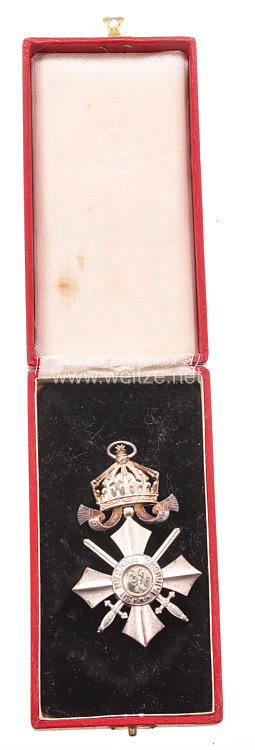
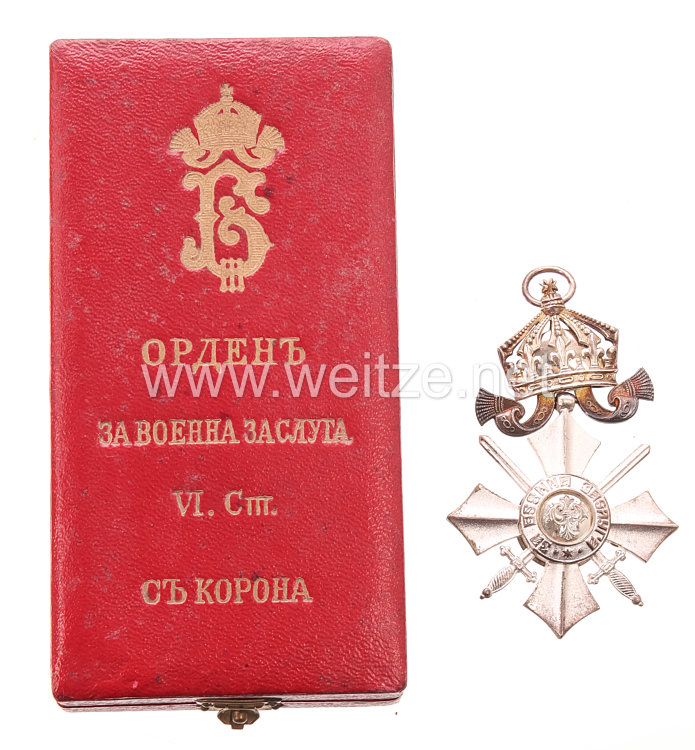
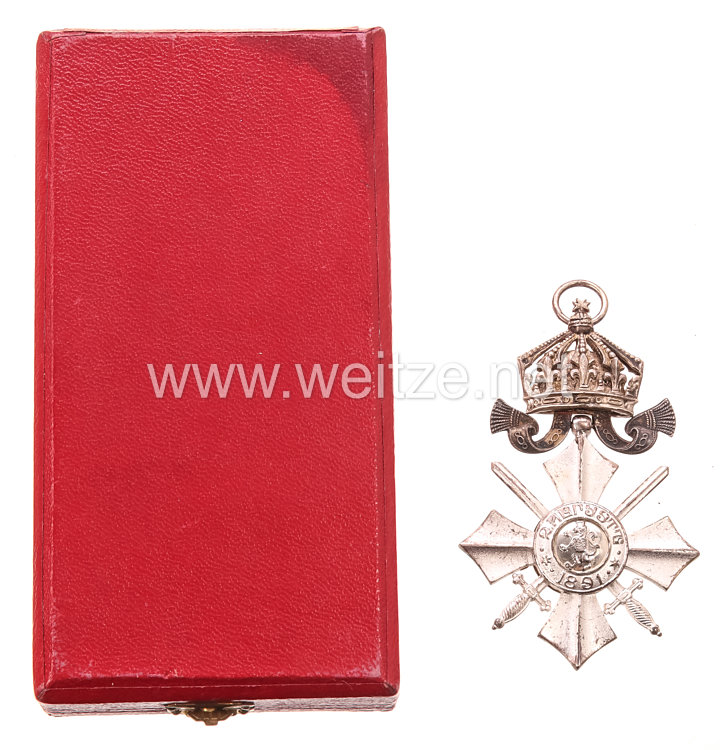
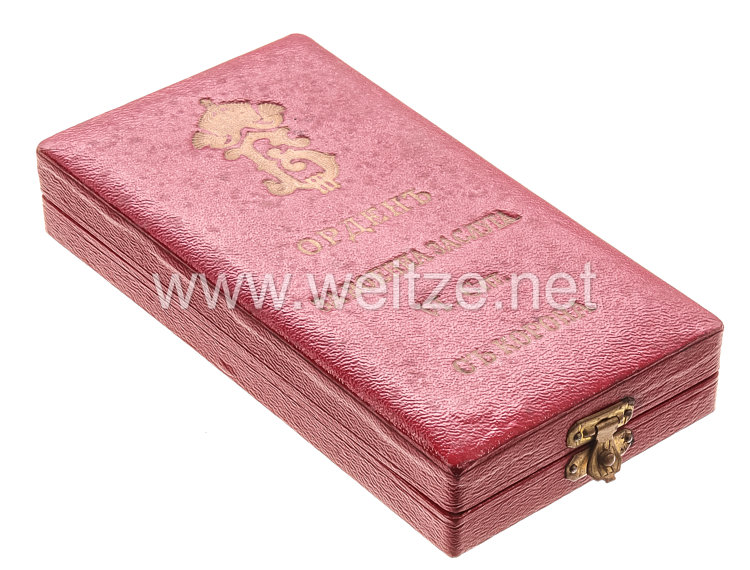
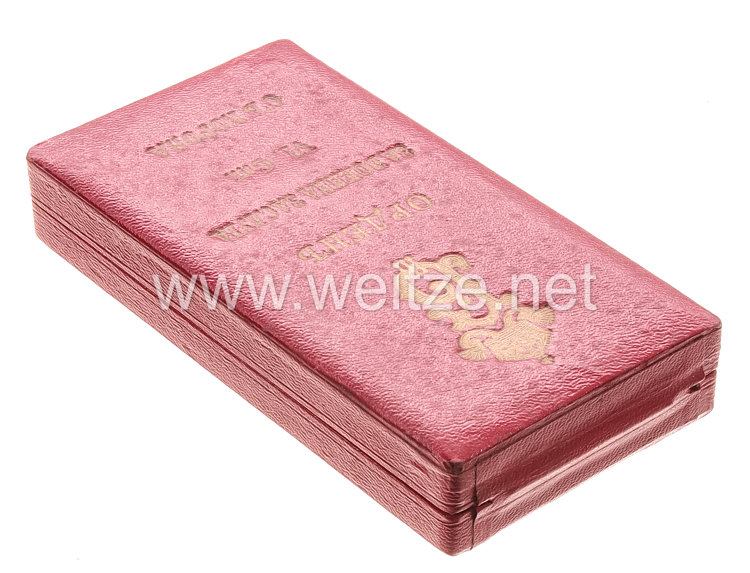
Bulgaria Order of Military Merit VI Class Silver Merit Cross with Crown

Silver-plated base metal, complete in original presentation case
422835
200,00

Bulgaria Order of Military Merit VI Class Silver Merit Cross with Crown

The Bulgarian Military Order of Merit (Bulgarian: Орден за военна заслуга) represents one of the most significant military decorations of the Kingdom of Bulgaria and was established to recognize outstanding military service. The 6th Class presented here, in the form of a silver merit cross with crown, represents an important grade within this multi-tiered order system.

The Military Order of Merit was established on May 29, 1880 by Prince Alexander I of Bulgaria, shortly after the restoration of Bulgarian statehood following the Russo-Turkish War (1877-1878) and the Congress of Berlin. The order was intended to serve as an instrument for recognizing military achievements and promoting loyalty within the newly established Bulgarian armed forces.

The order system originally comprised five classes, but was expanded over time. The structure was organized as follows: 1st Class (Grand Cross), 2nd Class (Grand Officer), 3rd Class (Commander), 4th Class (Officer), 5th Class (Knight), and finally the 6th Class, which was executed as a silver merit cross. This lowest grade was intended for non-commissioned officers and enlisted men, providing recognition opportunities for lower-ranking service members.

The crown atop the cross symbolizes Bulgaria's monarchical form of government and the bearer's connection to the Royal House. After Bulgaria's elevation to a kingdom in 1908 under Tsar Ferdinand I, this symbolism gained additional significance. The cross itself is made of silver-plated base metal, which was characteristic of the 6th Class and marked the distinction from higher classes, which were often made of more precious materials.

Awards were made according to strict rules and statutes. The merit cross of the 6th Class could be awarded for brave actions in combat, special devotion to duty, or outstanding performance in military service. During the numerous conflicts in which Bulgaria was involved - including the Balkan Wars (1912-1913) and World War I (1915-1918) - these decorations were awarded in large numbers.

The presentation case in which the cross was stored is an integral part of the decoration. These cases were typically marked with the coat of arms or name of the order and decorated in Bulgarian national colors. They served not only to protect the decoration but also emphasized its official character and the significance of the honor.

The design of the order followed European heraldic traditions while also displaying specifically Bulgarian elements. The cross is typically executed as an equal-armed cross, with the exact design and applied symbols reflecting Bulgarian national identity. The use of the crown as a crowning element was common in many European order systems and emphasized the state authority of the award.

After World War II and the establishment of the People's Republic of Bulgaria in 1946, the monarchical order system was abolished and replaced with new, socialist-oriented decorations. This makes preserved examples of the Military Order of Merit important historical testimonies of Bulgaria's monarchical period from 1880 to 1946.

Today, these decorations are sought-after collectibles and important sources for military historical research. They document not only the military award practices of a significant Balkan state but also the social and hierarchical structure of the Bulgarian armed forces. Particularly complete examples with original presentation cases, such as the one described here, are of special value as they preserve the authentic condition and presentation method of the decoration.

The study of these orders contributes to understanding Bulgarian military history and illustrates the role that decorations played in shaping military culture and identity. They are material witnesses to an era when Bulgaria sought to establish its position as a modern European state.