Wehrmacht - Postwar Signatures of Various Knight's Cross Recipients
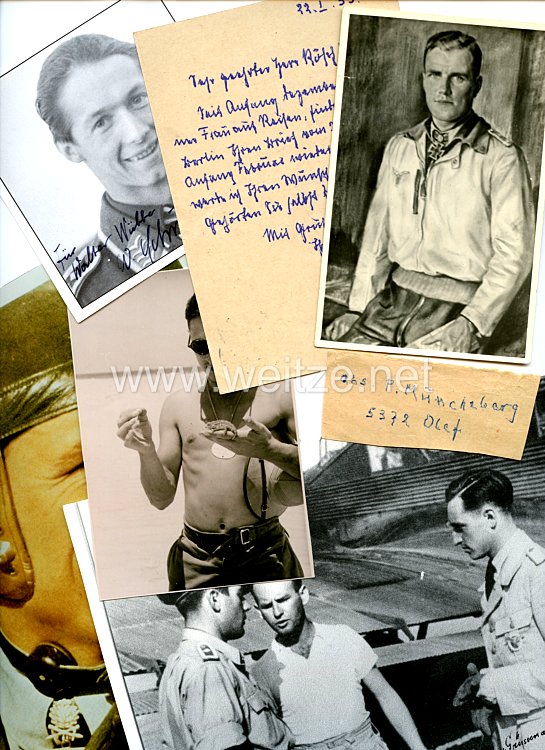
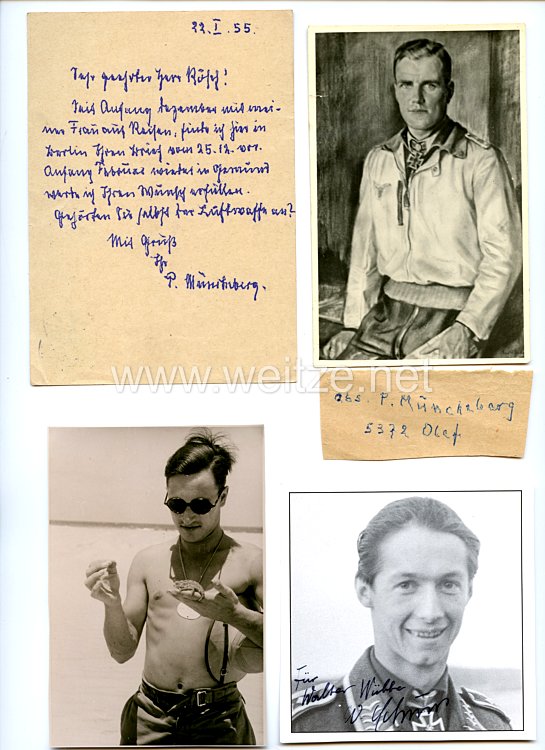
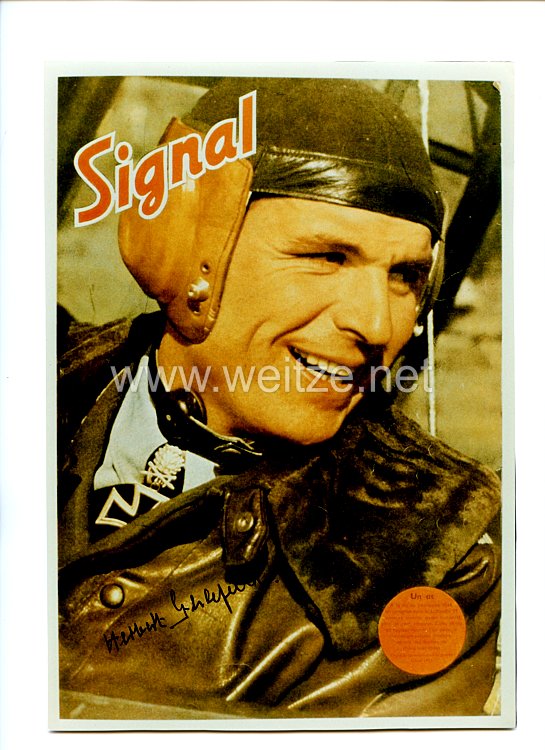
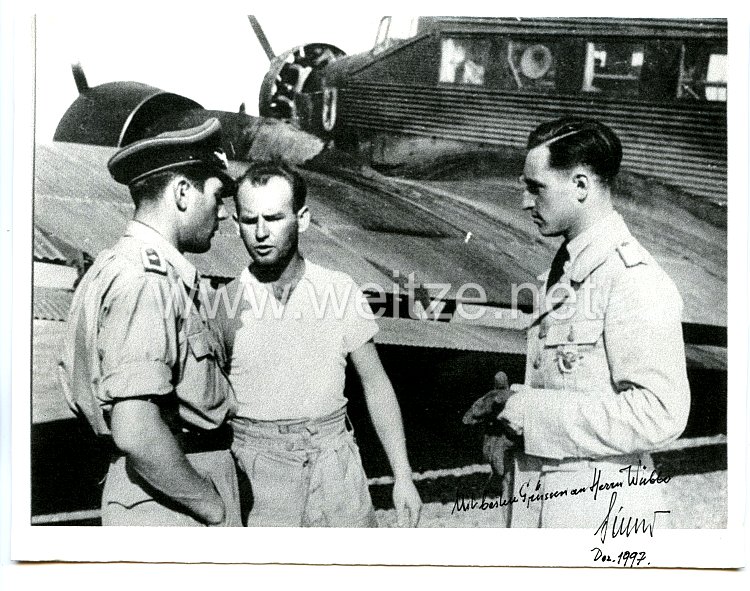
This collection of photographs with post-war signatures from various Knight's Cross recipients of the Wehrmacht represents a fascinating phenomenon of the post-war era: the collection of autographs from military dignitaries of World War II. The five photographs described here are prints made after 1945 and signed by recipients of the Knight's Cross of the Iron Cross.
The Knight's Cross of the Iron Cross was instituted on September 1, 1939, by Adolf Hitler as a renewal of the Prussian Iron Cross and represented the highest grade of the Iron Cross. It was awarded in various grades: the Knight's Cross itself, the Knight's Cross with Oak Leaves, with Oak Leaves and Swords, with Oak Leaves, Swords and Diamonds, and the rarest form with Golden Oak Leaves, Swords and Diamonds. During the war, approximately 7,300 soldiers of all branches and ranks received the Knight's Cross in its various grades.
After Germany's unconditional surrender on May 8, 1945, a complex period of confronting the military past began. Many former Wehrmacht members, especially highly decorated officers, were taken into prisoner-of-war camps or had to undergo denazification procedures. Despite the defeat and the increasing revelation of German war crimes, an active veteran culture developed in the 1950s and 1960s, in which former soldiers were organized in traditional associations such as the Association of German Soldiers or the Knight's Cross Recipients' Association.
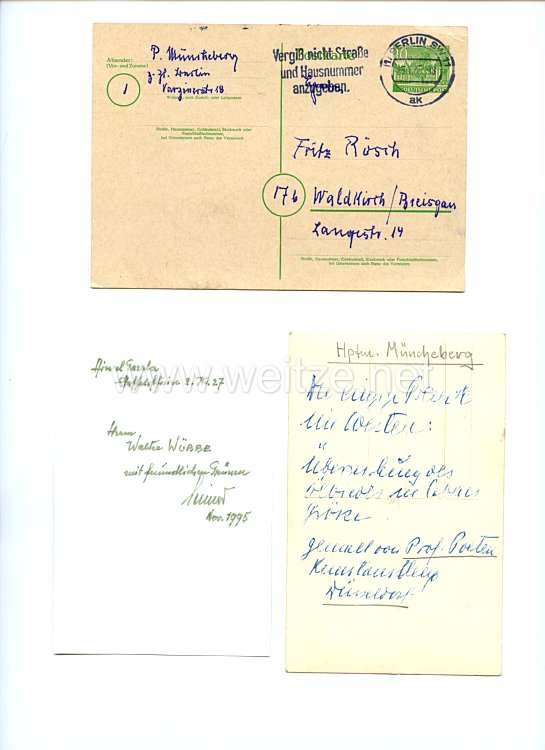
The practice of collecting autographs from Knight's Cross recipients developed in this context. Collectors, often veterans themselves or those interested in military history, sent photographs to former soldiers with requests for signatures. These photographs frequently showed the recipients in uniform, during military operations, or as portrait photographs from the war period. The fact that the photographs described here are designated as “prints made after 1945” is characteristic of this collecting activity: the images were newly printed from original negatives or existing photographs and then sent for signing.
The historical assessment of such collections is complex and has changed over the decades. In the immediate post-war years and especially during the 1950s, a largely uncritical attitude toward the Wehrmacht prevailed in the Federal Republic of Germany. The myth of the “clean Wehrmacht,” which allegedly fought independently of the crimes of the Nazi regime, was widespread. Only from the 1990s onward, particularly through the Wehrmacht Exhibition by the Hamburg Institute for Social Research (1995-1999), did a broader societal confrontation with the Wehrmacht's involvement in war crimes and the Holocaust begin.
From a military-historical perspective, such autograph collections document the perpetuation of military commemorative culture in the post-war period. They testify to a continuing interest in military achievement and individual bravery, detached from questions about the legitimacy of the war or the criminal nature of the Nazi regime. For collectors of military-historical items, these photographs have documentary value, as they make the biographies of individual persons traceable and serve as primary sources for researching individual military careers.
The legal situation regarding the collecting and trading of such objects is clear in Germany: collecting autographs and photographs of former Wehrmacht members is legal, as long as no anti-constitutional symbols within the meaning of §86a StGB are displayed. The Knight's Cross itself does not fall under this regulation, as it is considered a military decoration for bravery. The situation is different with Nazi Party badges or SS runes.
Today, such collections are increasingly viewed critically. Museums and educational institutions emphasize the necessity of a contextualized presentation that considers both the military-historical dimension and the embedding of the Wehrmacht in the criminal system of National Socialism. The scholarly value of such objects lies primarily in their function as testimonies to post-war commemorative culture and societal confrontation with the Nazi past.