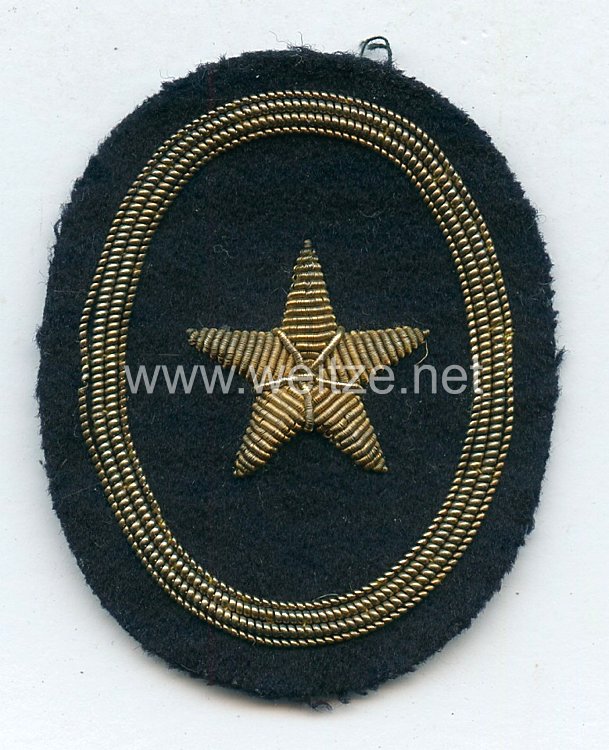
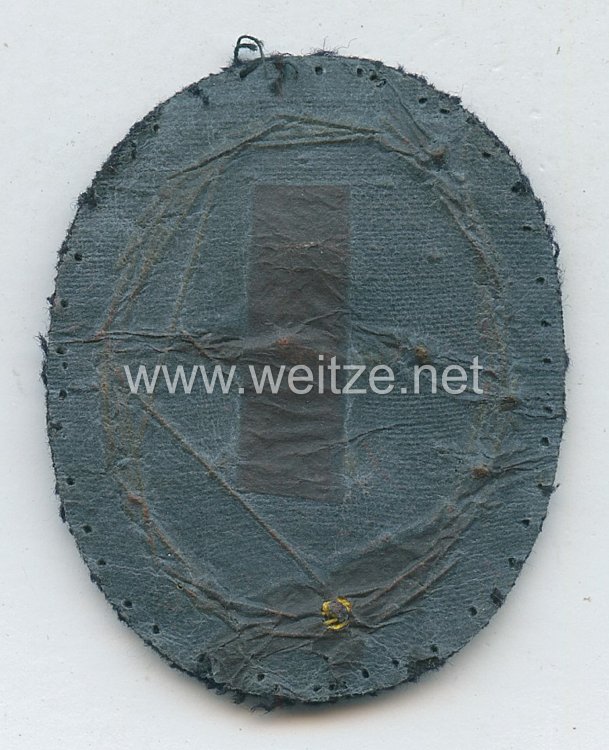
Kriegsmarine Sleeve Insignia Cadets Seaman Career Track
The Kriegsmarine sleeve badge for cadets of the seamanship career path represents a significant example of the sophisticated rank insignia system of the German Navy during World War II. These badges, crafted from metal thread, served to identify rank and career affiliation within the hierarchical structure of the Kriegsmarine.
The Kriegsmarine, the official designation for the German Navy from 1935 to 1945, developed a complex system of uniform insignia based on centuries-old maritime traditions. With rearmament under the National Socialist regime and the official renaming of the Reichsmarine to Kriegsmarine on May 21, 1935, new uniform regulations and insignia rules were introduced, oriented toward the traditional structures of the Imperial Navy but adapted to the new political circumstances.
The seamanship career path (seemännische Laufbahn) formed one of three main career groups within the Kriegsmarine, alongside the officer career path and special service career path. It encompassed enlisted ranks and non-commissioned officers who primarily performed practical seamanship duties. Cadets of this career path underwent specialized training that prepared them for their future duties aboard various ship types.
The sleeve badges were typically worn on the left upper arm of the uniform jacket and consisted of metal thread embroidered on a dark blue cloth background. The use of metal thread - usually gold or silver colored - was characteristic of naval insignia and clearly distinguished them from insignia of other Wehrmacht branches. The quality of workmanship and materials used varied depending on the time of manufacture and manufacturer. While high-quality materials were still used at the beginning of the war, substitute materials increasingly had to be employed as the war progressed.
The cadet system in the Kriegsmarine was carefully structured. The training of naval cadets (Seekadetten) took place on special training ships and in naval schools. Cadets of the seamanship career path were instructed in all aspects of practical naval service, from navigation to ship technology to weaponry. The duration of cadet training typically ranged from several months to years, depending on the position sought and military requirements.
The badges were worn according to precise regulations of the Dress Regulations for the Navy (Anzugsordnung für die Marine), which were regularly updated. These regulations governed not only the type and position of insignia but also their exact execution and the circumstances under which they were to be worn. Strict adherence to these regulations was part of military discipline and enabled immediate recognition of a naval soldier's rank and function.
From a collecting perspective, these sleeve badges are today important testimonies of naval history. They document not only the organizational structure of the Kriegsmarine but also the craftsmanship quality of military textile production of that era. The indicated condition 2 according to the common collector's scale suggests a well-preserved specimen that may have been worn but shows no significant damage.
These badges were manufactured by various specialized companies authorized by the Kriegsmarine. Known manufacturers included traditional passementerie makers who had already produced military insignia during the Imperial era. Quality and execution could vary slightly between different manufacturers, though all had to comply with basic regulations.
In the context of naval history, such badges represent more than just rank identifiers. They are part of a system that connected the centuries-old tradition of naval forces with the specific requirements of the 20th century. The seamanship career path was the backbone of the Kriegsmarine, and cadets of this path were to form the future generation of qualified non-commissioned officers and specialists.
Today, these badges are valued by collectors of military historical objects and serve historians as material sources for researching the organizational structure and daily life in the Kriegsmarine. They recall a complex period of German naval history and the thousands of young men who completed their training as cadets.