SS-Porzellanmanufaktur Allach - Standard Bearer of the Pandurs
Extremely rare.
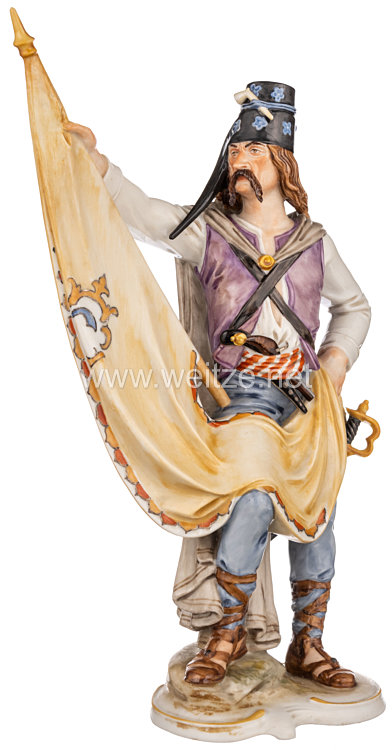
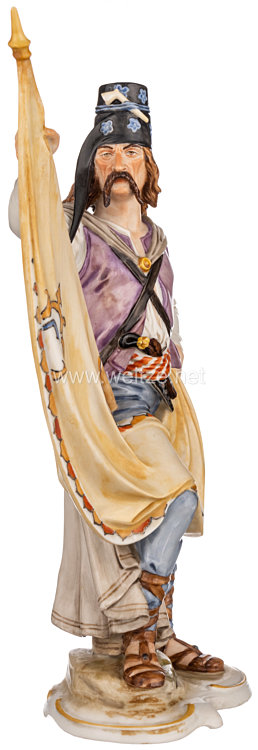
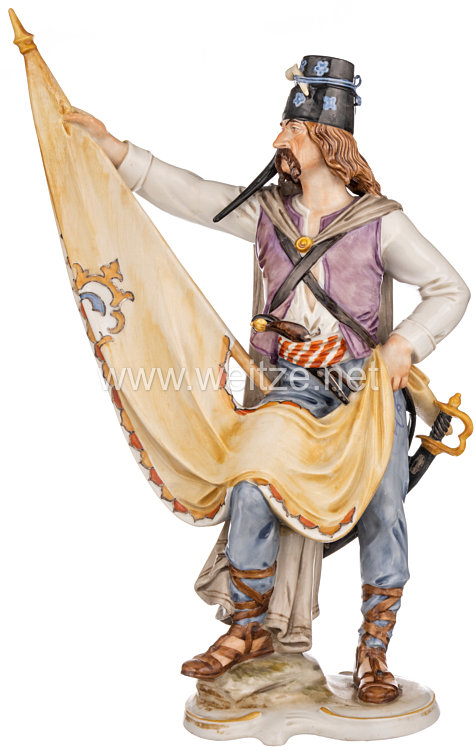
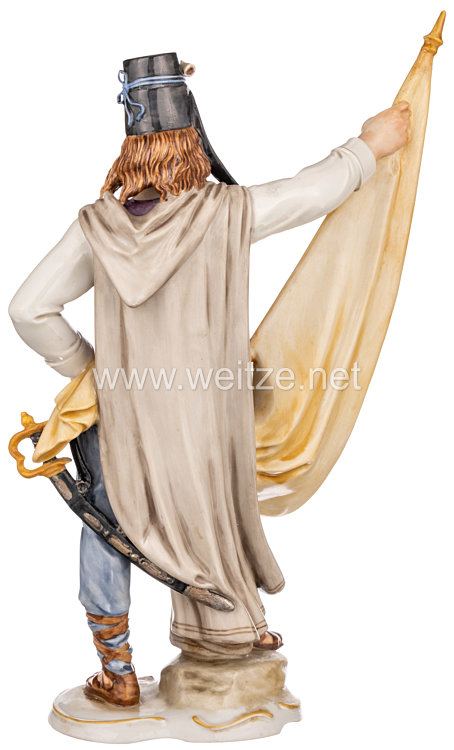
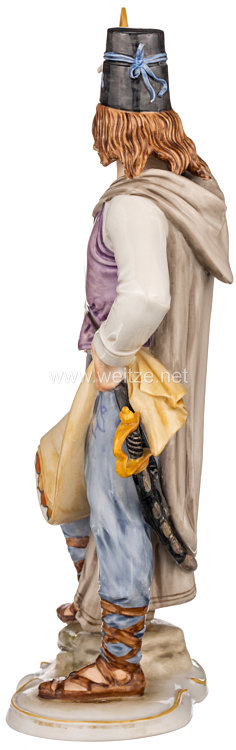
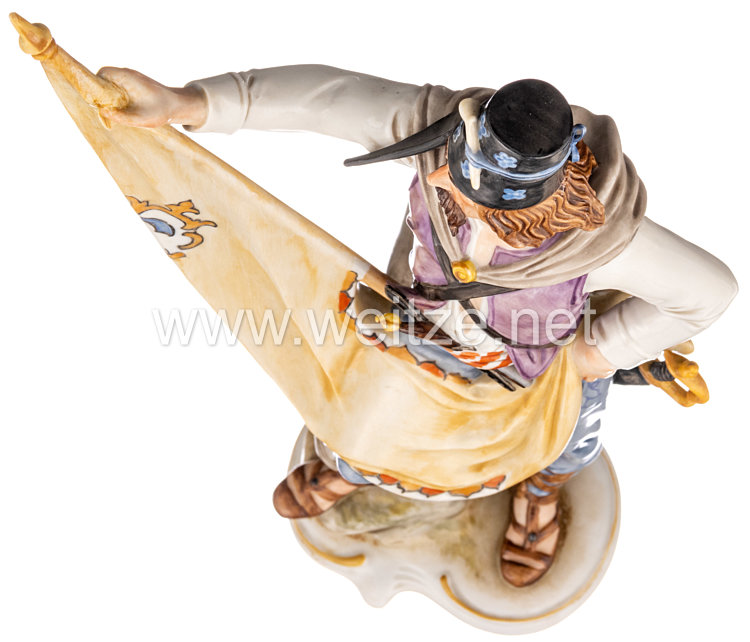
Among the rarest productions of the SS-Porzellanmanufaktur Allach, the Standard Bearer of the Panduren, Model #141, occupies a singular position. Designed by the artist Richard Förster and manufactured between 1941 and 1944, this porcelain figurine belongs to a group of pieces produced exclusively during the war years. Since no official production lists of the overall models exist from 1939 onward, the exact edition size remains unknown. However, given their wartime-only production window, it can be assumed that these figurines appeared in very small editions and are therefore among the rarest Allach pieces in existence.
The Porzellan Manufaktur Allach was established as a private company in 1935 in Allach, near Munich. After just one year of independent operation, the enterprise was acquired by the SS in 1936. Heinrich Himmler, the leader of the SS known for his obsession with Aryan mysticism, saw in the acquisition an opportunity to produce works of art that would be representative, in his eyes, of Germanic culture. In 1937, the primary factory was relocated to the SS Training and Education Camp adjacent to Dachau. Beginning in 1940, Jewish prisoners from the concentration camp were forced to work in the factory — a fact that continues to shape the ethical discourse surrounding these collectibles.
The majority of items produced at Allach as collectibles bolstered Nazi ideology by presenting idealized representations of peasants, historical figures, and rural themes. Production spanned the period from 1935 to 1945.
Richard Förster modeled a series of military foot soldier figurines intended as a supplement to the cavalry figurines created by Prof. Theodor Kärner. Model #141 depicts an unmounted Panduren soldier carrying a flag from the period of the Silesian Wars. It is a porcelain figurine devoted entirely to a historical military subject.
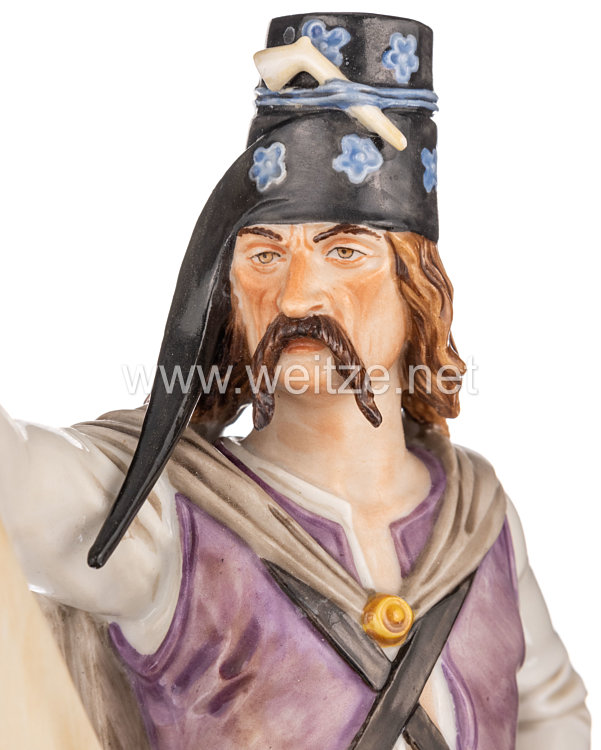
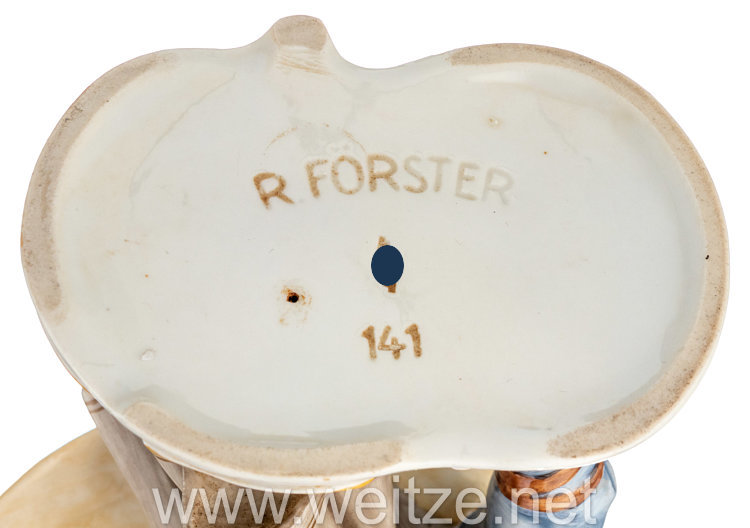
The great majority of known Allach pieces are made of white, glazed porcelain. Colored painted versions are significantly rarer, particularly for figurines that were only produced during the war years. The example under discussion features a colored painted finish with ochre-colored details, placing it among the rarer variants. The base bears the blind-pressed Allach SS rune mark, the artist signature “R. Förster,” and model number 141. Dealer sources additionally note a seldom-seen variation in the placement of the pipe for this model number.
The figurine represents a soldier from Trenck’s Pandurs, a light infantry unit of the Habsburg monarchy raised by Baron Franz von der Trenck under a charter issued by Maria Theresa of Austria in 1741. The unit was largely composed of volunteers from the Kingdom of Slavonia and the Slavonian Military Frontier.
The Pandurs were notable for their distinctly unconventional appearance. They did not use uniforms and had an overall Ottoman appearance. This oriental character was compounded by the practice of mandatory head shaving, leaving only a rattail, as well as the use of a horse tail bunchuk instead of a conventional unit banner. The Pandurs fought in the War of the Austrian Succession, including the Silesian Wars, and were employed by the Kingdom of Hungary from 1741 onward.
With the fall of Nazi Germany in 1945, Allach Porcelain ceased production entirely. The factory was abandoned, and its molds were destroyed or confiscated by Allied forces. In the postwar period, Theodor Kärner reused some of his Allach molds while working at Eschenbach in the American-controlled zone of Germany. Between 1947 and 1953, several of Richard Förster’s models were also created at the Eschenbach Porcelain Manufactory. Additionally, Franz Nagy may have restarted production at the original factory in Allach, as some postwar stoneware pieces have been observed bearing an Allach mark with the letter “N” for Nagy replacing the SS insignia.
Today, Allach pieces remain both rare and controversial. Collectors and historians continue to debate their ethical implications, as these objects are inextricably linked to the system of forced labor and Nazi ideology. The colored wartime figurines such as the Standard Bearer of the Panduren are among the most difficult to locate and simultaneously serve as documents of one of the darkest chapters in the history of European porcelain production.