Prussia World War I Sea Bag for Soldier "König" in the 2nd Hanoverian Field Artillery Regiment No. 26
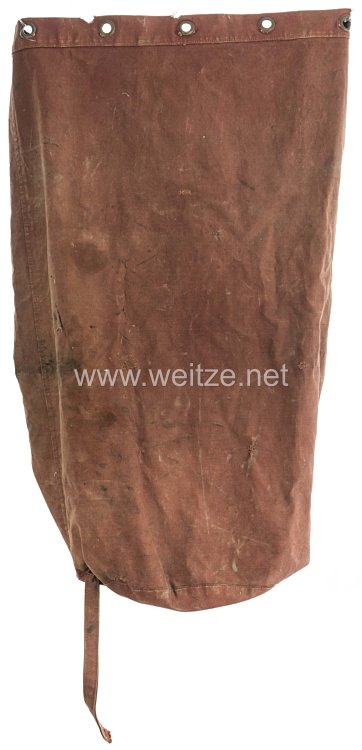
The duffle bag (Seesack) from the 2nd Hanoverian Field Artillery Regiment No. 26 represents an authentic piece of equipment from the Imperial German Army during World War I. These practical transport containers were an indispensable part of every soldier's personal equipment and reflect the material culture of wartime daily life.
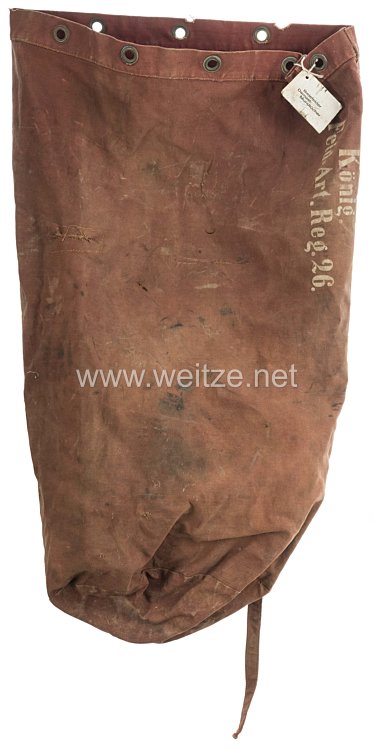
The 2nd Hanoverian Field Artillery Regiment No. 26 had its peacetime garrison in Verden an der Aller, a town in Lower Saxony. The regiment was established in 1867 and belonged to the X Army Corps. During World War I, the regiment fought on various fronts and participated in numerous significant battles. The inscription “König. Feld-Art. Reg.26.” indicates its designation as a Royal Prussian Regiment, an honorary title that emphasized its connection to the Prussian monarchy.
The duffle bag itself was a standardized piece of equipment according to the clothing regulations of the Prussian Army. These robust bags were made from durable linen and served to transport a soldier's personal belongings. The reddish-brown coloring was typical for military equipment of this period and served both practical and camouflage purposes. The metal eyelets at the top allowed the bag to be closed and carried with a cord or strap.
The personal equipment of a German artilleryman in World War I included numerous items beyond the duffle bag. Typically, the duffle bag contained reserve uniform parts, underwear, personal items, washing equipment, and possibly private letters and photographs. During marches or troop movements, the duffle bag was usually transported on the unit's supply wagon, as it was too bulky to be carried by soldiers in addition to their combat equipment.
The dating “circa 1916” places this duffle bag in a critical phase of the war. 1916 was the year of the Battle of Verdun and the Battle of the Somme, two of the bloodiest confrontations of the entire war. German field artillery played a decisive role in warfare during this period. Field Artillery Regiment No. 26 was equipped with field guns and light field howitzers, typically the 7.7 cm FK 96 n.A. (Field Gun 96 new model) and the 10.5 cm leFH 98/09 (light field howitzer).
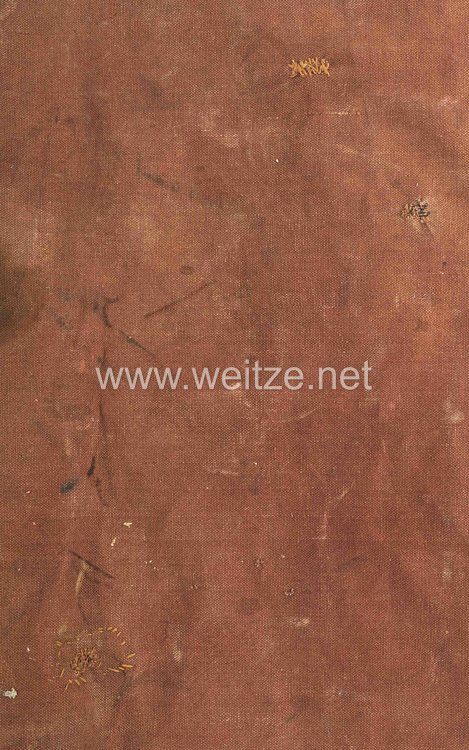
The visible repairs on the duffle bag are of particular historical interest. They testify to intensive use and the material shortages that increasingly affected the German Reich from 1916 onwards. The British naval blockade led to considerable supply shortages that also affected military equipment. Soldiers and their families were forced to use and repair equipment for as long as possible. These patches thus tell a silent story of deprivation and perseverance.
The labeling of the duffle bag followed military regulations for marking equipment items. Indicating the unit served identification purposes and was intended to prevent equipment from being lost or confused. In the chaotic circumstances of troop movements, trench warfare, and retreats, clear marking of personal items was of great practical importance.
As a military historical object, this duffle bag offers an authentic insight into the material world of the German soldier in World War I. Unlike weapons or uniforms, which often show the representative side of the military, the duffle bag represents everyday life and the practical needs of soldier life. It is a testimony to the social history of war that extends beyond purely military history.
The preservation of such objects is of inestimable value to historical scholarship. They enable subsequent generations to establish a connection with the people who used these items and to understand the material realities of war. The duffle bag of the 2nd Hanoverian Field Artillery Regiment No. 26 stands representative for millions of similar objects that shaped soldiers' daily lives and are now largely lost.