Kingdom of Hannover Helmet for an Ensign in the 1st Regiment King's Dragoons
The helmet was only worn until 1838. Extremely rare, the first piece we have been able to offer in over 30 years!
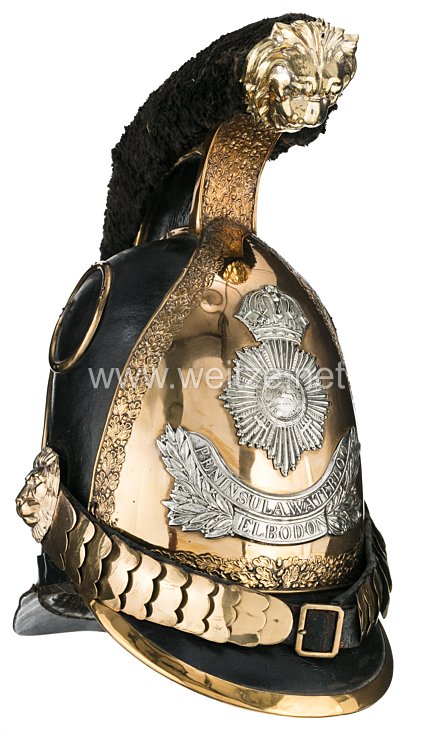
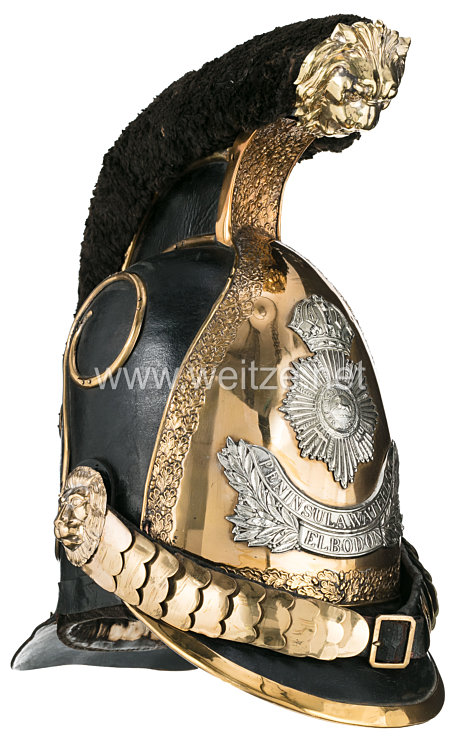
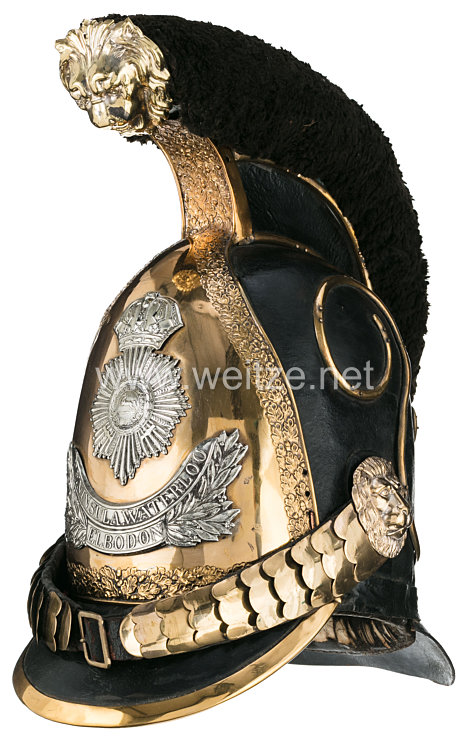
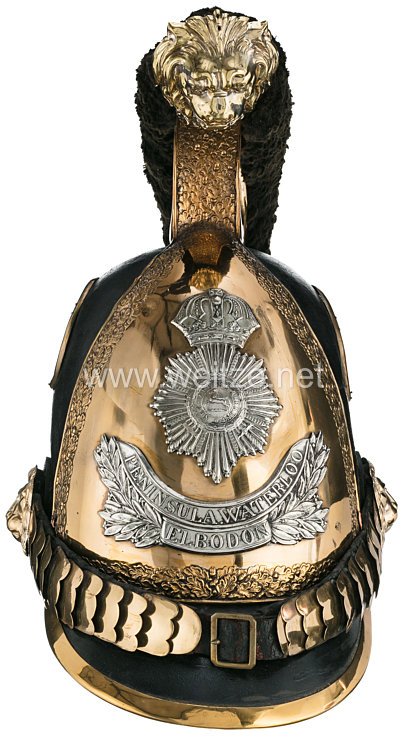
This magnificent Raupenhelm (caterpillar helmet) for a Fähnrich (ensign officer) in the 1st Regiment King's Dragoons of the Kingdom of Hannover represents an extraordinarily rare testament to a brief but significant epoch in Hanoverian military history. Manufactured around 1833, the helmet embodies a mere five-year transitional period that began with the cavalry reform under King Ernst August in 1833 and ended as early as 1838, when the Hanoverian cavalry was reorganized once again and Hussar regiments were reestablished.
The Hanoverian Army existed as an independent military force from 1814 to 1866. In 1833, King Ernst August implemented a significant cavalry reform in which all cavalry units were classified as Dragoon regiments. This reorganization proved short-lived, as the cavalry was reformed again just five years later. The extreme rarity of this helmet pattern is documented by the fact that this was the first example that could be offered on the market in over 30 years, and only the second dragoon helmet whatsoever in over 40 years.
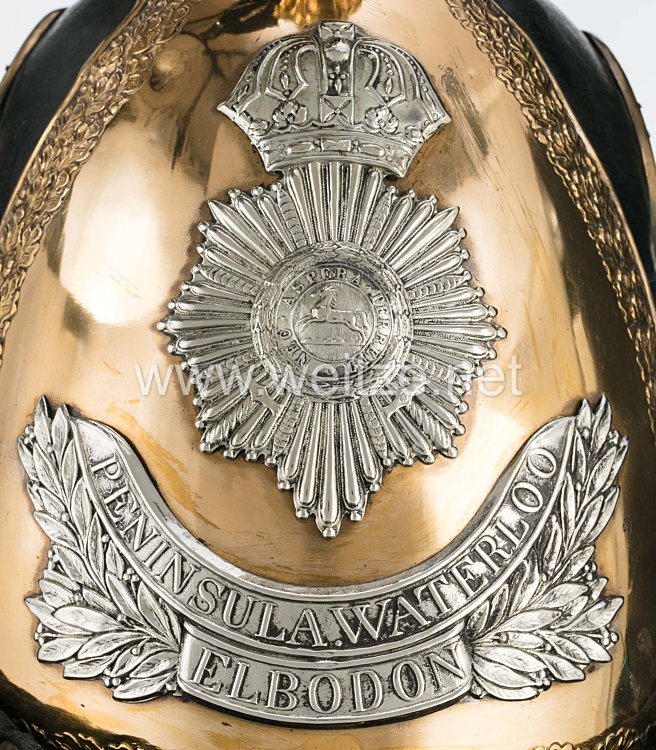
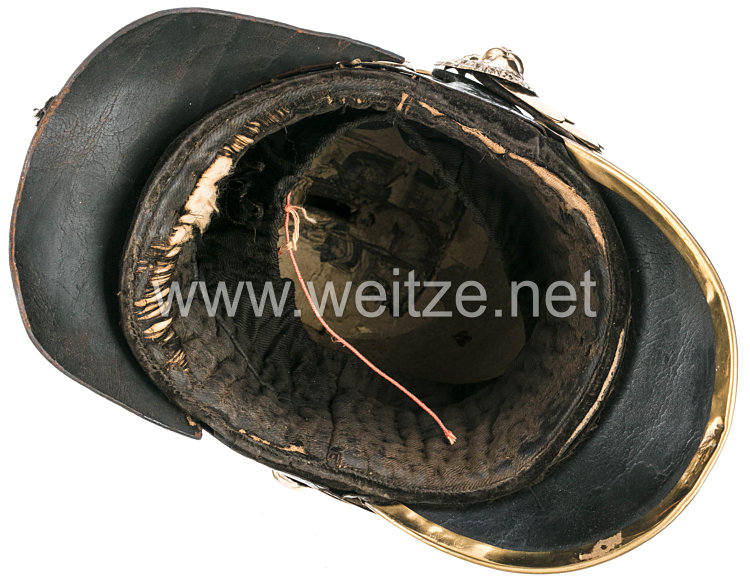
The helmet was manufactured by C.A. Wagner, Royal Court Hatmaker (Königlicher Hof-Hutmacher) in Hannover, whose large paper label is preserved inside the helmet bell. The execution corresponds to the highest officer quality with a black leather body and gilt brass fittings. The high front shield displays embossed oak leaf decoration around the rim, while the center features the crowned star of the House Order with swords in nickel silver (Neusilber). Below this is the large bandeau with laurel decoration bearing the battle honors “Peninsula – Waterloo – El Bodon.”
These battle honors reference the glorious history of the King's German Legion (KGL), from whose tradition the 1st Regiment emerged. The 1st Regiment King's Dragoons traced its lineage to the 1st Regiment of Light Dragoons of the King's German Legion, which had distinguished itself at the Battle of Garcia Hernandez (1812) and throughout the Peninsular War. The KGL was formed in 1803 from Hanoverian soldiers after Napoleon dissolved the Electorate of Hannover, and fought continuously as part of the British Army until 1816. After its disbandment, numerous units were integrated into the newly reconstituted Hanoverian Army, with KGL veterans and traditions being adopted.
The battle names immortalized on the helmet represent significant engagements of the Napoleonic Wars: the campaigns of the Peninsular War (1808-1814), the Battle of Waterloo (1815), and the Battle of El Bodon (September 25, 1811). These honors were carried forward by successor regiments of the Hanoverian Army.
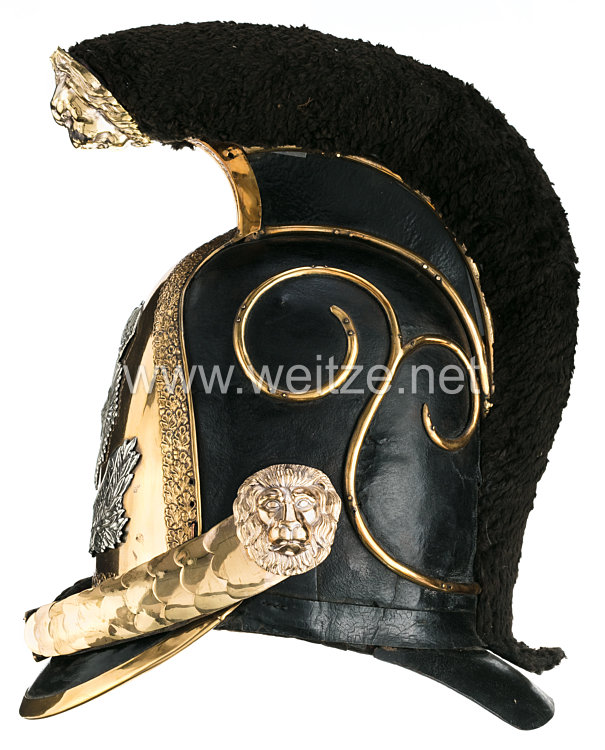
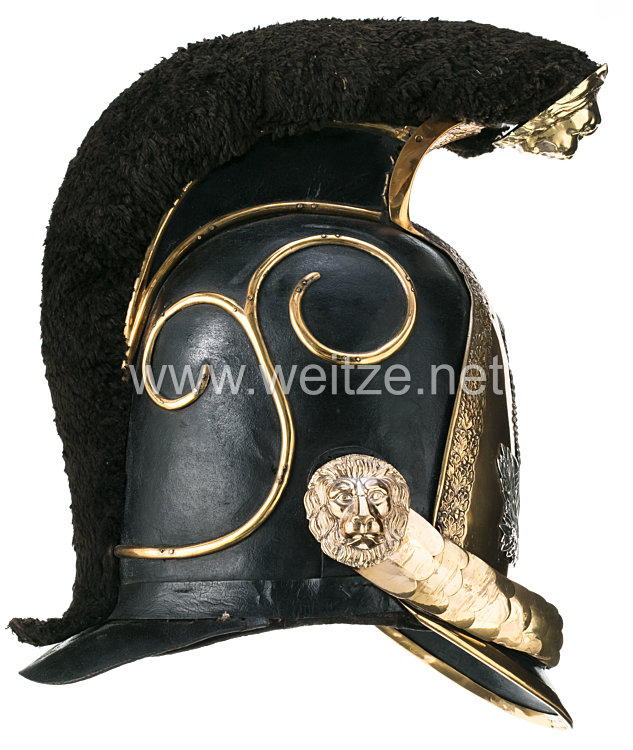
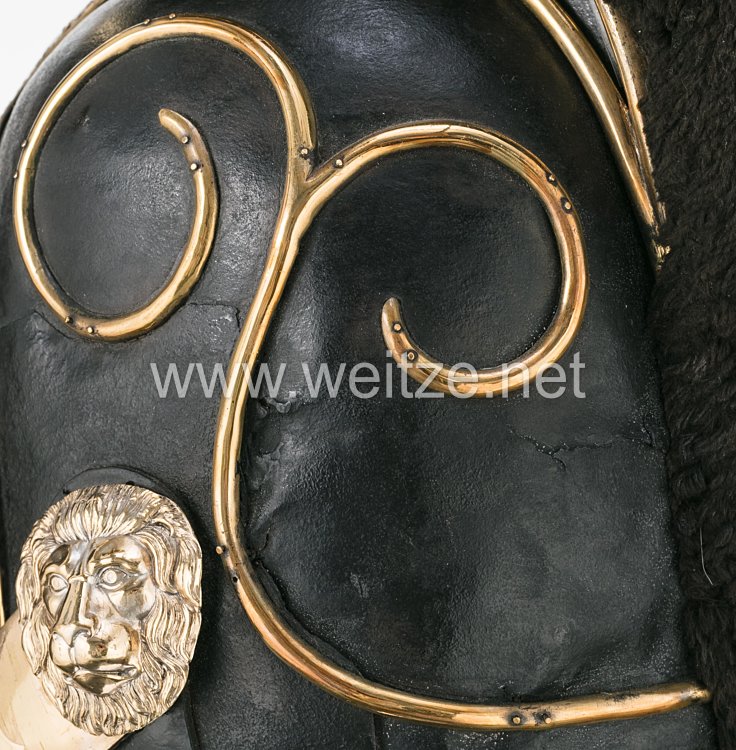
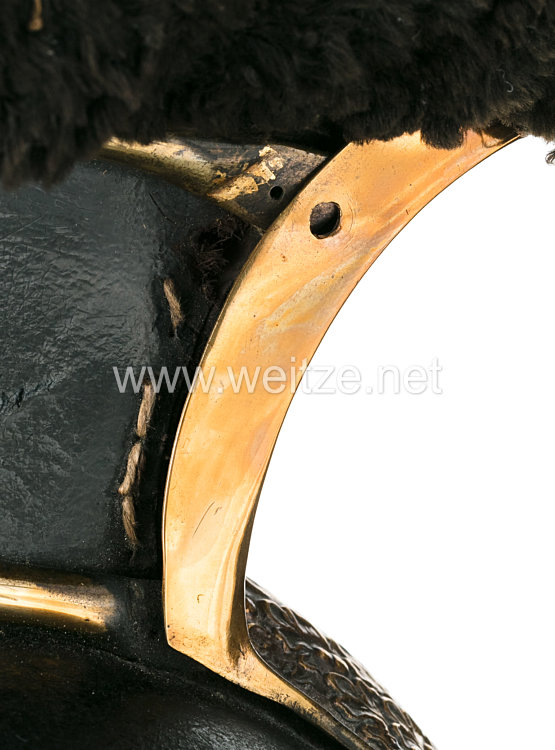
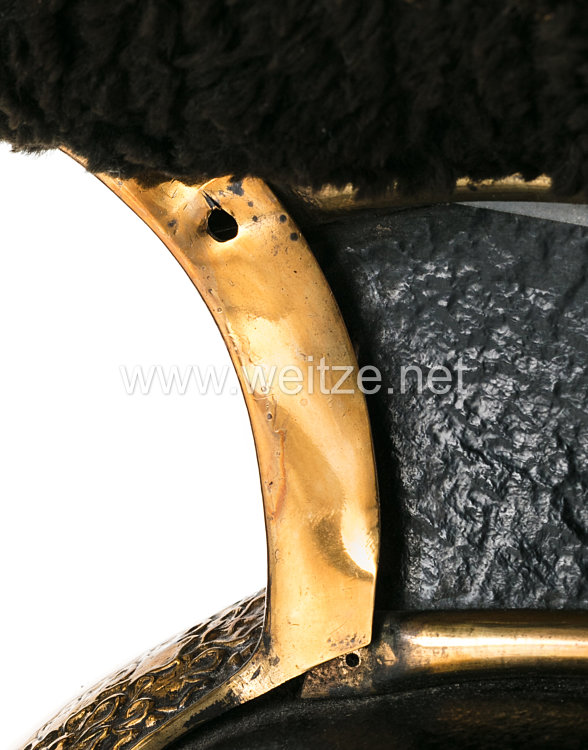
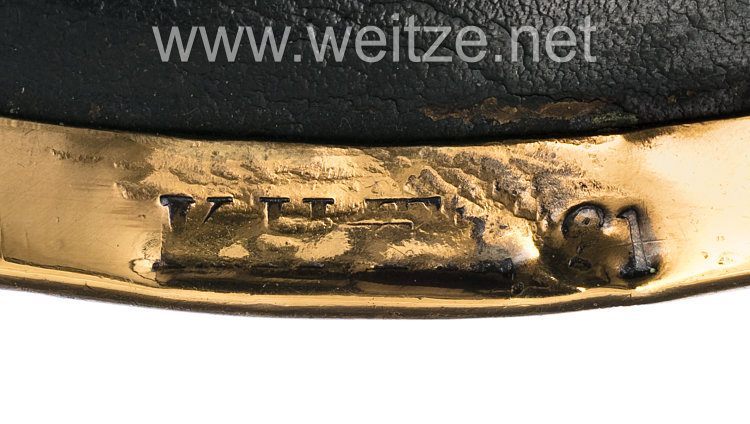
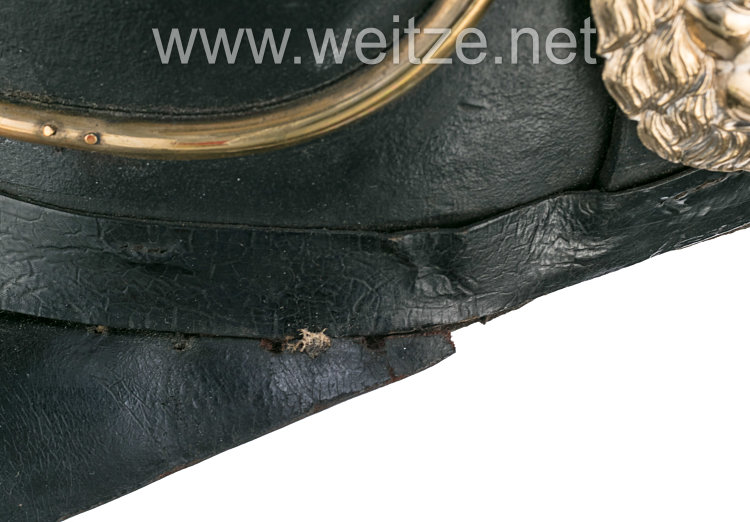
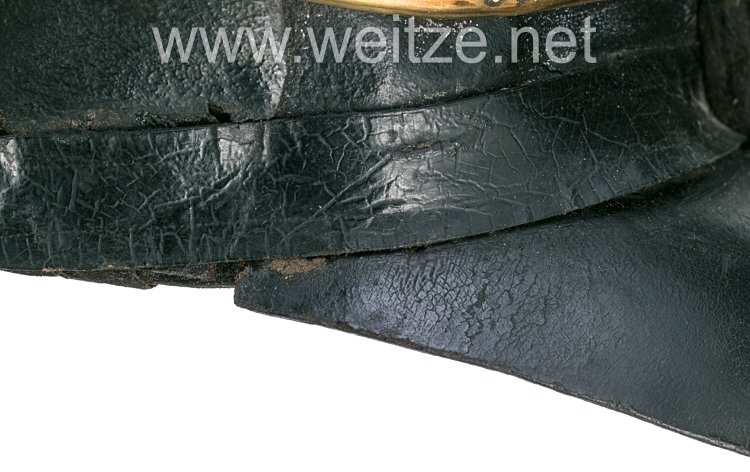
The constructional features of the helmet include domed scale chin chains with lion heads on the sides, side sword guards (Hiebspangen) in snake form made of brass, and a black leather crest ridge with a high woven wool caterpillar, featuring an applied lion head in gilt brass at the front. The interior shows an officer-style sewn liner, while the helmet bell is lined with gray felt. The underside of the front visor bears a stamp.
After 1838, this helmet style was replaced by new patterns for the reestablished Hussar and other cavalry regiments. However, the Raupenhelm style continued in use in Bavaria until 1886. The history of the Hanoverian Army ended in 1866, when Hannover was defeated in the German War and annexed by Prussia. The traditions of Hanoverian units were perpetuated in Prussian regiments. In 1899, Kaiser Wilhelm II granted certain Prussian units with Hanoverian heritage permission to display KGL battle honors on their helmet plates.
This documented helmet comes from the royal collection at Schloss Marienburg (Marienburg Castle) and was auctioned at Sotheby's in October 2005. The rank of Fähnrich designated the lowest commissioned officer rank in cavalry regiments during this period.