Grand Duchy of Hesse Cavalry Extra Saber (KD) 89 for a Member of the Leib-Dragoner-Regiment (2nd Grand Ducal Hessian) No. 24
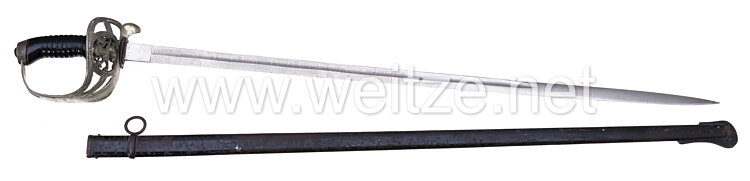
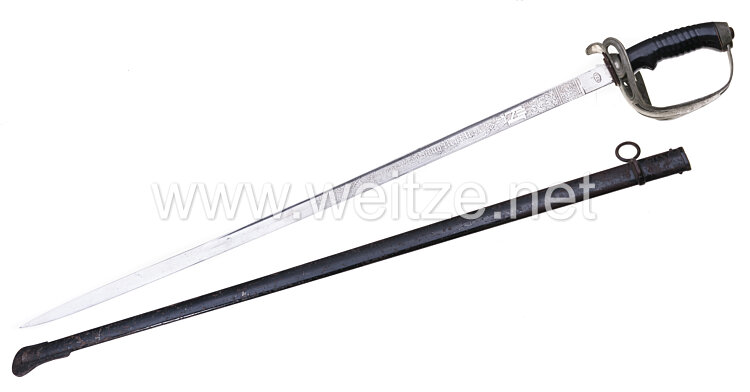
The Leib-Dragoner-Regiment (2nd Grand Ducal Hessian) No. 24 represents a significant part of the military tradition of the Grand Duchy of Hesse in the late Imperial era. This Cavalry Extra Saber (KD) Model 89 exemplifies the standardized armament of the German cavalry around 1910 while documenting the regional identity of Hessian cavalry units.
The regiment was originally established in 1813 as the Guard Chevauleger Regiment and evolved throughout the 19th century into one of the most prestigious cavalry units of the Grand Duchy. In 1871, following the foundation of the German Empire, it received the designation Leib-Dragoner-Regiment (2nd Grand Ducal Hessian) No. 24 within the unified numbering system of the German Army. The regimental headquarters was located in Darmstadt, the residence city of the grand ducal family.
The Cavalry Extra Saber Model 1889 was officially introduced for the entire German cavalry through the Supreme Cabinet Order of January 6, 1891. This weapon replaced the previously used various saber types and aimed to create uniformity in cavalry armament. The term “extra saber” refers to the fact that this weapon had to be purchased at the personal expense of the officer or non-commissioned officer - it was thus a private property item and not army inventory.
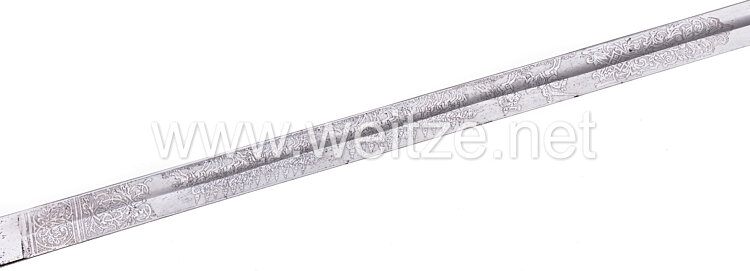
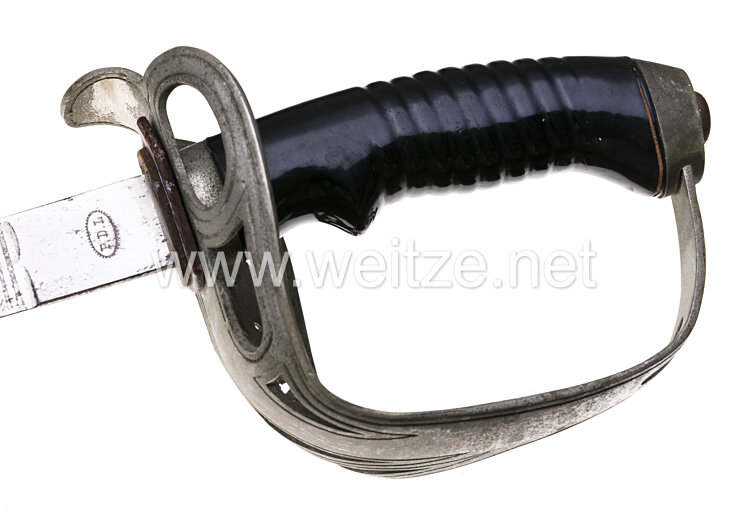
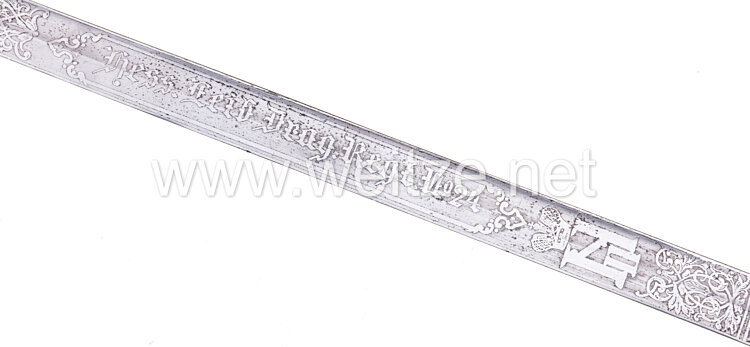
The blade of this specimen displays characteristic features of this period: The double-sided etching with fuller served not only to reduce weight but also for decorative design. The cavalry scene on the obverse side was a typical motif symbolizing the branch of service, while the inscription "Hess. Leib Drag. Regt. No. 24" in a cartouche on the reverse side documented regimental affiliation. The marking "P.D.L." on the ricasso identifies the manufacturer as P.D. Lüneschloss, a renowned Solingen weapons producer known for the quality of his blades.
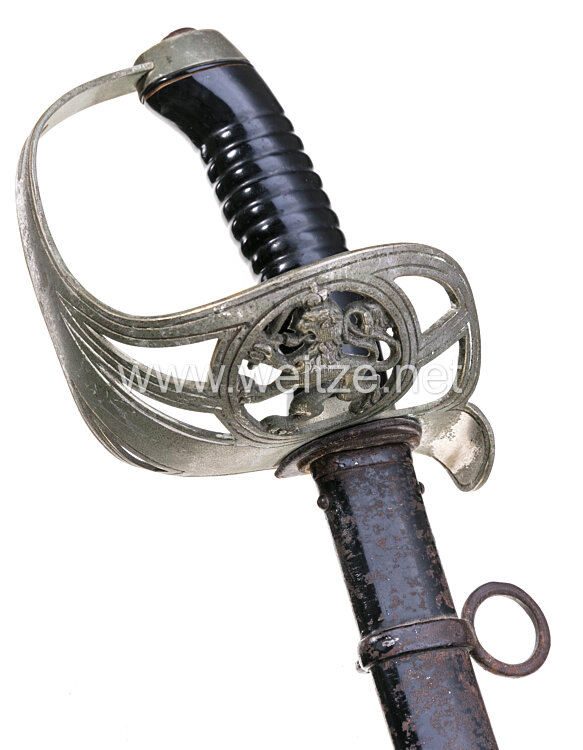
The solid hilt featuring the Hessian Lion is a special characteristic of this regional variant. The Hessian Lion, the heraldic animal of the Grand Duchy, emphasized the sovereign tradition and the special position of the regiment as a bodyguard regiment. The original nickel plating of the hilt and blade corresponded to the regulations for extra weapons of this period and distinguished them from the gilded or brass-mounted hilts of other weapon types.
The black plastic grip represents an interesting technological development. Around 1910, modern materials such as ebonite or galalith began to replace traditional wooden or horn grips. These materials were more weather-resistant and dimensionally stable, which was advantageous for military use.
The black steel scabbard with fixed carrying ring corresponded to the standard design for cavalry sabers of this time. The fixed suspension enabled quick drawing of the weapon on horseback and prevented disruptive swinging while riding. The lacquer finish served as corrosion protection but was subject to the considerable stresses of daily service.
The Leib-Dragoner-Regiment No. 24 remained active until 1918 and participated in World War I. The dragoons, originally conceived as mounted infantry, had evolved during the 19th century into a versatile cavalry type that could fight both mounted and dismounted. After the war and the dissolution of the monarchy, the regiment, like all German cavalry units, was disbanded.
Extra weapons such as this saber are today important military-historical documents. They not only demonstrate the technical development of armament but also the social structure of the officer corps, personal connection to the unit, and regional peculiarities within the German Army. The individual traces of use tell of years of service and make each piece a unique historical testimony.