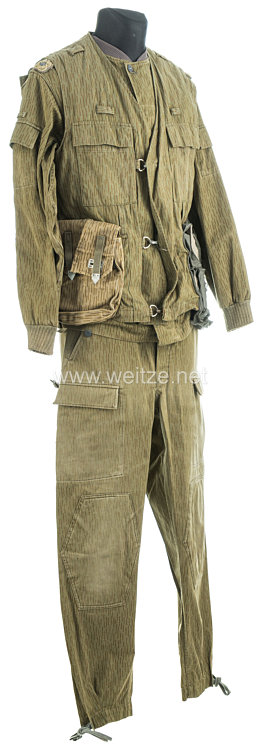
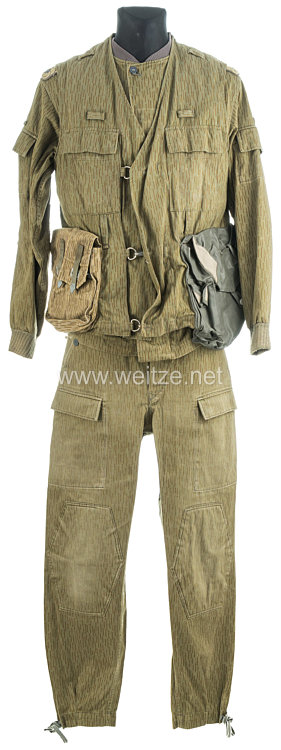
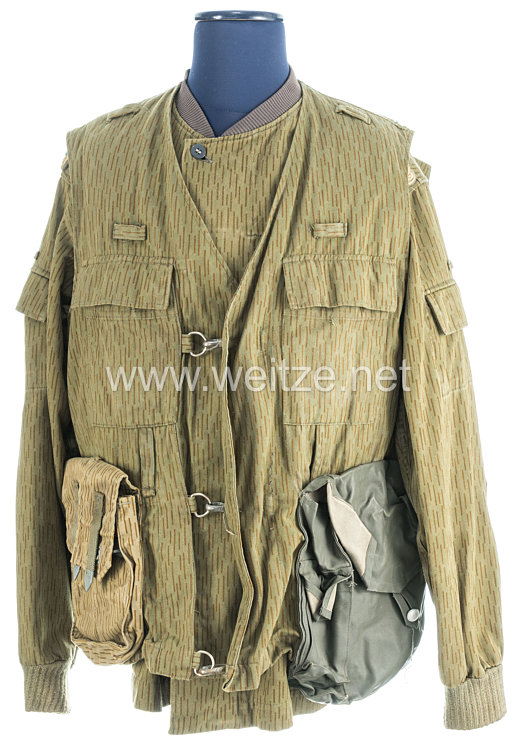
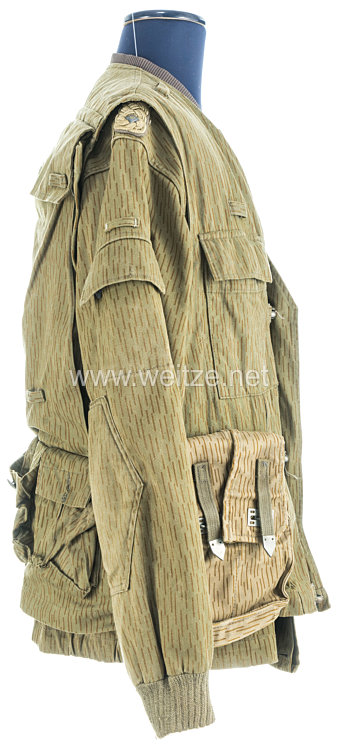
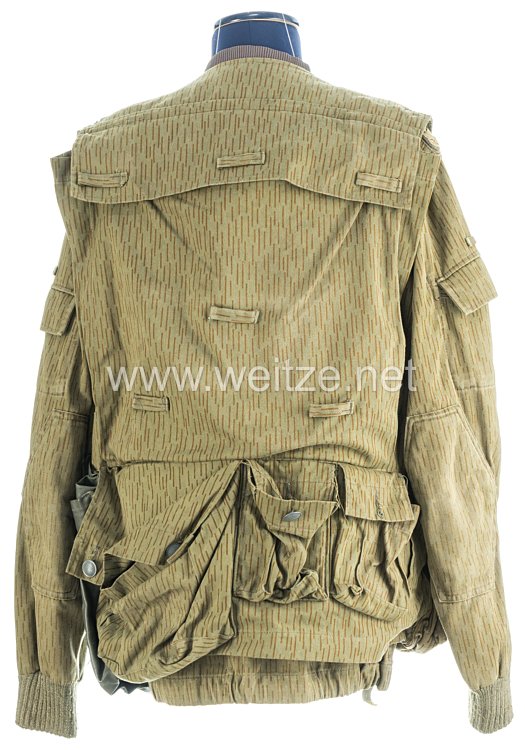
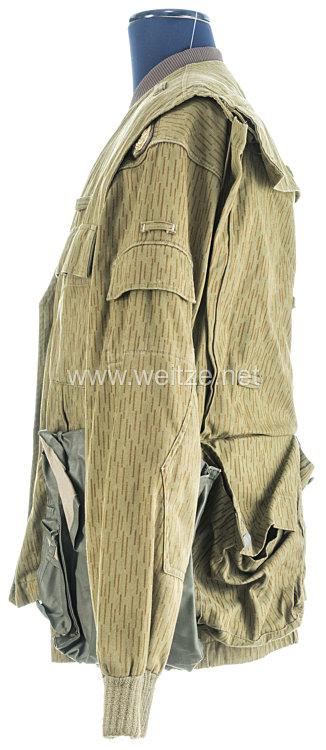
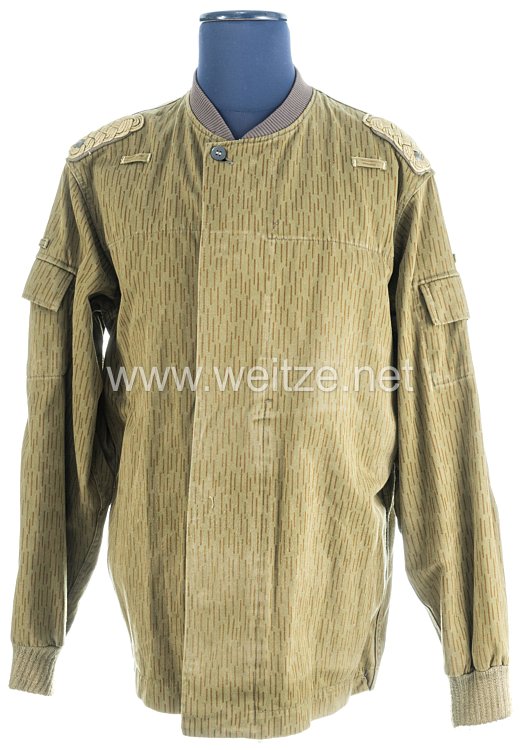
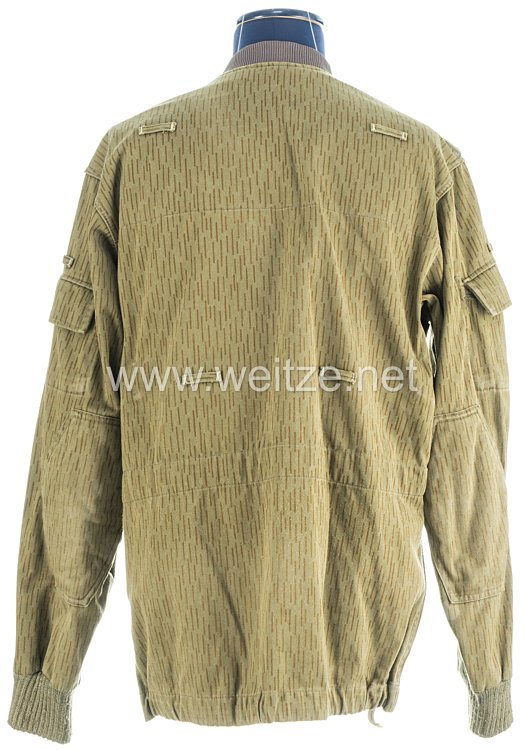
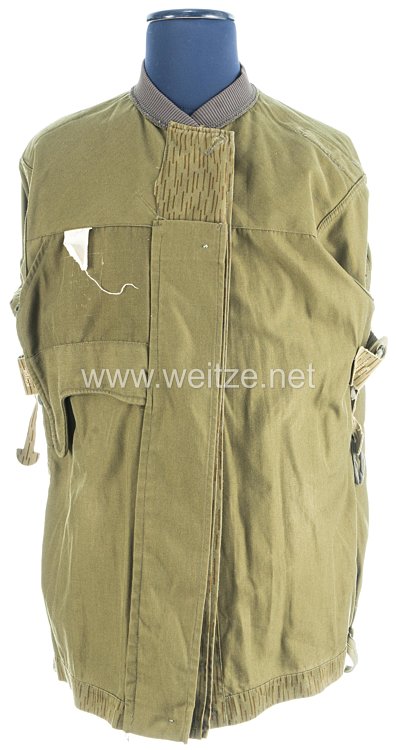
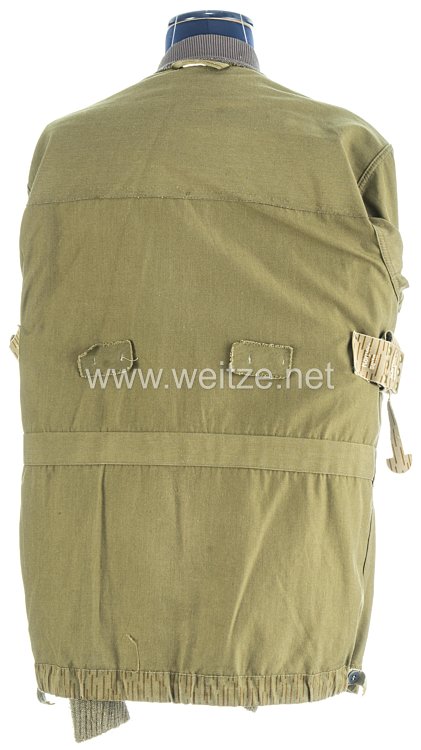
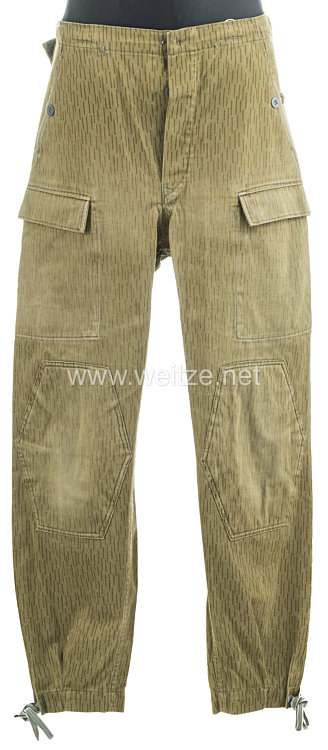
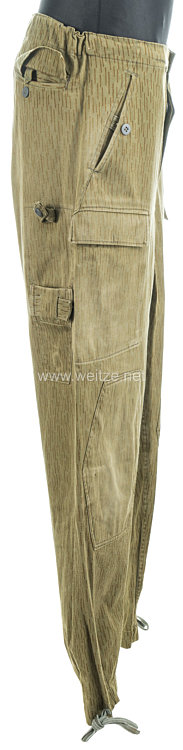
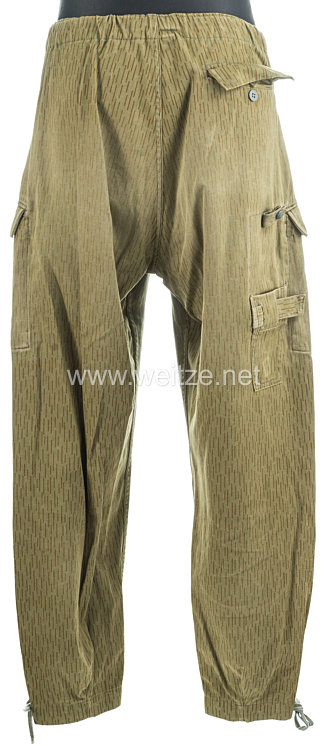
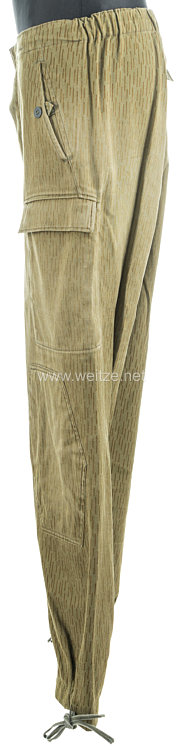
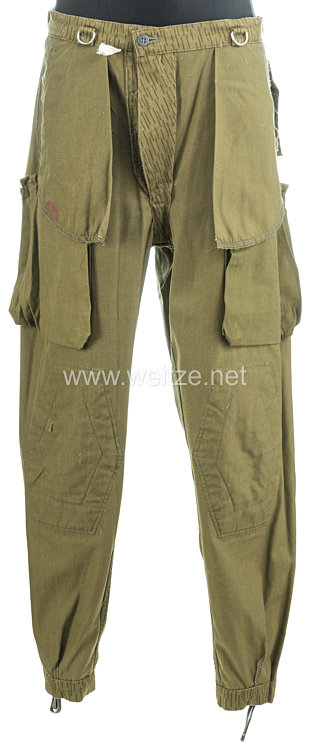
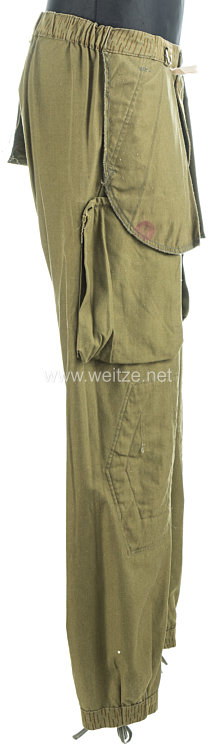
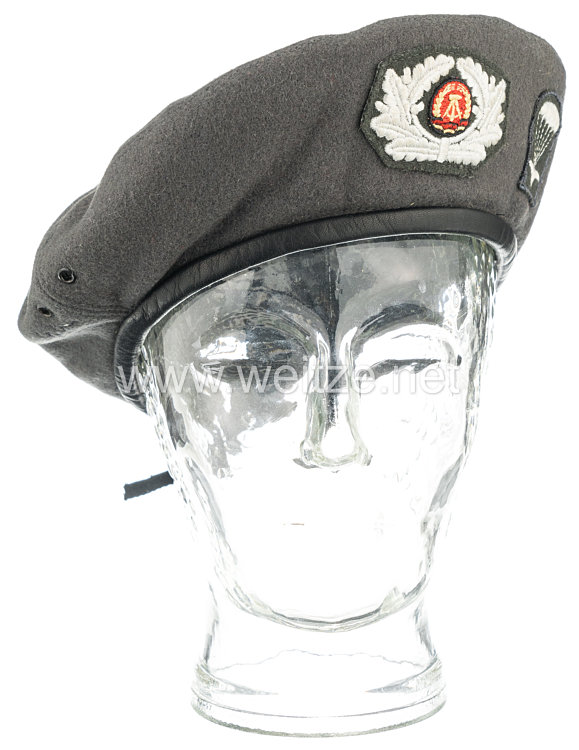
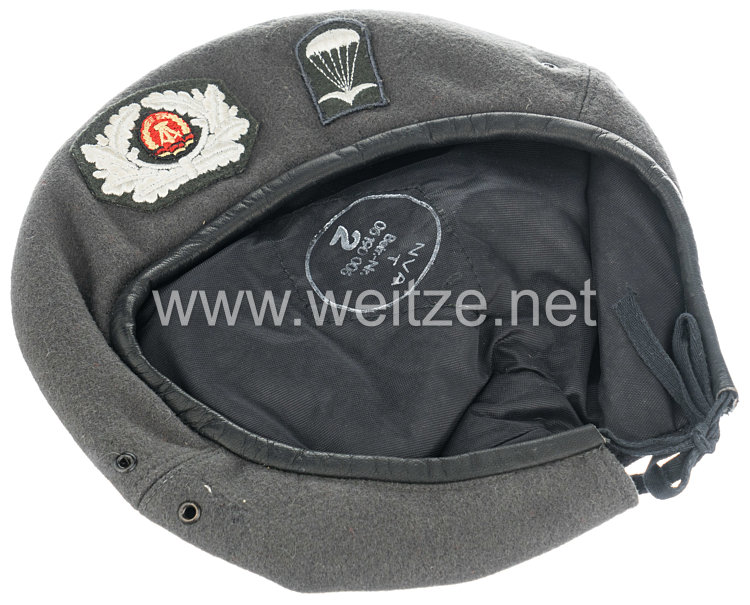
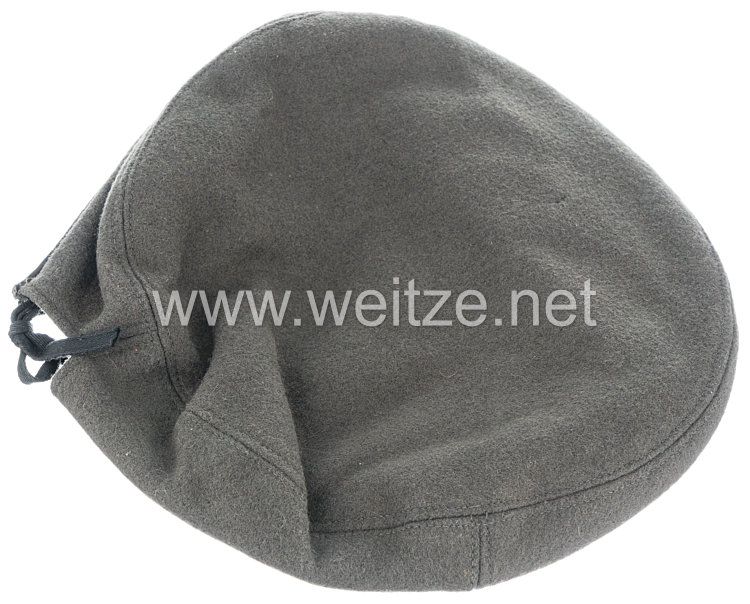
This uniform ensemble represents the military equipment of a Major of the Paratroopers in the National People's Army (NVA) of the German Democratic Republic (GDR). This collection of jacket, trousers, combat vest, and beret documents the specialized clothing of airborne troops, which held a special role within the NVA.
The National People's Army was officially established on January 18, 1956, and served as the armed forces of the GDR until German reunification in 1990. The NVA's paratrooper troops, subordinated to the Air Force/Air Defense Command, were considered elite units and were stationed in Prora on Rügen island. The Paratrooper Battalion 5 formed the core of this specialized force.
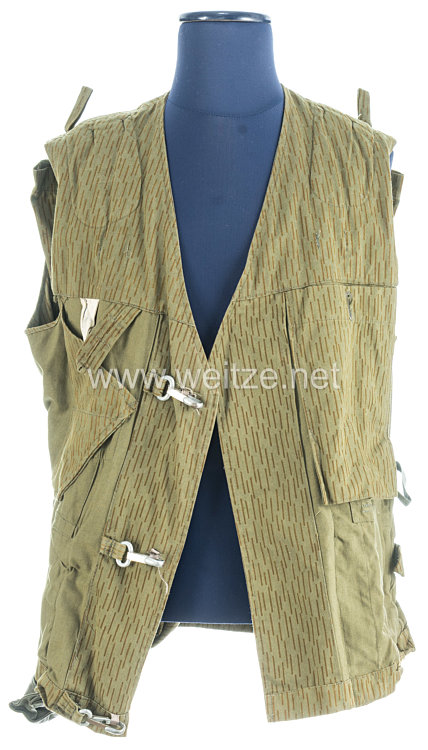
The characteristic stroke camouflage pattern, also known as “one stroke - no stroke,” was introduced in the NVA during the 1960s. This camouflage pattern represented a development of Soviet camouflage concepts and was designed to be particularly effective in Central European vegetation zones. The vertical stripe pattern was specifically used for paratroopers and other special forces and differed significantly from the surface camouflage patterns of regular ground troops.
The shoulder boards of the jacket, sewn on, indicate officer rank. In the NVA, rank insignia were worn on shoulder boards following the Soviet model. A Major belonged to the category of field officers and typically commanded battalions or served as staff officers at regimental level. The rank of major was introduced in 1956 with the founding of the NVA and corresponded to the Soviet equivalent.
The trousers in the 4th model refer to the developmental history of NVA uniforms. The NVA underwent several uniform reforms, with each model bringing improvements in cut, material, and functionality. The fourth model of paratrooper trousers was characterized by reinforced seams and adapted pockets that accommodated the special requirements of airborne operations.
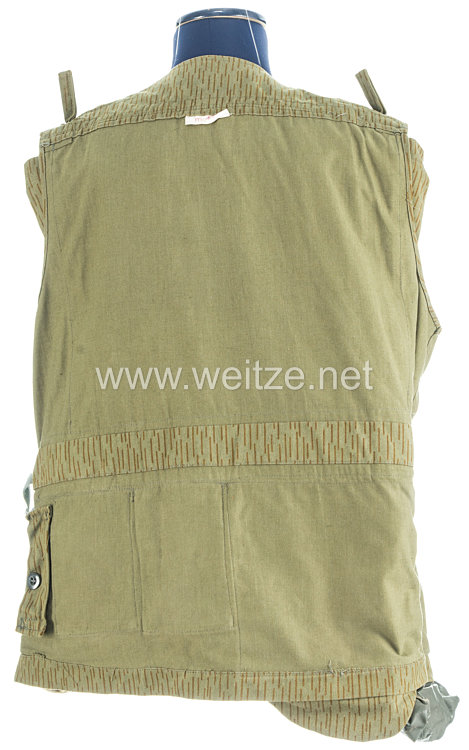
The combat vest with its characteristic rubber pocket on the left side served to carry equipment and ammunition. These vests were specifically designed for airborne operations and enabled quick access to important equipment during jumps and in combat. The manufacturer marking “m 48” refers to the clothing size according to the system commonly used in the GDR.
The beret was a special distinguishing feature of the paratrooper troops. Unlike regular NVA units that wore side caps, paratroopers were allowed to wear the beret as an elite force. The sewn-on GDR national emblem shows the characteristic wreath of wheat with hammer and compass, while the officer's cockade indicates the wearer's rank status. The manufacturer marking “NVA T, Betr.-Nr. 06190006” refers to a specific textile factory within the centralized GDR production structure.
The size specifications “sg 48” follow the GDR clothing system, which was based on Soviet standards. The measurements of the uniform show that this is a complete service uniform containing all necessary components for military duty.
The NVA's paratrooper troops maintained close connections with the Soviet Airborne Forces (VDV) and regularly trained together with other Warsaw Pact states. Their main task consisted of rapid airborne insertion behind enemy lines, securing strategic objectives, and supporting offensive operations within the framework of Warsaw Pact doctrine.
After German reunification in 1990, the NVA was dissolved. Parts of the equipment and uniforms were stored, sold, or transferred to museum collections. Today, such complete uniform ensembles represent important contemporary historical documents that provide insight into the organizational structure, military hierarchy, and textile development of the GDR armed forces.
The condition grade 2 of the individual components indicates good preservation, with minimal signs of wear that underscore the authentic character of the uniform. Such ensembles are of particular value for military historical research and museum presentation, as they document the material culture of the GDR armed forces.