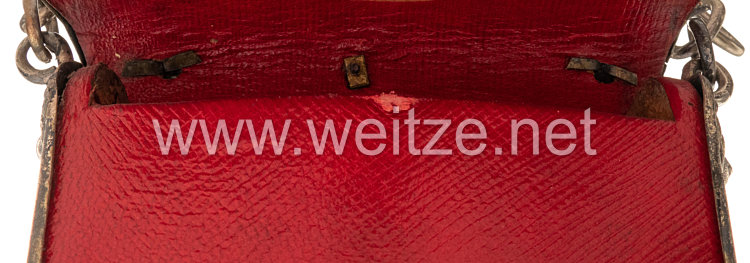
Brunswick Cartridge Box for Officers of Hussar Regiment No. 17

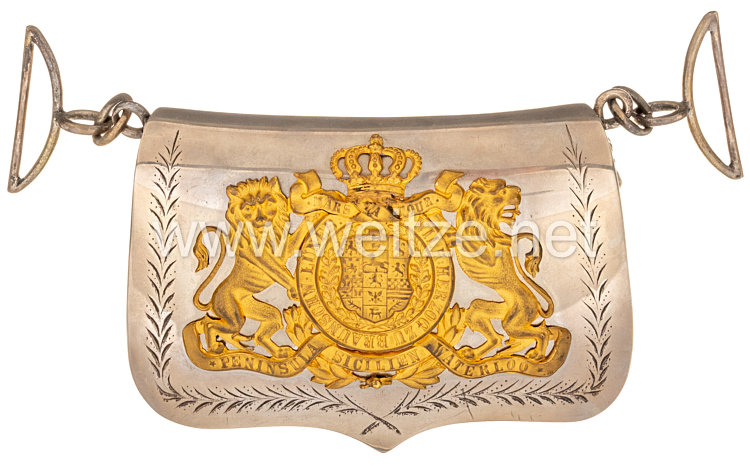
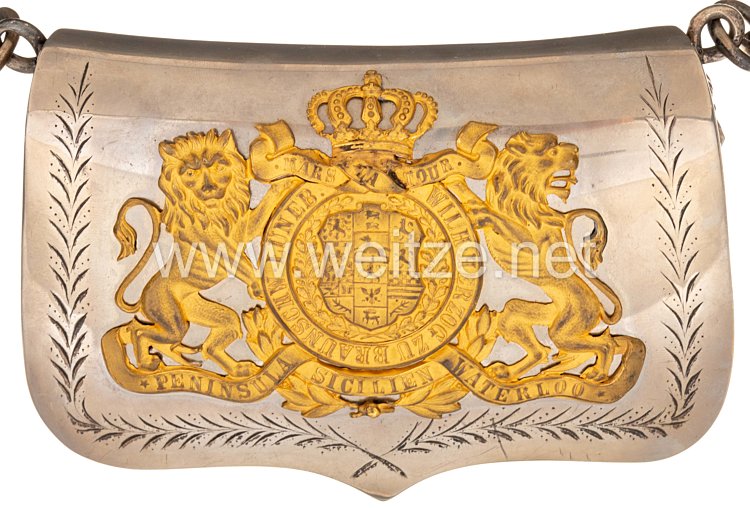
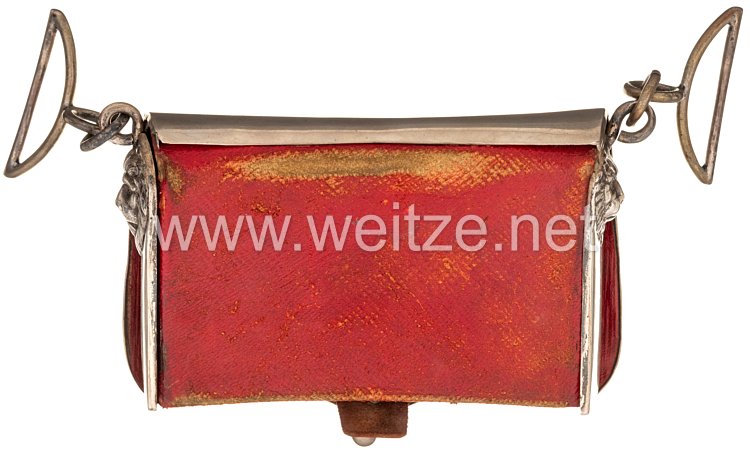
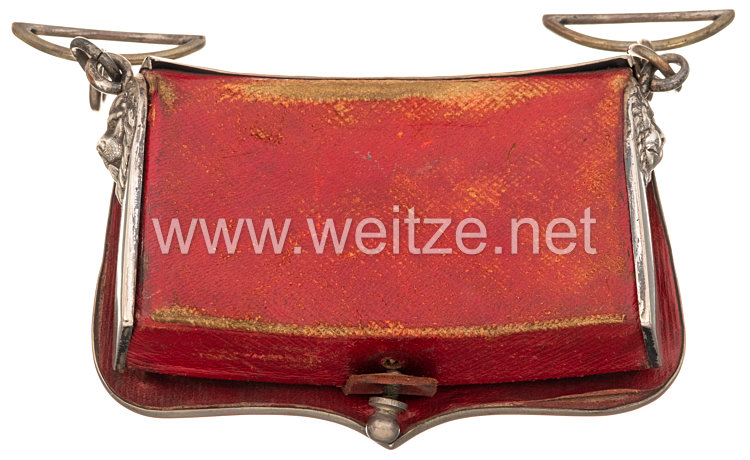
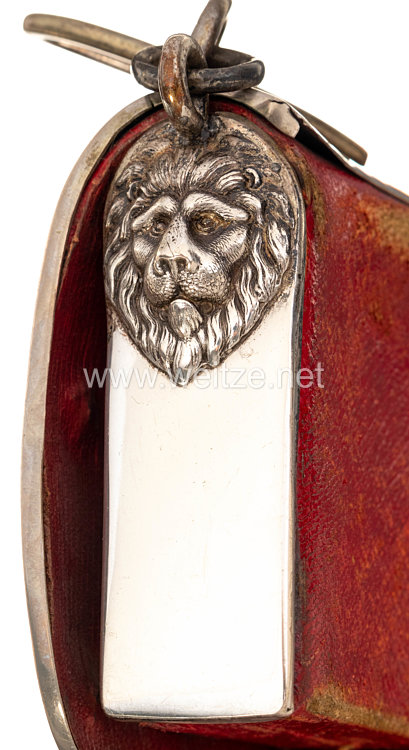
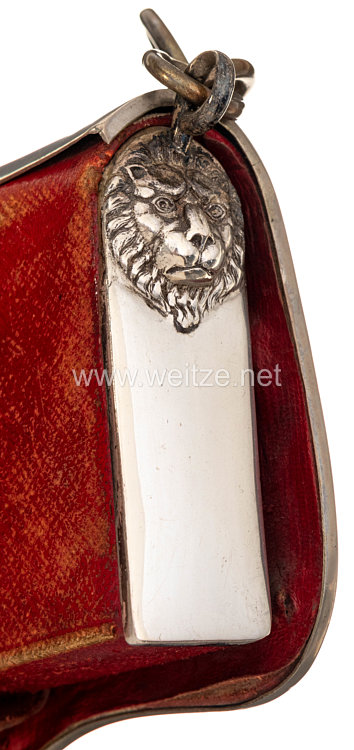
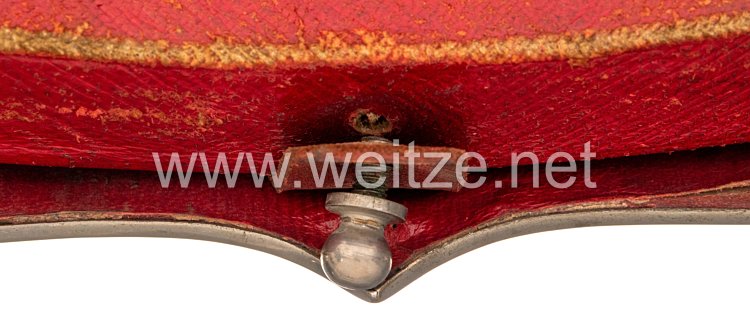
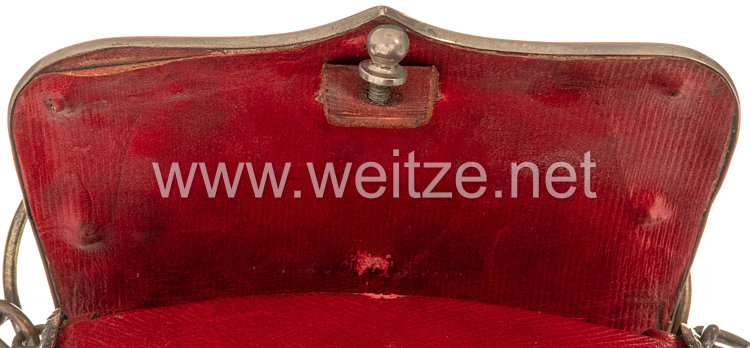
Brunswick, circa 1910. The wooden body covered with red morocco leather, sides with silver-plated fittings with semi-relief lion heads and carrying hooks, the lid in genuine silver with applied large gilt coat of arms bearing the bandeaux “Peninsula Sicilien Waterloo”, “Mars la Tour” and “Wilh: Herzog zu Braunschw. Lüneb.”. Only very slight wear from use. Condition 2.

Extremely rare!
386332
3.200,00

Brunswick Cartridge Box for Officers of Hussar Regiment No. 17

The cartridge box (also known as cartouche or ammunition pouch) represented an essential element of military equipment from the 18th to the early 20th century. The specimen described here, designed for officers of the Brunswick Hussar Regiment No. 17, exemplifies the highest quality of military craftsmanship during the Imperial era around 1910.

The Hussar Regiment No. 17 carried forward the proud tradition of the Duchy of Brunswick, whose military history extends back to the 18th century. The bandeaus displayed on the coat of arms reference the glorious battles in which Brunswick troops participated: the Peninsula (Iberian Peninsula, 1808-1814), Sicily, Waterloo (1815), and Mars-la-Tour (1870). The Battle of Waterloo gained particular tragic fame for Brunswick when Duke Friedrich Wilhelm fell leading his troops.

The inscription “Wilh: Herzog zu Braunschw. Lüneb.” refers to the ducal line of Brunswick-Lüneburg. After the restoration of the duchy in 1813 following Napoleonic occupation, a particularly close bond developed between the sovereign and the army.

The technical execution of this cartridge box corresponds to Prussian army regulations, which specified particular standards for officers' cartridges. The wooden body covered with red morocco leather was characteristic of officers' pieces and differed significantly from the simpler versions for enlisted men. The silver-plated fittings with semi-relief lion heads reference the Brunswick heraldic animal, the leaping lion (Saxon Horse).

Particularly noteworthy is the use of genuine silver for the lid with an applied gilded coat of arms. This was no longer militarily prescribed by 1910 but represented a private investment by the officer, demonstrating his social status and devotion to the regiment.

Hussar regiments were originally light cavalry of Hungarian origin, distinguished by the particular elegance of their uniforms. In the German Empire, they were considered elite units with pronounced esprit de corps. The Brunswick Hussar Regiment No. 17 was established in 1866 as the Brunswick Hussar Regiment and received the number 17 in the Prussian army in 1867.

By 1910, the cartridge box itself had largely lost its practical significance, as modern ammunition equipment required different carrying systems. Nevertheless, the cartridge box remained part of the full dress uniform and parade equipment, symbolizing the continuity of military tradition.

The preservation of this object with only very slight signs of wear suggests it was primarily worn on ceremonial occasions. The elaborate design and materialization make clear that such pieces were often manufactured by specialized court suppliers in Brunswick or Berlin.

With the end of the monarchy in 1918 and the dissolution of the old army structures, such equipment items lost their official function. Today they represent important testimonies to the military culture of the Imperial era, documenting the connection between craftsmanship, military tradition, and regional identity.

r