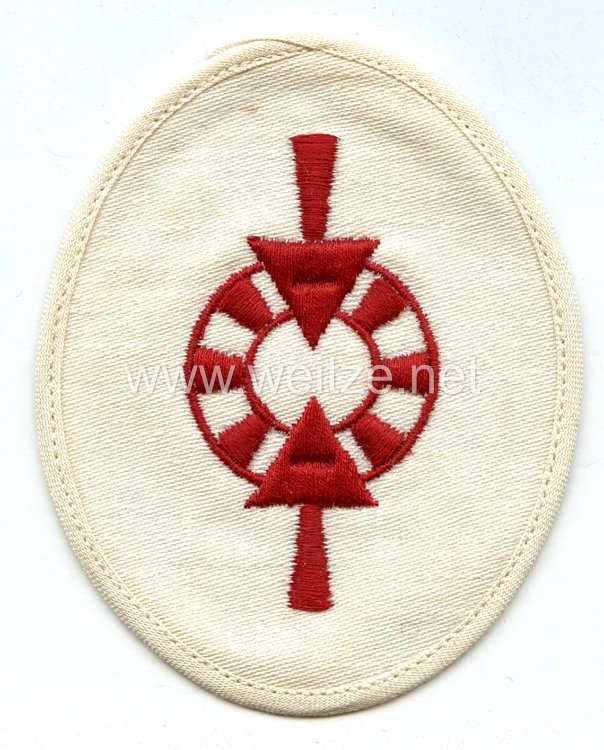
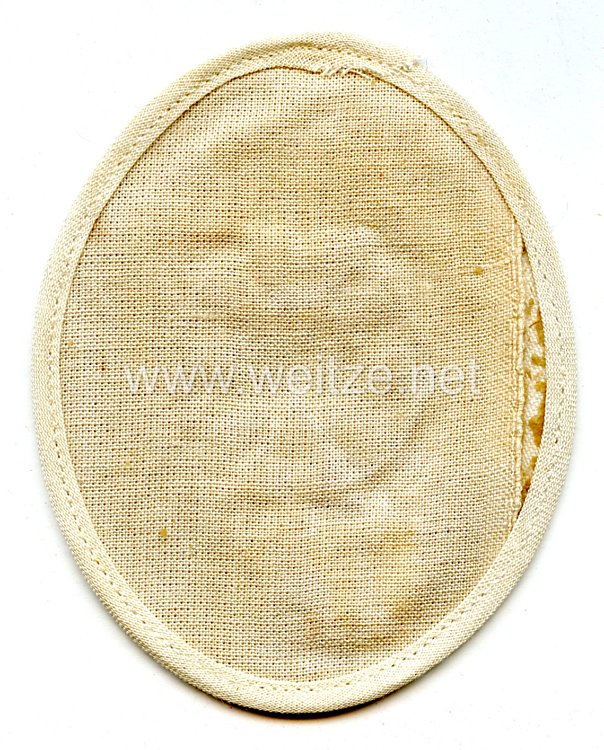
Kriegsmarine Sleeve Insignia Special Training Fire Control Petty Officer (Troop Training)

for the white blouse, condition 2.
422531
25,00

Kriegsmarine Sleeve Insignia Special Training Fire Control Petty Officer (Troop Training)

The Kriegsmarine Sleeve Badge for Special Training as Weapons Control Petty Officer represents a significant example of the complex system of career badges developed in the German Navy during World War II. These specialized insignia served for immediate visual identification of naval personnel with specific technical qualifications and played an important role in military hierarchy and organization.

The Kriegsmarine, the official designation of the German Navy from 1935 to 1945, developed an extensive system of uniform badges and rank markings. Following rearmament under the National Socialist regime and the official rejection of the Versailles Treaty restrictions in 1935, the Reichsmarine was renamed Kriegsmarine. With the rapid expansion of the fleet and the increasing technical complexity of modern warships, a differentiated system for marking specialized training became necessary.

The Waffenleitvormann (Weapons Control Petty Officer) was a specialized position within the Kriegsmarine dealing with fire control technology. Fire control was a critical area of naval warfare, encompassing the coordination and direction of naval artillery. With the progressive development of rangefinders, fire control computers, and target tracking systems in the 1930s and 1940s, highly specialized personnel were needed to operate these complex technical systems.

The special training badges were worn according to Kriegsmarine uniform regulations and attached to the white summer blouse. The white blouse, also referred to as the white drill suit, was part of the tropical clothing and summer uniform of the Kriegsmarine. These uniforms were worn in warmer climates and during summer months, both aboard ships and at shore stations.

The placement of such badges followed strict regulations laid down in the dress regulations of the Kriegsmarine. These rulebooks specified exactly which badges could be worn where, how they were to be attached, and under what circumstances they had to be worn. Sleeve badges were typically worn on the left upper arm and were designed to be clearly visible and recognizable from a distance.

The system of career badges in the Kriegsmarine distinguished between different categories: there were badges for troop training, for technical specializations, and for various ranks within these specializations. The term “Vormann” designated a non-commissioned officer rank positioned between Maat and Obermaat. A Waffenleitvormann had thus already completed advanced training and bore responsibility in his specialized field.

Training to become a Waffenleitvormann included theoretical instruction in ballistic calculations, practical exercises on fire control systems, and training in the operation of various optical and mechanical targeting devices. This training took place at specialized naval schools, such as the Naval Artillery School in Kiel-Wik, where future fire control specialists were instructed in their craft.

The technical complexity of German naval artillery in World War II was considerable. Systems such as fire control installations were highly developed mechanical computers that took into account factors such as ship movement, wind speed, target distance and speed. Operating these systems required not only technical understanding but also quick reactions and precise work under combat conditions.

The present badge is preserved in condition 2, which in numismatic and militaria collecting terminology indicates good to very good condition. This suggests that the piece was worn but shows no significant damage. Such badges were typically embroidered or woven and sewn onto the uniform.

The materials and manufacturing techniques of these badges varied during the war. Early examples were often made with higher quality and more elaborate materials, while later wartime productions became increasingly simplified. This reflected the general resource scarcity that Germany experienced in the later war years.

Today, such sleeve badges are important historical artifacts that provide insight into the complex organizational system of the Kriegsmarine. They document not only military rank structures but also the technical specialization and professionalization of the German Navy during this period. For collectors and historians, they offer valuable information about uniform regulations, training systems, and the material culture of World War II.

r