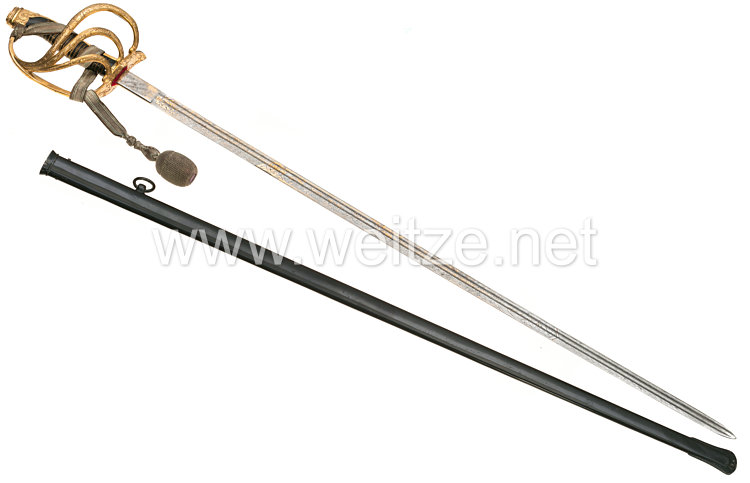
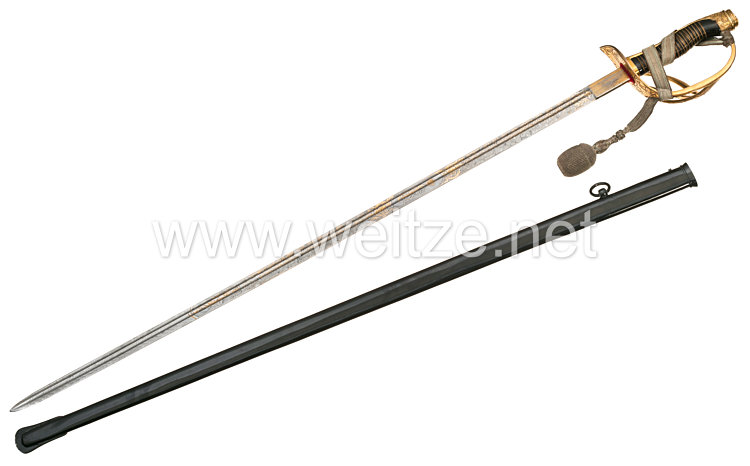
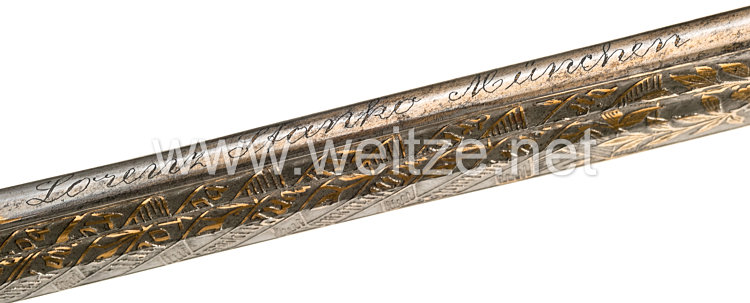
Bayern prächtiger Geschenkpallasch des Offizierskorps des Königlich Bayerischen 1. Schweren-Reiter-Regiments "Prinz Karl von Bayern" an Prinz Alfons von Bayern
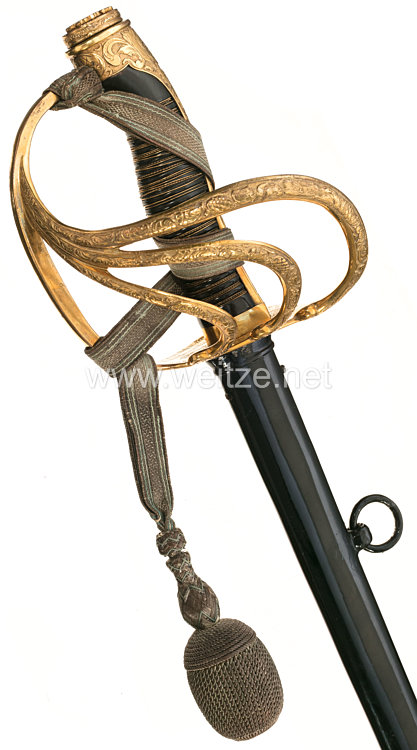
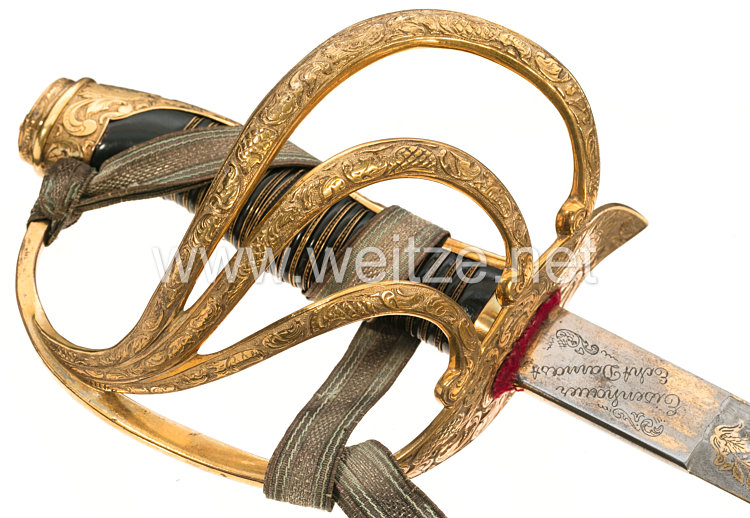
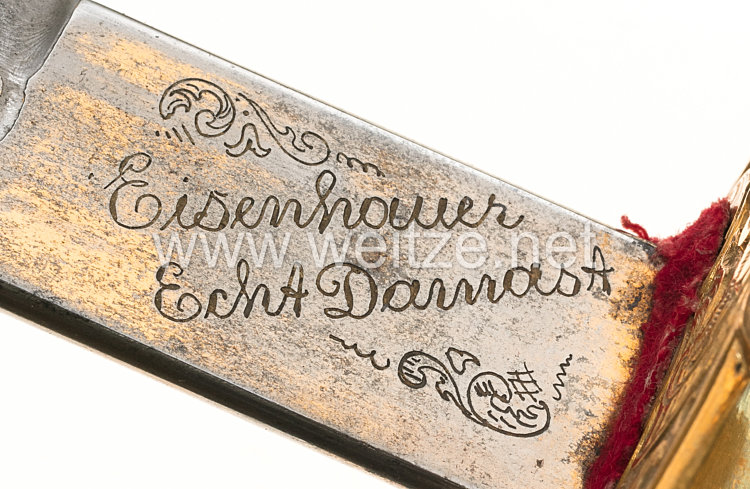
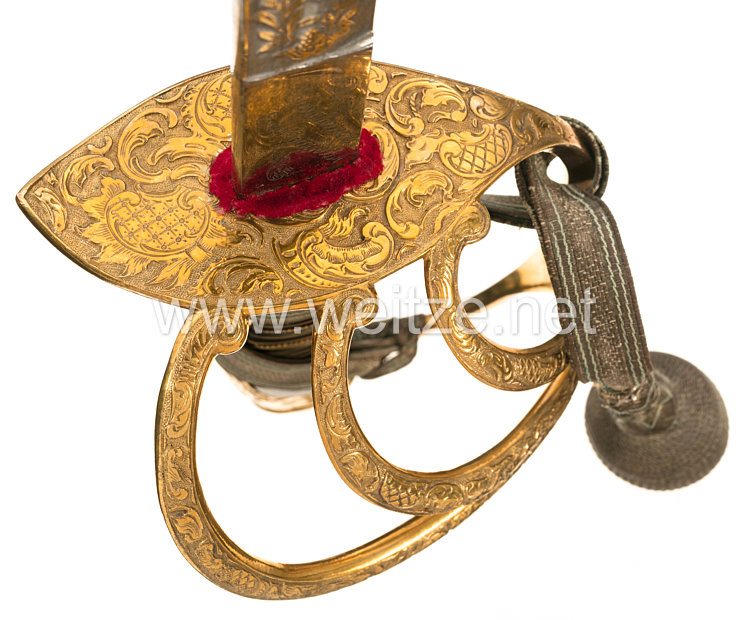
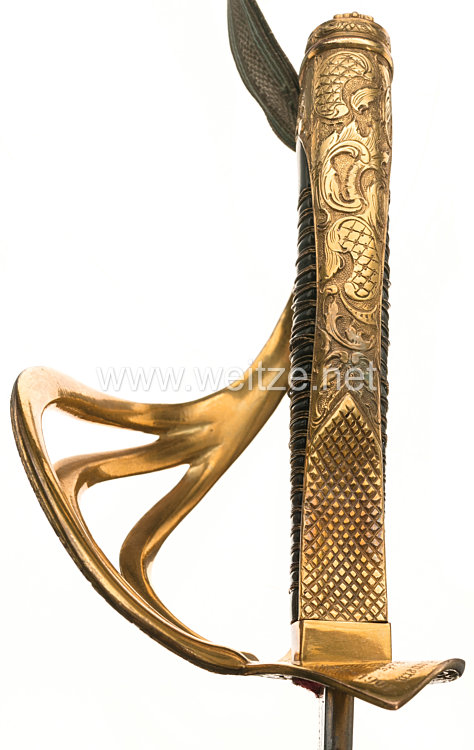
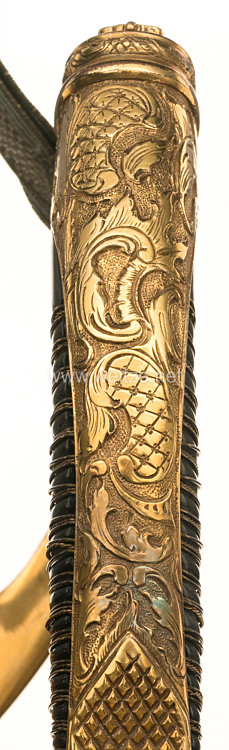
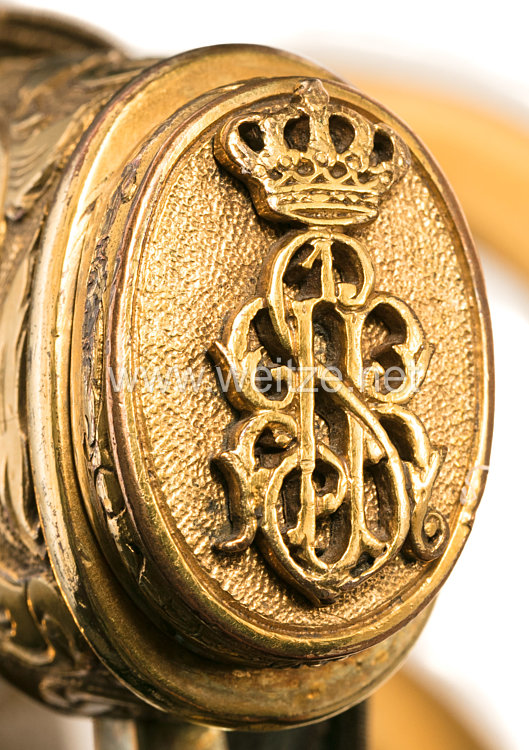
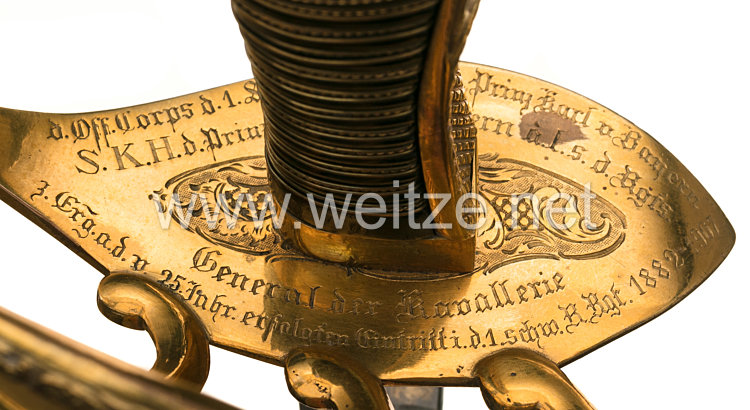
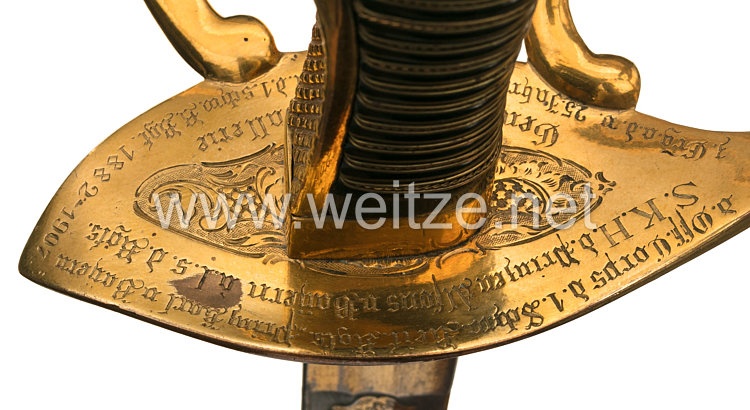
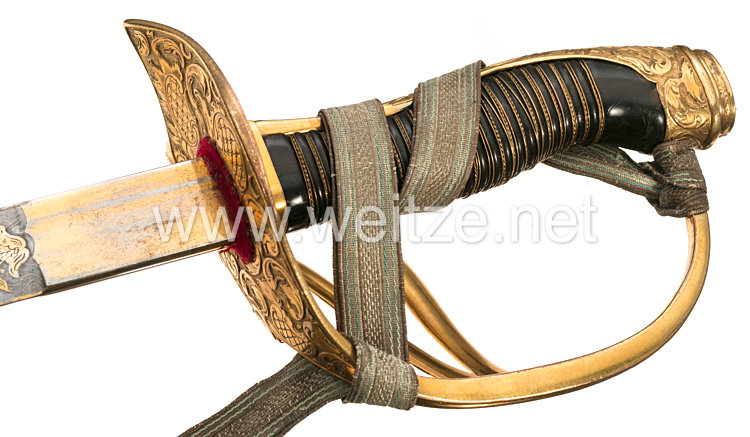
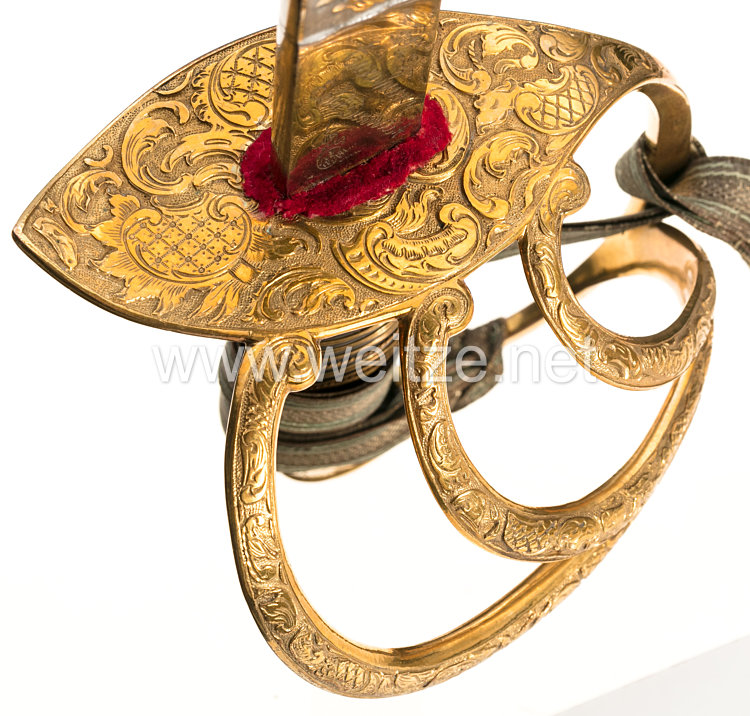
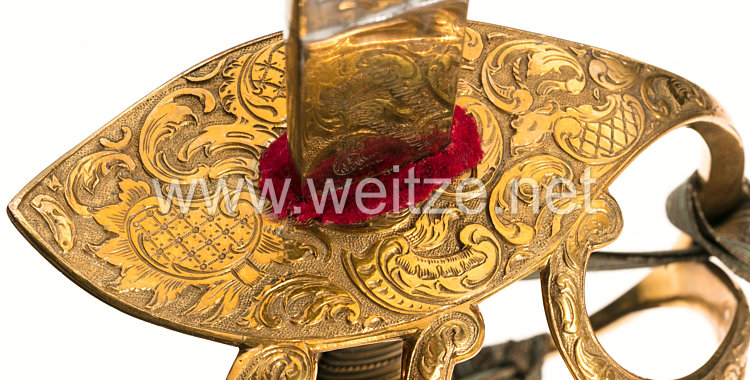
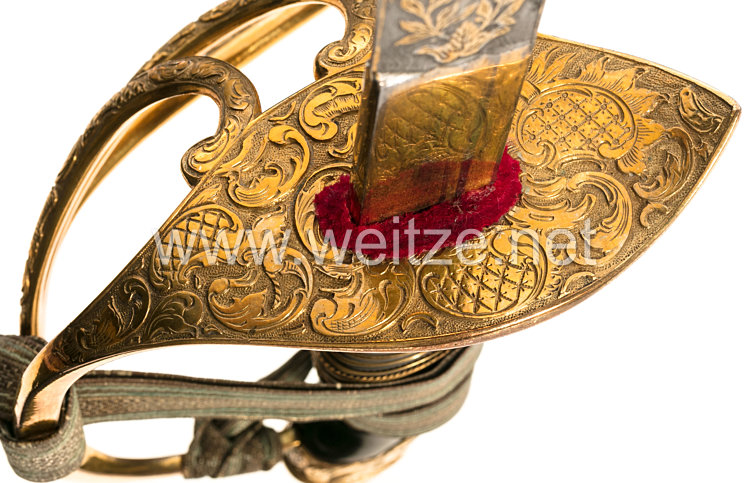
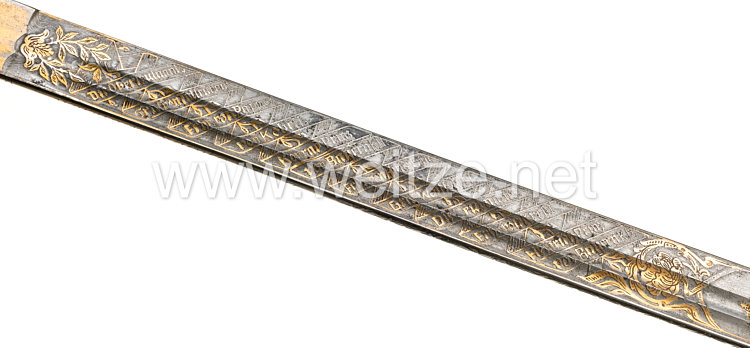
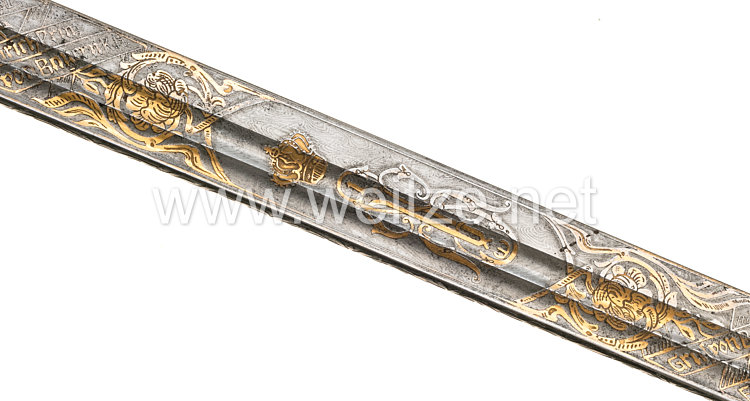
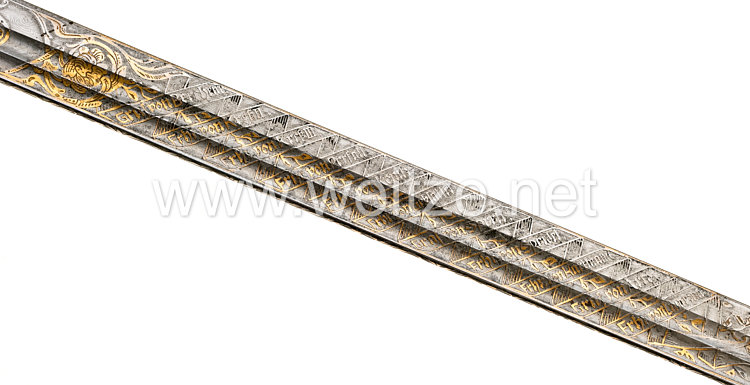
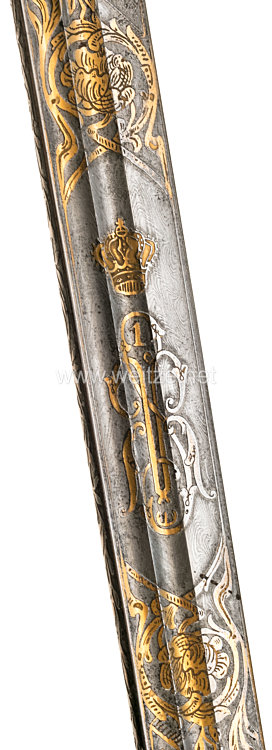
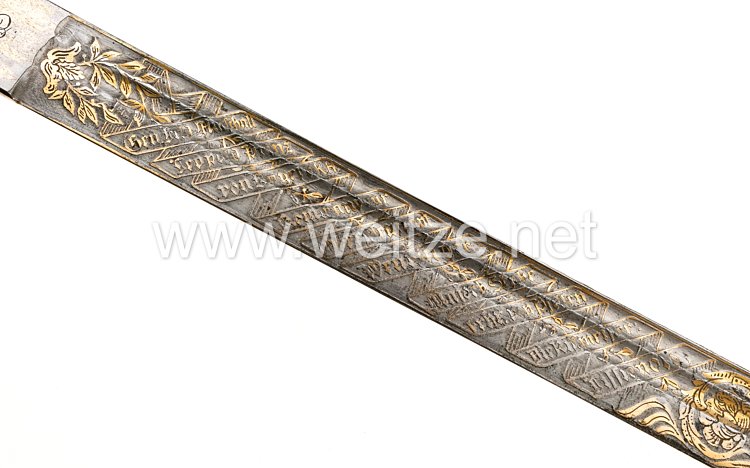
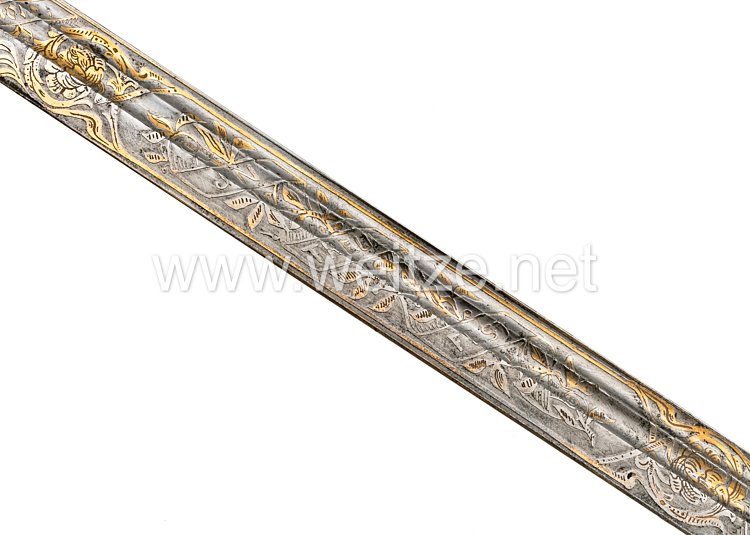
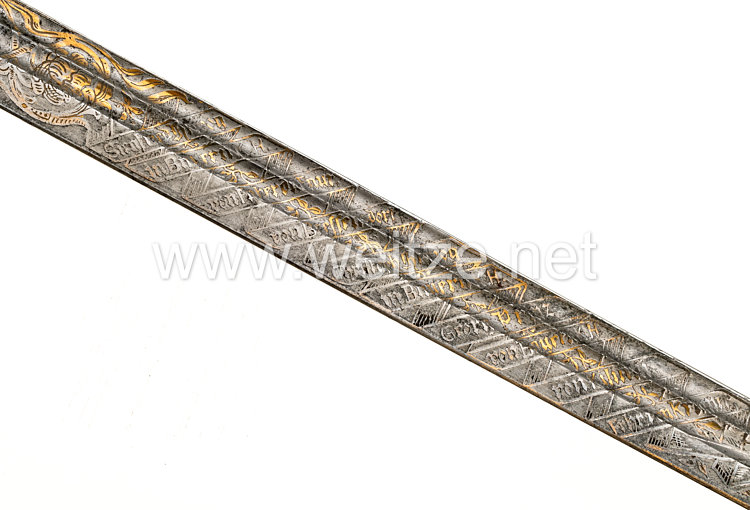
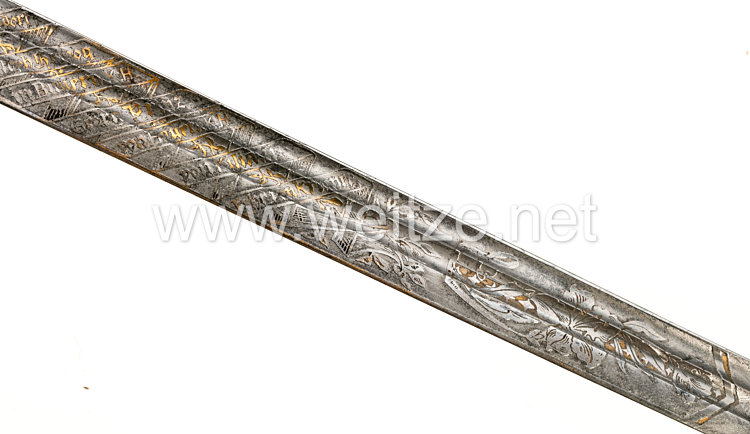
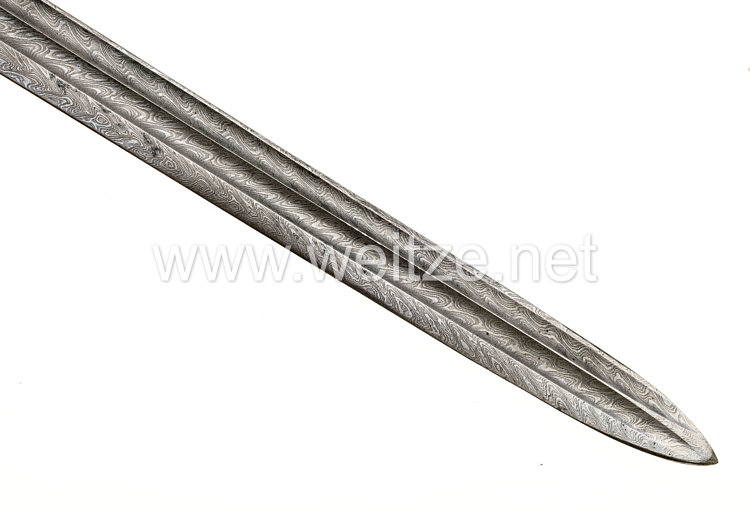
Ehrengeschenk zum 25jährigen Dienstjubiläum im Regiment 1907. Gerade, beidseitig doppelt gekehlte Rückenklinge aus Damaststahl, die Vergoldung noch zu ca. 65 % erhalten. Auf der Fehlschärfe terzseitig die Bezeichnung "Eisenhauer Echt Damast", am Rücken die Signatur "Lorenz Stanko München", schauseitig auf der Klinge Zierätzung mit Namensbanderolen des Generalfeldmarschalls Leopold Prinz von Bayern sowie der Offiziere des Regiments , im Zentrum die Devise "In Treue fest", auf der Gegenseite weitere Offiziersnamen, im Zentrum die gekrönte Regimentschiffre.Vergoldetes. Das vergoldete Griffgefäß mit 3 Terzspangen reich verziert und per Hand graviert, geriffelte Daumenmulde, am Knauf die aufgelegte Regimentschiffre, auf der Innenseite des Stichblattes mit umlaufender Widmungsgravur: "D. Off. Corps d. 1. Schw. Reit. Rgts "Prinz Karl v. Bayern" S.K.H. d. Prinzen Alfons von Bayern à. l. s. d. Rgts, General der Kavallerie, z. Erg. a.d. v. 25 Jahr. erfolgten Eintritt i.d. 1. schw. R. Rgt. 1882-1907", Das Griffstück aus Horn mit intakter Drahtwicklung. Komplett mit dem original gebundenen Portepee für Offiziere. Schwarz lackierte Stahlscheide mit einem beweglichen Tragering, Schlepper gestempelt "236" (eine Mundblechschraube fehlt). Gesamtlänge 105,5 cm. Der Pallasch ist getragen, mit leichten Trage- und Altersspuren, in sehr schönem Zustand.
Vom 15. Juli 1892 bis 18. Dezember 1899 war Prinz Alfons von Bayern Regimentskommandeur und stand ab 1901 à la suite.
Prinz Alfons Maria Franz Clemens Maximilian von Bayern (1862 - 1933), ein Enkel Ludwigs I. von Bayern. Seine Eltern waren Prinz Adalbert Wilhelm von Bayern (Bruder des Prinzregenten Luitpold) und dessen Gemahlin Infantin Amalia Philippa Pilar von Spanien. 1891 heiratete Alfons auf Schloss Nymphenburg Louise Victoire d'Orléans. Alfons durchlief im 1. Schweren Reiter-Regiment sämtliche Rangstufen bis zum Regimentskommandeur, 1899 wurde er General und Kommandeur der 1. Kavallerie-Brigade, 1909 wurde er Inhaber des 7. bayer. Chevauleger-Rgts., 1913 Chef des in Hofgeismar stationierten Dragoner-Regiments "Freiherr von Manteuffel" (Rheinisches) Nr. 5. Er liegt in der Michaelskirche zu München begraben.
Vom 15. Juli 1892 bis 18. Dezember 1899 war Prinz Alfons von Bayern Regimentskommandeur und stand ab 1901 à la suite.
Prinz Alfons Maria Franz Clemens Maximilian von Bayern (1862 - 1933), ein Enkel Ludwigs I. von Bayern. Seine Eltern waren Prinz Adalbert Wilhelm von Bayern (Bruder des Prinzregenten Luitpold) und dessen Gemahlin Infantin Amalia Philippa Pilar von Spanien. 1891 heiratete Alfons auf Schloss Nymphenburg Louise Victoire d'Orléans. Alfons durchlief im 1. Schweren Reiter-Regiment sämtliche Rangstufen bis zum Regimentskommandeur, 1899 wurde er General und Kommandeur der 1. Kavallerie-Brigade, 1909 wurde er Inhaber des 7. bayer. Chevauleger-Rgts., 1913 Chef des in Hofgeismar stationierten Dragoner-Regiments "Freiherr von Manteuffel" (Rheinisches) Nr. 5. Er liegt in der Michaelskirche zu München begraben.