Nationalpreis für Kunst und Wissenschaft - Ordensstern und Ordensschärpe
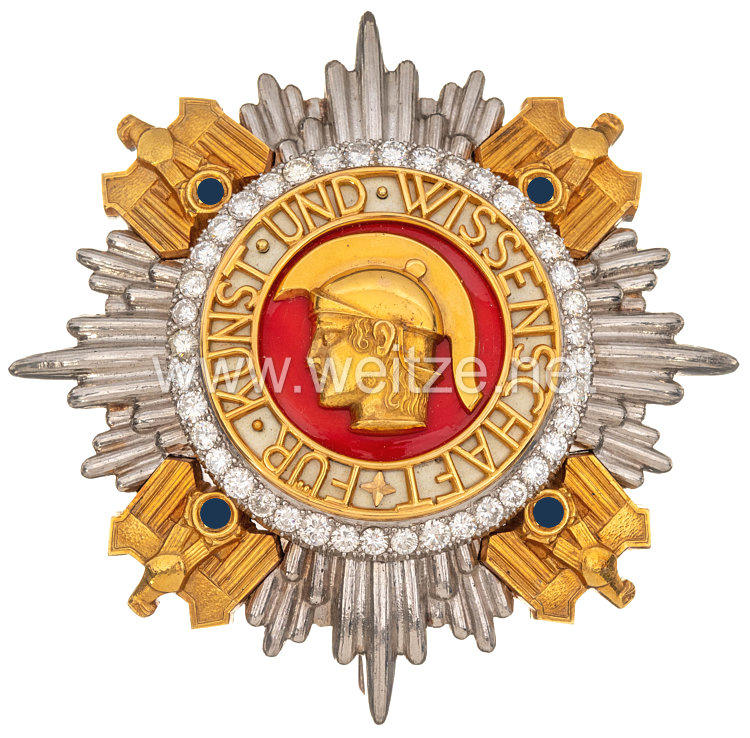
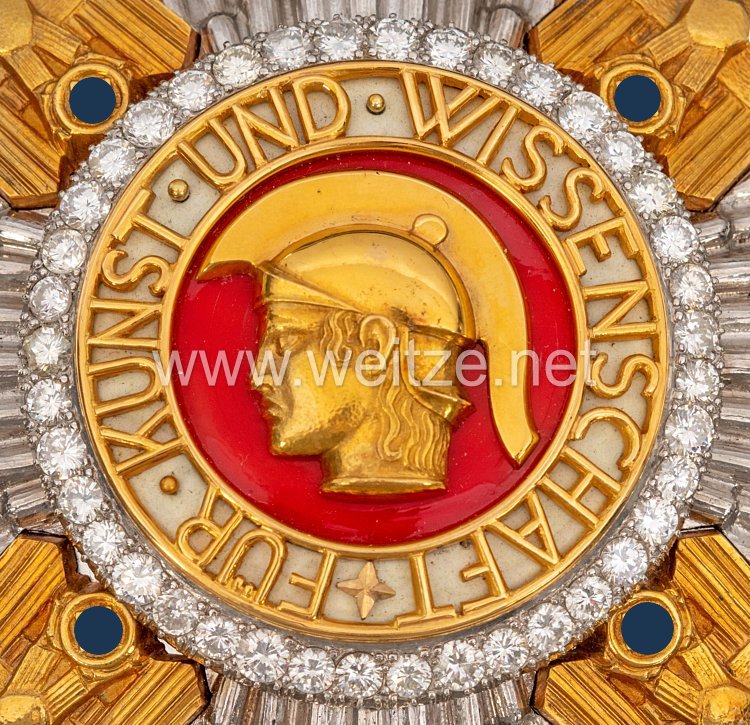
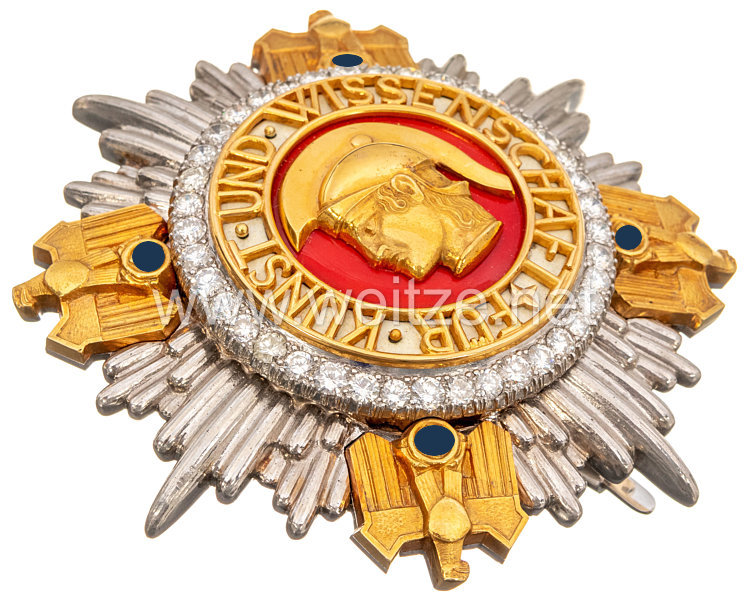
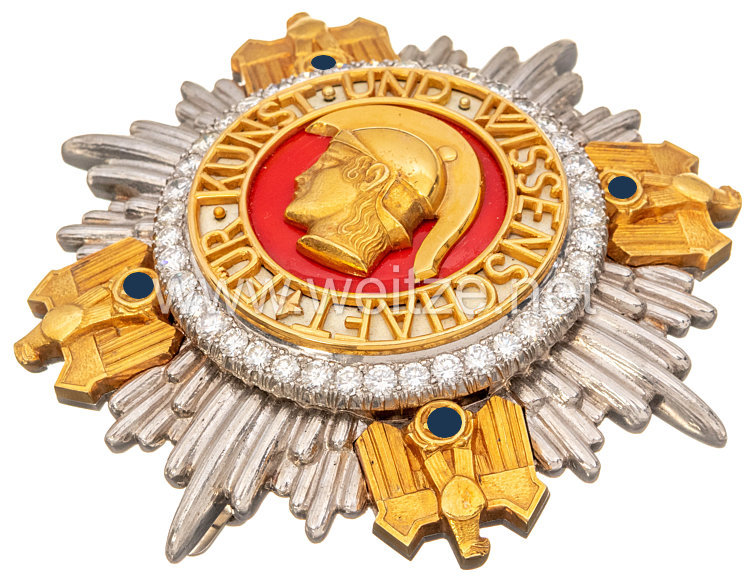
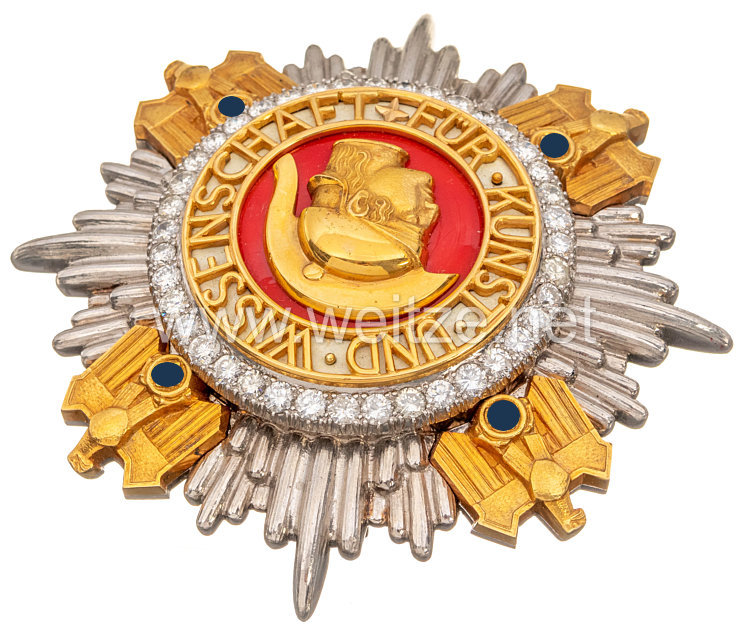
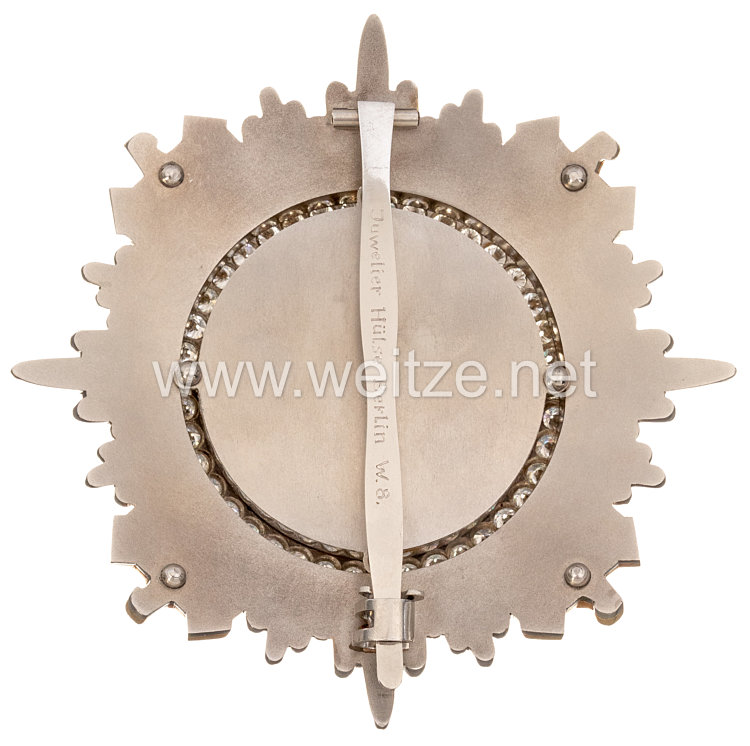
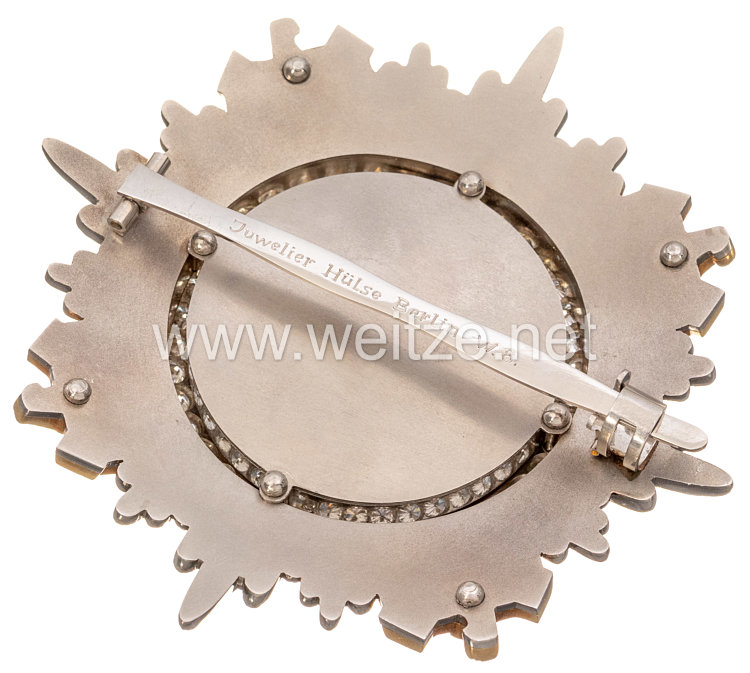
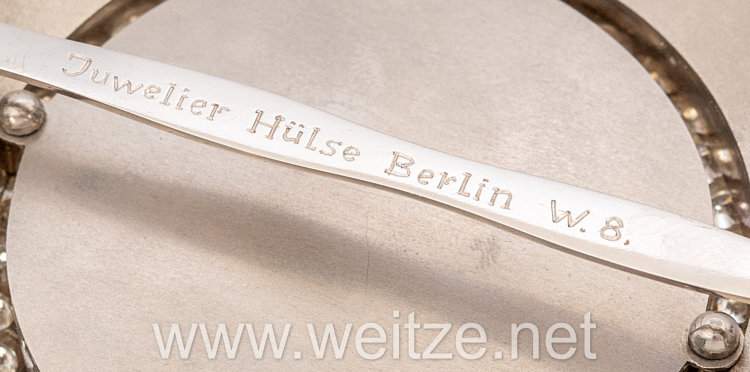
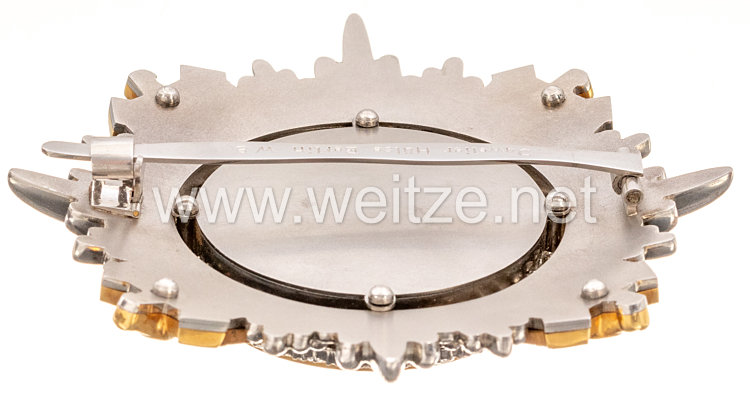
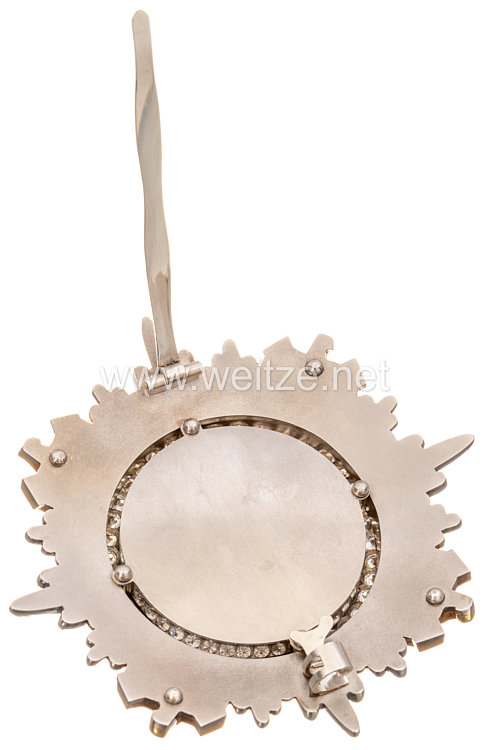
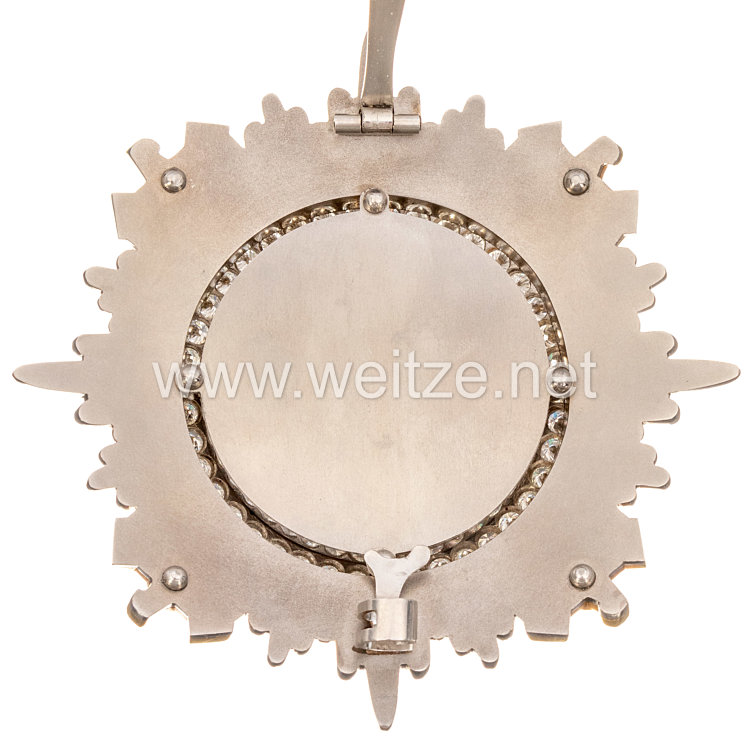
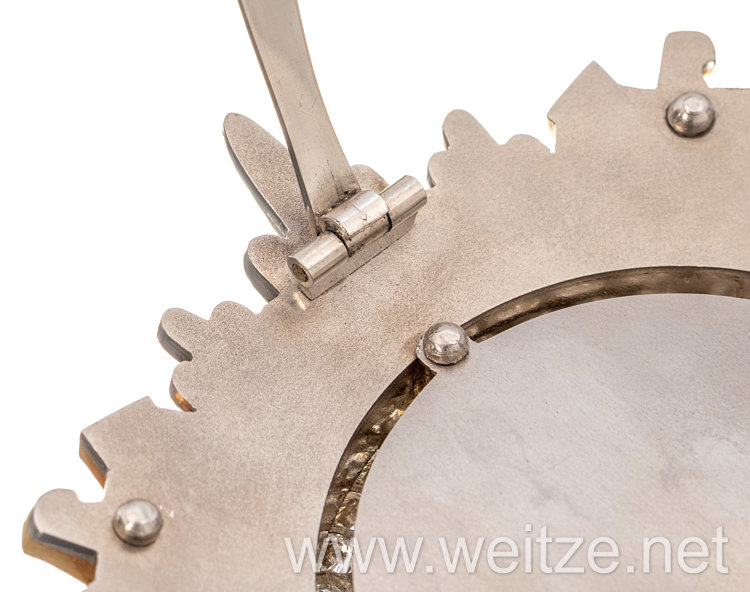
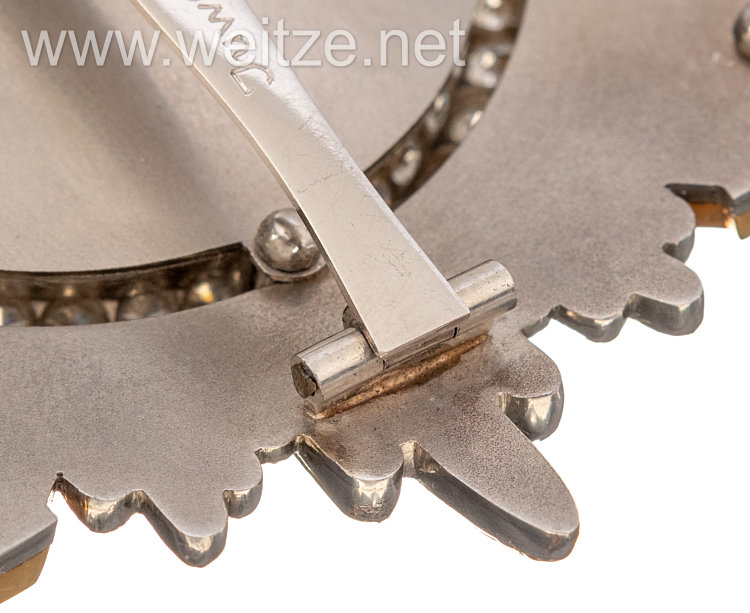
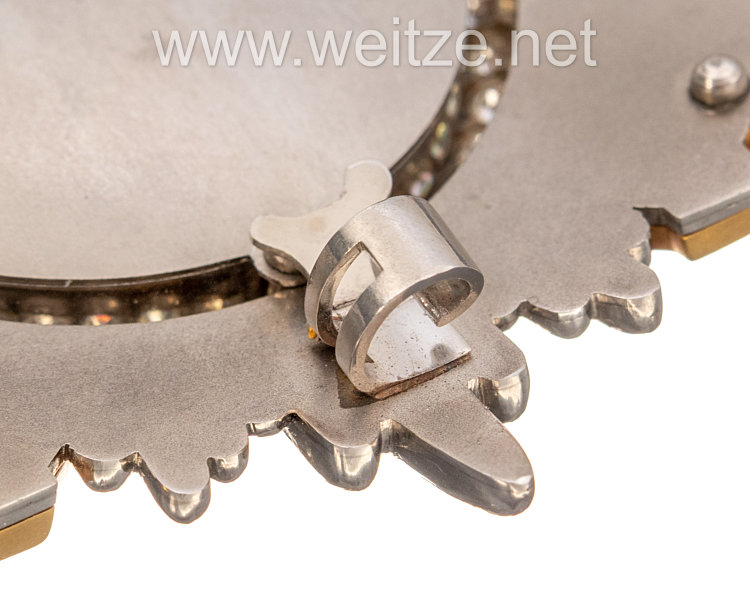
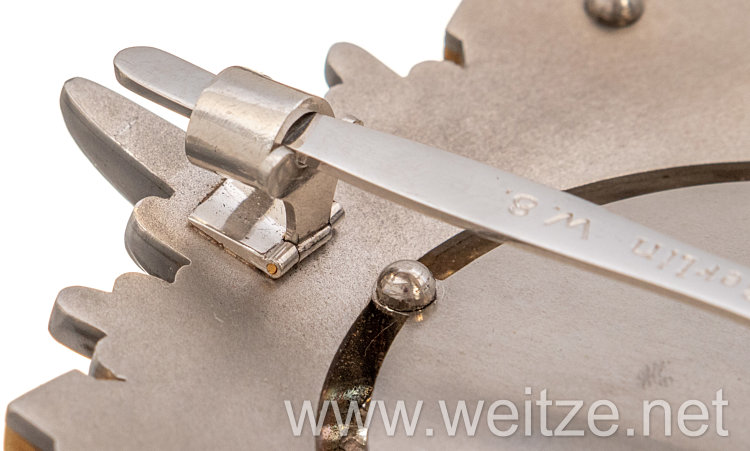
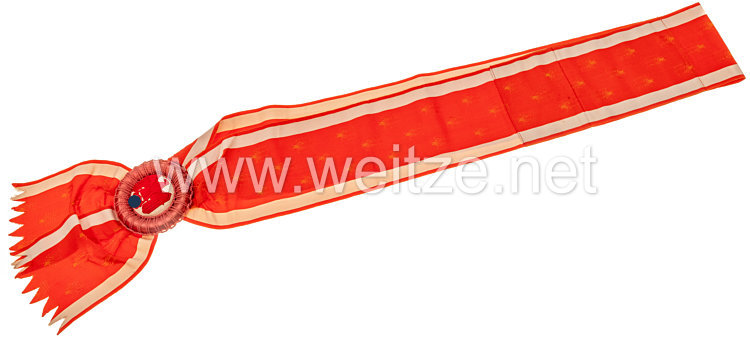
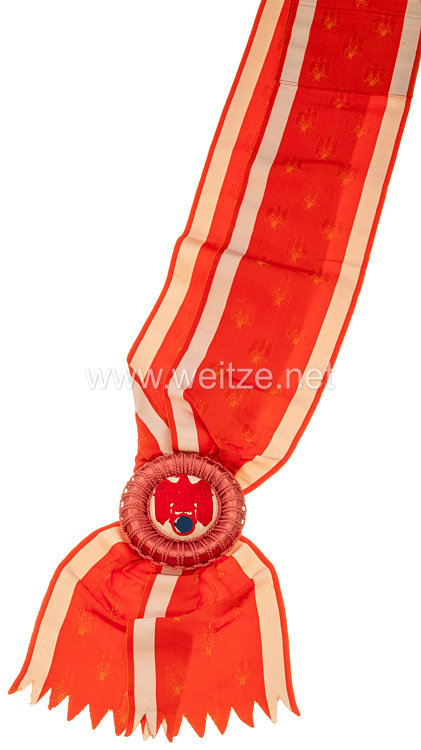
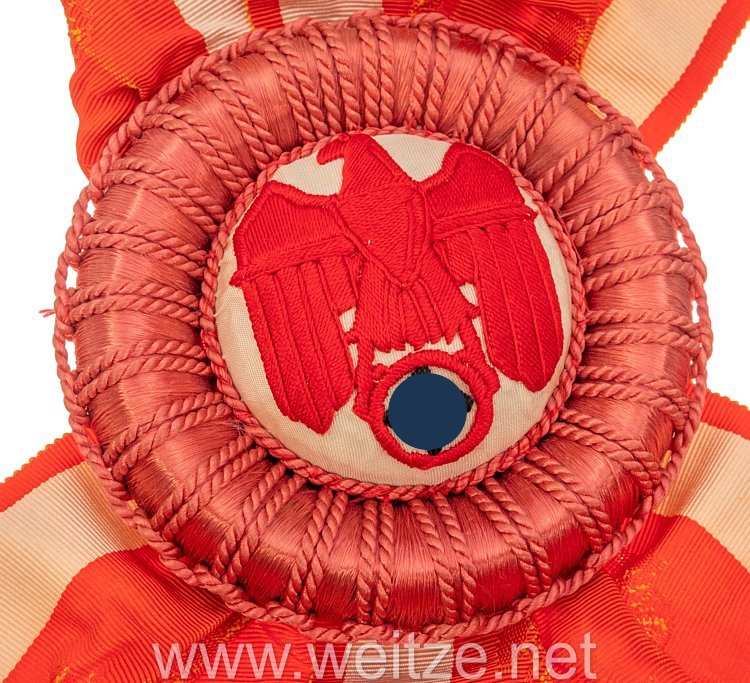
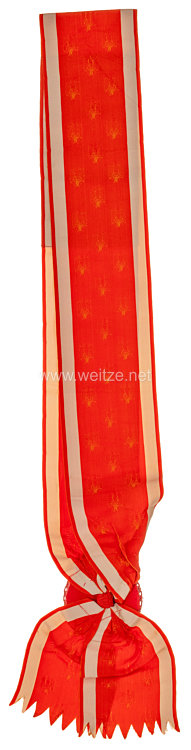
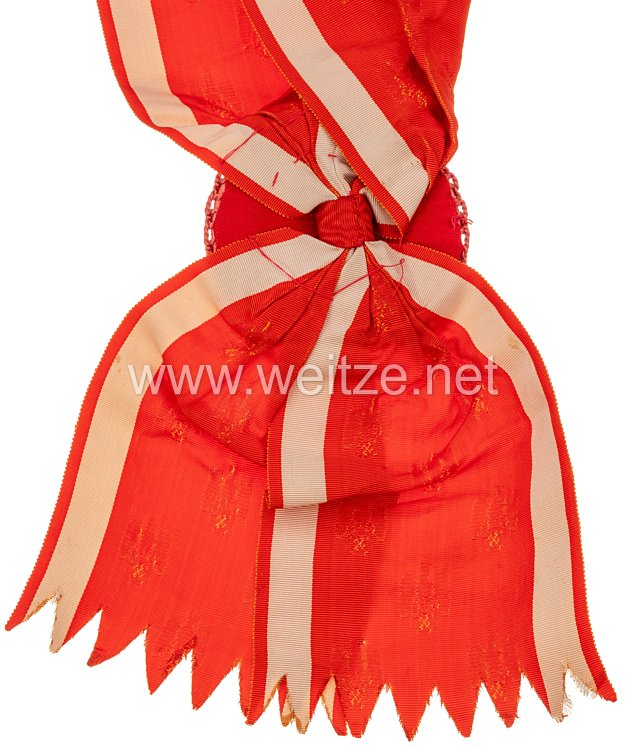
Es handelt sich bei dem Ordensstern um die Ausführung der 2. Verleihungserie von 1938. Der Sternkörper besteht aus Platin, im Zentrum das Medaillon der Pallas Athene aus Gold, der Hintergrund in roter Emaille. Die 4 aufgesetzten Hoheitsadler aus Gold. Der Brillantreif um das Medaillon mit 40 Brillanten im 8/8 Schliff besetzt. Die Fassung ist rückseitig durchbrochen (à jour) gearbeitet. Rückseitig mit 6 Vollnieten, auf der Nadel mit Herstellerbezeichnung "Juwelier Hülse Berlin W.8", das Nadelsystem ist mit einem besonderen Sicherungshaken versehen. Dazu die genähte Ordensschärpe aus rot/weißem Seidenband mit eingewebten Hoheitsadlern und großer genähter Rosette mit handgesticktem Hoheitsadler. Nur minimale Alterspuren in hervorragendem Zustand.
Im Fachbuch "Orden 1700-2000" Band 4 von Karsten Klingbeil/Andreas Thies ist auf den Seiten 124 - 129 der Ordenssatz aus dem Besitz von Prof. August Bier abgebildet mit dem Bruststern der 1. Verleihungsserie von 1937. Während die Ordensschärpe absolut identisch sind, unterscheiden sich die Bruststerne nur minimal durch ein Detail im Schriftreif: während der Stern zwischen "Für" und "Wissenschaft" kleiner ist und separat aufgesetzt wurde, so ist der Stern beim 2. Modell deutlich größer und ein Teil des Schriftrings. Bei dem Kopf der Pallas Athene gibt es ebenfalls ein paar geringfügige Unterschiede in den Details.
Zu diesem Ordenssatz gibt es ein Gutachten von Jörg Nimmergut aus dem Jahr 1996, welches wir auf Wunsch gerne mitliefern.
Der Deutsche Nationalpreis für Kunst und Wissenschaft war ein Ehrenpreis und die höchste Friedensauszeichnung des nationalsozialistischen Deutschen Reiches. Er wurde 1937 durch Adolf Hitler gestiftet und sollte an die Stelle des Nobelpreises treten, den anzunehmen Hitler – als Reaktion auf die Verleihung des Friedensnobelpreises an Carl von Ossietzky 1936 – „für alle Zukunft Deutschen“ untersagte. Der Preis wurde nur 1937 und 1938 verliehen.
Am 25. Juni 1936 sprach das Nobelpreiskomitee des norwegischen Parlaments dem inhaftierten Karl von Ossietzky den Friedensnobelpreis zu. Die Reichsregierung protestierte gegen den Beschluss; am 26. November äußerte sie ihr „äußerstes Befremden“ darüber und erklärte, sich „alle Schlussfolgerungen aus dem Vorfall vorbehalten“ zu wollen. Am 30. Januar 1937 stiftete Adolf Hitler schließlich den Deutschen Nationalpreis für Kunst und Wissenschaft: „Um für alle Zukunft beschämenden Vorgängen vorzubeugen, verfüge ich mit dem heutigen Tage die Stiftung eines Deutschen Nationalpreises für Kunst und Wissenschaft. Dieser Nationalpreis wird jährlich an drei verdiente Deutsche in der Höhe von je 100 000 Reichsmark zur Verteilung gelangen. Die Annahme des Nobelpreises wird damit für alle Zukunft Deutschen untersagt. ". Die Durchführungsbestimmungen wurden von Propagandaminister Joseph Goebbels erlassen. Die Verleihung sollte demnach jährlich in einem feierlichen Akt auf dem Reichsparteitag der NSDAP stattfinden. Organisation und Durchführung des Festaktes oblag dem Reichspropagandaleiter im Einvernehmen mit dem Reichsorganisationsleiter Robert Ley. Details der Auszeichnung Entwurf: Gerdy Troost Ausführung: Franziska Kobell Mappe: Frieda Thiersch. Die Auszeichnung beinhaltete neben der eigentlichen Ordensdekoration, dem Bruststern, eine prächtige Schärpe mit Agraffe, eine aufwendig gearbeitete Ordenskassette mit vergoldeten Eckbeschlägen in Adlerform und eine Urkundenmappe aus terrabraunem genarbtem Leder. Am 7. Dezember 1937 notierte Goebbels: „Urkunden zum Nationalpreis fertig. Sehr gut geworden. Frau Troost zeigt sie. Meisterstück!“. Es wurden verschiedene Mustervorlagen des Bruststerns angefertigt, unter anderem von Richard Klein und Herbert Zeitner, die jedoch von Hitler verworfen wurden, möglicherweise weil ihm ihr Symbolgehalt bezüglich der Begriffe „Kunst“ und „Wissenschaft“ zu schwach ausgeprägt war. Die endgültige Fassung der Dekoration basiert auf einem Entwurf des Bildhauers Hermann Müller. Der gegossene und polierte Sternenkorpus besitzt einen Durchmesser von 95 mm und besteht aus Platin. Aufgelegt sind vier 20 × 22 mm große Adler aus 18-karätigem Gold. Das Medaillon zeigt auf rot emailliertem Grund den nach links gewandten Kopf der Pallas Athene. Der Schriftring trägt auf elfenbeinfarbig emailliertem Grund, die handgesägte und polierte umlaufende Inschrift: „FÜR * KUNST * UND * WISSENSCHAFT“ und wird umgeben von einem Medaillonring, besetzt mit 40 Diamanten in 8/8-Schliff mit facettierter Tafel. Um den Brillanten Licht zu geben, ist der Medaillonring nach hinten offen segmentiert. Das Gesamtgewicht der Dekoration beträgt je nach Version 205,0 (1937) oder 210,47 (1938) Gramm. Goebbels notierte am 15. Dezember: „Der Orden zum Nationalpreis ist nun fertig. Der Führer ist begeistert davon.“. Mit der Ausführung wurde der Juwelier Wilhelm Hülse in Berlin betraut. Die Beauftragung des relativ unbekannten Juweliers erfolgte entweder durch Goebbels selbst oder durch eine seiner Dienststellen. Anlässlich der „Ersten Deutschen Architektur- und Kunsthandwerkausstellung“ vom 22. Januar bis 18. April 1938 in München wurde im Haus der Deutschen Kunst das Exemplar von Paul Ludwig Troost ausgestellt. Im Auftrag von Heinrich Doehle wurden Fotos davon für die Präsidialkanzlei gemacht, die er als Vorlage für seine Publikationen zur Ordenskunde gebrauchte. Symbolik Pallas Athene gilt in der griechischen Mythologie als die jungfräuliche Göttin der Weisheit, Künste und Wissenschaften, Schirmherrin der Städte und Patronin des Handwerks. Der Adler auf Agraffe, Schatulle und Bruststern ist der des Reiches, blickt also nach heraldisch rechts, zu seiner rechten Schwinge – der Parteiadler blickte nach heraldisch links – und trägt ein Hakenkreuz in seinen Klauen. Der Adler ist frei gestaltet und entspricht keinem der gängigen Typen von Staat oder Partei. Auf der Tagung der Reichsfilmkammer, 1935 im Berliner Schillertheater, war ein derartiger Adler im Großformat an der Stirnwand des Festsaales angebracht, was dafür spricht, dass die Form vom Propagandaministerium vorgegeben wurde.
Der Deutsche Nationalpreis wurde insgesamt an neun Personen vergeben. Die 1. Preisverkündung fand am 7. September 1937 im „Nürnberger Opernhaus“ statt, die Übergabe der Preise erfolgte am 30. Januar 1938 durch Adolf Hitler in der Reichskanzlei. Die fünf ersten Preisträger waren:
der Baumeister und Architekturprofessor Paul Ludwig Troost (posthum),
Reichsleiter Alfred Rosenberg,
der Asien- und Südpolarforscher Wilhelm Filchner,
die Chirurgen August Bier und Ferdinand Sauerbruch (geteilter Preis).
Die 2. Preisverkündung erfolgte am 6. September 1938, die Übergabe am 30. Januar 1939 durch Adolf Hitler in der Reichskanzlei. Die Preisträger dieses zweiten Jahrgangs waren:
der Generalinspektor für das deutsche Straßenwesen und Leiter der militärischen Bauorganisation Organisation Todt Fritz Todt,
der Autobauer Ferdinand Porsche,
die Flugzeugkonstrukteure Willy Messerschmitt und Ernst Heinkel (geteilter Preis).
Historisch als auch ordenskundlich wohl die bedeutenste und kostbarste Auszeichnung des III. Reiches.
Im Fachbuch "Orden 1700-2000" Band 4 von Karsten Klingbeil/Andreas Thies ist auf den Seiten 124 - 129 der Ordenssatz aus dem Besitz von Prof. August Bier abgebildet mit dem Bruststern der 1. Verleihungsserie von 1937. Während die Ordensschärpe absolut identisch sind, unterscheiden sich die Bruststerne nur minimal durch ein Detail im Schriftreif: während der Stern zwischen "Für" und "Wissenschaft" kleiner ist und separat aufgesetzt wurde, so ist der Stern beim 2. Modell deutlich größer und ein Teil des Schriftrings. Bei dem Kopf der Pallas Athene gibt es ebenfalls ein paar geringfügige Unterschiede in den Details.
Zu diesem Ordenssatz gibt es ein Gutachten von Jörg Nimmergut aus dem Jahr 1996, welches wir auf Wunsch gerne mitliefern.
Der Deutsche Nationalpreis für Kunst und Wissenschaft war ein Ehrenpreis und die höchste Friedensauszeichnung des nationalsozialistischen Deutschen Reiches. Er wurde 1937 durch Adolf Hitler gestiftet und sollte an die Stelle des Nobelpreises treten, den anzunehmen Hitler – als Reaktion auf die Verleihung des Friedensnobelpreises an Carl von Ossietzky 1936 – „für alle Zukunft Deutschen“ untersagte. Der Preis wurde nur 1937 und 1938 verliehen.
Am 25. Juni 1936 sprach das Nobelpreiskomitee des norwegischen Parlaments dem inhaftierten Karl von Ossietzky den Friedensnobelpreis zu. Die Reichsregierung protestierte gegen den Beschluss; am 26. November äußerte sie ihr „äußerstes Befremden“ darüber und erklärte, sich „alle Schlussfolgerungen aus dem Vorfall vorbehalten“ zu wollen. Am 30. Januar 1937 stiftete Adolf Hitler schließlich den Deutschen Nationalpreis für Kunst und Wissenschaft: „Um für alle Zukunft beschämenden Vorgängen vorzubeugen, verfüge ich mit dem heutigen Tage die Stiftung eines Deutschen Nationalpreises für Kunst und Wissenschaft. Dieser Nationalpreis wird jährlich an drei verdiente Deutsche in der Höhe von je 100 000 Reichsmark zur Verteilung gelangen. Die Annahme des Nobelpreises wird damit für alle Zukunft Deutschen untersagt. ". Die Durchführungsbestimmungen wurden von Propagandaminister Joseph Goebbels erlassen. Die Verleihung sollte demnach jährlich in einem feierlichen Akt auf dem Reichsparteitag der NSDAP stattfinden. Organisation und Durchführung des Festaktes oblag dem Reichspropagandaleiter im Einvernehmen mit dem Reichsorganisationsleiter Robert Ley. Details der Auszeichnung Entwurf: Gerdy Troost Ausführung: Franziska Kobell Mappe: Frieda Thiersch. Die Auszeichnung beinhaltete neben der eigentlichen Ordensdekoration, dem Bruststern, eine prächtige Schärpe mit Agraffe, eine aufwendig gearbeitete Ordenskassette mit vergoldeten Eckbeschlägen in Adlerform und eine Urkundenmappe aus terrabraunem genarbtem Leder. Am 7. Dezember 1937 notierte Goebbels: „Urkunden zum Nationalpreis fertig. Sehr gut geworden. Frau Troost zeigt sie. Meisterstück!“. Es wurden verschiedene Mustervorlagen des Bruststerns angefertigt, unter anderem von Richard Klein und Herbert Zeitner, die jedoch von Hitler verworfen wurden, möglicherweise weil ihm ihr Symbolgehalt bezüglich der Begriffe „Kunst“ und „Wissenschaft“ zu schwach ausgeprägt war. Die endgültige Fassung der Dekoration basiert auf einem Entwurf des Bildhauers Hermann Müller. Der gegossene und polierte Sternenkorpus besitzt einen Durchmesser von 95 mm und besteht aus Platin. Aufgelegt sind vier 20 × 22 mm große Adler aus 18-karätigem Gold. Das Medaillon zeigt auf rot emailliertem Grund den nach links gewandten Kopf der Pallas Athene. Der Schriftring trägt auf elfenbeinfarbig emailliertem Grund, die handgesägte und polierte umlaufende Inschrift: „FÜR * KUNST * UND * WISSENSCHAFT“ und wird umgeben von einem Medaillonring, besetzt mit 40 Diamanten in 8/8-Schliff mit facettierter Tafel. Um den Brillanten Licht zu geben, ist der Medaillonring nach hinten offen segmentiert. Das Gesamtgewicht der Dekoration beträgt je nach Version 205,0 (1937) oder 210,47 (1938) Gramm. Goebbels notierte am 15. Dezember: „Der Orden zum Nationalpreis ist nun fertig. Der Führer ist begeistert davon.“. Mit der Ausführung wurde der Juwelier Wilhelm Hülse in Berlin betraut. Die Beauftragung des relativ unbekannten Juweliers erfolgte entweder durch Goebbels selbst oder durch eine seiner Dienststellen. Anlässlich der „Ersten Deutschen Architektur- und Kunsthandwerkausstellung“ vom 22. Januar bis 18. April 1938 in München wurde im Haus der Deutschen Kunst das Exemplar von Paul Ludwig Troost ausgestellt. Im Auftrag von Heinrich Doehle wurden Fotos davon für die Präsidialkanzlei gemacht, die er als Vorlage für seine Publikationen zur Ordenskunde gebrauchte. Symbolik Pallas Athene gilt in der griechischen Mythologie als die jungfräuliche Göttin der Weisheit, Künste und Wissenschaften, Schirmherrin der Städte und Patronin des Handwerks. Der Adler auf Agraffe, Schatulle und Bruststern ist der des Reiches, blickt also nach heraldisch rechts, zu seiner rechten Schwinge – der Parteiadler blickte nach heraldisch links – und trägt ein Hakenkreuz in seinen Klauen. Der Adler ist frei gestaltet und entspricht keinem der gängigen Typen von Staat oder Partei. Auf der Tagung der Reichsfilmkammer, 1935 im Berliner Schillertheater, war ein derartiger Adler im Großformat an der Stirnwand des Festsaales angebracht, was dafür spricht, dass die Form vom Propagandaministerium vorgegeben wurde.
Der Deutsche Nationalpreis wurde insgesamt an neun Personen vergeben. Die 1. Preisverkündung fand am 7. September 1937 im „Nürnberger Opernhaus“ statt, die Übergabe der Preise erfolgte am 30. Januar 1938 durch Adolf Hitler in der Reichskanzlei. Die fünf ersten Preisträger waren:
der Baumeister und Architekturprofessor Paul Ludwig Troost (posthum),
Reichsleiter Alfred Rosenberg,
der Asien- und Südpolarforscher Wilhelm Filchner,
die Chirurgen August Bier und Ferdinand Sauerbruch (geteilter Preis).
Die 2. Preisverkündung erfolgte am 6. September 1938, die Übergabe am 30. Januar 1939 durch Adolf Hitler in der Reichskanzlei. Die Preisträger dieses zweiten Jahrgangs waren:
der Generalinspektor für das deutsche Straßenwesen und Leiter der militärischen Bauorganisation Organisation Todt Fritz Todt,
der Autobauer Ferdinand Porsche,
die Flugzeugkonstrukteure Willy Messerschmitt und Ernst Heinkel (geteilter Preis).
Historisch als auch ordenskundlich wohl die bedeutenste und kostbarste Auszeichnung des III. Reiches.