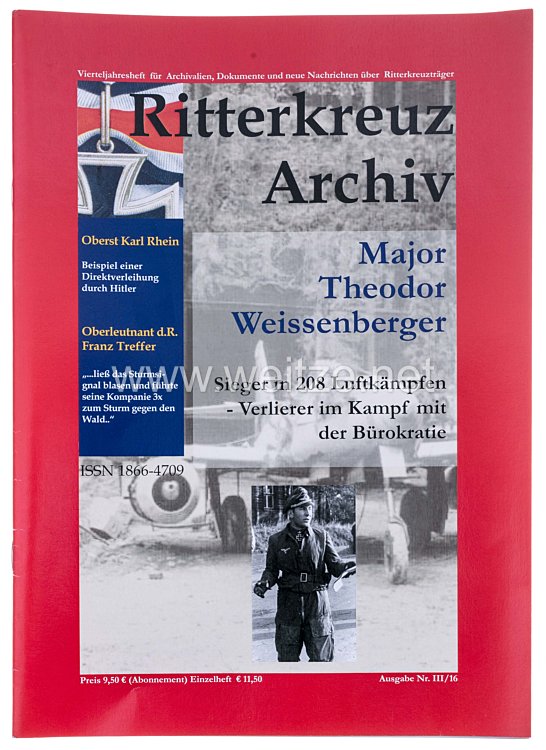
Luftwaffe großer Nachlass aus dem Besitz des Ritterkreuzträgers mit Eichenlaub Major Theodor Weissenberger, Träger des Ritterkreuz mit Eichenlaub - der 10. erfolgreichste Jagdflieger des 2. Weltkriegs !
An Auszeichnungen:
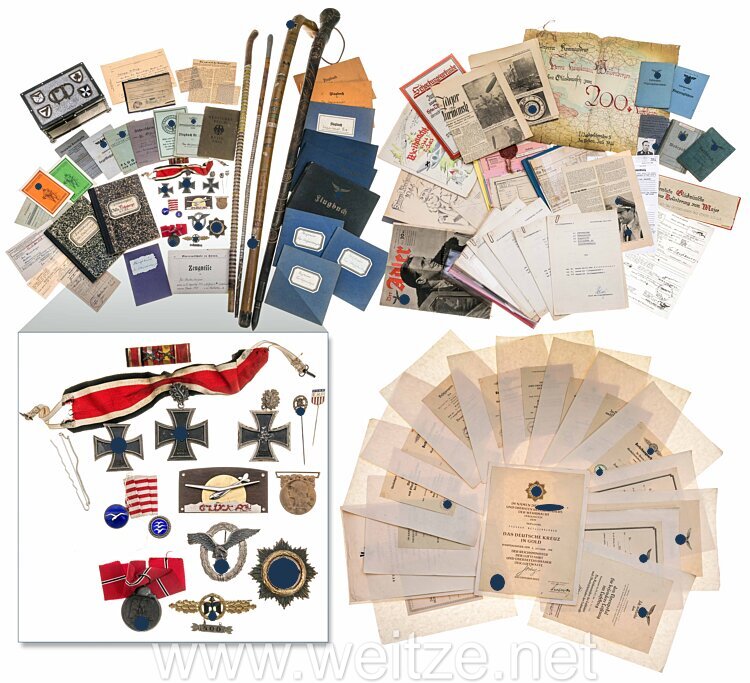
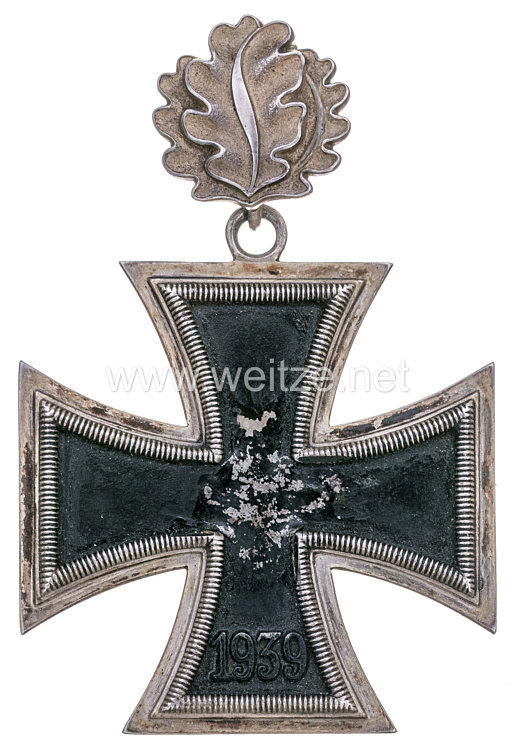
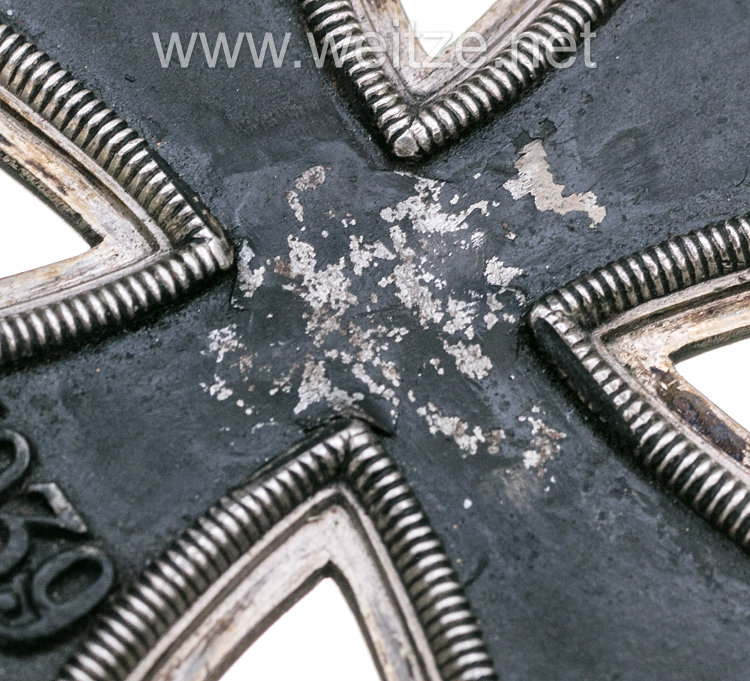
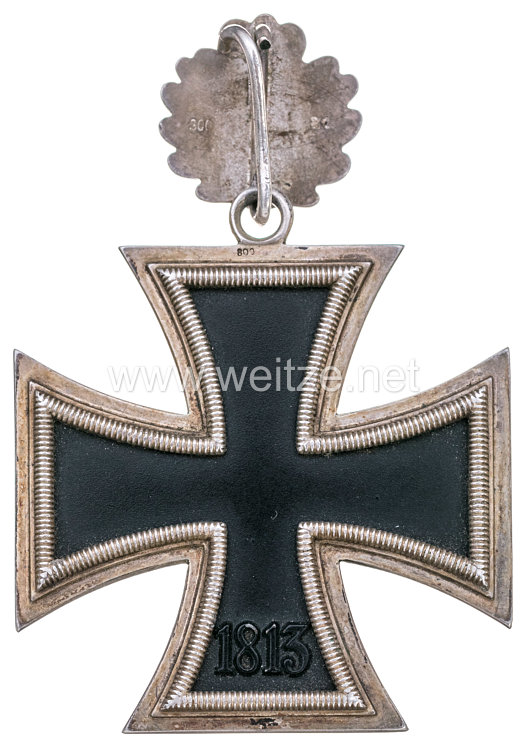
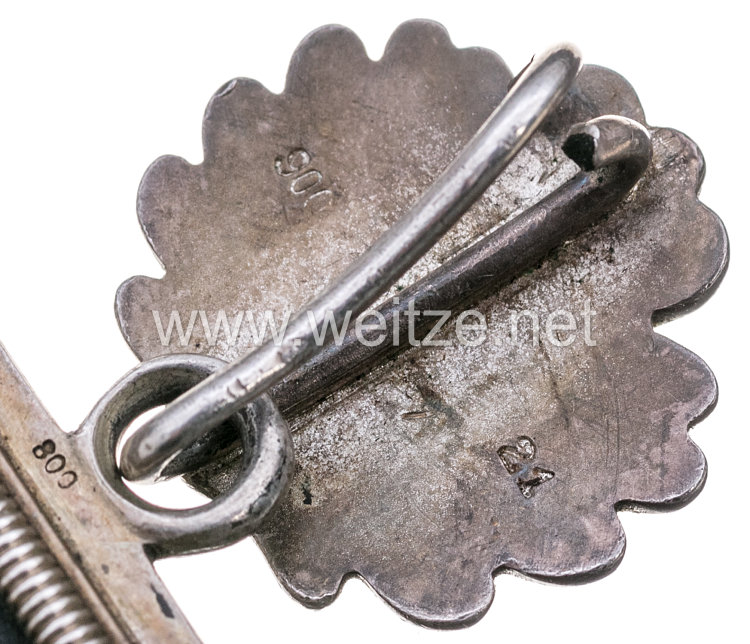
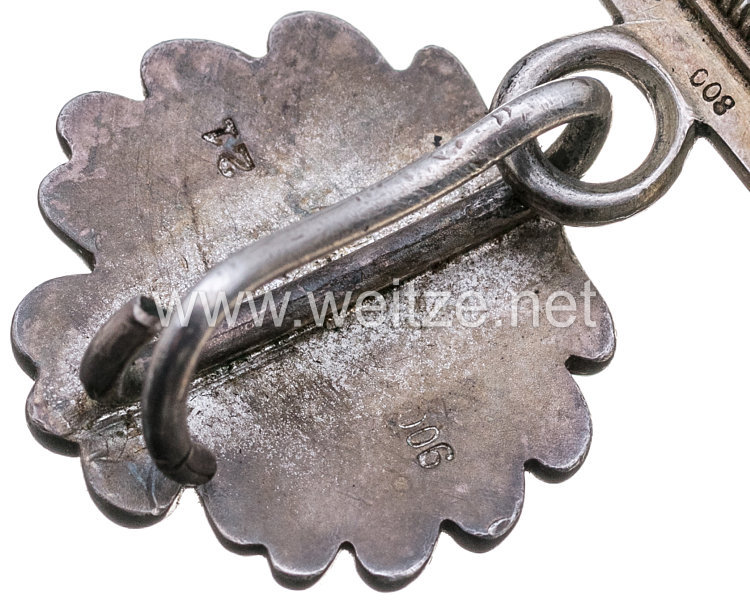
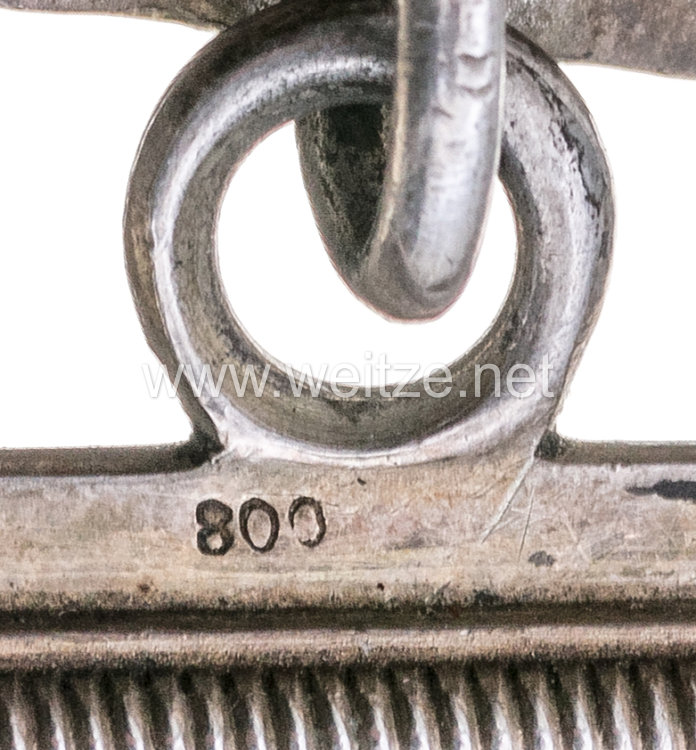
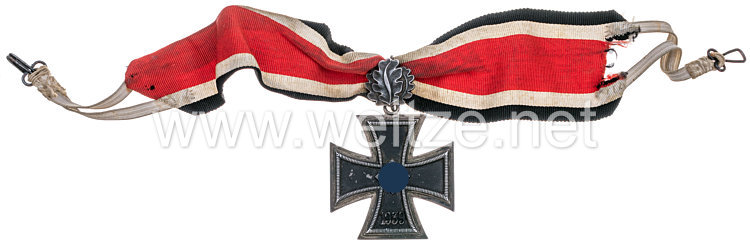
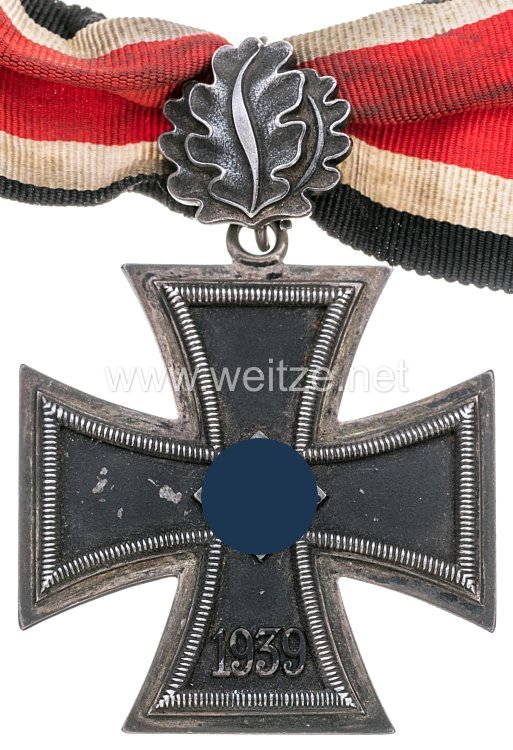
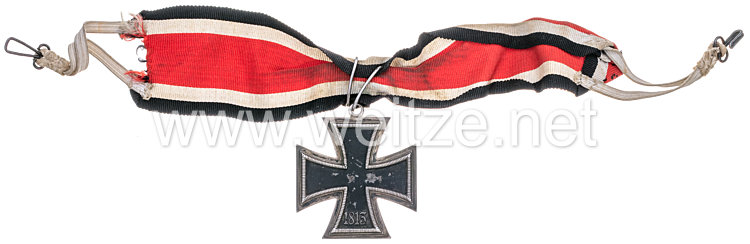
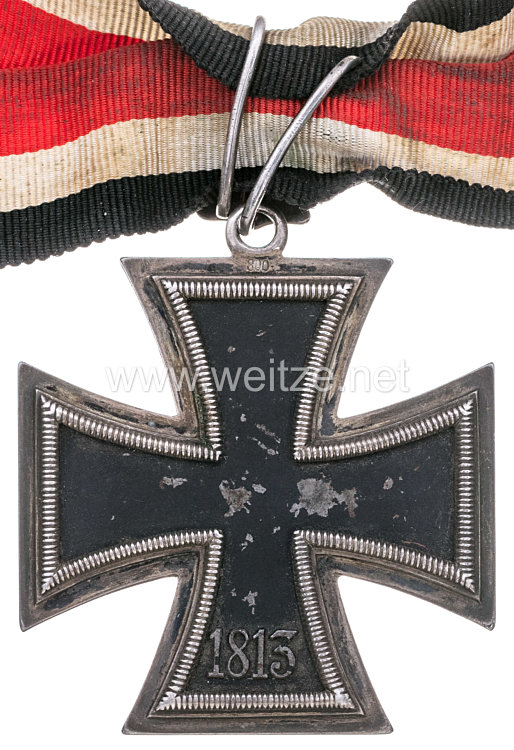
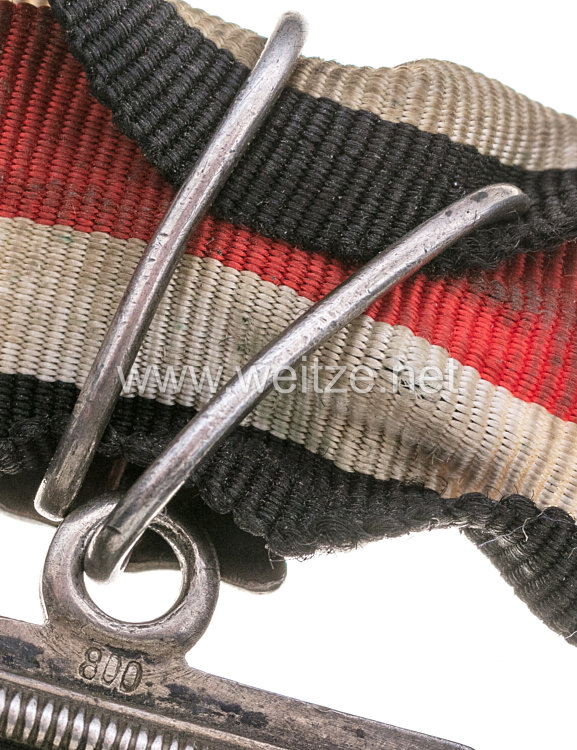
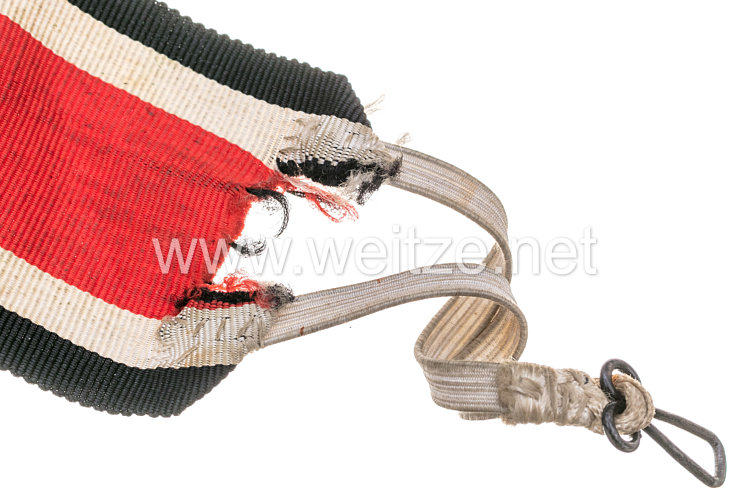
Ritterkreuz mit Eichenlaub des Eisernen Kreuzes 1939. Das Ritterkreuz ist eine Fertigung von Klein & Quenzer, rückseitig "800" Silber gestempelt. Das Eichenlaub ist eine typische Fertigung von Godet, rückseitig "900" und "21" gestempelt, komplett am konfektionierten Halsband. Viel getragen, Zustand 2-.
Dazu ein weiteres Ritterkreuz mit Eichenlaub des Eisernen Kreuzes 1939. Das Ritterkreuz ist eine Fertigung von Steinhauer & Lück, rückseitig "800" gestempelt. Das Eichenlaub ist eine typische Fertigung von Godet, rückseitig "900" und "21" gestempelt. Viel getragen, Zustand 2-. Das Ritterkreuz wurde 1945 von Weissenberger in der US Kriegsgefangenschaft entnazifiziert.
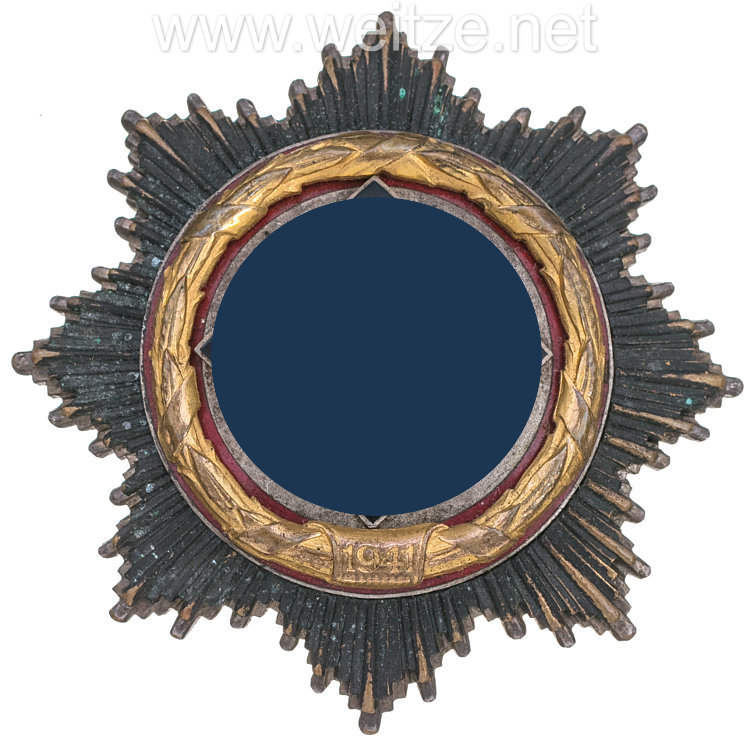
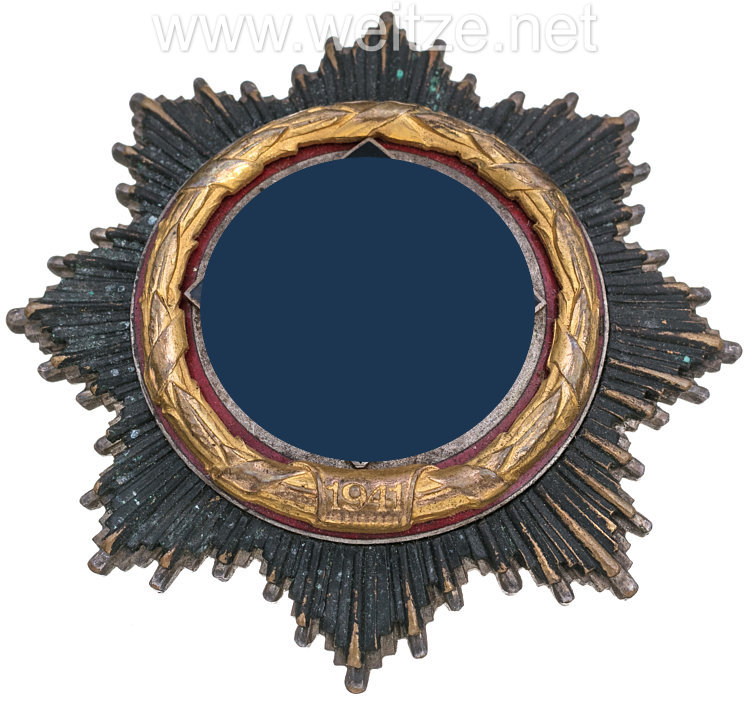
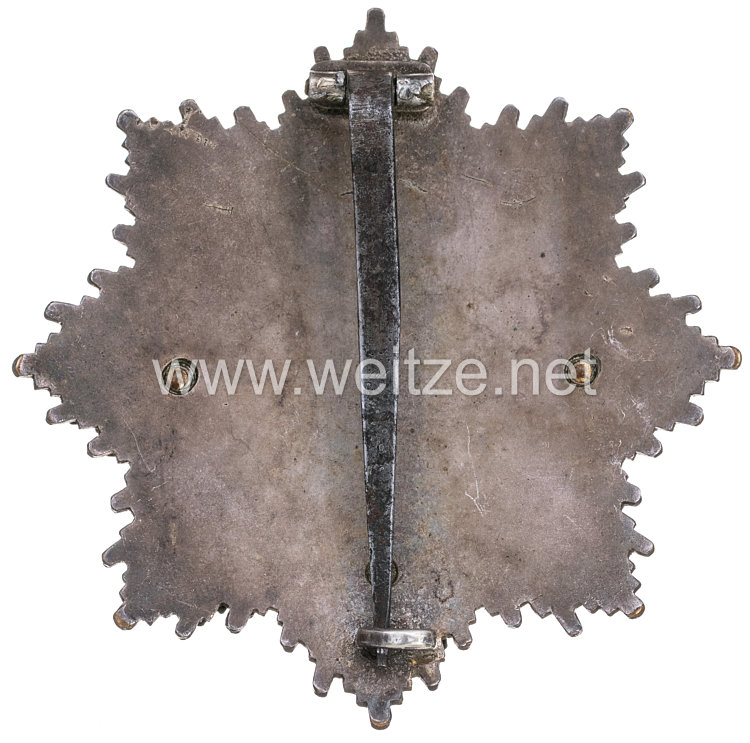
Deutsches Kreuz in Gold, schwere Ausführung von Deschler, rückseitig mit 4 Nieten. Getragen, mit Emailleschaden auf dem Hakenkreuz, Zustand 2.
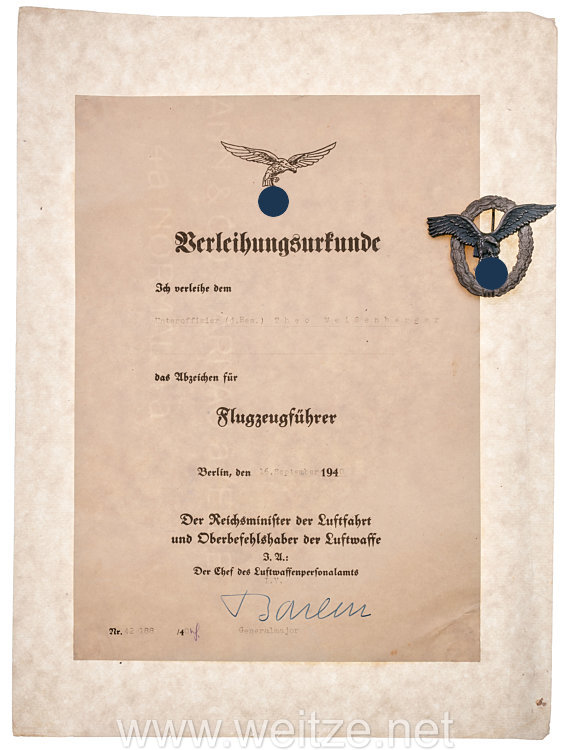
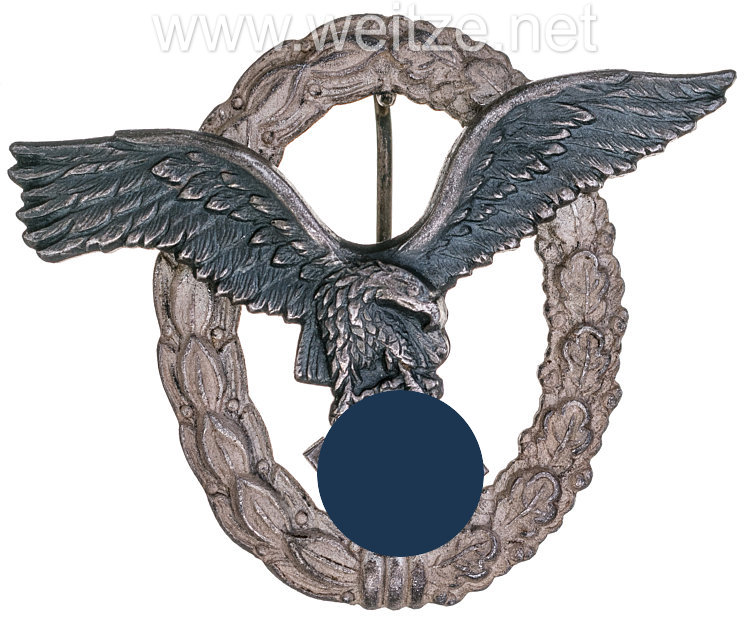
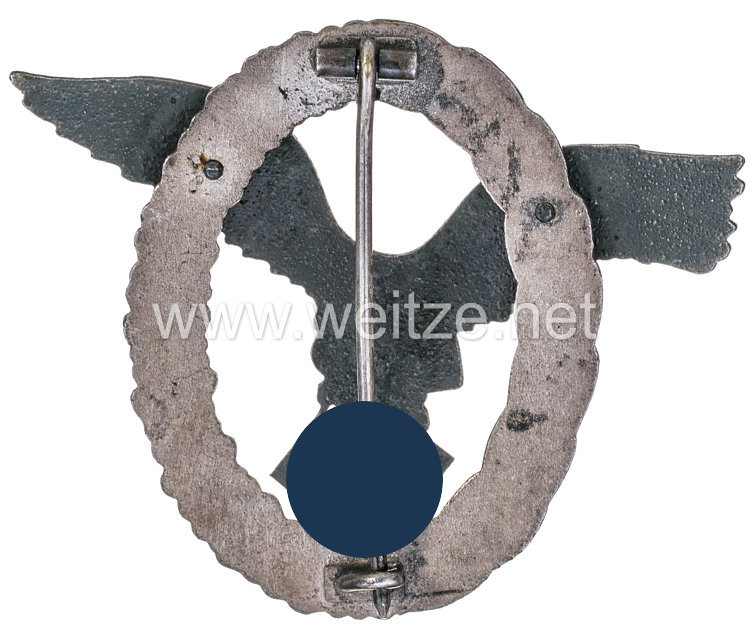
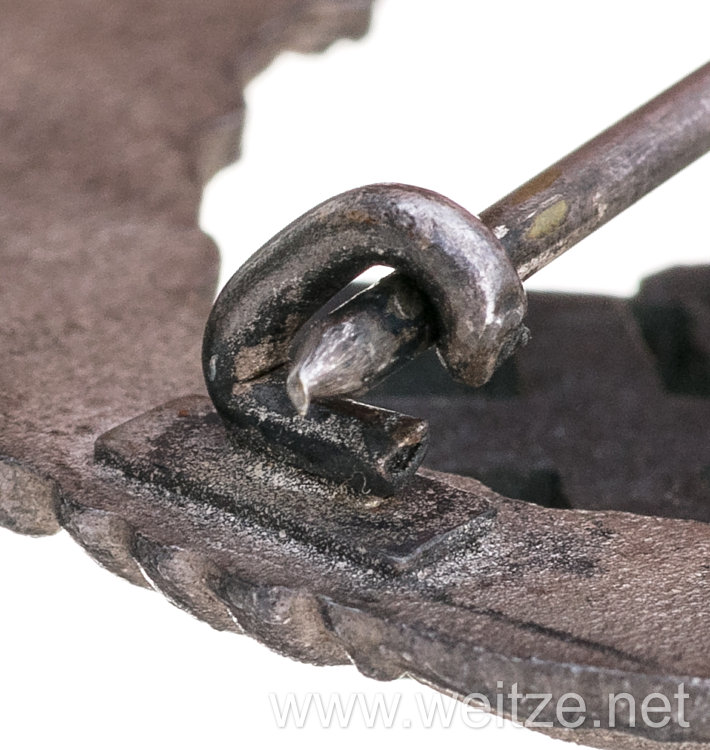
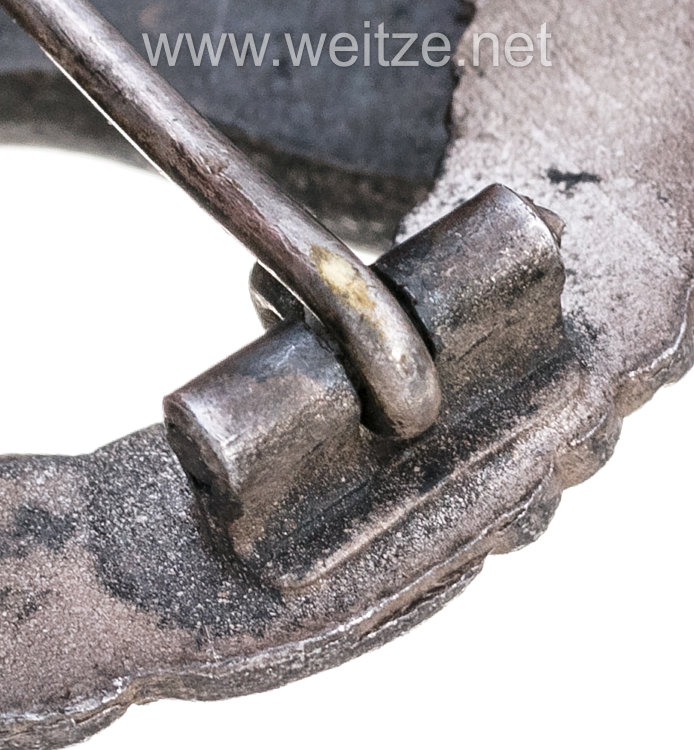
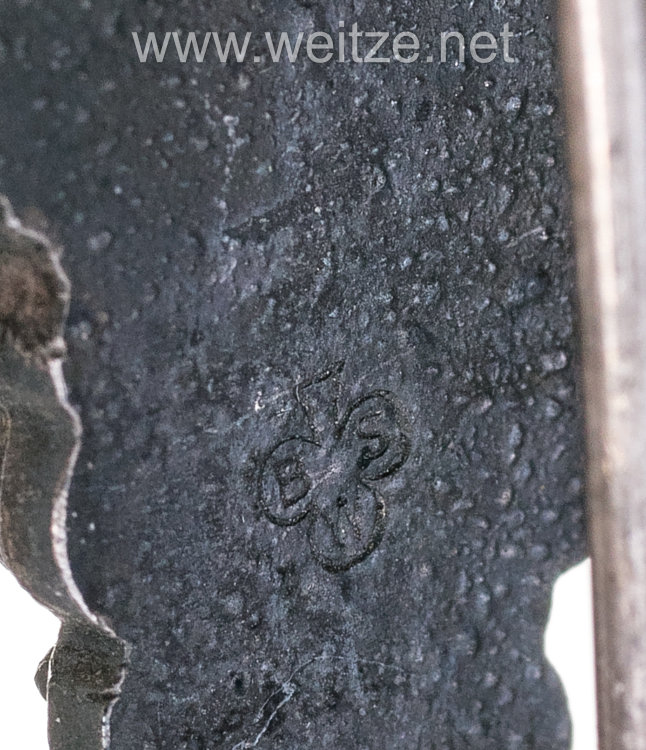
Flugzeugführerabzeichen der Luftwaffe. Feinzink, Fertigung von BSW, Zustand 2.
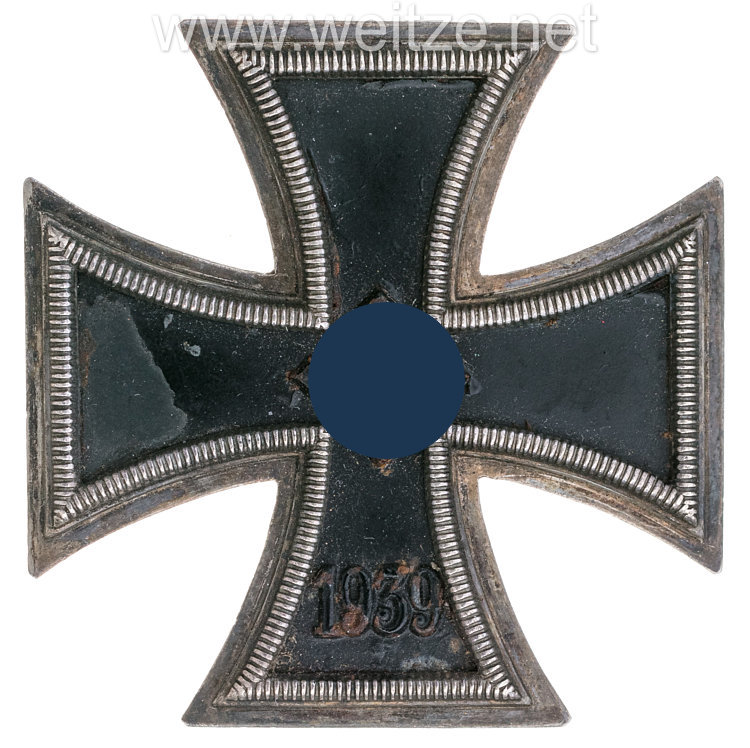
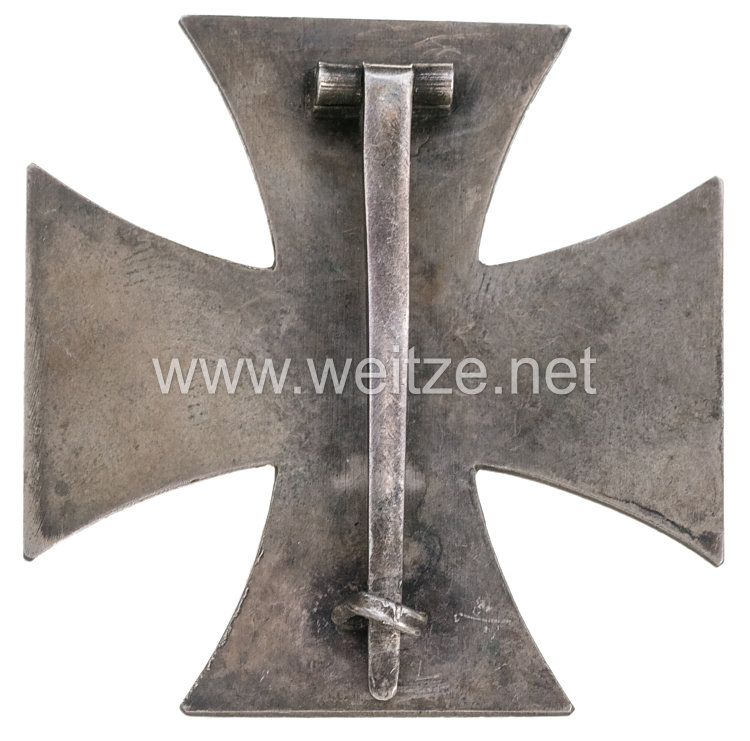
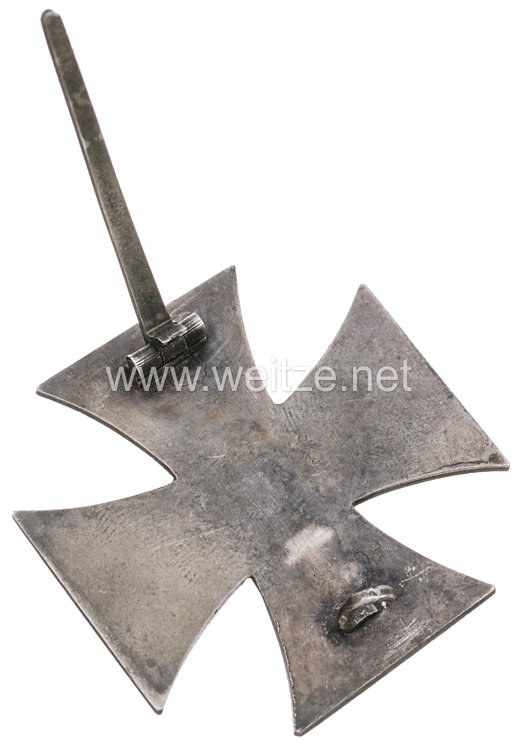
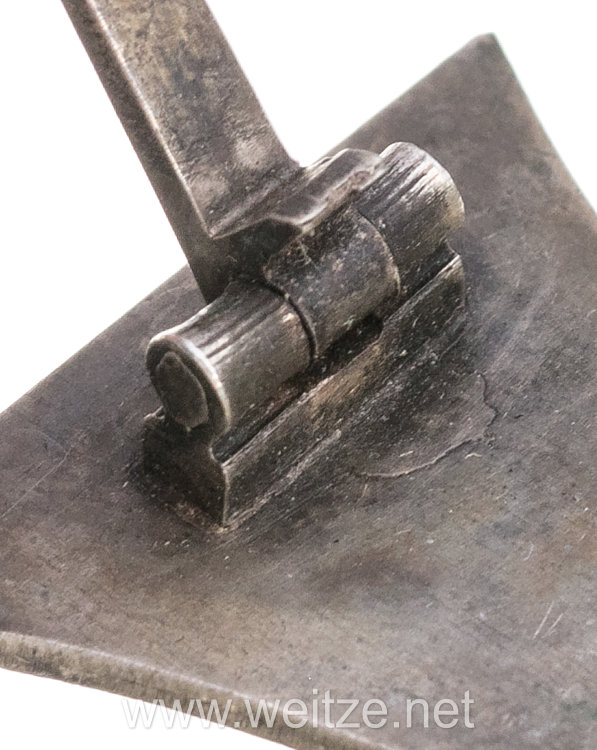
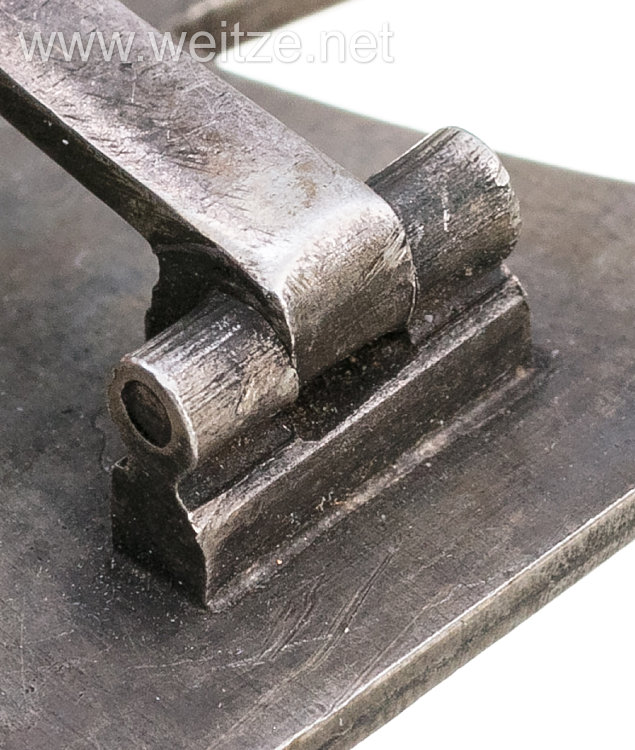
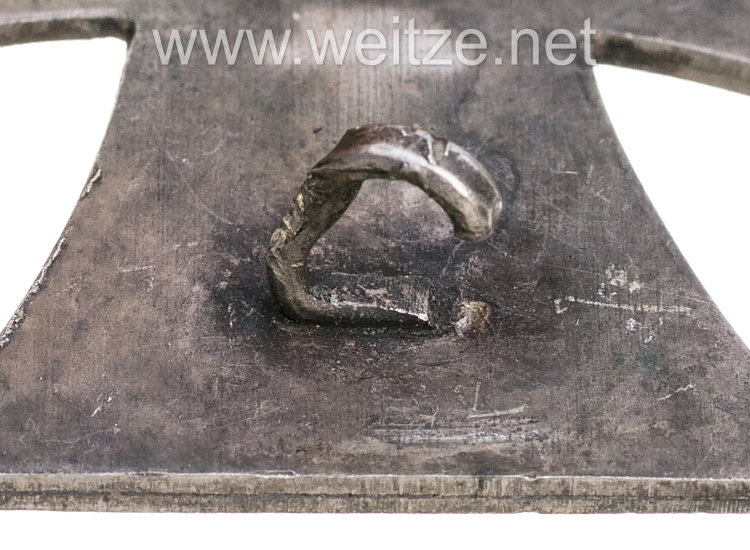
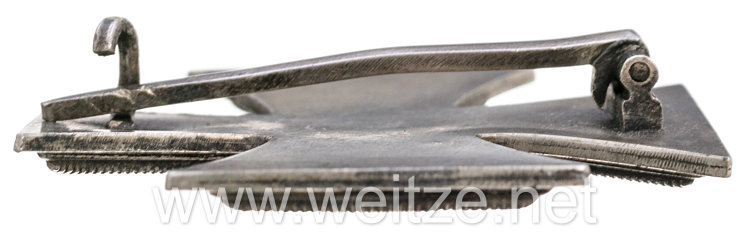
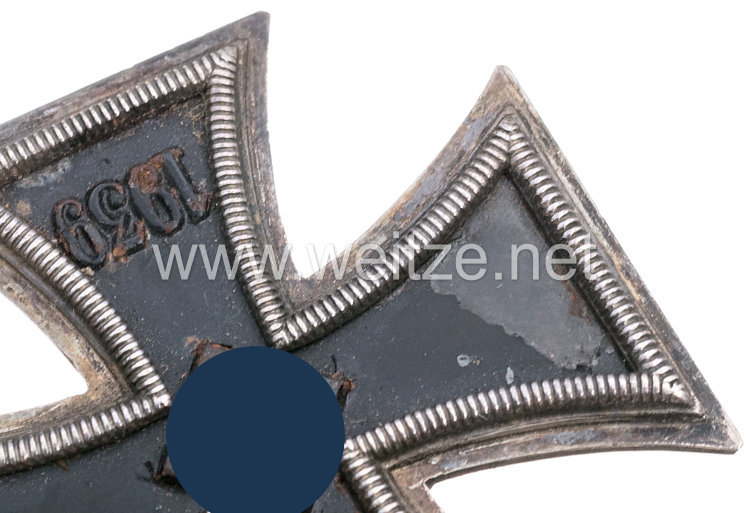
Eisernes Kreuz 1939 1. Klasse. Getragen, Zustand 2.
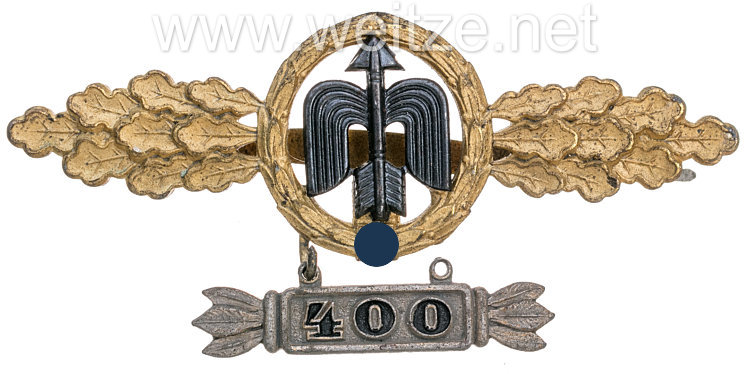
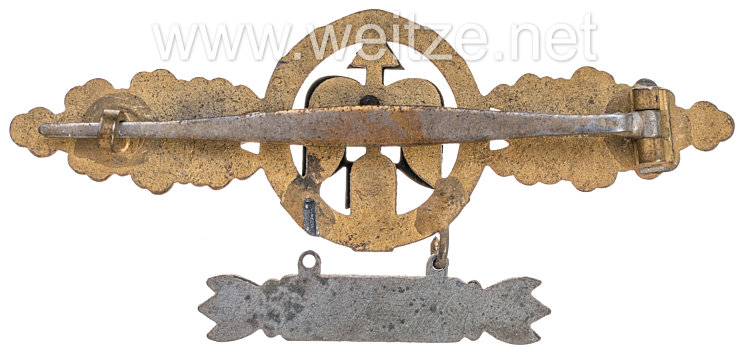
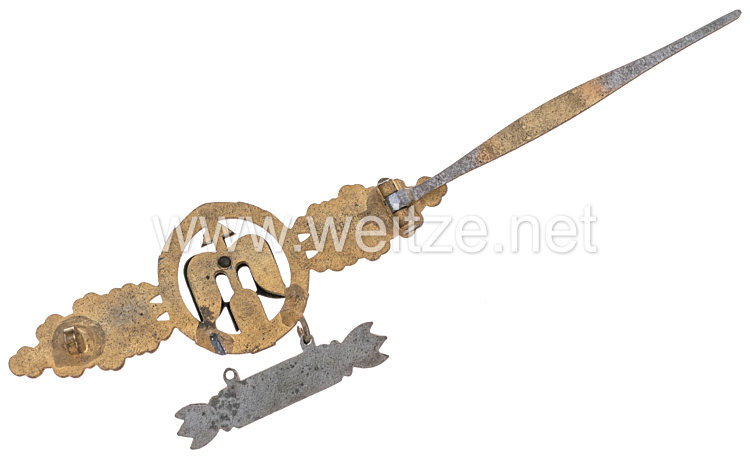
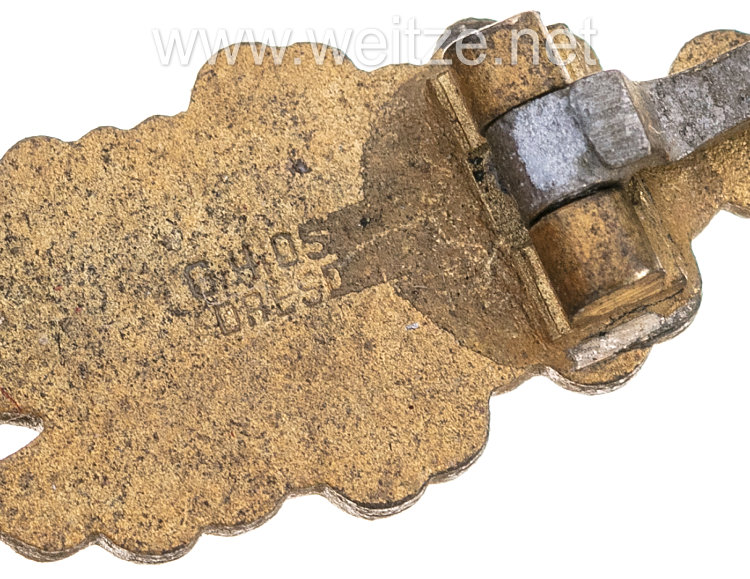
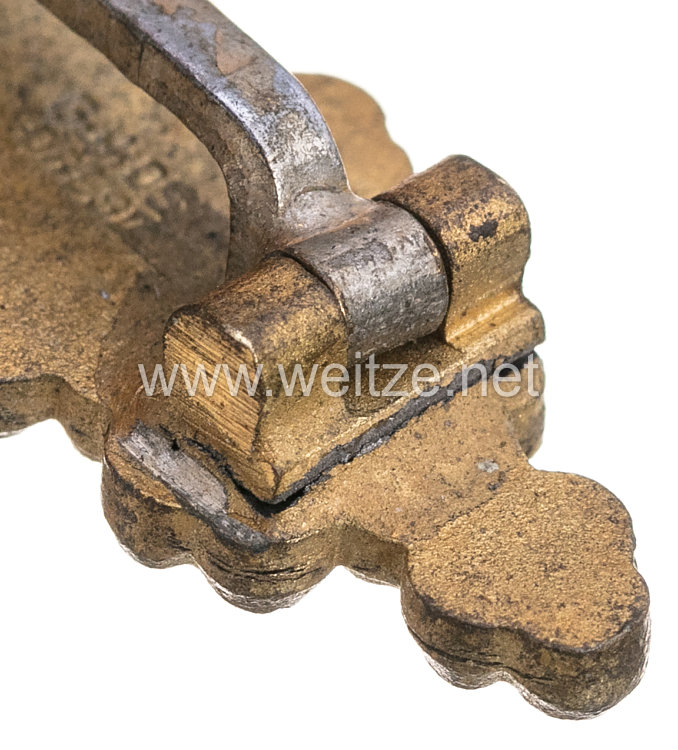
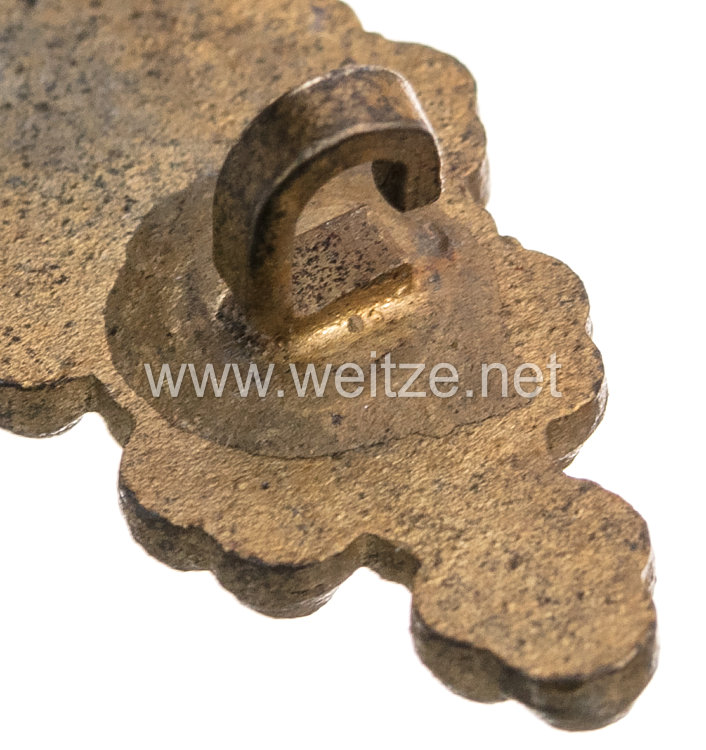
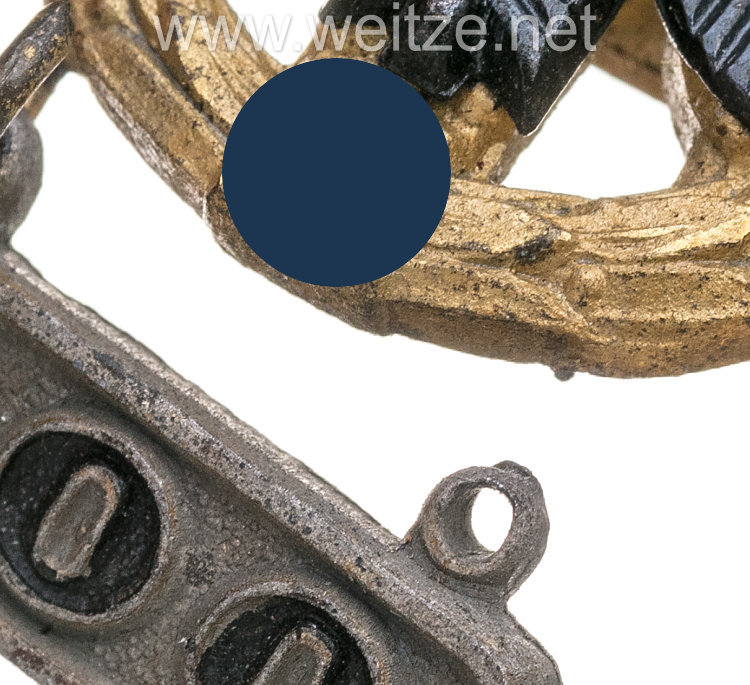
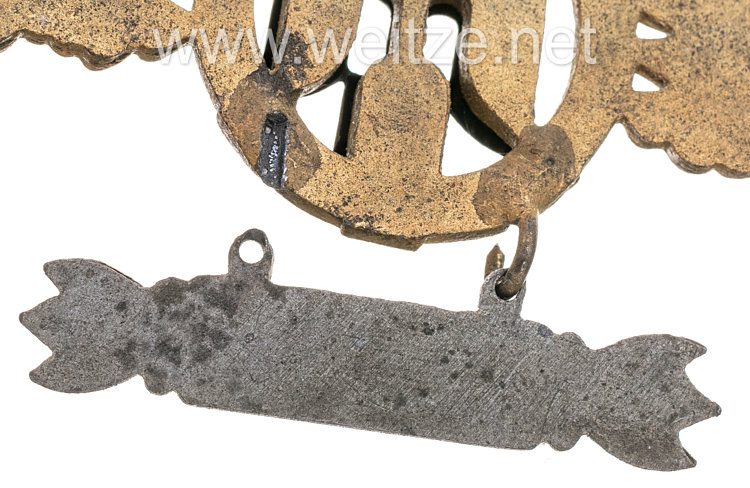
Frontflugspange für Jäger in Gold mit Anhänger "400". Buntmetallausführung, ein Haltesteg am Anhänger fehlt (kann auf Wunsch restauriert werden), Zustand 2.
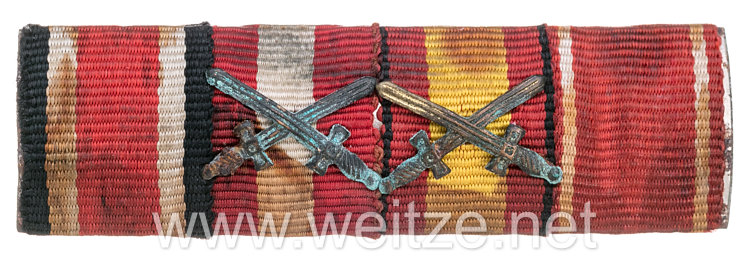
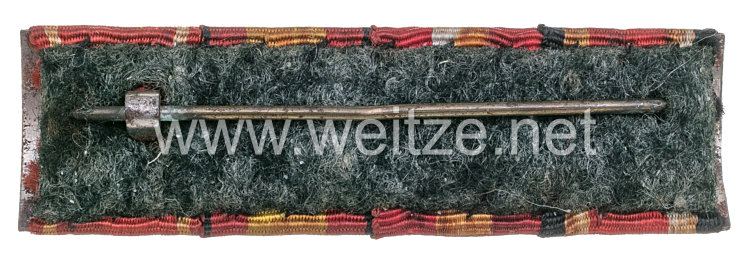
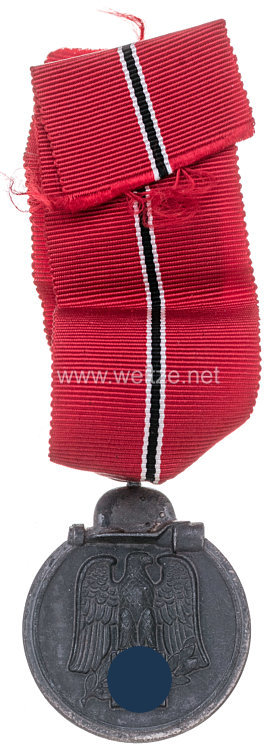
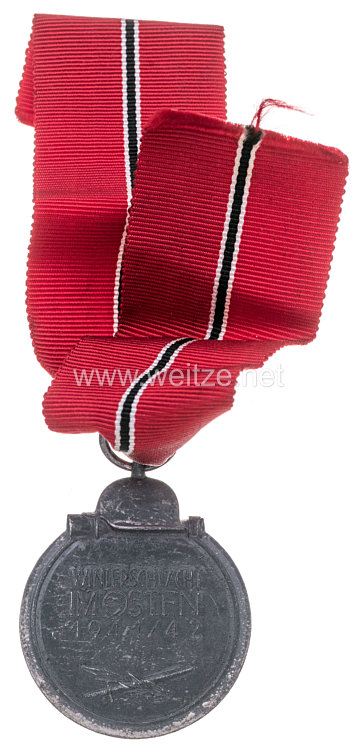
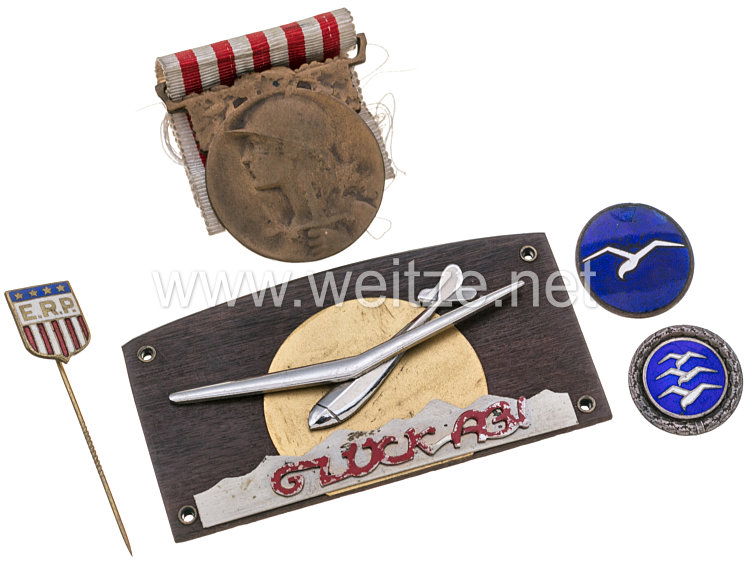
Winterschlachtmedaille, Feldspange mit 4 Auszeichnungen, 2 Segelfliegerabzeichen.
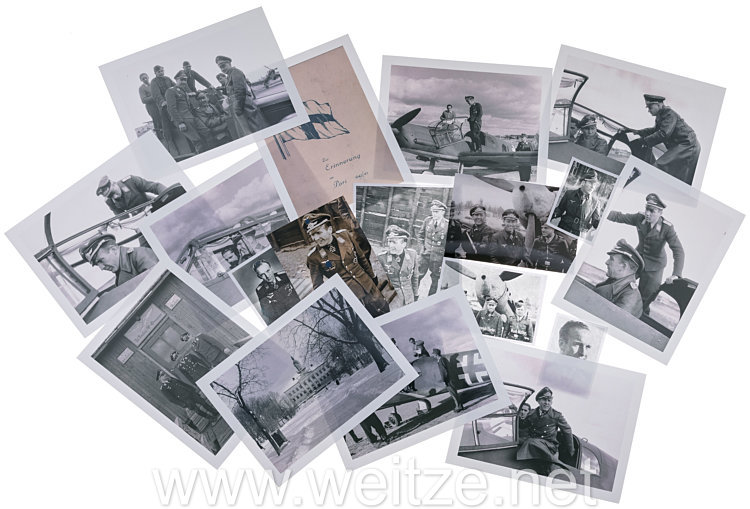
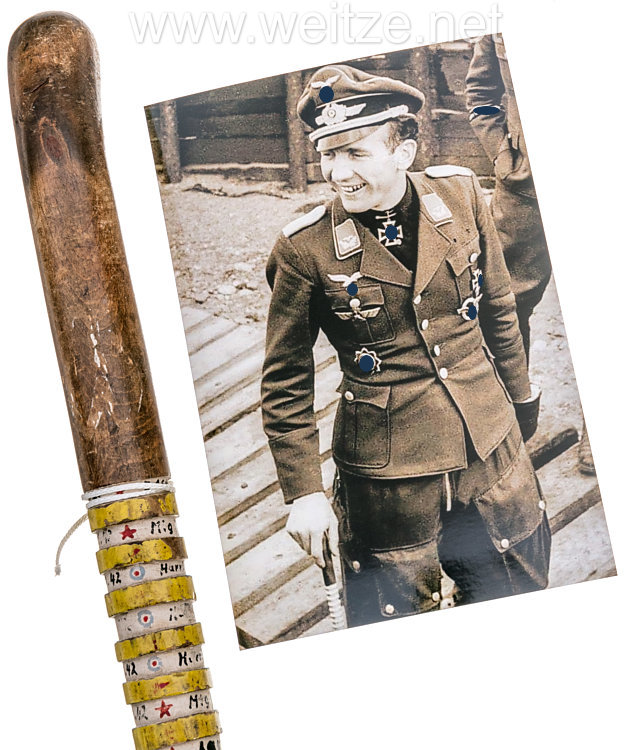
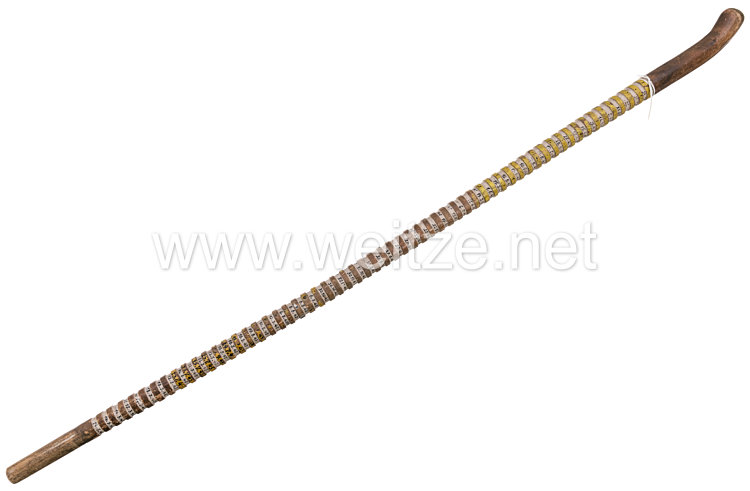
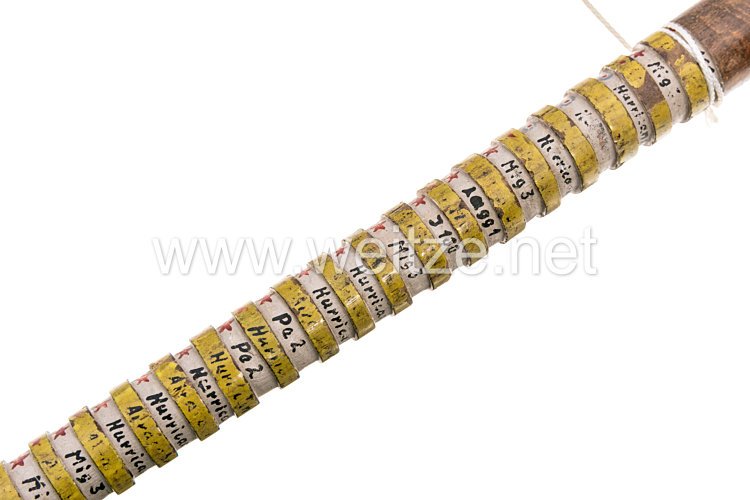
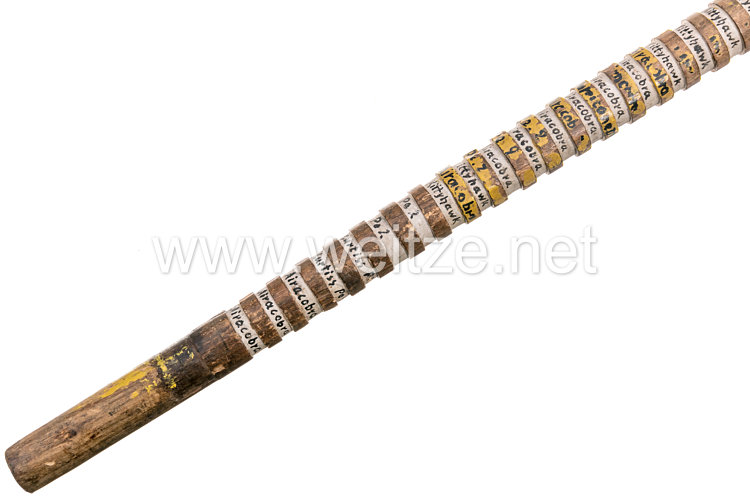
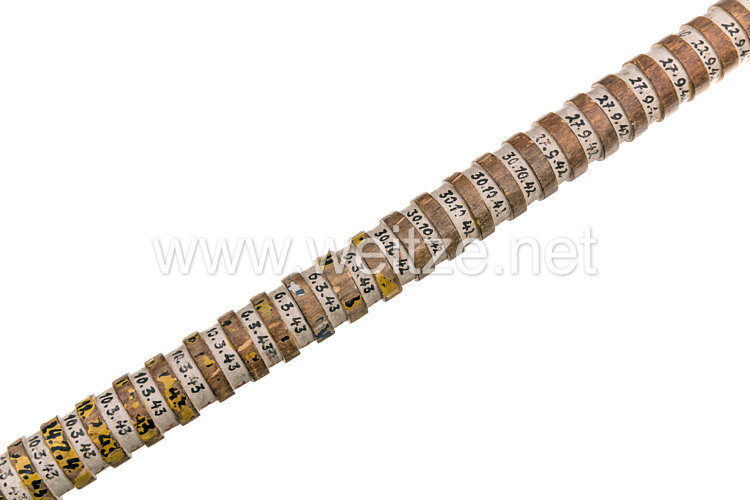
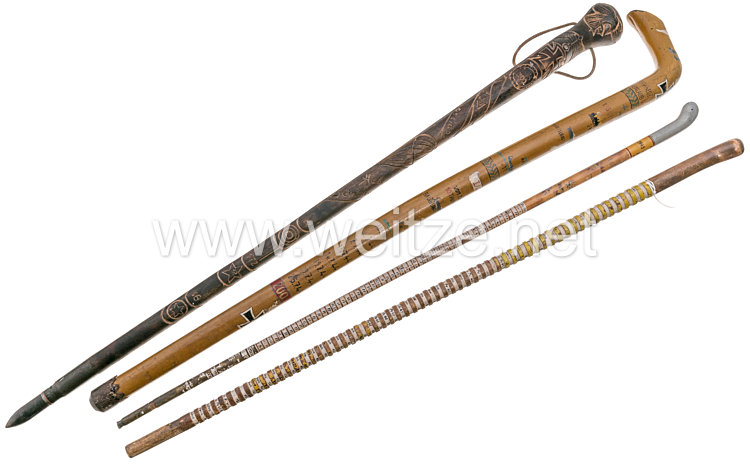
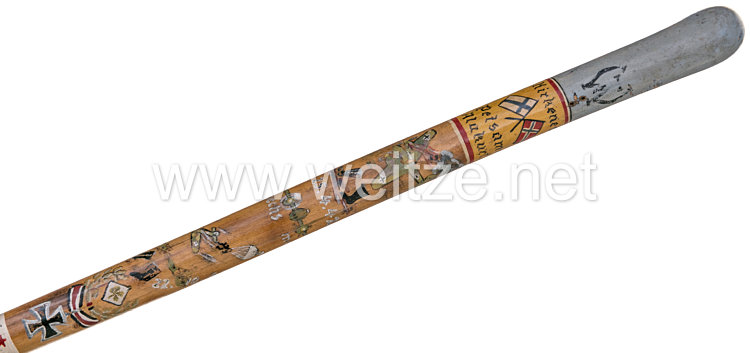
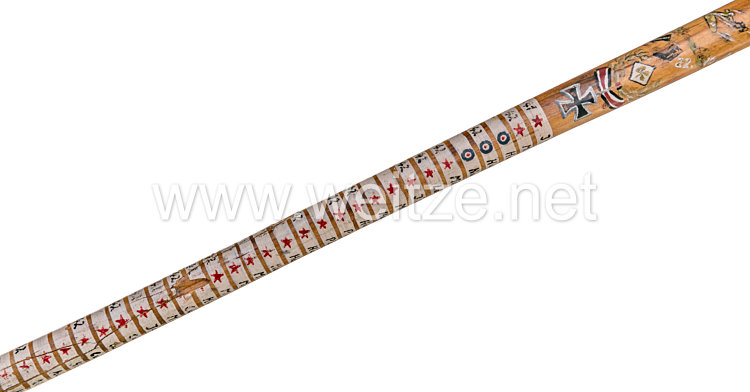
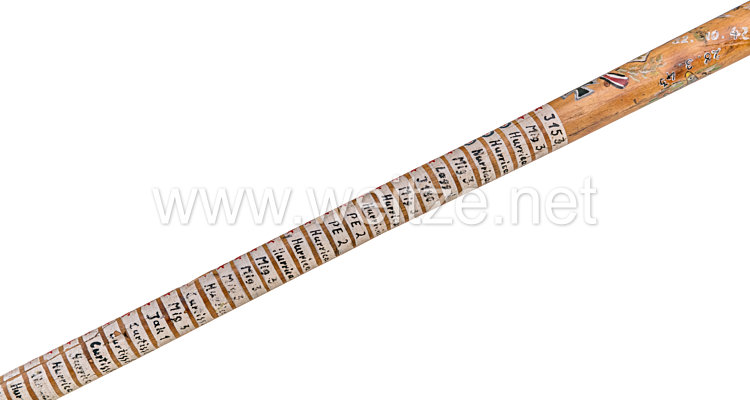
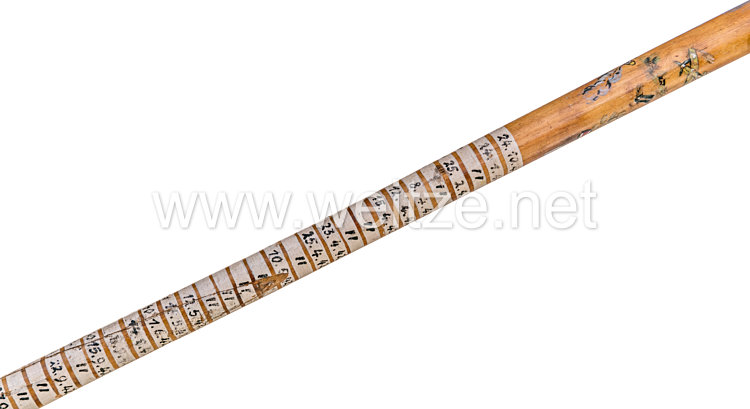
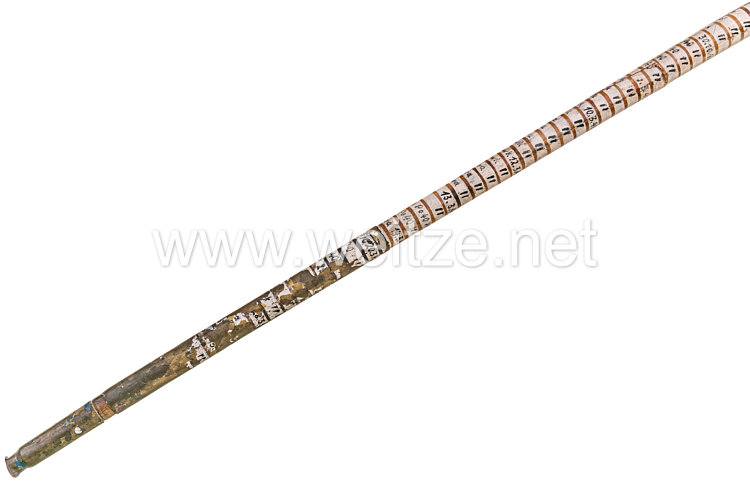
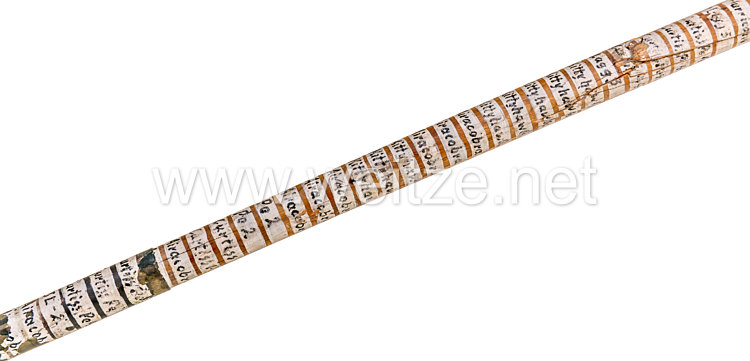
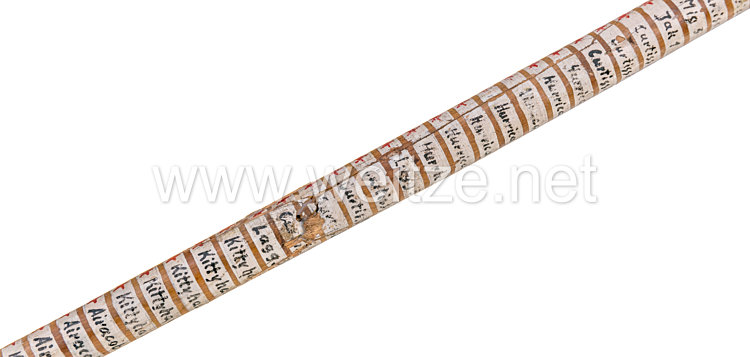
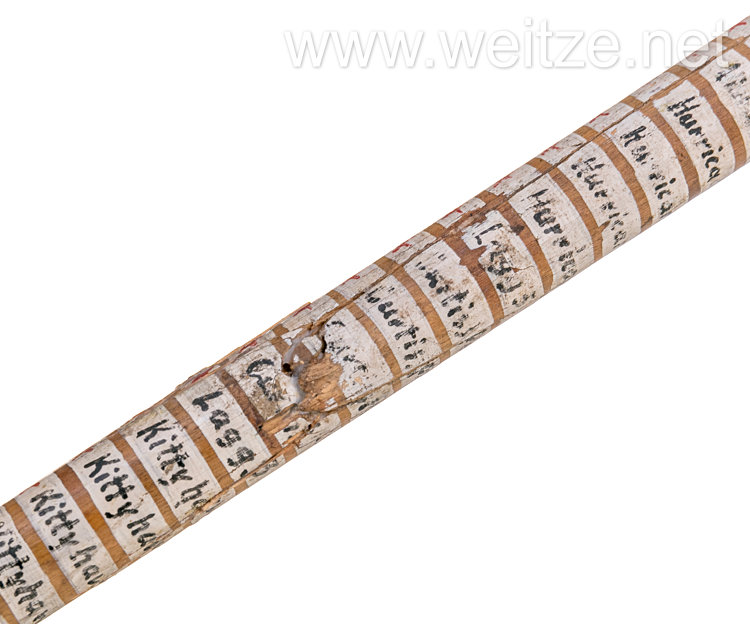
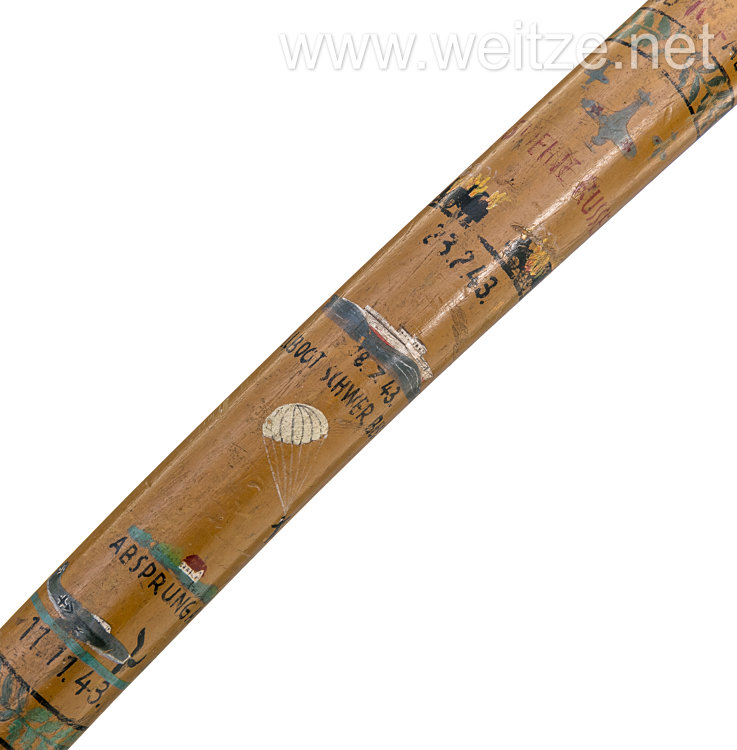
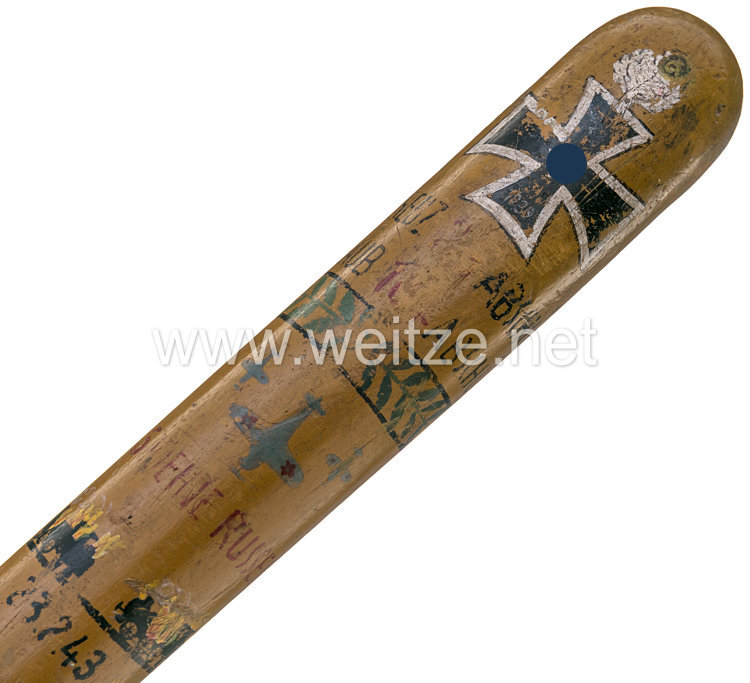
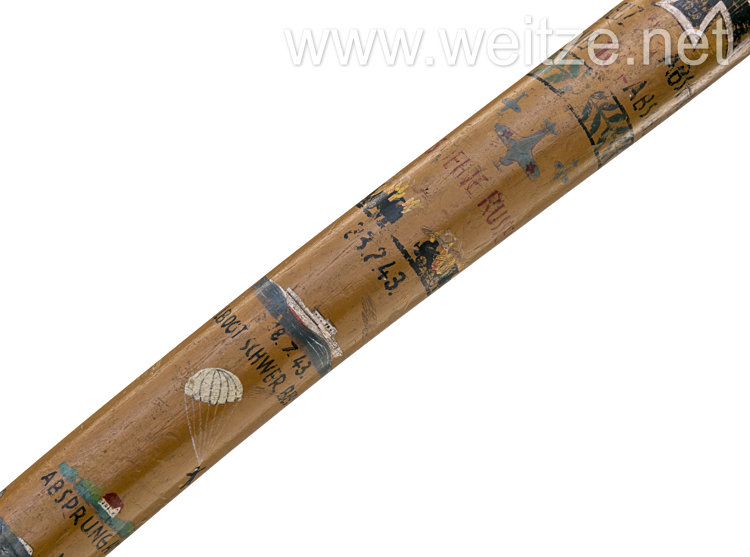
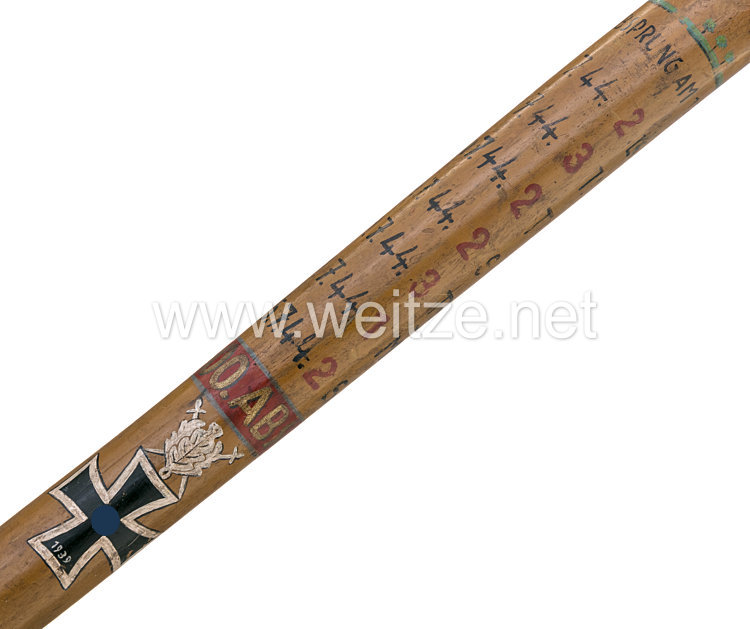
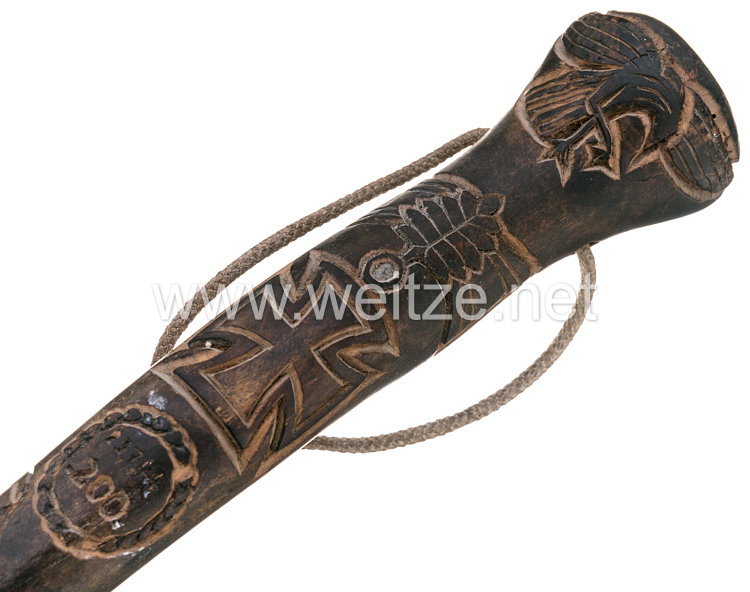
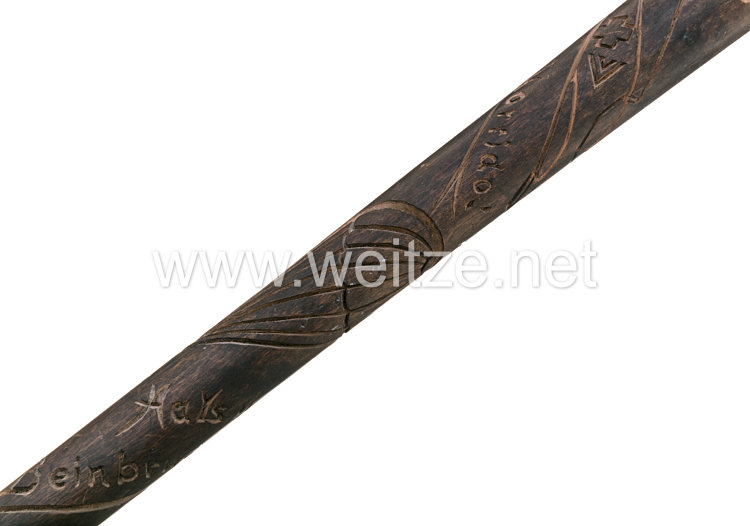
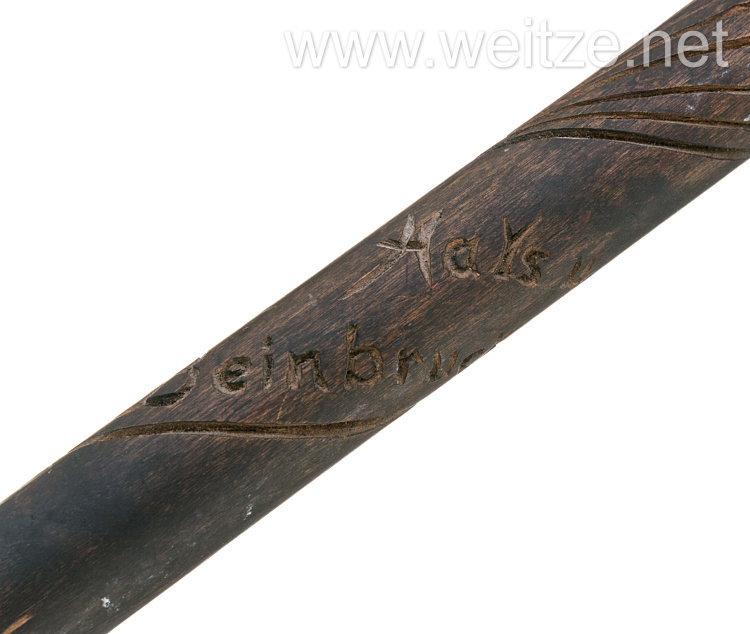
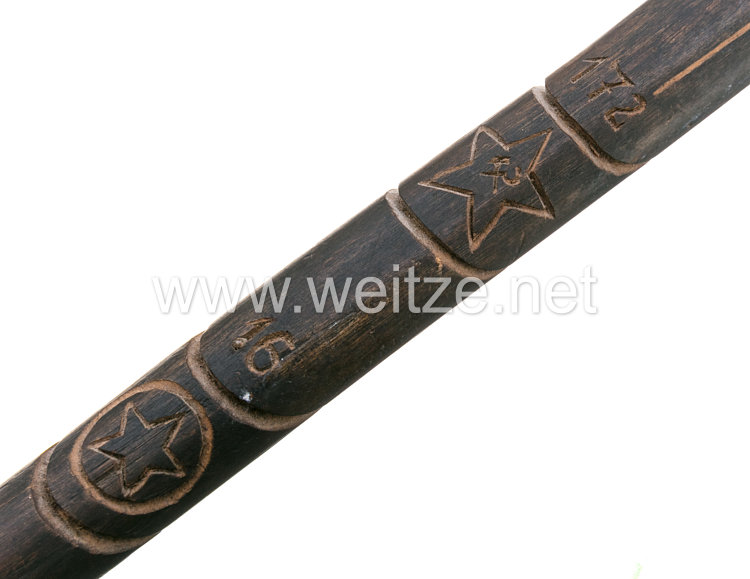
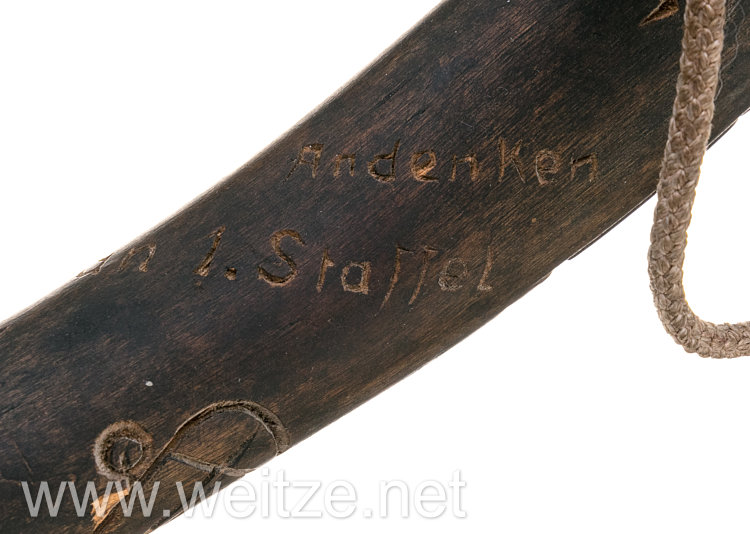
4 Abschuss-Stöcke, liebevoll von den Kameraden gefertigt, handgeschnitzt und bemalt, mit allen Abschüssen bis zum 200. Abschuß am 5.7.1944, Bauchlandung, Absprung aus dem Flugzeug 1942 Beschädigung eines U-Boots, Vernichtung einer Eisenbahnzugs, etc. Anbei mehrere schöne Repro Fotos Weissenbergers, auf dem er mit einem dieser Abschuss-Stöcke zu sehen ist.
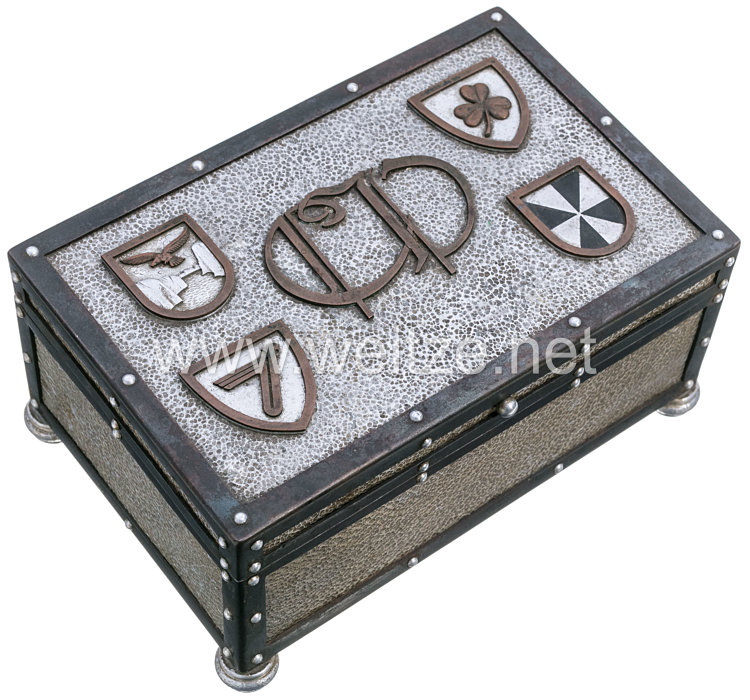
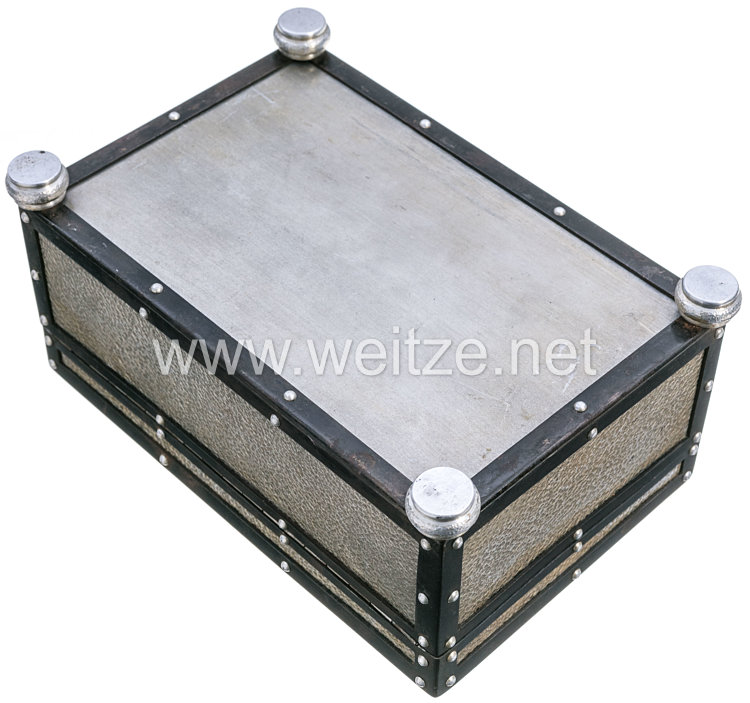
Geschenk/Ordenskiste, hergestellt von den Kameraden. Fertigung aus Flugzeugblech, sehr schön gefertigt mit seiner Initiale "W" und den Geschwader- und Staffelwappen.
An Urkunden und Dokumenten:
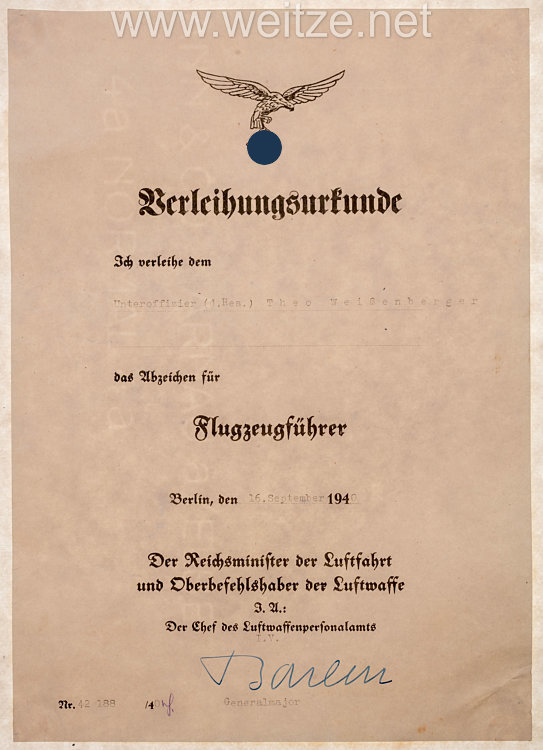
Verleihungsurkunde zum Flugzeugführerabzeichen der Luftwaffe, ausgestellt 16. September 1940.
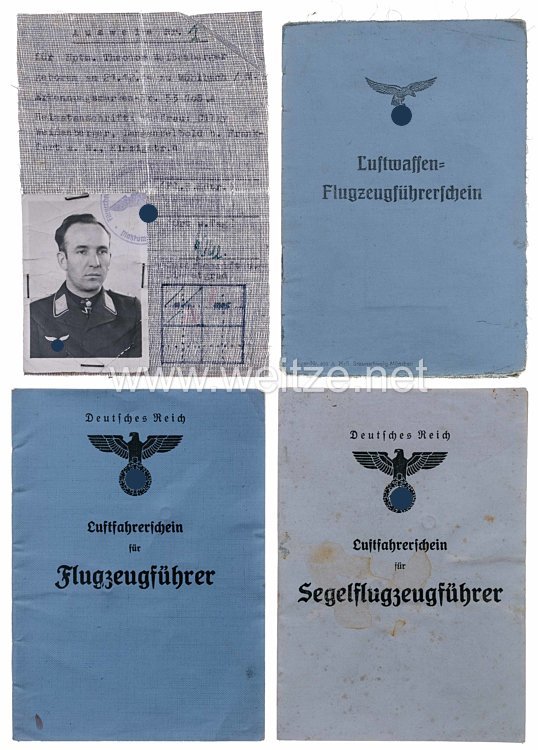
Luftwaffe Flugzeugführerschein, ausgestellt 22. Juli 1940 vom Fliegerausbildungsregiment 63 in Eger.
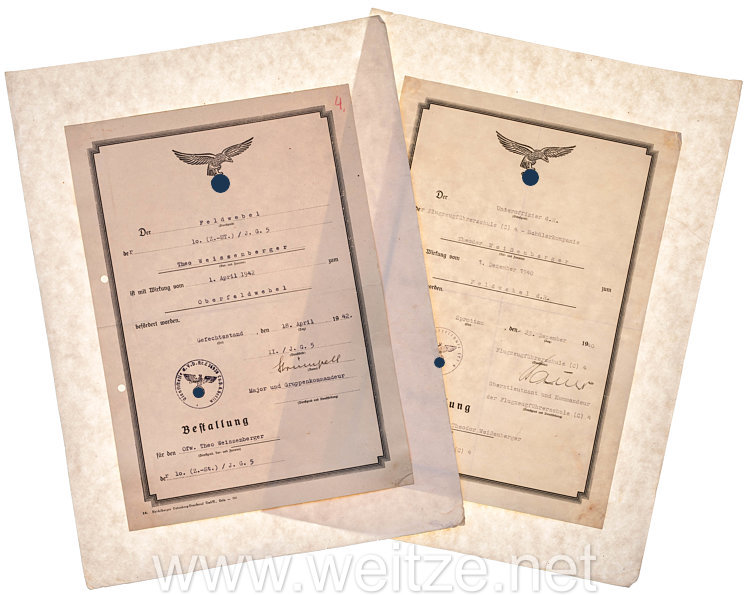
Bestallungsurkunde zum Feldwebel, ausgestellt 23. Dezember 1940 von der Flugzeugführerschule 4.
Luftfahrerschein für Flugzeugführer, ausgestellt 28. September 1939.
Luftfahrerschein für Segelflugzeugführer, ausgestellt 18. Juli 1941.
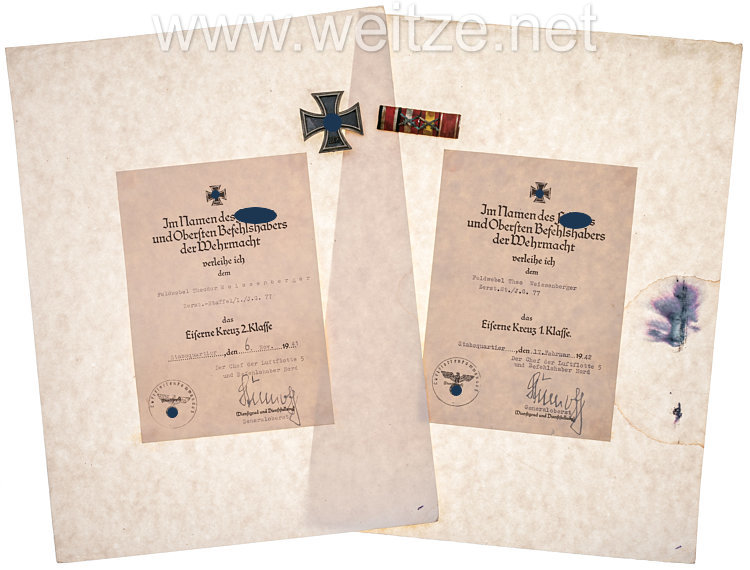
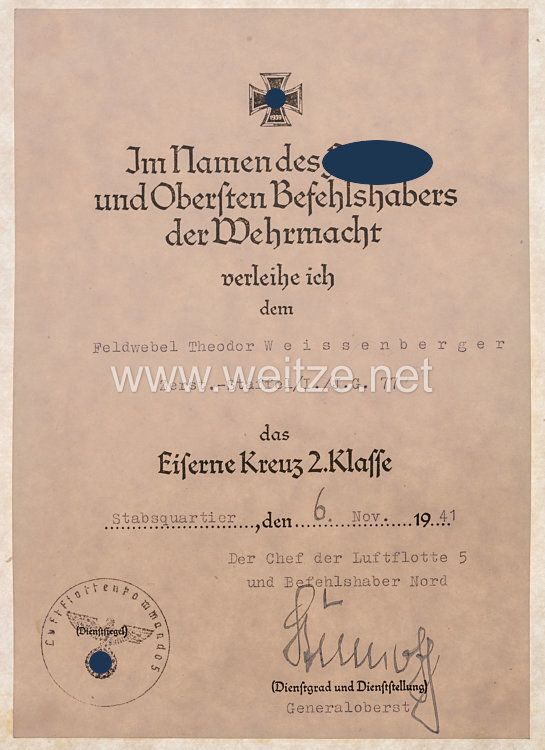
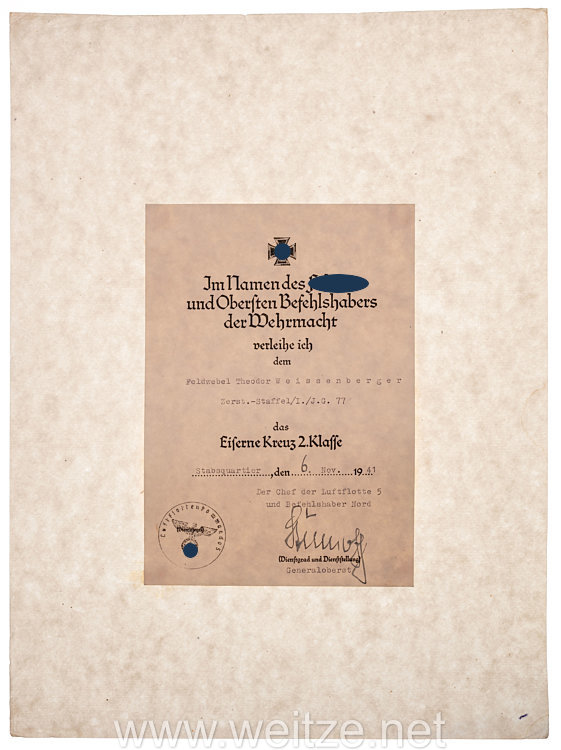
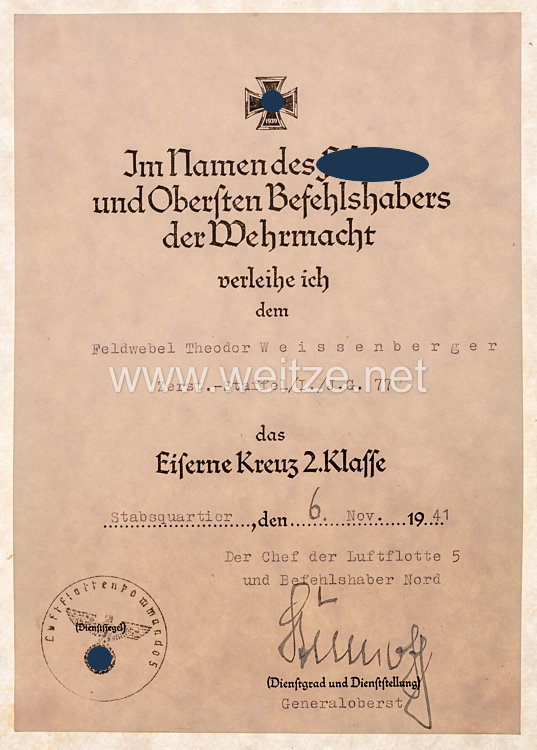
Verleihungsurkunde zum Eisernen Kreuz 2. Klasse, ausgestellt 6. November 1941, OU "Der Chef der Luftflotte 5 und Befehlshaber Nord Stumpff, Generaloberst".
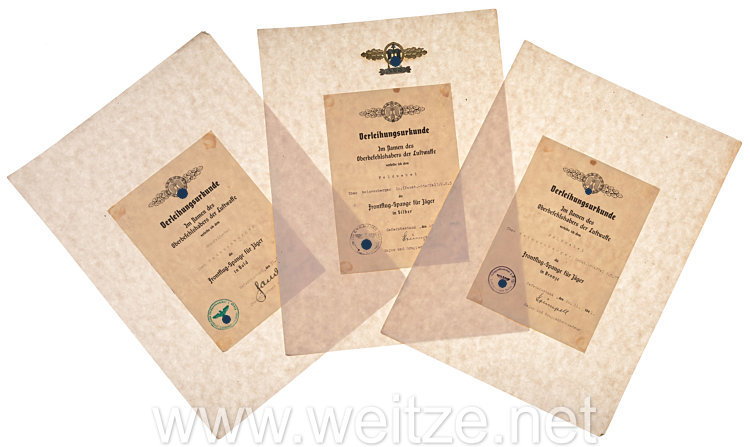
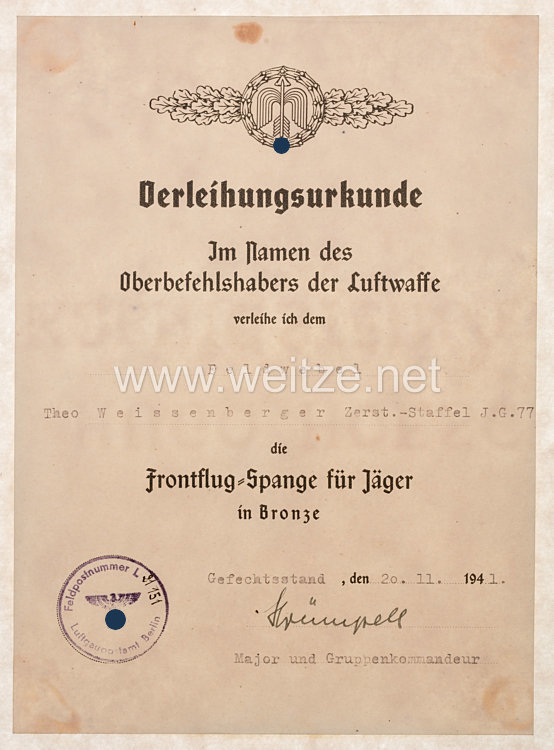
Verleihungsurkunde zur Frontflugspange für Jäger in Bronze, bei der Zerstörer-Staffel J.G. 77, OU Major und Gruppenkommandeur".
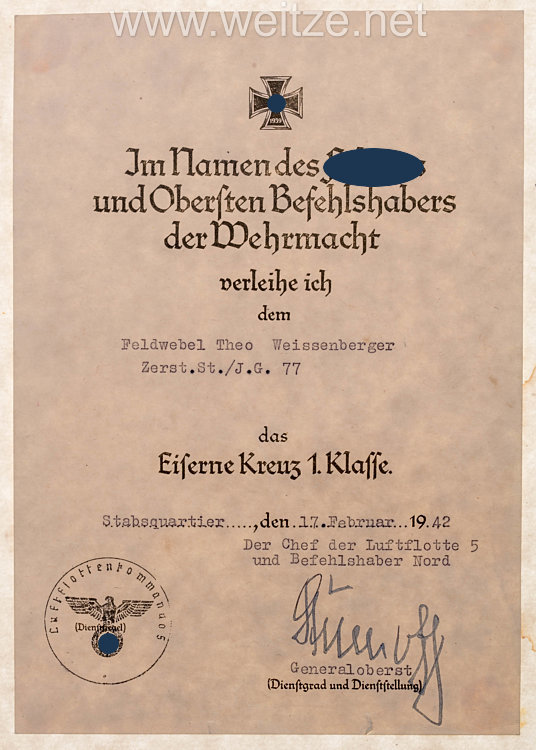
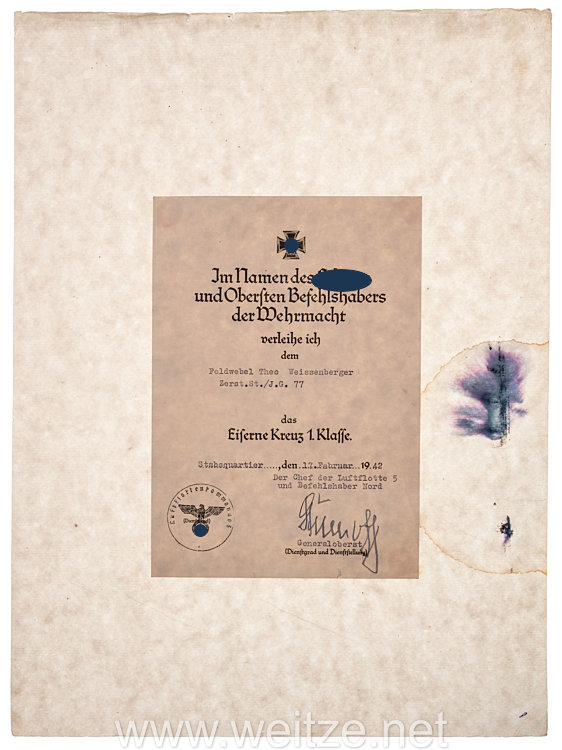
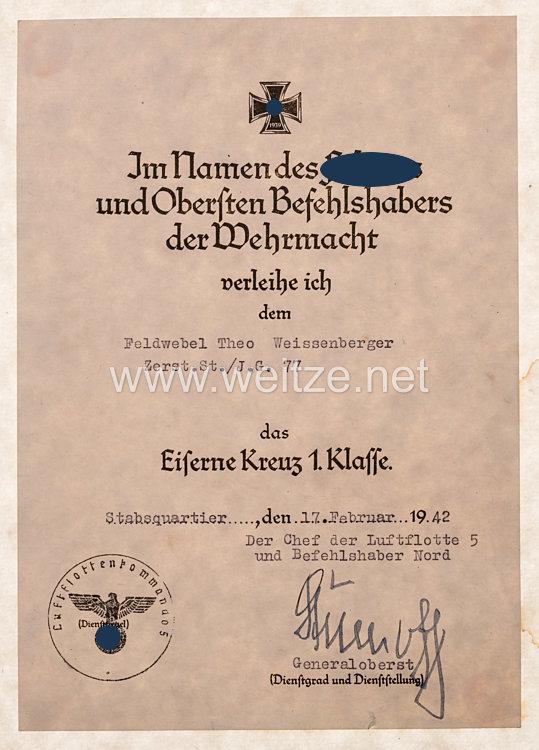
Verleihungsurkunde zum Eisernen Kreuz 1. Klasse, ausgestellt 17. Februar 1942, OU "Der Chef der Luftflotte 5 und Befehlshaber Nord Stumpff, Generaloberst".
Bestallungsurkunde zum Oberfeldwebel, ausgestellt am 18. April 1942 von der II./J.G. 5 .
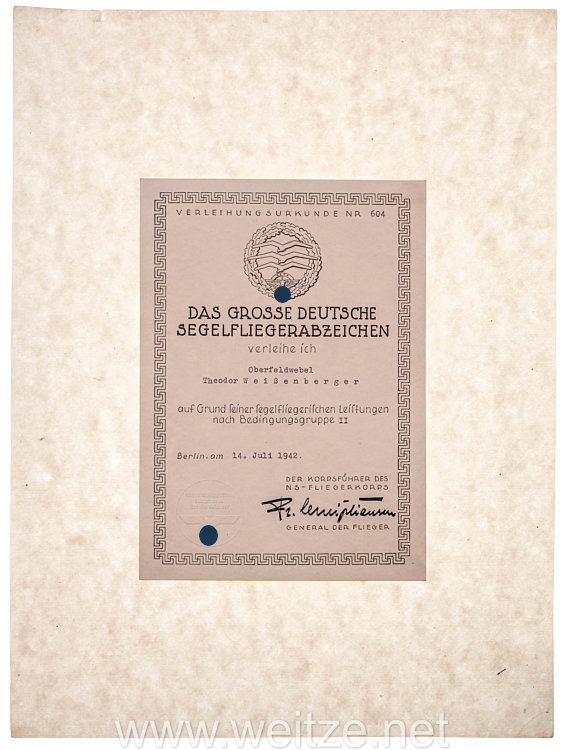
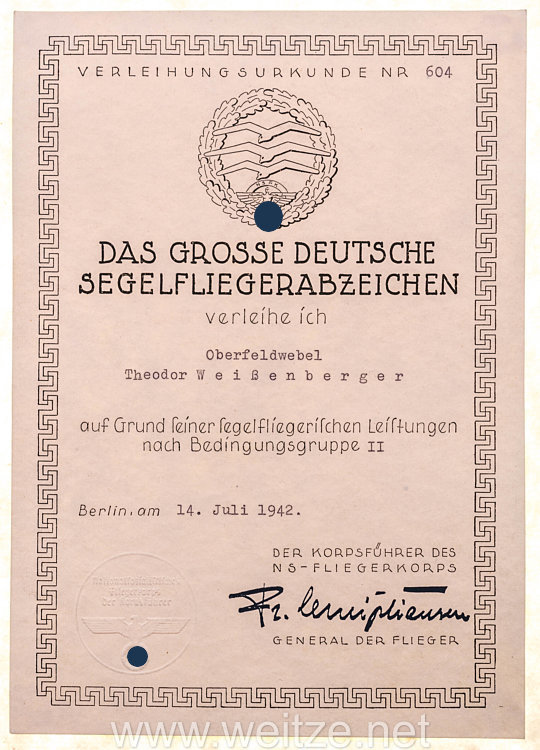
NSFK Verleihungsurkunde für das Grosse Deutsche Segelfliegerabzeichen, datiert 14. Juli 1942.
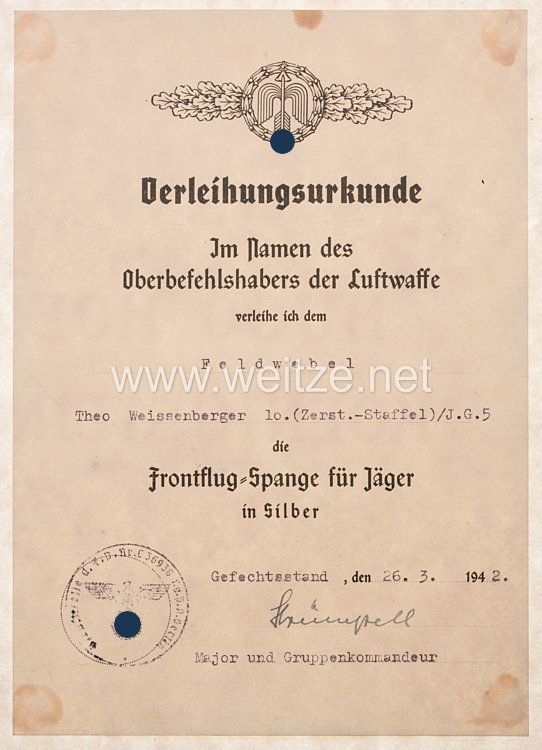
Verleihungsurkunde zur Frontflugspange für Jäger in Silber, ausgestellt 26.3.1942, OU Major und Gruppenkommandeur".
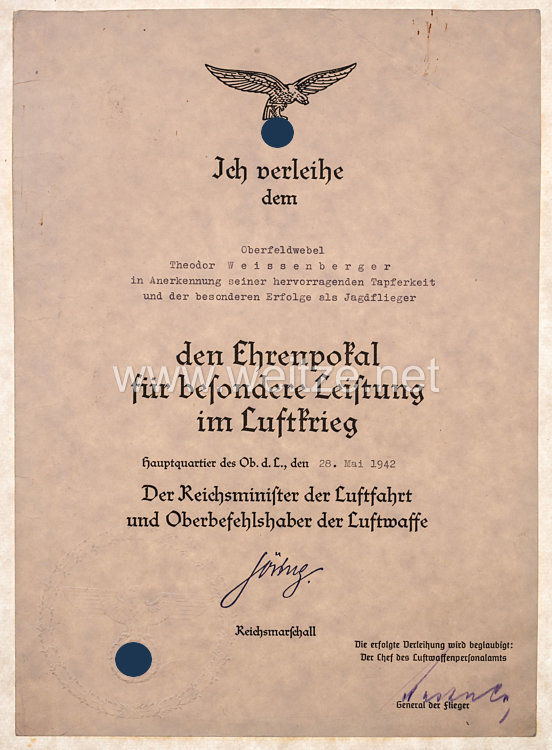
Verleihungsurkunde zum Ehrenpokal für besondere Leistungen im Luftsieg "in Anerkennung seiner hervorragenden Tapferkeit und der besonderen Erfolge als Jagdflieger", datiert 28. Mai 1942.
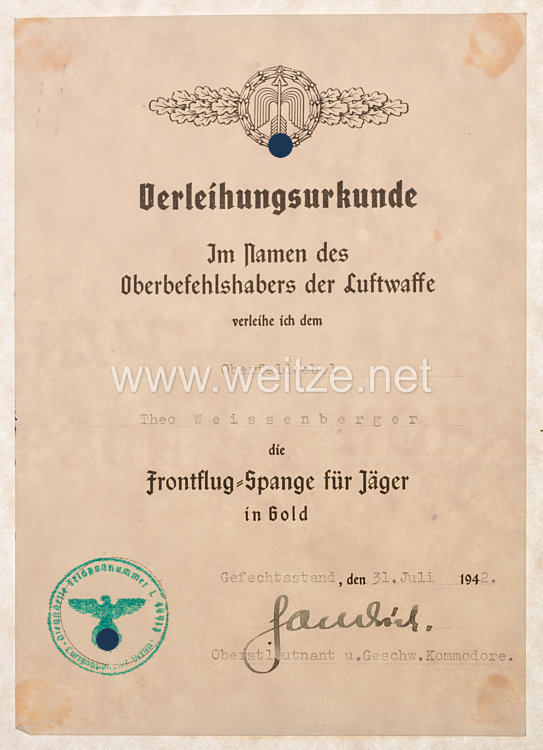
Verleihungsurkunde zur Frontflugspange für Jäger in Gold, ausgestellt 31. Juli 1942, OU Oberstleutnant u. Geschw. Kommodore".
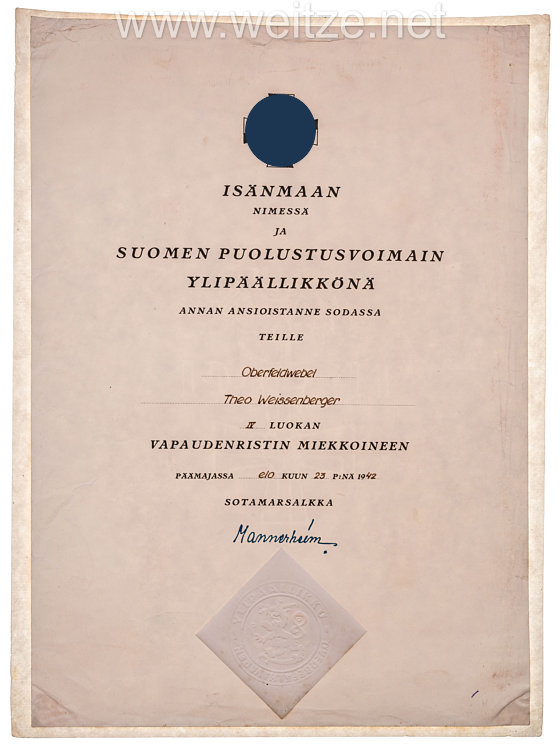
Finnland große Verleihungsurkunde zum Freiheitskreuz IV. Klasse mit Schwertern, datiert 1942.
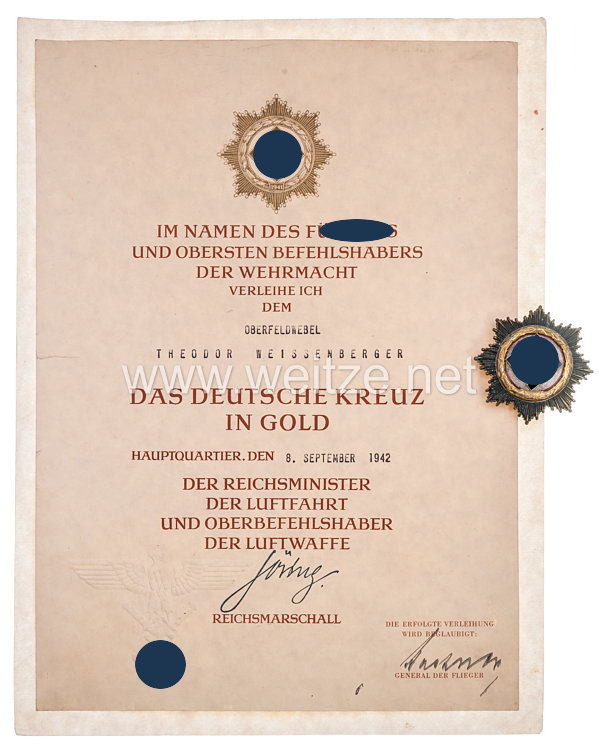
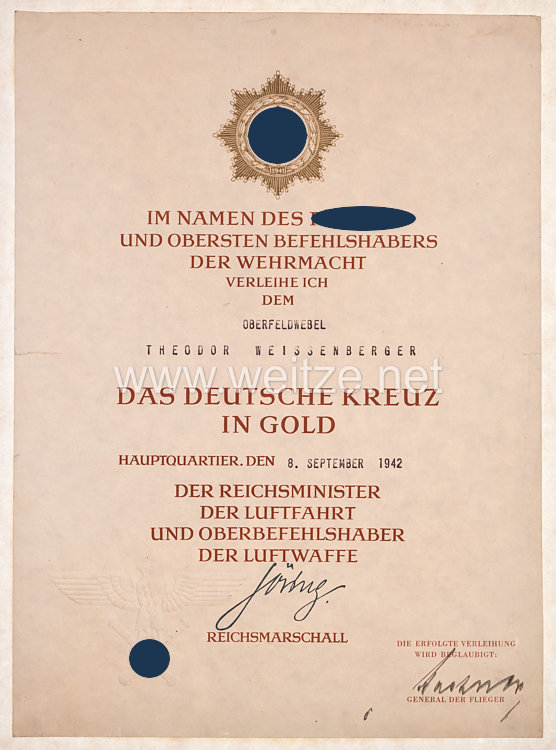
Große Verleihungsurkunde zum Deutschen Kreuz in Gold, ausgestellt 8. September 1942.
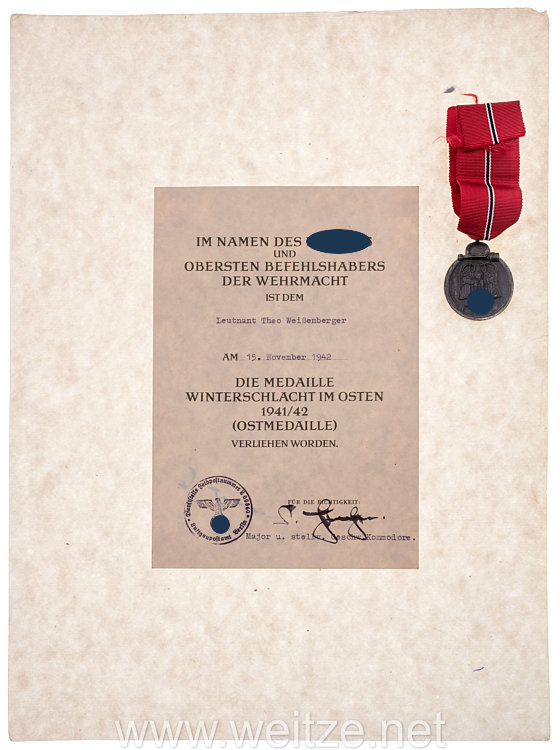
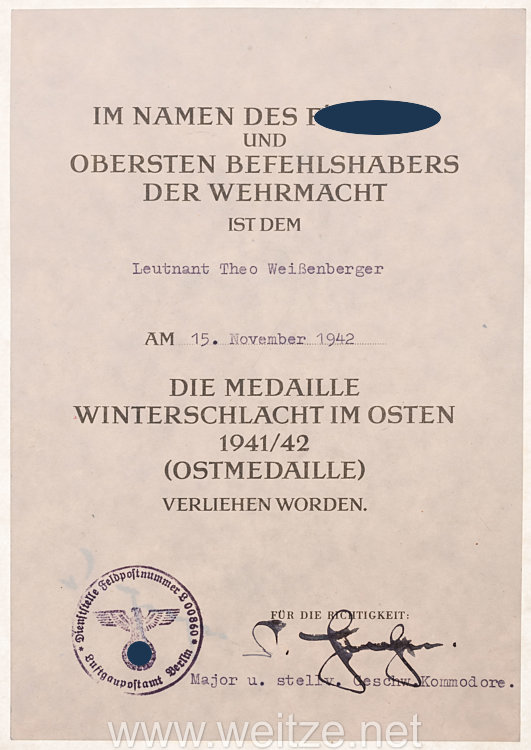
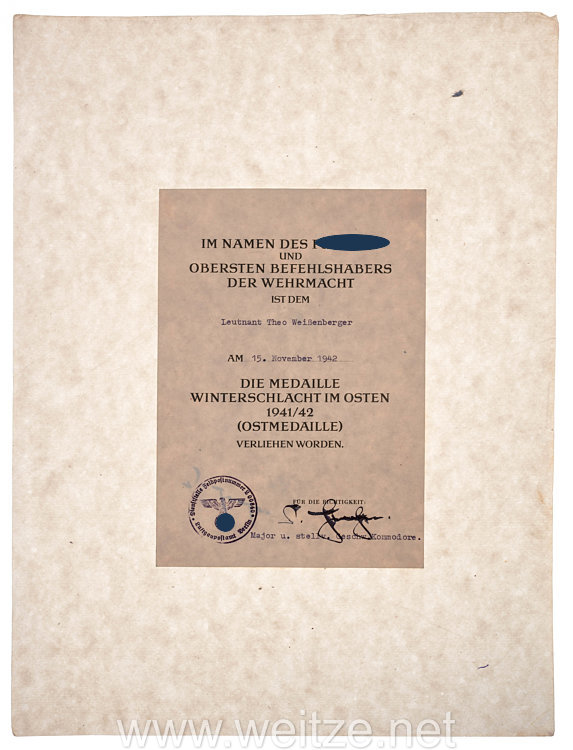
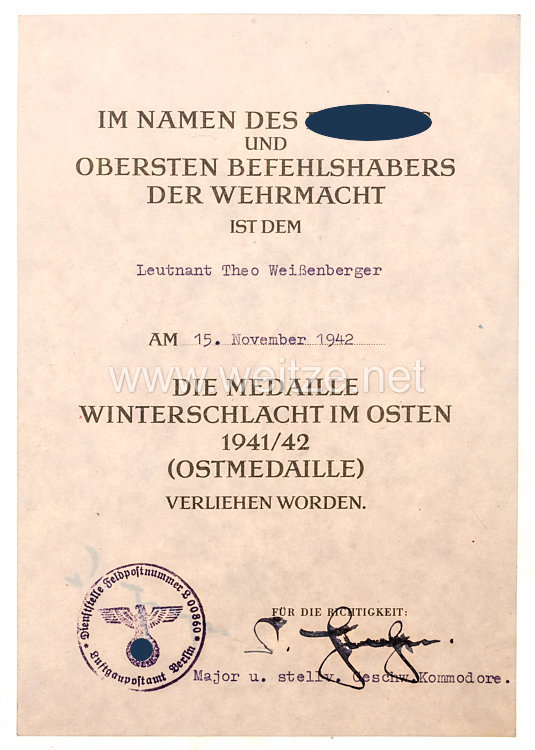
Verleihungsurkunde zur Medaille Winterschlacht im Osten, datiert 15. November 1942.
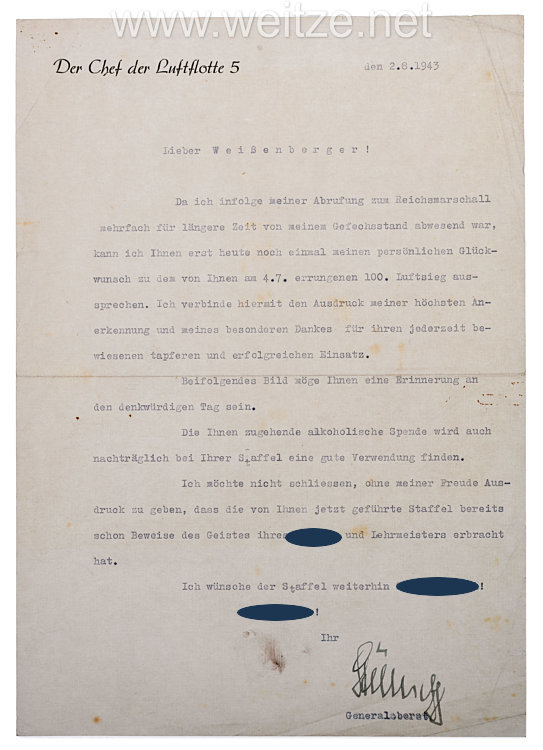
Gratulationsschreiben des Chefs der Luftflotte 5 zum 100. Luftsieg, datiert 2.8.1942, OU Stumpff, Generaloberst.
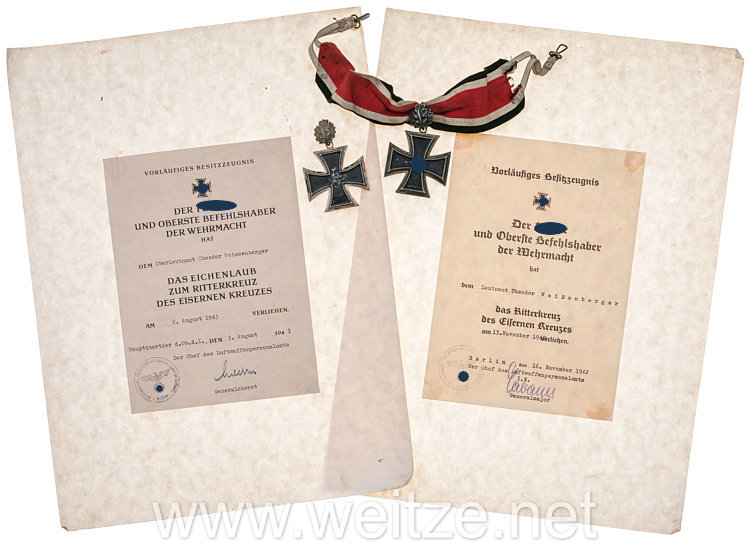
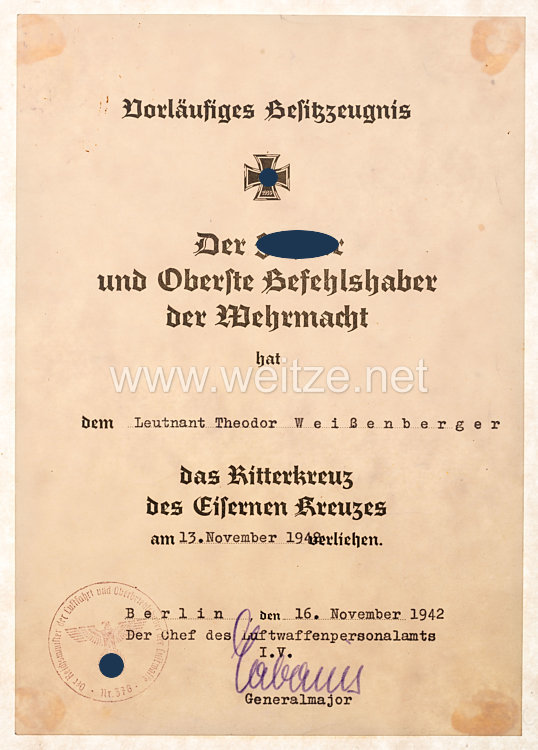
Vorläufiges Besitzzeugnis zum Ritterkreuz des Eisernen Kreuzes, verliehen am 13. November 1942, ausgestellt 16. November 1942
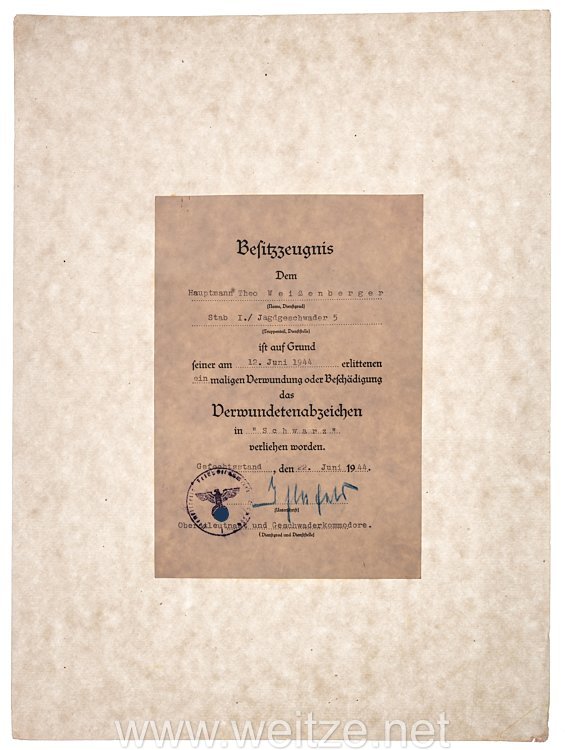
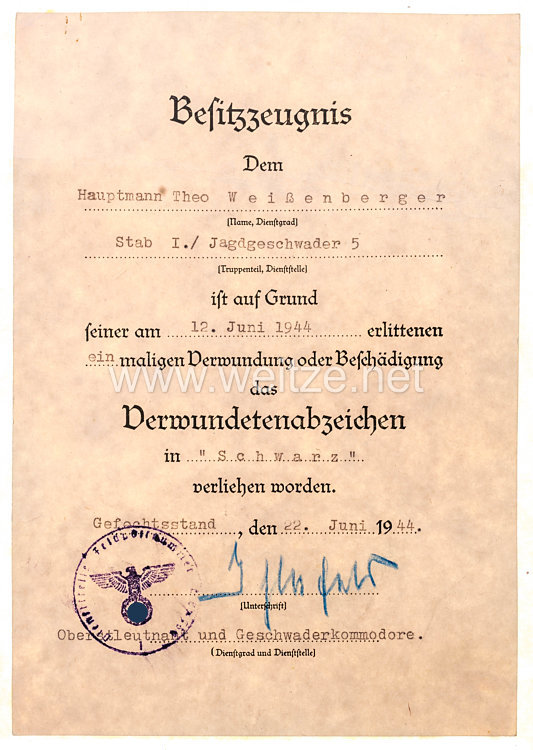
Besitzzeugnis zum Verwundetenabzeichen in Schwarz, ausgestellt vom Stab Jagdgeschwader 5 am 22. Juni 1944, mit OU Geschwaderkommodore (Verwundung nach Notlandung am 8.6.44.).
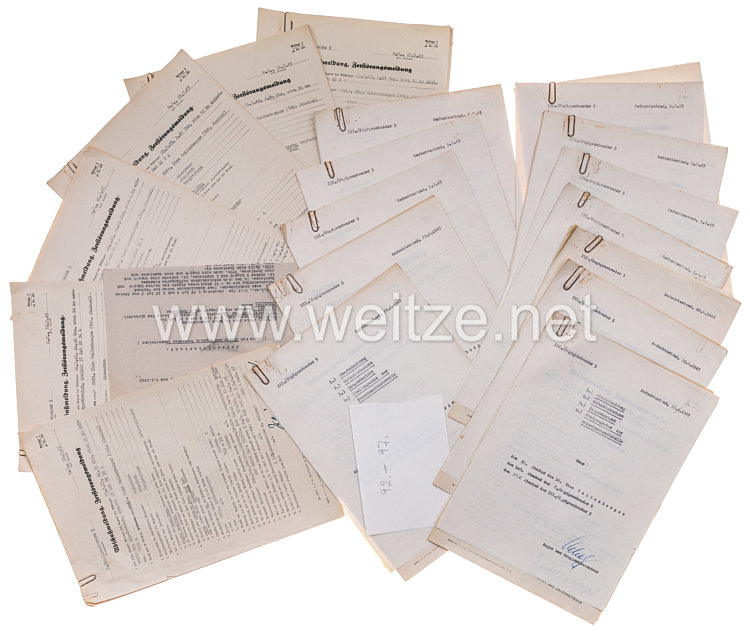
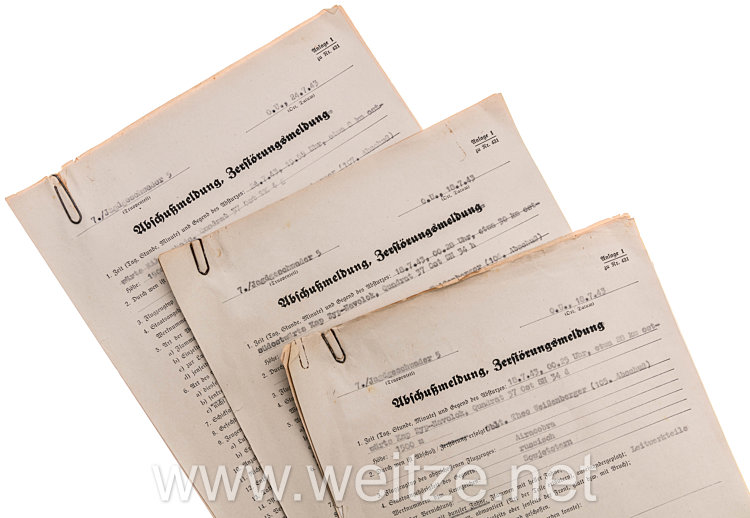
Insgesamt 20 Abschußmeldungen aus dem Zeitraum Mai bis Juli 1943. Es handelt sich um den 92. bis 104. Abschuß, einzeln durchnummeriert. Jede Abschußmeldung aus ca. 6 Seiten, bestehend aus Abschußmeldung, Gefechtsbericht, Zeugenbericht, Stellungnahme der Zwischendienststelle, jeweils unterschrieben vom Gruppenkommandeur, Weißenberger und dem Augenzeugen. 8 weitere Abschußmeldungen vom 18.7 bis 25.7.1943 auf entsprechendem Vordruck, jeweils von Weißenberger und dem Staffelführer unterschrieben.
Telegramm von Adolf Hitler: "..verleihe ich Ihnen als 266. Soldaten der Deutschen Wehrmacht das Eichenlaub zum Ritterkreuz des Eisernen Kreuzes.", datiert 2.8.1943.
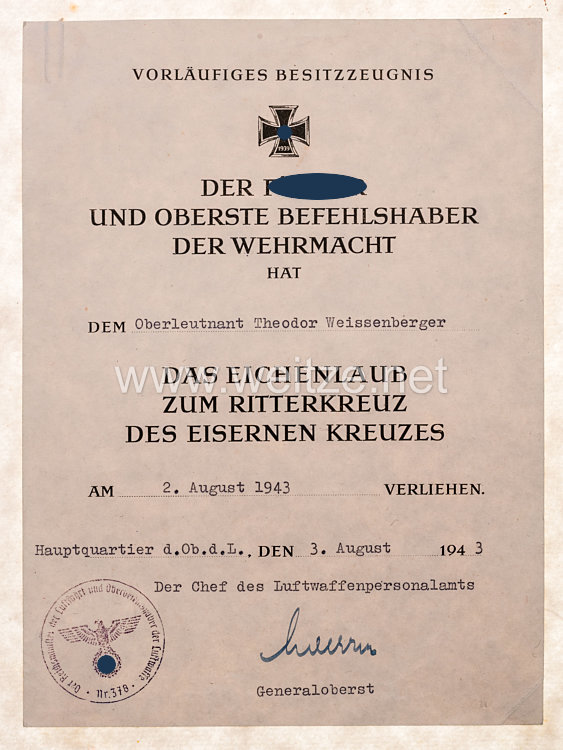
Vorläufiges Besitzzeugnis für ds Eichenlaub zum Ritterkreuz des Eisernen Kreuzes, verliehen am 2. August 1943, ausgestellt 3. August 1943, OU "Der Chef des Luftwaffenpersonalamtes Loerzer Generaloberst".
Telegramm von Reichsmarschall Hermann Göring, Gratulation zur Verleihung des Eichenlaubs, datiert 5.8.1943.
Die meisten Urkunden sind jeweils auf ein großes Papierblatt aufgeklebt.
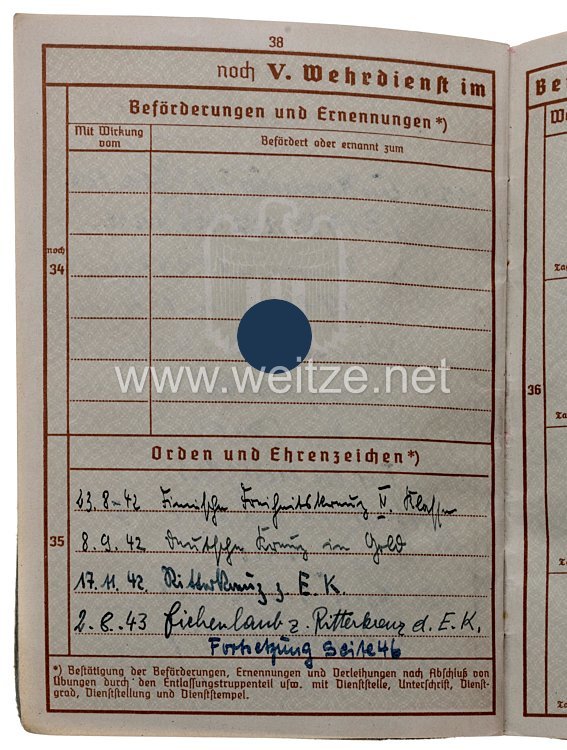
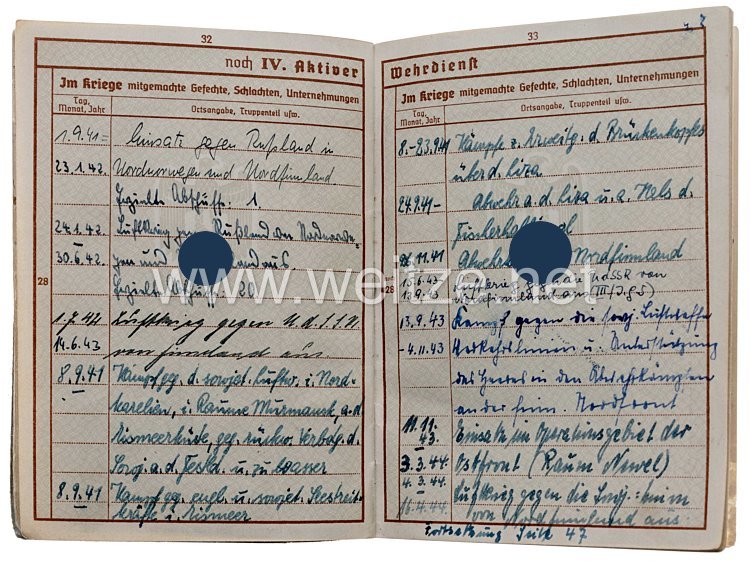
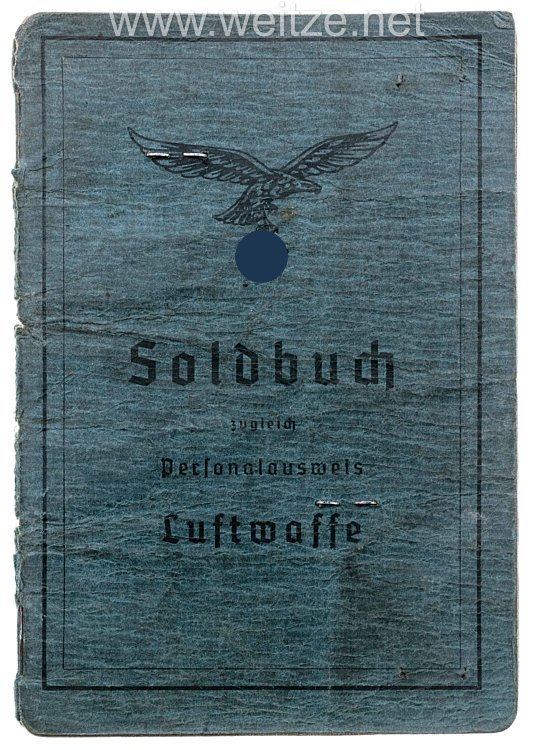
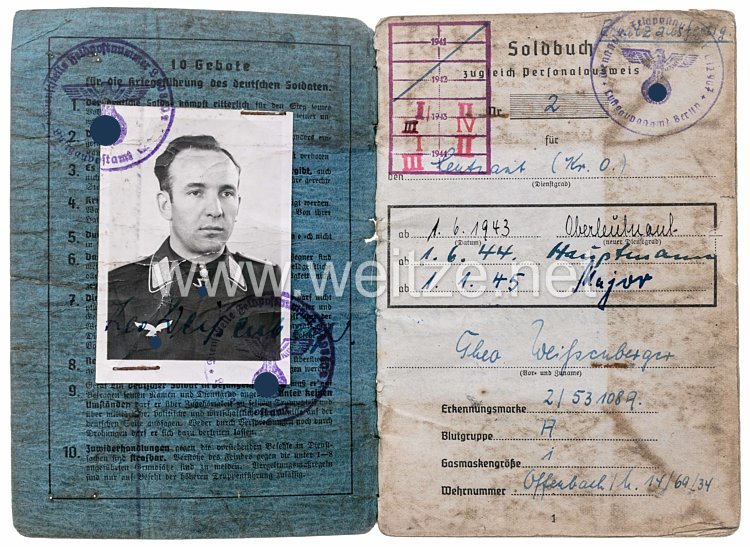
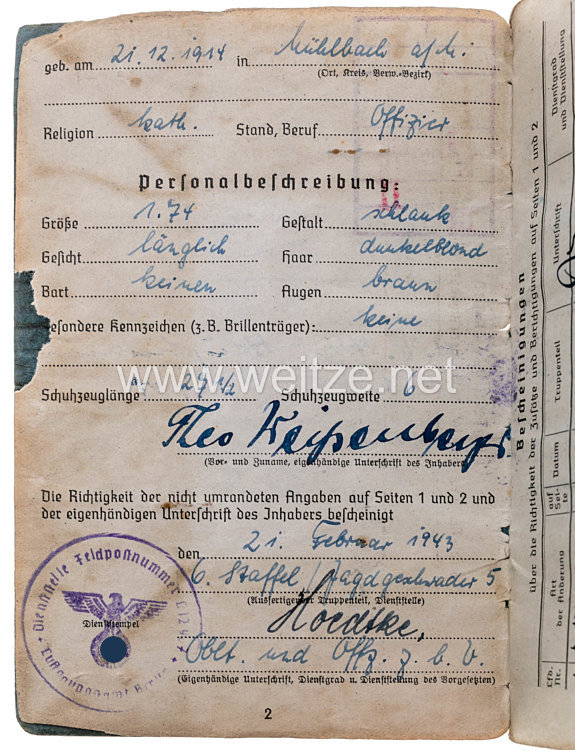
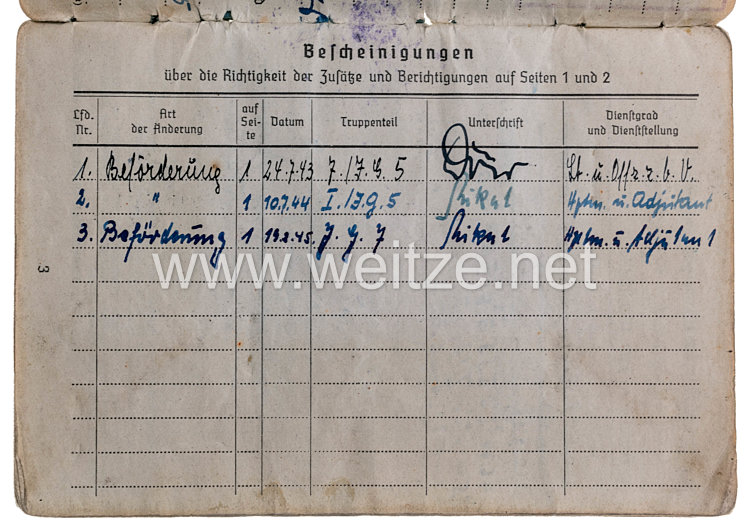
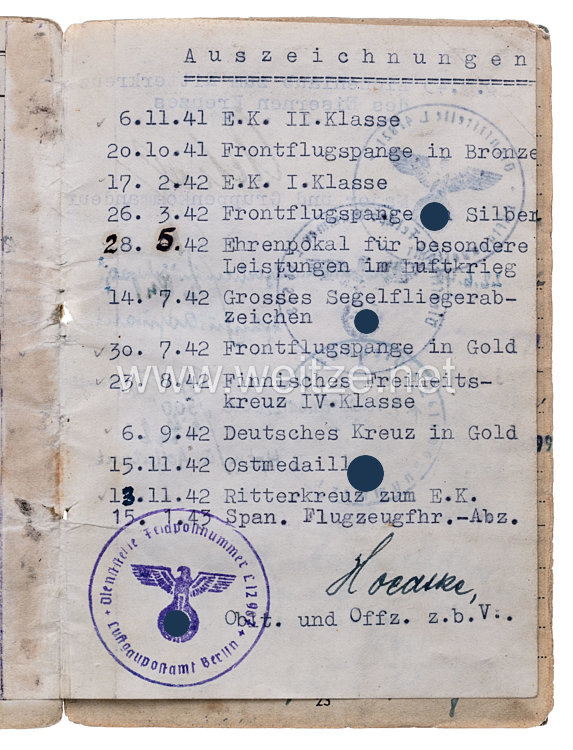
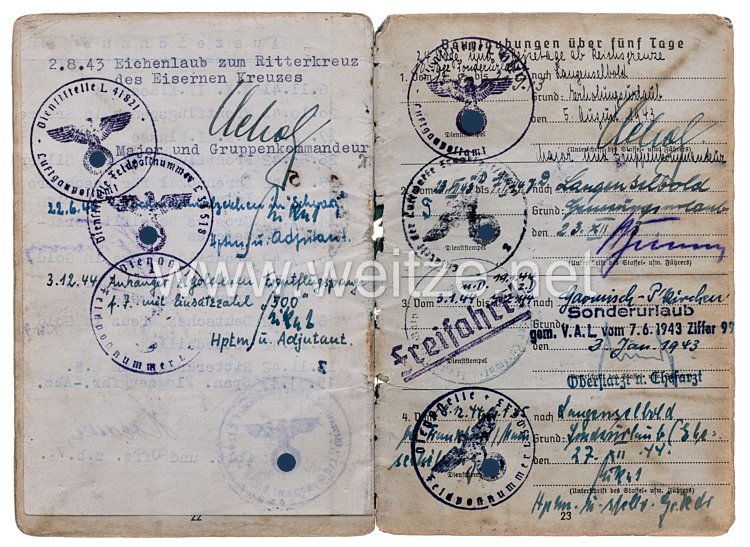
Soldbuch der Luftwaffe, ausgestellt 21. Februar 1943, mit sehr schönem Portraitfoto als Oberleutnant mit Ritterkreuz und Eichenlaub. Randvoll mit allen Eintragungen, alle Auzeichnungen bis "3.12.44 Anhänger z. goldenen Frontflugspange f.J. Einsatzzahl "500", alle Beförderungen bis zum Major am 1.1.45, letzte Eintragung 30.1.1945.
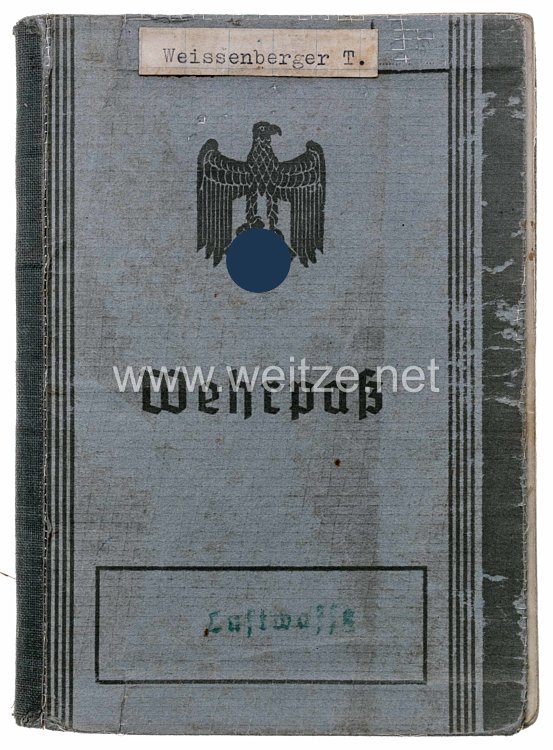
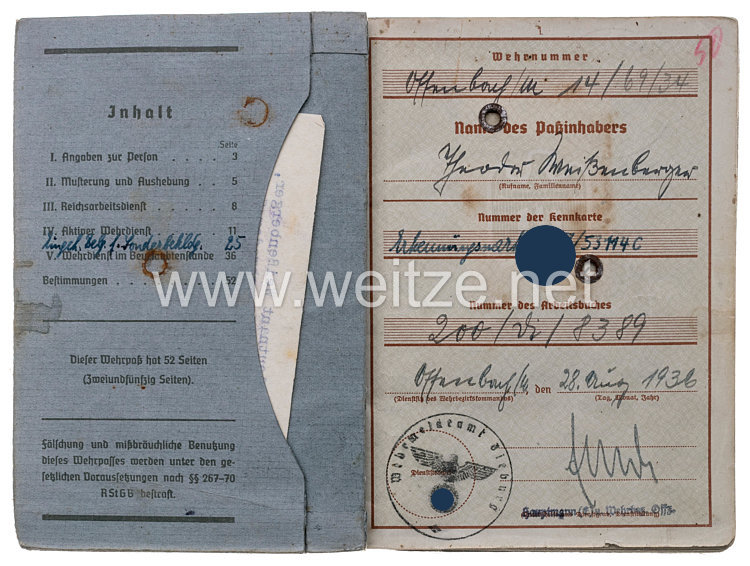
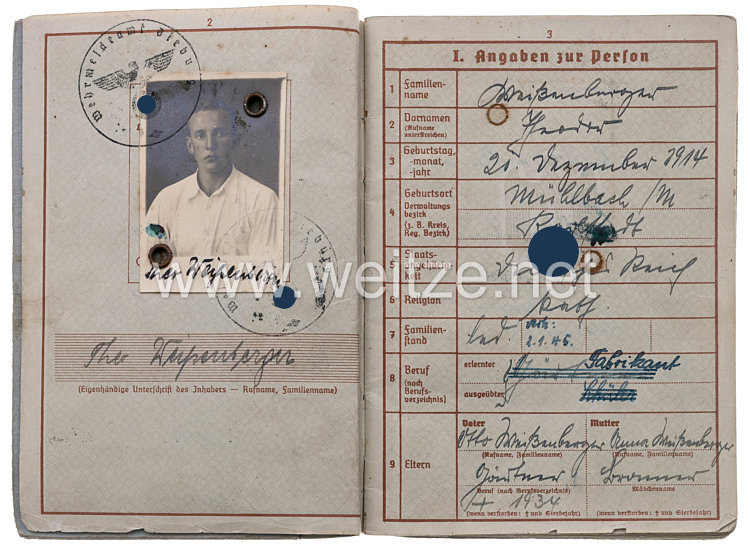
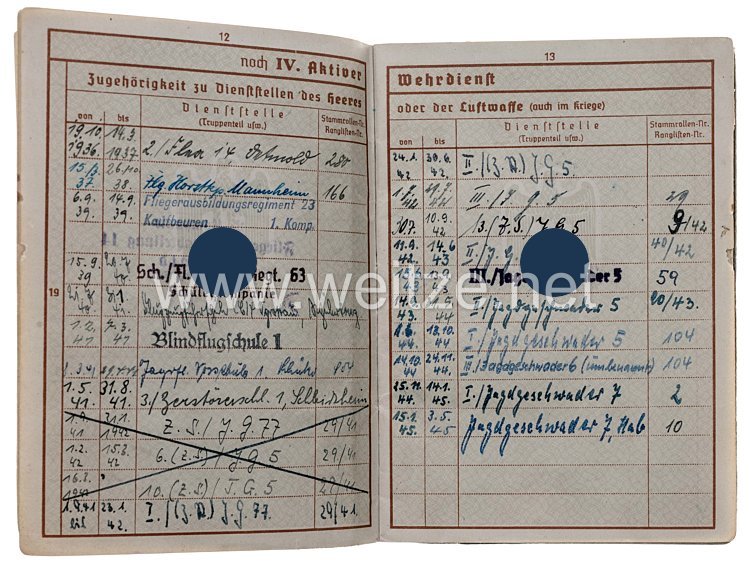
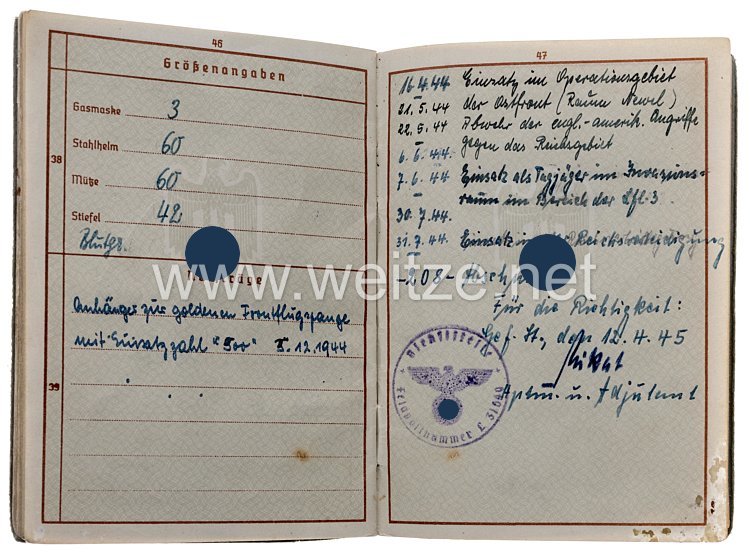
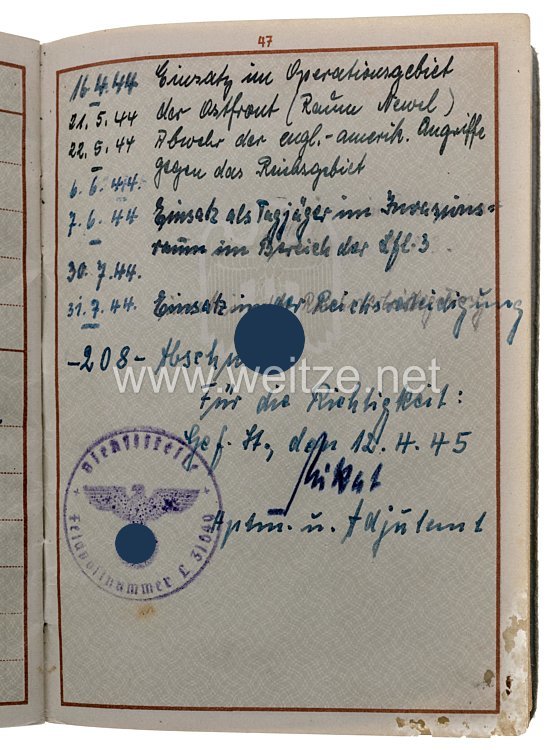
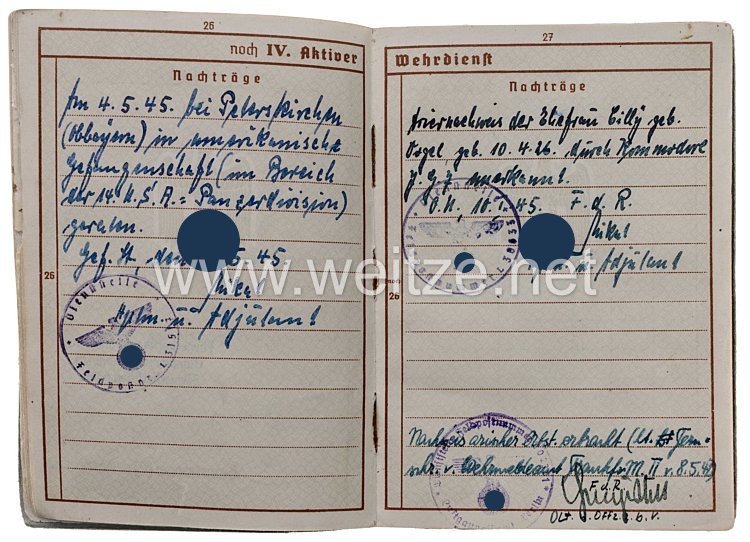
Wehrpaß der Luftwaffe, ausgestellt 28. August 1936, randvoll mit allen Eintragungen, Beförderungen, Orden, Kampfhandlungen etc. Letzter Eintrag: "am 4.5.45 bei Peterskirchen (Obbayern) in amerikanische Gefangenschaft (im Bereich der 14. U.S.A.-Panzerdivision) geraten. Gef. St. den 4.5.45 ".
Luftwaffe grauer Leinenausweis für Angehörige des fliegenden Personals, ausgestellt 29. Dezember 1944, mit schönem Uniformfoto mit Ritterkreuz und Eichenlaub, gültig bis 1. Quartal 1945.
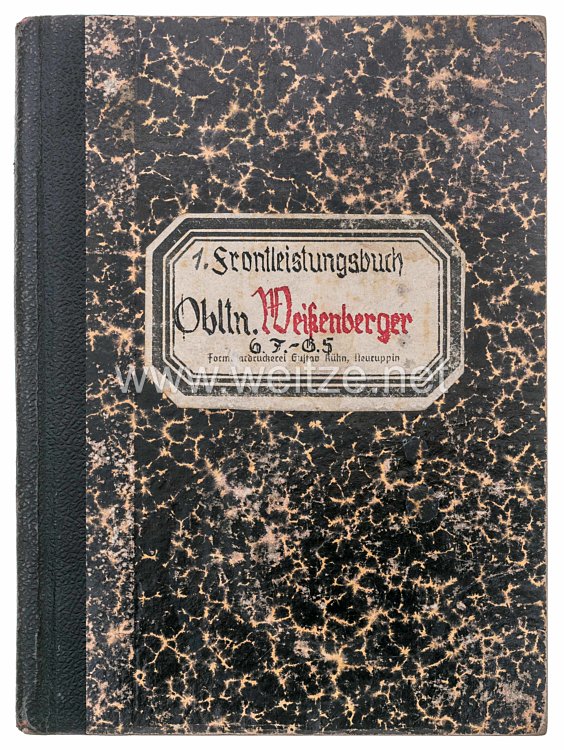
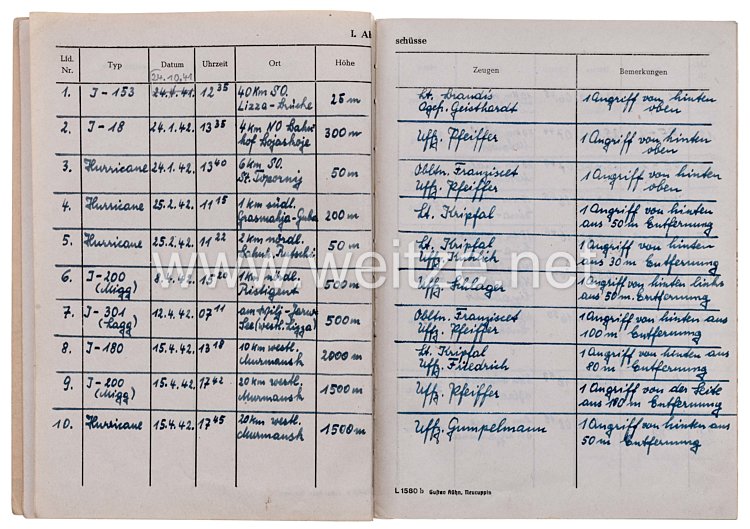
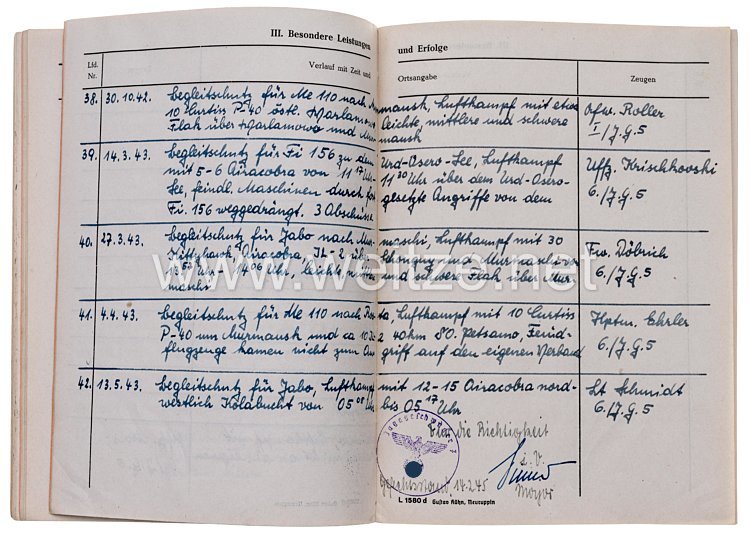
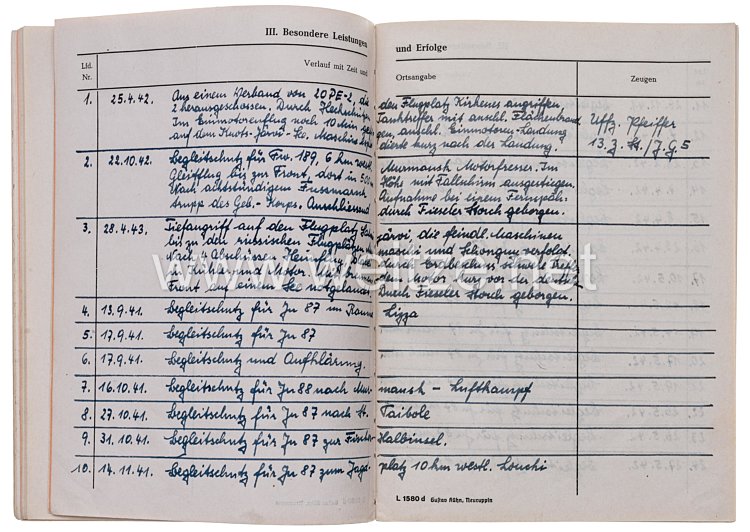
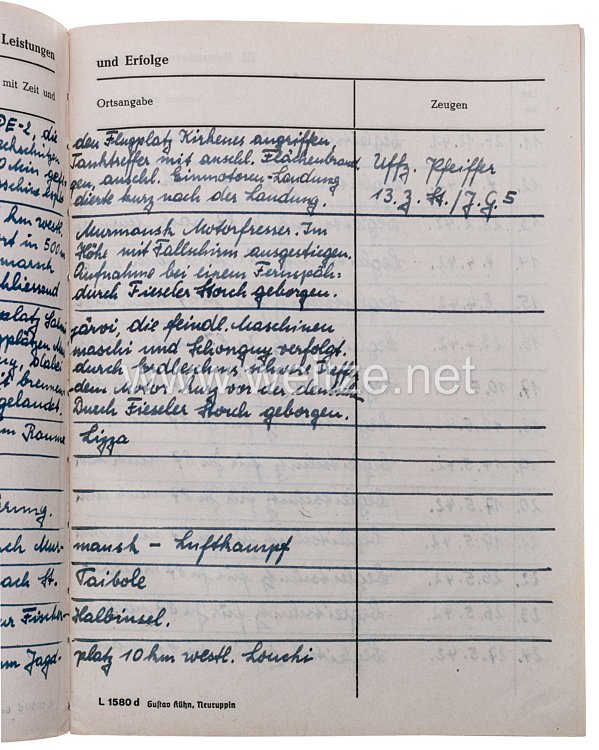
1. Frontleistungsbuch vom 6./J.G. 5 mit den eingetragenen Abschüssen von Nr. 1 (24.10.1941) bis Abschuss Nr. 116 (13.10.1943), jeder Abschuß detailliert beschrieben. Gestempelt "Jagdgeschwader 7" datiert 14.2.45 und unterschrieben.
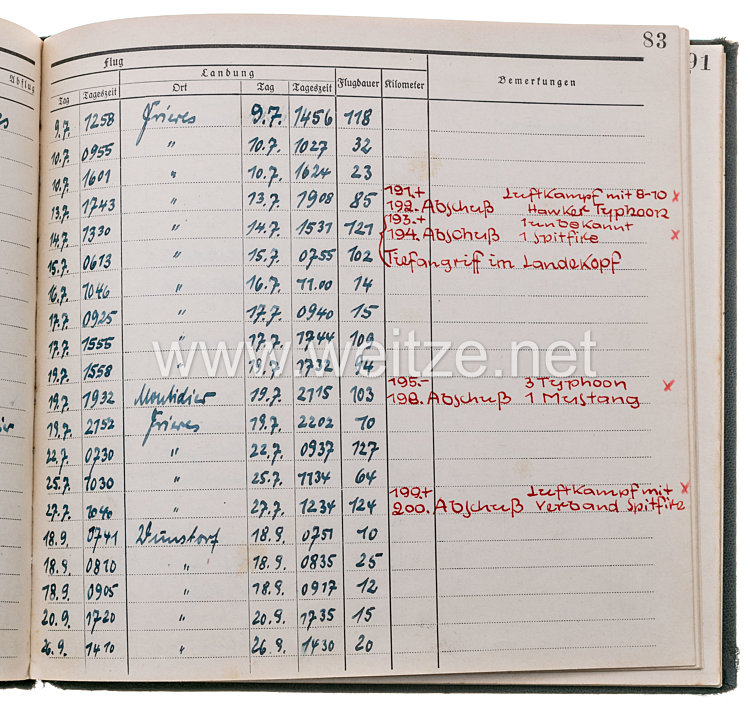
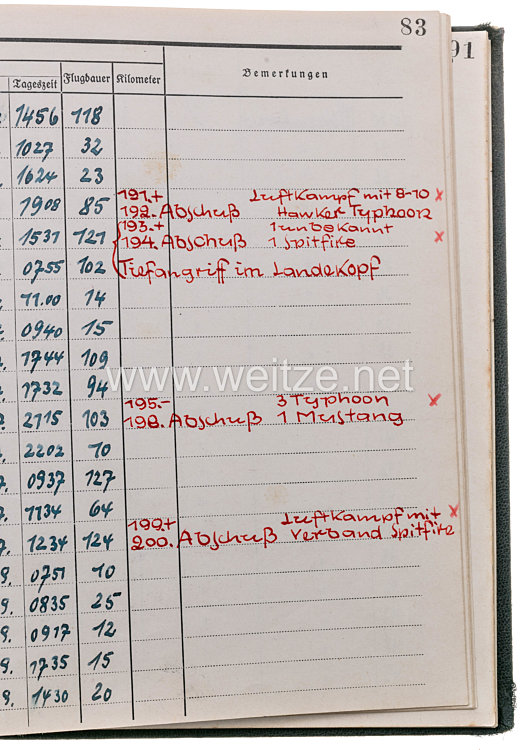
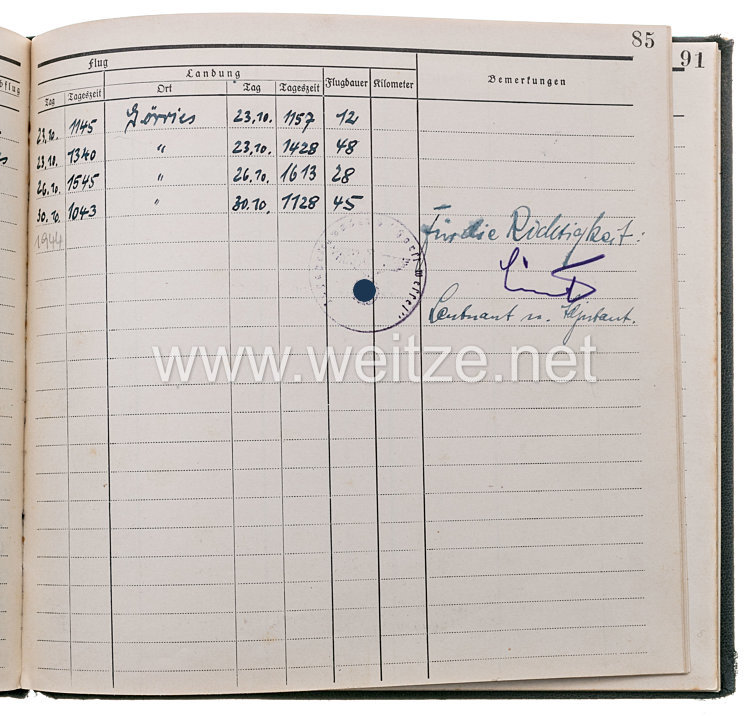
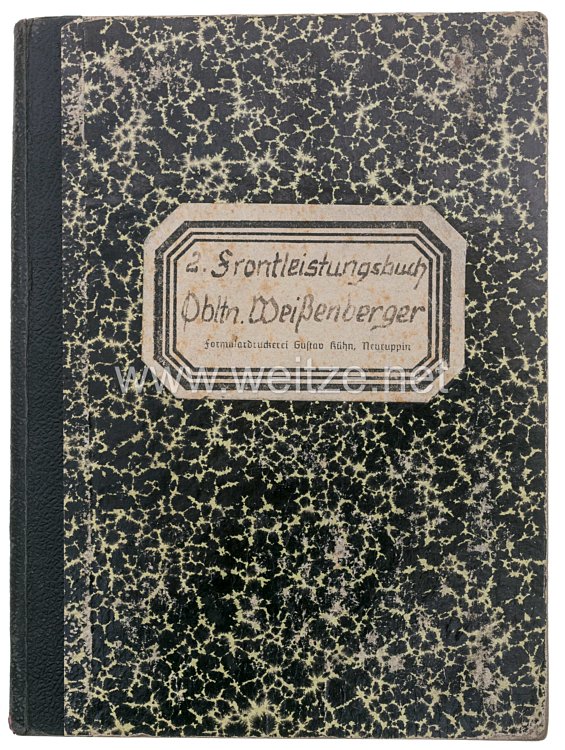
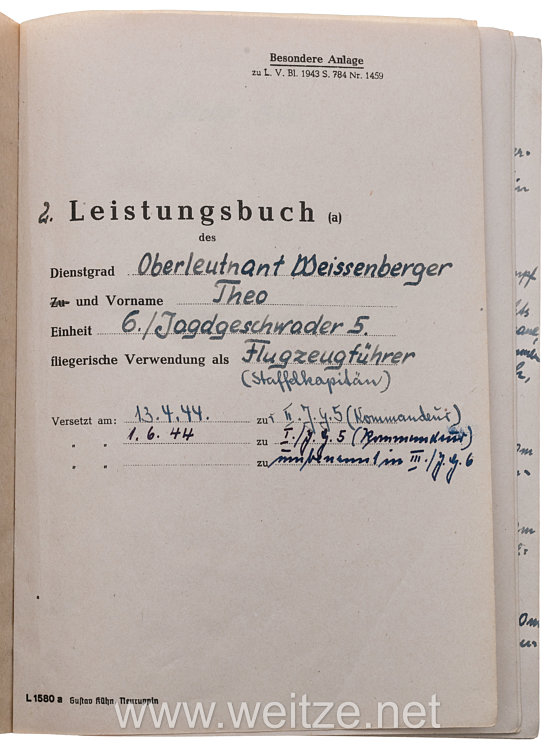
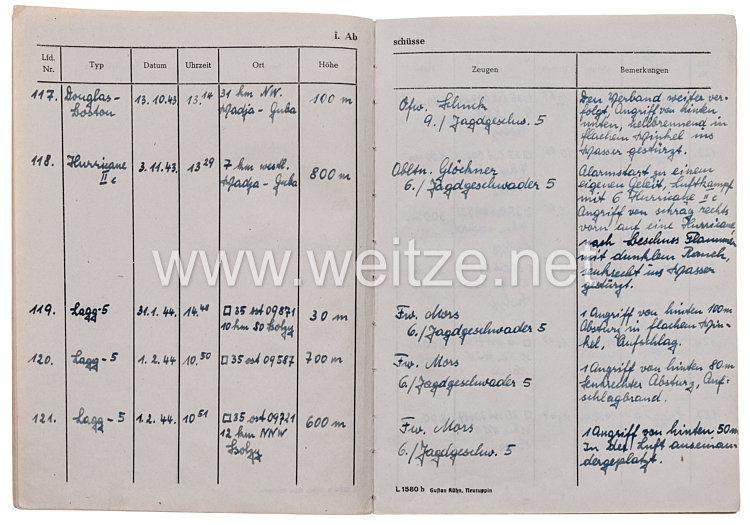
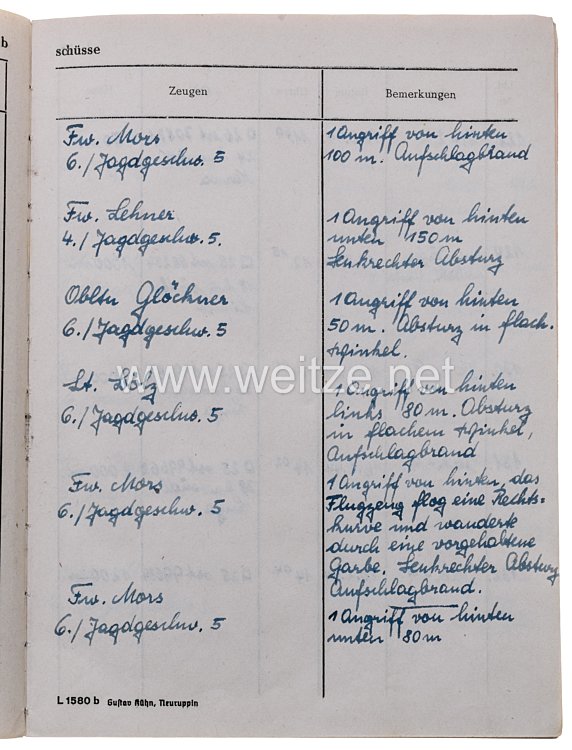
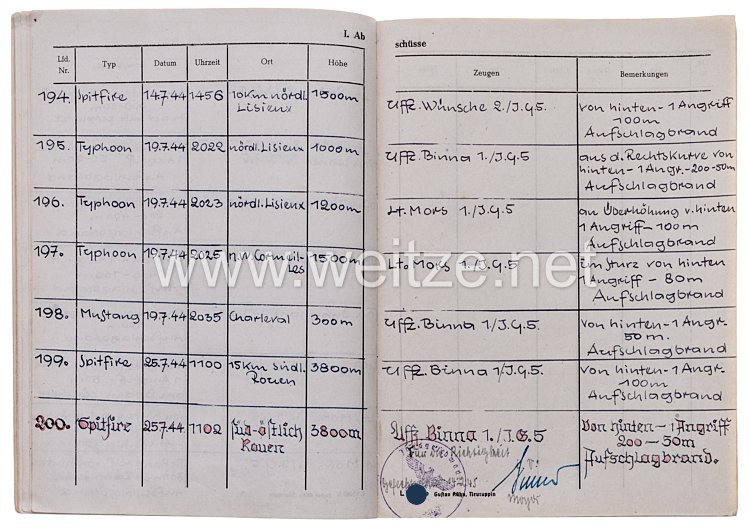
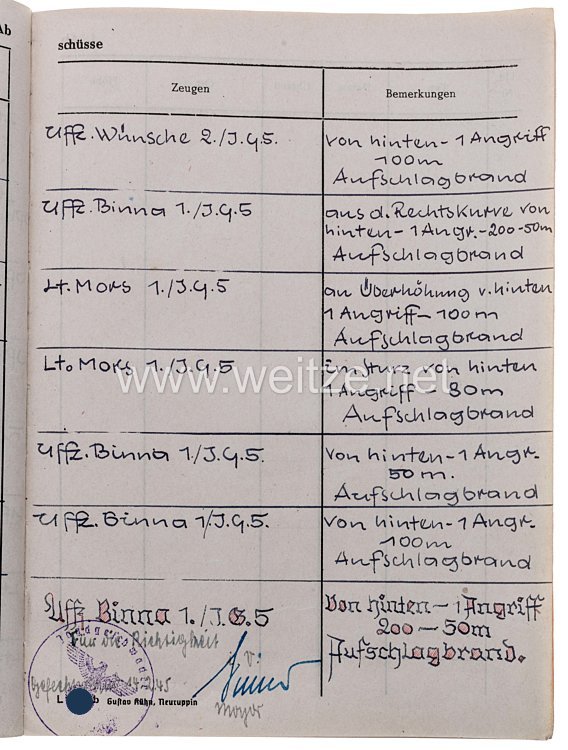
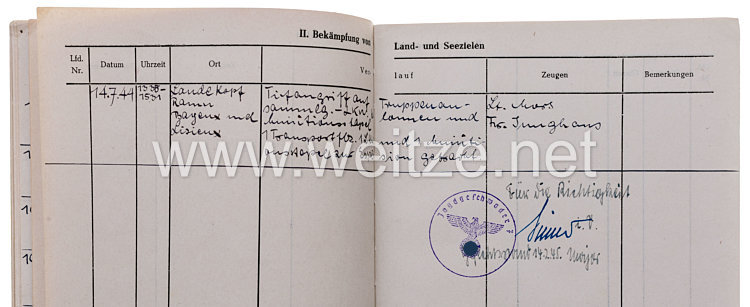
2. Frontleistungsbuch mit den eingetragenen Abschüssen von Nr. 117 (13.10.43) bis Abschuss Nr. 200 (25.7.1944), jeder Abschuß detailliert beschrieben. Gestempelt "Jagdgeschwader 7" datiert 14.2.45 und unterschrieben.
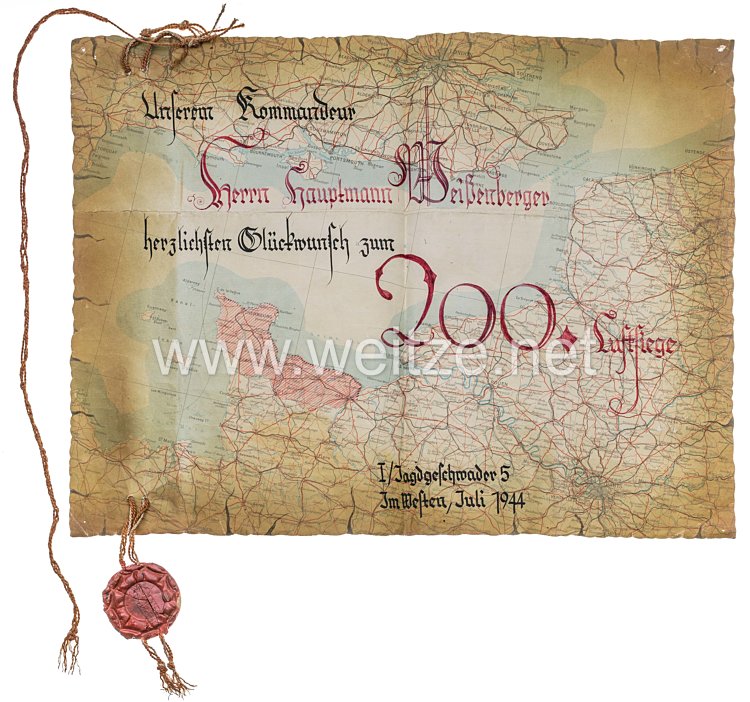
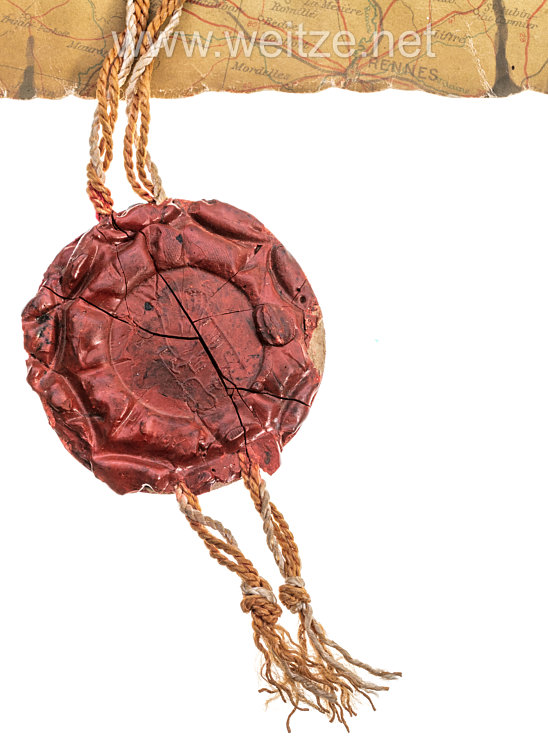
Große Glückwunschurkunde zum 200. Luftsieg, ausgestellt vom I/Jagdgeschwader 5, datiert "Im Westen, Juli 1944". Die Urkunde ist kunstvoll per Hand auf eine original Fliegerkarte mit dem Ärmelkanal und der französisch/englischen Küste gemalt und gesiegelt mit dem Geschwaderwappen des JG 5.
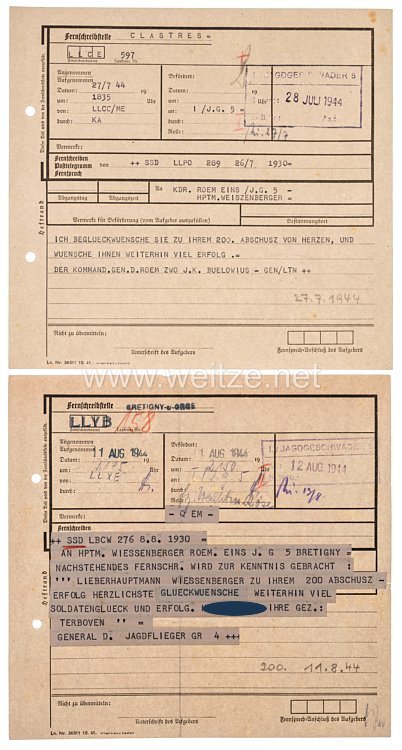
Telegramm von Generalfeldmarschall Sperrle: Gratulation zum 200. Luftsieg, datiert 26.7.1944. Dazu 2 weitere Telegramme von General Bülowius und General Terboven zum 200. Luftsieg.
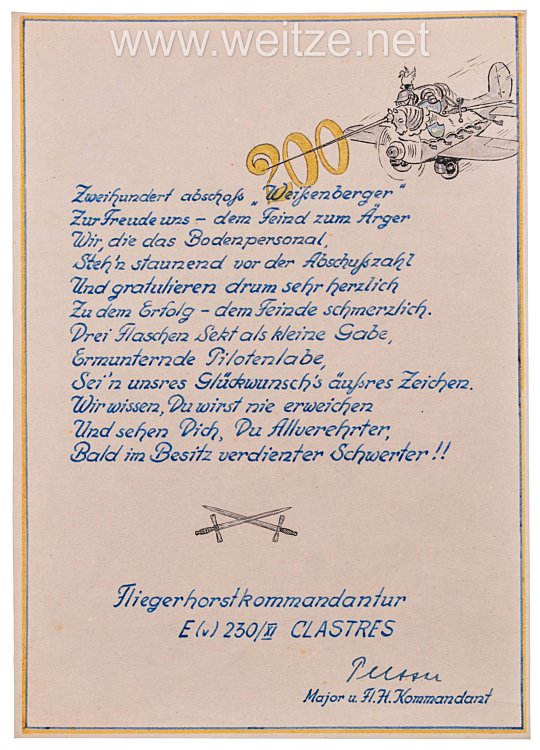
Glückwunschurkunde zum 200. Abschuß von der Fliegerhorstkommandantur im Namen des Bodenpersonals mit 3 Flaschen Sekt..
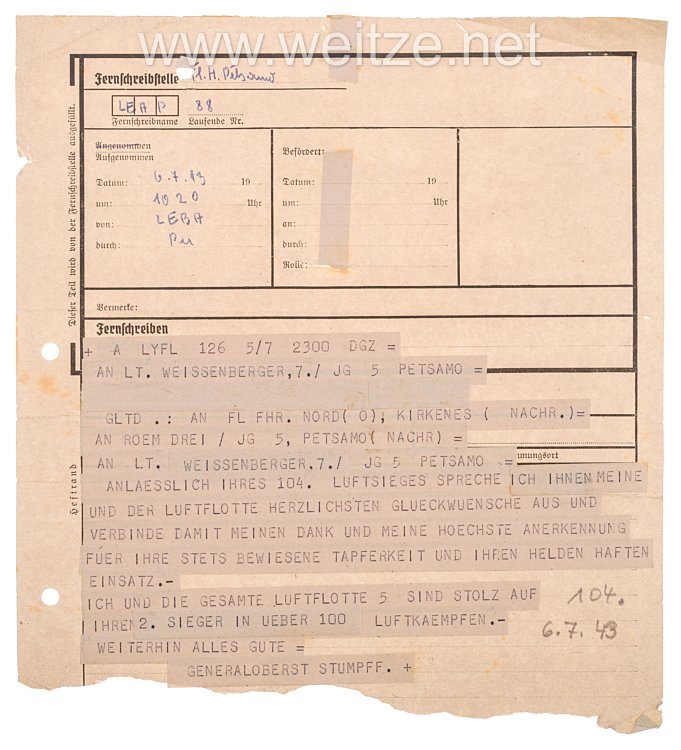
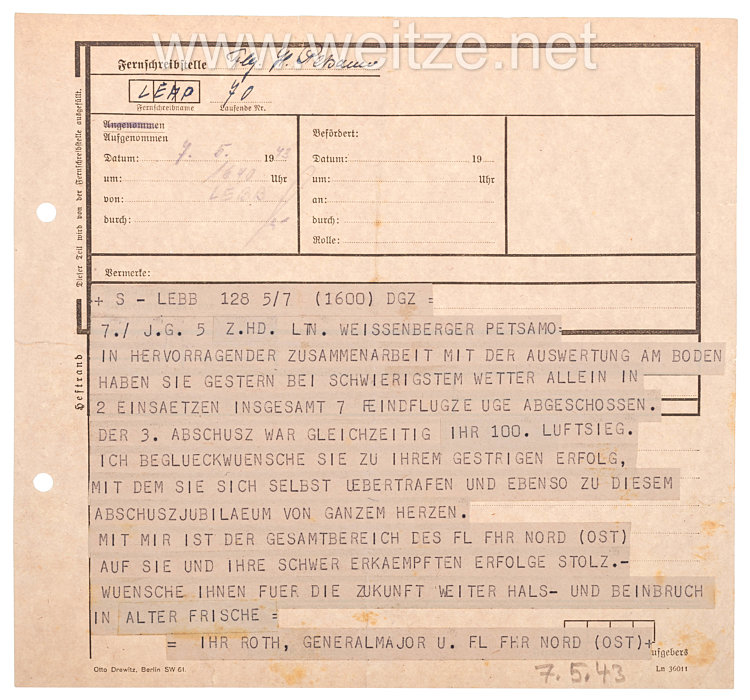
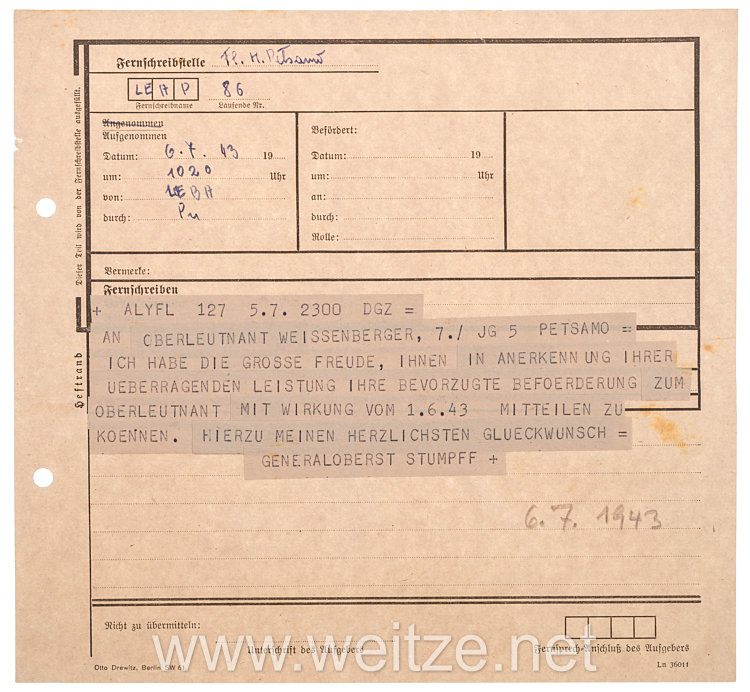
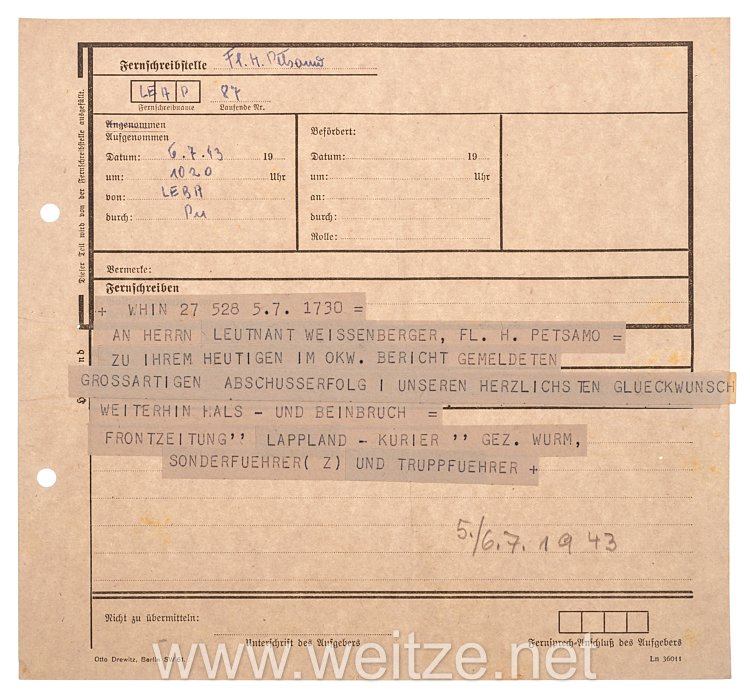
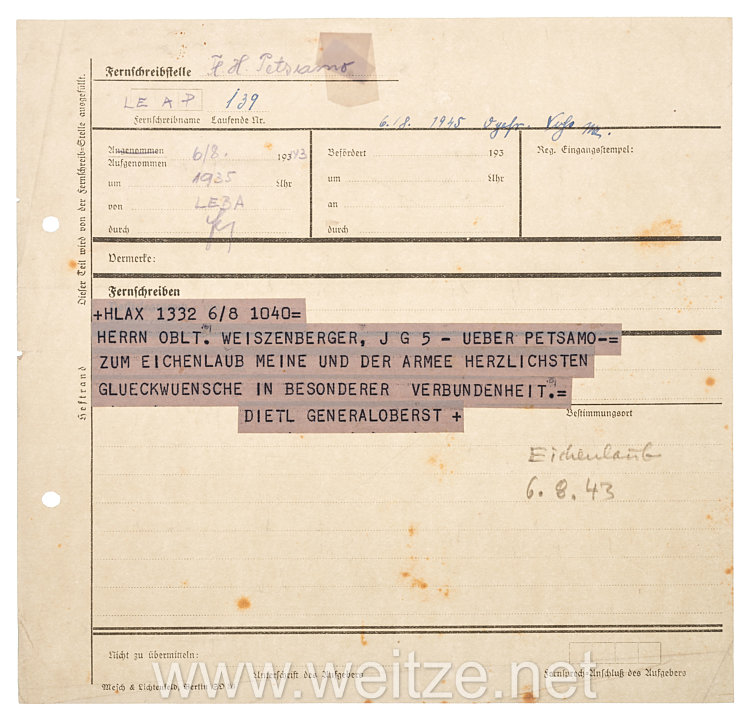
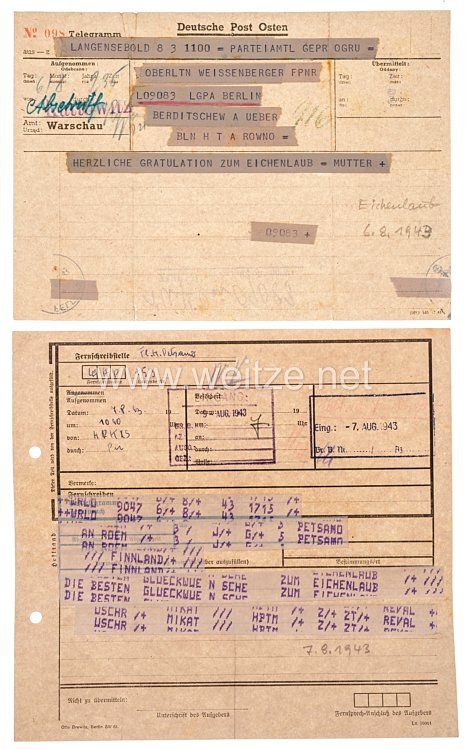
Insgesamt 17 weitere Telegramme von diversen Generalen: Glückwünsche zum 100. Luftsieg, zur Verleihung des Eichenlaub, zum 150. Abschuss, zu Beförderungen etc.
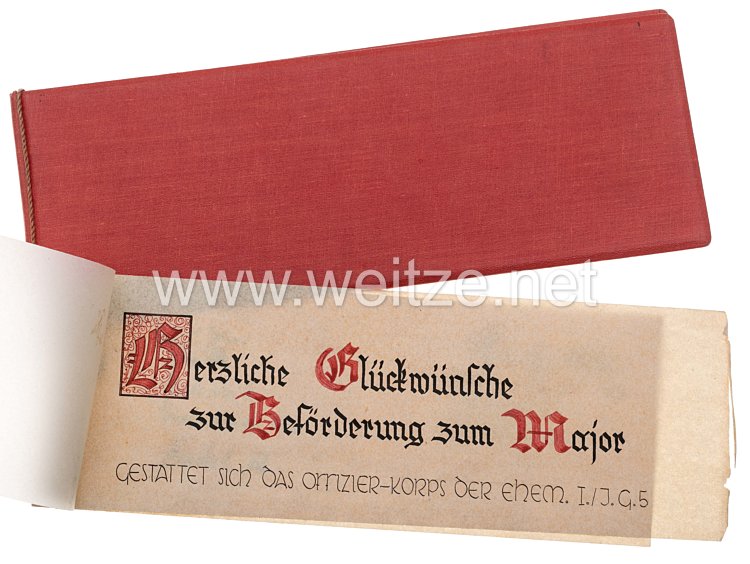
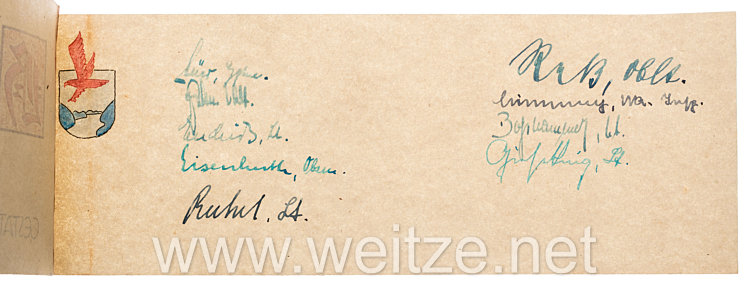
Große Glückwunschurkunde zur Beförderung zum Major. Per Hand gemalte Klappurkunde, unterschrieben von den Offizieren der I./JG 5, in roter Leinenmappe.
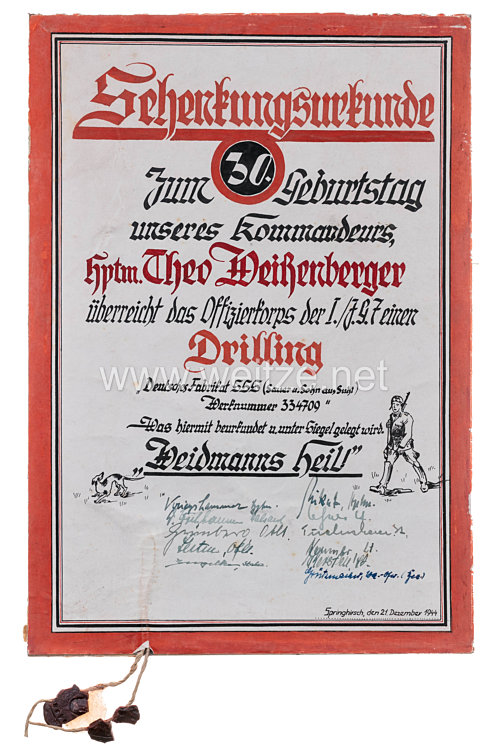
Geschenkurkunde "Zum 30. Geburtstag unseres Kommandeurs Hptm. Theo Weißenberger überreicht das Offizierskorps der I./J.G. 7 einen Drilling" (Jagdgewehr), datiert 21. Dezember 1944.
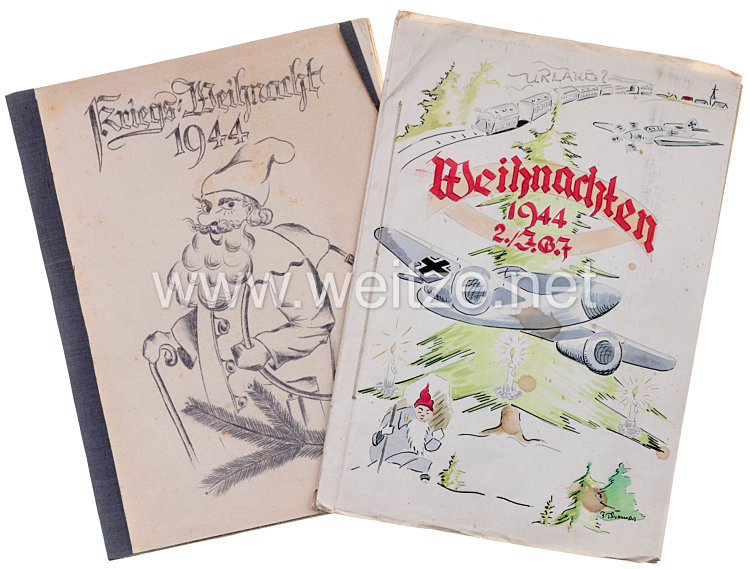
Bierzeitung "Weihnachten 1944" der 2./J.G. 7, das Deckblatt mit farbiger Darstellung einer Me 262 vor Weihnachtsbaum. Dazu eine weitere Festzeitung von der Stabskompanie.
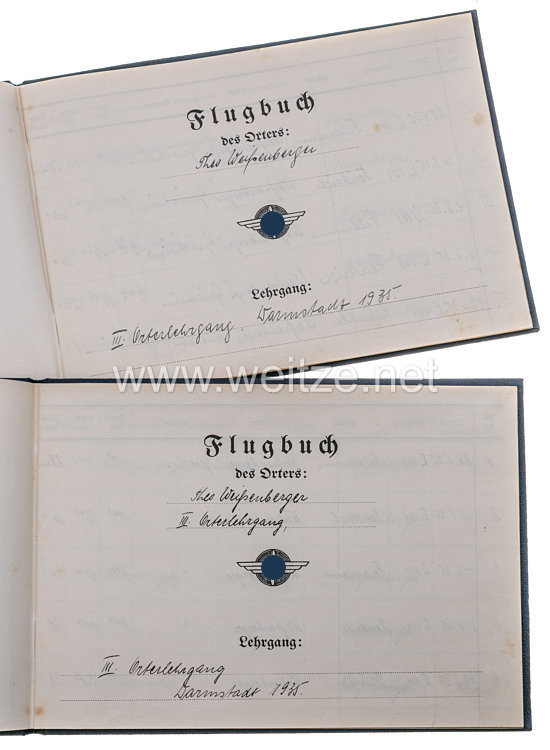
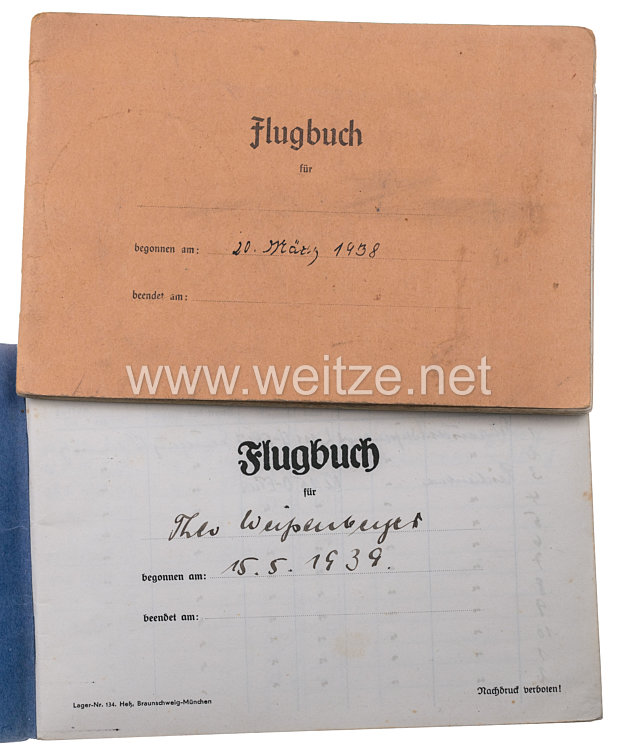
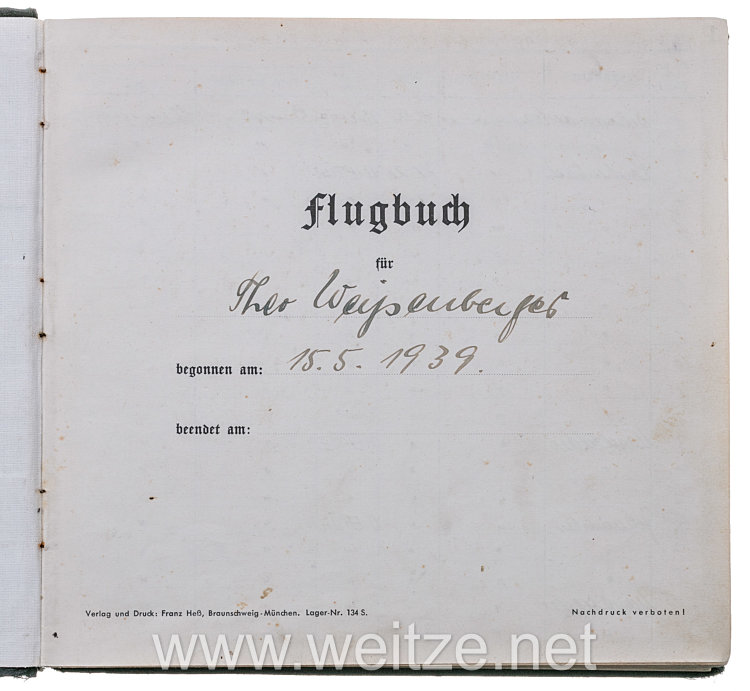
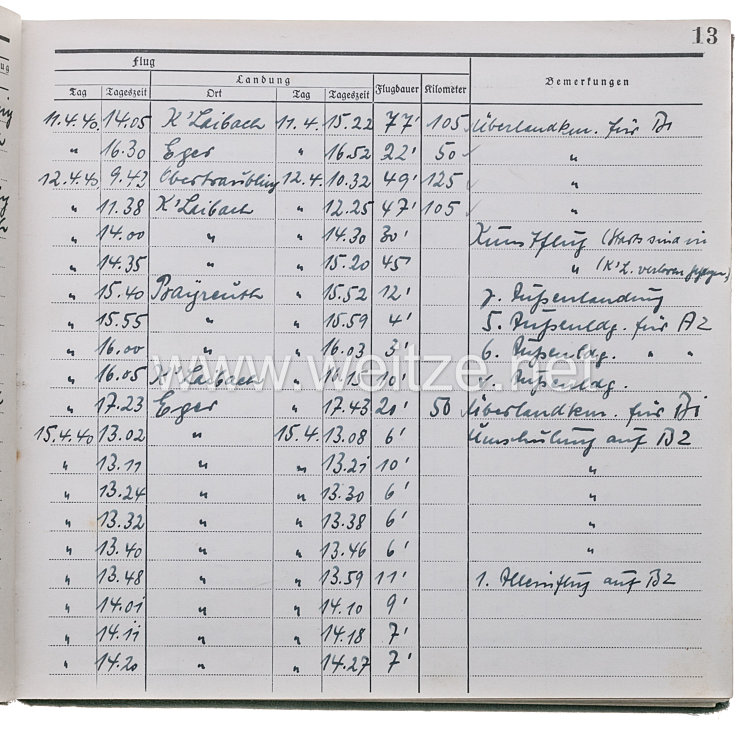
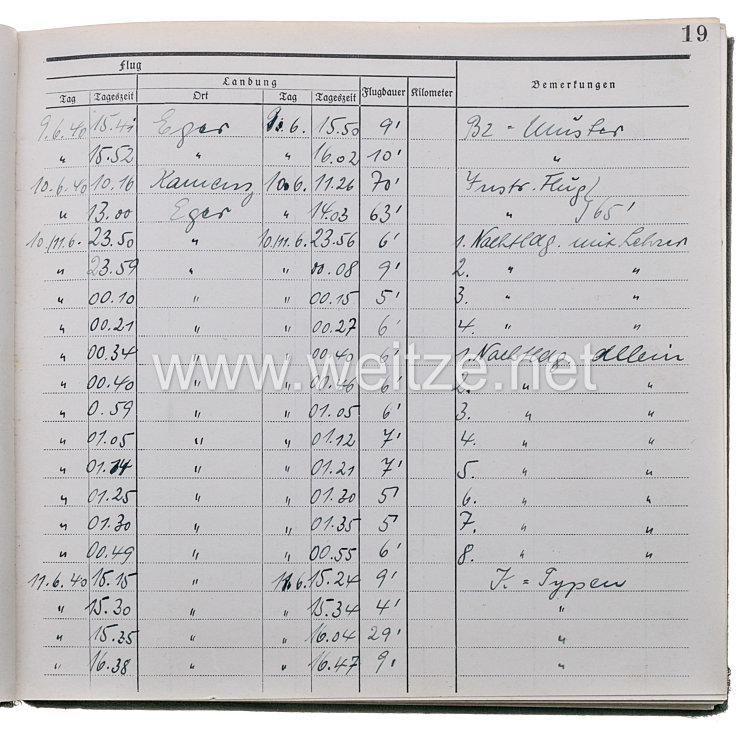
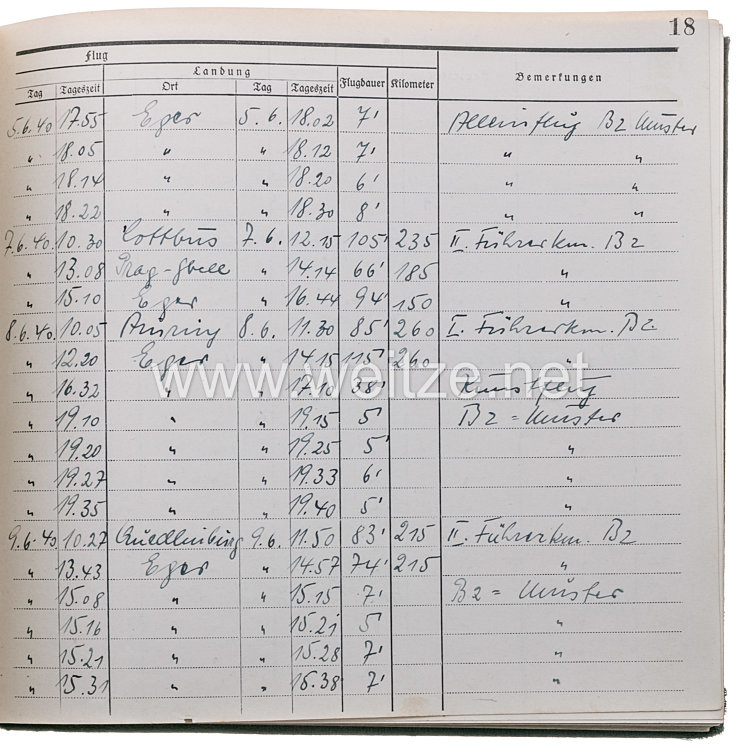
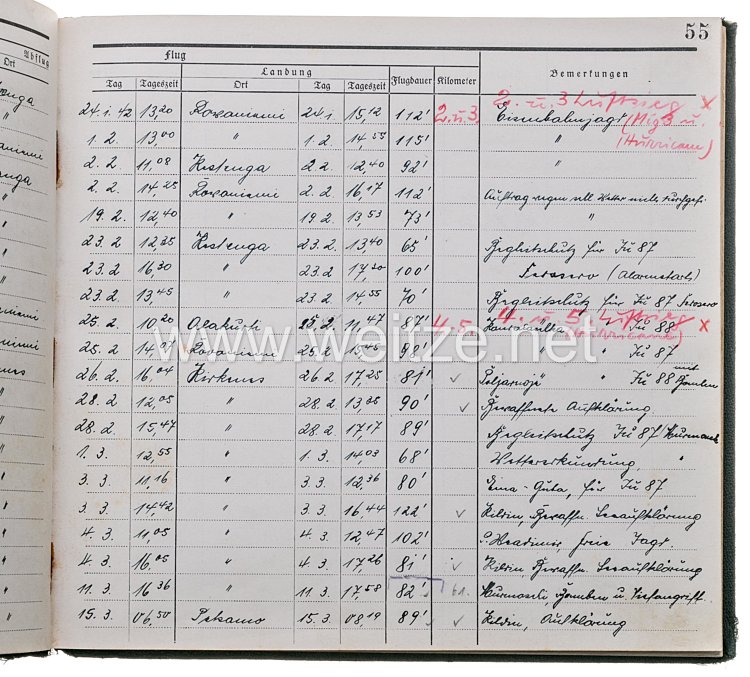
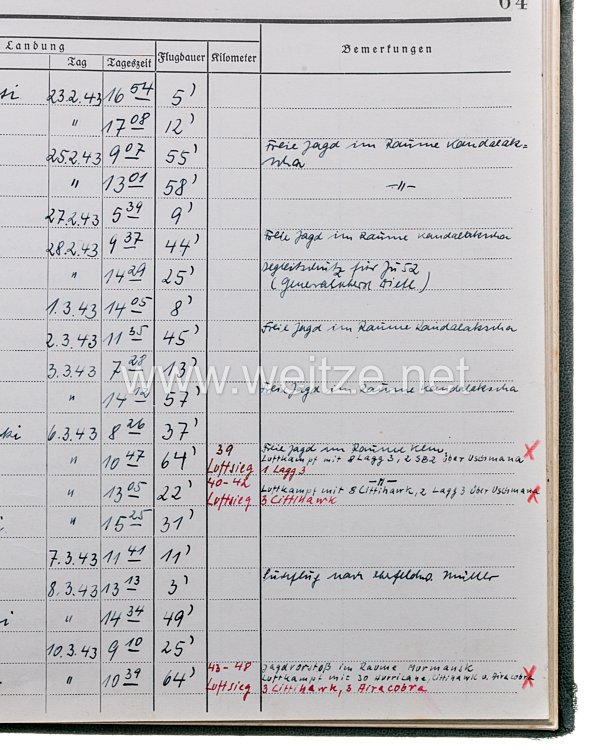
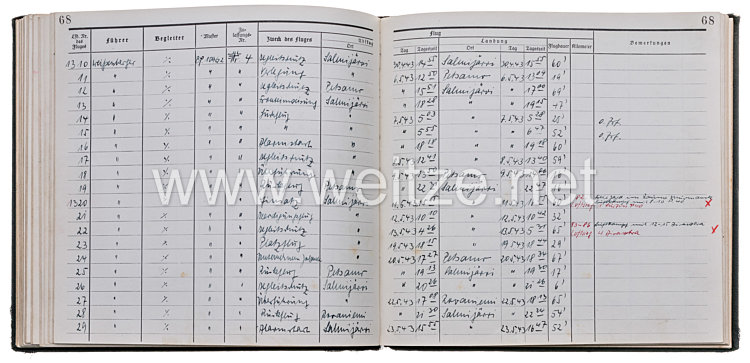
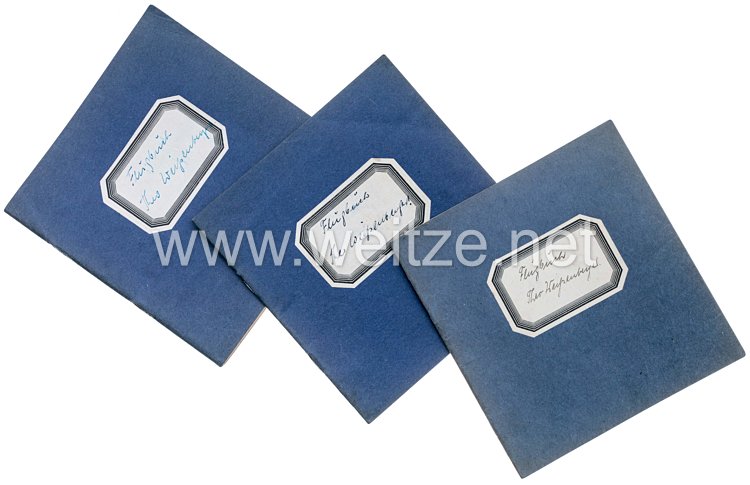
7 Flugbücher der Luftwaffe, durchgehend für die Jahre 1937 bis August 1942. Ab September 1941 im Fronteinsatz auf Bf110, Feindflüge und eingetragene Abschüsse von Nr 1 bis Nr. 22 am 14.8.1942.
Insgesamt ca. 30 Zeitungsauschnitte über die Erfolge Weissenbergers.
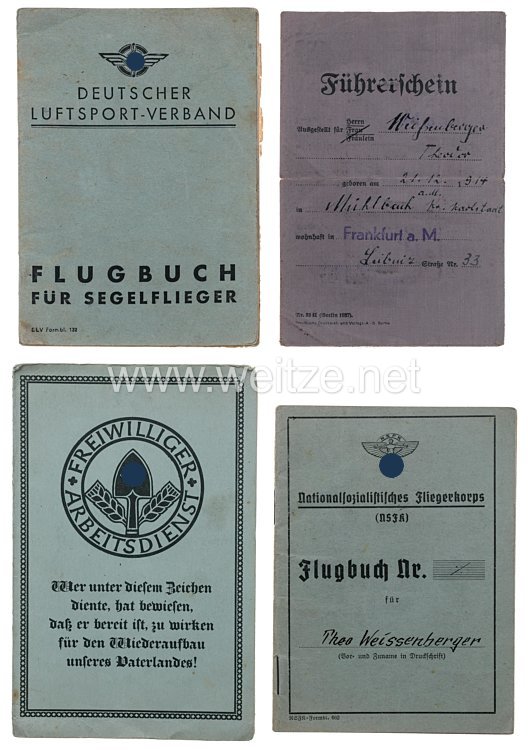
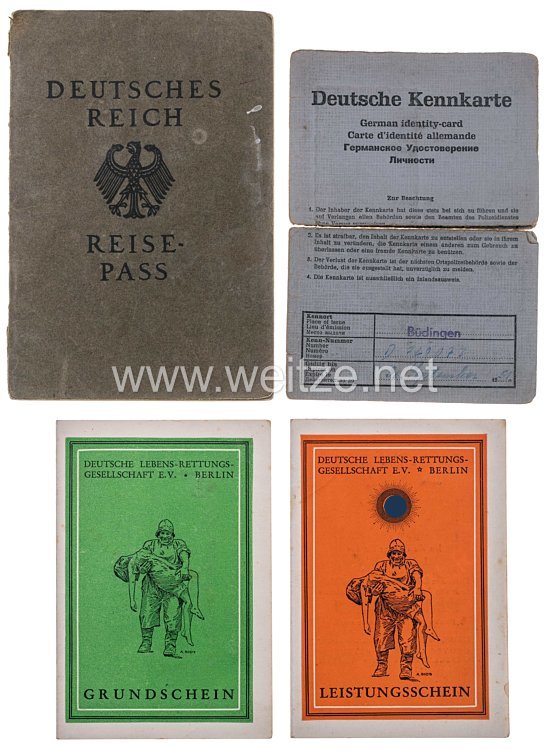
Weiterhin an Papieren III. Reich : Freiwilliger Arbeitsdienst Arbeitspaß, DLRG Grundschein und Leistungsschein mit Uniformfoto, NSFK 4 Flugbücher, Schießbuch von 1941, Führerschein von 1933, Reisepaß von 1938.
Alte Fotokopie aus der Entlassung aus der US Kriegsgefangenschaft, datiert 5. Juni 1945, diverse Papiere und Ausweise der Nachkriegszeit.
Dazu zahlreiche schöne Reprofotos von Weissenberger mit seinen Flugzeugen, Kameraden etc.
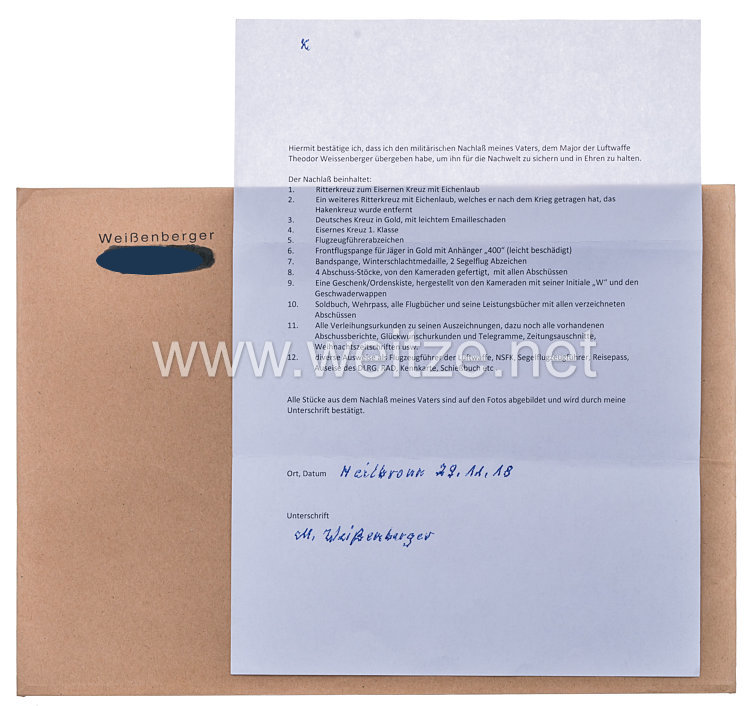
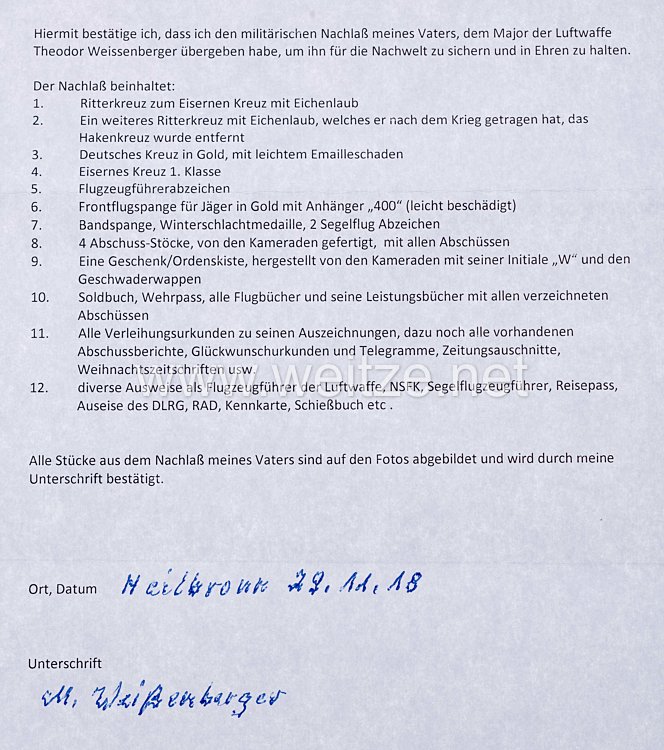
Wir konnten diesen umfangreichen Nachlass direkt aus der Familie erwerben, anbei mit der original Verkaufsbestätigung des Sohnes, datiert November 2018.
Theodor Weissenberger (* 21. Dezember 1914 in Mühlbach; † 11. Juni 1950 am Nürburgring) . Im Oktober 1936 trat er in die 2. Kompanie der Flieger-Ersatz-Abteilung 14 in Detmold ein. Zum Feldwebel der Reserve wurde er am 1. Dezember 1940 befördert und kam August 1941 zum Jagdgeschwader 77. Am 24. Oktober 1941 errang er seinen ersten Luftsieg, wurde am 1. Februar 1942 zum Oberfeldwebel der Reserve und am 1. Juli 1942 zum Leutnant befördert. September 1942 wurde er zur 6. Staffel des Jagdgeschwaders 5 versetzt. Als Zerstörer-Pilot erzielte er bis dahin 23 Abschüsse, woraufhin ihm das Deutsche Kreuz in Gold verliehen wurde. Nach weiteren 15 Luftsiegen wurde ihm am 13. November 1942 das Ritterkreuz des Eisernen Kreuzes verliehen. Zum Oberleutnant befördert am 1. Juni 1943, übernahm er am 15. Juni 1943 als Staffelkapitän die 7. Staffel des Jagdgeschwaders 5. Das Eichenlaub wurde ihm nach seinem 112. Luftsieg am 2. August 1943 verliehen. Die 6. Staffel übernahm er als Chef am 14. September 1943 und wurde ab dem 26. März 1944 Kommandeur der II. Gruppe des Jagdgeschwaders 5. Am 1. Juni 1944 wurde er zum Hauptmann befördert und am 3. Juni 1944 Kommandeur der I. Gruppe des Jagdgeschwaders 5. Am 25. Juli 1944 errang er seinen 200. Luftsieg und schulte anschließend auf den neuen Düsenjäger Me 262 um. Im November 1944 wurde er Kommandeur der I. Gruppe des Jagdgeschwaders 7. Am 1. Januar 1945 wurde er zum Major befördert und wurde Kommodore des Jagdgeschwaders 7. Auf über 500 Feindflügen hatte Weissenberger bei Kriegsende 208 Luftsiege errungen. Weissenberger starb bei einem Rennunfall auf dem Nürburgring am 11. Juni 1950. Er ist in Langenselbold auf dem alten Friedhof begraben.
Ritterkreuz mit Eichenlaub des Eisernen Kreuzes 1939. Das Ritterkreuz ist eine Fertigung von Klein & Quenzer, rückseitig "800" Silber gestempelt. Das Eichenlaub ist eine typische Fertigung von Godet, rückseitig "900" und "21" gestempelt, komplett am konfektionierten Halsband. Viel getragen, Zustand 2-.
Dazu ein weiteres Ritterkreuz mit Eichenlaub des Eisernen Kreuzes 1939. Das Ritterkreuz ist eine Fertigung von Steinhauer & Lück, rückseitig "800" gestempelt. Das Eichenlaub ist eine typische Fertigung von Godet, rückseitig "900" und "21" gestempelt. Viel getragen, Zustand 2-. Das Ritterkreuz wurde 1945 von Weissenberger in der US Kriegsgefangenschaft entnazifiziert.
Deutsches Kreuz in Gold, schwere Ausführung von Deschler, rückseitig mit 4 Nieten. Getragen, mit Emailleschaden auf dem Hakenkreuz, Zustand 2.
Flugzeugführerabzeichen der Luftwaffe. Feinzink, Fertigung von BSW, Zustand 2.
Eisernes Kreuz 1939 1. Klasse. Getragen, Zustand 2.
Frontflugspange für Jäger in Gold mit Anhänger "400". Buntmetallausführung, ein Haltesteg am Anhänger fehlt (kann auf Wunsch restauriert werden), Zustand 2.
Winterschlachtmedaille, Feldspange mit 4 Auszeichnungen, 2 Segelfliegerabzeichen.
4 Abschuss-Stöcke, liebevoll von den Kameraden gefertigt, handgeschnitzt und bemalt, mit allen Abschüssen bis zum 200. Abschuß am 5.7.1944, Bauchlandung, Absprung aus dem Flugzeug 1942 Beschädigung eines U-Boots, Vernichtung einer Eisenbahnzugs, etc. Anbei mehrere schöne Repro Fotos Weissenbergers, auf dem er mit einem dieser Abschuss-Stöcke zu sehen ist.
Geschenk/Ordenskiste, hergestellt von den Kameraden. Fertigung aus Flugzeugblech, sehr schön gefertigt mit seiner Initiale "W" und den Geschwader- und Staffelwappen.
An Urkunden und Dokumenten:
Verleihungsurkunde zum Flugzeugführerabzeichen der Luftwaffe, ausgestellt 16. September 1940.
Luftwaffe Flugzeugführerschein, ausgestellt 22. Juli 1940 vom Fliegerausbildungsregiment 63 in Eger.
Bestallungsurkunde zum Feldwebel, ausgestellt 23. Dezember 1940 von der Flugzeugführerschule 4.
Luftfahrerschein für Flugzeugführer, ausgestellt 28. September 1939.
Luftfahrerschein für Segelflugzeugführer, ausgestellt 18. Juli 1941.
Verleihungsurkunde zum Eisernen Kreuz 2. Klasse, ausgestellt 6. November 1941, OU "Der Chef der Luftflotte 5 und Befehlshaber Nord Stumpff, Generaloberst".
Verleihungsurkunde zur Frontflugspange für Jäger in Bronze, bei der Zerstörer-Staffel J.G. 77, OU Major und Gruppenkommandeur".
Verleihungsurkunde zum Eisernen Kreuz 1. Klasse, ausgestellt 17. Februar 1942, OU "Der Chef der Luftflotte 5 und Befehlshaber Nord Stumpff, Generaloberst".
Bestallungsurkunde zum Oberfeldwebel, ausgestellt am 18. April 1942 von der II./J.G. 5 .
NSFK Verleihungsurkunde für das Grosse Deutsche Segelfliegerabzeichen, datiert 14. Juli 1942.
Verleihungsurkunde zur Frontflugspange für Jäger in Silber, ausgestellt 26.3.1942, OU Major und Gruppenkommandeur".
Verleihungsurkunde zum Ehrenpokal für besondere Leistungen im Luftsieg "in Anerkennung seiner hervorragenden Tapferkeit und der besonderen Erfolge als Jagdflieger", datiert 28. Mai 1942.
Verleihungsurkunde zur Frontflugspange für Jäger in Gold, ausgestellt 31. Juli 1942, OU Oberstleutnant u. Geschw. Kommodore".
Finnland große Verleihungsurkunde zum Freiheitskreuz IV. Klasse mit Schwertern, datiert 1942.
Große Verleihungsurkunde zum Deutschen Kreuz in Gold, ausgestellt 8. September 1942.
Verleihungsurkunde zur Medaille Winterschlacht im Osten, datiert 15. November 1942.
Gratulationsschreiben des Chefs der Luftflotte 5 zum 100. Luftsieg, datiert 2.8.1942, OU Stumpff, Generaloberst.
Vorläufiges Besitzzeugnis zum Ritterkreuz des Eisernen Kreuzes, verliehen am 13. November 1942, ausgestellt 16. November 1942
Besitzzeugnis zum Verwundetenabzeichen in Schwarz, ausgestellt vom Stab Jagdgeschwader 5 am 22. Juni 1944, mit OU Geschwaderkommodore (Verwundung nach Notlandung am 8.6.44.).
Insgesamt 20 Abschußmeldungen aus dem Zeitraum Mai bis Juli 1943. Es handelt sich um den 92. bis 104. Abschuß, einzeln durchnummeriert. Jede Abschußmeldung aus ca. 6 Seiten, bestehend aus Abschußmeldung, Gefechtsbericht, Zeugenbericht, Stellungnahme der Zwischendienststelle, jeweils unterschrieben vom Gruppenkommandeur, Weißenberger und dem Augenzeugen. 8 weitere Abschußmeldungen vom 18.7 bis 25.7.1943 auf entsprechendem Vordruck, jeweils von Weißenberger und dem Staffelführer unterschrieben.
Telegramm von Adolf Hitler: "..verleihe ich Ihnen als 266. Soldaten der Deutschen Wehrmacht das Eichenlaub zum Ritterkreuz des Eisernen Kreuzes.", datiert 2.8.1943.
Vorläufiges Besitzzeugnis für ds Eichenlaub zum Ritterkreuz des Eisernen Kreuzes, verliehen am 2. August 1943, ausgestellt 3. August 1943, OU "Der Chef des Luftwaffenpersonalamtes Loerzer Generaloberst".
Telegramm von Reichsmarschall Hermann Göring, Gratulation zur Verleihung des Eichenlaubs, datiert 5.8.1943.
Die meisten Urkunden sind jeweils auf ein großes Papierblatt aufgeklebt.
Soldbuch der Luftwaffe, ausgestellt 21. Februar 1943, mit sehr schönem Portraitfoto als Oberleutnant mit Ritterkreuz und Eichenlaub. Randvoll mit allen Eintragungen, alle Auzeichnungen bis "3.12.44 Anhänger z. goldenen Frontflugspange f.J. Einsatzzahl "500", alle Beförderungen bis zum Major am 1.1.45, letzte Eintragung 30.1.1945.
Wehrpaß der Luftwaffe, ausgestellt 28. August 1936, randvoll mit allen Eintragungen, Beförderungen, Orden, Kampfhandlungen etc. Letzter Eintrag: "am 4.5.45 bei Peterskirchen (Obbayern) in amerikanische Gefangenschaft (im Bereich der 14. U.S.A.-Panzerdivision) geraten. Gef. St. den 4.5.45 ".
Luftwaffe grauer Leinenausweis für Angehörige des fliegenden Personals, ausgestellt 29. Dezember 1944, mit schönem Uniformfoto mit Ritterkreuz und Eichenlaub, gültig bis 1. Quartal 1945.
1. Frontleistungsbuch vom 6./J.G. 5 mit den eingetragenen Abschüssen von Nr. 1 (24.10.1941) bis Abschuss Nr. 116 (13.10.1943), jeder Abschuß detailliert beschrieben. Gestempelt "Jagdgeschwader 7" datiert 14.2.45 und unterschrieben.
2. Frontleistungsbuch mit den eingetragenen Abschüssen von Nr. 117 (13.10.43) bis Abschuss Nr. 200 (25.7.1944), jeder Abschuß detailliert beschrieben. Gestempelt "Jagdgeschwader 7" datiert 14.2.45 und unterschrieben.
Große Glückwunschurkunde zum 200. Luftsieg, ausgestellt vom I/Jagdgeschwader 5, datiert "Im Westen, Juli 1944". Die Urkunde ist kunstvoll per Hand auf eine original Fliegerkarte mit dem Ärmelkanal und der französisch/englischen Küste gemalt und gesiegelt mit dem Geschwaderwappen des JG 5.
Telegramm von Generalfeldmarschall Sperrle: Gratulation zum 200. Luftsieg, datiert 26.7.1944. Dazu 2 weitere Telegramme von General Bülowius und General Terboven zum 200. Luftsieg.
Glückwunschurkunde zum 200. Abschuß von der Fliegerhorstkommandantur im Namen des Bodenpersonals mit 3 Flaschen Sekt..
Insgesamt 17 weitere Telegramme von diversen Generalen: Glückwünsche zum 100. Luftsieg, zur Verleihung des Eichenlaub, zum 150. Abschuss, zu Beförderungen etc.
Große Glückwunschurkunde zur Beförderung zum Major. Per Hand gemalte Klappurkunde, unterschrieben von den Offizieren der I./JG 5, in roter Leinenmappe.
Geschenkurkunde "Zum 30. Geburtstag unseres Kommandeurs Hptm. Theo Weißenberger überreicht das Offizierskorps der I./J.G. 7 einen Drilling" (Jagdgewehr), datiert 21. Dezember 1944.
Bierzeitung "Weihnachten 1944" der 2./J.G. 7, das Deckblatt mit farbiger Darstellung einer Me 262 vor Weihnachtsbaum. Dazu eine weitere Festzeitung von der Stabskompanie.
7 Flugbücher der Luftwaffe, durchgehend für die Jahre 1937 bis August 1942. Ab September 1941 im Fronteinsatz auf Bf110, Feindflüge und eingetragene Abschüsse von Nr 1 bis Nr. 22 am 14.8.1942.
Insgesamt ca. 30 Zeitungsauschnitte über die Erfolge Weissenbergers.
Weiterhin an Papieren III. Reich : Freiwilliger Arbeitsdienst Arbeitspaß, DLRG Grundschein und Leistungsschein mit Uniformfoto, NSFK 4 Flugbücher, Schießbuch von 1941, Führerschein von 1933, Reisepaß von 1938.
Alte Fotokopie aus der Entlassung aus der US Kriegsgefangenschaft, datiert 5. Juni 1945, diverse Papiere und Ausweise der Nachkriegszeit.
Dazu zahlreiche schöne Reprofotos von Weissenberger mit seinen Flugzeugen, Kameraden etc.
Wir konnten diesen umfangreichen Nachlass direkt aus der Familie erwerben, anbei mit der original Verkaufsbestätigung des Sohnes, datiert November 2018.
Theodor Weissenberger (* 21. Dezember 1914 in Mühlbach; † 11. Juni 1950 am Nürburgring) . Im Oktober 1936 trat er in die 2. Kompanie der Flieger-Ersatz-Abteilung 14 in Detmold ein. Zum Feldwebel der Reserve wurde er am 1. Dezember 1940 befördert und kam August 1941 zum Jagdgeschwader 77. Am 24. Oktober 1941 errang er seinen ersten Luftsieg, wurde am 1. Februar 1942 zum Oberfeldwebel der Reserve und am 1. Juli 1942 zum Leutnant befördert. September 1942 wurde er zur 6. Staffel des Jagdgeschwaders 5 versetzt. Als Zerstörer-Pilot erzielte er bis dahin 23 Abschüsse, woraufhin ihm das Deutsche Kreuz in Gold verliehen wurde. Nach weiteren 15 Luftsiegen wurde ihm am 13. November 1942 das Ritterkreuz des Eisernen Kreuzes verliehen. Zum Oberleutnant befördert am 1. Juni 1943, übernahm er am 15. Juni 1943 als Staffelkapitän die 7. Staffel des Jagdgeschwaders 5. Das Eichenlaub wurde ihm nach seinem 112. Luftsieg am 2. August 1943 verliehen. Die 6. Staffel übernahm er als Chef am 14. September 1943 und wurde ab dem 26. März 1944 Kommandeur der II. Gruppe des Jagdgeschwaders 5. Am 1. Juni 1944 wurde er zum Hauptmann befördert und am 3. Juni 1944 Kommandeur der I. Gruppe des Jagdgeschwaders 5. Am 25. Juli 1944 errang er seinen 200. Luftsieg und schulte anschließend auf den neuen Düsenjäger Me 262 um. Im November 1944 wurde er Kommandeur der I. Gruppe des Jagdgeschwaders 7. Am 1. Januar 1945 wurde er zum Major befördert und wurde Kommodore des Jagdgeschwaders 7. Auf über 500 Feindflügen hatte Weissenberger bei Kriegsende 208 Luftsiege errungen. Weissenberger starb bei einem Rennunfall auf dem Nürburgring am 11. Juni 1950. Er ist in Langenselbold auf dem alten Friedhof begraben.