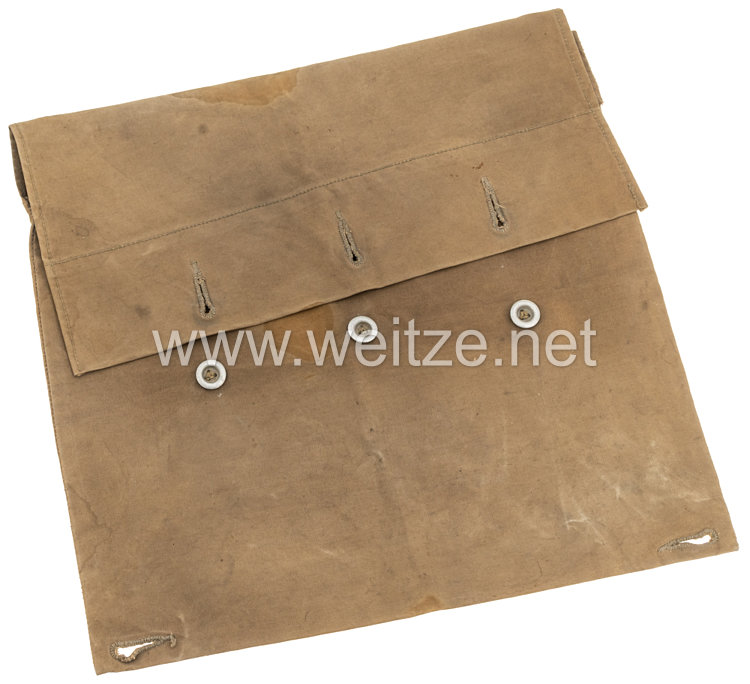
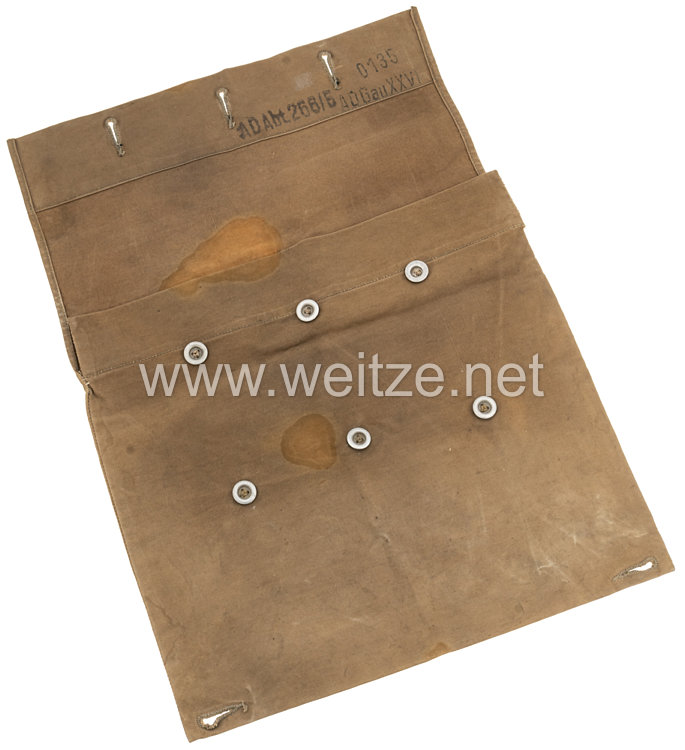
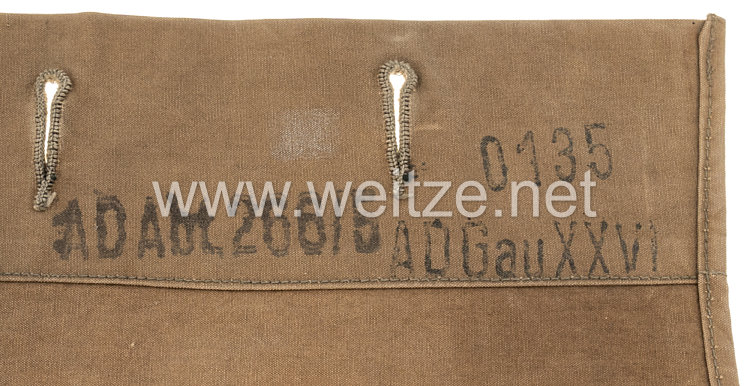
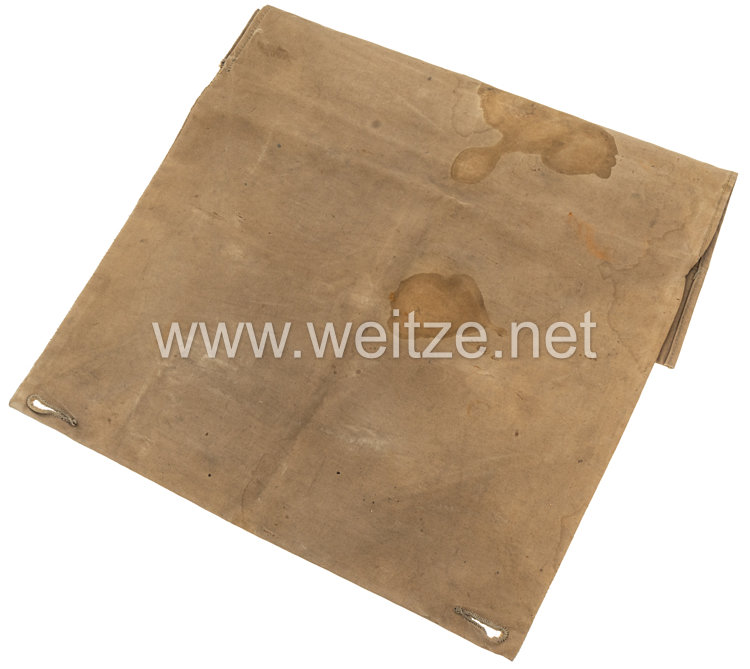
Reichsarbeitsdienst (RAD) Flag Case of RAD Detachment 266/5
This flag case of the Reichsarbeitsdienst (RAD) represents an authentic artifact of the organization that played a central role in the National Socialist social order between 1935 and 1945. The stamped notation “AD Abt. 2/266 0135 AD Gau XXVI” clearly identifies this case as property of Work Service Unit 2/266 in Work District XXVI.
The Reichsarbeitsdienst was established on June 26, 1935, through the “Law for the Reich Labor Service” as compulsory service for all young Germans. Young men aged 18 to 25 had to serve six months in the RAD before they could be drafted into military service. From 1939 onwards, a compulsory year was also introduced for young women. The organization had its origins in the voluntary labor services of the Weimar Republic but was transformed under National Socialist rule into an instrument of ideological education and practical labor force.
The RAD Districts (Gaue) were territorial administrative units organized geographically. Work District XXVI designated a specific region within Reich territory. Each district was subdivided into several work groups, which in turn consisted of individual units (Abteilungen). The unit 2/266 mentioned here was part of this hierarchical structure, where the number 266 identified the superior group and the 2 indicated the specific unit within that group.
The flag case itself served both a practical and ceremonial purpose. It was used for storing and transporting flags and standards that played a central role in the highly ritualized world of the Reich Labor Service. Flag ceremonies, oath-taking ceremonies, and other ritual events were integral parts of daily RAD life. The flags symbolized the unity of each respective unit and served to create identity within the organization.
The light brown material of the case corresponds to the typical RAD color scheme, which differed from the field-gray Wehrmacht equipment. The RAD used characteristic earth-brown tones for its uniforms and equipment items, visually distinguishing the organization from other formations of the Nazi state. The construction with buttons and folding mechanism allowed the case to be stored compactly when not in use and to be fully opened when needed to safely remove or insert the flag.
The stamping with inventory number 0135 indicates the RAD's systematic administrative system. Every piece of equipment was recorded and assigned to a specific unit. This served not only for inventory control but also for accountability of materials. Labor service members were personally responsible for the equipment assigned to them and had to account for any loss or damage.
The Reich Labor Service carried out various types of work. These included land reclamation projects, draining of swamps, construction of roads and bridges, agricultural auxiliary work, and from 1939 increasingly also war-essential construction projects such as the building of fortifications, particularly on the Westwall. The organization was hierarchically structured according to military models but used its own ranks and designations. At its head stood Reich Labor Leader Konstantin Hierl, who led the organization from 1935 to 1945.
RAD equipment included, besides flag cases, uniforms, work tools such as the characteristic spade that became the symbol of the organization, as well as various ceremonial objects. The absence of a manufacturer's mark on this flag case is not unusual, as many equipment items were produced by smaller suppliers or in the organization's own workshops, which did not always apply their own markings.
After the end of the war in 1945, the Reich Labor Service was dissolved along with all other Nazi organizations by the Allies. Preserved equipment items such as this flag case are today important historical documents that provide insight into the organization, administration, and daily life of this institution. They serve historical research and education about the mechanisms of totalitarian rule and the integration of the population into the National Socialist system.