Prussian Helmet Model 1867 for a Colonel in General's Position in a Cuirassier Regiment

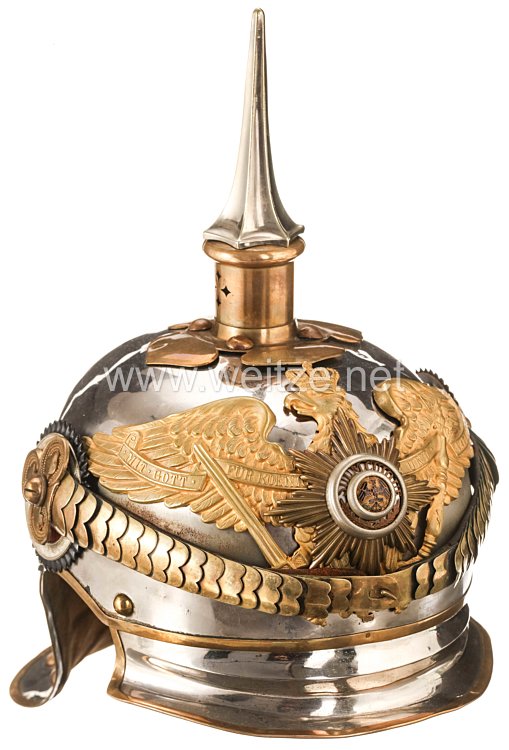
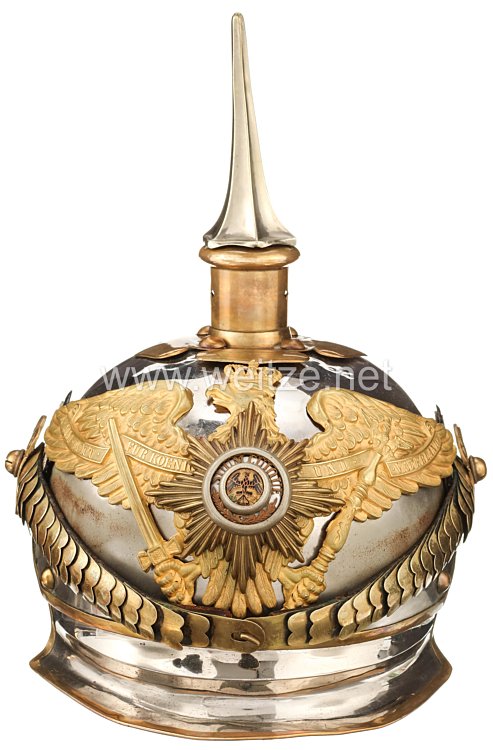
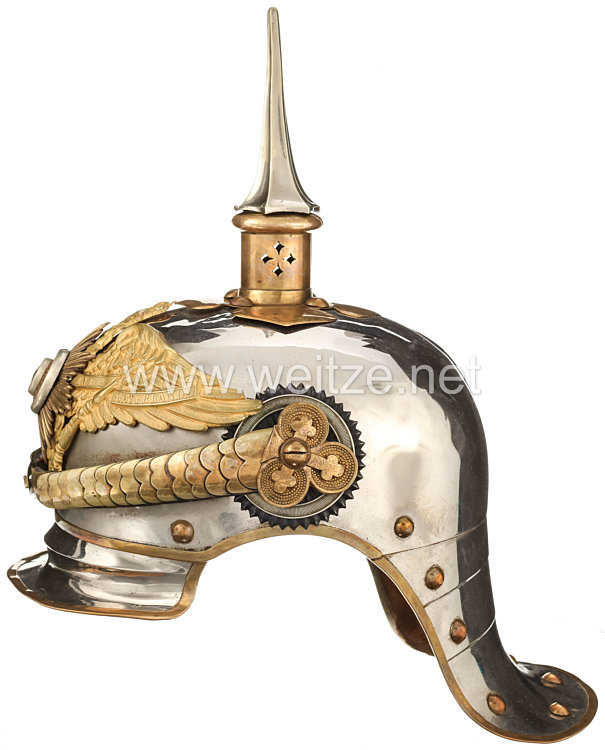
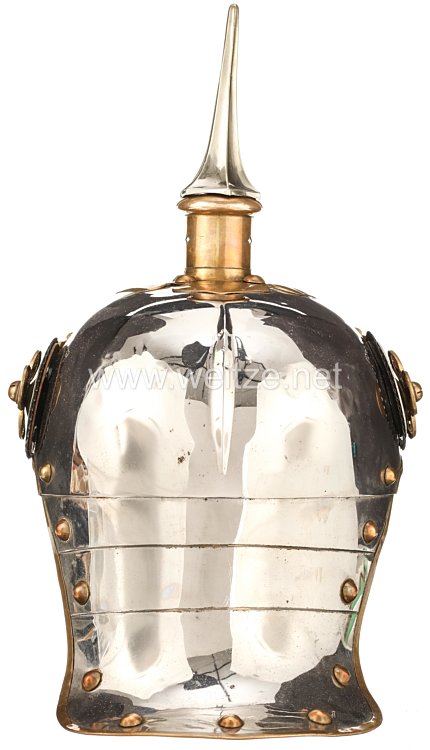
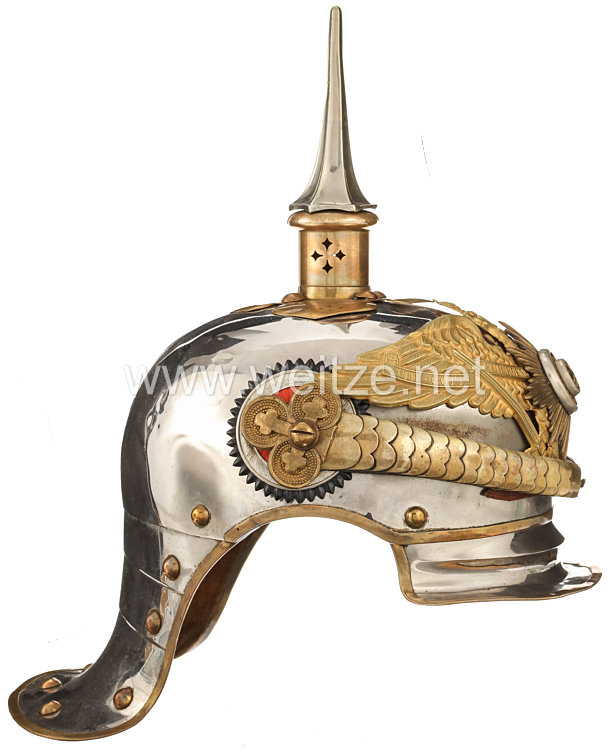
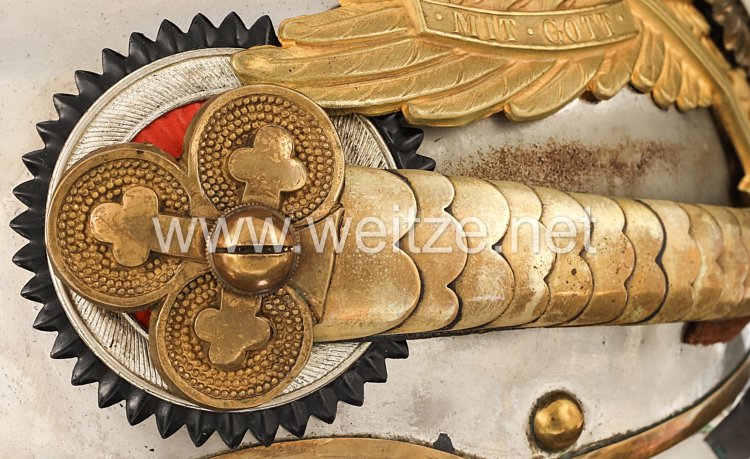
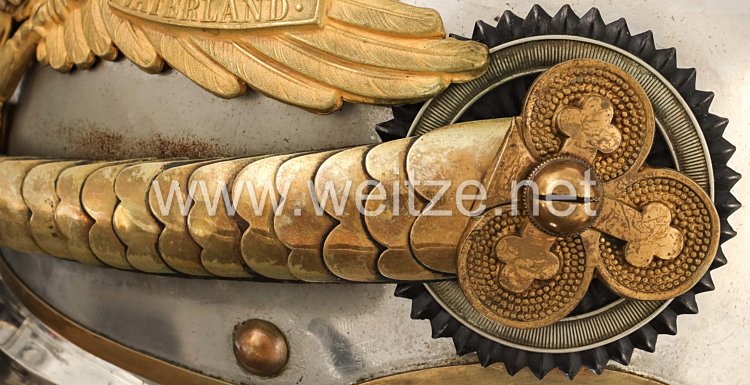
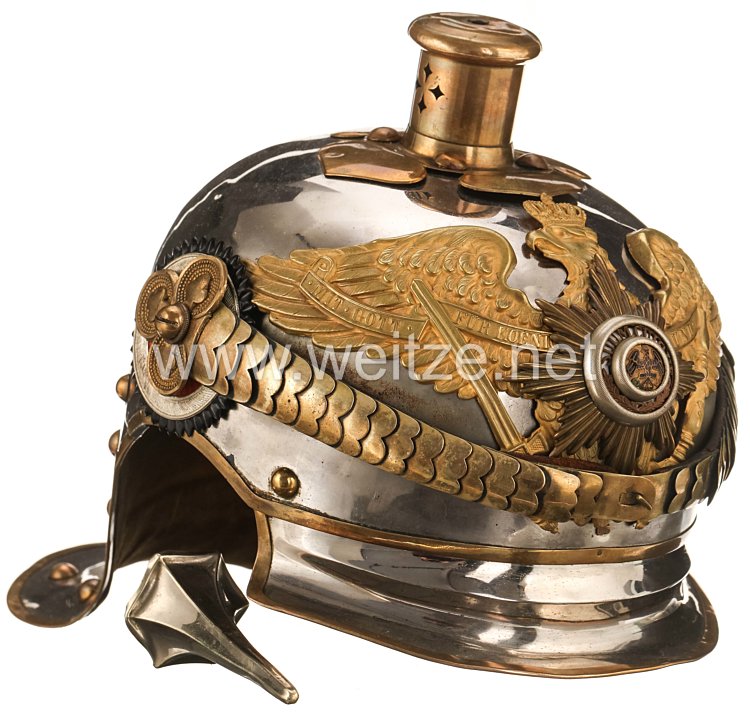
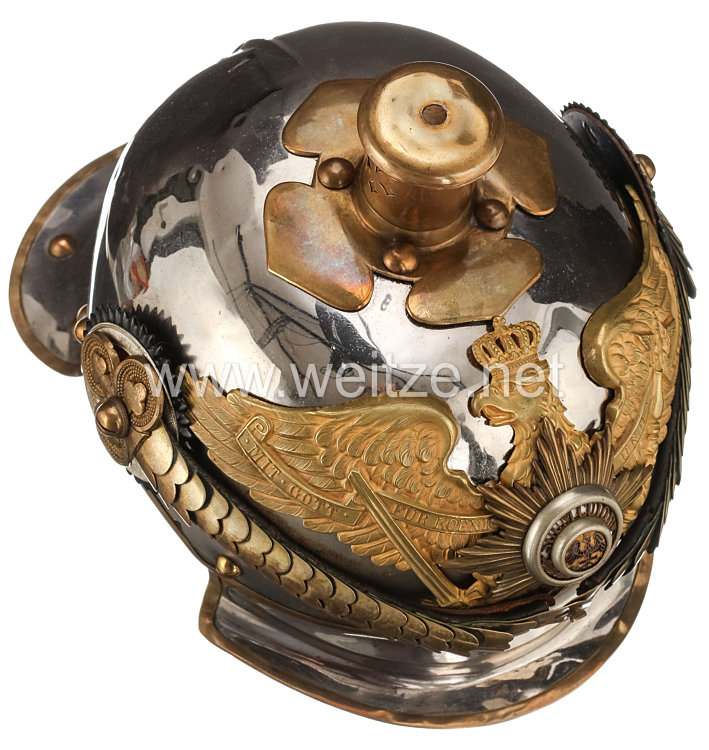
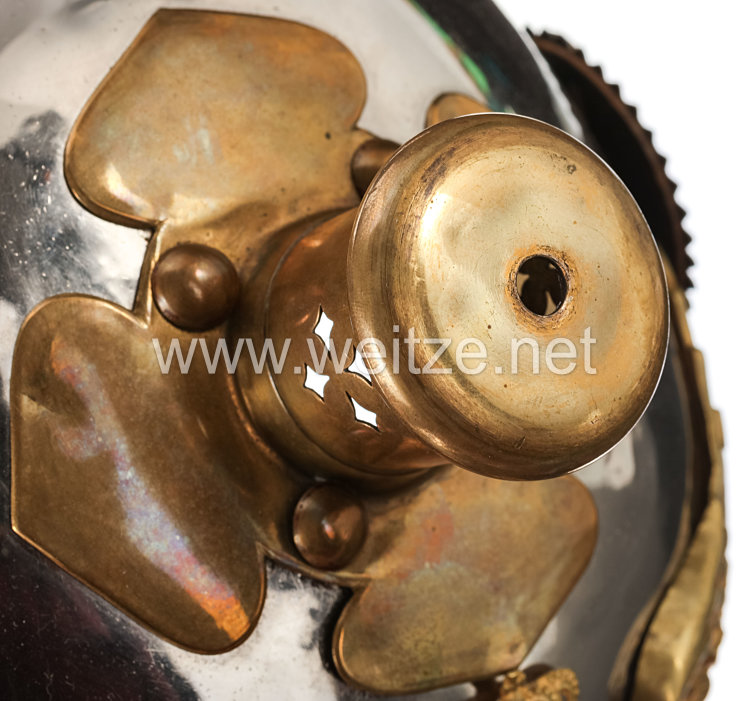
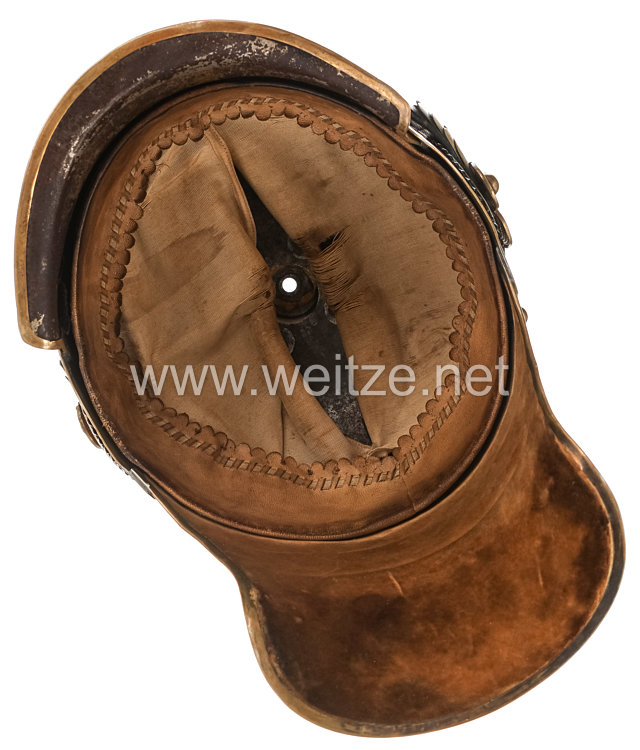
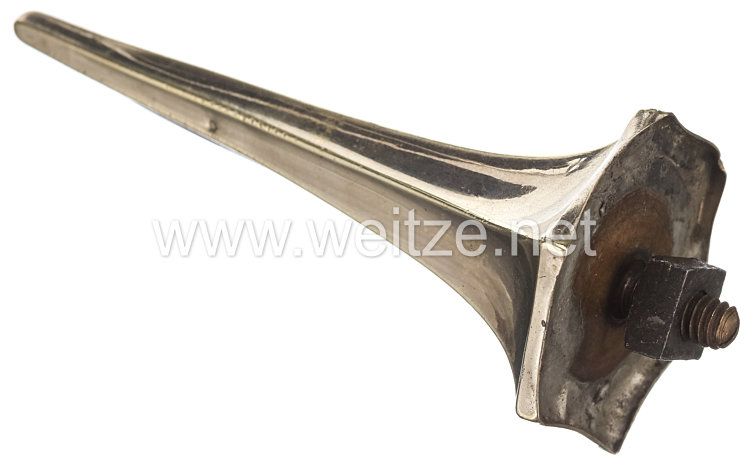
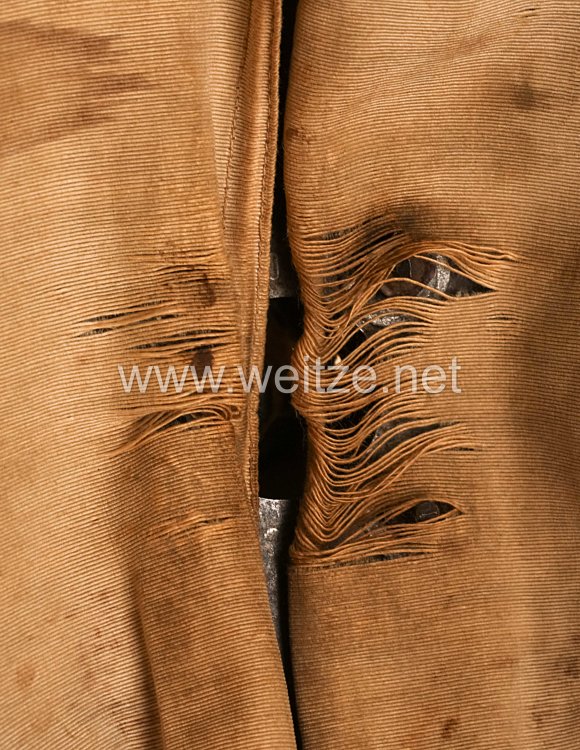
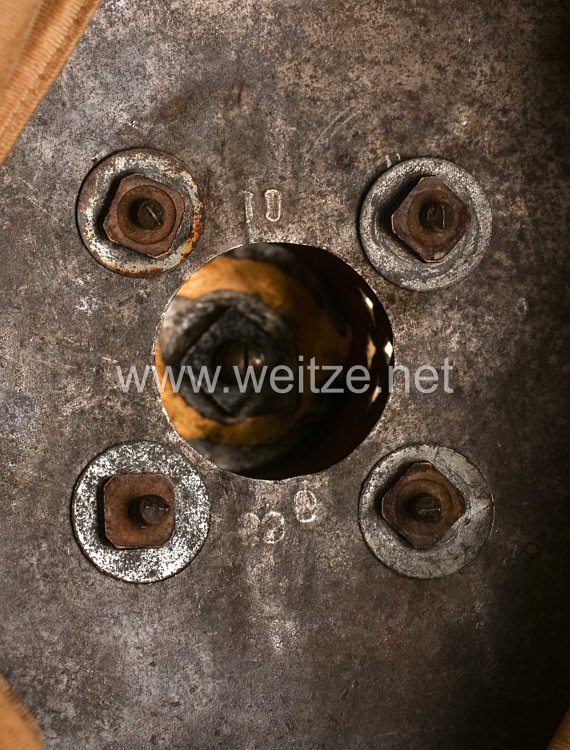
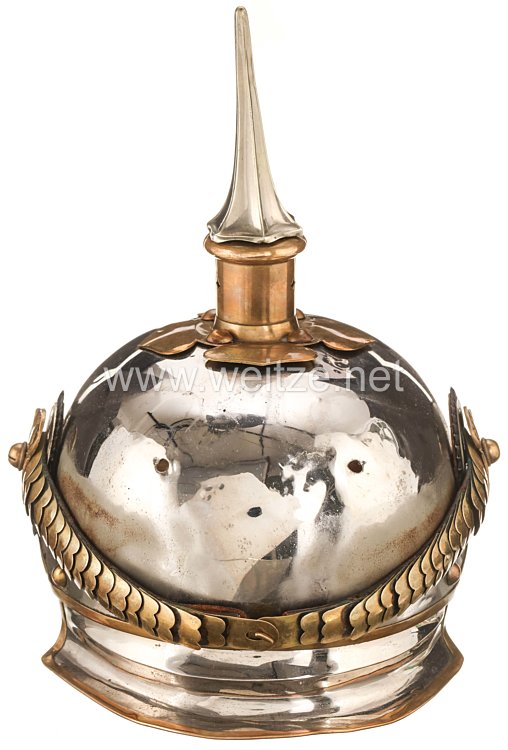
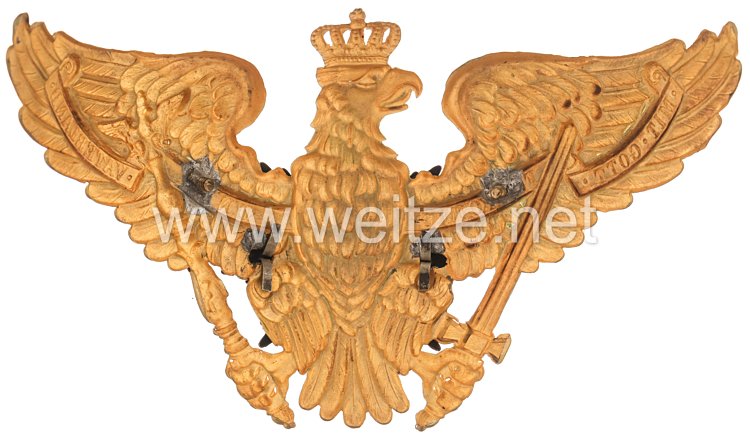
Circa 1900. Helmet in the pattern for Cuirassier officers. Light helmet skull of nickel-plated steel sheet, complete with all fittings. At front the large fire-gilt Guard eagle with polished edges for generals, superimposed with the Guard star, the center enameled. Domed scale chains with clovers and knurled screws. Complete with both cockades in the large pattern. Cross guard with ball screws, tall fluted and nickel-plated spike. Interior with light brown sweatband with silk ribbon drawstring, light beige silk lining, the neck guard lined with light velvet. Size 57. The helmet is in good condition, on the rear of the helmet skull a few minor dents are visible, the leather lining in the front visor is missing. Condition 2.

According to A.K.O. (Army Cabinet Order) of 31.7.1860, colonels in general's position wore the uniform of their old unit. Cuirassiers retained their headgear, but with gold general's eagle and star. (See Paul Pietsch “Fomations- und Uniformierungsgeschichte des preußischen Heeres” Volume II, page 250).

A very rare helmet! Only very few examples have survived.


322229

Prussian Helmet Model 1867 for a Colonel in General's Position in a Cuirassier Regiment

The Prussian Cuirassier Helmet Model 1867 for a Colonel in General's Rank (Oberst in Generalsstellung) represents a remarkable combination of military traditions in the Kingdom of Prussia and later Imperial Germany. This extraordinary piece of headgear embodies the Prussian regulation that allowed colonels promoted to general's status to retain the uniform of their original regiment, albeit with modified rank insignia.

The Prussian cuirassier metal helmet originated in 1842-43 when the Pickelhaube was introduced. All-metal versions were worn specifically by cuirassiers and often by high-ranking figures. The Model 1867 represented a weight-reduction effort, introducing a lighter helmet with modified visor connection. This pattern saw service during the Franco-Prussian War of 1870-71.

The specific general's configuration reflects the Prussian regulation allowing colonels promoted to general's status to retain their regimental uniform with modified insignia. According to the Allerhöchste Kabinetts-Order (A.K.O.) or Supreme Cabinet Order of 31 July 1860, colonels in general's rank wore the uniform of their former regiment. Cuirassiers retained their metal helmet but with the golden general's eagle and star, as documented in Paul Pietsch's “Formations- und Uniformierungsgeschichte des preußischen Heeres,” Band II, page 250.

The technical construction of the helmet displays the characteristic features of the officer variant of the Model 1867. The light nickel-plated steel shell is distinguished from enlisted men's helmets by its lighter construction and higher-quality fittings. The stepped front visor is characteristic of the 1867 pattern, as is the articulated neck guard in lobster-tail form. The curved chin scales are attached with cloverleaf rosettes and knurled screws, a feature of officer quality. The crosspiece with ball screws and the tall fluted nickel-plated spike complete the typical silhouette.

The outstanding feature of this general's variant is the large fire-gilt Guard eagle (Gardeadler) with polished edges for generals. Applied to it is the Guard star (Gardestern), whose center is enameled. This combination of Guard eagle and star was reserved exclusively for generals and linked the wearer to both elite Guard status and general officer rank. The two cockades in large pattern correspond to officer quality.

The Model 1867 differed from the subsequent Model 1889, which introduced a rounded visor for enlisted troops and eliminated the protective ridge on the rear skull. While the Model 1889 gradually replaced enlisted helmets, officers could continue to purchase and wear Model 1867-style helmets as private property (Eigentum). After 1897, cockade positions changed with the Prussian cockade moving to the left and the Reich cockade to the right.

The interior fittings demonstrate the high quality of officer manufacture: light brown leather sweatband with silk ribbon drawstring, light beige silk lining, and the neck guard lined with light-colored velvet. The size 57 corresponds to the standard helmet sizes of this period.

Prussia's cuirassier regiments formed part of the Kingdom of Prussia's heavy cavalry, later incorporated into the Imperial German Army after 1871. These units, equipped with armor and firearms, represented the elite of the heavy cavalry. The cuirassier metal helmets remained in use until World War I, when they were gradually replaced by more practical field gear.

After 1918 and the fall of the German Empire, such helmets became historical artifacts and are now rare collectors' items, particularly the general's variants. The description correctly notes that this is a very rare helmet and only very few examples survive. The specific combination of cuirassier helmet and general's insignia for a colonel in general's rank makes this specimen an extraordinary testament to Prussian military tradition and hierarchy.

r