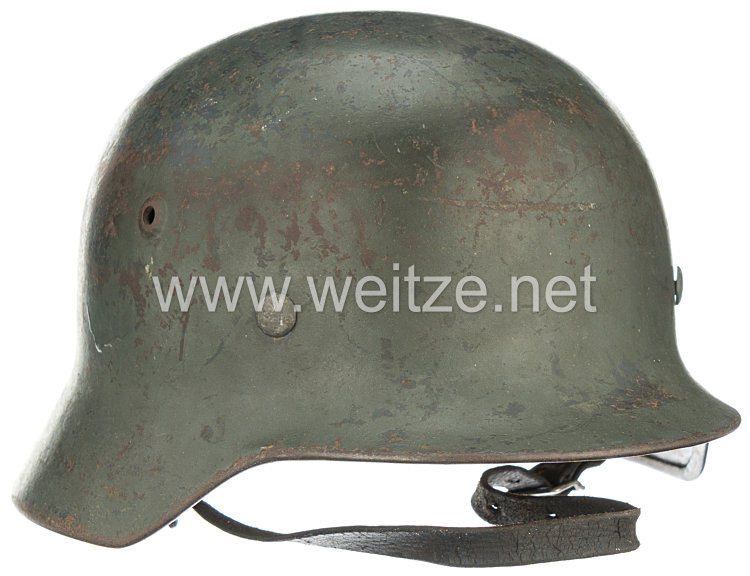
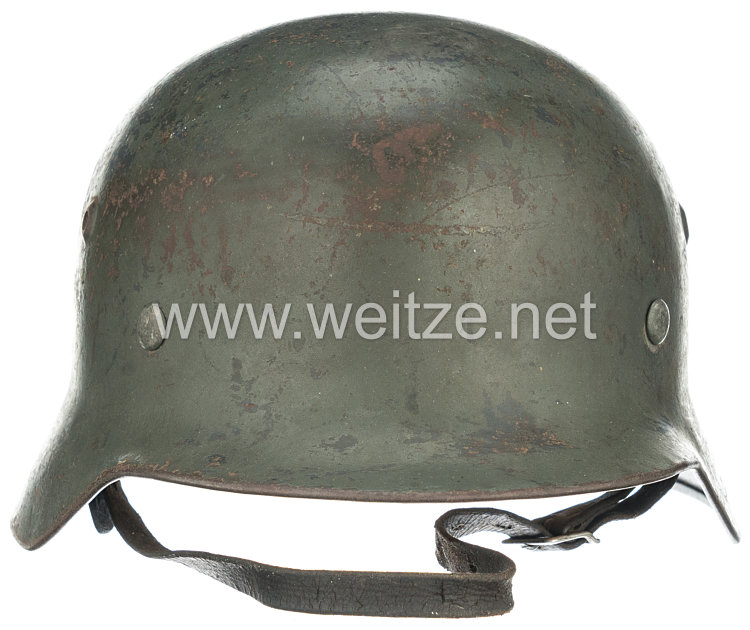
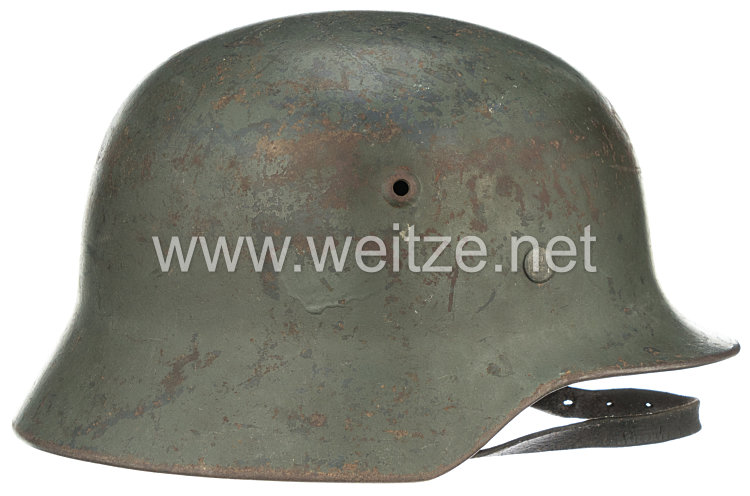
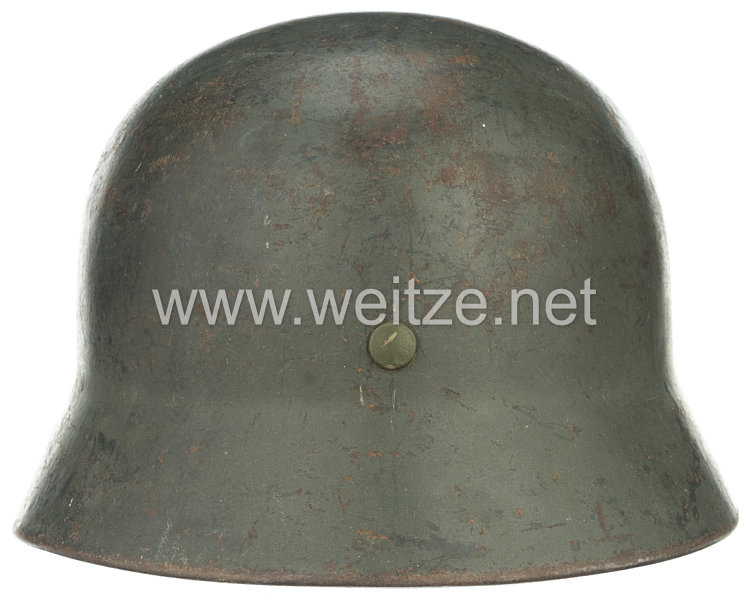
Luftwaffe Steel Helmet M35 of a Luftwaffe Field Division
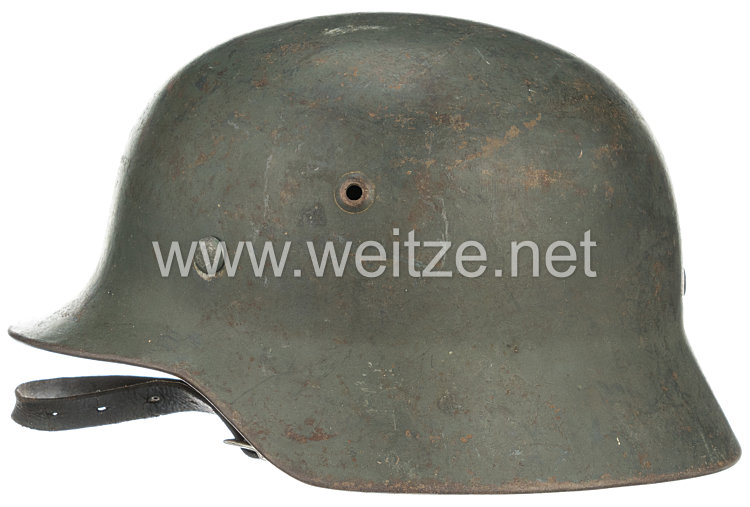
The Model 1935 steel helmet (Stahlhelm M35) of the German Luftwaffe represents a significant piece of Wehrmacht equipment during World War II. This particular helmet belonged to a Luftwaffe Field Division, a special type of unit that represents a fascinating development within the German armed forces.
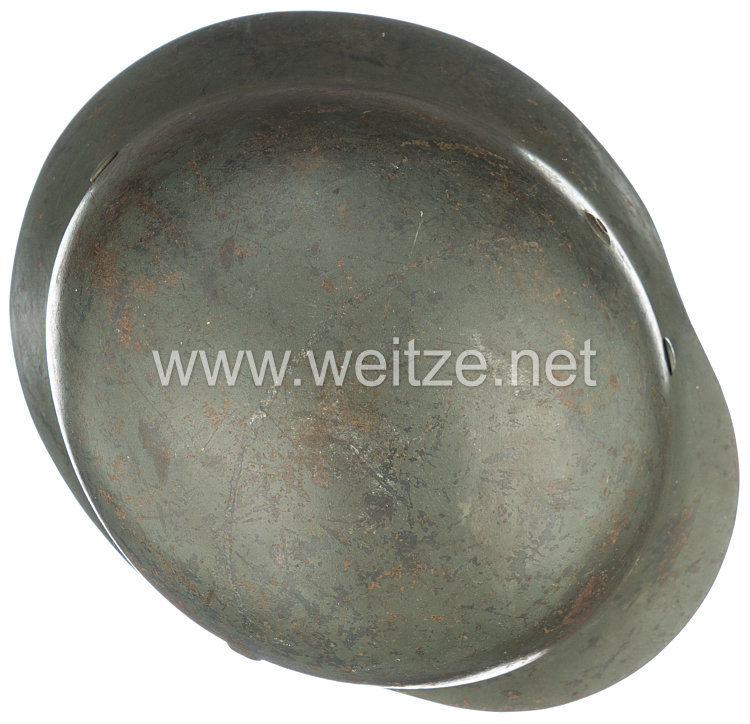
The Steel Helmet Model 1935 was developed as the successor to the M16 from World War I. The construction essentially followed the proven design, but several improvements were made. The characteristic shape with the pronounced neck guard and wide front visor was retained, but the ventilation holes were made smaller and more aerodynamic. The M35 featured two side ventilation holes that passed through the helmet shell and were secured with rivets.
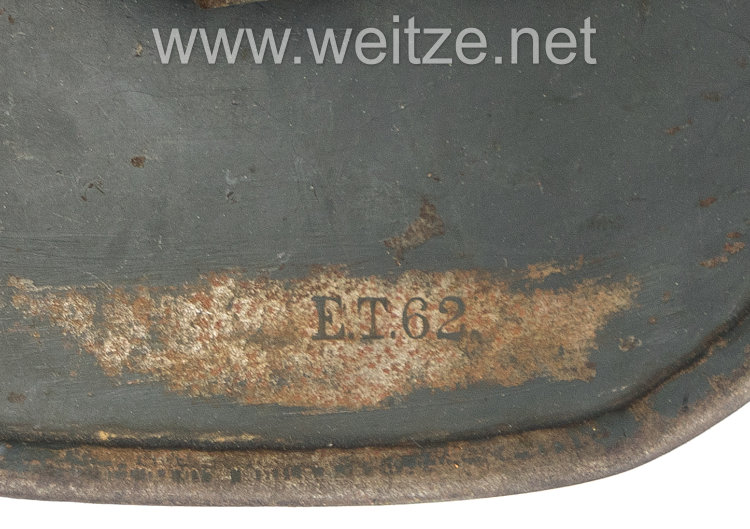
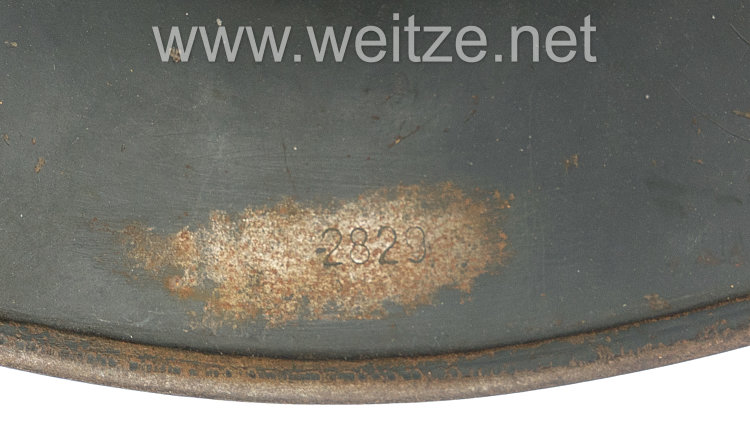
The manufacturer marking "ET" stands for the firm Thale in the Harz region, one of numerous German manufacturers that produced steel helmets during the war. The number "62" indicates the production year 1942, which correlates chronologically with the establishment of the Luftwaffe Field Divisions. The lot number "2829" in the neck area enabled assignment to a specific production batch.
The original grey-blue finish was the Luftwaffe's standard color and differed significantly from the field grey used by the Army and Waffen-SS. This coloring was intended to make the affiliation with the Luftwaffe immediately recognizable. The subsequent overpainting in field grey is a historically significant detail indicating the deployment of these helmets with the Luftwaffe Field Divisions.
The Luftwaffe Field Divisions were established from 1942 onwards on the initiative of Reichsmarschall Hermann Göring. Göring wanted to prevent surplus Luftwaffe personnel – particularly ground crews from airfields – from being transferred to the Army. Instead, these soldiers were to be organized in separate Luftwaffe ground combat units. Between 1942 and 1943, a total of 22 Luftwaffe Field Divisions were established.
These divisions were problematic from the start. Personnel consisted largely of airfield personnel, anti-aircraft crews, and other specialists without infantry training. Officers and non-commissioned officers often had no experience in leading ground troops. Moreover, equipment was frequently inadequate, and tactical doctrine differed from that of the Army.
The repainting of originally grey-blue helmets in field grey reflects the attempt to achieve some standardization with Army units, with whom the Luftwaffe Field Divisions were often deployed. This frequently occurred in the field and explains the varying quality of such repaintings. Some helmets retained their Luftwaffe insignia, while others were completely remarked.
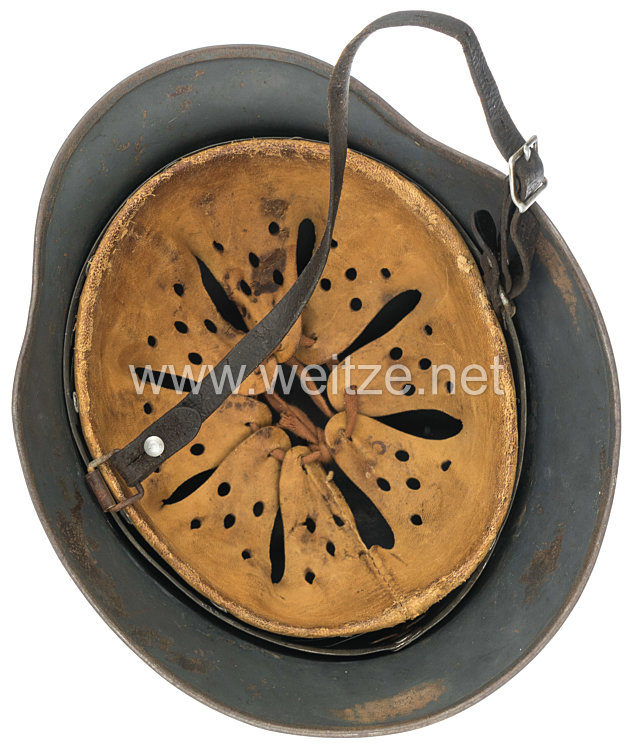
The inner liner of the M35 consisted of a characteristic system with eight leather fingers attached to an aluminum ring. This ring was connected to three suspension points in the helmet shell by spring bands. The system provided some shock absorption and was intended to improve wearing comfort. The size designation 55 refers to the head circumference in centimeters.
The leather chin strap was another standardized element and was secured by a simple hook fastener. Unlike later models such as the M40 and M42, where various simplifications were made to save materials, the M35 still shows the higher quality workmanship of the pre-war and early war period.
The mention that the rear helmet rivet was replaced indicates war damage or wear. Such repairs were carried out both in workshops and improvised in the field. The rivets were functionally important as they secured the ventilation holes, but could be damaged by combat action.
Helmets of the Luftwaffe Field Divisions saw service on virtually all fronts. Particularly notable was their deployment in North Africa, where the 1st Luftwaffe Field Division fought at Tunis, and on the Eastern Front, where several of these divisions suffered devastating losses. The lack of infantry training led to high casualties, and many divisions were dissolved or reorganized into Army units.
The Luftwaffe Field Divisions represent an example of the organizational rivalries within Nazi Germany's military structure. Göring's insistence on maintaining control over "his" personnel, even when they were needed as infantry replacements, contributed to military inefficiency and unnecessary casualties.
Today, such helmets are sought-after collector's items that document a specific aspect of German military history. They tell the story of an improvised troop type that was ground down between the organizational rivalries of the Nazi leadership and the harsh realities of war.