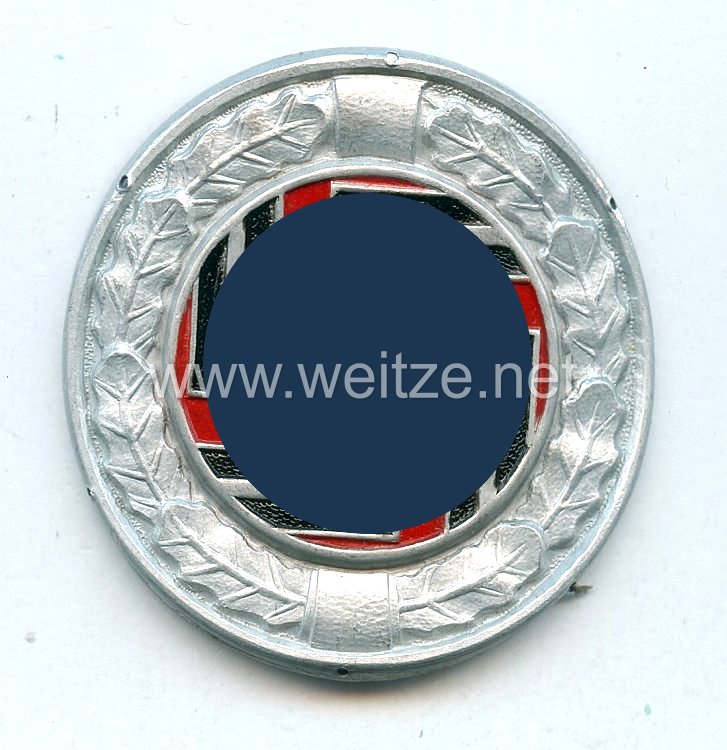
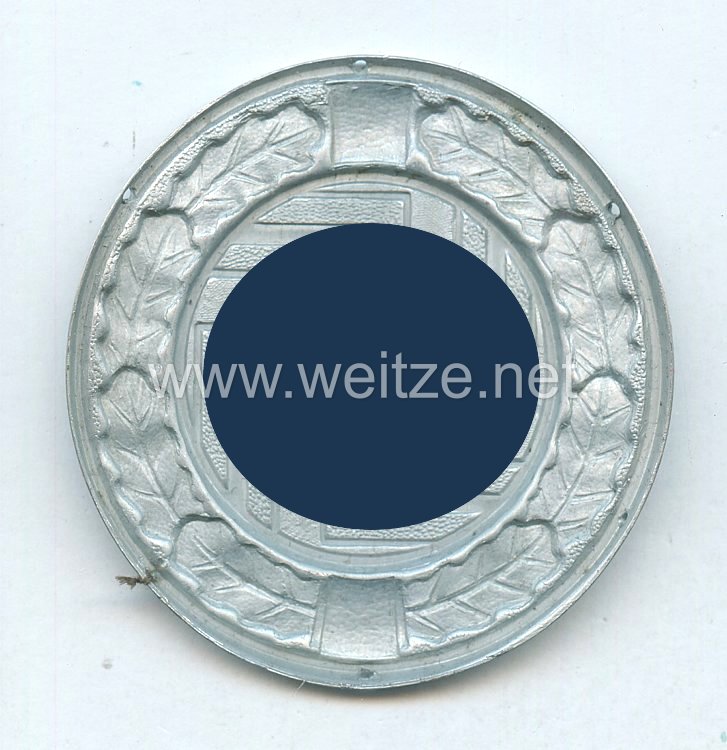
Croatia World War II: Sleeve Insignia of the German Company within the Croatian Home Army
Very rare, as later all German soldiers were transferred to the SS Division “Prinz Eugen”.
The sleeve badge of the German Company within the Croatian Home Army (Hrvatsko Domobranstvo) represents an extraordinary testimony to the complex military conditions in the Independent State of Croatia (Nezavisna Država Hrvatska, NDH) during World War II.
Following the dismemberment of Yugoslavia in April 1941 by the Axis powers, the NDH was established under the fascist Ustaša movement led by Ante Pavelić as a satellite state of the German Reich and Italy. Croatian armed forces were divided into two main components: the regular Croatian Home Army (Domobranstvo) and the paramilitary Ustaša militias.
Within this complex power structure, special formations existed, including units composed of ethnic Germans living on NDH territory. These Volksdeutsche (ethnic Germans) represented a significant minority, particularly in the eastern regions of Slavonia and Syrmia. The German Reich leadership regarded this population group as an important link for asserting German interests in Southeast Europe.
The German Company within the Domobranstvo constituted one of these special formations. German men living in Croatia were initially organized within Croatian armed forces but received special insignia to make their ethnic affiliation visible. The described sleeve badge made of painted aluminum served precisely this purpose - identifying German soldiers within Croatian units.
The production of such badges occurred through Croatian manufacture, reflecting local manufacturing conditions and the limited industrial capacity of the NDH. The use of painted aluminum was typical for wartime production of this era when nobler materials became scarce. Attachment via sewn-on holes corresponded to standard practice for sleeve badges of this period.
The historical significance of this badge is underscored by its rarity. Beginning in 1942, the systematic reorganization of ethnic Germans in Southeast Europe commenced. The SS Division “Prinz Eugen” was established in March 1942 as the 7th SS Volunteer Mountain Division and specifically recruited Volksdeutsche from throughout Southeast Europe, particularly from the Banat, Croatia, Hungary, and Romania.
The division received its name from Prince Eugene of Savoy, the famous 18th-century military commander who fought against the Ottomans - a deliberate historical reference symbolizing the “defensive function” against the Balkans. Under the command of SS-Obergruppenführer Artur Phleps, the division developed into one of the largest Waffen-SS divisions with approximately 21,000 men at its peak.
The transfer of German soldiers from the Croatian Domobranstvo to SS Division “Prinz Eugen” occurred systematically between 1942 and 1943. This reorganization marked the effective end of independent German companies within Croatian armed forces. The affected soldiers received SS uniforms and equipment and were integrated into the divisional structure.
SS Division “Prinz Eugen” operated primarily in the partisan war in the Balkans and was involved in numerous war crimes against civilian populations. It fought against Yugoslav partisans under Josip Broz Tito and was deployed throughout the NDH, in Serbia, Montenegro, and partially in Bosnia. The division surrendered in Austria in May 1945.
The present sleeve badge thus documents a transitional phase in the organization of German armed forces in Southeast Europe. It represents the brief period from 1941 to 1942/43 when Volksdeutsche still served in Croatian uniforms with special insignia before being fully integrated into the Waffen-SS.
For collectors and historians, this badge therefore possesses considerable documentary value. It illustrates the complex nationality relationships in the NDH, the role of Volksdeutsche in German occupation policy, and the organizational development of German armed forces in Southeast Europe during World War II. The rarity of such pieces results directly from the short period of use and the subsequent systematic transfer of wearers to other military structures.