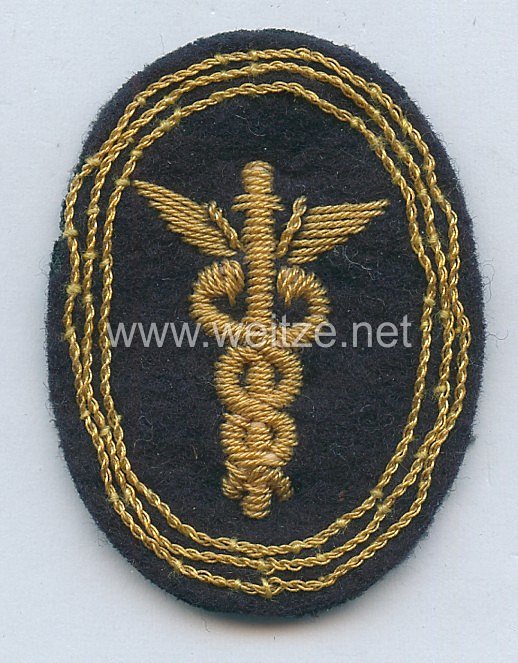
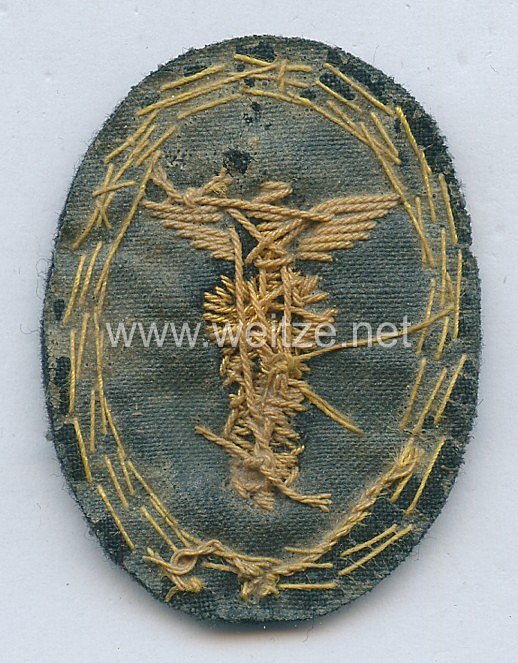
Kriegsmarine Sleeve Insignia Cadet Career Path Administration

hand-embroidered seawater-resistant version, condition 2
331129
45,00

Kriegsmarine Sleeve Insignia Cadet Career Path Administration

The Kriegsmarine sleeve insignia for cadets of the Administration career path represents a significant uniform element of the German Kriegsmarine during World War II. These hand-embroidered, seawater-resistant versions were part of the service uniform for officer candidates in the administrative branch of the navy and document the complex organizational structure of the German naval forces between 1935 and 1945.

The Kriegsmarine was officially established on May 21, 1935, replacing the Reichsmarine, which had been severely restricted by the Treaty of Versailles. With rearmament came the development of a differentiated system of rank insignia and career path badges that clearly identified the various specialized areas within the navy. The administration career path formed an essential sector that was indispensable for the logistical and administrative functionality of the Kriegsmarine.

The cadet career path designated the training route for future officers. Cadets underwent multi-year training that combined theoretical schooling on land with practical training at sea. For the administration career path, this meant special preparation for administrative, financial, and organizational duties within the naval structure. These officers were responsible for areas such as supply, accounting, personnel administration, and other non-technical administrative tasks.

The sleeve insignia of the Kriegsmarine followed a precise set of regulations established in various implementation guidelines. The badges were worn on the left upper arm and identified the wearer's respective career path. A specific design was designated for the administration career path, distinguishing it from insignia of other paths such as the sea officer career, technical career, or medical career.

The hand-embroidered execution of such insignia indicates high-quality manufacture. Unlike machine-made or woven versions, hand-embroidered badges display finer details and were often privately procured. Officers and officer candidates had the opportunity to have their uniforms and insignia made by specialized craftsmen, resulting in higher quality but also more expensive versions.

The designation “seawater-resistant” refers to the special processing of these insignia. Since naval uniforms were exposed to harsh conditions at sea – including saltwater, moisture, and intense sun exposure – the insignia had to be correspondingly durable. Seawater-resistant versions used special threads and backing materials that were resistant to fading and the corrosive effects of saltwater.

The organization of the Kriegsmarine encompassed various officer corps. Besides sea officers, who were responsible for nautical and tactical command, specialized career paths existed. The administration officers formed an independent group with specific training and career progression. They typically did not reach the highest command positions but were essential for the smooth operation of administrative processes.

Cadet training typically began at a young age. After passing the entrance examination, cadets went through several training phases that varied according to career path. For administration cadets, in addition to general basic military training, the curriculum emphasized knowledge in administrative sciences, law, and economics.

During the course of the war, the importance of efficient administration increased considerably. The logistical challenges of a war fleet operating across multiple seas required competent administration officers who organized supply chains, managed resources, and maintained the administrative infrastructure. Cadets of this career path were prepared for these demanding tasks.

Today, such sleeve insignia represent important military-historical documents. They provide insights into the organizational structure, hierarchies, and various specializations within the Kriegsmarine. For collectors and historians, hand-embroidered versions are of particular interest as they document the craftsmanship and material usage of that era. The condition of such textiles after more than 75 years is of special significance for their historical and museum evaluation.

r