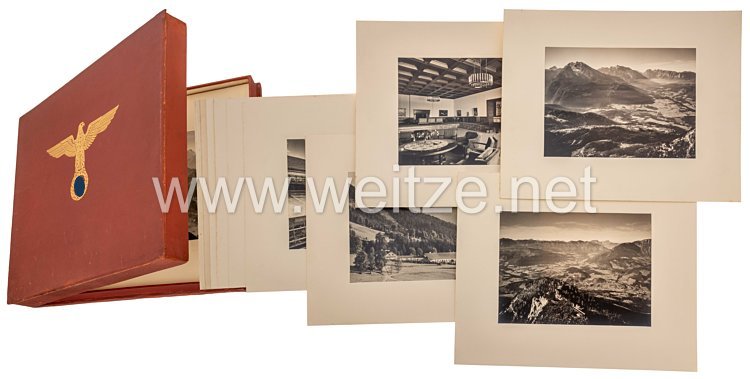
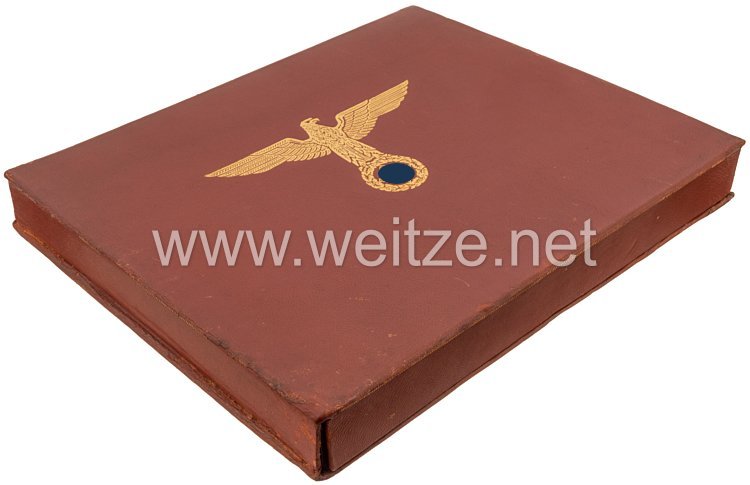
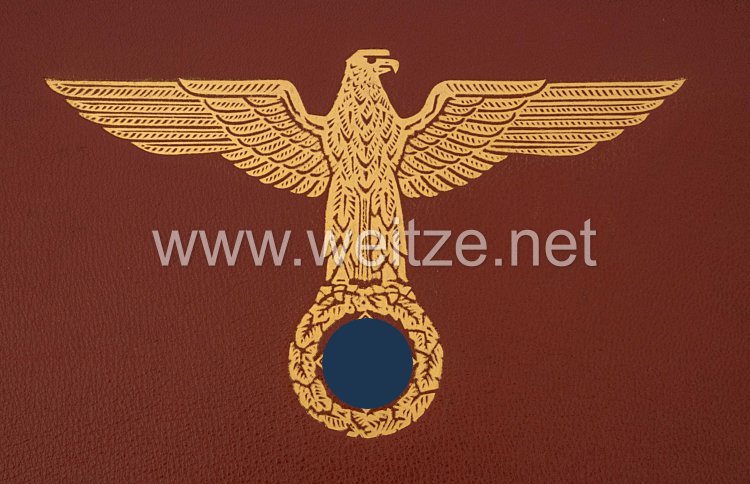
III. Reich große Foto-Geschenkmappe aus dem persönlichen Besitz von Adolf Hitler, anlässlich der Fertigstellung des Berghof und dem Kehlsteinhaus, um 1937
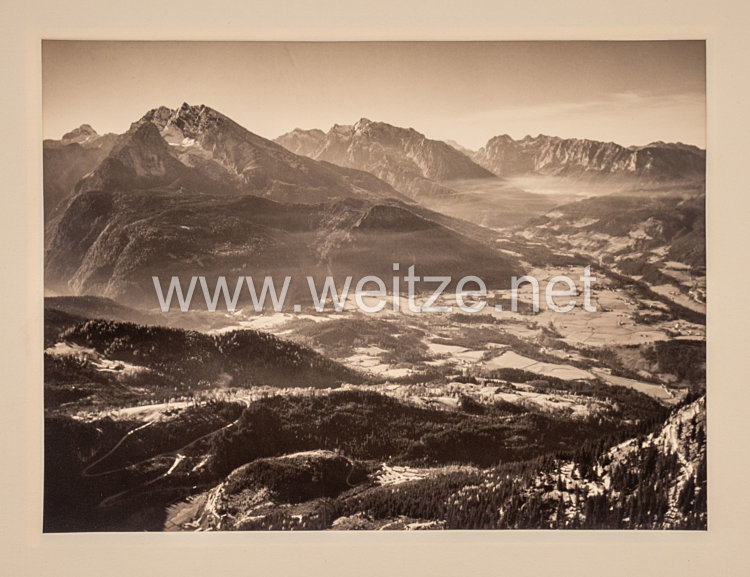
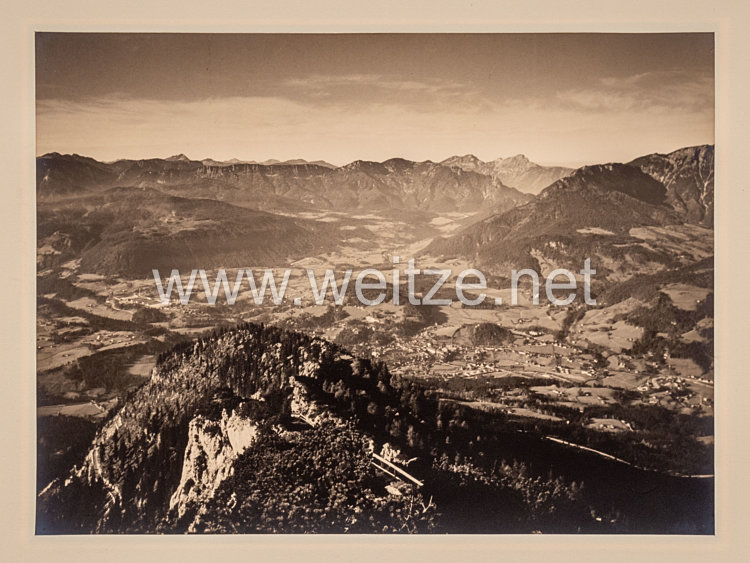
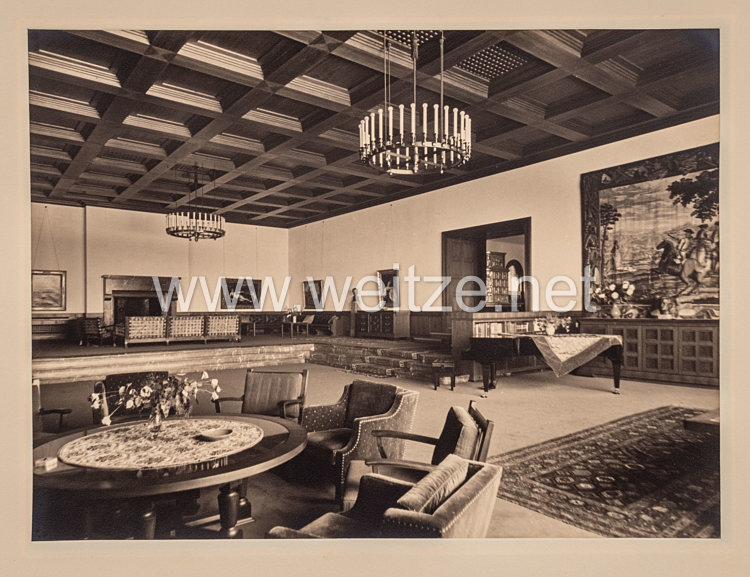
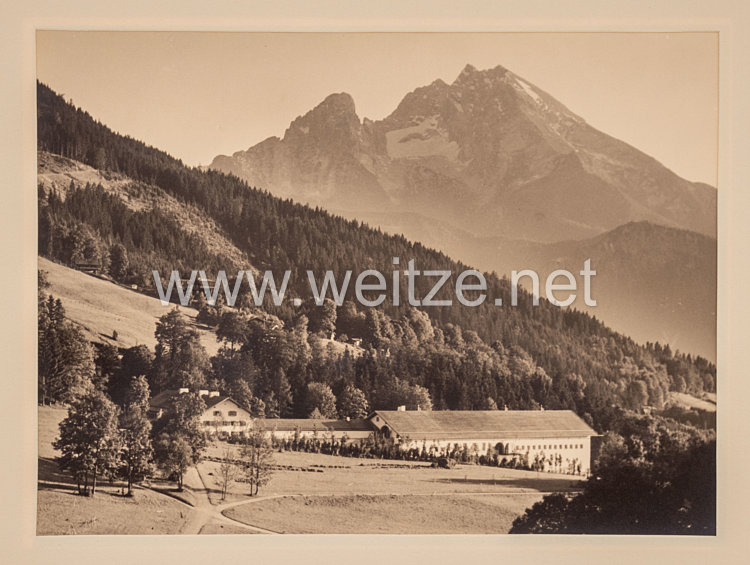
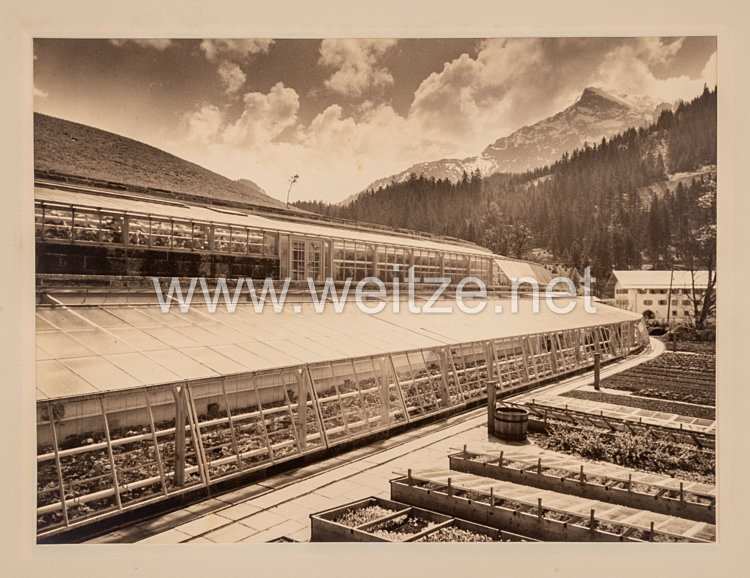
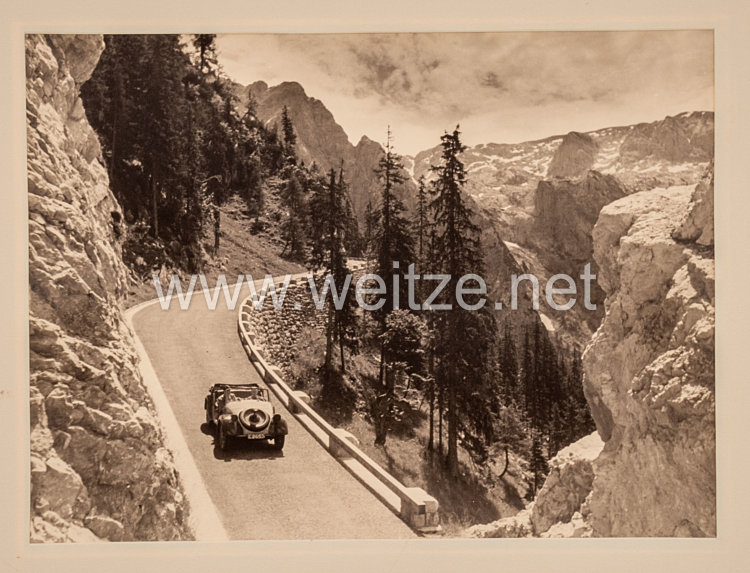
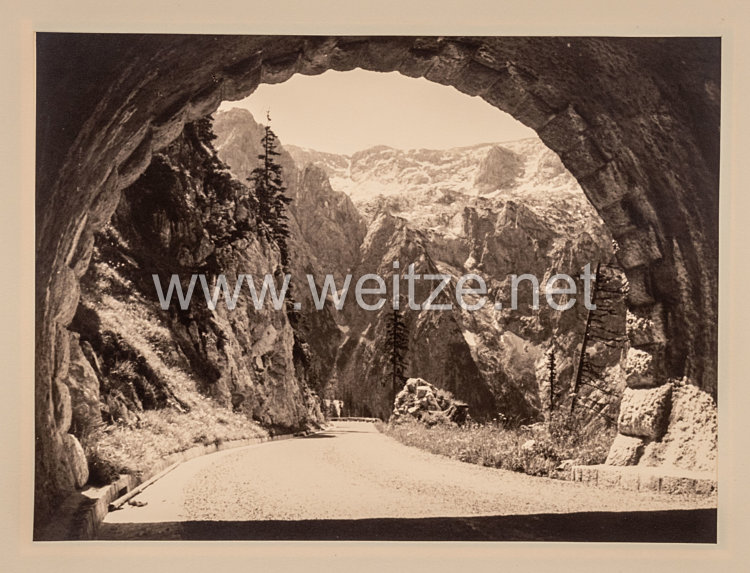
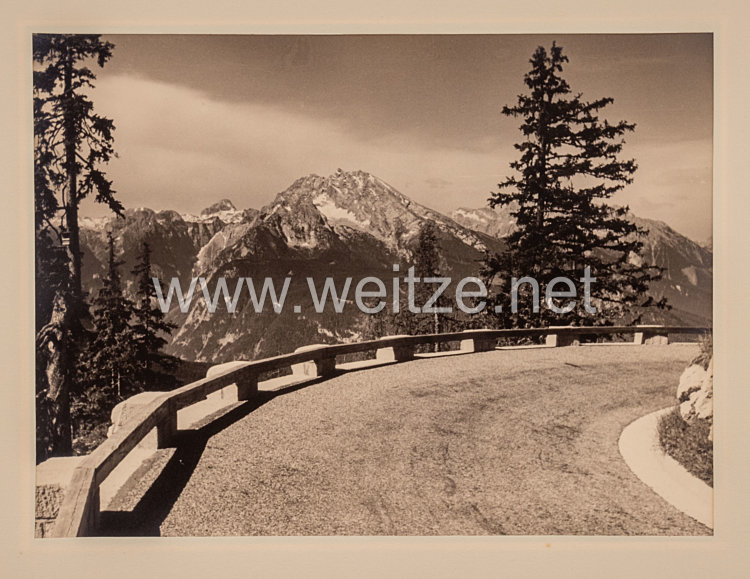
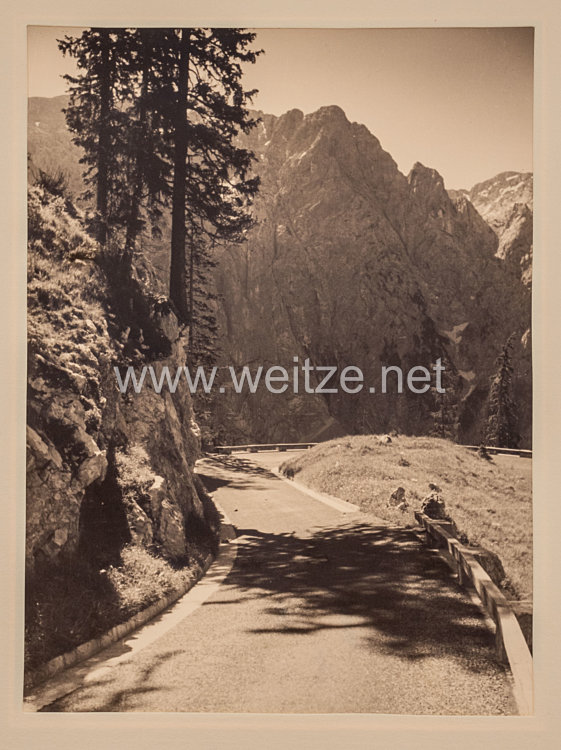
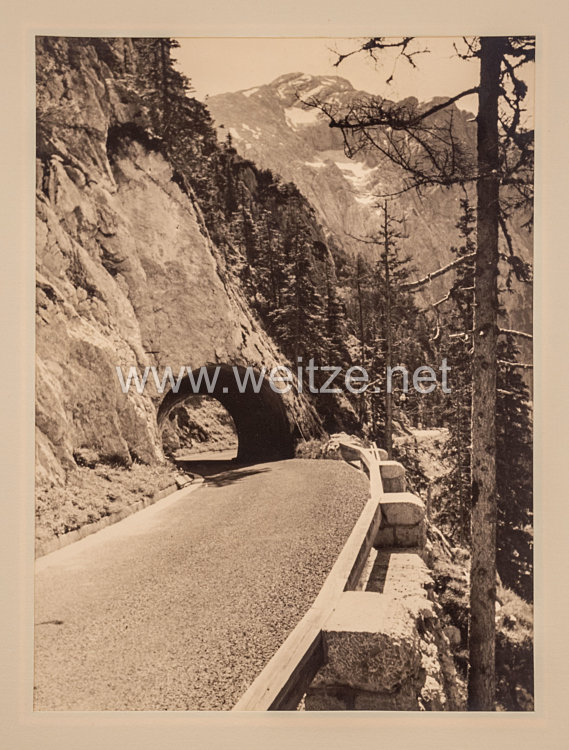
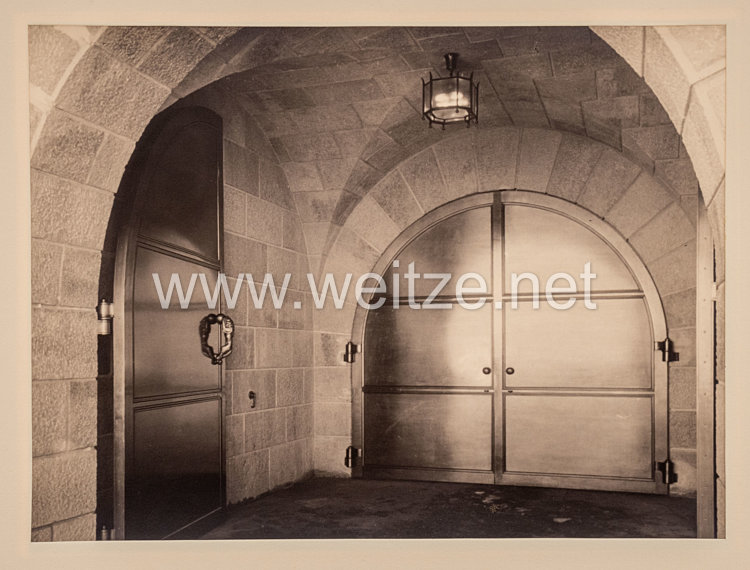
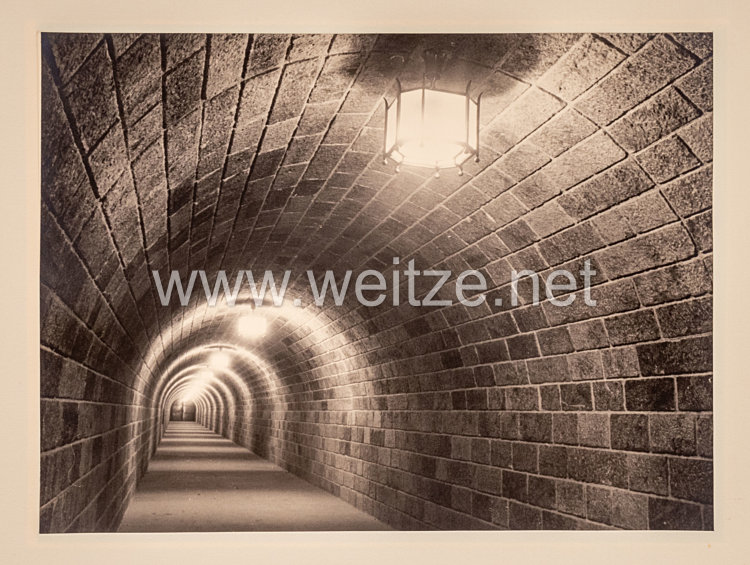
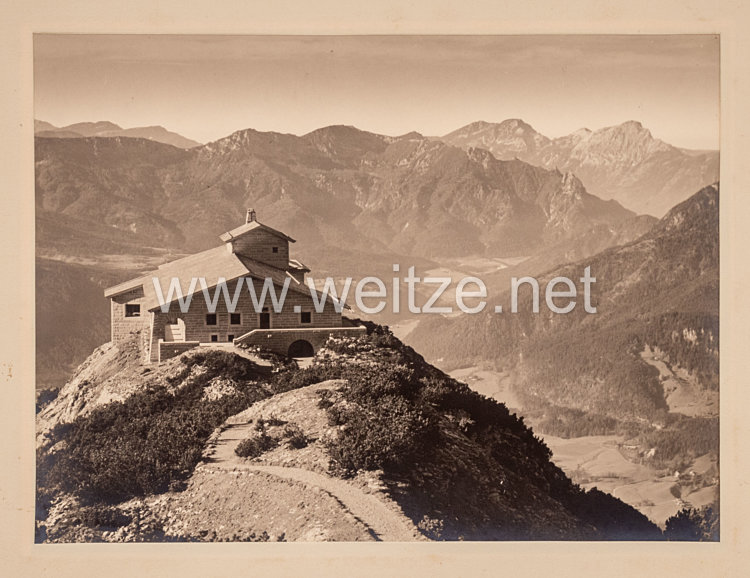
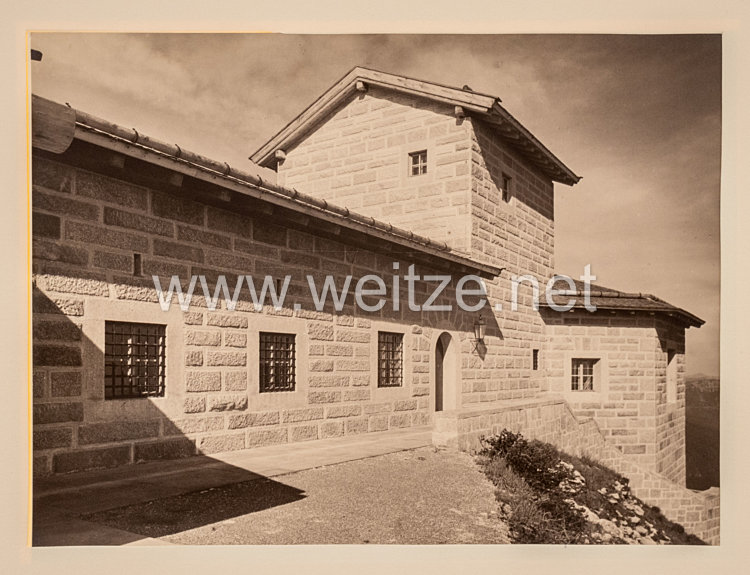
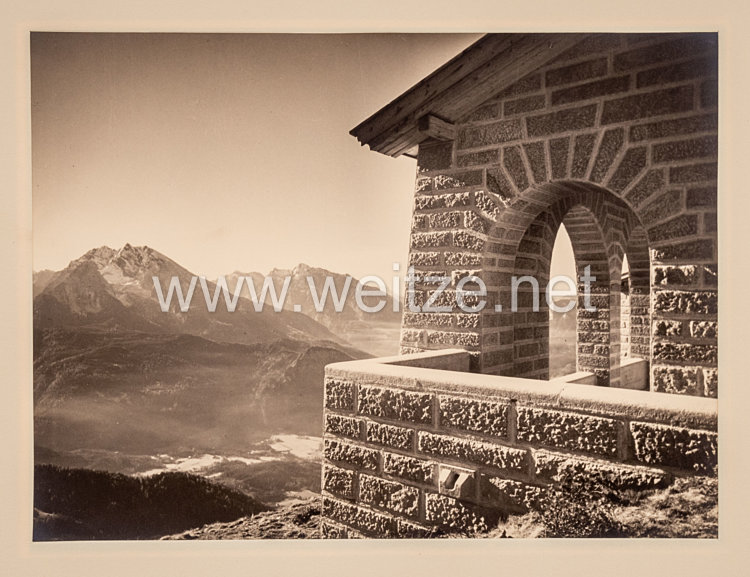
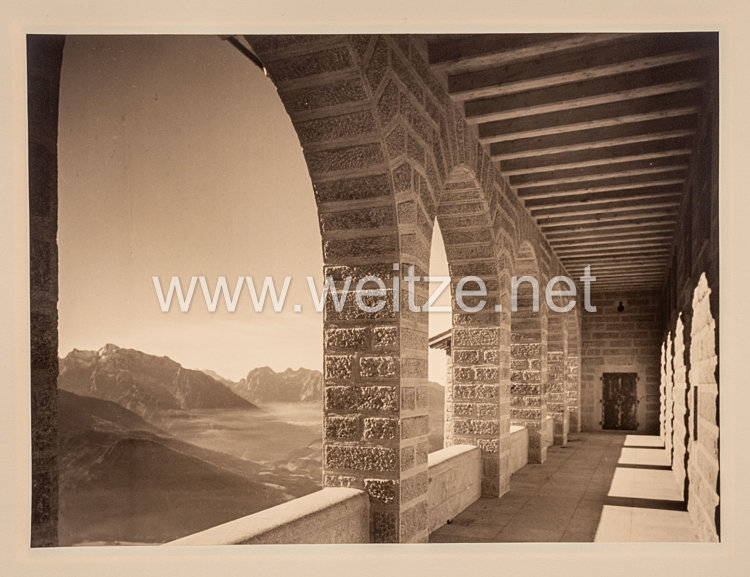
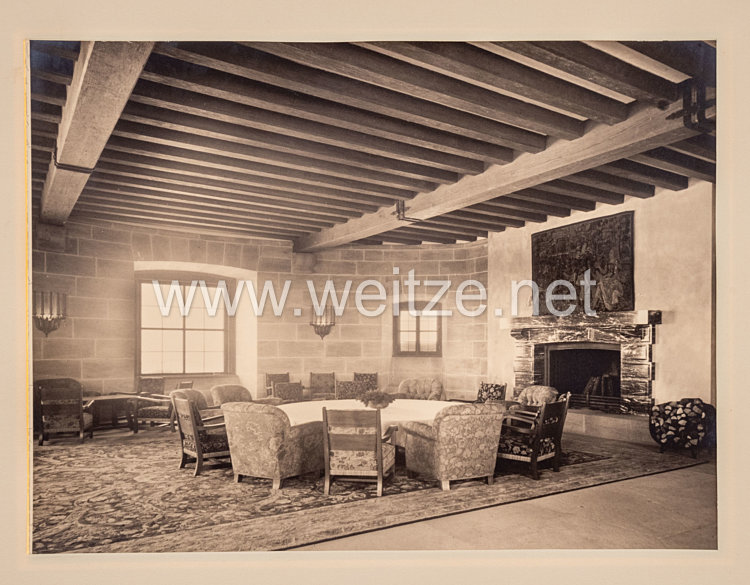
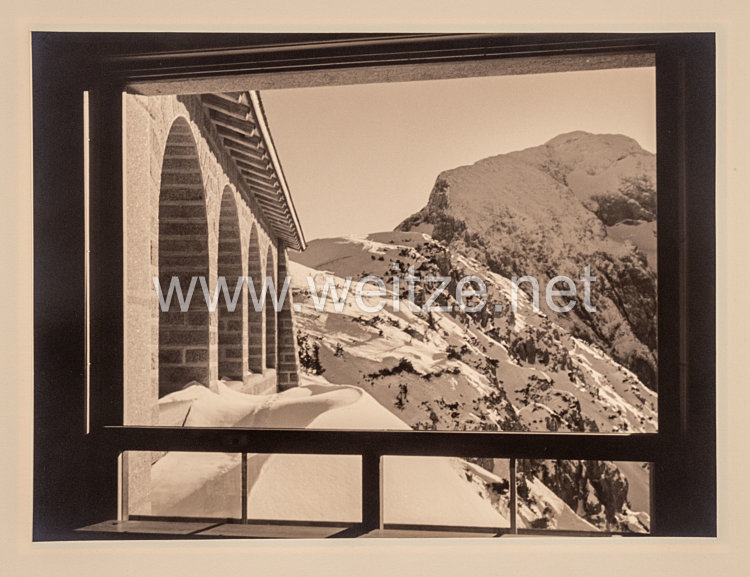
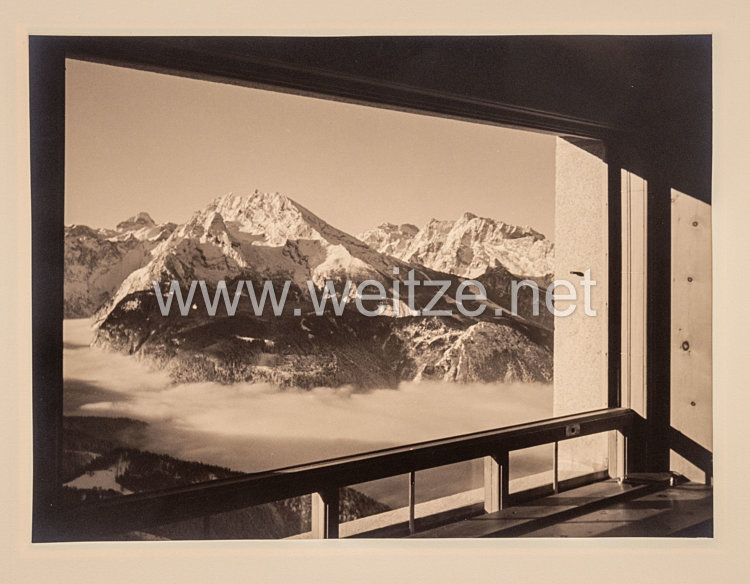
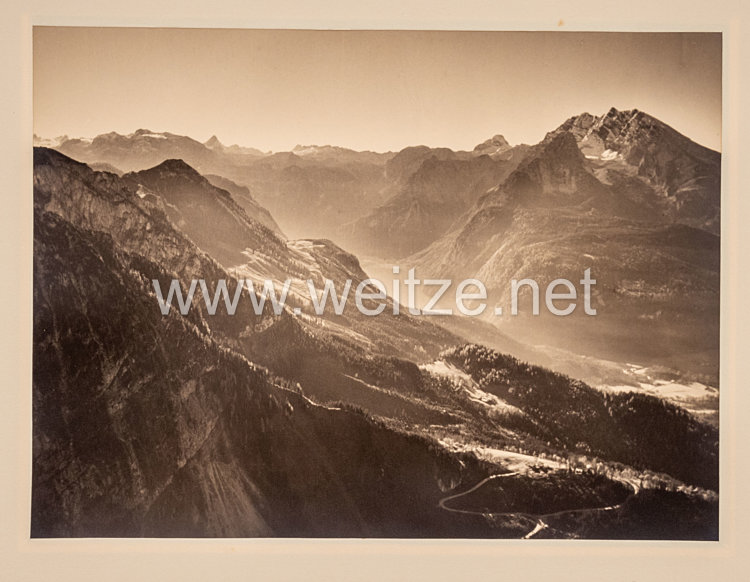
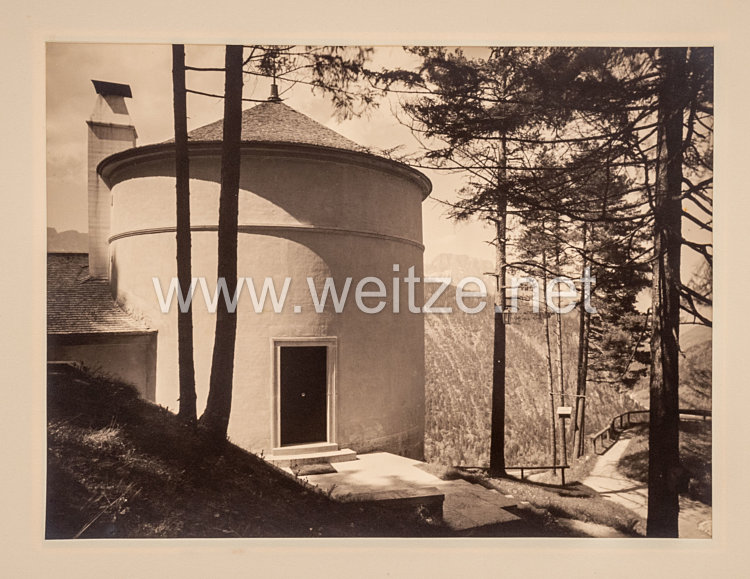
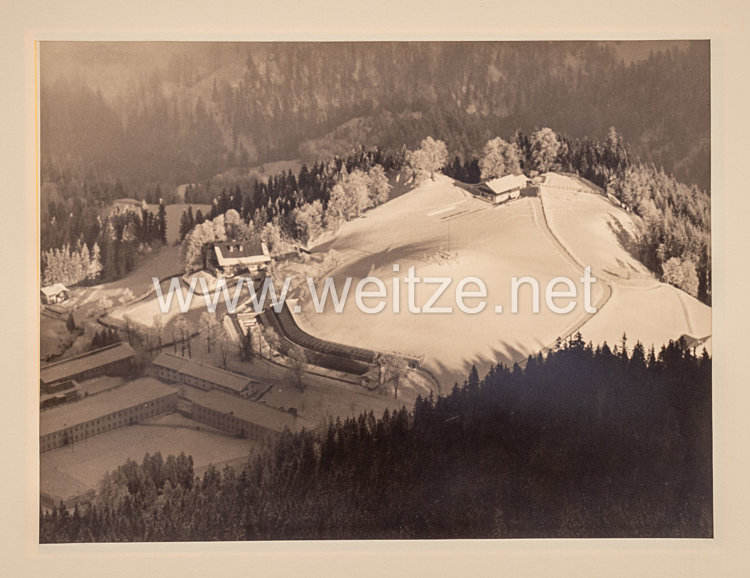
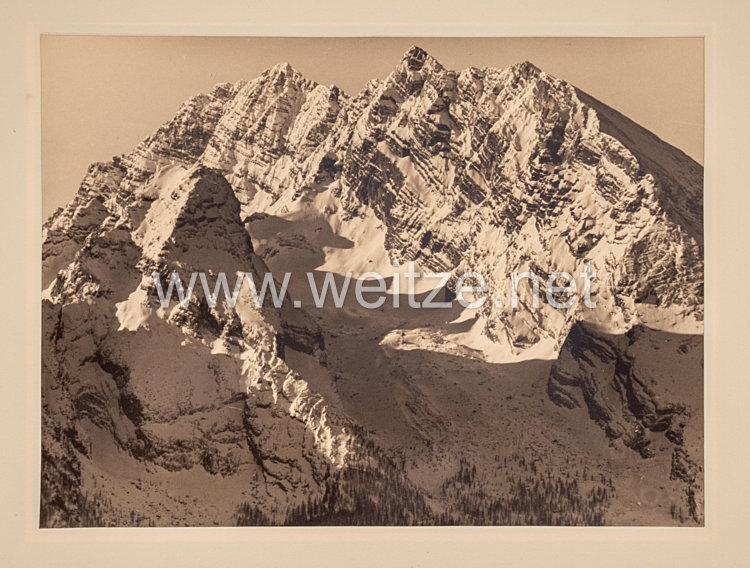
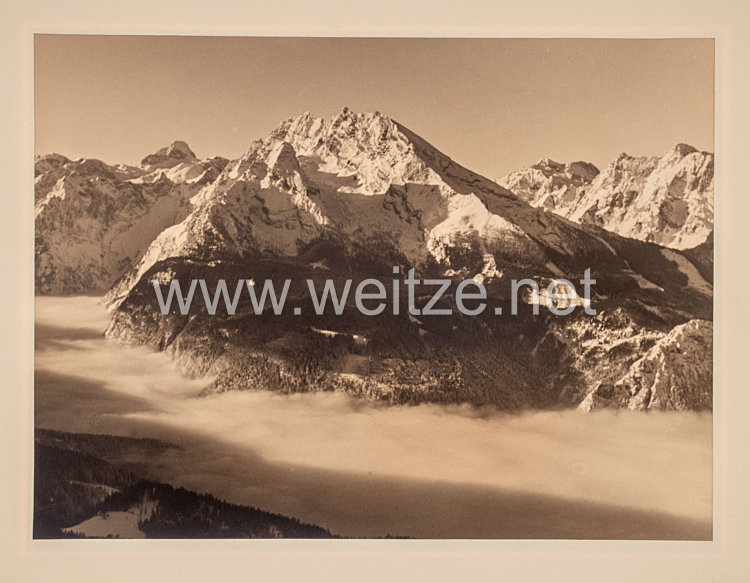
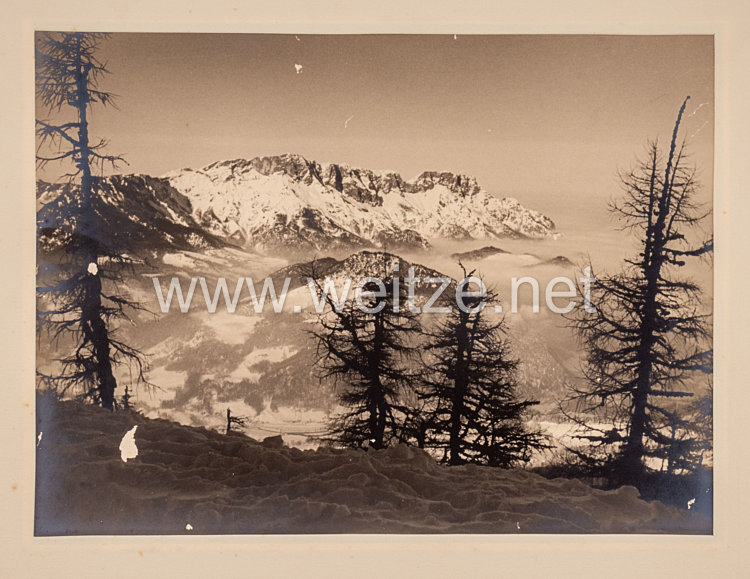
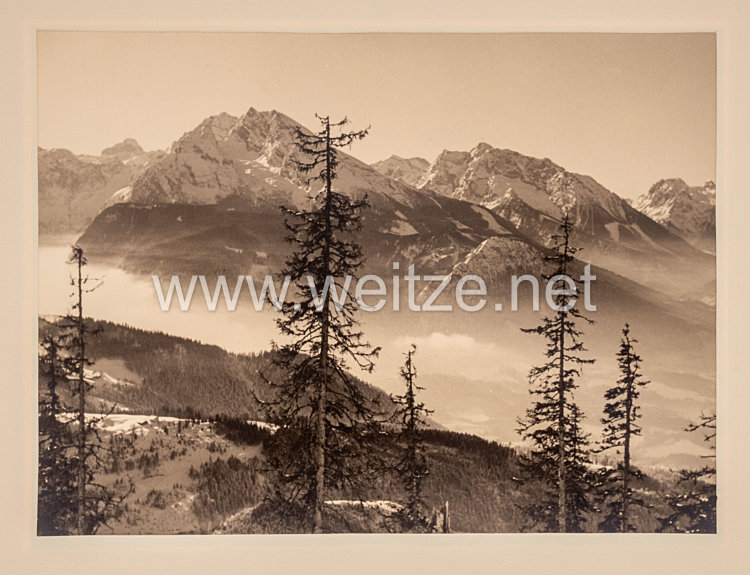
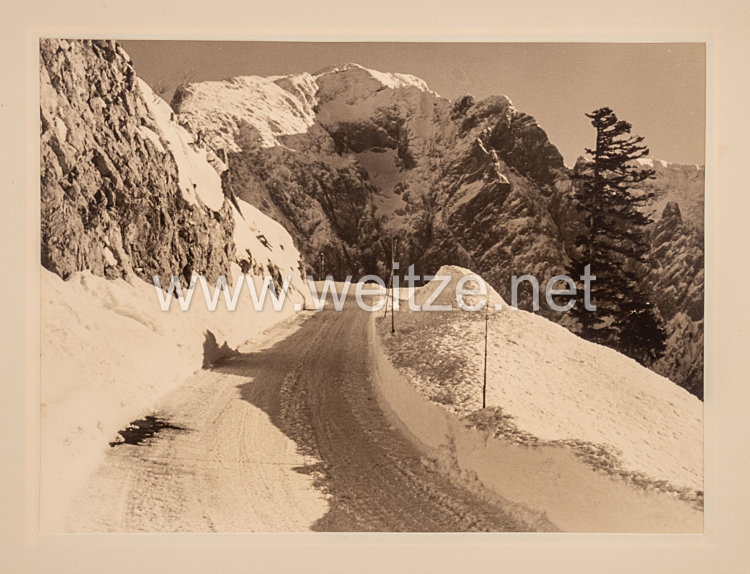
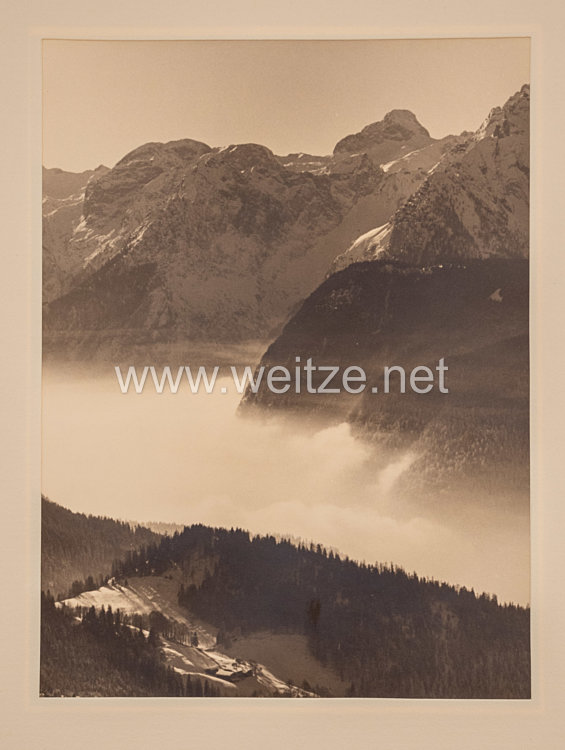
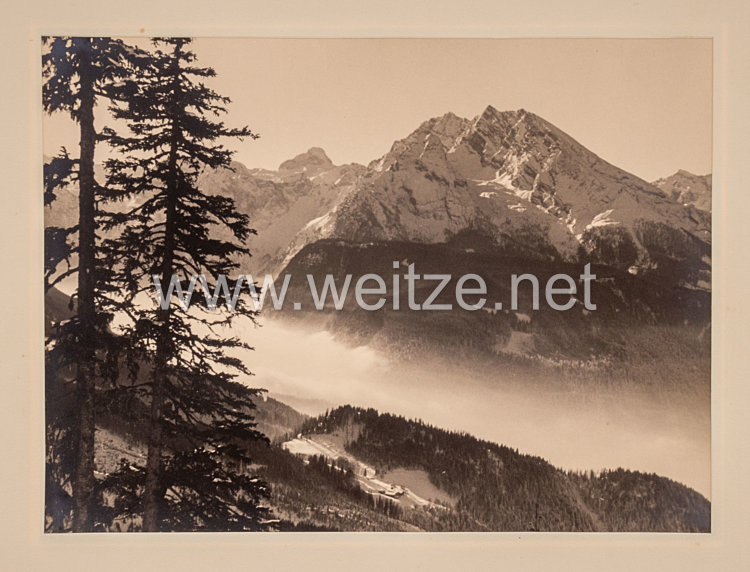
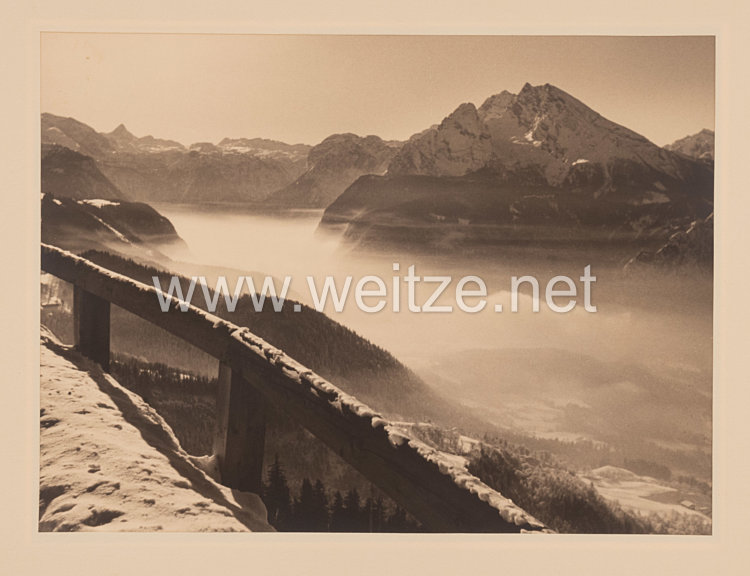
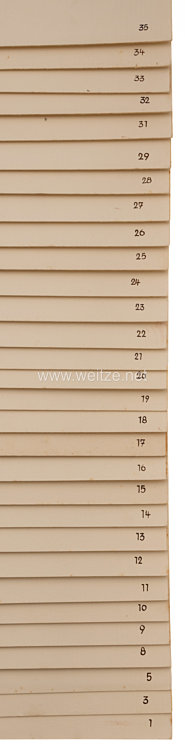
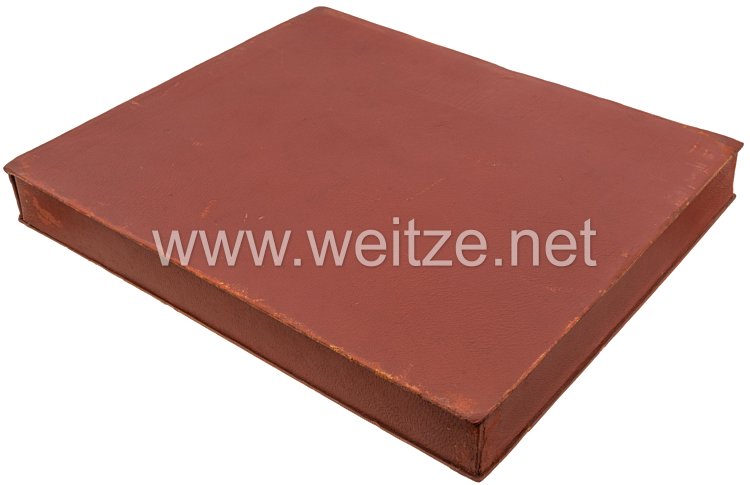
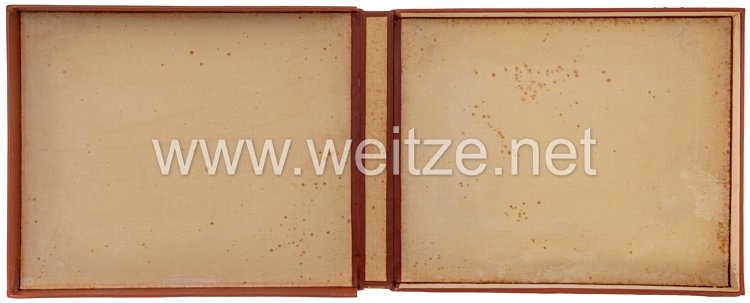
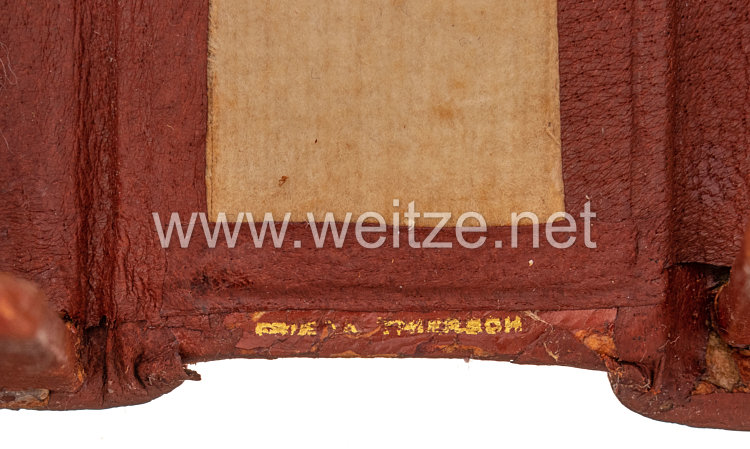
Große rote lederne Geschenkmappe zum aufklappen, hergestellt von Frieda Thiersch, auf dem Deckel mit großem in Gold geprägten Hoheitsadler mit ausgestreckten Schwingen, nach rechts blickend. Maße 40 x 33 x 5,5 cm. Die Mappe ist in der typischen Anfertigungsqualität von Frieda Thiersch, vergleichbar mit den Kästen für die silbernen Staatsrahmen und den Verleihungsmappen zum Ritterkreuz und den höheren Stufen. Die Geschenkmappe klappt sich lach links auf, innen mit cremefarbenem ausgeschlagen. Innen im Buchrücken unten mit Gold gedruckter Künstlerbezeichnung "Frieda Thiersch". Innen einliegend 30 großformatige Fotos mit Passepartout, aufgenommen von Prof. Heinrich Hoffmann. Die einzelnen Fotos zeigen den Ausblick vom Berghof auf das Tal und die umliegende Bergwelt, Innenaufnahme des großen Wohnsaals, Blick auf den Berghof, die Gärtnerei, die neu angelegte Zufahrtstraße zum Berghof, die unterirdischen Bunker und Tunnel, das Kehlsteinhaus, kurz vor der Fertigstellung, das frisch möblierte Kaminzimmer Kehlsteinhaus, Blick aus dem großen heruntergelassenem Panoramafenster auf die Bergwelt, Impressionen der Bergwelt, der Obersalzberg und die umliegenden Berge als verzauberte Winterlandschaft - alles die Eindrücke, die Hitler bei seinen Besuchen selbst erlebt hat. Jedes Foto mit Passepartout ist rückseitig per Hand nummeriert von 1 bis 35. Da die Mappe nur 30 Fotos beinhalten kann, wurden 5 Fotos nicht eingelegt (= die Nummern 2, 4, 6, 7 und 30). Nur leicht Altersspuren in gutem Zustand.
Höchstwahrscheinlich handelt es sich bei dieser Fotobildmappe an Adolf Hitler um ein persönliches Geschenk von Martin Bormann, der mit dem Bau und der Fertigstellung des Berghof betraut war.
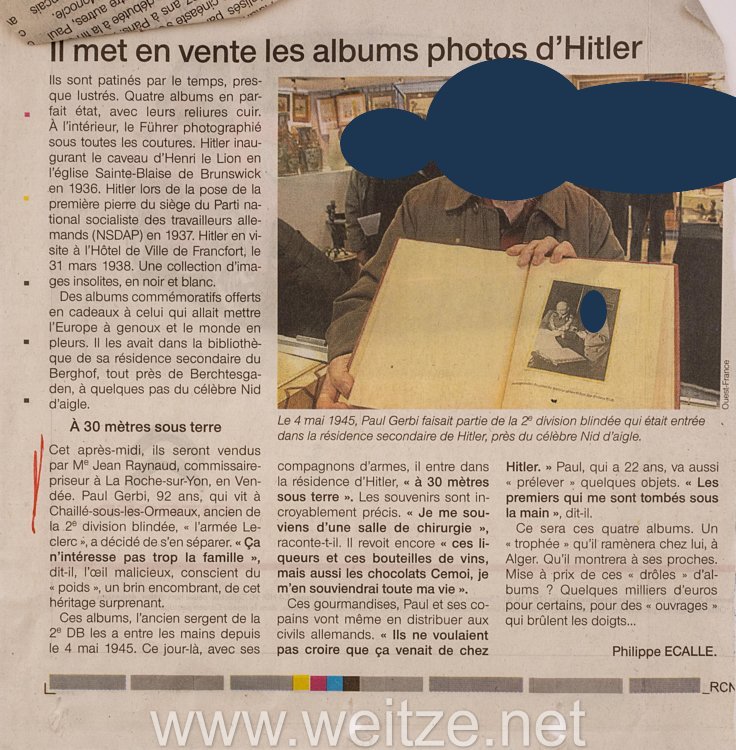
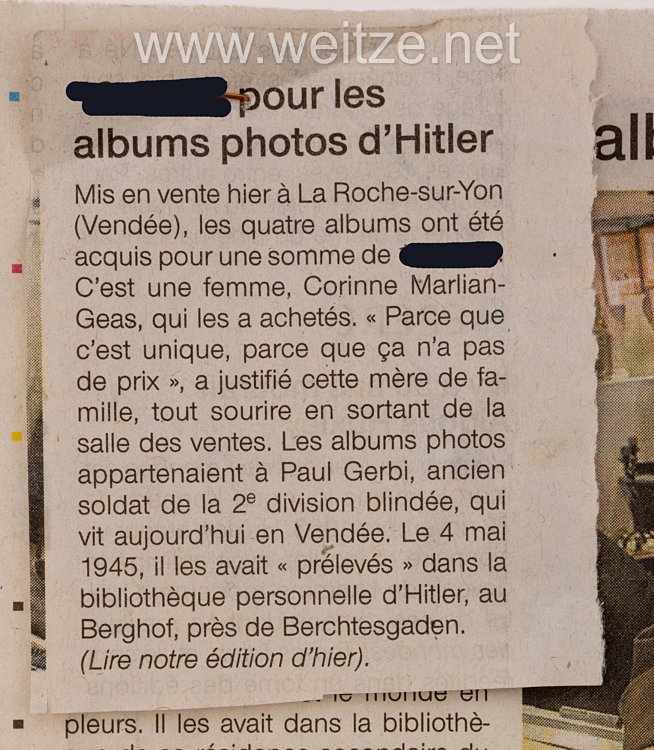
Die Geschenkmappe war die Kriegsbeute des französischen Veteran Sergeant der 2. division blindée Paul Gerbi, die er am 4. Mai 1945 in der persönlichen Bibliothek Adolf Hitlers auf dem Berghof erbeutet hat. Der Sergeant hatte insgesamt 4 verschiedene Alben, die anderen Exemplare wurde vor Jahren in Frankreich versteigert. Anbei ein französischer Zeitungsausschnitt mit dem Bericht über den Verkauf und dem Veteranen aus dem Jahr 2015.
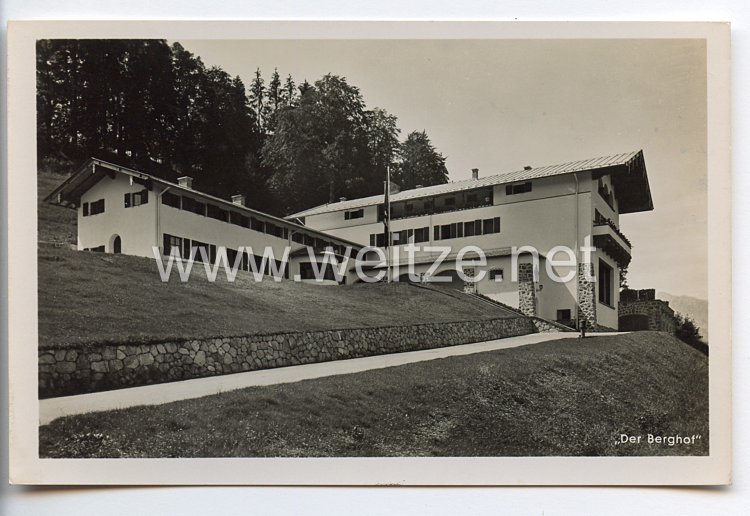
Der Berghof war das Landhaus Adolf Hitlers am Obersalzberg , Berchtesgaden. Das Gebäude wurde 1916 als Landhaus Wachenfeld für einen norddeutschen Kaufmann errichtet. Ab 1928 war das Landhaus Hitlers gemietetes Feriendomizil. Nach der Machtübernahme 1933 kaufte er es und ließ es zum Berghof, seiner repräsentativen Residenz, ausbauen. Er bildete dann den Kern des Führer-Sperrgebietes Obersalzberg, das mit dem Bau der „Kleinen Reichskanzlei“ 1937 und dem Flughafen Reichenhall-Berchtesgaden als zweiter Regierungssitz zu einem zentralen Ort der Macht im nationalsozialistischen Deutschen Reich wurde. Insgesamt verbrachte Hitler etwa ein Drittel seiner Regierungszeit auf dem Berghof, also zusammengerechnet fast vier Jahre. Internationale Diplomaten und Politiker kamen zu Verhandlungen zum Berghof. Das Gebäude wurde kurz vor Kriegsende durch alliierte Luftangriffe schwer beschädigt. 1952 wurde das Gebäude durch den Freistaat Bayern gesprengt und zerstört.
Höchstwahrscheinlich handelt es sich bei dieser Fotobildmappe an Adolf Hitler um ein persönliches Geschenk von Martin Bormann, der mit dem Bau und der Fertigstellung des Berghof betraut war.
Die Geschenkmappe war die Kriegsbeute des französischen Veteran Sergeant der 2. division blindée Paul Gerbi, die er am 4. Mai 1945 in der persönlichen Bibliothek Adolf Hitlers auf dem Berghof erbeutet hat. Der Sergeant hatte insgesamt 4 verschiedene Alben, die anderen Exemplare wurde vor Jahren in Frankreich versteigert. Anbei ein französischer Zeitungsausschnitt mit dem Bericht über den Verkauf und dem Veteranen aus dem Jahr 2015.
Der Berghof war das Landhaus Adolf Hitlers am Obersalzberg , Berchtesgaden. Das Gebäude wurde 1916 als Landhaus Wachenfeld für einen norddeutschen Kaufmann errichtet. Ab 1928 war das Landhaus Hitlers gemietetes Feriendomizil. Nach der Machtübernahme 1933 kaufte er es und ließ es zum Berghof, seiner repräsentativen Residenz, ausbauen. Er bildete dann den Kern des Führer-Sperrgebietes Obersalzberg, das mit dem Bau der „Kleinen Reichskanzlei“ 1937 und dem Flughafen Reichenhall-Berchtesgaden als zweiter Regierungssitz zu einem zentralen Ort der Macht im nationalsozialistischen Deutschen Reich wurde. Insgesamt verbrachte Hitler etwa ein Drittel seiner Regierungszeit auf dem Berghof, also zusammengerechnet fast vier Jahre. Internationale Diplomaten und Politiker kamen zu Verhandlungen zum Berghof. Das Gebäude wurde kurz vor Kriegsende durch alliierte Luftangriffe schwer beschädigt. 1952 wurde das Gebäude durch den Freistaat Bayern gesprengt und zerstört.