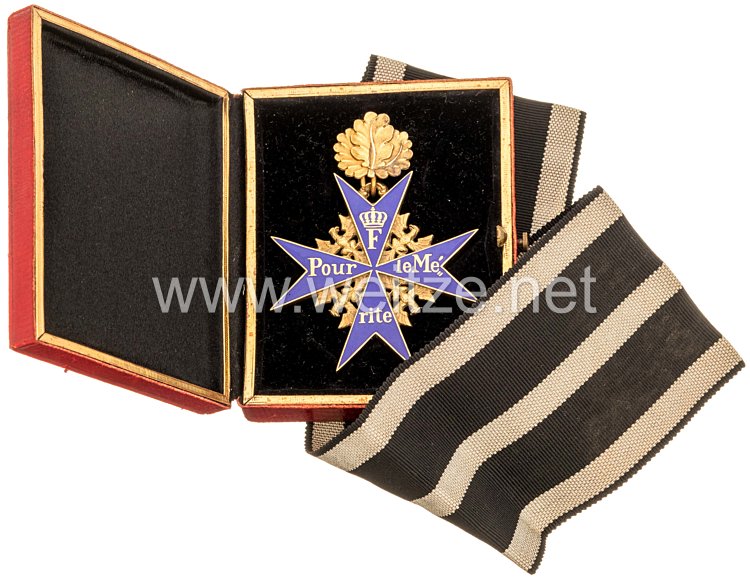
The Order Pour le Mérite with Oak Leaves represents one of the highest military decorations in Prussian and German history. Established in 1740 by King Frederick II of Prussia, this order succeeded the older Ordre de la Générosité from 1667. Its French designation reflected the language of the Prussian court at that time and persisted for nearly two centuries. On January 18, 1810, King Frederick William III transformed the decoration into an exclusively military order, henceforth awarded only to officers for extraordinary personal achievement in combat.
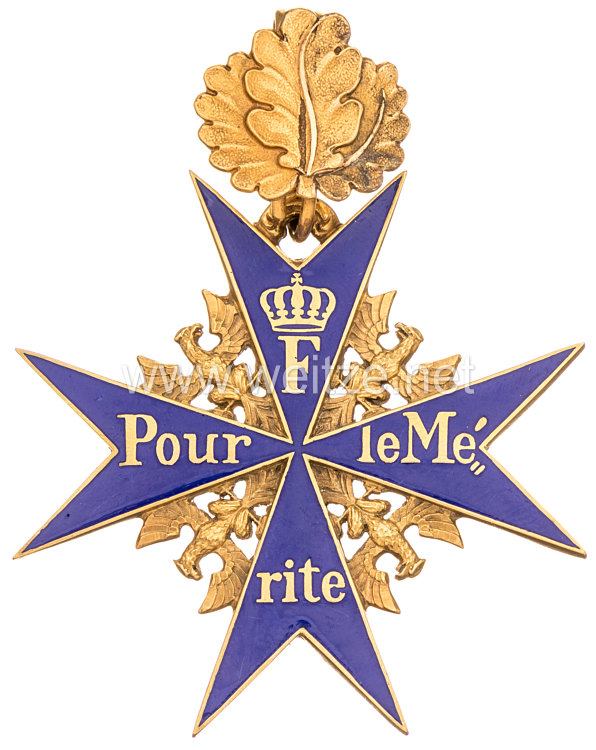
The distinctive addition of Oak Leaves was introduced in March 1813 by Frederick William III. According to the original regulations of 1813, the oak leaves were to be awarded for the capture or successful defense of a fortification, or for victory in battle. During the First World War, the oak leaves increasingly came to signify a second or higher award of the Pour le Mérite and were usually reserved for high-ranking officers, particularly field commanders or general staff officers responsible for planning victorious battles or campaigns.
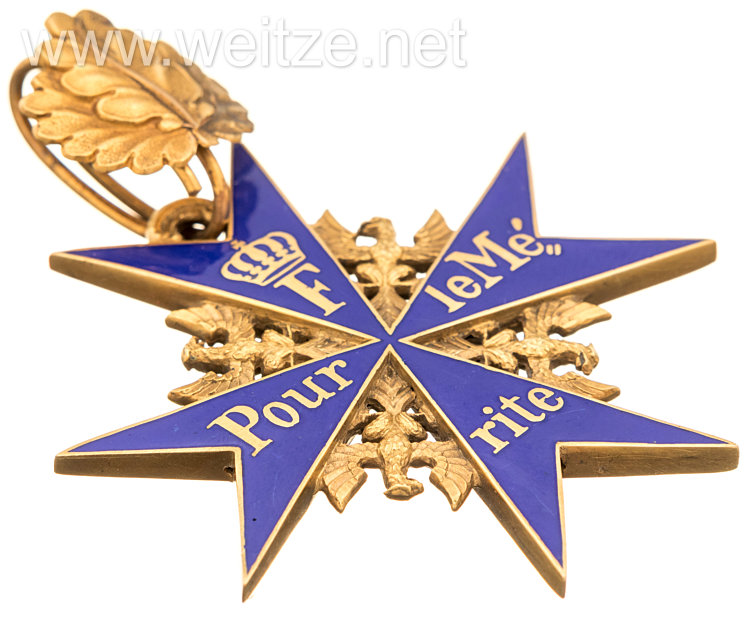
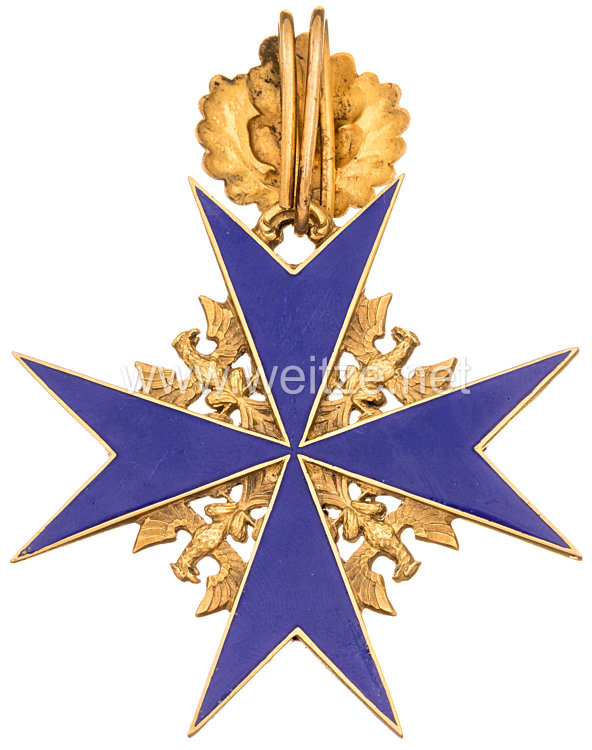
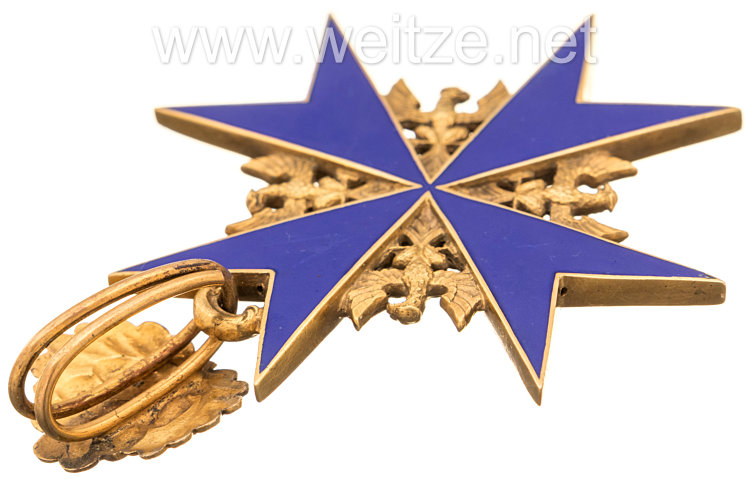
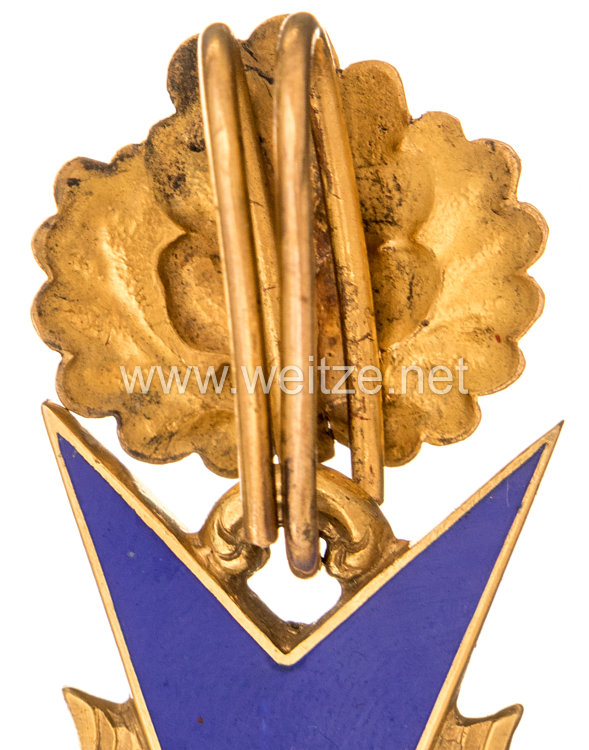
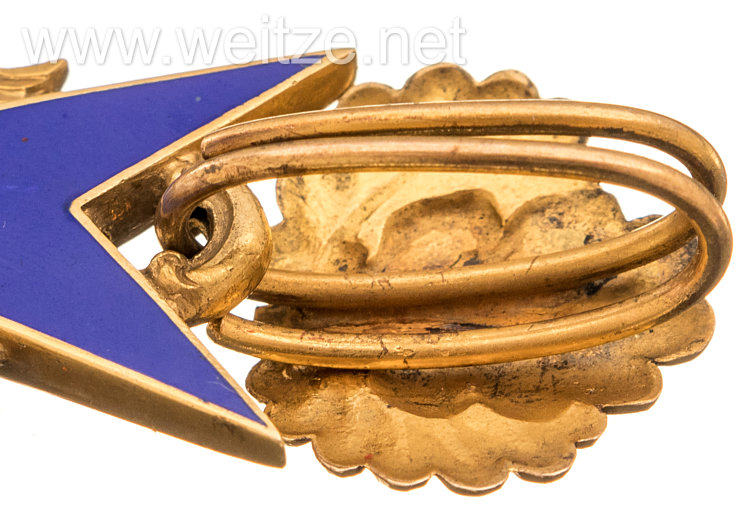
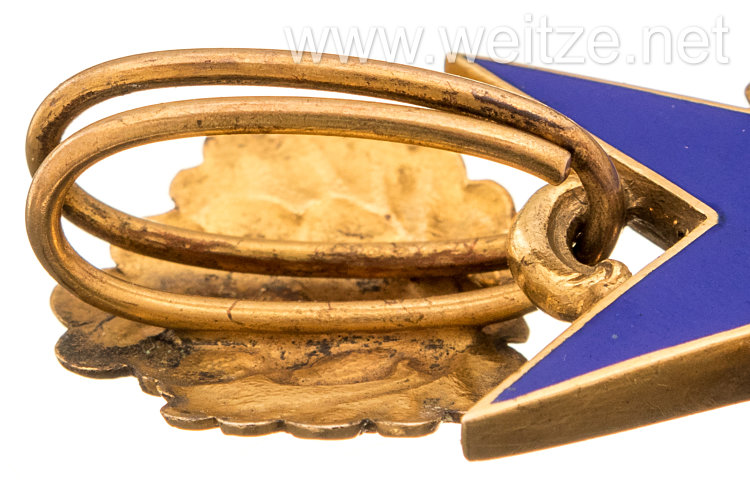
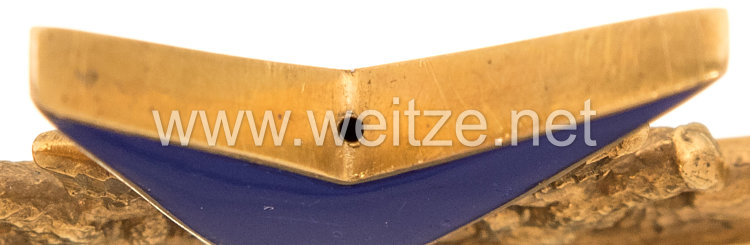
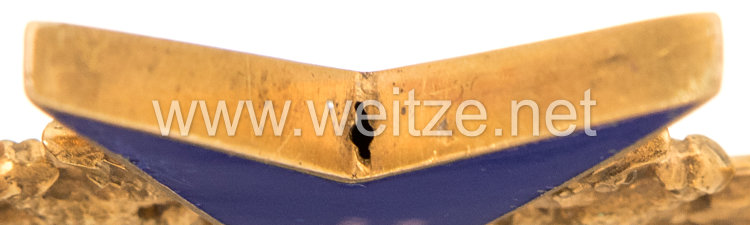
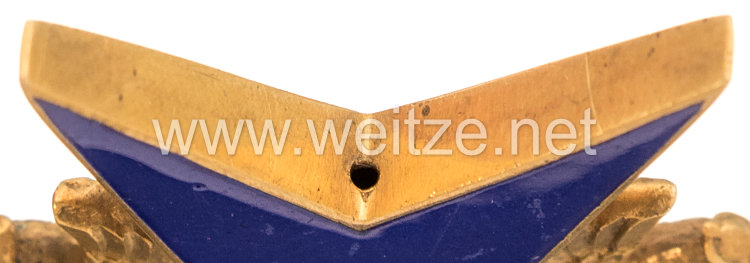
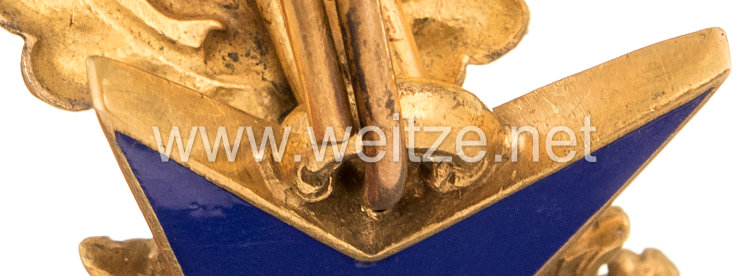
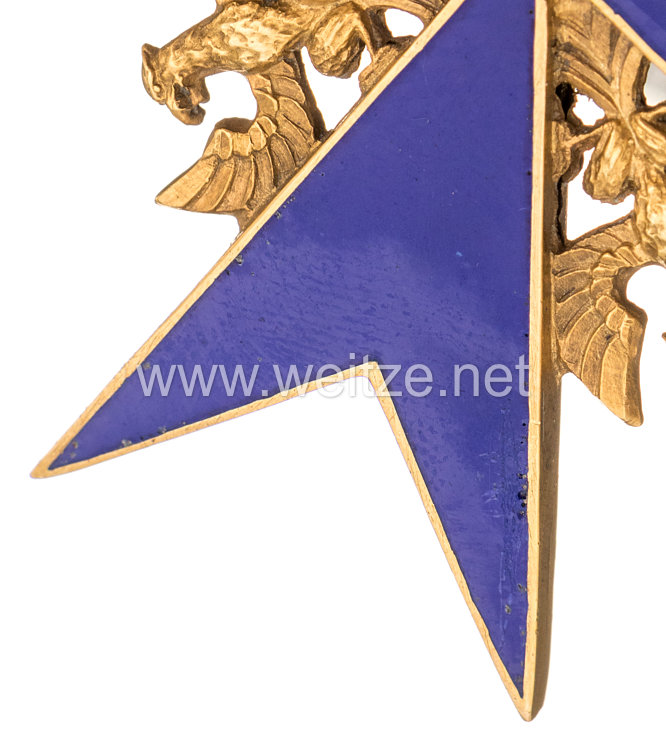
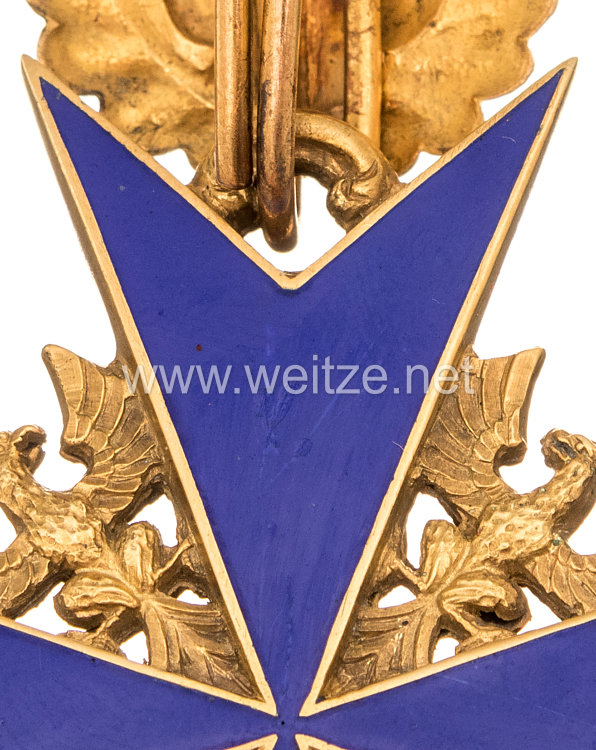
The piece under consideration exemplifies the classic production of the firm Wagner & Sohn, Berlin, which was executed in gold until the end of 1915. The hollow construction in gold, finely enameled on both sides, corresponds exactly to the craftsmanship produced by this renowned Berlin manufacturer. The Maltese Cross displays blue enamel on the cross arms, golden eagles between the arms, a golden imperial crown with the letter F for Friedrich on the upper arm, and the inscription Pour le Mérite distributed on the three remaining cross arms. The characteristic hollow construction with vent holes on the cross arms at three and nine o'clock was typical of Wagner production.
The material history of the order reflects the dramatic circumstances of World War I. Due to wartime material shortages, the General Orders Commission decreed on October 10, 1916 that gold crosses were henceforth to be made only from gilded silver with a fineness of 938/1000, marked with the content mark 938 and the manufacturer's control mark. This makes the gold versions produced until the end of 1915 particularly rare: only 106 gold Pour le Mérite were awarded in total, and of these only 31 times with oak leaves.
From its foundation in 1740 until the end of the First World War in 1918, the order was awarded to a total of 5,430 persons. During the First World War, it was conferred 687 times, with the oak leaves added only 122 times. Among the most famous recipients were the fighter aces Max Immelmann and Oswald Boelcke, who received the decoration on January 12, 1916 as the first airmen, as well as Manfred von Richthofen, the famous “Red Baron,” who received it in January 1917. Among submarine commanders, Lothar von Arnauld de la Perière, Walther Schwieger, Otto Hersing, and Otto Weddigen were decorated. Military leaders such as Paul von Hindenburg and Erich Ludendorff, who received the order in August 1914 and the oak leaves in February 1915, number among the most prominent recipients.
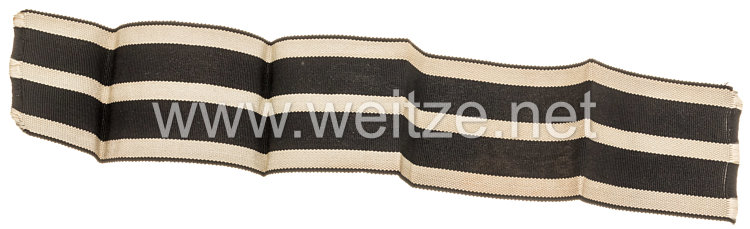
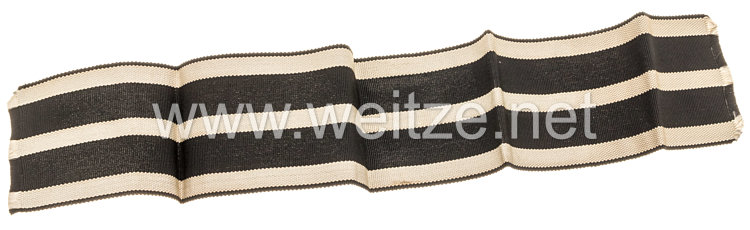
For aviators during World War I, the award criteria evolved with the changing nature of aerial warfare. Initially requiring eight aerial victories in 1916, the threshold was revised to sixteen in early 1917 and reached approximately thirty by war's end. The decoration was never awarded posthumously, and recipients were required to wear the award whenever in uniform. The ribbon was black with silver-white edge stripes, and by decree of December 17, 1917, recipients of the oak leaves wore a ribbon with three silver stripes.
The final award was made on September 2, 1918 to the flying ace Theo Osterkamp. With the abdication of Kaiser Wilhelm II on November 9, 1918 and the end of the Prussian monarchy, the military order became extinct. Previous recipients continued to wear the decoration, however, and the order remained a living symbol of military excellence until the death of the last recipient, the writer Ernst Jünger, in 1998.