Luftwaffe Large Estate of an Oberlandforstmeister in the Forestry Service

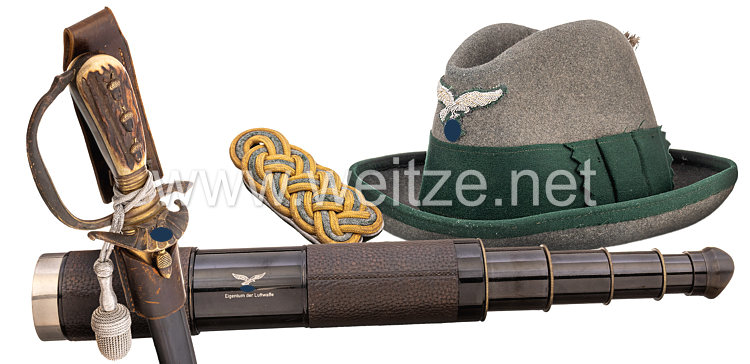
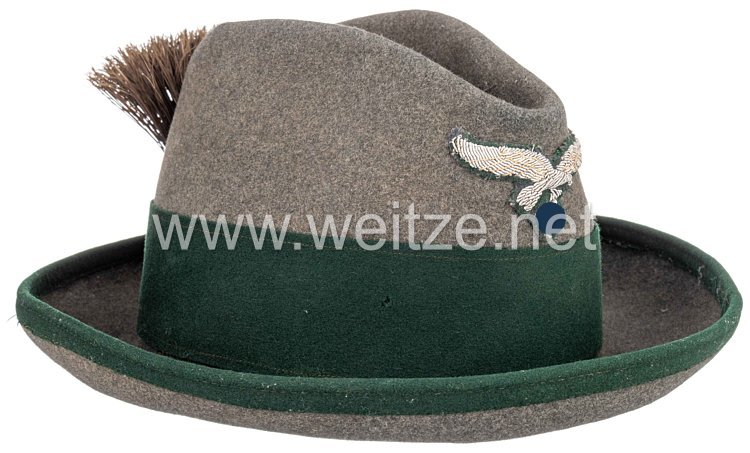
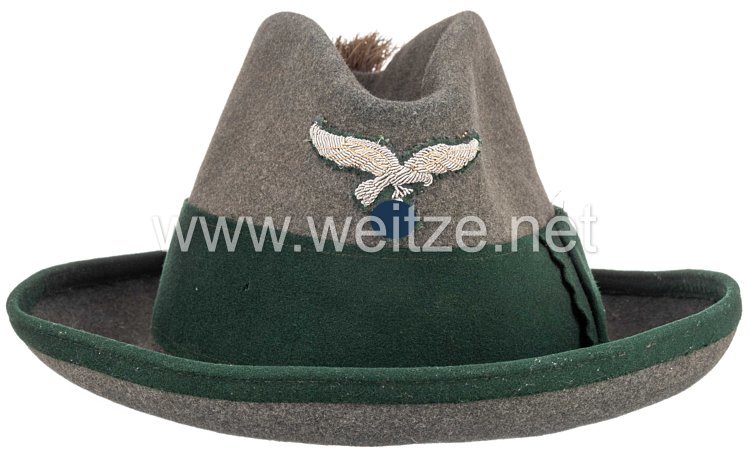
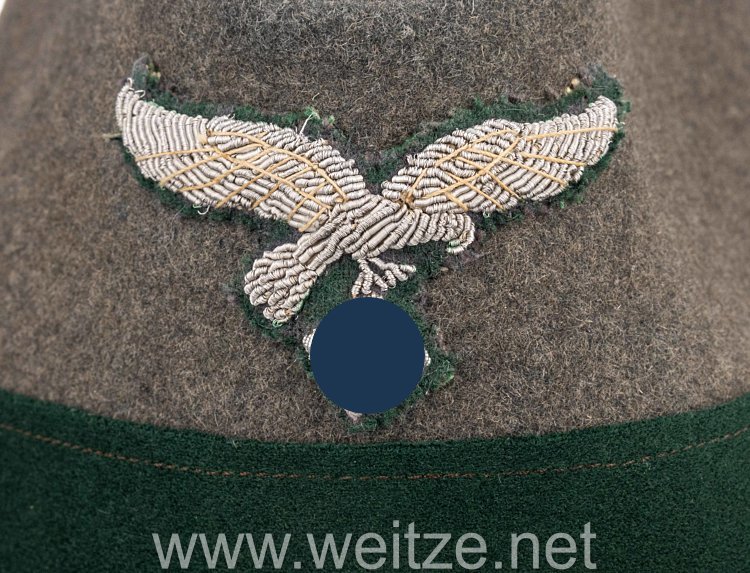
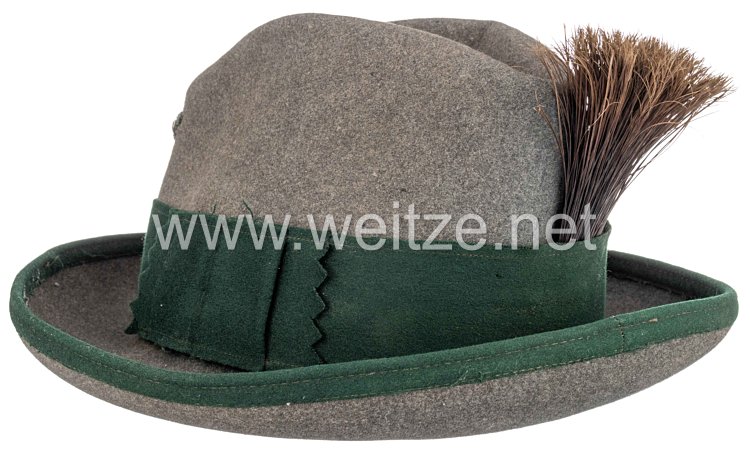
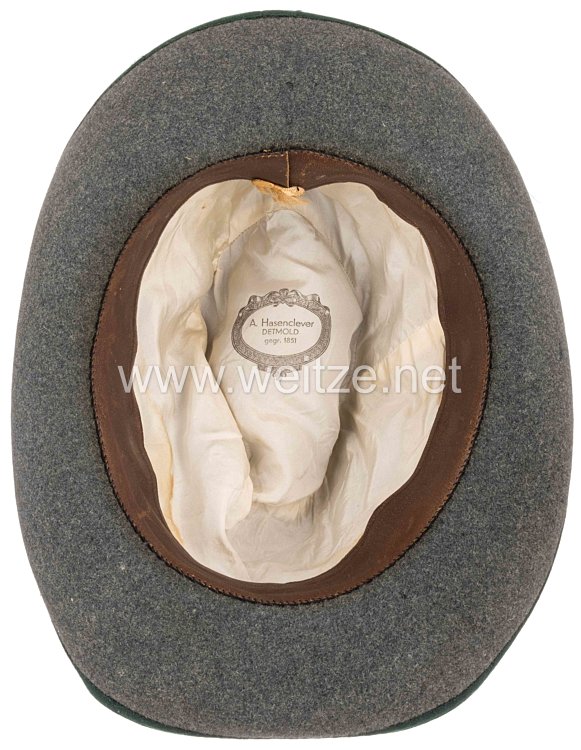
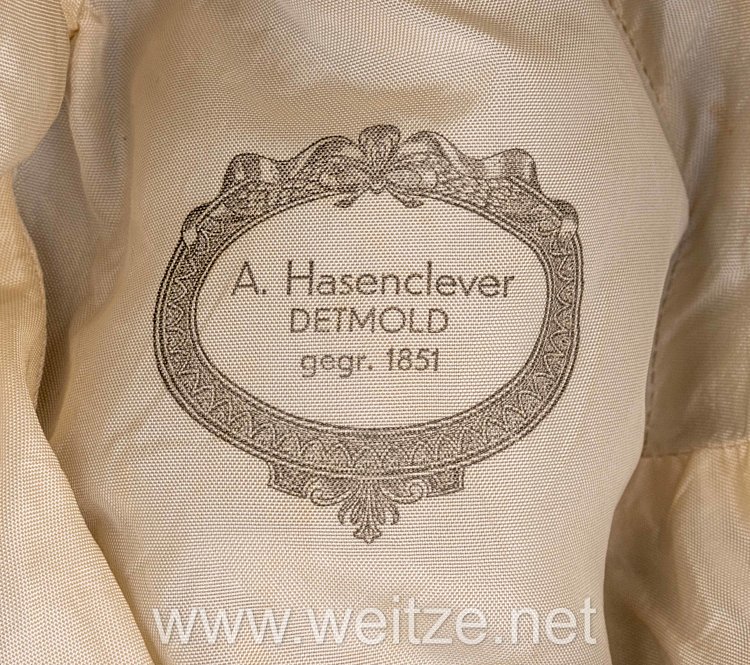
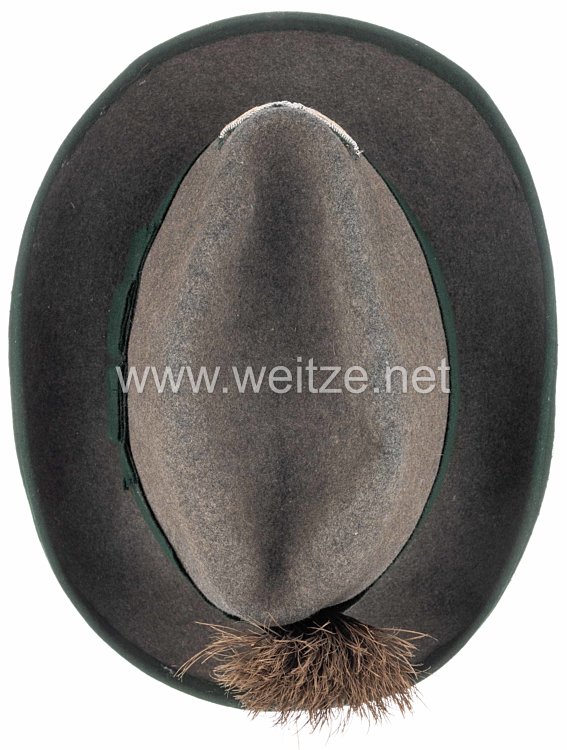
circa 1939. Hat for Forestry Officials of the Luftwaffe. Regulation pattern, manufactured from gray-green felt cloth with dark green hatband and edge piping. Front with hand-embroidered Luftwaffe national eagle in metal thread on dark green background, rear with inserted chamois beard (Gamsbart). Interior with brown sweatband, light silk lining with maker “A. Hasenclever Detmold gegr. 1851”, size 57. Lightly worn, condition 2.
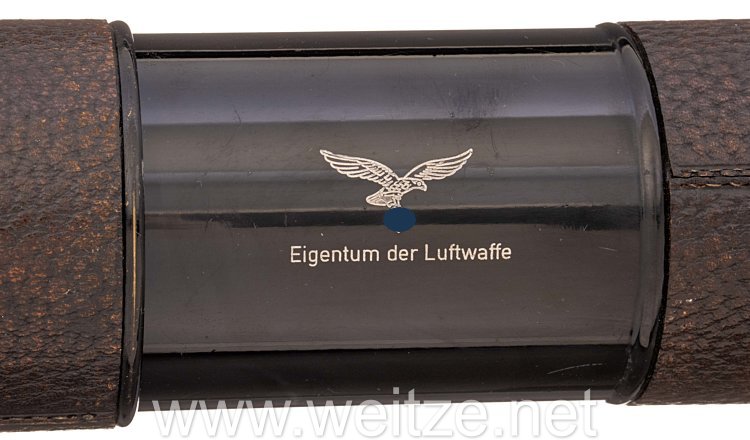
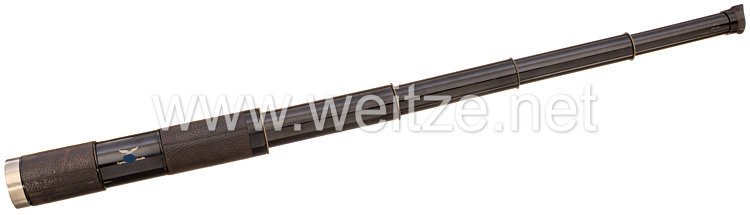
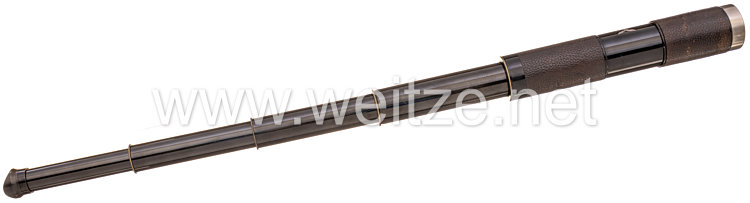
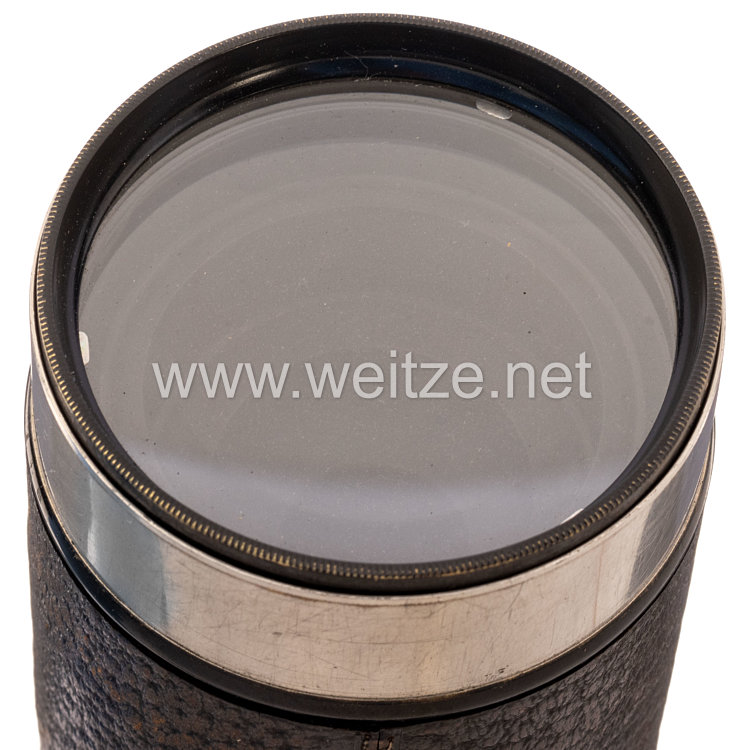
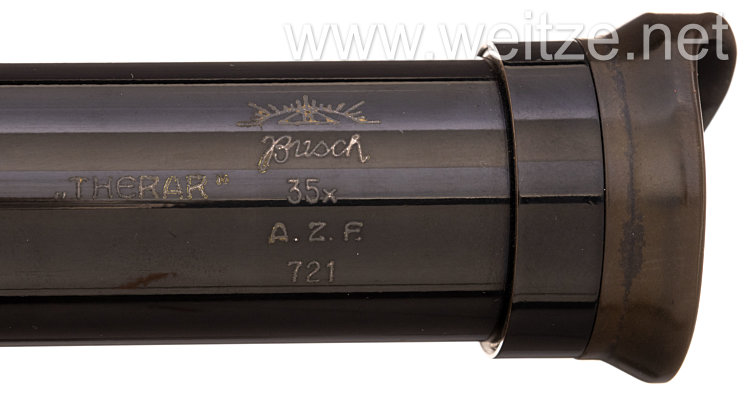
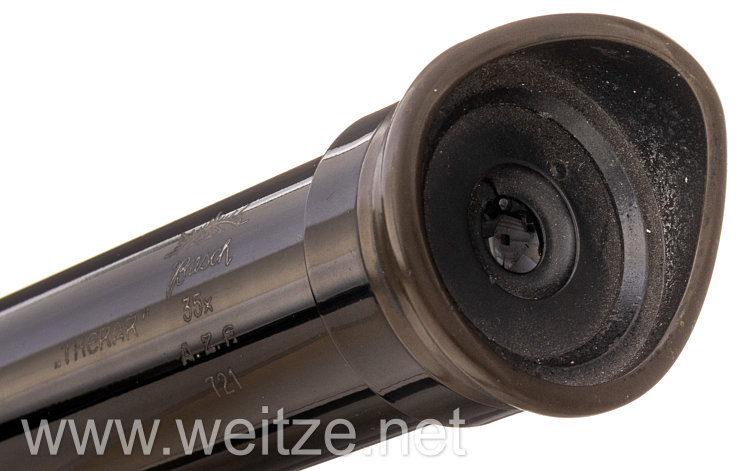
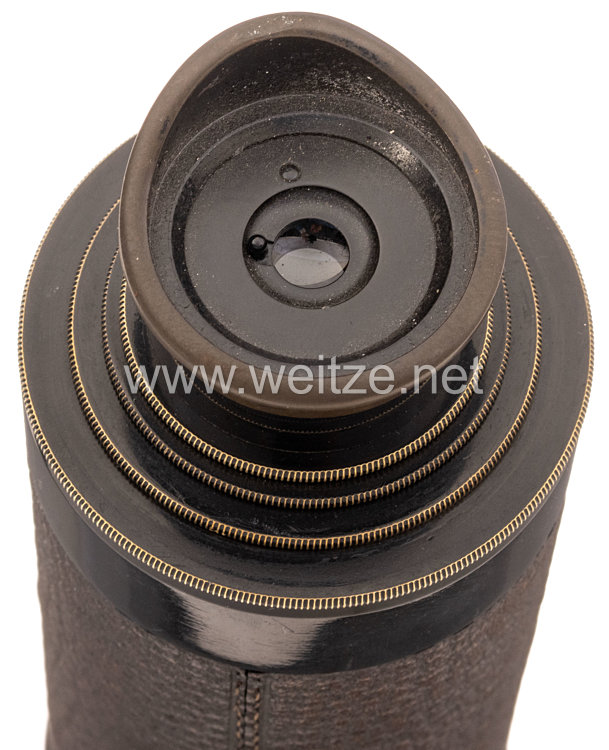
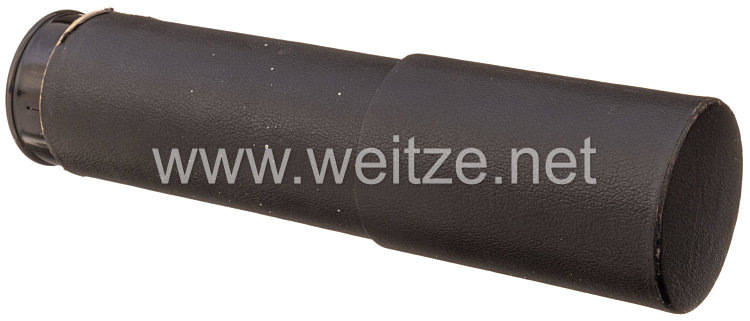
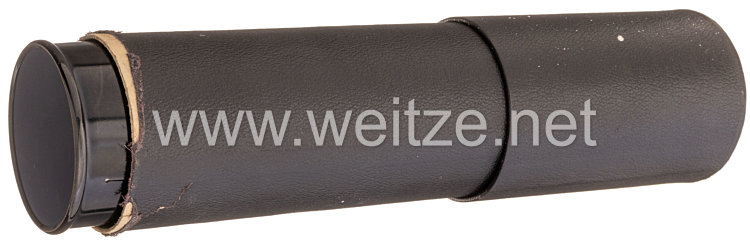
Large spotting scope/observation telescope for wildlife observation. Extendable design with 5 draw tubes, maker designation “Busch 'Therar' 30x A-Z.F. 721”, with very fine marking Luftwaffe national eagle over “Eigentum der Luftwaffe” (Property of the Luftwaffe). Length extended 96 cm, length retracted 28.5 cm. Complete with protective cap and cardboard tube from maker. Condition 2.
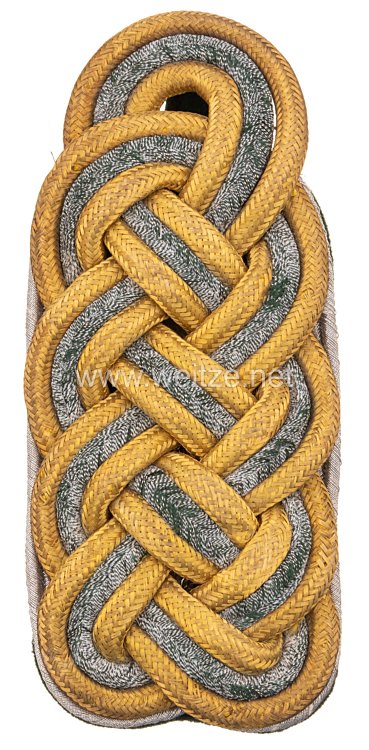
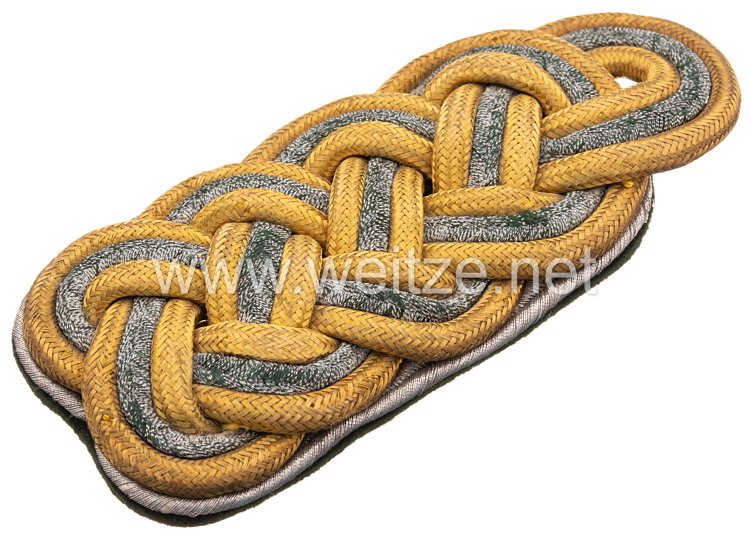
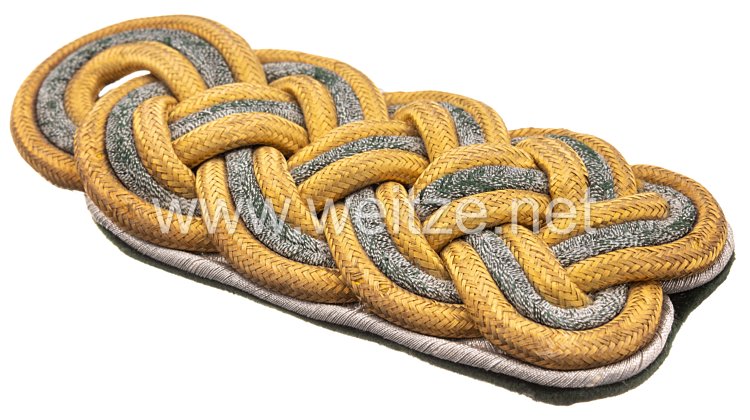
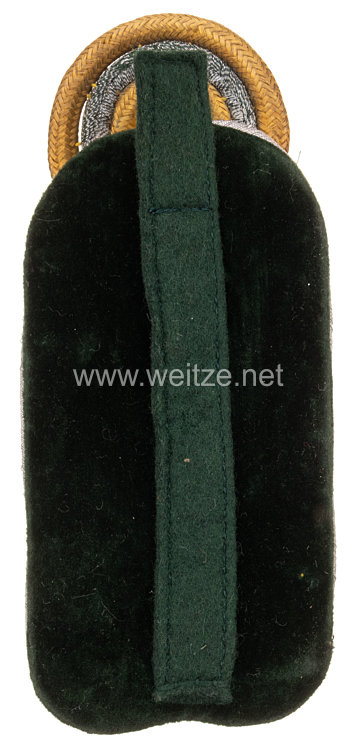
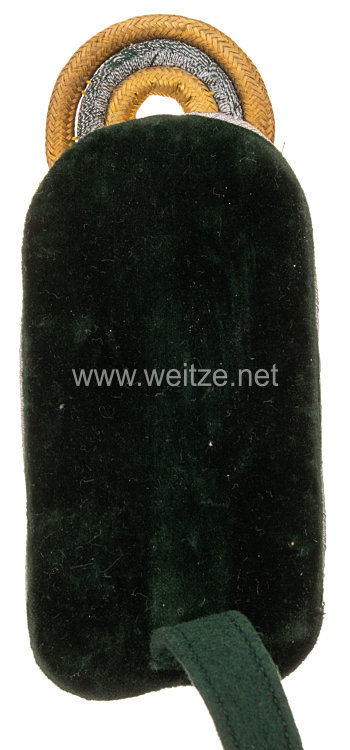
Single shoulder board as Oberlandforstmeister (rank equivalent to Major General). Large heavy gold/silver bullion with green interwoven stripes, dark green velvet underlay, with loop. Worn, condition 2.
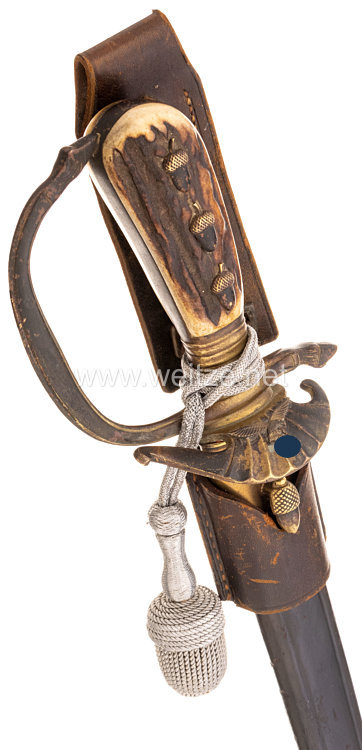
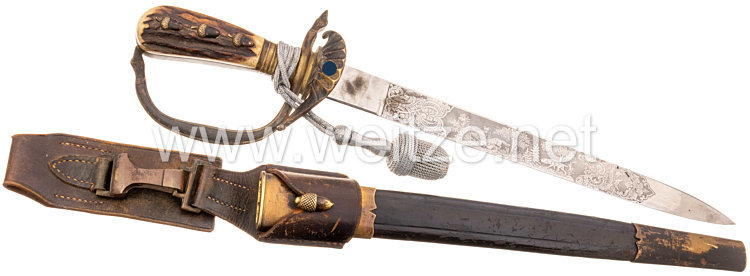
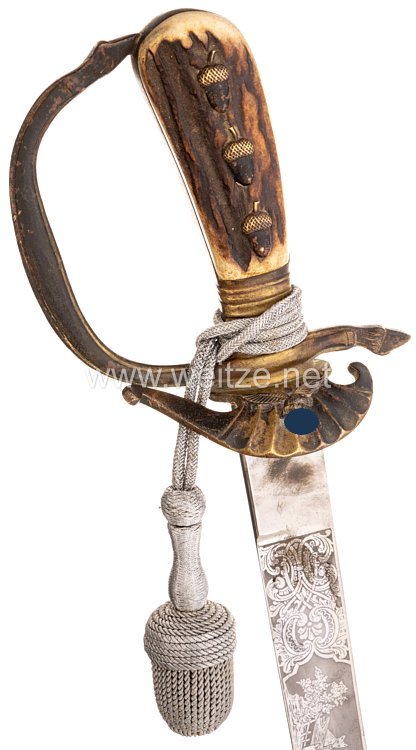
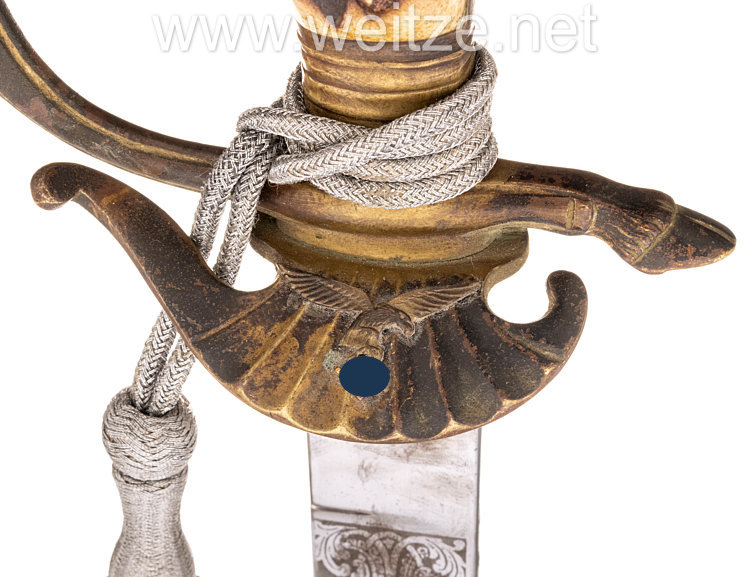
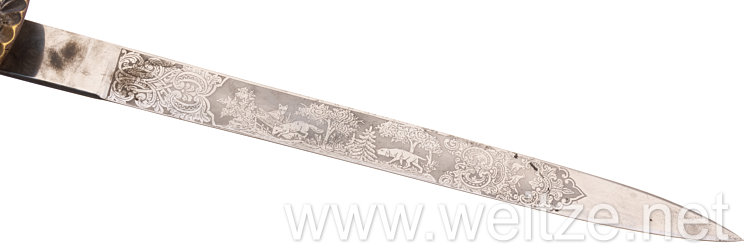
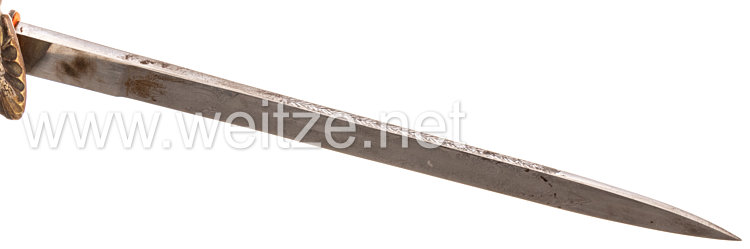
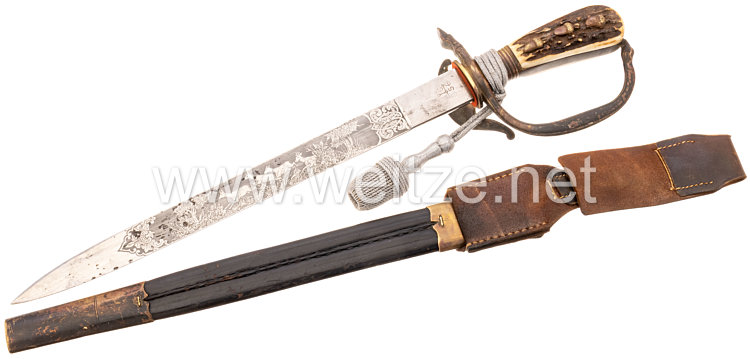
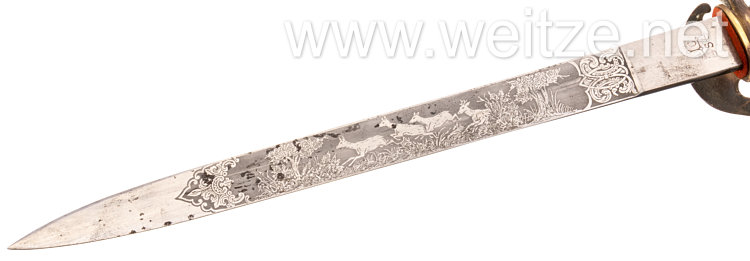
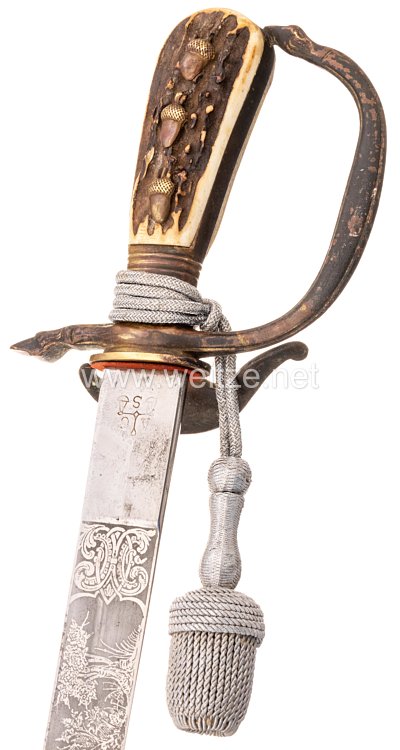
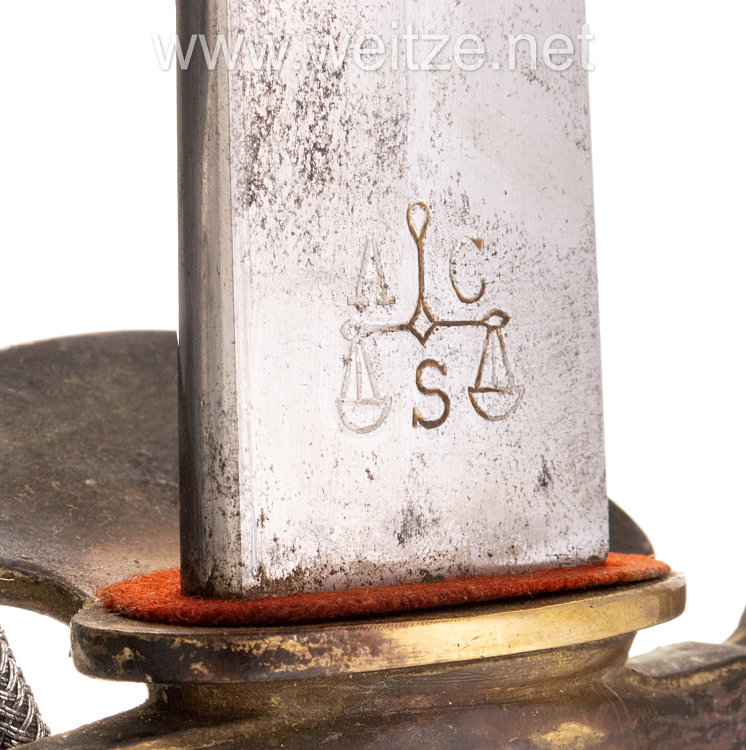
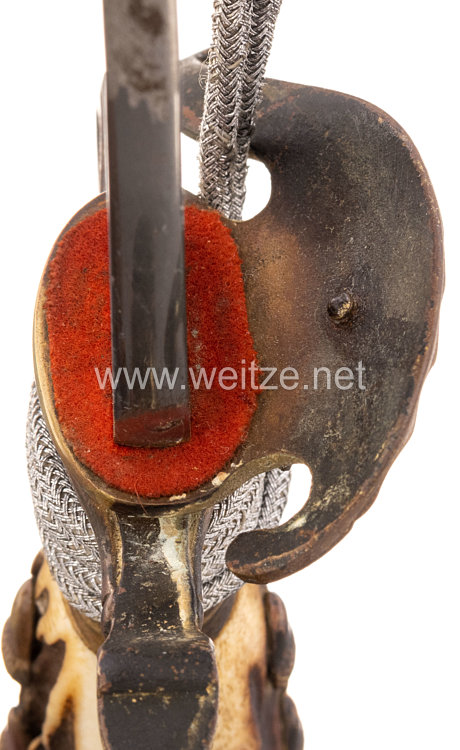
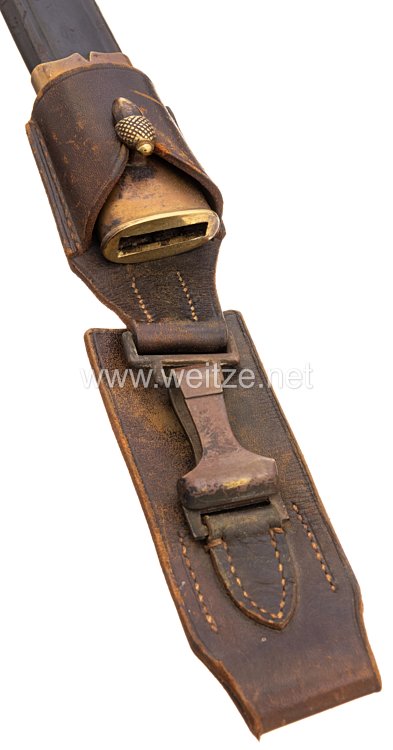
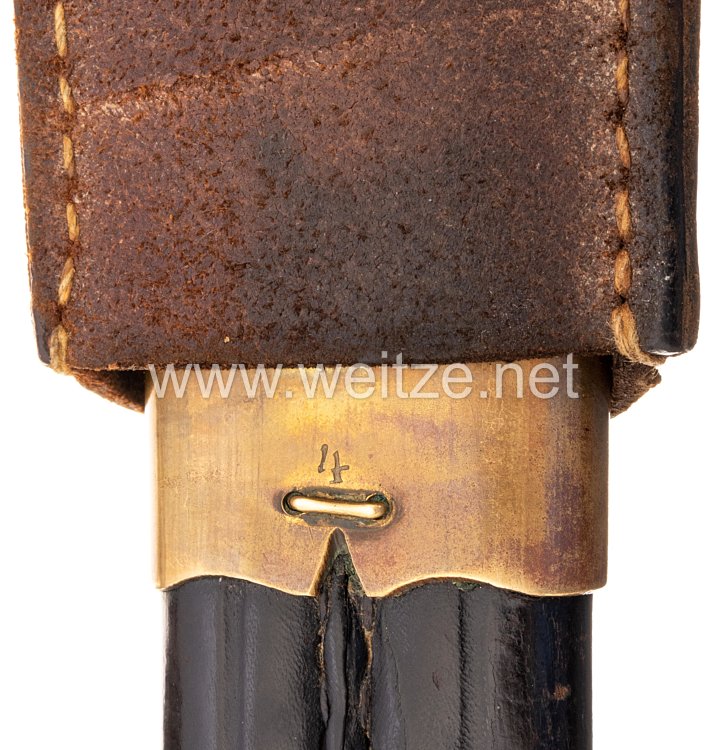
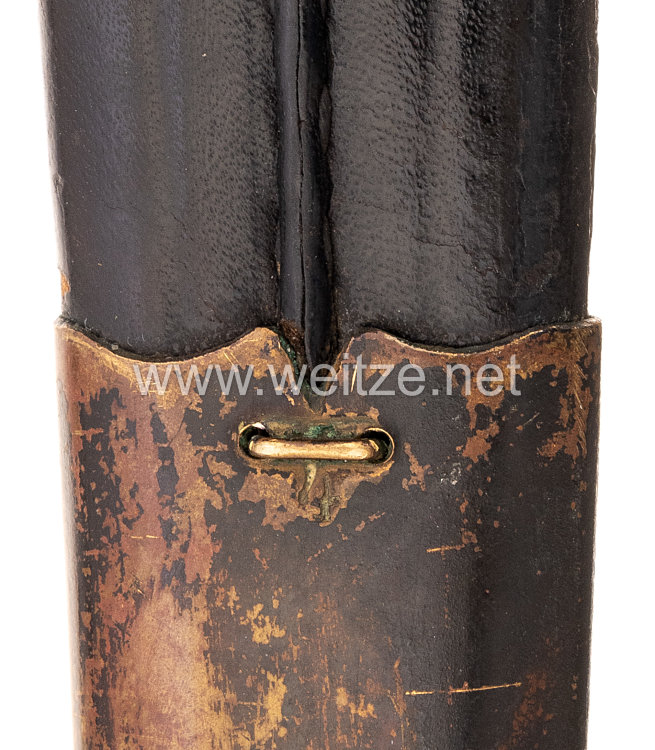
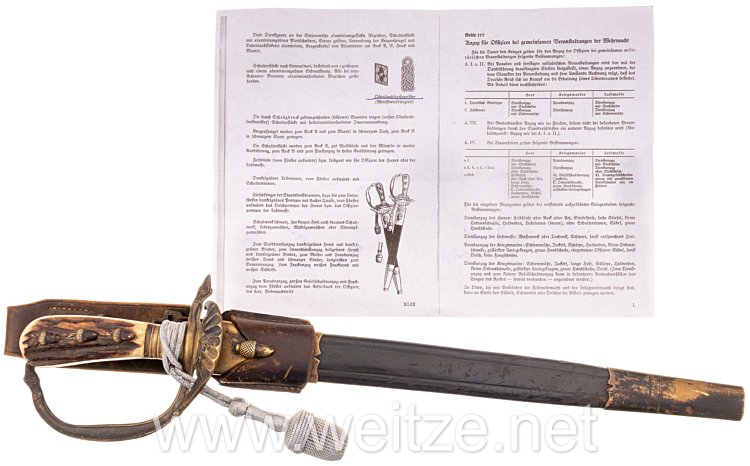
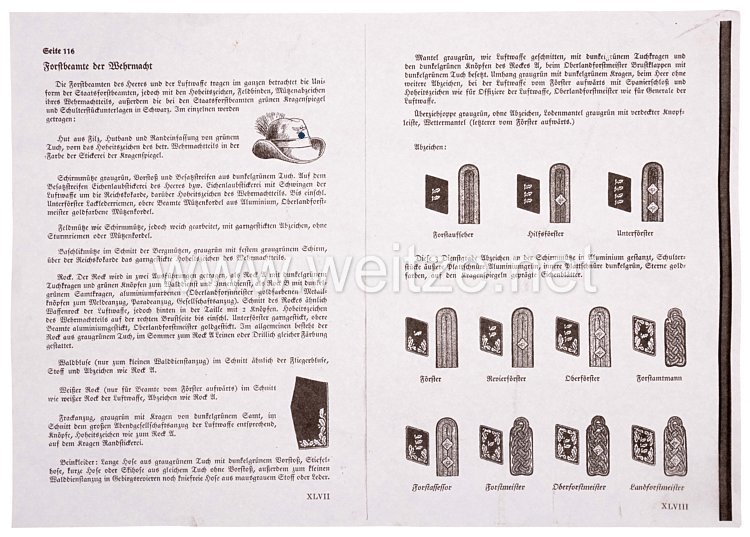
Forestry hanger for Forestry Officials of the Luftwaffe. Manufactured by Alcoso, Solingen. The hilt of gilt brass, the grip scales of staghorn with 3 applied acorns, the knuckle bow terminating in a deer hoof. The shell guard fan-shaped with applied Luftwaffe eagle 1st pattern. Complete with original knotted Luftwaffe officer's portepee. Nickel-plated spear-point blade with decorative etching on both sides, reverse with maker mark “A C S” with scales. The black leather scabbard also with gilt brass fittings, complete with brown belt shoe and belt suspension loop. The forestry hanger corresponds exactly to the illustration in the reference work “Uniformen der Deutschen Wehrmacht, einschließlich Ausrüstung und Seitenwaffen” by E. Hettler, 1939/40 edition, appendix page XLIX, although shown in the book without Luftwaffe eagle. Worn piece, still uncleaned in untouched original condition. Condition 2-.

Extremely rare estate, we are not aware of any other Luftwaffe forestry hanger.

433428

Hunting Dagger for Forestry Officials of the Luftwaffe – An Extraordinary Estate from the Third Reich Era

This remarkable estate of an Oberlandforstmeister (Senior Provincial Forestry Director) in the Luftwaffe Forestry Service represents a rare ensemble that offers profound insights into a little-known niche of German military and administrative history. At its center stands a Hirschfänger (hunting dagger) for Forestry Officials of the Luftwaffe, manufactured by the renowned Solingen firm Alcoso (Alexander Coppel, Solingen), founded in 1865 and recognized by its trademark consisting of the letters “A C S” accompanied by a stylized balance scale. Complementing the Hirschfänger are several associated uniform and equipment items that together paint a comprehensive picture of the forestry service within the Luftwaffe.

Historical Background: Göring's Forestry and Hunting Empire

On July 8, 1933, Hermann Göring was appointed Reichsjägermeister (Reich Master of the Hunt), granting him administrative authority over all aspects of forestry and hunting. The following year, in 1934, he was additionally named Reichsforstmeister (Master of the German Forests). In this dual capacity, Göring instituted comprehensive reforms to forestry laws and took active measures to protect endangered species. That same year, the Reichsforstamt (National Forestry Office) was established to replace the regional forestry departments. This office was subdivided into four main branches, including the Luftwaffe Forstdienst (Air Force Forestry Service).

The German Hunting Association and the Forestry Service Organization eventually came under NSDAP supervision, both headed by Hermann Göring, with the primary objective of conserving game and forests. On July 1, 1938, the Luftwaffe adopted the rank system for its forestry personnel, introducing black as the new branch color. The Army followed on December 16, 1938, with the same arrangement. During the relatively brief period of twelve years, no fewer than four different dress regulations for the forestry services were issued – a testament to the frequent organizational restructuring of the era.
The Hirschfänger – Tradition and Symbolism

Hunting and forestry cutlasses have a long tradition that predates the Third Reich by centuries. During the Nazi period, only minor design changes were introduced, the most significant being the addition of the national eagle on Third Reich examples. These weapons are commonly described as a “cutlass” in specialist literature. Notably, very few Third Reich era Hirschfängers were manufactured displaying any Nazi emblems, making examples bearing such markings particularly significant.
The present piece was a privately purchased item – hunting and forestry cutlasses were privately procured with endless variations. Some were simple, while others were complex and crafted from high-quality materials. This example clearly belongs to the latter category: it features gilt brass/buntmetal fittings, staghorn grip scales with three applied acorns, a fan-shaped guard bearing a first model Luftwaffe eagle, a nickel-plated blade with decorative etching, and a black leather scabbard with gilt fittings. The dagger is completed by an original knotted Luftwaffe officer's portepee.
The Associated Items

The estate includes a hat for Luftwaffe forestry officials made of gray-green felt cloth with a dark green hatband, a hand-embroidered Luftwaffe eagle in metal thread, and a chamois beard (Gamsbart) inserted at the rear. The interior bears the maker's label “A. Hasenclever Detmold gegr. 1851” in size 57.

A large spotting scope/observation telescope for wildlife observation completes the functional equipment of the estate. This extendable instrument with five draw tubes bears the maker's designation “Busch Therar 30x A-Z.F. 721” along with a Luftwaffe eagle above the inscription “Eigentum der Luftwaffe” (Property of the Luftwaffe). It measures 96 cm when extended and 28.5 cm when collapsed.

A single shoulder board of an Oberlandforstmeister displays heavy gold/silver braiding with green interweaves on a dark green velvet backing. Collar tabs and shoulder board underlays identified the service branch – black designated the Luftwaffe and Army Forestry Service. Oberlandforstmeister wore knotted lace with interwoven thin gold lace and two silver acorns on their shoulder boards.

Post-War Legacy of the Rank Insignia

Remarkably, the forestry service shoulder boards survived the fall of National Socialism. In most occupation zones, they remained part of the uniform. From 1949 to 1955, collar tabs were officially part of the uniform in West Germany, but were abolished permanently after 1955. The 1942-pattern shoulder boards, however, remained in use for a remarkably long time – until 2004/2005.

Significance for Collectors

This estate is of outstanding importance for several reasons. The Luftwaffe Forestry Service was a specialized niche organization responsible for maintaining woodlands around airfields and controlling hunting, among other duties. The combination of Hirschfänger, headgear, observation equipment, and rank insignia in a single, cohesive estate offers a rare and complete glimpse into the service life of a high-ranking Luftwaffe forestry official around 1939. The manufacture by Alcoso, one of Solingen's leading producers of edged weapons, underscores the quality of this exceptional ensemble.

r