Hermann und Emmy Göring: großes silbernes Hochzeitsgeschenk der Kameradschaft der deutschen Künstler 1935
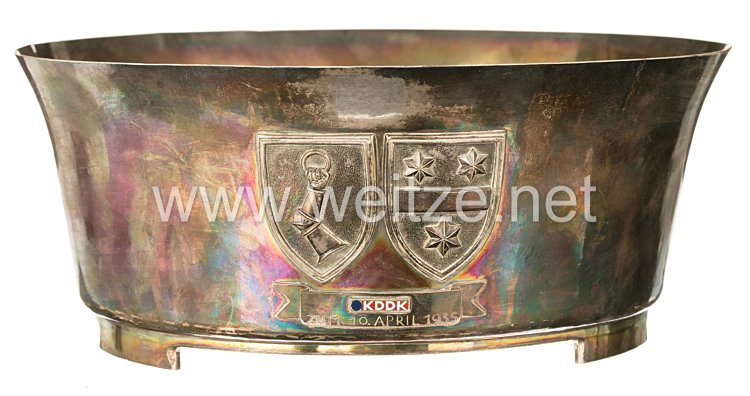
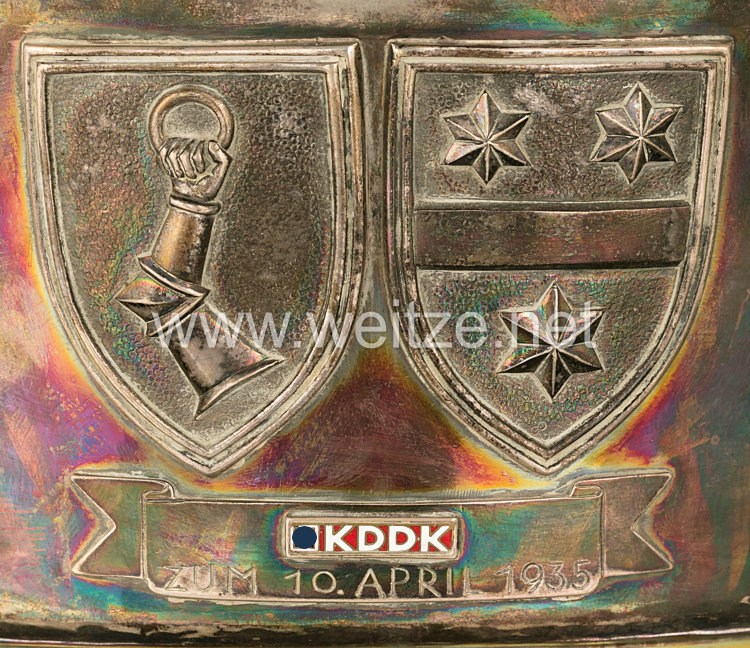
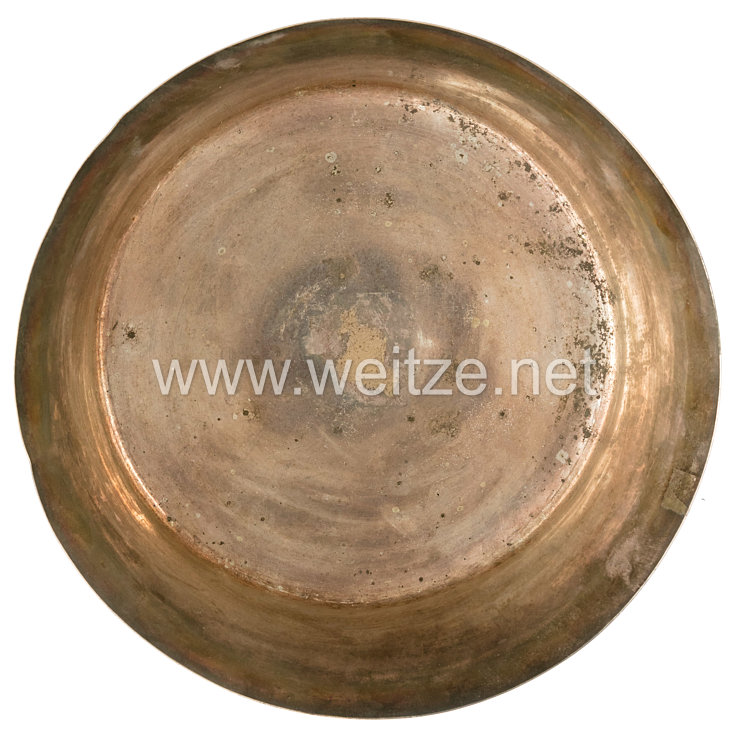
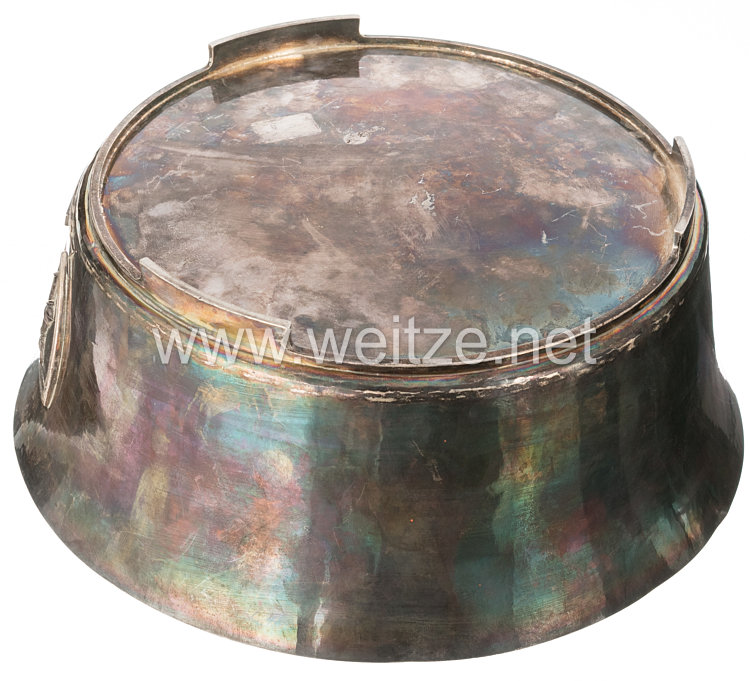
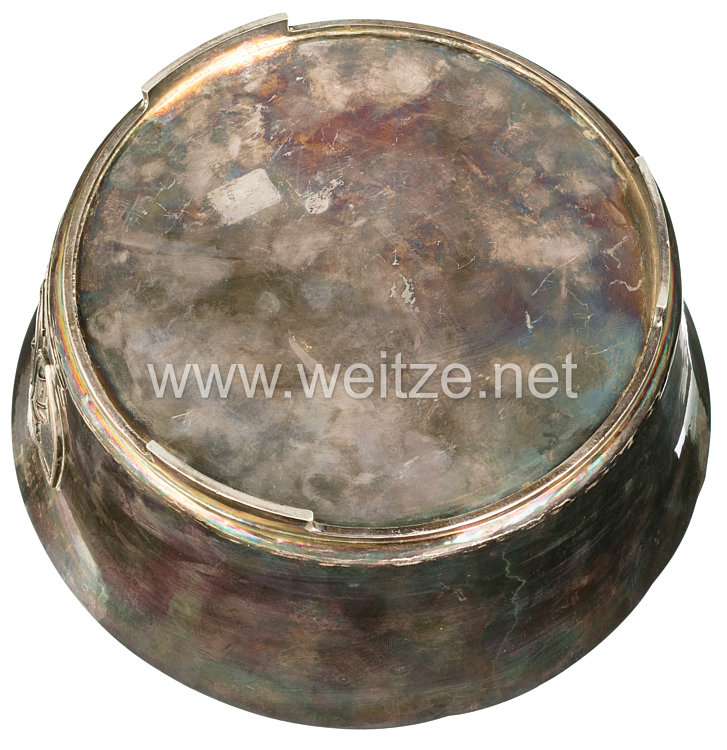
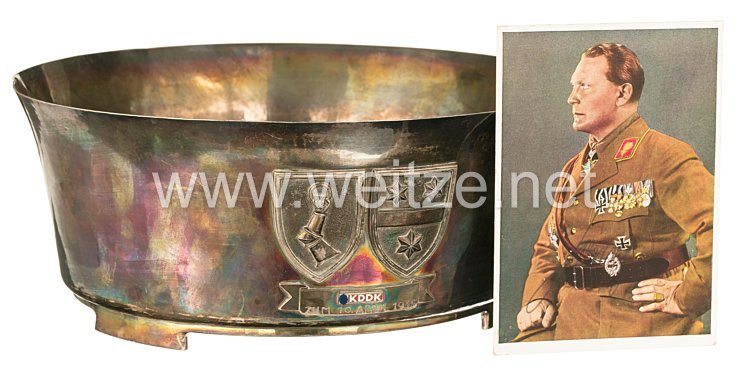
um 1935. Große silberne Obstschale Silber, die Seitenwände sich nach oben leicht öffnend, auf 3 flachen Standfüßen. Auf der Frontseite die aufgelegten große Schilde mit dem Wappen Görings und Emmy Sonnemanns, darunter aufgelegtes Bandeau mit emailliertem Schild der "KDDK" und dem gravierten Hochzeitsdatum "zum 10. April 1935". Höhe 11 cm, Durchmesser ca. 27 cm, Gewicht 980 g. Nur leichte Altersspuren mit schöner Patina, Zustand 2.
Sehr schönes Ehrengeschenk der 1934 gegründeten Kameradschaft der deutschen Künstler, die aus dem Bund der NS-Bühnen- und Filmkünstler hervorging und in der alle namhaften Künstler aus Film, Theater, Kunst und Musik Mitglieder waren.
Emmy Göring (* 24. März 1893 in Hamburg; † 8. Juni 1973 in München, geborene Emma Johanna Henny Sonnemann) wuchs als Tochter eines wohlhabenden Fabrikantenehepaares auf und genoss die Ausbildung zur Schauspielerin bei Leopold Jessner in Hamburg. Ab 1910 folgten Engagements in Hamburg, München, Wien, Stuttgart und Weimar. Im Jahr 1932 machte sie die Bekanntschaft des 1931 verwitweten Hermann Görings. In der Funktion des preußischen Ministerpräsidenten verlieh er ihr im Herbst 1934 den Titel einer preußischen Staatsschauspielerin und verschaffte ihr ein Engagement am Preußischen Staatstheater Berlin. Als Minna von Barnhelm nahm sie 1935 Abschied vom Berliner Staatstheater. Mit großem Pomp wurde am 10. April 1935 die Hochzeit von Hermann und Emmy Göring gefeiert. Emmy Göring fungierte, weil Adolf Hitler unverheiratet war, als „Hohe Frau“ des Deutschen Reiches, oft in Konkurrenz zu Magda Goebbels.
Sehr schönes Ehrengeschenk der 1934 gegründeten Kameradschaft der deutschen Künstler, die aus dem Bund der NS-Bühnen- und Filmkünstler hervorging und in der alle namhaften Künstler aus Film, Theater, Kunst und Musik Mitglieder waren.
Emmy Göring (* 24. März 1893 in Hamburg; † 8. Juni 1973 in München, geborene Emma Johanna Henny Sonnemann) wuchs als Tochter eines wohlhabenden Fabrikantenehepaares auf und genoss die Ausbildung zur Schauspielerin bei Leopold Jessner in Hamburg. Ab 1910 folgten Engagements in Hamburg, München, Wien, Stuttgart und Weimar. Im Jahr 1932 machte sie die Bekanntschaft des 1931 verwitweten Hermann Görings. In der Funktion des preußischen Ministerpräsidenten verlieh er ihr im Herbst 1934 den Titel einer preußischen Staatsschauspielerin und verschaffte ihr ein Engagement am Preußischen Staatstheater Berlin. Als Minna von Barnhelm nahm sie 1935 Abschied vom Berliner Staatstheater. Mit großem Pomp wurde am 10. April 1935 die Hochzeit von Hermann und Emmy Göring gefeiert. Emmy Göring fungierte, weil Adolf Hitler unverheiratet war, als „Hohe Frau“ des Deutschen Reiches, oft in Konkurrenz zu Magda Goebbels.