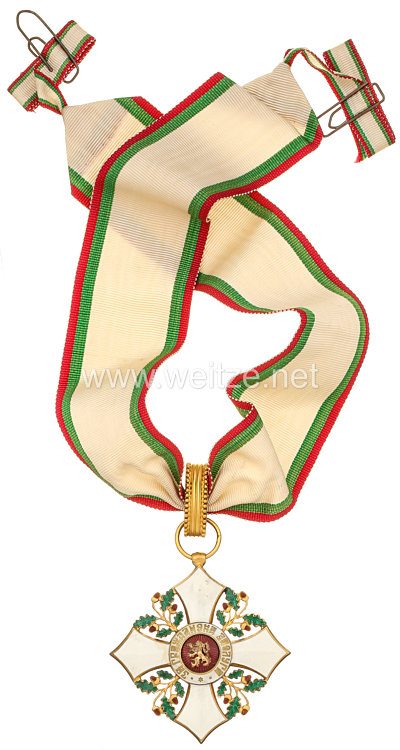
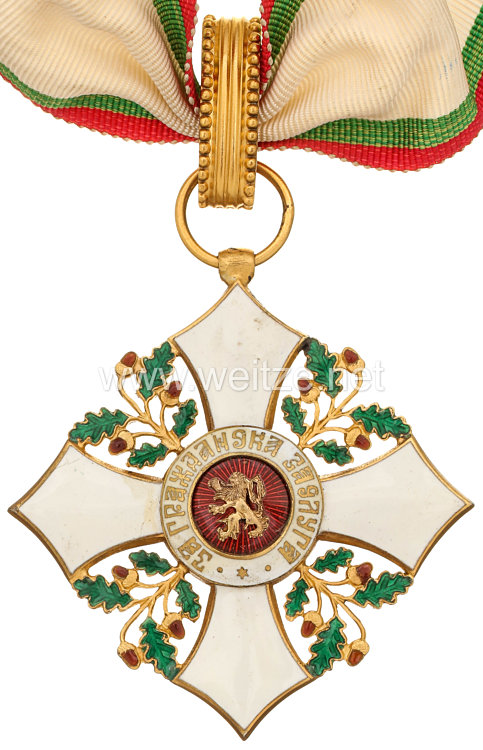
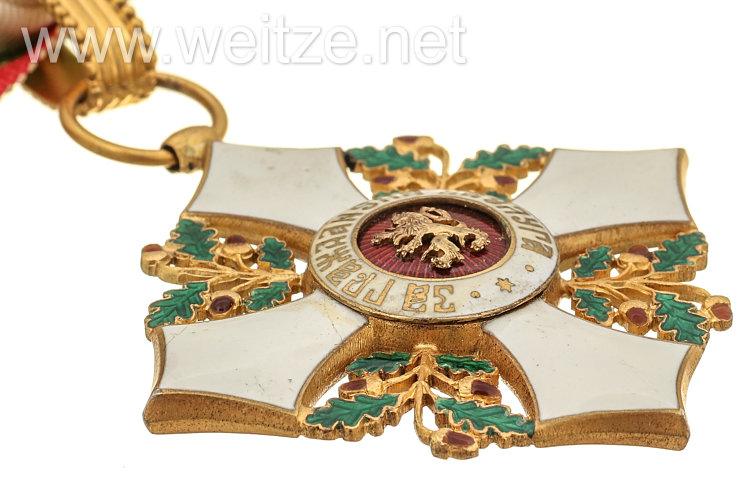
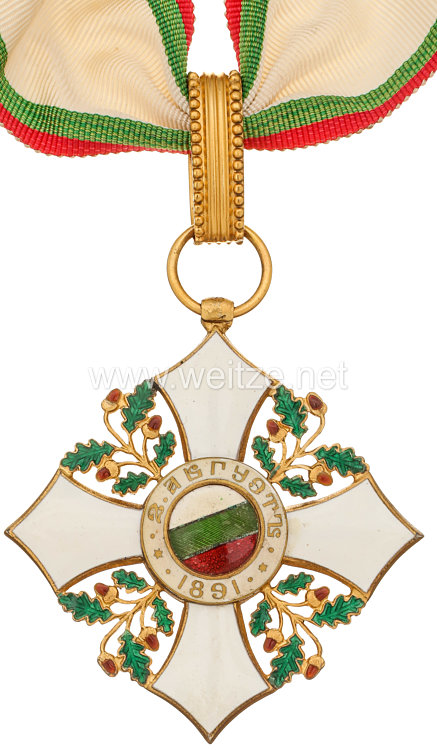
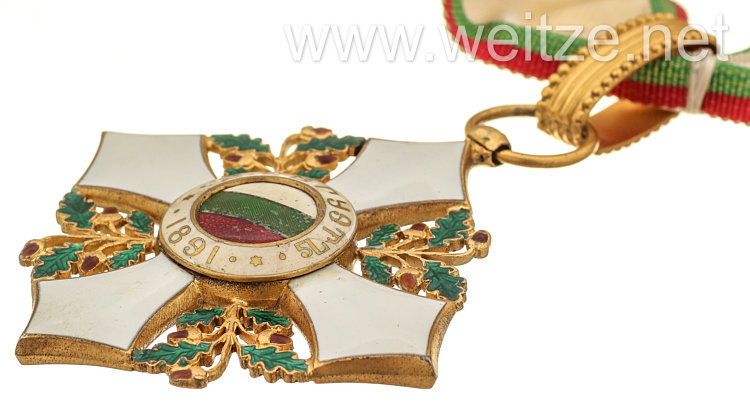
Bulgaria Order of Civil Merit 1944-1946 Cross III Class Commander's Cross

Neck cross, gilt bronze and white enameled. Complete with long ready-made neck ribbon, condition 2+.
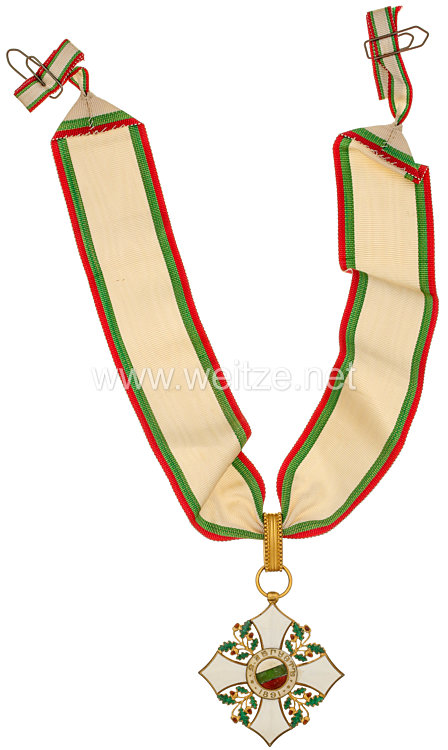
In the 1944-1946 model, the monogram on the reverse was replaced by the national colors.
354627
700,00

Bulgaria Order of Civil Merit 1944-1946 Cross III Class Commander's Cross

The Bulgarian Order of Civil Merit 1944-1946: Commander's Cross III Class

The Bulgarian Order of Civil Merit in its 1944-1946 version represents a significant transitional period in Bulgarian history. This Commander's Cross III Class, worn as a neck cross, embodies the political and social upheavals that Bulgaria experienced after World War II.

Historical Context

After September 9, 1944, Bulgaria underwent a radical political transformation. On this day, the Fatherland Front, a coalition under communist leadership, seized power through a coup d'état. King Boris III had already died in 1943, and his minor son Simeon II was under regency. The new government immediately severed relations with Nazi Germany and declared war on it.

This political transformation was immediately reflected in state decorations and symbolism. The most characteristic feature of the 1944-1946 order version is the replacement of the royal monogram on the reverse with the Bulgarian national colors (white, green, and red). This change symbolized the transition from monarchy to a new form of state and the distancing from monarchist symbols.

Technical Description and Manufacturing

The present Commander's Cross is made of gilt base metal with white enameling. The production reflects wartime and post-war material shortages, with less expensive alloys used instead of gold and silver. The cross is worn on a long, ready-made neck ribbon, as prescribed for the III Class (Commander's Cross).

The white enameling of the cross follows traditional Bulgarian order conventions and symbolizes purity and merit. The gilding, although of base metal, was intended to emphasize the dignified character of the decoration.

The Order of Civil Merit in the Bulgarian System

The Order of Civil Merit (Bulgarian: Орден за гражданска заслуга) was originally instituted to recognize outstanding services by civilians to the Bulgarian state. Unlike military decorations, this order honored achievements in administration, culture, science, economics, and other civilian fields.

The order system comprised several classes, with the III Class as Commander's Cross representing a middle but nevertheless significant rank. Wearing it on a neck ribbon distinguished it from lower classes worn as breast crosses and from higher classes with additional breast star components.

The Period 1944-1946

The years 1944 to 1946 were a time of profound change for Bulgaria. The country was transitioning from a constitutional monarchy to a communist people's republic. On September 15, 1946, the monarchy was officially abolished through a referendum, and the People's Republic of Bulgaria was proclaimed.

During this transitional period, state decorations continued to be awarded, albeit with modified symbolism. The removal of monarchist emblems such as the royal monogram was part of a comprehensive program to reshape state symbolism. After 1946, the entire order system was fundamentally reformed and adapted to the new socialist state order.

Collector Value and Historical Significance

Decorations from the 1944-1946 period are particularly interesting to collectors and historians today, as they document a brief but significant transitional phase. The modification of the reverse with national colors instead of the monogram makes these pieces easily identifiable and historically valuable.

The good condition (2+) of the described specimen with complete neck ribbon increases its documentary and collector value. Such pieces are witnesses to a turbulent time when Bulgaria was seeking its place in the new post-war order of Europe.

Conclusion

The Commander's Cross III Class of the Bulgarian Order of Civil Merit from the 1944-1946 period is more than just a military antique. It is a tangible symbol of the political upheavals in Bulgaria during the immediate post-war period. The replacement of the royal monogram with the national colors tells the story of a country in transition, moving from monarchy to people's republic. For historians and collectors, this decoration offers a fascinating insight into a brief but decisive epoch of Bulgarian history.

r