Waffen-SS Pair of Enlisted Ranks Shoulder Straps Motor Vehicle Driver

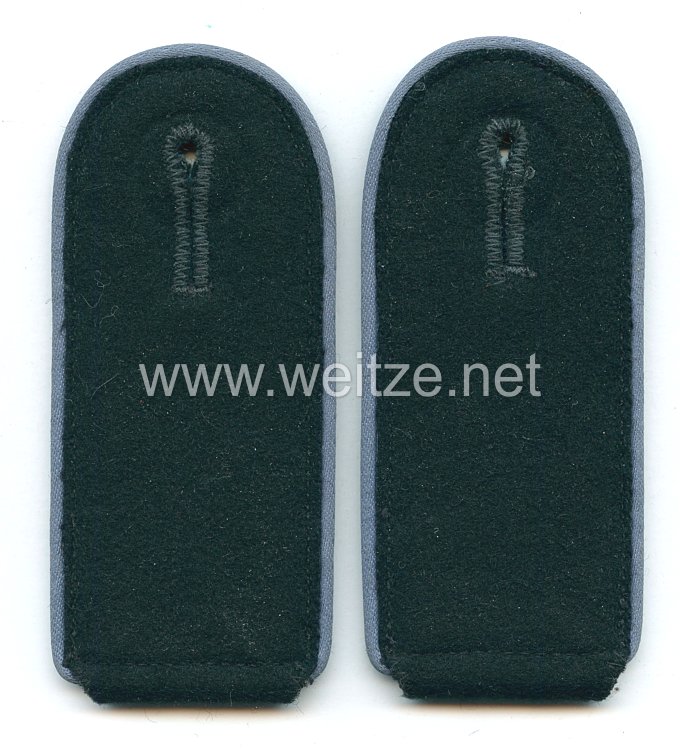
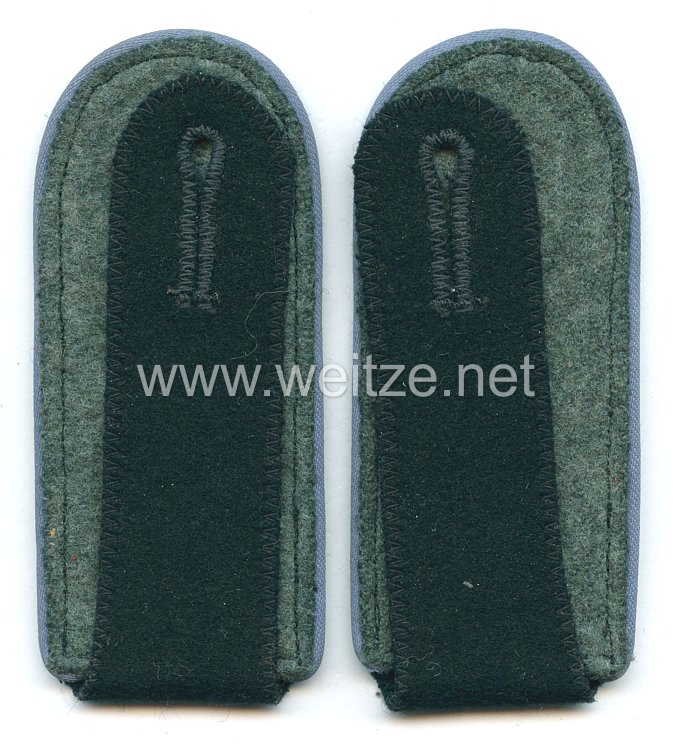
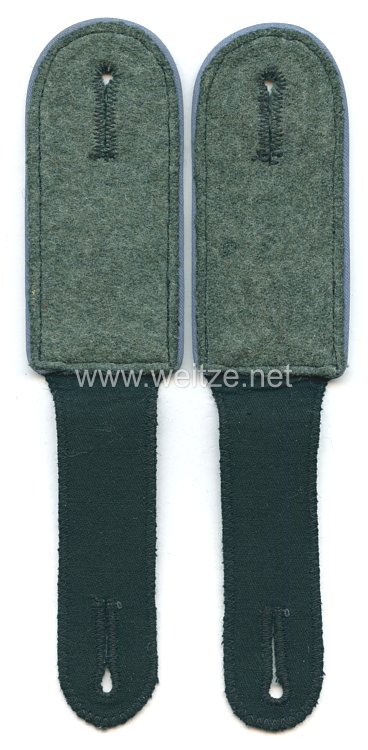
Circa 1943/44 production, light blue Waffenfarbe (branch color). Execution with loops. Unissued condition, Condition 2.
340325
500,00

Waffen-SS Pair of Enlisted Ranks Shoulder Straps Motor Vehicle Driver

These Waffen-SS enlisted ranks shoulder straps with light blue Waffenfarbe (branch color) represent an authentic example of military uniform equipment for motor vehicle personnel during World War II. Dating from approximately 1943/44, these shoulder boards provide insight into the differentiated system of uniform identification within the German armed forces.

Historical Context and Development: The system of Waffenfarben for identifying different military branches was introduced in the 19th century in the Prussian Army and was adopted by both the Wehrmacht and the Waffen-SS. The light blue branch color was specifically assigned to motor transport troops, reflecting the increasing importance of motorization in modern warfare. From the late 1930s onward, military leadership recognized the strategic significance of motorized units for mobility and logistical support.

Technical Characteristics and Manufacturing: Shoulder straps for enlisted ranks differed significantly from those of non-commissioned officers and officers. They were typically manufactured from black base material, onto which the appropriate branch color was applied as piping or edging. The execution with loops allowed for practical attachment to the uniform. The pieces described here originate from the production period of 1943/44, a time when German war industry increasingly suffered from material shortages and rationing measures. Nevertheless, the production of uniform components continued, albeit often with simplified manufacturing processes.

The Role of Motor Transport Troops: Motor vehicle drivers played a crucial role in military organization. They were responsible for transporting troops, ammunition, supplies, and wounded soldiers. Motorization had developed considerably since World War I, and by World War II, motorized units were indispensable for the Blitzkrieg strategy of the early war years. Drivers not only needed driving skills but also had to perform basic maintenance and repair work on their vehicles. Their training encompassed technical knowledge of various vehicle types, from motorcycles to trucks to armored vehicles.

Uniform Regulations: Precise specifications for shoulder straps were established in various uniform regulations. The Waffen-SS had its own dress regulations, which differed in some aspects from those of the Wehrmacht. The correct application and execution of shoulder straps was strictly regulated and enabled immediate identification of a soldier's rank and branch of service. The light blue branch color was clearly assigned to motor transport troops, while other branches such as infantry (white), artillery (red), or armored troops (pink) had their own colors.

Production and Materials: During the war years, the production of military equipment was subject to constant changes. Early war productions showed higher quality and better materials, while later versions often featured substitute materials and simplified manufacturing methods. The fact that the described shoulder straps are unworn suggests they may have been part of a warehouse stock reserve or were never issued.

Historical Significance for Collectors: Today, such uniform components are important historical documents that provide insight into the military organization and material culture of the period. Their study enables historians and researchers to trace the development of uniform regulations, production methods, and military organization. The unworn condition makes these pieces particularly valuable for historical research, as they have preserved their original manufacturing state.

Context of 1943/44: The period from which these shoulder straps originate was marked by significant changes in the war situation. By 1943, Germany was increasingly on the defensive on multiple fronts. The demand for motorized transport became even more critical as military operations required constant movement of resources and troops. The continued production of proper uniform insignia, even during this period of resource scarcity, demonstrates the importance placed on military protocol and identification systems within the German armed forces.

r