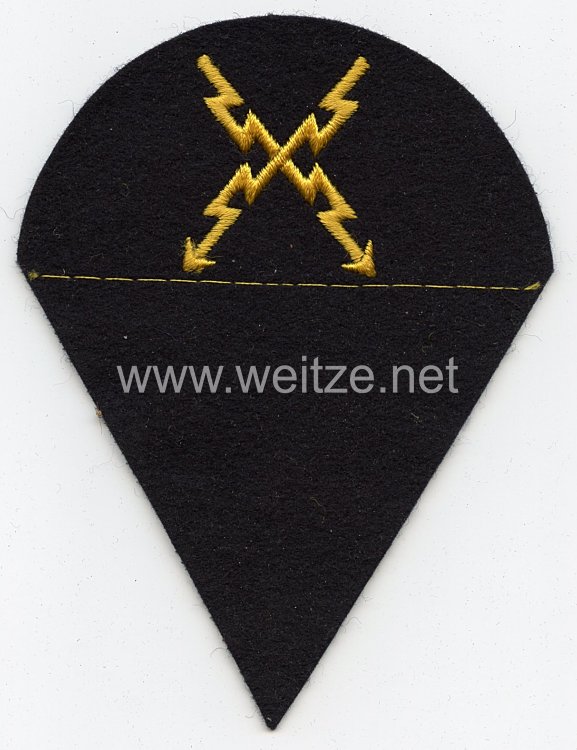
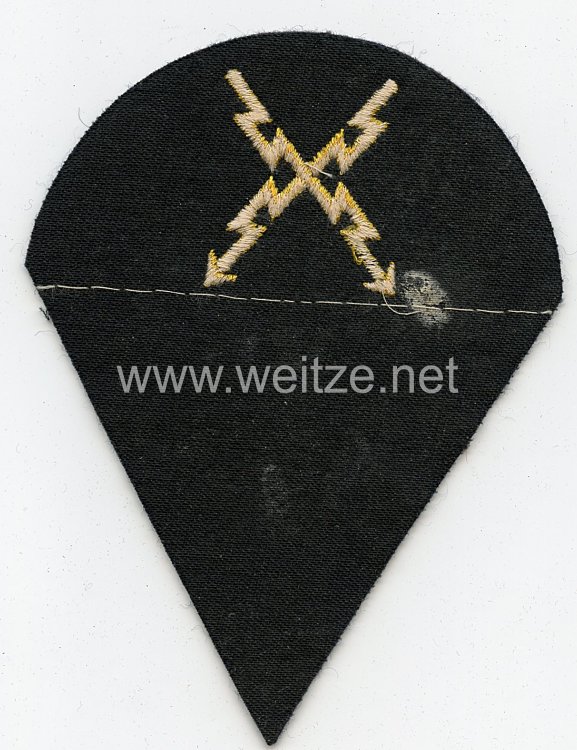
Kriegsmarine Career Insignia Enlisted Personnel Teleprinter Operator
The Kriegsmarine Career Badge for Enlisted Teletype Operators represents a fascinating example of the highly differentiated system of specialist badges developed in the German Navy during World War II. These badges served not only to identify specialist personnel but also reflected the increasing technological complexity of modern naval warfare.
The Kriegsmarine, as the naval force of the Third Reich from 1935 to 1945, established a comprehensive system of career badges to identify the various technical specializations within its enlisted ranks. The teletype service (Fernschreibdienst) was of particular importance for military communications. Teletypes enabled the rapid and relatively secure transmission of encrypted messages over long distances, which was essential for coordinating fleet operations, submarine deployments, and general naval warfare.
The introduction of specialized career badges was part of the Uniform Regulations for the Kriegsmarine, which contained detailed provisions regarding the wearing of uniforms and badges. These badges were typically worn on the left upper arm of the uniform and indicated the specific technical training and function of the wearer. For enlisted personnel without the portepee (non-commissioned officers without sword knot), these badges were particularly important as they represented their acquired specialized knowledge and position within the technical hierarchy aboard ship.
The present badge is manufactured in the version for the Colani, which refers to the dark blue working uniform of the Kriegsmarine. This uniform was worn for daily service aboard ships and was more practical than dress uniforms. Badges for the Colani were correspondingly robust in construction and had to withstand the demands of shipboard service.
The teletype operators of the Kriegsmarine were highly specialized personnel who had to undergo intensive training. They were responsible for operating and maintaining teletype equipment, transmitting and receiving encrypted messages, and ensuring communication links. These specialists were indispensable, particularly in the submarine service and on larger surface vessels. Teletype technology enabled more reliable communication than pure radio telegraphy and was less susceptible to transmission errors.
The technological development of communications technology in the 1930s and 1940s made the teletype service a strategically important area. The Kriegsmarine used various teletype systems, often combined with the famous Enigma encryption machines, to create an additional layer of security for communications. Teletype operators were thus part of the complex communications network that was essential for conducting naval operations.
The presence of foxing (age spots) on historical pieces often indicates the humid conditions aboard warships, where moisture was a constant challenge. Such condition markers provide insight into the actual use and environment in which these badges were worn and stored.
The historical significance of these career badges lies not only in their military function but also in their testimonial value for the history of communications technology and military communications. They document an era in which technical specialization in the military increased dramatically and in which mastery of modern communications technology could be decisive in war.
The system of Kriegsmarine specialist badges was meticulously organized, with different designs for various technical branches including engineers, electricians, radio operators, and as in this case, teletype operators. Each badge design was specifically approved and had to conform to official patterns. The manufacture of these badges was contracted to authorized companies, ensuring quality and uniformity.
During the war years, teletype operators played a crucial role in maintaining the communications infrastructure of the fleet. On major warships, they worked in dedicated communications rooms, often in shifts around the clock. Aboard submarines, where space was extremely limited, teletype operators had to work in cramped conditions while maintaining the vital communications link with naval command.
Today, these badges are important study objects for military historians and collectors concerned with the history of the Kriegsmarine and the development of military communications technology. They serve as reminders of the often-forgotten technical specialists whose behind-the-scenes work was essential for the operation of the war fleet. Each badge tells a story of specialization, training, and the human element in naval warfare.