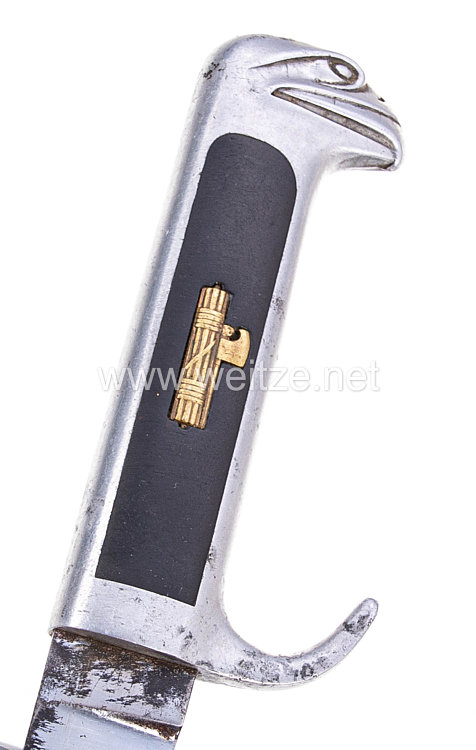
Italy, Model 37 Dagger for Leaders of the Fascist Militia MVSN
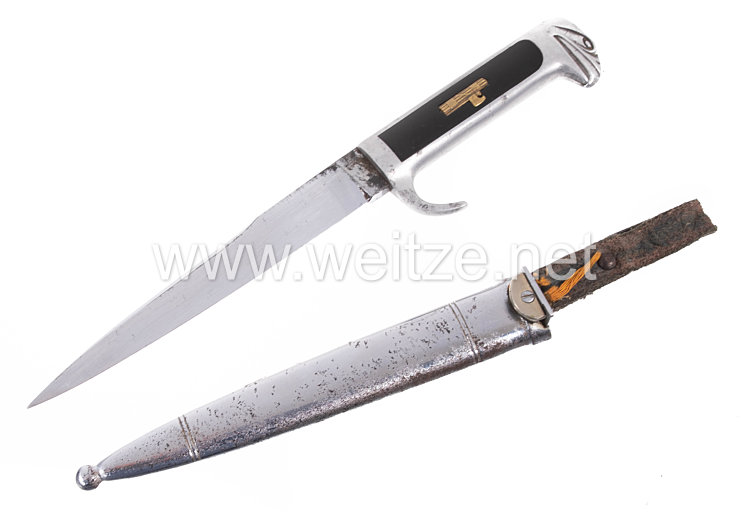
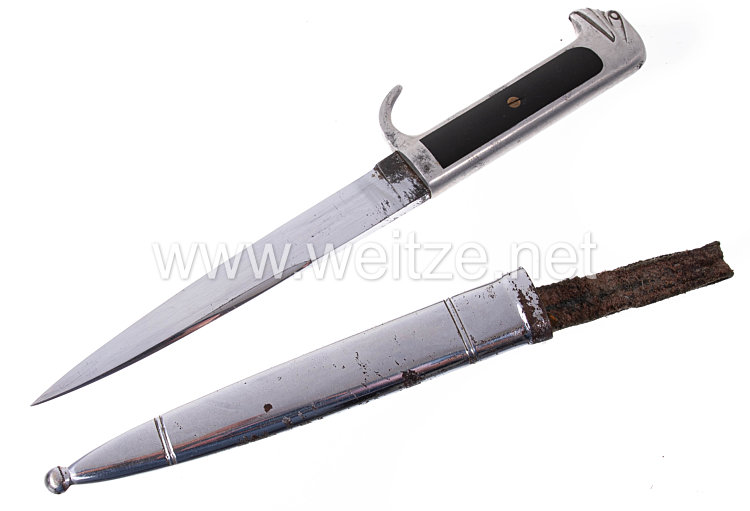
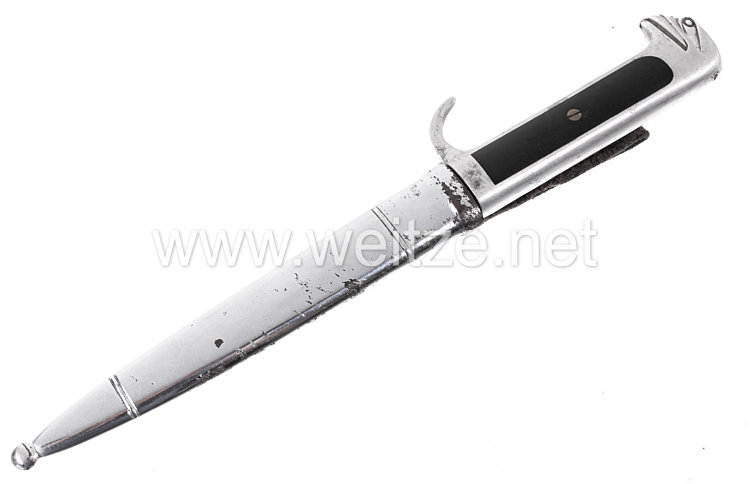
Overall length is 30.5 cm.
The M 37 dagger (Modello 1937) for leaders of the Milizia Volontaria per la Sicurezza Nazionale (MVSN) represents a significant symbol of Italy's fascist era under Benito Mussolini. This weapon embodies not only military functionality but also the ideological identity and hierarchical structure of the fascist militia.
The MVSN, also known as the Blackshirts (Camicie Nere), was founded in 1923 as a paramilitary organization and served as the armed wing of the Fascist Party. Following Mussolini's rise to power in 1922, this militia became an official state institution that existed parallel to the regular army. The organization played a central role in enforcing fascist ideology and maintaining internal order.
The Model 37 was specifically designed for officers and leaders of the MVSN and differed significantly from the daggers of other military units. Its introduction occurred as part of the comprehensive standardization of military equipment in fascist Italy during the late 1930s. This period was characterized by intensive armament efforts and preparation for the coming world war.
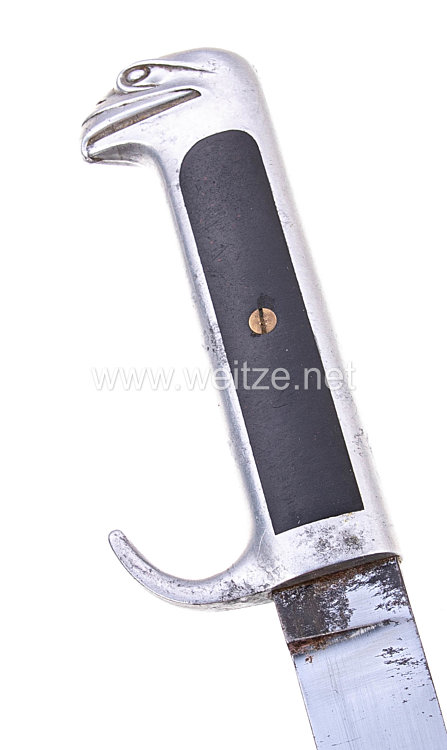
The characteristic features of the dagger are highly symbolic: The eagle head on the grip represents the Roman tradition and the claim to power of the fascist regime, which saw itself as the successor to the ancient Roman Empire. The fasces (Fascio Littorio) on the grip scales was the central symbol of Italian fascism - from which the term “fascism” itself derives. In Roman antiquity, the bundle of rods with an axe symbolized the authority of magistrates.
The nickel-plated blade and scabbard were typical of Italian military edged weapons of this era. The single-edged design distinguished the dagger from ceremonial weapons and emphasized its practical military character, even though it primarily served as an insignia of rank. The overall length of approximately 30.5 cm made it a handy sidearm to be worn with the uniform.
These daggers were manufactured in various Italian weapons factories, with strict quality standards being maintained. The use of aluminum for the grip was characteristic of the 1930s, when this material was increasingly used in weapons production. The black plastic grip scales with golden fasces testified to the combination of traditional symbolism with modern materials.
During World War II, this type of dagger accompanied MVSN officers to various theaters of war, from North Africa to the Balkans and the Eastern Front. The MVSN participated in all major military operations of fascist Italy until the dissolution of the organization following Mussolini's fall in 1943 and Italy's capitulation.
After the war, many of these daggers were taken by Allied soldiers as war trophies or hidden by Italian citizens and later sold. The M 37 became a sought-after collector's item documenting the complex history of Italian fascism. Today, such objects serve in museums and private collections as material witnesses to a dark epoch of European history.
The historical significance of the M 37 dagger lies not in its military effectiveness but in its function as a status symbol and ideological carrier. It embodies the aesthetics and symbolic language of fascism, which deliberately drew upon Roman traditions to suggest legitimacy and greatness. For historians and collectors, it represents an important object of study for researching the material culture of totalitarian regimes of the 20th century.