Wehrmacht : großer Ordensnachlass aus dem Besitz von Generalmajor Konrad von Alberti
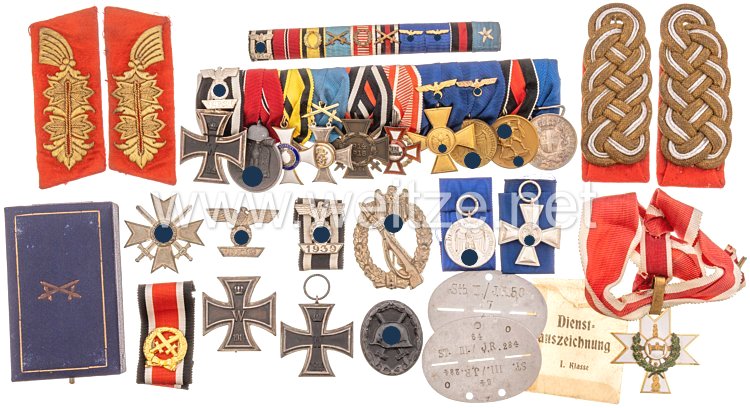
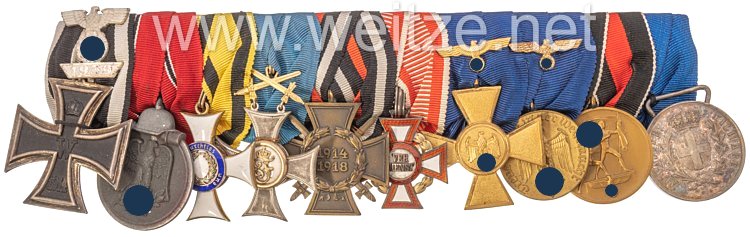
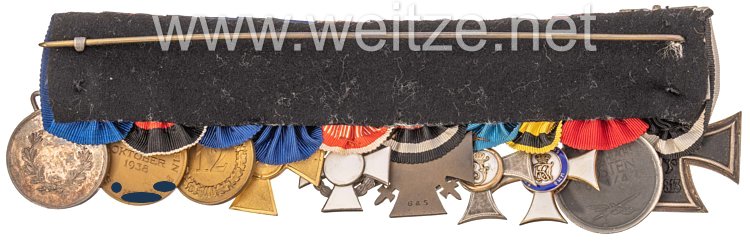
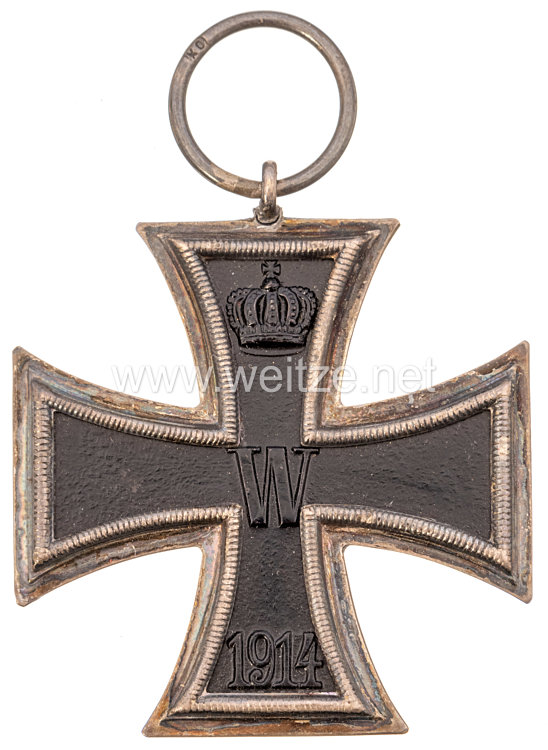
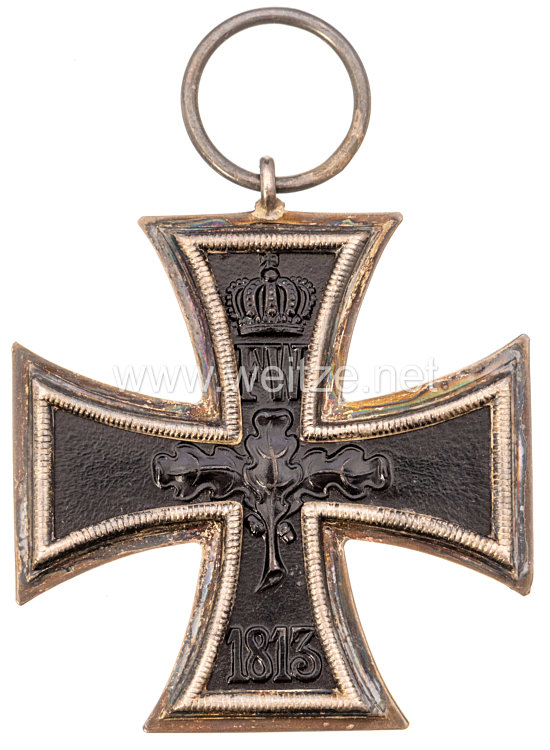
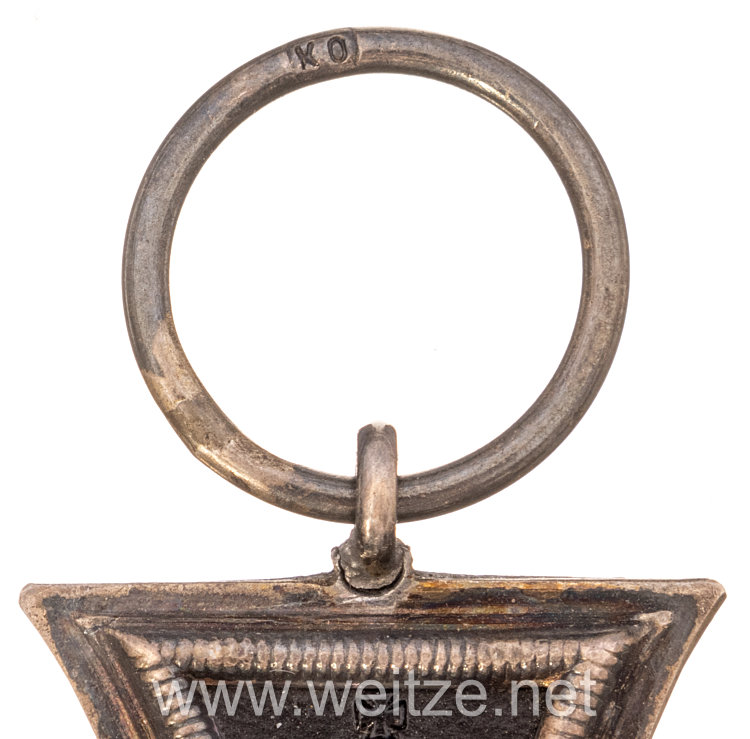
Große Ordensschnalle mit 11 Auszeichnungen: Eisernes Kreuz 1914 2. Klasse mit aufgelegter Wiederholungsspange "1939" in reduzierter Form. Medaille Winterschlacht im Osten.
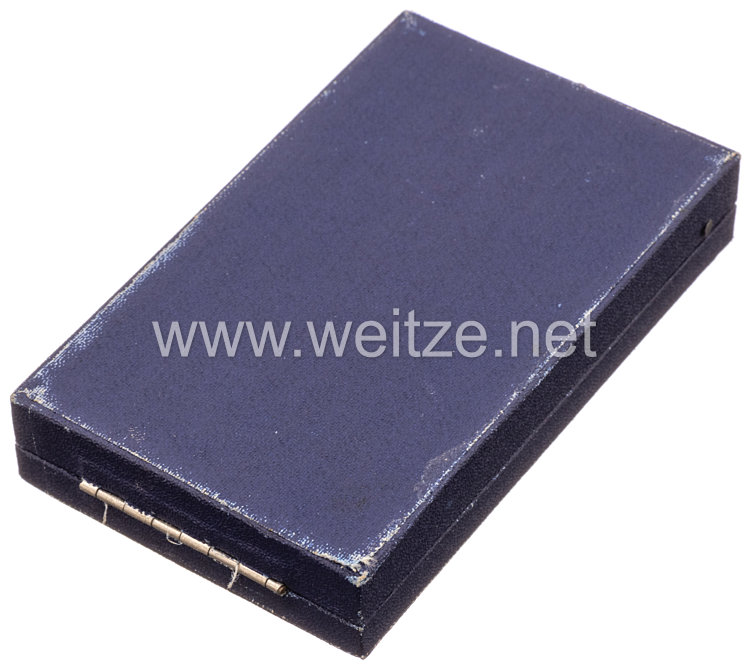
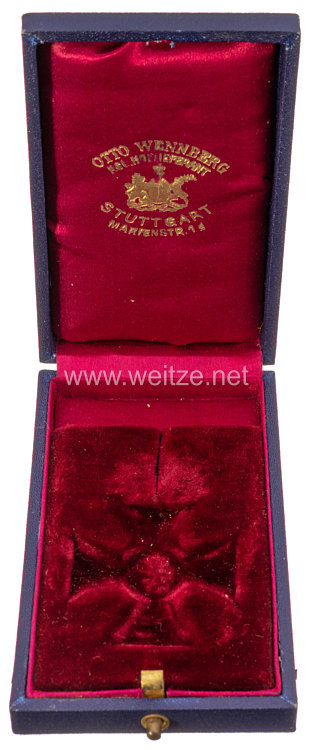
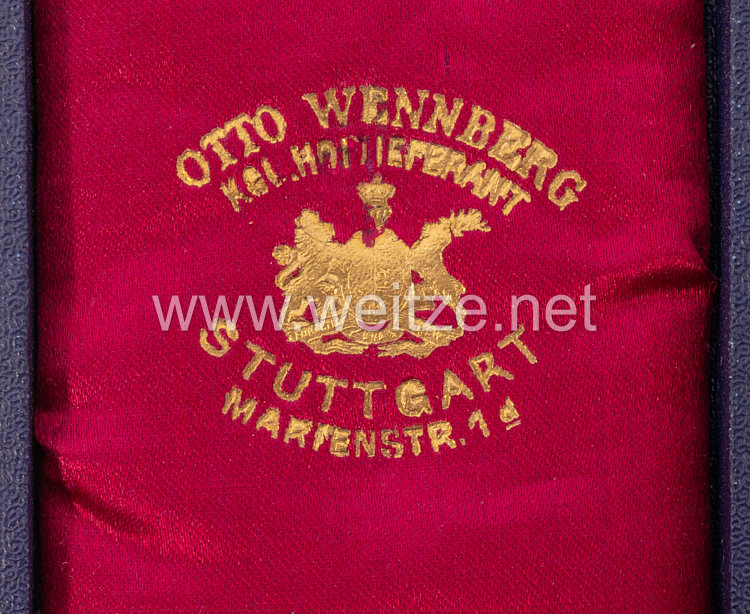
Württemberg Militär-Verdienstorden Ritterkreuz, Silber vergoldet, beidseitig fein emailliert. Württemberg Friedrichs-Orden Ritterkreuz 2. Klasse mit Schwertern, Silber, die Auflagen vergoldet. Dazu das leere Verleihungsetui anbei. Ehrenkreuz für Frontkämpfer 1914-1918. Österreich Militär-Verdienstorden Kreuz 3. Klasse mit Kriegsdekoration. Wehrmacht Dienstauszeichnungen für XXV Jahre und für 12 Jahre mit 2 aufgelegten Bandadlern. Medaille zur Erinnung an den 1. Oktober 1938. Italien silberne Tapferkeitsmedaille "Al Valore Militare", rückseitig ohne Gravur. Dazu die passende Feldspange.
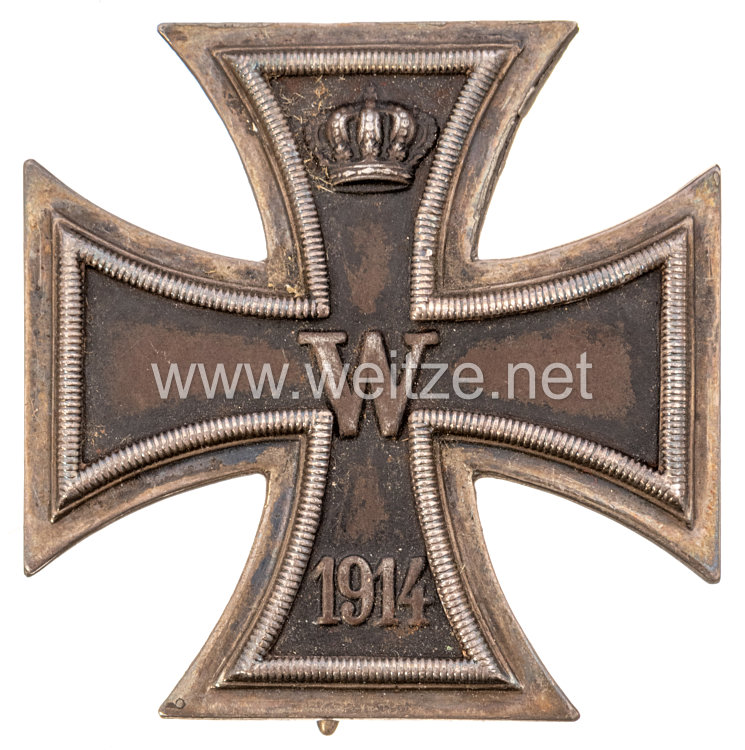
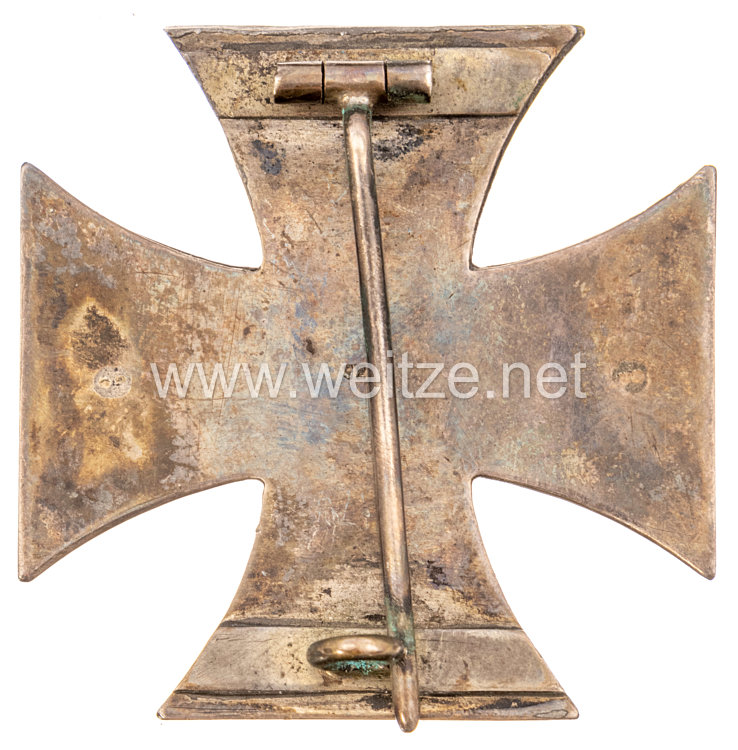
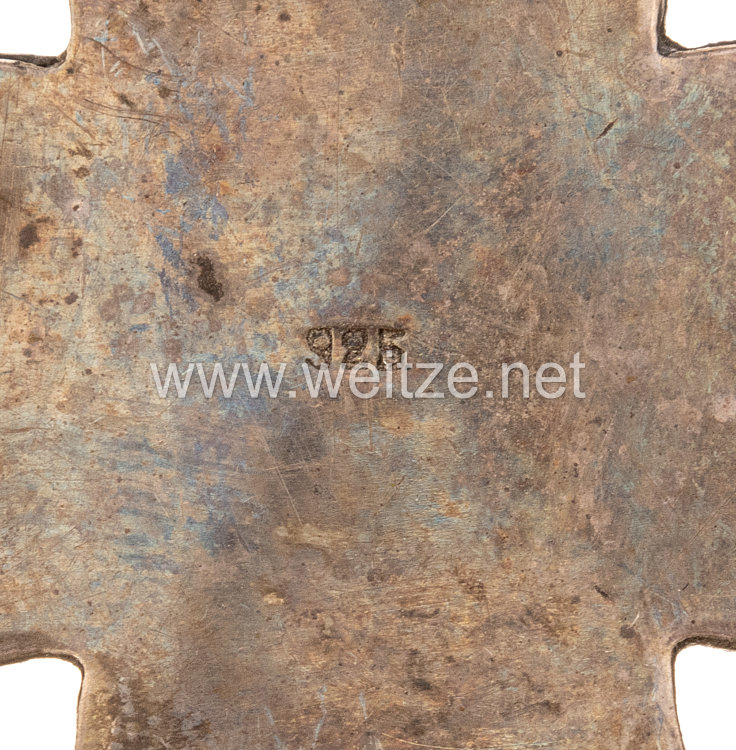
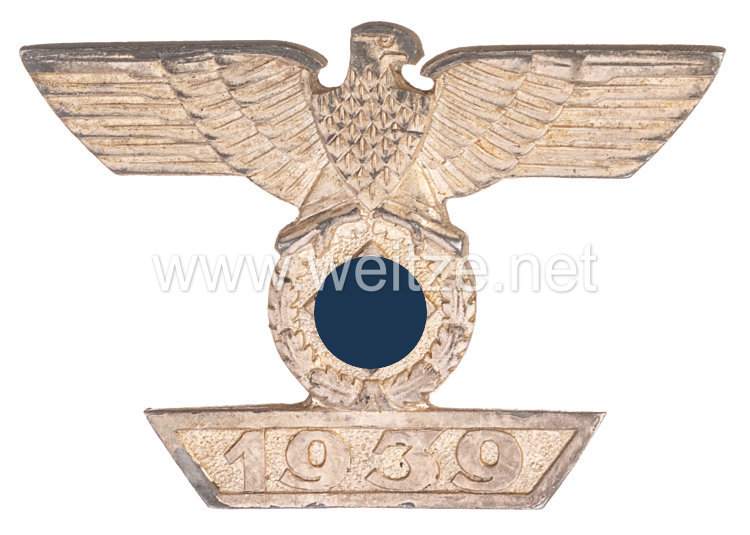
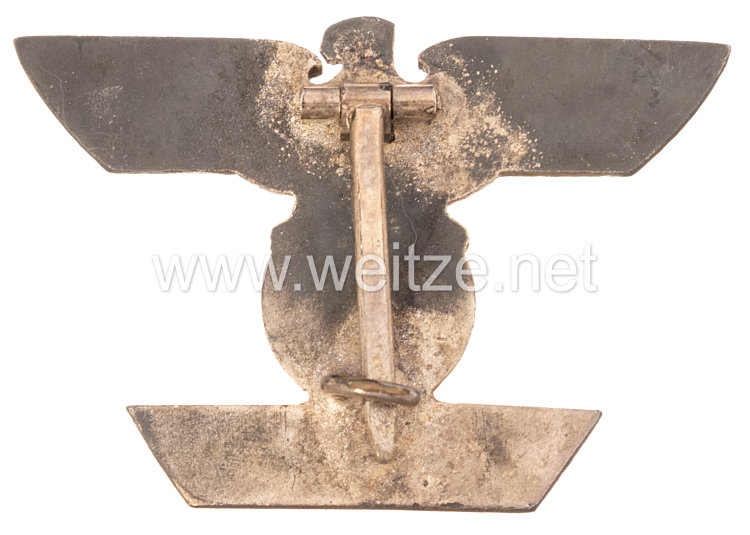
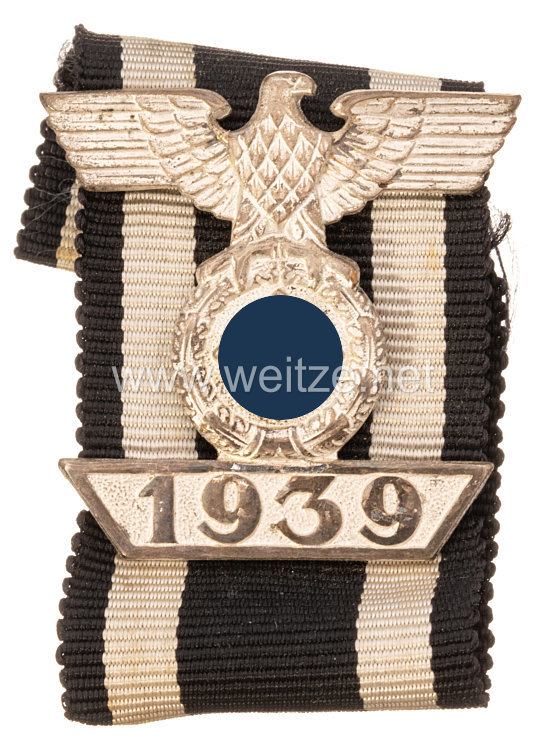
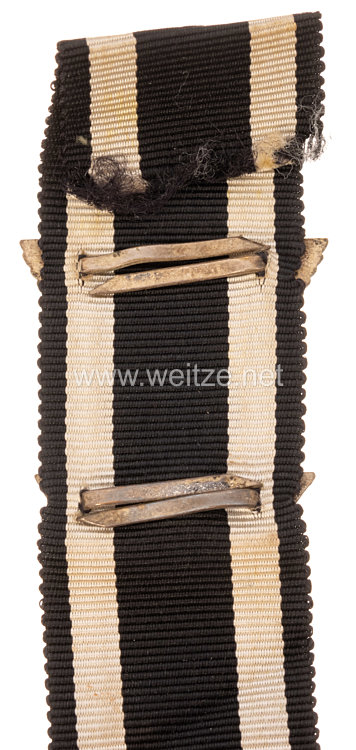
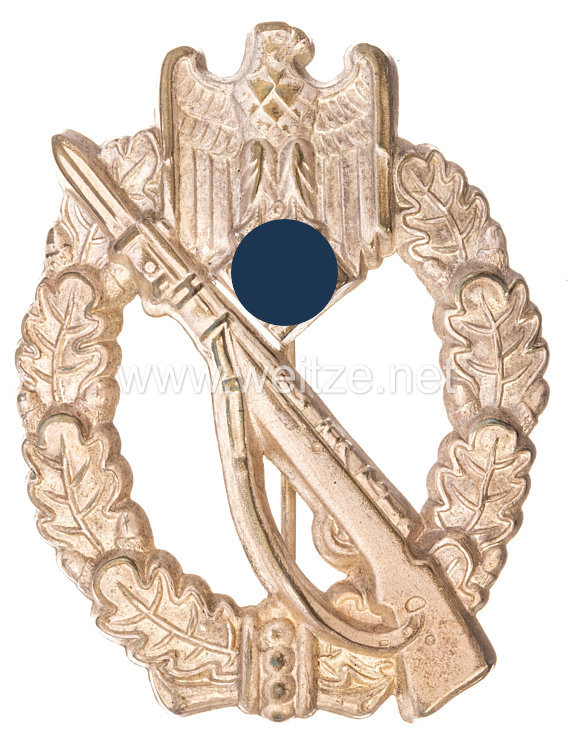
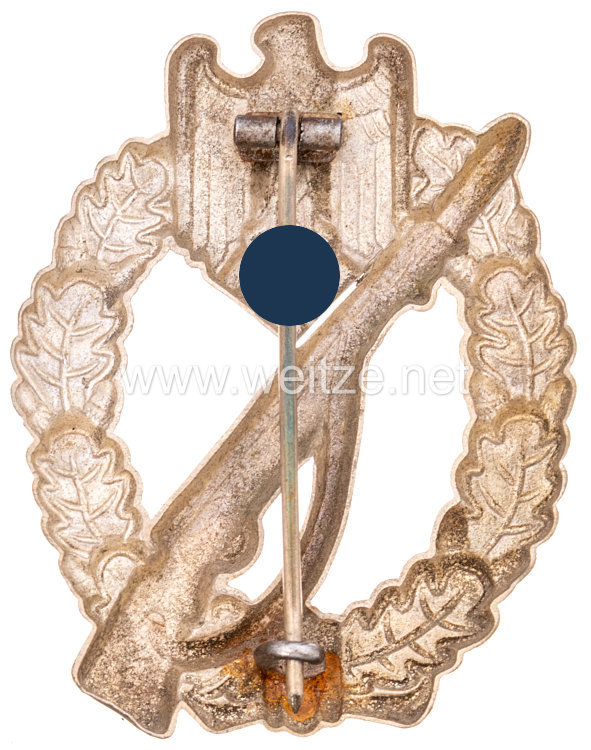
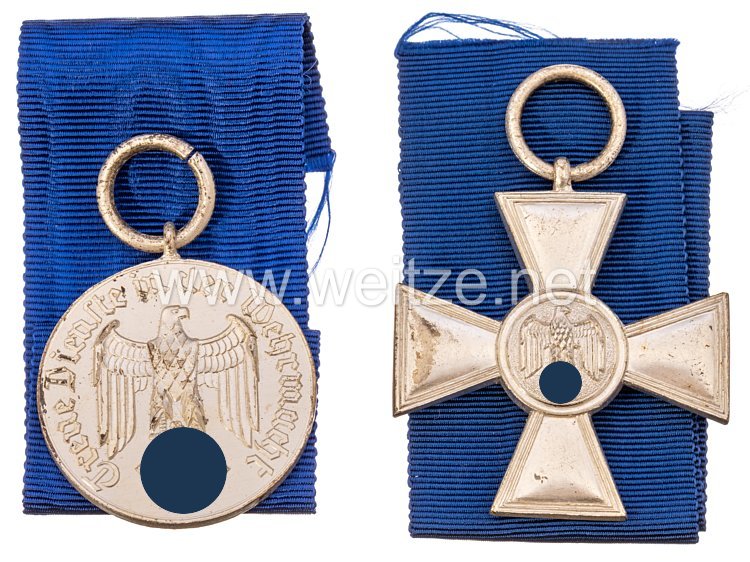
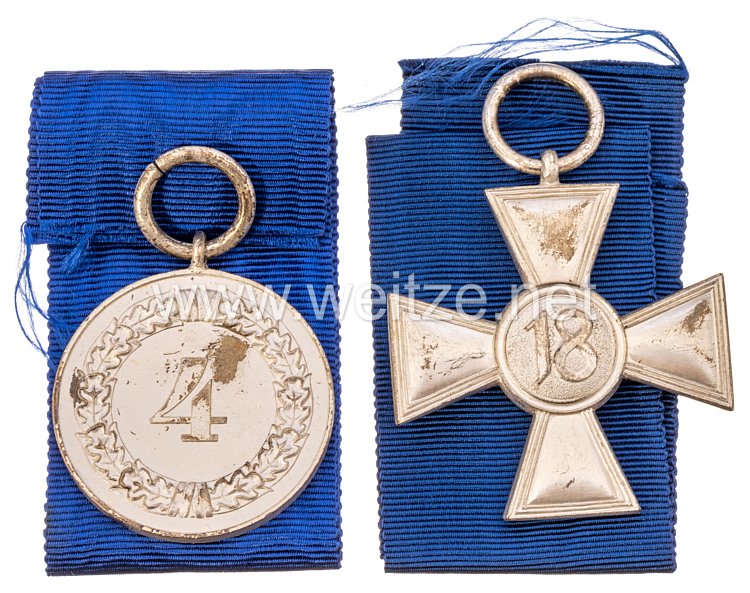
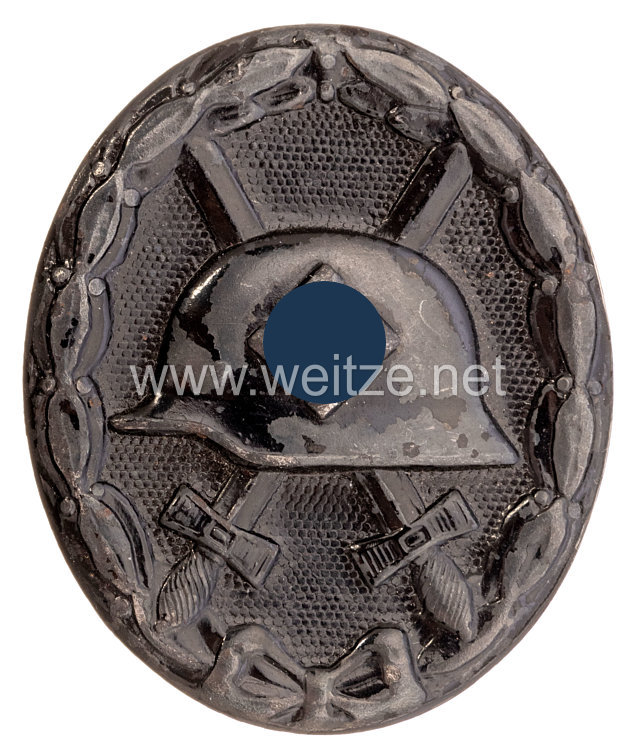
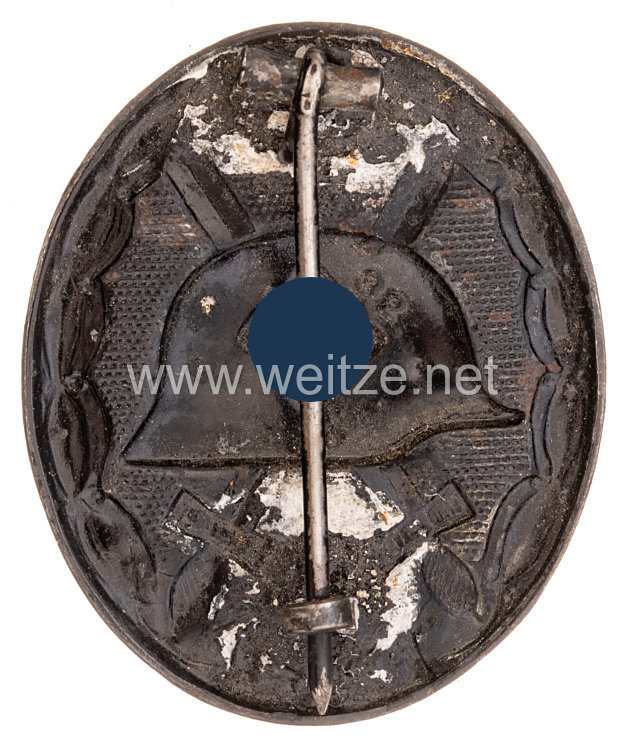
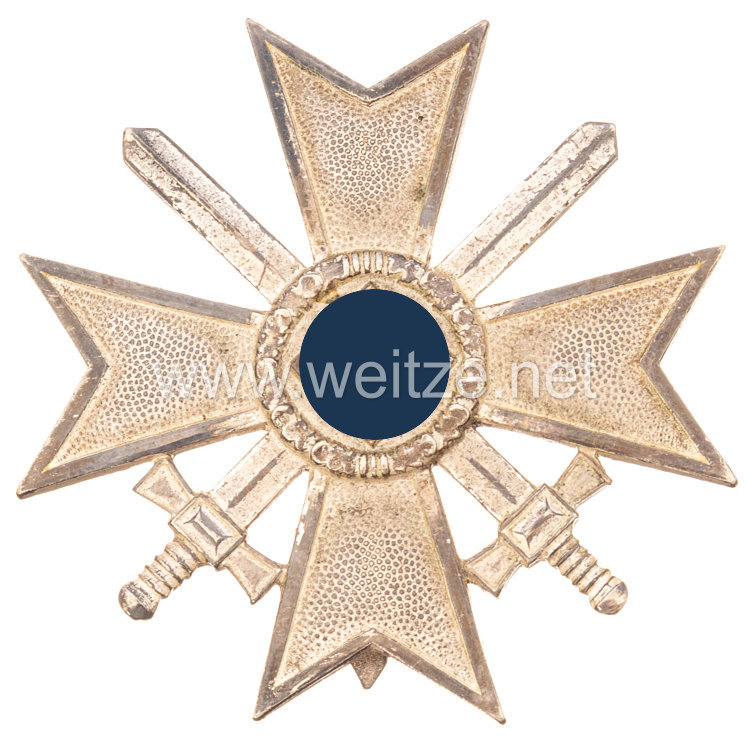
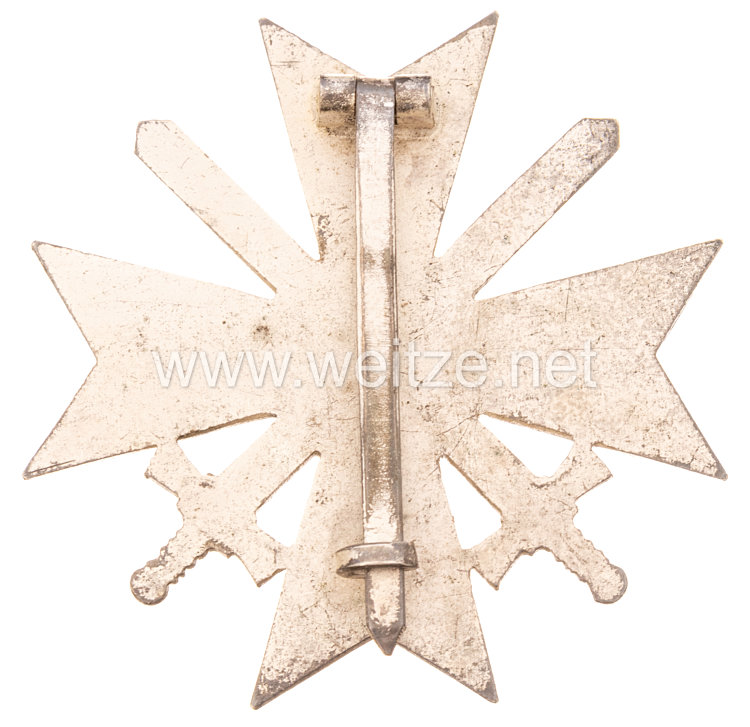
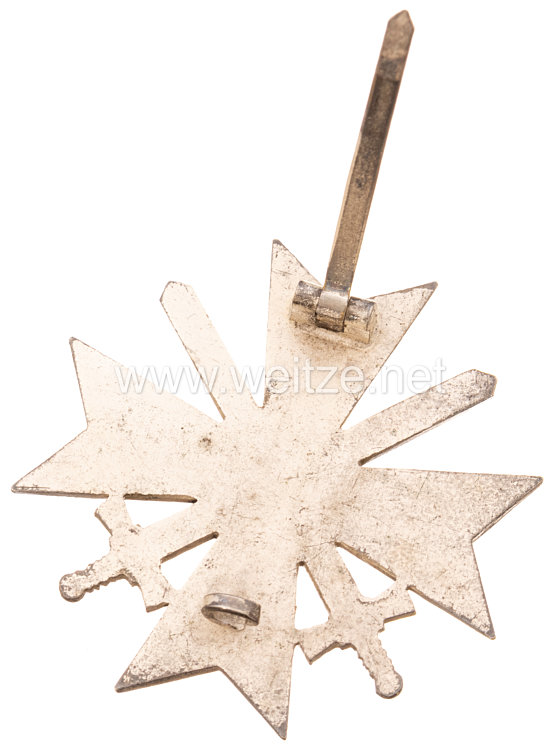
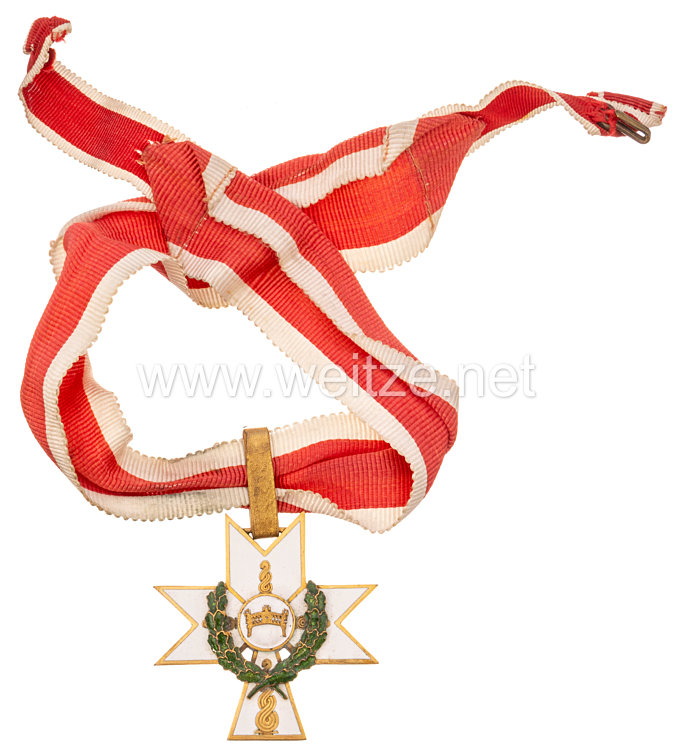
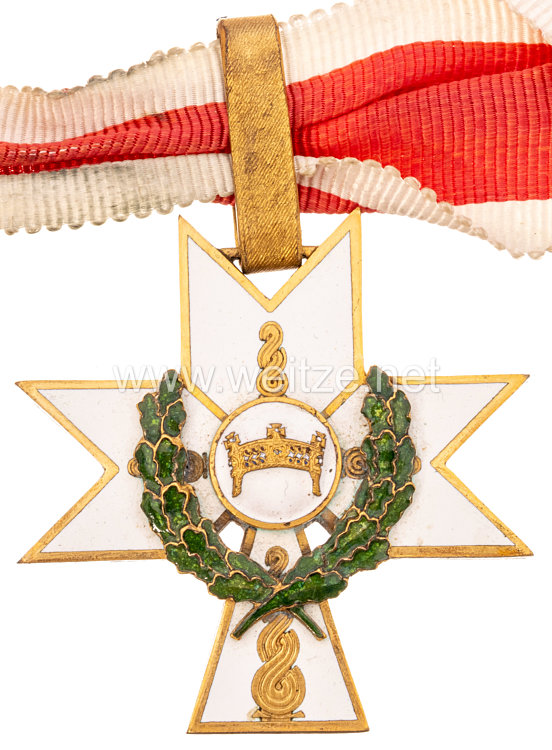
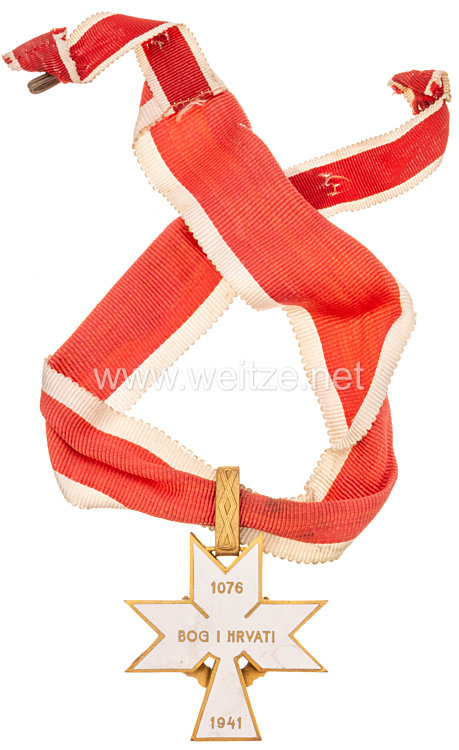
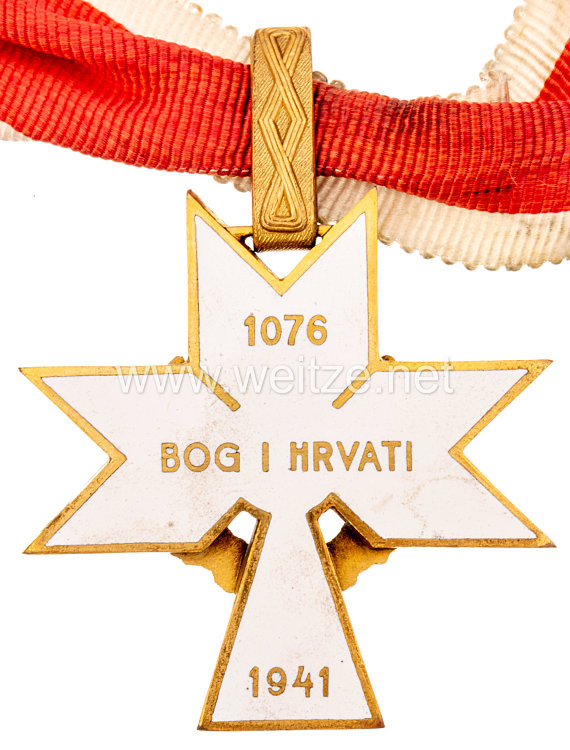
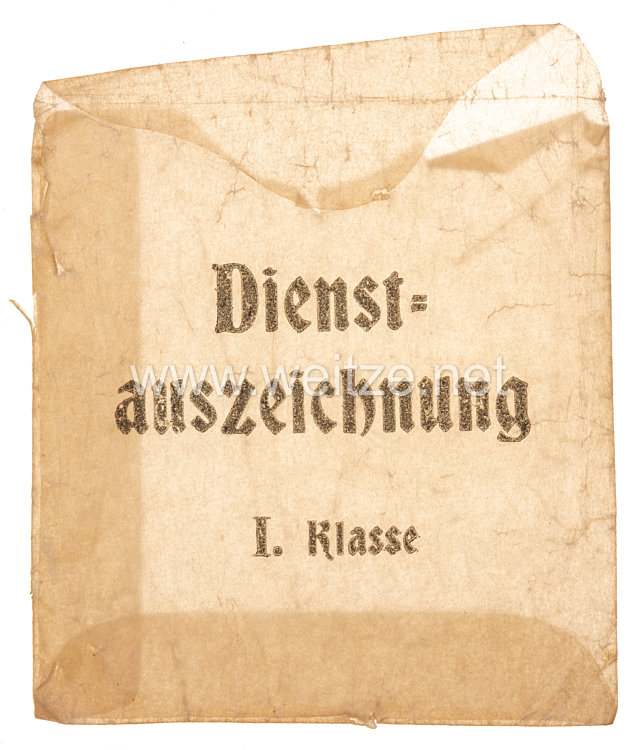
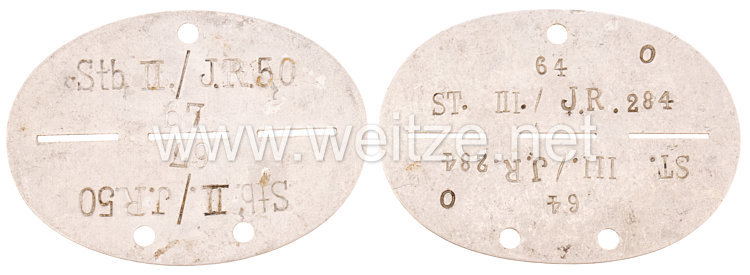
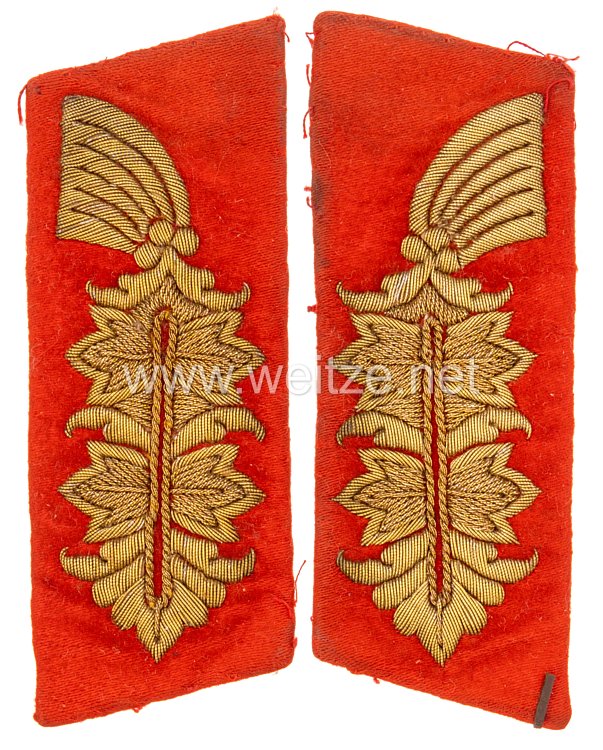
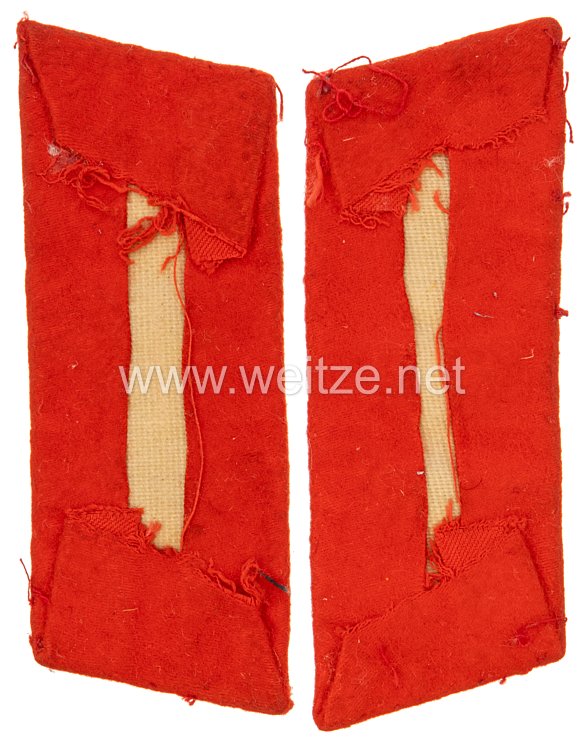
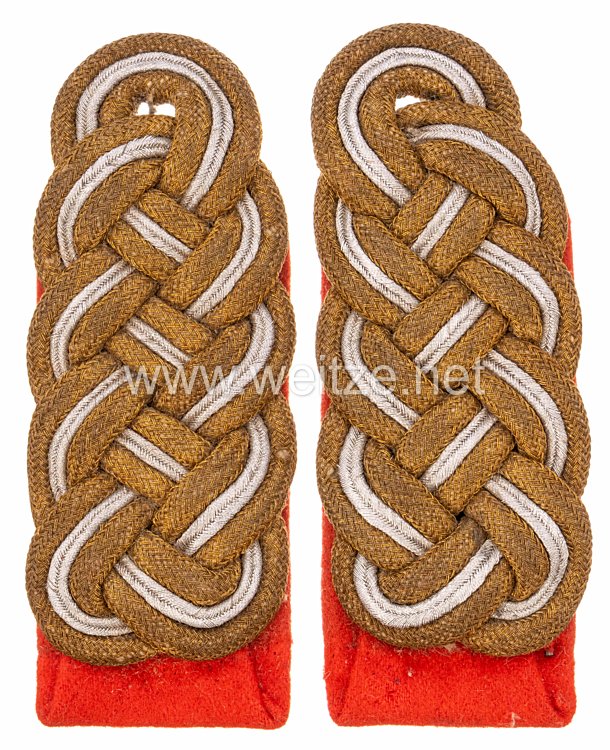
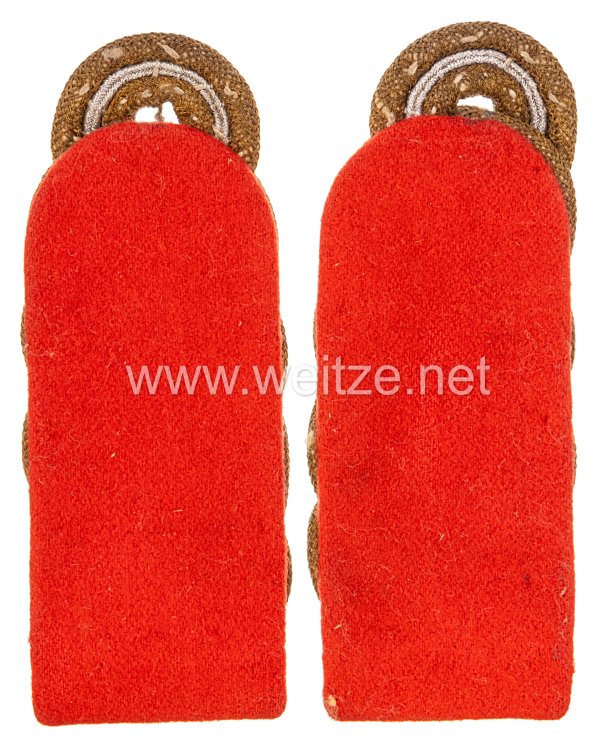
Eisernes Kreuz 1914 1 Klasse, leicht gewölbte Ausführung auf Silberplatte, rückseitig "925" Silber gestempelt. Dazu die Wiederholungsspange "1939" 1. Klasse aus Feinzink versilbert. Eine weitere Wiederholungsspange "1939" 2. Klasse am Band für die Feldbluse. Kriegsverdienstkreuz 1939 1. Klasse mit Schwertern, Buntmetall versilbert. Infanteriesturmabzeichen in Silber, Buntmetall hohlgeprägt. Verwundetenabzeichen 1939 in Schwarz, Eisen, rückseitig Hersteller "32". 2 ungetragene WH Dienstauszeichnungen für 4 und 18 Jahre, mit Bändern. Dazu die Verleihungstüte "Dienst-auszeichnung I. Klasse" (befindet sich auf der Ordensschnalle. Kroatien Orden von König Zvonimir Kommandeurkreuz mit Kriegsdekoration, am Halsband. Dazu ein Paar Kragenspiegel und Schulterstücke als Generalmajor sowie 2 Erkennungsmarken "Stb. II./J.R. 50 Nr. 67" und "St. III./JR. 284 Nr. 64". Alle Teile leicht getragen in gutem bis sehr gutem Zustand.
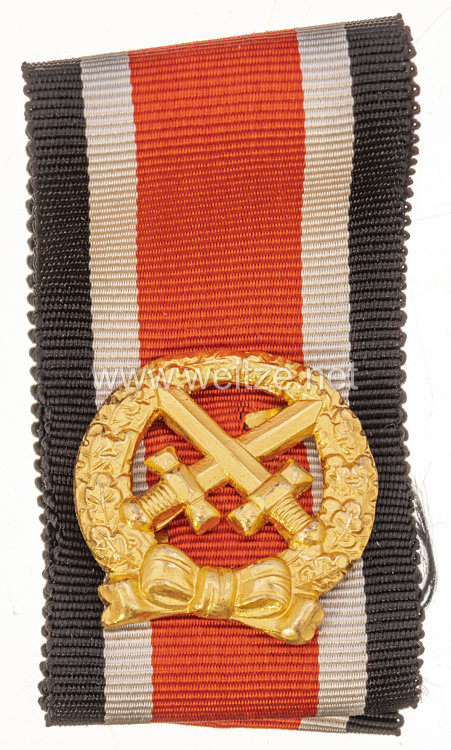
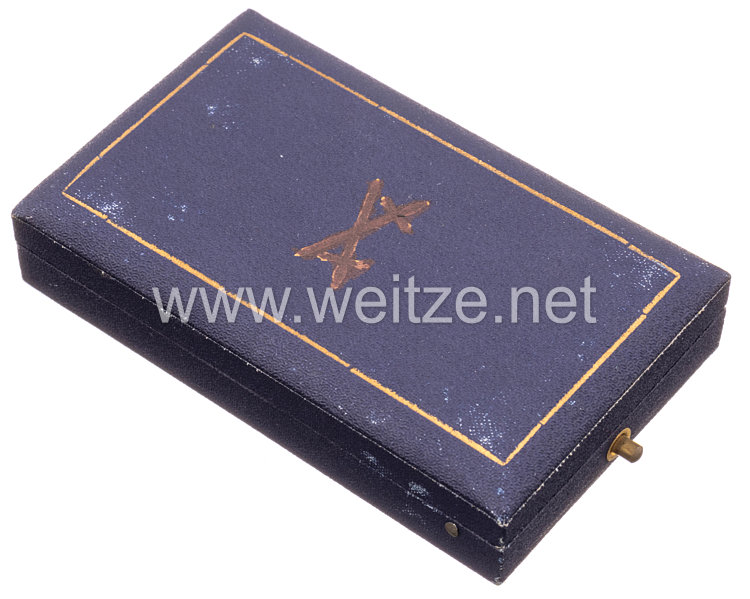
Dazu noch eine Ehrenblattspange des Heeres Ausführung 1957 mit kleiner Schachtel.
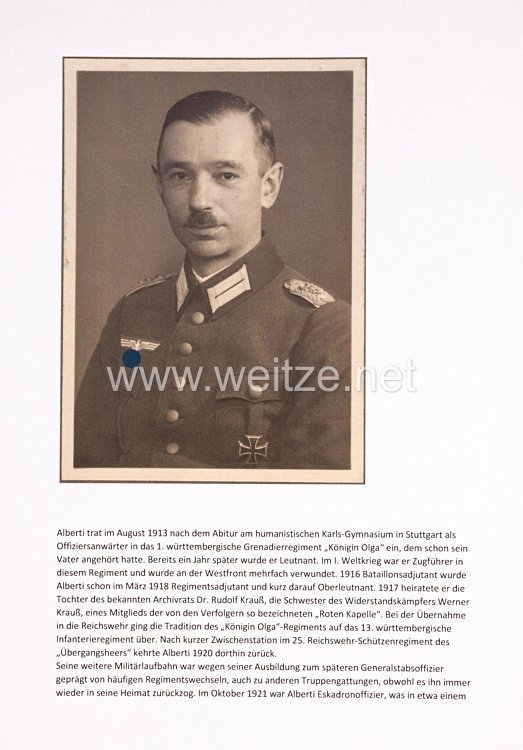
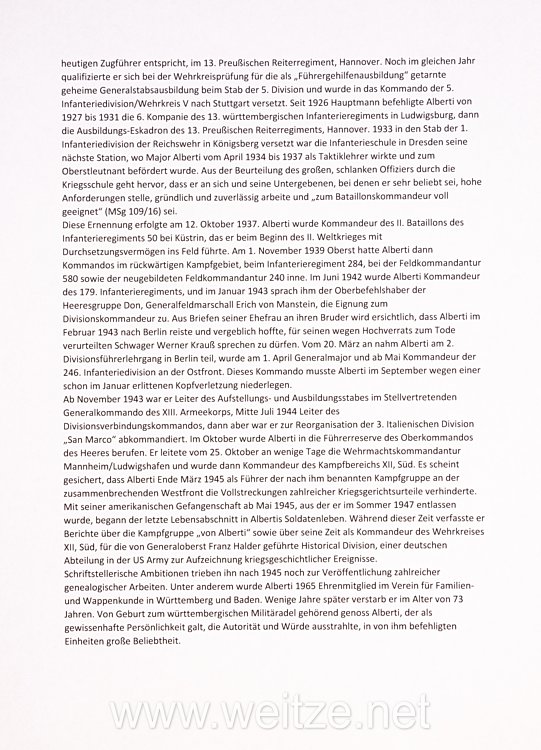
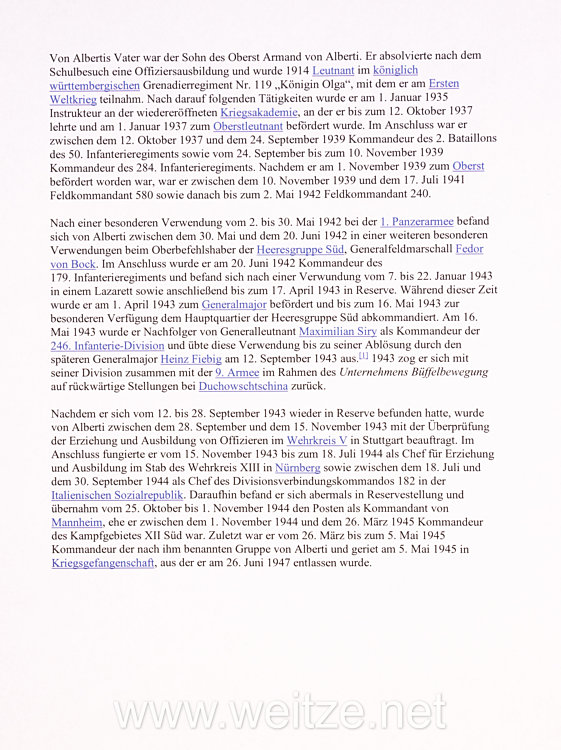
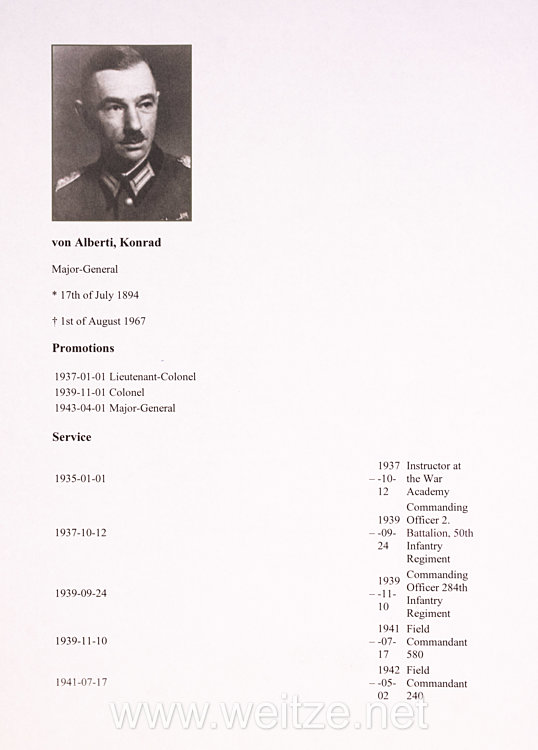
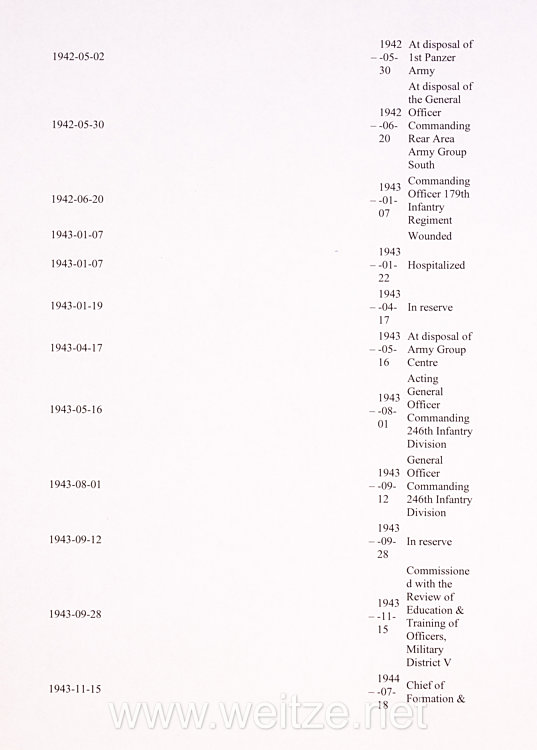
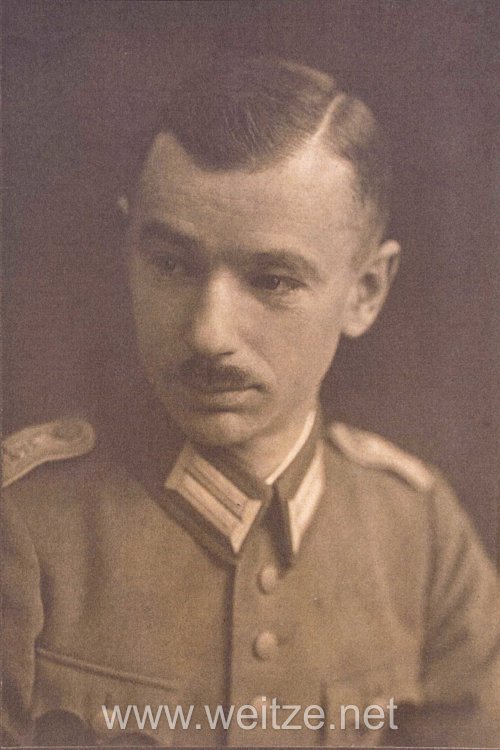
Konrad von Alberti war im 1. Weltkrieg Leutnant im Königl. Württembergischen Grenadier-Regiment Königin Olga Nr. 119. In der Wehrmacht ab 1935 Instrukteur an der Kriegsakademie, im Januar 1937 Beförderung zum Oberstleutnant. Von Oktober 1937 bis 24. September 1939 Kommandeur II. Btl. Infanterie-Regiment 50, danach Kommandeur des Infanterie-Regiment 283, Am 1. November 1939 Beförderung zum Oberst , ab November 1939 bis Juli 1941 Feldkommandant 580, danach bis Mai 1942 Feldkommandant 240. Ab 20. Juni 1942 Kommandeur Infanterie-Regiment 179 bi zu seiner Verwundung Anfang Januar 1943. Beförderung am 1. April 1943 zum Generalmajor, und bis 16. Mai 1943 zur Besonderen Verfügung im Hauptquartier Heeresgruppe Süd. Am 16. Mai 1943 Kommandeur der 246. Infanterie-Division bis 12. September 1943. Danach bis Juli 1944 Einsatz im Heimatkriegsgebiet. Am 18. Juli 1944 bis 30. September 1944 als Chef des Divisionsverbindungskommandos 182 in der Italienischen Sozialrepublik RSI. Ab 1. November 1944 bis 26.3.1945 Kommandeur des Kampfgebiets XII Süd. Zuletzt von 26. März bis 5. Mai 1945 Kommandeur der "Kampfgruppe von Alberti", am 5. Mai 1945 in Kriegsgefangenschaft, Entlassung 1947. Anbei ein Ausdruck seiner militärischen Biographie.
Der Nachlass ist 100% zusammengehörig und in allen Teilen original, es wurde nichts nach 1945 hinzugefügt, wir konnten den Nachlass direkt aus der Familie erwerben.
Württemberg Militär-Verdienstorden Ritterkreuz, Silber vergoldet, beidseitig fein emailliert. Württemberg Friedrichs-Orden Ritterkreuz 2. Klasse mit Schwertern, Silber, die Auflagen vergoldet. Dazu das leere Verleihungsetui anbei. Ehrenkreuz für Frontkämpfer 1914-1918. Österreich Militär-Verdienstorden Kreuz 3. Klasse mit Kriegsdekoration. Wehrmacht Dienstauszeichnungen für XXV Jahre und für 12 Jahre mit 2 aufgelegten Bandadlern. Medaille zur Erinnung an den 1. Oktober 1938. Italien silberne Tapferkeitsmedaille "Al Valore Militare", rückseitig ohne Gravur. Dazu die passende Feldspange.
Eisernes Kreuz 1914 1 Klasse, leicht gewölbte Ausführung auf Silberplatte, rückseitig "925" Silber gestempelt. Dazu die Wiederholungsspange "1939" 1. Klasse aus Feinzink versilbert. Eine weitere Wiederholungsspange "1939" 2. Klasse am Band für die Feldbluse. Kriegsverdienstkreuz 1939 1. Klasse mit Schwertern, Buntmetall versilbert. Infanteriesturmabzeichen in Silber, Buntmetall hohlgeprägt. Verwundetenabzeichen 1939 in Schwarz, Eisen, rückseitig Hersteller "32". 2 ungetragene WH Dienstauszeichnungen für 4 und 18 Jahre, mit Bändern. Dazu die Verleihungstüte "Dienst-auszeichnung I. Klasse" (befindet sich auf der Ordensschnalle. Kroatien Orden von König Zvonimir Kommandeurkreuz mit Kriegsdekoration, am Halsband. Dazu ein Paar Kragenspiegel und Schulterstücke als Generalmajor sowie 2 Erkennungsmarken "Stb. II./J.R. 50 Nr. 67" und "St. III./JR. 284 Nr. 64". Alle Teile leicht getragen in gutem bis sehr gutem Zustand.
Dazu noch eine Ehrenblattspange des Heeres Ausführung 1957 mit kleiner Schachtel.
Konrad von Alberti war im 1. Weltkrieg Leutnant im Königl. Württembergischen Grenadier-Regiment Königin Olga Nr. 119. In der Wehrmacht ab 1935 Instrukteur an der Kriegsakademie, im Januar 1937 Beförderung zum Oberstleutnant. Von Oktober 1937 bis 24. September 1939 Kommandeur II. Btl. Infanterie-Regiment 50, danach Kommandeur des Infanterie-Regiment 283, Am 1. November 1939 Beförderung zum Oberst , ab November 1939 bis Juli 1941 Feldkommandant 580, danach bis Mai 1942 Feldkommandant 240. Ab 20. Juni 1942 Kommandeur Infanterie-Regiment 179 bi zu seiner Verwundung Anfang Januar 1943. Beförderung am 1. April 1943 zum Generalmajor, und bis 16. Mai 1943 zur Besonderen Verfügung im Hauptquartier Heeresgruppe Süd. Am 16. Mai 1943 Kommandeur der 246. Infanterie-Division bis 12. September 1943. Danach bis Juli 1944 Einsatz im Heimatkriegsgebiet. Am 18. Juli 1944 bis 30. September 1944 als Chef des Divisionsverbindungskommandos 182 in der Italienischen Sozialrepublik RSI. Ab 1. November 1944 bis 26.3.1945 Kommandeur des Kampfgebiets XII Süd. Zuletzt von 26. März bis 5. Mai 1945 Kommandeur der "Kampfgruppe von Alberti", am 5. Mai 1945 in Kriegsgefangenschaft, Entlassung 1947. Anbei ein Ausdruck seiner militärischen Biographie.
Der Nachlass ist 100% zusammengehörig und in allen Teilen original, es wurde nichts nach 1945 hinzugefügt, wir konnten den Nachlass direkt aus der Familie erwerben.