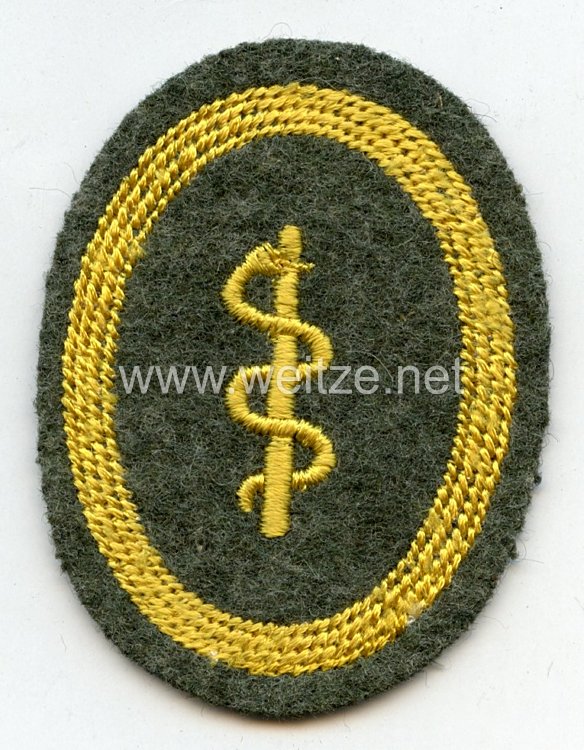
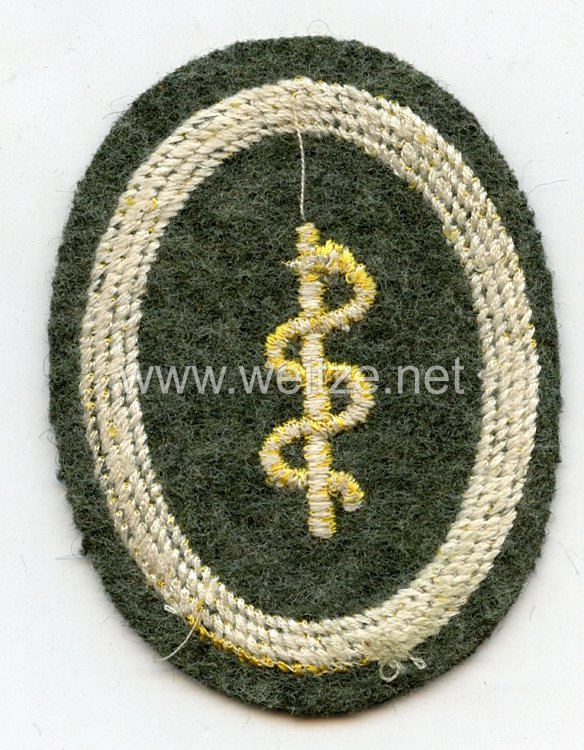
Kriegsmarine Sleeve Insignia for Cadets Medical Service for the Field-Gray Uniform

machine-embroidered, condition 2.
436124
135,00

Kriegsmarine Sleeve Insignia for Cadets Medical Service for the Field-Gray Uniform

The Kriegsmarine sleeve insignia for medical service cadets for the field-grey uniform represents a fascinating testament to the complex rank badge and uniform system of the German Kriegsmarine during World War II. This machine-embroidered version exemplifies the practical application of military identification systems during a period of profound organizational development.

The Kriegsmarine, officially established on June 1, 1935, as the successor to the Reichsmarine, developed a comprehensive system of career badges and specialization markings. Cadets, as officer candidates, occupied a special position within the naval hierarchy. They underwent intensive training that imparted seamanship, military skills, and specialized knowledge.

The Medical Service of the Kriegsmarine formed an essential component of the naval forces. Naval medical officers and their personnel were responsible for medical care aboard warships, in naval hospitals, and coastal facilities. Training to become a medical officer required both a completed medical degree and specific military and maritime instruction.

The field-grey uniform in the Kriegsmarine may initially seem unusual, as the navy is traditionally associated with dark blue uniforms. In fact, however, the Kriegsmarine used various types of uniforms for different operational areas. The field-grey version was employed particularly for land operations, coastal defense units, and certain special services. This reflects the increasing diversification of naval duties that extended far beyond traditional sea service.

The sleeve badge itself followed the precise specifications of the Anzugsordnung für die Kriegsmarine (Dress Regulations for the Kriegsmarine), which detailed which badges were to be worn on which uniform parts. Cadet badges differed distinctly from those of enlisted personnel and fully trained officers. Career identification for the medical service was accomplished through specific symbols, typically the Rod of Asclepius, the traditional symbol of the healing arts.

The machine embroidery of these badges was standard for most uniform insignia during World War II. In contrast to hand-embroidered versions, often used for higher-ranking officers or parade uniforms, machine-embroidered badges were more cost-effective to produce while maintaining good quality. This enabled mass production, which was necessary given the large number of naval personnel.

Coloring and design followed strict guidelines. Medical service badges were typically embroidered in dark blue or black tones on corresponding backgrounds, with specific details indicating career affiliation. Placement on the sleeve enabled quick visual identification of rank and function.

The training of naval cadets took place in various institutions, including the Marineschule Mürwik in Flensburg-Mürwik, the main training facility for naval officers known as the “Red Castle.” Medical cadets additionally received their medical training at naval hospitals and Wehrmacht medical facilities.

In the context of military history, such badges document the organizational complexity of modern naval forces. They demonstrate how systematically the identification of rank, function, and training status was regulated. This served not only military order but also practical purposes: in emergencies, it had to be immediately recognizable who possessed which qualifications.

The preservation condition of such historical textiles is of particular importance today for collectors and museums. Condition 2 in collector nomenclature typically designates a well-preserved state with light signs of use, which is remarkable for an object over 75 years old. Conservation of such pieces requires professional storage under controlled climatic conditions.

Today, these objects serve as important sources for military historical research and museum presentation. They provide insights into the everyday reality of military organization and the material culture of the Kriegsmarine. At the same time, as relics of a dark epoch in German history, they serve as reminders for critical engagement with the past.