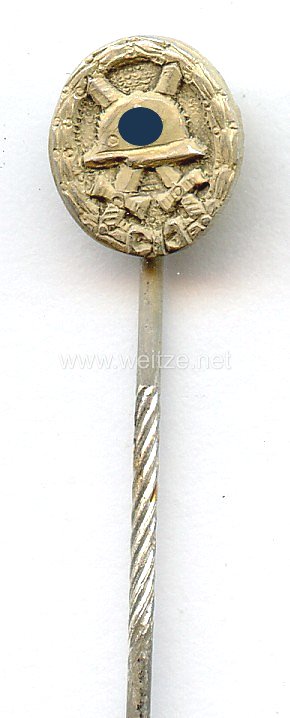
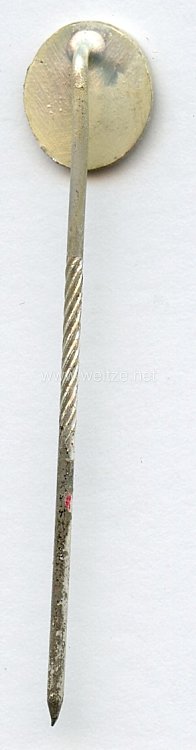
Wound Badge in Silver 1939 - Miniature

9 mm, non-ferrous metal, on long pin, condition 2.
368323
35,00

Wound Badge in Silver 1939 - Miniature

The Wound Badge in Silver 1939 ranks among the most significant German military decorations of World War II. This miniature version measuring 9 mm represents a special form of this award, manufactured for specific wearing occasions.

The Wound Badge was instituted on September 1, 1939, the day of the German invasion of Poland, by Adolf Hitler. The decree continued the tradition of the Wound Badge from World War I, which had been introduced on March 3, 1918, by Kaiser Wilhelm II. The new badge was intended to honor soldiers who were wounded in combat for Germany or suffered health damage through combat operations.

The decoration existed in three classes: Black for one or two wounds, Silver for three or four wounds, and Gold for five or more wounds. The silver Wound Badge, as presented here in miniature form, was thus awarded to soldiers who had been wounded at least three times in combat - testimony to considerable personal sacrifice in military service.

The design of the badge featured a steel helmet with crossed swords, surrounded by a laurel wreath. In the silver version, the badge was made from silver-plated base metal or finished in silver color. Awards were made according to established guidelines detailed in the Army Regulations Gazette and other military directives.

Miniatures of military decorations had a long tradition in the German military system. They were typically worn on special occasions, particularly at social events, with gala uniforms, or civilian clothing. While the regular version of the Wound Badge measured approximately 35-40 mm, miniatures typically ranged between 8 and 15 mm. The 9 mm version described here corresponds to the typical proportions of such miniature versions.

The long pin to which this miniature is attached was characteristic of the wearing method for miniature decorations. It enabled secure attachment to clothing, with the pin passed through the fabric and fixed with a clasp on the reverse. This construction differed from the flatter pin of the regular versions.

Miniatures were manufactured by various makers, often the same firms that produced the regular badges. The base metal used here was a typical material for such versions. Base metal refers to various copper alloys well-suited for manufacturing orders and badges, increasingly used instead of more precious materials due to wartime resource scarcity.

The indicated condition 2 corresponds in numismatic and militaria collecting grading scales to a very good to good state of preservation. This means the piece was worn and shows slight signs of use, but no significant damage or heavy wear.

The Wound Badge held particular propaganda significance in Nazi Germany. It symbolized willingness to sacrifice and was frequently highlighted in war propaganda. Wearers of the silver badge were regarded as particularly brave soldiers who had risked their lives multiple times for the regime.

After World War II, the wearing of Wound Badges in the Federal Republic of Germany was regulated by the Law on Titles, Orders and Decorations of July 26, 1957. According to this law, Wound Badges could continue to be worn in denazified form, meaning without swastika and other NS symbols. This acknowledged the personal sacrifices of soldiers while rejecting the ideological symbolism of the Nazi regime.

Today, such miniatures are sought-after collectibles representing important testimonies of military history. They document not only the military decoration systems of the period but also the personal fates of the soldiers who wore these badges. For historical research and museum work, they offer valuable insights into the material culture of World War II and the commemoration practices of the postwar period.

The study of these objects contributes to our understanding of how nations remember and honor military service, and how the symbols and meanings of such decorations change across different political contexts. The miniature versions particularly illuminate the social and ceremonial aspects of military culture, showing how decorations were integrated into both formal military and civilian social life.