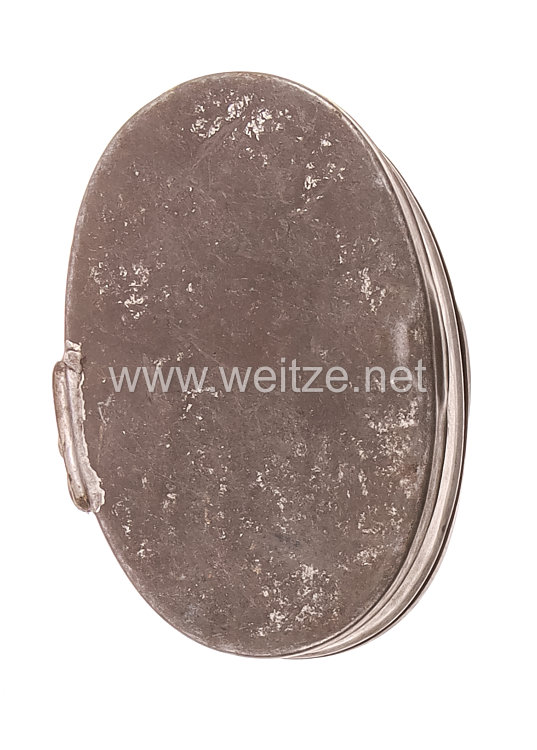
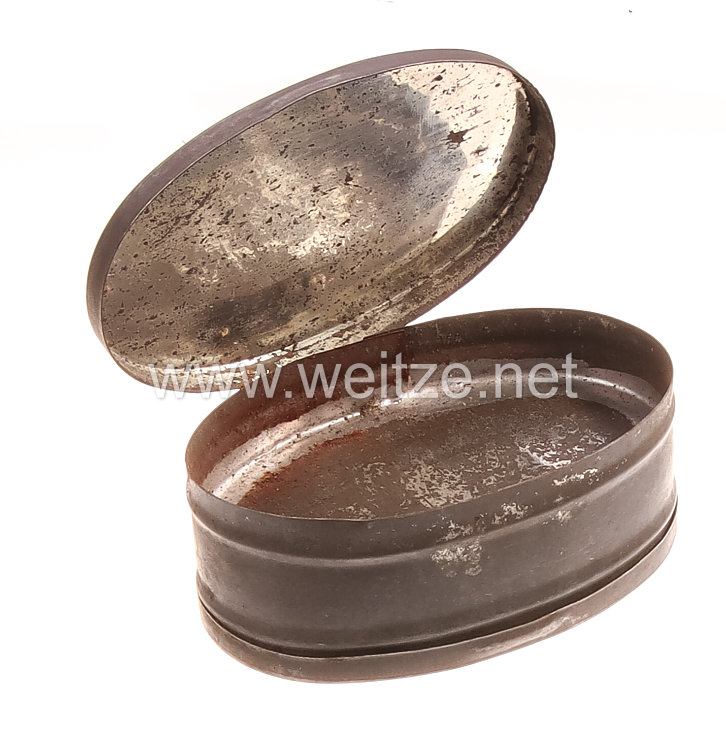
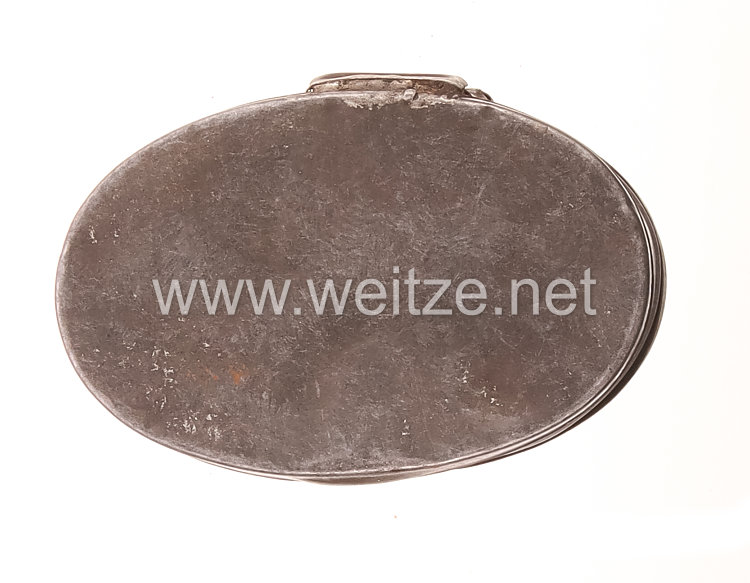
France World War I Double Container for Grease and Shoe Polish for Line Infantry Soldiers

Gray-green lacquered tin container with one lid on each side. Condition 2.

434423
35,00

France World War I Double Container for Grease and Shoe Polish for Line Infantry Soldiers

The double tin for grease and shoe polish represents a characteristic example of the practical equipment issued to French soldiers during the First World War. This gray-green lacquered tin container with separate lids on each side was part of the standard equipment of the Line Infantry and illustrates the military organization of supply in the early 20th century.

The French Army placed great emphasis on the proper maintenance of equipment and footwear even before the First World War. The Infanterie de Ligne, which formed the backbone of French forces, received detailed regulations for equipment care. The Règlement sur le service intérieur des troupes d'infanterie of 1913 contained precise instructions for the care of leather goods and equipment items.

The gray-green coloring corresponds to the French Army's general transition to less conspicuous uniform colors that occurred from 1914/1915 onwards. After the devastating losses of the first months of war in the conspicuous red-and-blue uniforms, France introduced the “bleu horizon” uniform. The field-gray coloring of equipment items served better camouflage and met the new requirements of trench warfare.

The double compartment design of the tin had a practical purpose: one side was intended for leather grease, which served to maintain and waterproof boots, while the other side held shoe polish for external care and shine. This separation was important as both substances served different functions and should not be mixed.

Footwear represented vital equipment for soldiers in the First World War. In the trenches, where men often had to stand in mud and water for days, neglected boots quickly led to “trench foot” (Pied des tranchées), a painful and potentially dangerous condition. The French military leadership recognized the importance of foot care and issued corresponding instructions.

Such care tins were typically transported in the knapsack or in the bread bag (musette). The compact design and robust tin construction were ideal for field service. The two lids allowed easy opening and closing, even with cold or injured hands, which was of considerable importance in front-line service.

The manufacture of such equipment items took place on a large scale in French military manufactories and civilian factories that had been converted for war production. The simple construction allowed for cost-effective mass production, which was necessary to equip millions of soldiers.

In the context of the material culture of the First World War, such everyday objects represent an important aspect of soldier life that is often overlooked in historiography. While weapons and strategic equipment are in the foreground, it was precisely these small, practical items that shaped soldiers' daily lives and influenced their ability to survive.

The preservation of such objects today offers valuable insights into the logistical and everyday challenges of warfare. They document the military administration's efforts to supply their troops even with seemingly insignificant but actually essential equipment items. The French Army of the First World War mobilized over 8.4 million soldiers, which posed enormous logistical requirements.

Such tins were often kept by veterans after the war as souvenirs or continued to be used in civilian life. Their robust construction enabled long-term use, which is why many examples have survived to this day and have found a place in collections of military-historical objects.