German Fleet Association (DFV)
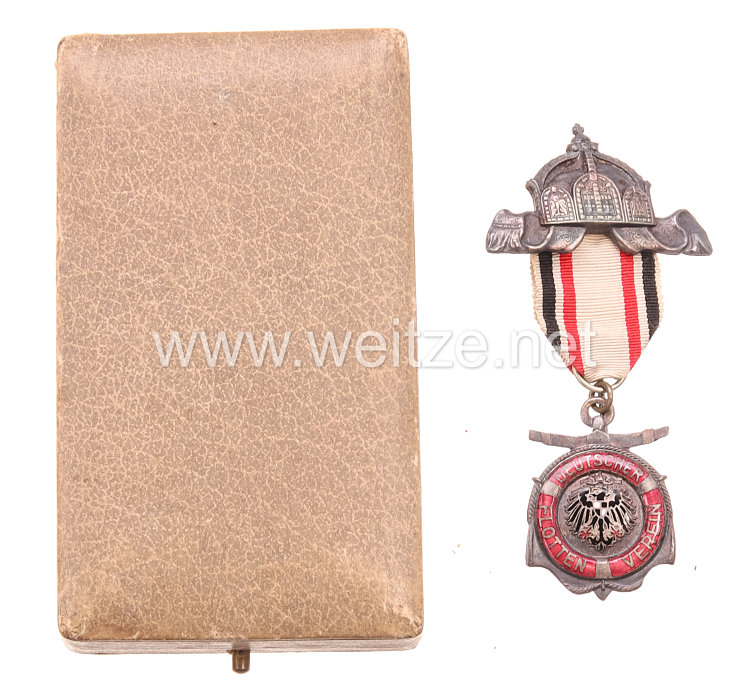
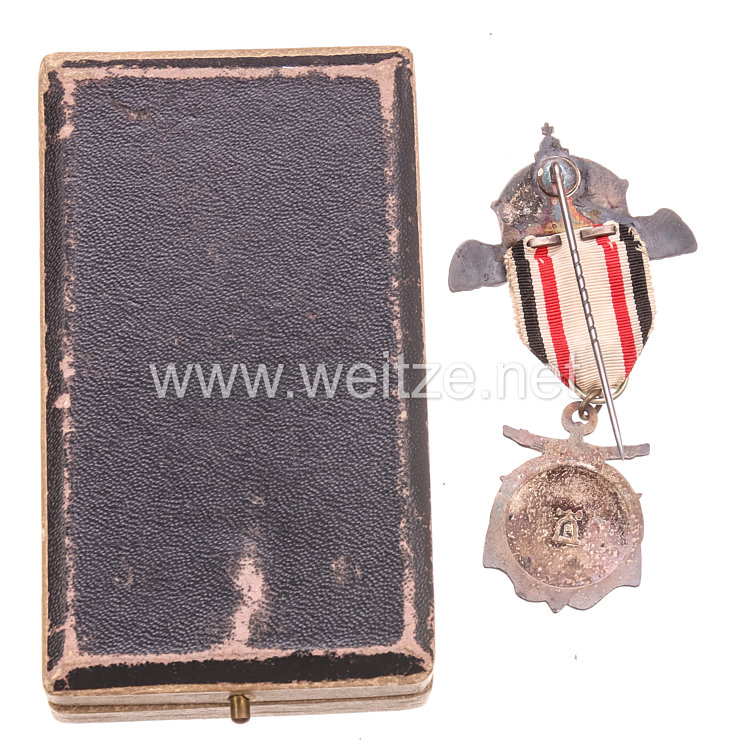
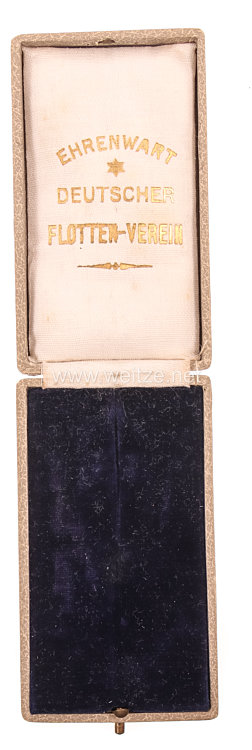
The Badge for Holders of Honorary Diplomas of the German Fleet Association (Deutscher Flottenverein - DFV) represents a significant historical testament to German naval enthusiasm and the fleet ideology in the German Empire. This silver-plated badge of honor with ribbon and long pin, presented in its original case with the inscription “Ehrenwart Deutscher Flotten-Verein” (Honorary Warden German Fleet Association), documents the organized support for building up the Imperial German Navy in the decades before World War I.
The German Fleet Association was founded on April 30, 1898, in Berlin and rapidly developed into one of the largest mass organizations in the German Empire. Its establishment occurred against the backdrop of Kaiser Wilhelm II's global political ambitions and his vision of a German naval power that could compete with the British Royal Navy. Under the leadership of Grand Admiral Alfred von Tirpitz, the German Empire pursued an ambitious naval construction policy, legally anchored through the first Fleet Act of 1898 and subsequent amendments.
The Fleet Association's mission was to generate enthusiasm for the navy among the German population and mobilize political support for the costly fleet construction programs. By 1900, the organization already counted over 600,000 members, and by 1914, membership had grown to an impressive 1.1 million. The association organized lectures, exhibitions, and publications that propagated the necessity of a strong German fleet and promoted maritime awareness across all social classes.
The honorary badge for honorary wardens described here was part of a differentiated system of decorations with which the Fleet Association honored particularly deserving members. The position of honorary warden (Ehrenwart) was an important function within the local association structures. Honorary wardens bore responsibility for organizing and conducting events at the regional level and were often respected personalities in their communities. The award of such a badge was connected with the issuance of a corresponding diploma and represented significant recognition for services rendered.
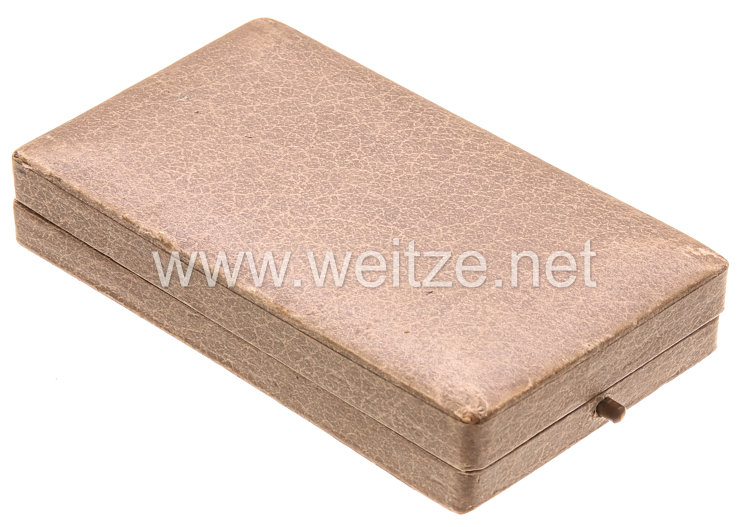
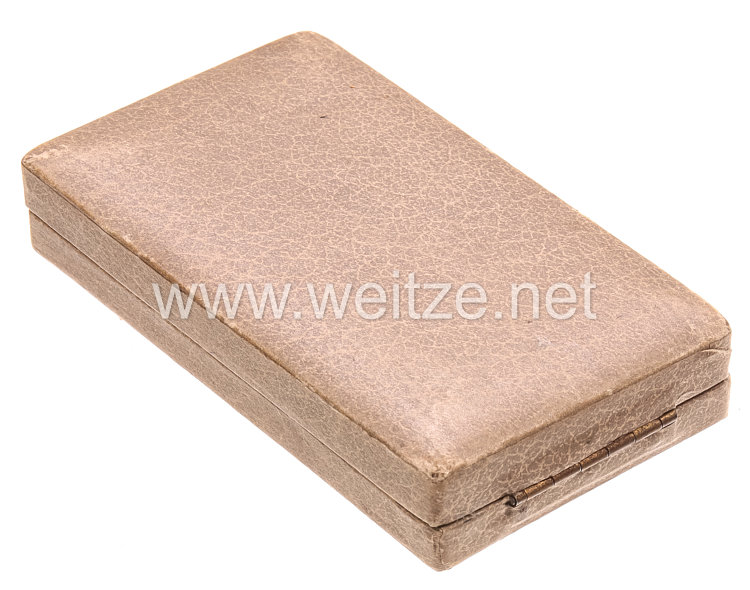
The badge's design followed the heraldic and aesthetic conventions of the Wilhelmine era. The silver plating gives the piece a dignified character, while the long pin enabled wearing on civilian clothing. The manufacturer's logo on the reverse documents the craftsmanship quality of these official association decorations, which were produced by specialized manufacturers. The accompanying ribbon in the association's colors and the representative case with embossed inscription underscore the official and ceremonial character of this award.
The context of naval armament in the German Empire was of central importance for the escalation of international tensions before World War I. The Anglo-German naval race beginning around 1898 contributed significantly to the estrangement between the two nations and drove Britain into closer relations with France and Russia. The Tirpitz doctrine of the “risk fleet” was intended to make Germany an invincible maritime power, but led to the Reich's isolation and the formation of the Entente directed against Germany.
With the outbreak of World War I in 1914, the Fleet Association reached the peak of its significance but rapidly lost influence after the German defeat in 1918. The Imperial German Navy was drastically reduced by the provisions of the Treaty of Versailles, and the large battleships for whose construction the Fleet Association had so vehemently campaigned ended largely in the scuttling at Scapa Flow in June 1919. The Fleet Association itself was dissolved during the Weimar Republic.
Today, decorations like the described honorary badge are important historical artifacts that provide insight into the political culture of the German Empire. They document mass mobilization for military objectives, the role of associations in Wilhelmine society, and the complex interactions between state policy and civil society engagement. For collectors and historians, such pieces offer valuable sources for understanding the history of mentalities and political mobilization in pre-war Germany.
The condition grade 2 of the present example indicates good to very good preservation, which is remarkable given its age of over 100 years. The completeness with ribbon, pin, and original case makes this piece a particularly authentic witness to its era.