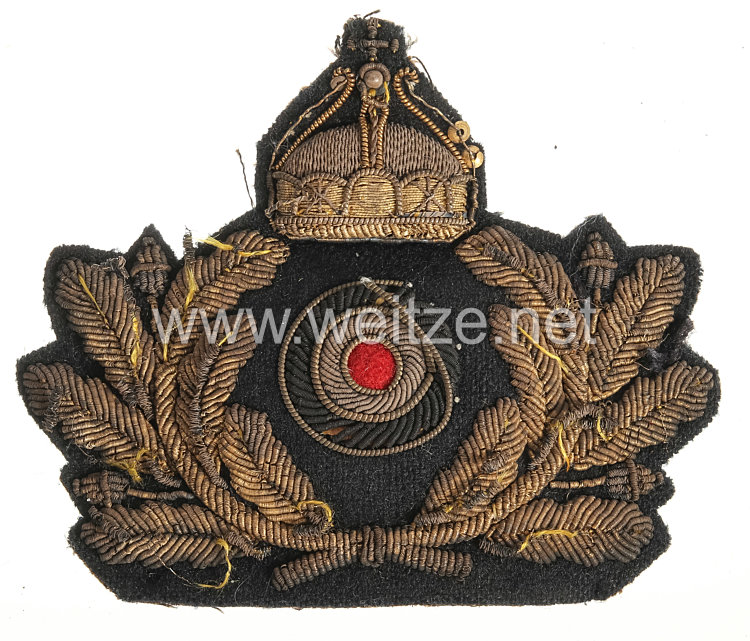
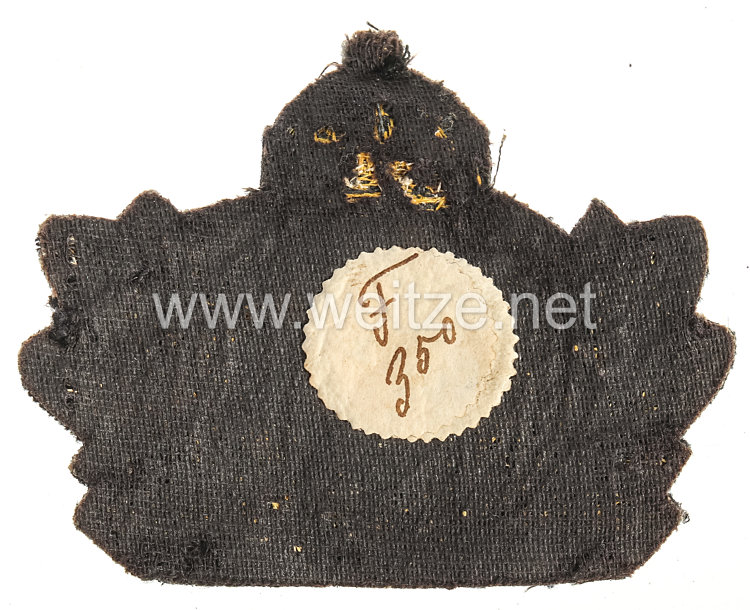
Imperial German Navy Visor Cap Badge for Officers
The Officer's Visor Cap Badge of the Imperial German Navy represents a significant artifact from the Wilhelmine era, embodying the maritime tradition of the German Empire between 1871 and 1918. These badges were not merely functional uniform components but symbolized rank, affiliation, and the pride of the imperial naval officers.
The Imperial German Navy (Kaiserliche Marine) developed under Emperor Wilhelm II into one of the world's most powerful naval forces. The Kaiser, who harbored a particular passion for maritime affairs, promoted the massive expansion of the fleet, known as the naval arms race (Flottenrüstung). The Navy's uniform regulations and insignia were carefully designed to represent the dignity and tradition of the imperial naval force.
This visor cap badge from around 1910 displays the classic design of this period: An Imperial Crown surmounts an oak leaf wreath, at the center of which sits the Reich cockade. This symbolism was deeply rooted in Prussian-German military tradition. The oak leaves symbolized strength and permanence, while the Imperial Crown represented monarchical authority and direct subordination to the Kaiser as Supreme Commander.
The Reich cockade in the colors black-white-red was the national identification symbol of the German Empire since its foundation in 1871. This color combination united the Prussian colors of black-white with the Hanseatic colors of white-red, symbolizing the unification of the German states under Prussian leadership.
The hand-embroidered metallic thread work of these badges demonstrates the highest level of craftsmanship. This technique, in which gold or silver threads were attached to a backing, was extremely time-consuming and expensive. Officers had to procure their uniforms and badges themselves, which required considerable financial means. The quality of embroidery and the use of precious materials also served as a subtle indicator of the wearer's social status.
The production of such badges took place in specialized military effects factories and workshops that often perfected their craft over generations. Companies such as Gebrüder Held in Berlin and other renowned manufacturers were known for their high-quality work. Hand embroidery required specially trained artisans who mastered various embroidery techniques.
Around 1910, when this badge was created, the Imperial German Navy was at the height of its expansion. The Naval Laws of 1898 and 1900, initiated by Grand Admiral Alfred von Tirpitz, had led to an unprecedented shipbuilding program. The Navy had become a symbol of Imperial Germany and its ambitions for world power status.
The uniform regulations of the Imperial German Navy were defined in detailed regulations. The Adjustierungsvorschrift (Uniform Regulation) precisely defined which insignia were to be worn on which uniform for which occasion. The visor cap badge was part of the service cap, worn both in daily service and at official occasions.
The social composition of the Imperial Navy's officer corps differed somewhat from that of the Army. While nobility dominated the Army, the upper middle class was more strongly represented in the Navy. This reflected the more modern, technically oriented nature of the naval force, which required engineers and specialists.
After the end of World War I and the abdication of Kaiser Wilhelm II in November 1918, these imperial insignia lost their official significance. The Reichsmarine of the Weimar Republic introduced new republican symbolism. However, many former officers preserved their imperial uniform pieces as personal mementos.
Today, such visor cap badges are sought-after collector's items that provide important insights into the material culture and military tradition of the Empire. They document not only the craftsmanship of their time but also the complex symbolism and hierarchy of the Wilhelmine military system. The state of preservation, the quality of embroidery, and authenticity are decisive factors in the historical and collectible evaluation of such objects.
These artifacts serve as tangible connections to a pivotal period in German and European history, when naval power was seen as essential to national prestige and the balance of power shifted dramatically in the years leading to World War I.