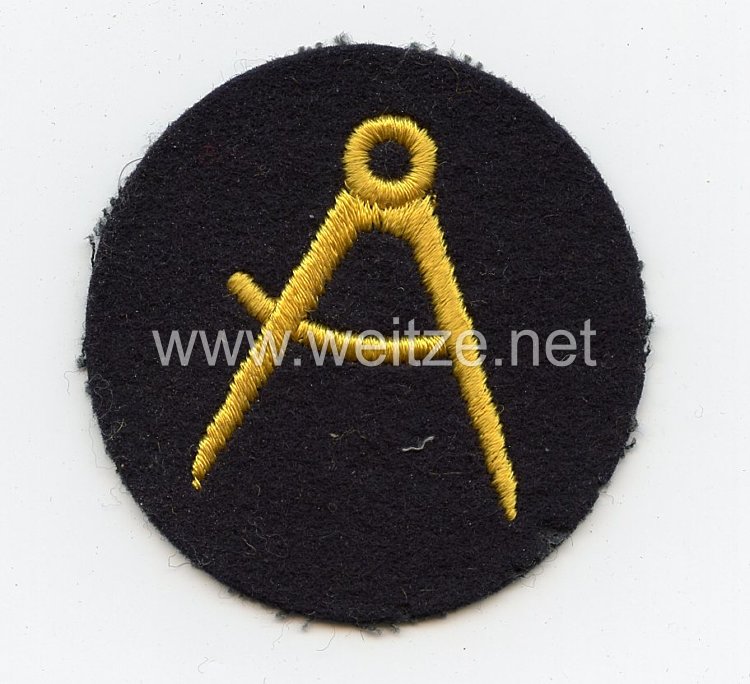
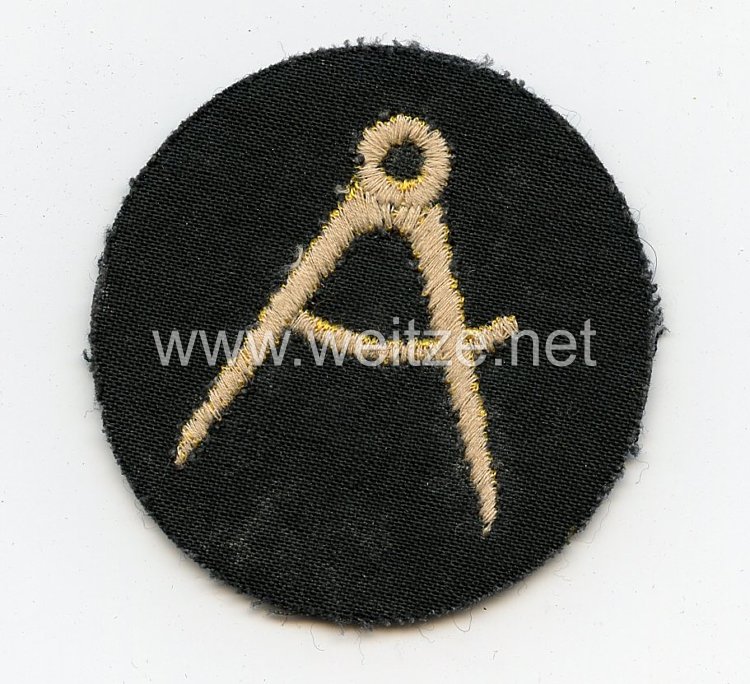
Kriegsmarine Enlisted Ranks Career Sleeve Insignia Carpenter
The Kriegsmarine sleeve insignia for enlisted personnel in the carpenter's career path represents a fascinating example of the specialized identification systems used in the German Navy during World War II. These badges served not only to identify ranks but also to designate special trades and career paths within the Third Reich's maritime forces.
The Kriegsmarine, officially founded in 1935 as the successor to the Reichsmarine, developed a complex system of uniforms and insignia that built upon the traditions of the Imperial German Navy. The various career paths were identified by specific sleeve badges worn on the blue service uniform or white summer uniform.
The Zimmermann (ship's carpenter) belonged to the skilled trades career paths of the Kriegsmarine and was responsible for woodwork aboard ship. Although warships were increasingly constructed of steel, carpentry and woodworking remained indispensable aboard vessels. Ship's carpenters were responsible for maintaining and repairing wooden structures, furniture, hatches, doors, and other wooden installations. On larger ships, they maintained complete workshops and were also responsible for emergency repairs during extended voyages.
The enlisted personnel sleeve insignia were worn on the left upper arm according to the Uniform Regulations for the Kriegsmarine (A.V.O.). These badges were typically embroidered on dark blue cloth for the blue uniform or on white cloth for the white uniform. The carpenter's badge typically displayed the symbolic tools of the trade - usually crossed carpenter's tools such as an axe and saw or similar representations of the craft.
The hierarchy within the career path was clearly structured. Enlisted men wore the simple career badge, while non-commissioned officers and higher ranks wore additional rank insignia. The system made it possible to recognize at a glance both the rank and specialization of a naval serviceman - an important organizational necessity on large warships with crews of several hundred or thousand men.
The manufacture of these badges was carried out by specialized firms authorized by the Kriegsmarine. Quality varied depending on the manufacturer and time of production. Early wartime productions often showed finer embroidery and better material quality, while later war years frequently brought simplified versions as resources became scarcer.
The present example is manufactured in the version for the blue uniform, indicating the standard service uniform. The blue uniform was the most common service dress and was worn both on land and at sea. Naval personnel wore this uniform in daily service, while the white uniform was mainly used in tropical regions or on special occasions.
In the historical context, this badge represents the importance of specialized craft professions in the Kriegsmarine. Despite increasing mechanization and modernization of warfare, traditional craft professions such as the carpenter remained essential for the operation and maintenance of warships. The Kriegsmarine employed thousands of skilled workers in various career paths, from mechanics to electricians to joiners and carpenters.
After the end of the war in 1945, the Kriegsmarine and its structures were dissolved. The uniforms and insignia became historical artifacts that are now studied by collectors and military historians. They serve as material witnesses to the organization and structure of the German naval forces during one of the darkest periods in German history.
For collectors and historians, such career badges offer valuable insights into the organizational structure of the Kriegsmarine. They document not only the military hierarchy but also the diversity of specializations required to operate a modern war fleet. The preservation and documentation of such objects contributes to understanding maritime military history.
The condition and construction of these badges also reflect the economic and industrial circumstances of wartime Germany. Early war examples typically demonstrate superior craftsmanship with fine detail work, while those produced in the final years of the conflict often show simplified construction methods and substitute materials, reflecting the Reich's deteriorating industrial capacity and resource availability.