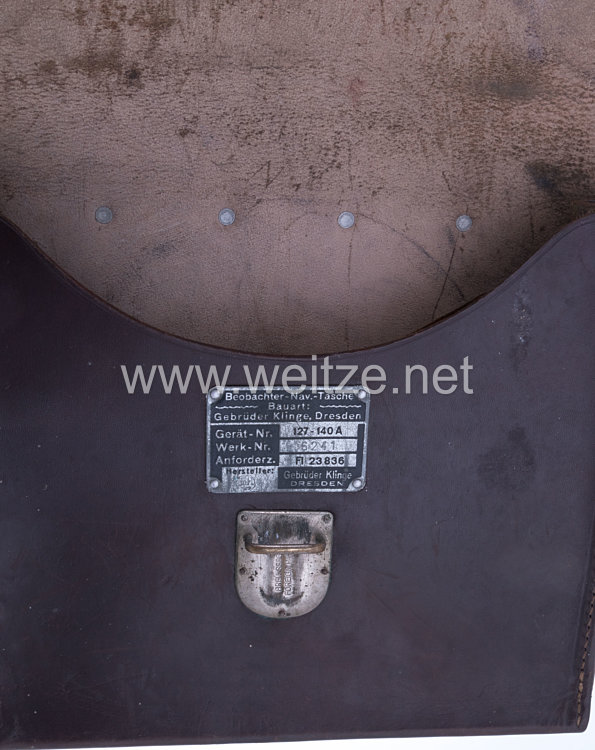
Luftwaffe Observer-Navigation Pouch

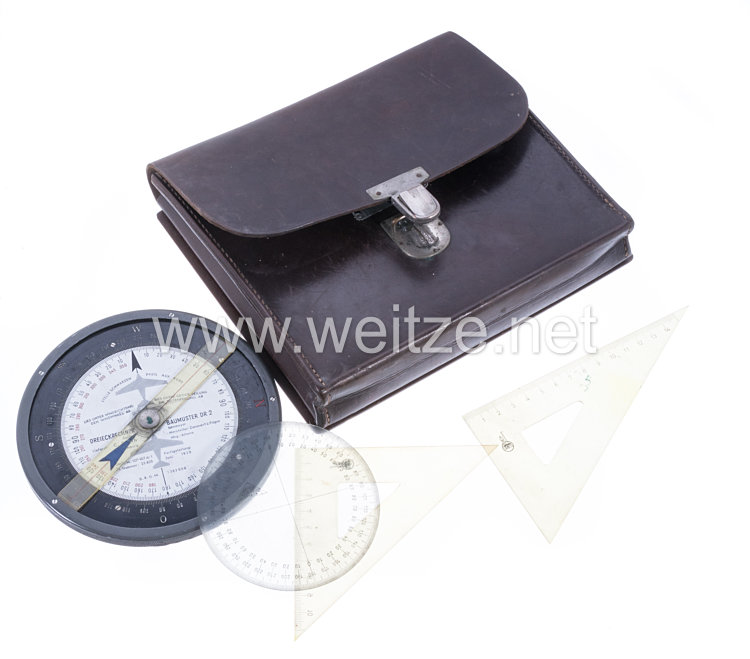
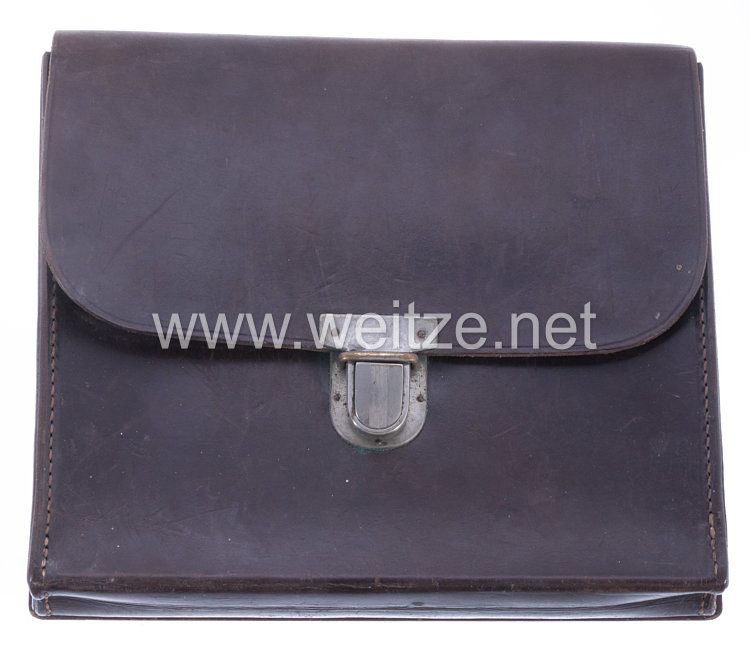
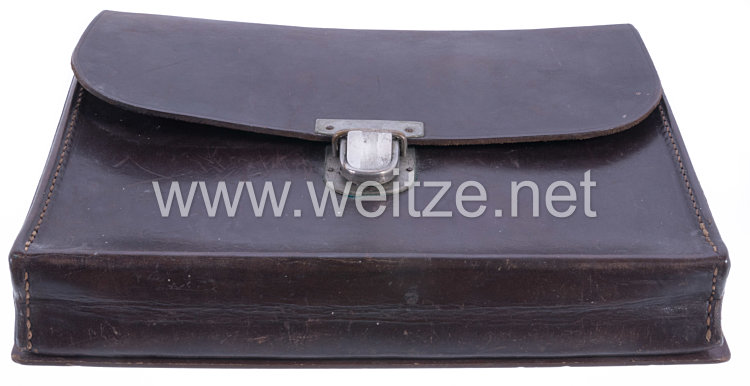
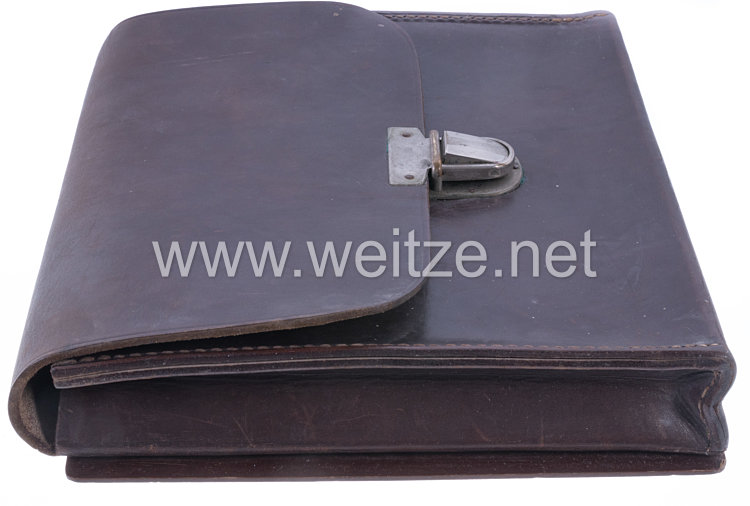
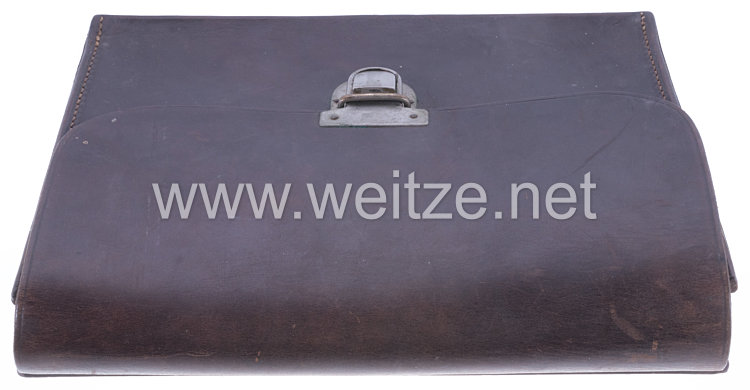
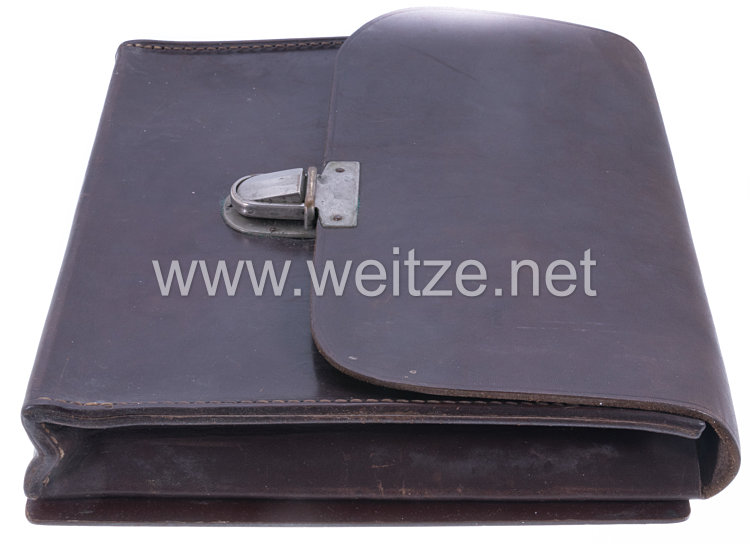
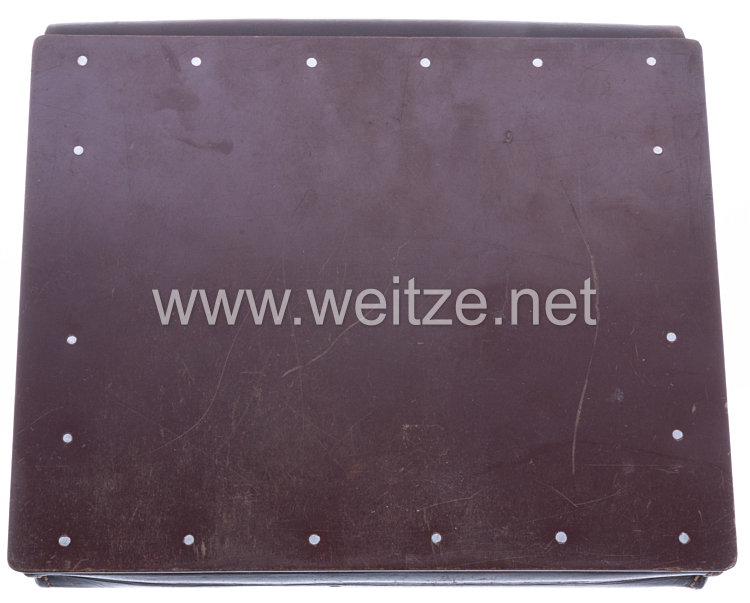
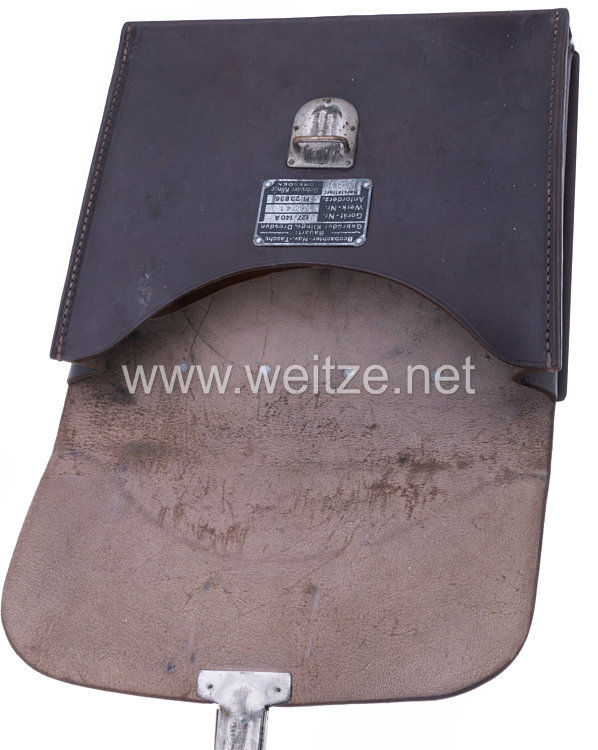
Brown smooth leather, interior with type plate Observer-Na-Pouch Gebrüder Klinge, Dresden Device-No. 127-140 A Requisition Fl 23836 with manufacturer Ba 1979. With contents, Luftwaffe navigation computer, and 3 civilian calculators, reverse side with Bakelite plate, Condition 2.
336020
850,00

Luftwaffe Observer-Navigation Pouch

The Luftwaffe Observer-Navigation Bag represents an authentic testament to German aerial warfare during World War II. This specialized equipment was an indispensable tool for observers and navigators in combat and reconnaissance aircraft of the Luftwaffe between 1939 and 1945.

This particular specimen was manufactured by Gebrüder Klinge of Dresden, one of many suppliers who produced military equipment within the framework of the German war economy. The marking Ba 1979 corresponds to the manufacturer code system (Betriebsnummern) that the Wehrmacht introduced from 1940 onwards to conceal production locations for security reasons. The device number 127-140 A and requisition number Fl 23836 document the systematic registration and management of military equipment by the Luftwaffe.

The bag, made of brown smooth leather, conforms to Luftwaffe material specifications designed to ensure durability and functionality under extreme conditions. Leather was preferred because it remained flexible at various temperatures and altitudes while protecting sensitive navigation instruments.

The role of the observer in the German Luftwaffe was of critical importance. In two-seat and multi-seat aircraft such as the Junkers Ju 88, Heinkel He 111, or Dornier Do 17, the observer (Beobachter-Navigator) was responsible not only for navigation but often also for bomb aiming, radio communication, and airspace surveillance. This multifaceted role required extensive equipment that needed to be readily accessible and securely stowed.

The most important content of such bags was the Luftwaffe triangle calculator, also known in German as Navigationsdreiecksrechner or Kursdreieck. This instrument, often made of Bakelite or Plexiglas, enabled the navigator to perform complex calculations: course computations accounting for wind speed and direction, fuel consumption, flight time, and distances. The use of Bakelite, an early plastic, was typical of the 1930s and 1940s and offered the advantage of durability while maintaining low weight.

The presence of civilian calculators in this military bag is historically significant. This could have several explanations: First, after the war began, civilian instruments were increasingly used in military contexts as production capacities became overtaxed. Second, many Luftwaffe crew members had worked in civilian aviation before the war and continued using familiar instruments. Third, this may indicate post-war usage when former military personnel returned to civilian aviation.

The training of observers took place in specialized Luftwaffe schools where prospective navigators underwent intensive theoretical and practical instruction. Training included astronomy, meteorology, cartography, and the use of navigation instruments. The loss of experienced crew members as the war progressed led to shortened training periods, further emphasizing the importance of reliable, easy-to-use equipment.

Dresden, the production location of Gebrüder Klinge, was a significant center of German armaments industry. The city housed numerous supplier companies for the Wehrmacht before being largely destroyed by Allied air raids in February 1945. The production of such specialized equipment in Dresden underscores the decentralized structure of the German war economy.

The classification as Condition 2 in the description corresponds to the grading system for military antiques, where Condition 1 represents mint condition and higher numbers indicate increasing use. A Condition 2 suggests a well-preserved object with slight signs of use, which is remarkable for an item over 75 years old.

Such navigation bags are today important historical artifacts that provide insight into the technical equipment and daily life of Luftwaffe crews. They document the state of navigation technology before the era of electronic systems, when pilots and navigators still relied on mechanical calculation aids, maps, and visual navigation. The preservation of such objects contributes to understanding the history of aerial warfare and technical development.

These bags typically contained not only calculators but also plotting boards, pencils, erasers, protractors, and sometimes specialized charts for high-altitude or long-range navigation. The systematic organization of this equipment was crucial for efficient operation in the confined and often chaotic environment of a combat aircraft. The standardization of equipment across the Luftwaffe ensured that crew members could operate effectively even when assigned to different aircraft or units.