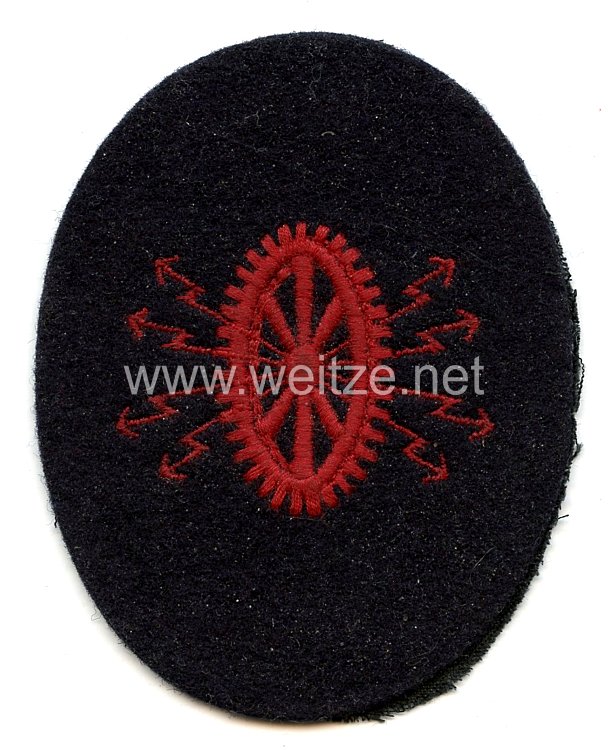
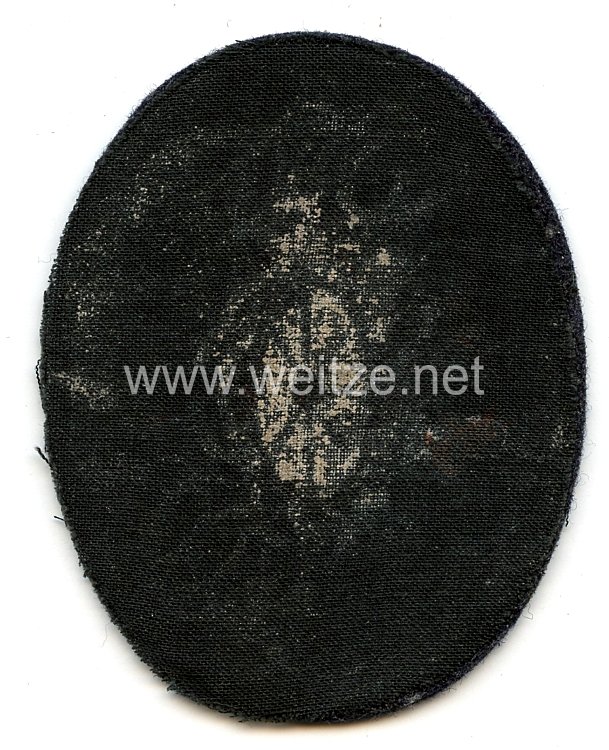
Kriegsmarine Sleeve Insignia for Special Training Technical Searchlight Course Coastal

for the blue blouse, lightly worn. Condition 2
418920
30,00

Kriegsmarine Sleeve Insignia for Special Training Technical Searchlight Course Coastal

The Kriegsmarine Sleeve Badge for Special Training Technical Searchlight Course Coast represents a fascinating testament to the highly specialized technical training within the German Navy during World War II. This badge was awarded to naval personnel who successfully completed special technical training in the field of coastal searchlights.

The Kriegsmarine, as the maritime force of the German Reich from 1935 to 1945, developed an extensive system of special badges and qualification insignia. These served not only to externally identify special skills but also promoted esprit de corps and motivation for further training. The system of sleeve badges for special training was systematically expanded to meet the growing technical requirements of modern naval warfare.

Coastal searchlights played a crucial role in the coastal defense of the Third Reich. These powerful searchlights served to monitor coastal waters, reconnaissance of enemy ship movements, and support of coastal artillery during night operations. Operating these complex technical installations required comprehensive knowledge of optics, electrical engineering, and tactical application.

The Technical Searchlight Course Coast was a specialized training program that instructed naval personnel in the maintenance, repair, and operational use of coastal searchlights. The courses included theoretical and practical components, including the functioning of electrical systems, the mechanics of swivel devices, maintenance of carbon arc lamps or later high-performance lamps, as well as tactical coordination with other coastal defense units.

The badge itself was worn on the blue blouse, the service uniform of the Kriegsmarine. The placement on the sleeve corresponded to the standardized wearing practice of special badges within the Navy. The exact position was specified by uniform regulations and allowed for quick identification of the wearer's qualifications.

The production of such badges was carried out by various authorized manufacturers who had to meet the strict quality requirements of the Kriegsmarine. The badges were typically manufactured in embroidery on dark blue cloth, with the coloring and design having to comply with official specifications. The craftsmanship quality varied depending on the manufacturer and production period, with early war productions often showing higher quality than later examples.

In the context of coastal defense, the wearers of these badges were important specialists. The German coast from the North Sea to the Baltic Sea was equipped with numerous searchlight positions that were part of a comprehensive defense system. These installations worked closely with radar stations, anti-aircraft batteries, and coastal artillery. The technical specialists not only had to keep their equipment operational under difficult conditions but also perform their duties under enemy fire.

The collector community values such special badges today as important historical documents. The described condition 2 (lightly worn) indicates an authentic piece that was actually used in service. Such worn examples are often more valuable than unworn pieces, as they represent a direct connection to historical reality.

After the end of the war in 1945, many of these badges were destroyed or kept by veterans as mementos. Today they serve historians and collectors as material witnesses to a specialized training system that reflects the technical complexity of naval warfare in the 20th century.

The rarity of these specialized training badges makes them particularly sought after by collectors of Third Reich militaria. Unlike combat decorations or general service badges, these technical qualification insignia were awarded in much smaller numbers, reflecting the specialized nature of the training required. The coastal searchlight specialization was particularly important given Germany's extensive coastline and the constant threat of Allied naval operations and amphibious assaults.