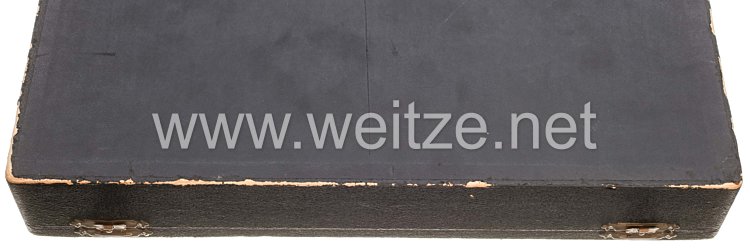
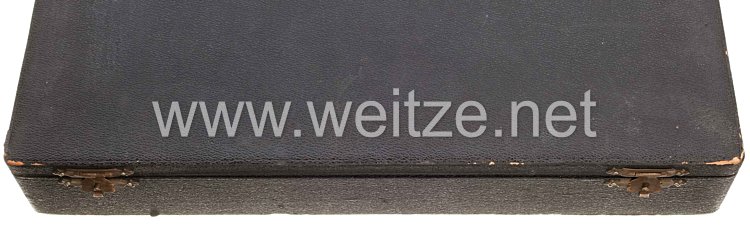
2. Weltkrieg: Großer Ordensmusterkoffer eines Handelsvertreters aus Lüdenscheid
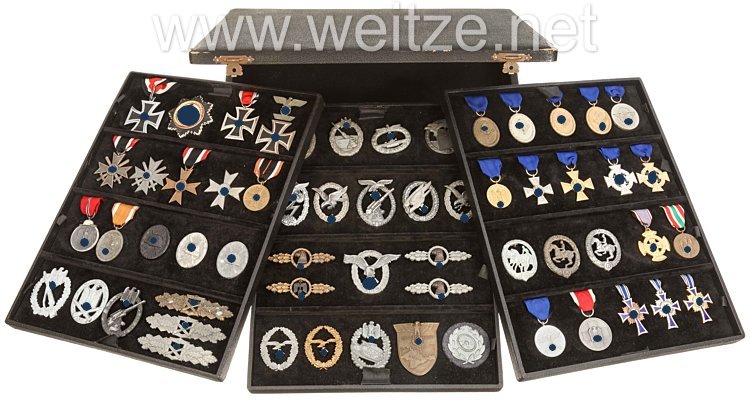
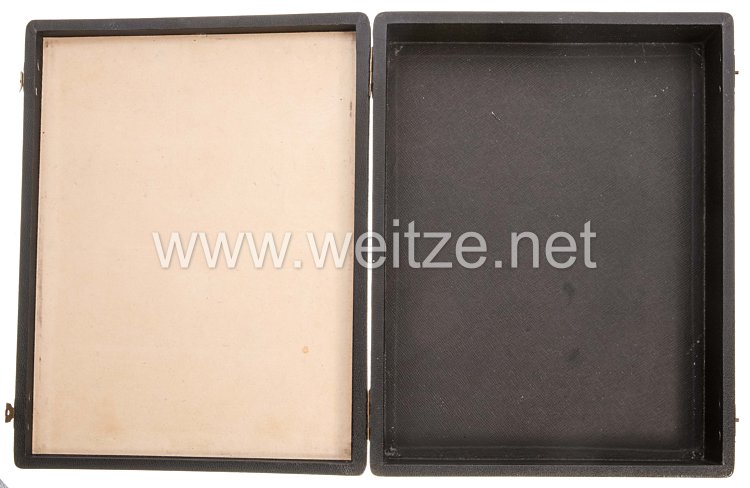
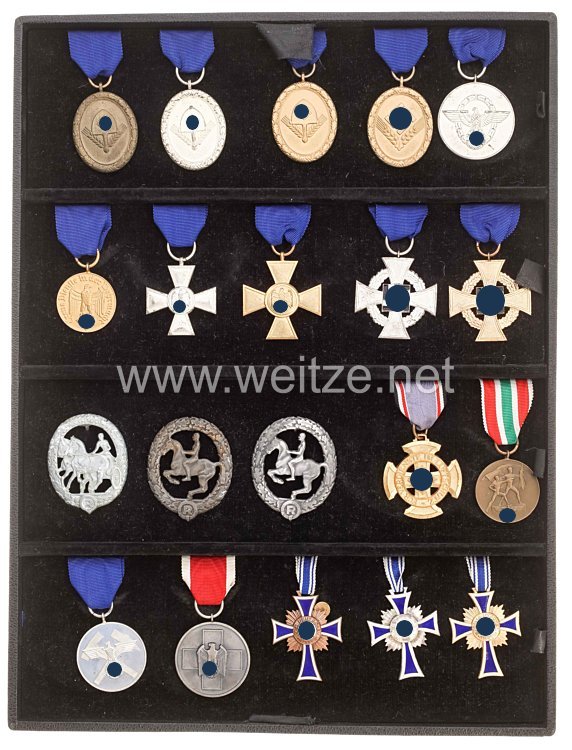
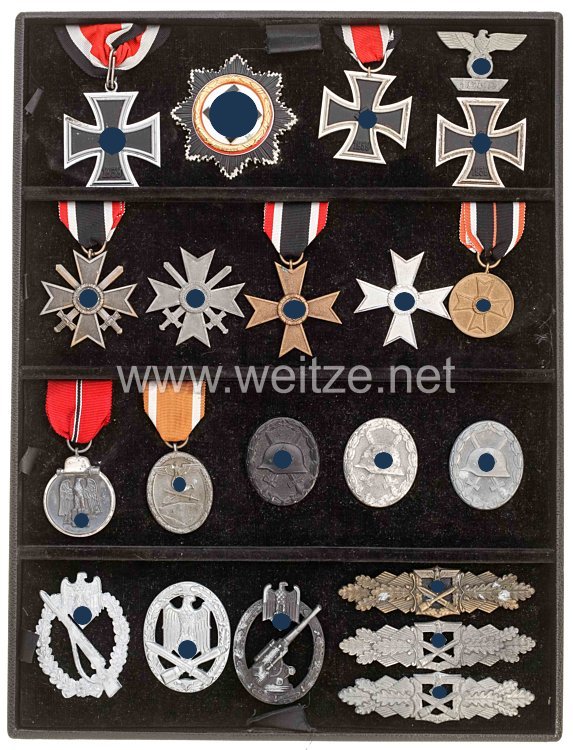
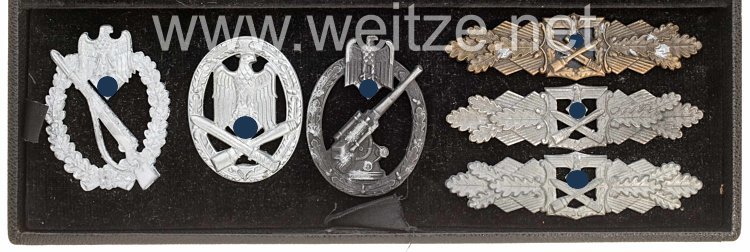
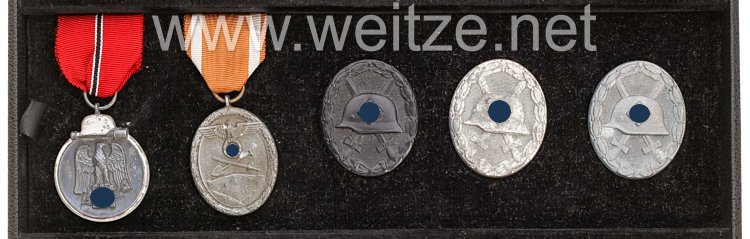
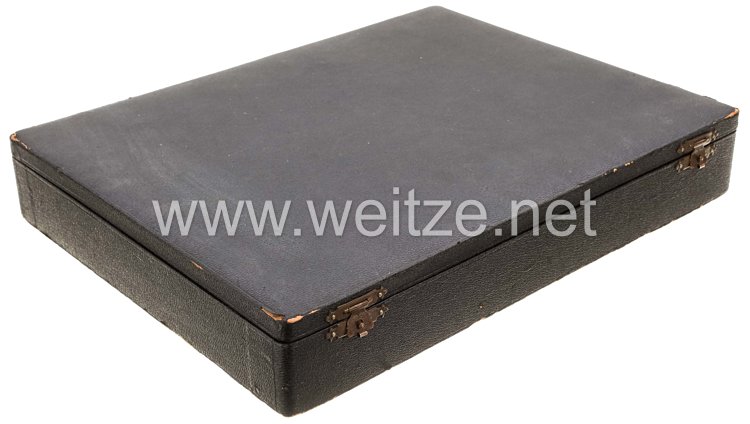
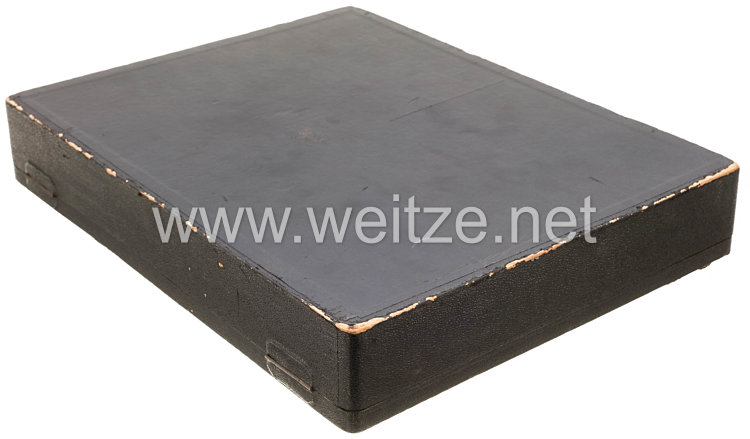
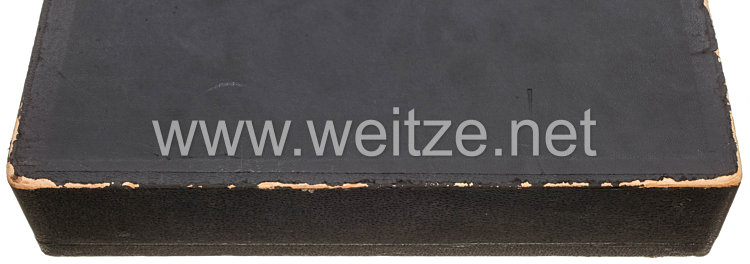
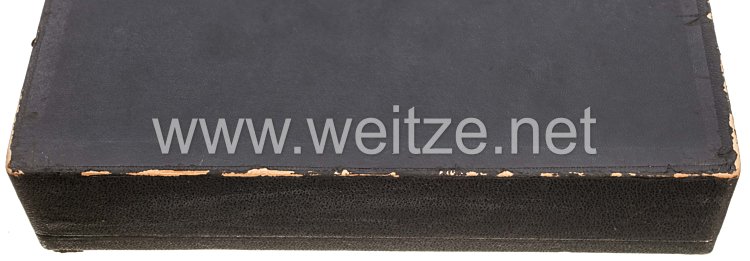
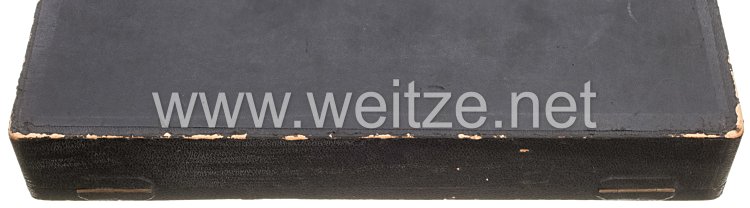
Es handelt sich hierbei um einen der letzten noch existierenden Ordens-Musterkasten der Firma Steinhauer & Lück aus Lüdenscheid, der noch vollständig erhalten ist. Hergestellt wahrscheinlich um 1944. Der Kasten ist mit blauem Lederimitat bezogen, Maße 29 x 35 cm. Innen auf 3 Tabletts sind insgesamt 59 Auszeichnungen montiert. Jedes Ordenstablett hat 4 Einlegetafeln, die sich an seitlichen Schlaufen herausnehmen lassen. Die einzelnen Abzeichen sind auf den insgesamt 12 Einlegetafeln so aufgesteckt, dass sich jedes Abzeichen problemlos herauslösen lässt. Fast alle Auszeichnungen stammen von der Firma Steinhauer & Lück, nur das Flakkampfabzeichen stammt von der Firma Assmann. Aufgrund der späten Kriegsfertigung sind die alle Kampfabzeichen aus Feinzink hergestellt. Im einzelnen sind es die folgenden Auszeichnungen :
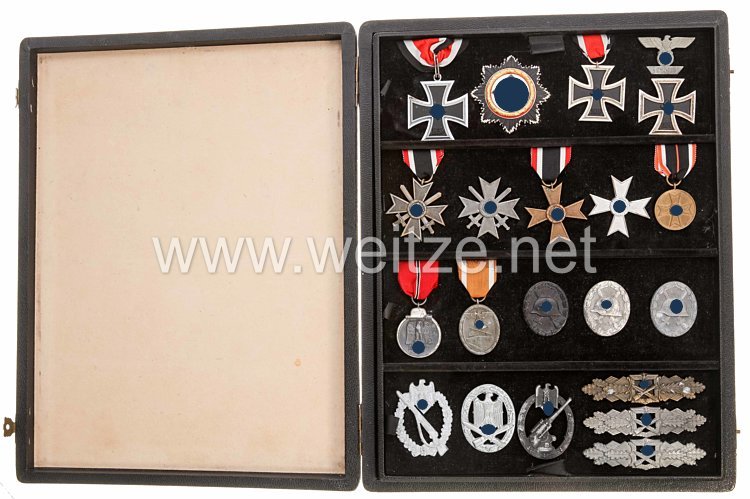
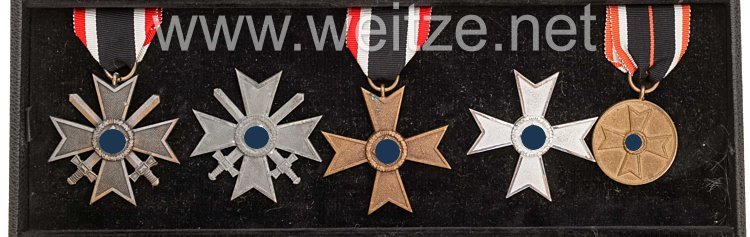
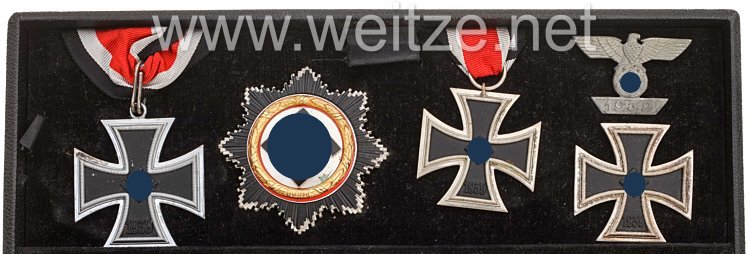
Tafel 1 : Ritterkreuz zum Eisernen Kreuz 1939, rückseitig "micro 800" gestempelt. Deutsches Kreuz in Gold, rückseitig auf der Nadel "4". Eisernes Kreuz 1939 2. Klasse, Hersteller im Ring "4". Eisernes Kreuz 1939 1. Klasse, Hersteller auf der Nadel "4". Wiederholungspange "1939" zum EK 1. Klasse 1914, Feinzink. Kriegsverdienstkreuz 1939 1. Klasse mit und ohne Schwerter, beide auf der Nadel "4" gestempelt". KVK 1939 2. Klasse mit und ohne Schwerter sowie KVK-Medaille. Winterschlachtmedaille. Schutzwall-Ehrenzeichen. Verwundetenabzeichen 1939 in Schwarz, Silber und Gold, die Vergoldung verblasst. Infanteriesturmabzeichen in Silber, hohl geprägt. Allgemeines Sturmabzeichen. Heeres-Flakkampfabzeichen. Nahkampfspange in Bronze, Silber und Gold, die Vergoldung verblasst. Alle 6 Kampfabzeichen ohne Herstellerbezeichnung.
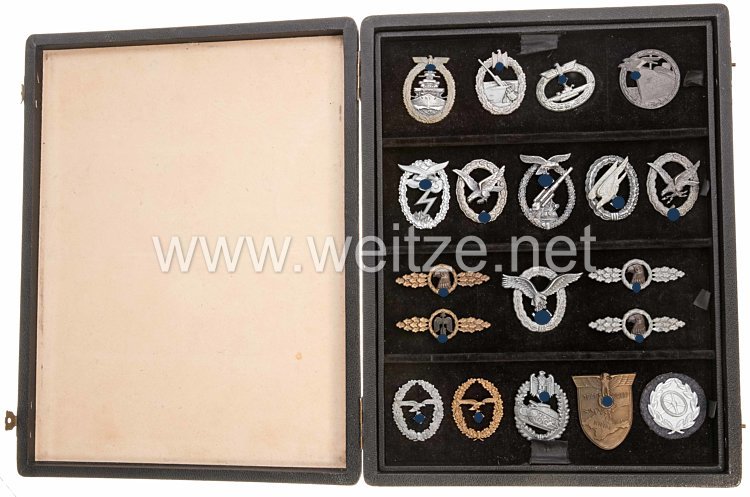
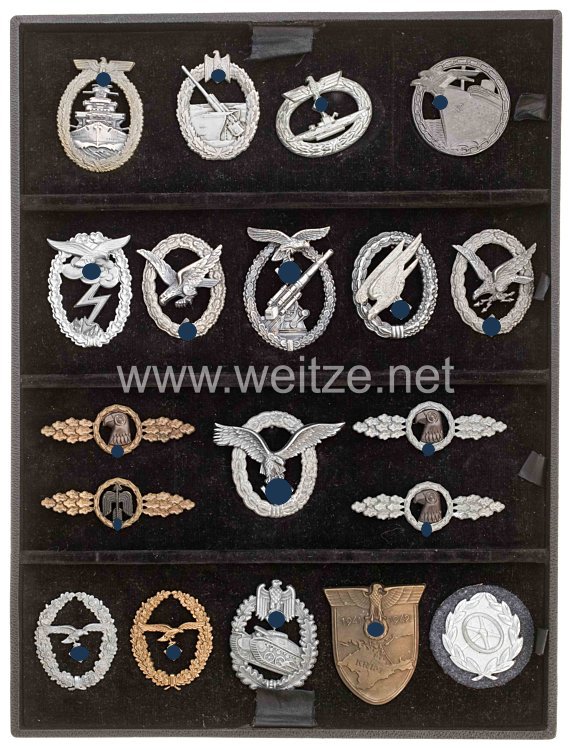
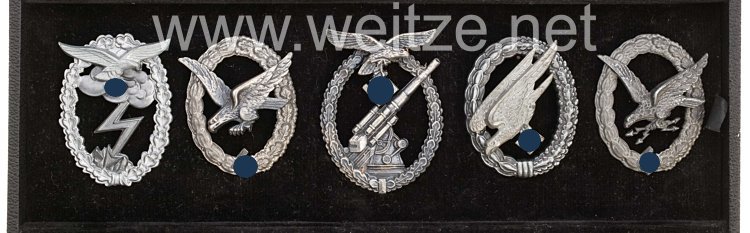
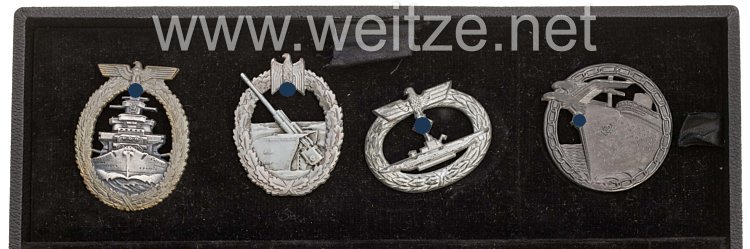
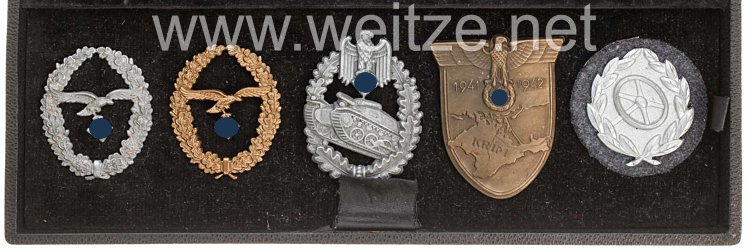
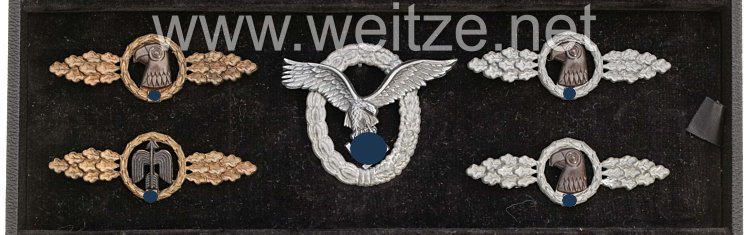
Tafel 2: Flottenkriegsabzeichen, Feinzink, halbhohle Ausführung. Küstenartillerie-Kriegsabzeichen. U-Bootkriegsabzeichen. Blockadebrecherabzeichen. Erdkampfabzeichen der Luftwaffe. Fliegerschützenabzeichen ohne Blitzbündel. Flakkampfabzeichen der Luftwaffe, Hersteller "A". Fallschirmschützenabzeichen. Fliegerschützenabzeichen mit Blitzbündel. Frontflugspange für Aufklärer in Bronze, Silber und Gold, die Vergoldung verblasst. Frontflugspange für Jäger in Bronze. Flugzeugführerabzeichen. Luftwaffe Auflage für die Schützenschnur in Silber und Gold. Auflage für die WH Schützenschnur Panzer 5 Stufe. Ärmelschild "Krim 1941/1942". Kraftfahrbewährungsabzeichen in Silber auf LW-Tuch.
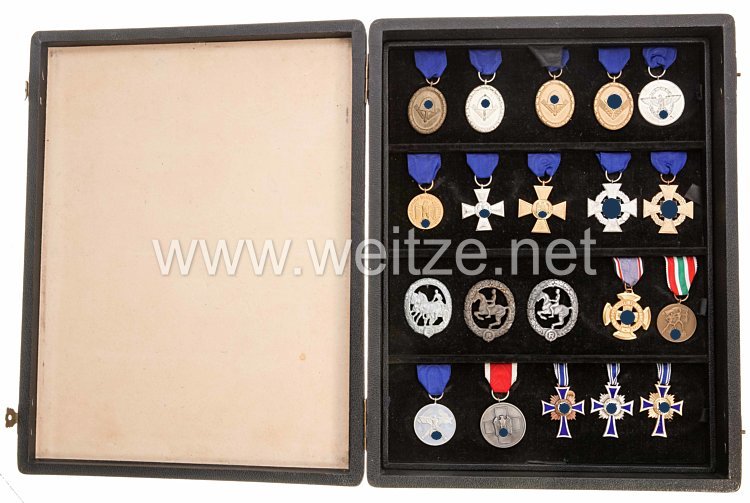
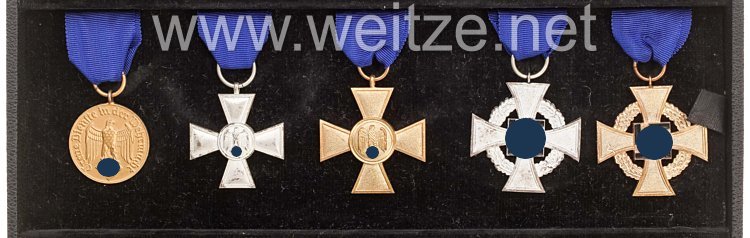
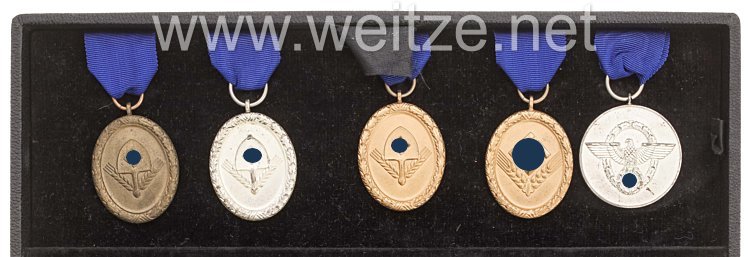
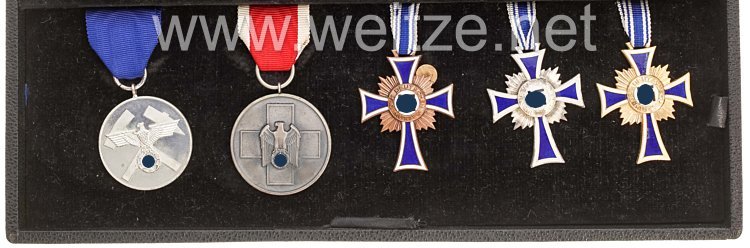
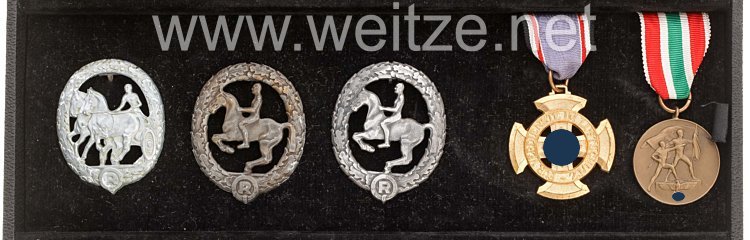
Tafel 3: RAD Dienstauszeichnung für Männer in Bronze, Silber und Gold. RAD Dienstauszeichnung für Frauen in Gold. Polizei-Dienstauszeichnung für 8 Jahre. WH Dienstauszeichnung für 12, 15 und 25 Jahre. Treudienst-Ehrenzeichen in Silber und Gold. Sehr interessante späte Fertigung mit schwarz lackierten Hakenkreuzen. Deutsches Fahrerabzeichen in Silber. Deutsches Reiterabzeichen in Bronze und Silber. Luftschutz-Ehrenzeichen 1. Stufe. Erinnerungsmedaille an die Heimkehr des Memellandes . Grubenwehr-Ehrenzeichen (am verkehrten Band !). Deutsche Medaille für Volkspflege. Ehrenkreuz des Deutschen Mutter in Bronze, Silber und Gold.
Alle Abzeichen waren im Kasten die letzten 65 Jahre gut geschützt und befinden sich in neuwertigem Zustand, nur bei dem U-Bootkriegsabzeichen hat sich das Nadelscharnier gelöst.
Ein einmaliges Set von ordenshistorischer Bedeutung !
Tafel 1 : Ritterkreuz zum Eisernen Kreuz 1939, rückseitig "micro 800" gestempelt. Deutsches Kreuz in Gold, rückseitig auf der Nadel "4". Eisernes Kreuz 1939 2. Klasse, Hersteller im Ring "4". Eisernes Kreuz 1939 1. Klasse, Hersteller auf der Nadel "4". Wiederholungspange "1939" zum EK 1. Klasse 1914, Feinzink. Kriegsverdienstkreuz 1939 1. Klasse mit und ohne Schwerter, beide auf der Nadel "4" gestempelt". KVK 1939 2. Klasse mit und ohne Schwerter sowie KVK-Medaille. Winterschlachtmedaille. Schutzwall-Ehrenzeichen. Verwundetenabzeichen 1939 in Schwarz, Silber und Gold, die Vergoldung verblasst. Infanteriesturmabzeichen in Silber, hohl geprägt. Allgemeines Sturmabzeichen. Heeres-Flakkampfabzeichen. Nahkampfspange in Bronze, Silber und Gold, die Vergoldung verblasst. Alle 6 Kampfabzeichen ohne Herstellerbezeichnung.
Tafel 2: Flottenkriegsabzeichen, Feinzink, halbhohle Ausführung. Küstenartillerie-Kriegsabzeichen. U-Bootkriegsabzeichen. Blockadebrecherabzeichen. Erdkampfabzeichen der Luftwaffe. Fliegerschützenabzeichen ohne Blitzbündel. Flakkampfabzeichen der Luftwaffe, Hersteller "A". Fallschirmschützenabzeichen. Fliegerschützenabzeichen mit Blitzbündel. Frontflugspange für Aufklärer in Bronze, Silber und Gold, die Vergoldung verblasst. Frontflugspange für Jäger in Bronze. Flugzeugführerabzeichen. Luftwaffe Auflage für die Schützenschnur in Silber und Gold. Auflage für die WH Schützenschnur Panzer 5 Stufe. Ärmelschild "Krim 1941/1942". Kraftfahrbewährungsabzeichen in Silber auf LW-Tuch.
Tafel 3: RAD Dienstauszeichnung für Männer in Bronze, Silber und Gold. RAD Dienstauszeichnung für Frauen in Gold. Polizei-Dienstauszeichnung für 8 Jahre. WH Dienstauszeichnung für 12, 15 und 25 Jahre. Treudienst-Ehrenzeichen in Silber und Gold. Sehr interessante späte Fertigung mit schwarz lackierten Hakenkreuzen. Deutsches Fahrerabzeichen in Silber. Deutsches Reiterabzeichen in Bronze und Silber. Luftschutz-Ehrenzeichen 1. Stufe. Erinnerungsmedaille an die Heimkehr des Memellandes . Grubenwehr-Ehrenzeichen (am verkehrten Band !). Deutsche Medaille für Volkspflege. Ehrenkreuz des Deutschen Mutter in Bronze, Silber und Gold.
Alle Abzeichen waren im Kasten die letzten 65 Jahre gut geschützt und befinden sich in neuwertigem Zustand, nur bei dem U-Bootkriegsabzeichen hat sich das Nadelscharnier gelöst.
Ein einmaliges Set von ordenshistorischer Bedeutung !