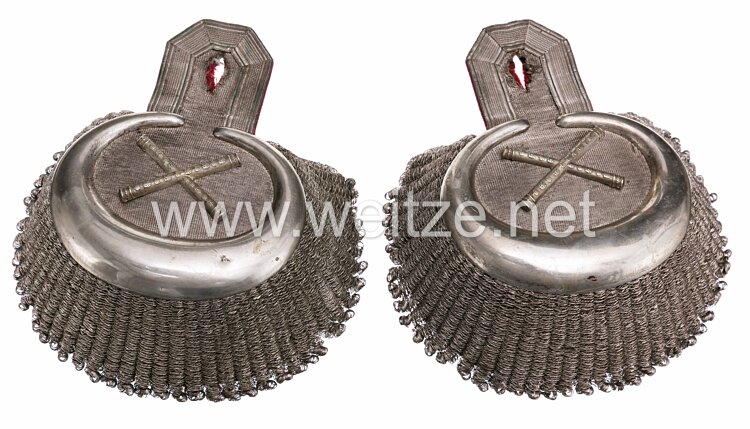
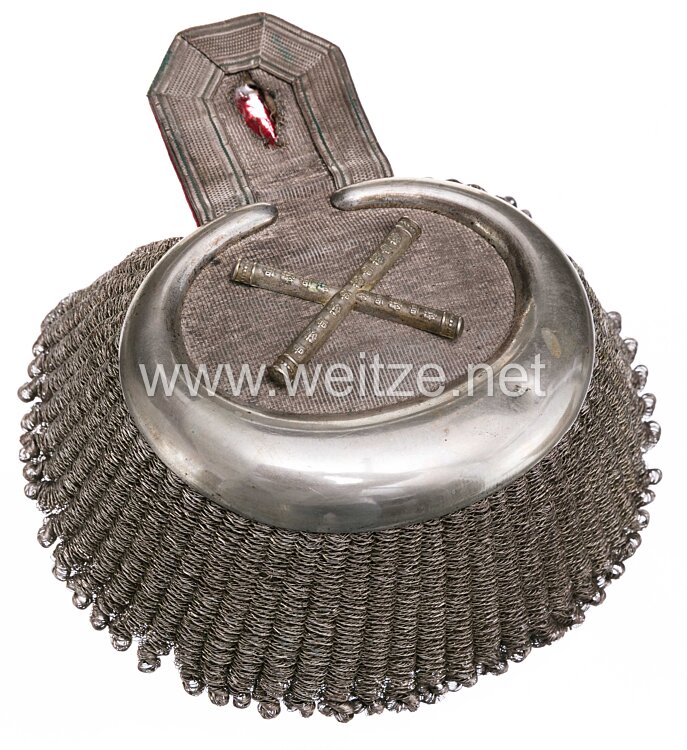
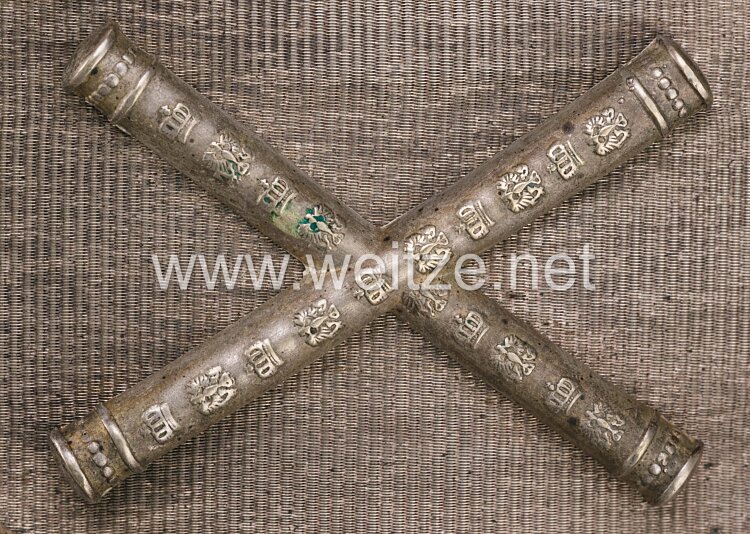
The present Generalfeldmarschall epaulettes of the Kingdom of Saxony represent one of the rarest military rank insignia in German history. Their extraordinary rarity derives from a remarkable historical fact: the Kingdom of Saxony bestowed the highest military rank of Generalfeldmarschall (Field Marshal) upon only two individuals in its entire history. Consequently, only two pairs of such Saxon Generalfeldmarschall epaulettes could have existed in official use.
These epaulettes belonged to King Georg of Saxony (1832–1904), who was born on August 8, 1832, in Pillnitz and died there on October 15, 1904. As the third son of Prince Johann of Saxony, Georg pursued a distinguished military career. In the 1866 war, he commanded the 1st Cavalry Brigade. During the Franco-Prussian War of 1870–71, he initially commanded the 1st Infantry Division No. 23, before assuming command of the XII Army Corps on August 19, 1870, which he led until March 29, 1900. On June 15, 1888, Prince Georg was promoted to Generalfeldmarschall, becoming the second Saxon to achieve this highest military rank. Following his brother's death, he ascended the Saxon throne on June 19, 1902, and reigned as King until his death in 1904.
The only other Saxon Generalfeldmarschall was Georg's elder brother, Crown Prince Albert of Saxony (1828–1902), who was elevated to this rank on July 11, 1871. Albert was the first non-Prussian Generalfeldmarschall of the German Empire and became King of Saxony in 1873. The fact that only these two brothers from the House of Wettin ever bore the rank of Saxon Generalfeldmarschall underscores the historical significance of these epaulettes.
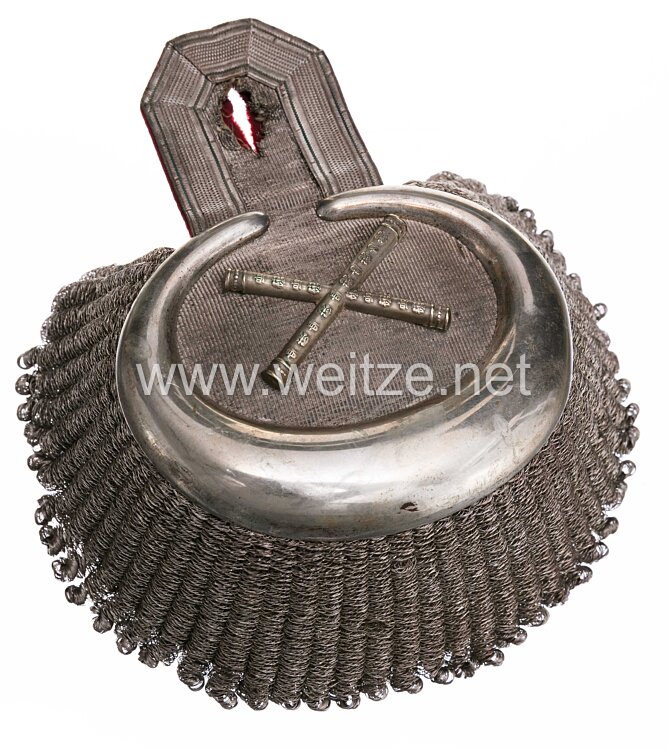
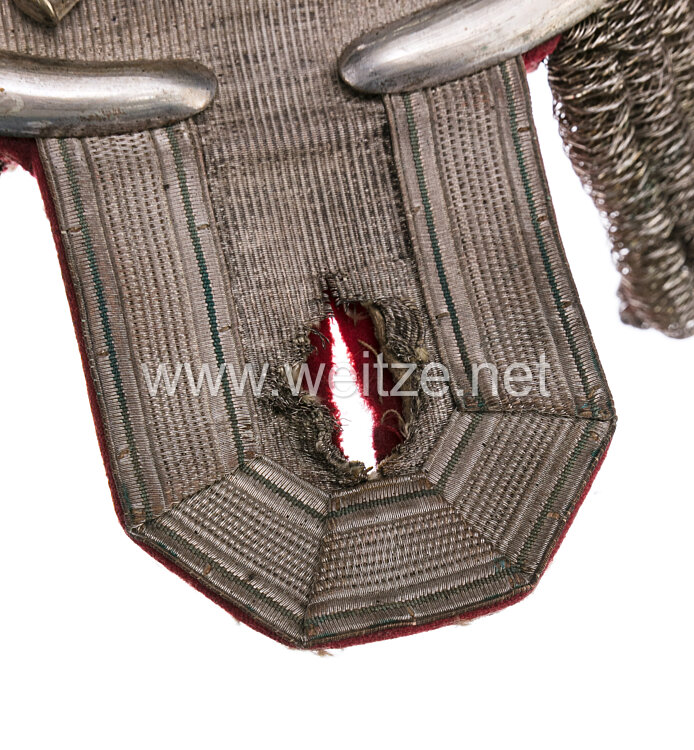
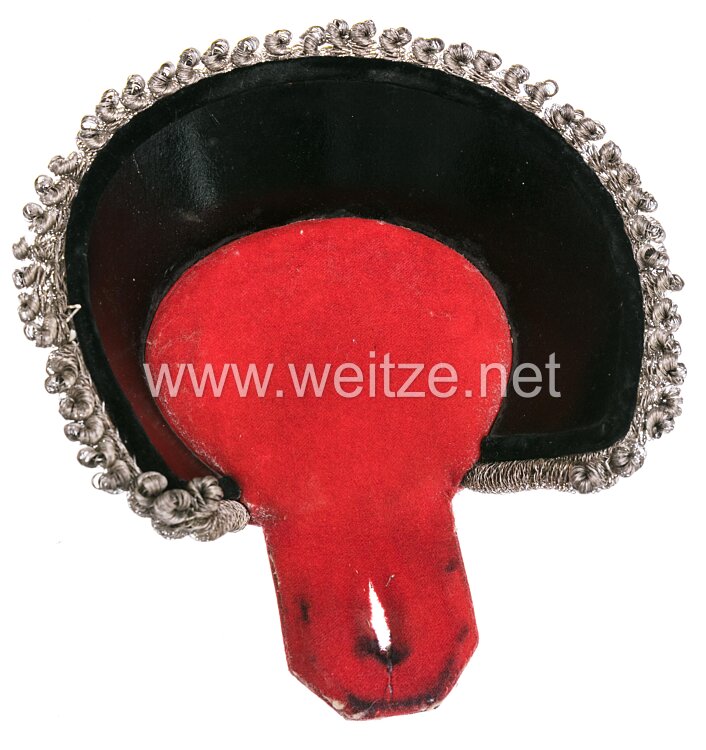
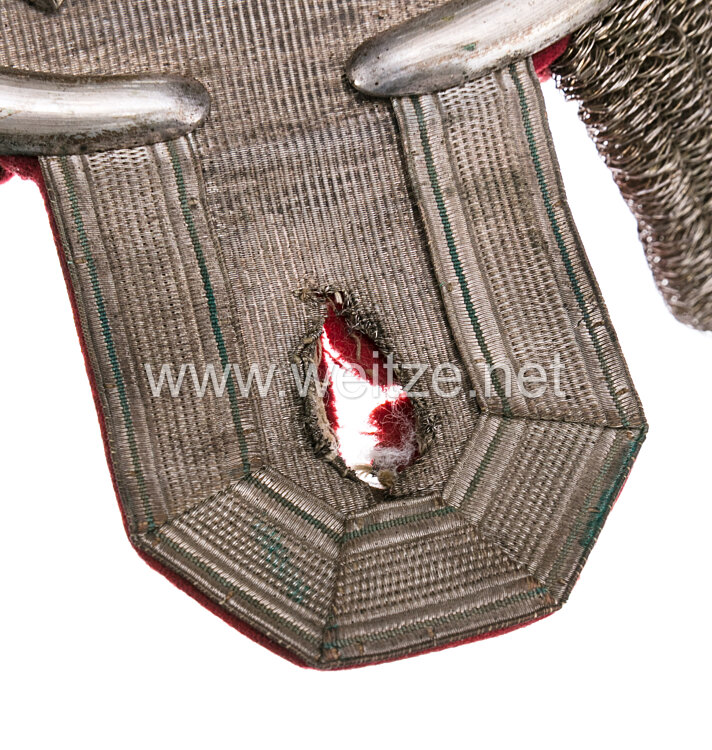
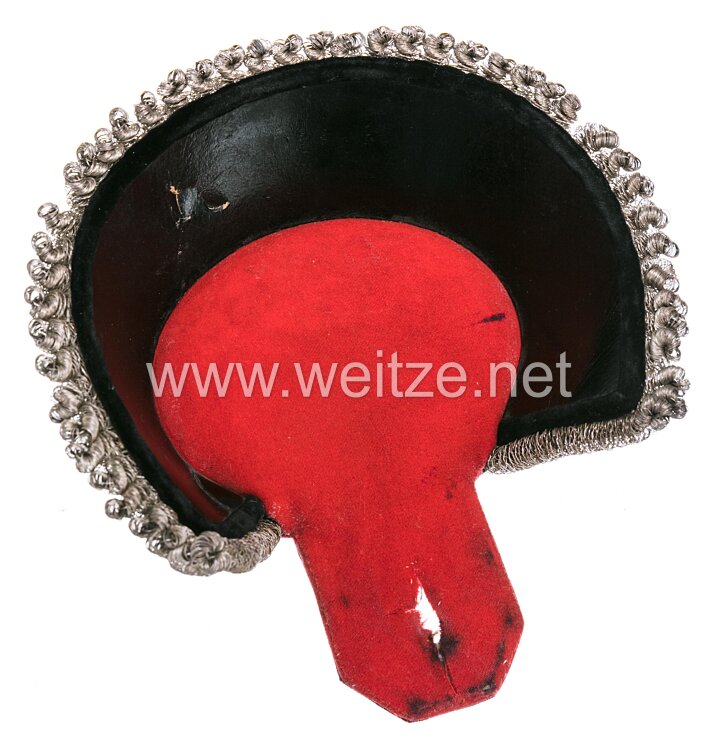
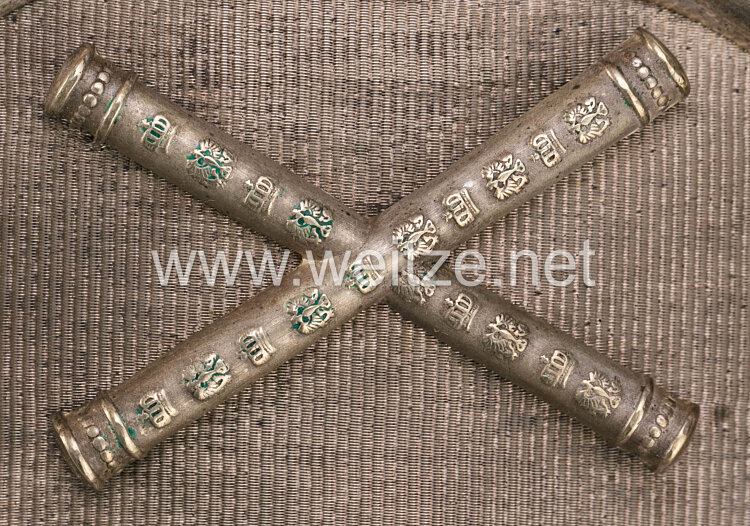
The epaulettes themselves were manufactured circa 1900 and display the characteristic features of the Saxon variant of this highest rank insignia. They consist of silver bullion fields in a waffle pattern (Waffelfelder), silver crescents (Halbmonde), and applied crossed silver field marshal batons (Generalfeldmarschallstäbe). Rigid silver bullion fringe (starre Kantillen) and red cloth backing (rote Tuchunterlage) complete the elaborate handwork. One source mentions the manufacturer as G. A. Westmann, Dresden, a court supplier to the Royal Saxon court.
The Kingdom of Saxony maintained its own army within the framework of the German Empire. After defeat in the 1866 Austro-Prussian War, Saxony joined the North German Confederation in 1867. Subsequently, the Saxon army adopted Prussian regulations and organization while retaining distinct Saxon insignia and traditions. Saxon epaulettes followed Prussian regulations after 1867, though the Saxon variant exhibited a significant distinction: while Prussian and other German Generalfeldmarschall epaulettes typically employed gold materials, Saxon examples utilized silver in accordance with Saxon military tradition.
The Saxon XII Army Corps was integrated into the German Imperial Army but retained its Saxon identity. As Generalfeldmarschall and General Inspector as well as Commander of the XII Army Corps until 1900, Georg wore these large parade epaulettes with his full dress uniform (Waffenrock). Smaller versions existed for daily service.
After the end of the German Empire in 1918 and the abolition of the monarchy in Saxony, such ceremonial military insignia lost their official function. The described pair appears in auction records, indicating it survived as a historical artifact and collector's item. The extreme rarity of these Saxon Generalfeldmarschall epaulettes continues to be emphasized in modern militaria markets, making them an exceptional testimony to Saxon military history within the German Empire.