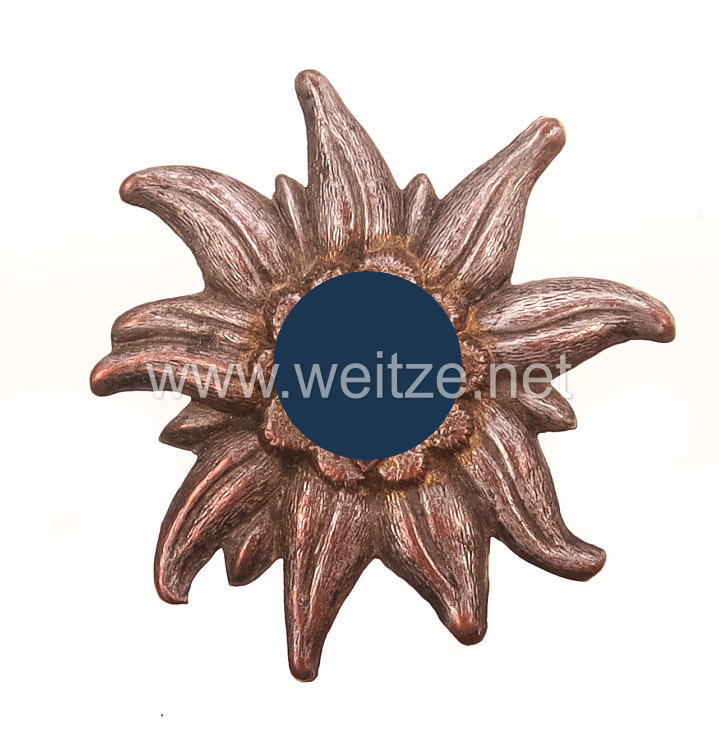
SA Cap Edelweiss of SA-Gruppe Hochland

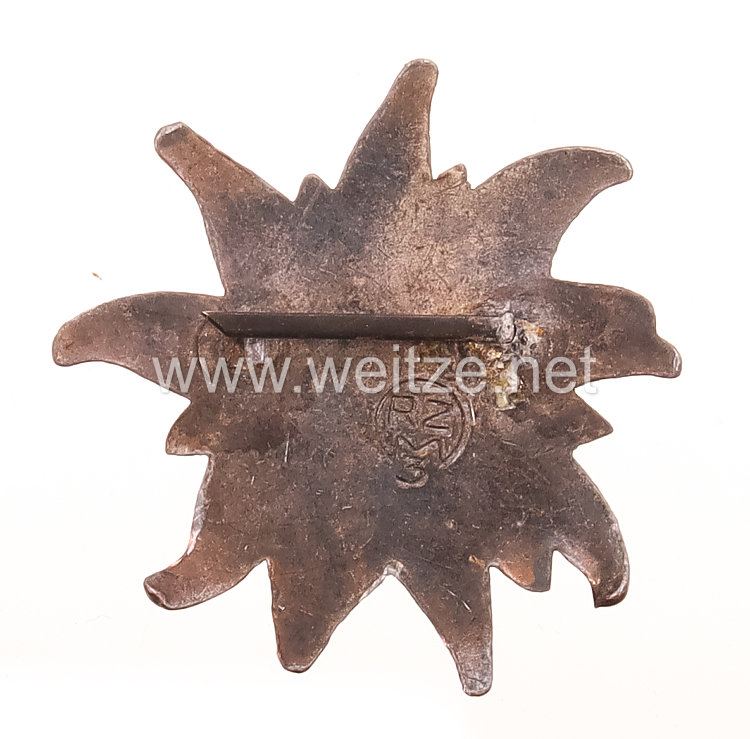
with swastika in center, reverse with RZM manufacturer marking. Clip-on type, 1 split pin missing, condition 2
433118
140,00

SA Cap Edelweiss of SA-Gruppe Hochland

The SA cap edelweiss of the SA-Gruppe Hochland represents a characteristic badge of the National Socialist Sturmabteilung (Storm Troopers), specifically worn by members of the SA-Gruppe Hochland. This edelweiss badge combines traditional Alpine symbolism with the uniformed hierarchy of the SA and documents the regional organizational structure of this paramilitary formation.

The Sturmabteilung (SA) was founded in 1920/21 as a security force for the NSDAP and developed into the largest paramilitary organization of the National Socialist movement by 1933. After the seizure of power in 1933, the SA temporarily numbered over four million members. The organization was divided into various groups, with the SA-Gruppe Hochland covering southern Germany, particularly Bavaria and adjacent Alpine regions.

The edelweiss as a symbol has a long tradition in the Alpine regions and was already used by mountain troops and alpine associations in the 19th century. The adoption of this symbol by the SA-Gruppe Hochland was intended to emphasize the connection to Bavarian-Alpine tradition while simultaneously highlighting regional identity within the National Socialist movement. The central swastika in the edelweiss demonstrates the ideological penetration of even traditional symbols.

The production and distribution of SA badges was subject to strict regulations from 1929 onwards. The Reichszeugmeisterei (RZM) system was introduced to control the quality and authenticity of party and SA insignia. The RZM assigned manufacturer numbers to authorized companies, which were affixed to the reverse of badges. This was intended to ensure uniformity and curb the black market in counterfeit badges.

The described cap edelweiss was attached to the cap using a clip system, a typical fastening method for metal badges of this type. The two split pins on the reverse were threaded through eyelets in the headgear and bent over. The absence of one pin, as with this specimen, is a common condition for such historical objects.

The SA uniform was strictly regulated and defined in various service regulations. The characteristic brown shirt, the armband with swastika, as well as various badges and rank insignia formed a complex system of visual hierarchy. Cap badges such as the edelweiss were special identifiers not worn by all SA members but marking specific affiliations.

After the so-called “Röhm Putsch” of June 30, 1934, when the SA leadership was murdered on Hitler's orders, the SA lost considerable significance. The SS increasingly assumed the role as the regime's most important paramilitary organization. Nevertheless, the SA continued to exist until 1945 and retained its uniforms and badges, even though its political and military importance declined sharply.

From a historical perspective, such badges document the complex organizational structure of the NS regime and the connection between regional tradition and totalitarian ideology. The edelweiss, originally an apolitical Alpine symbol, was instrumentalized and merged with National Socialist symbolism. This appropriation of traditional symbols was characteristic of NS propaganda, which attempted to feign continuity and rootedness.

The collection and research of such historical objects today serves exclusively for scientific documentation and education about the NS period. In Germany, the public display of NS symbols is generally prohibited, with exceptions for education, science, and historical documentation. Museums and research institutions preserve such objects as testimonies of a criminal dictatorship.

The RZM system left extensive documentation that today helps historians trace the production, distribution, and use of NS insignia. Manufacturer marks often enable precise dating and attribution of objects, which is of considerable value for historical research.

r