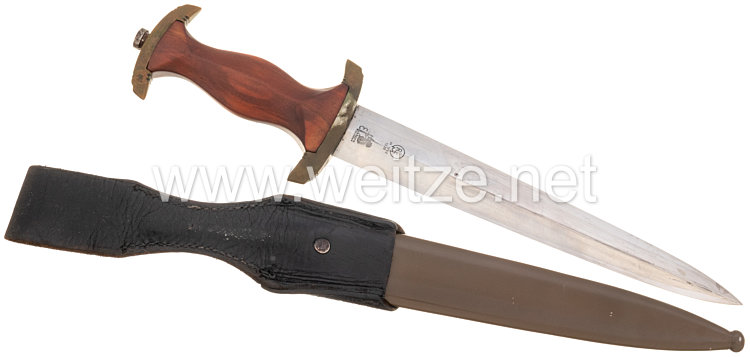
Third Reich National Political Educational Institution (NPEA) Dagger for Training Leader at the N.P.E.A. School Backnang

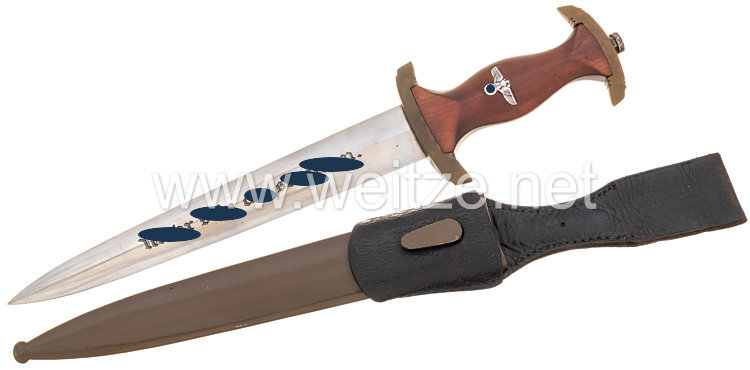
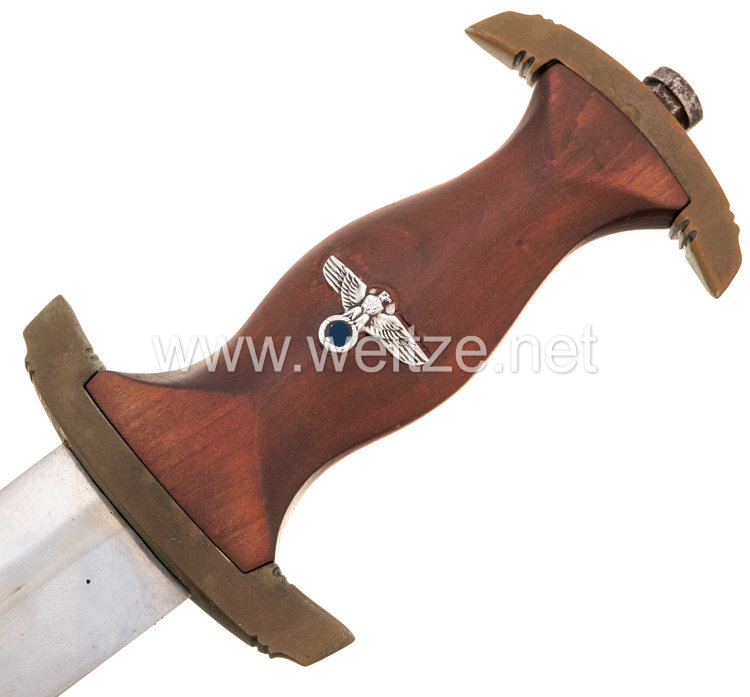
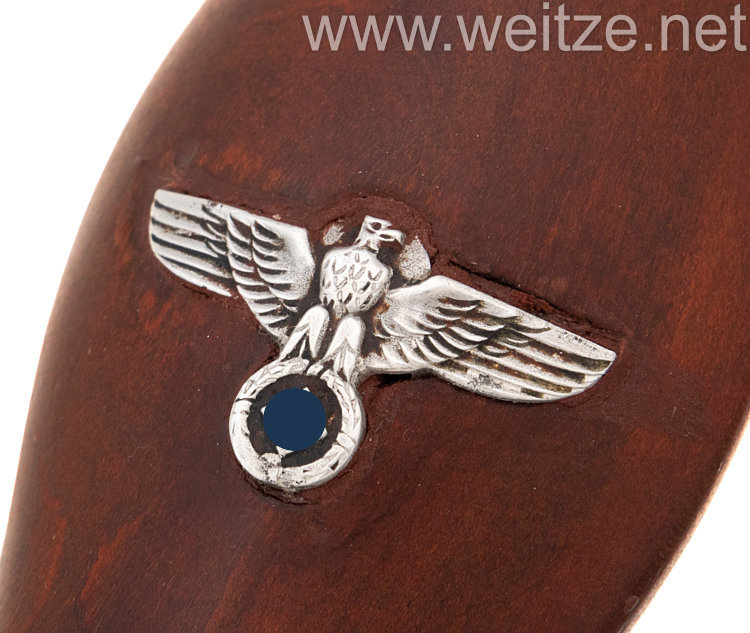
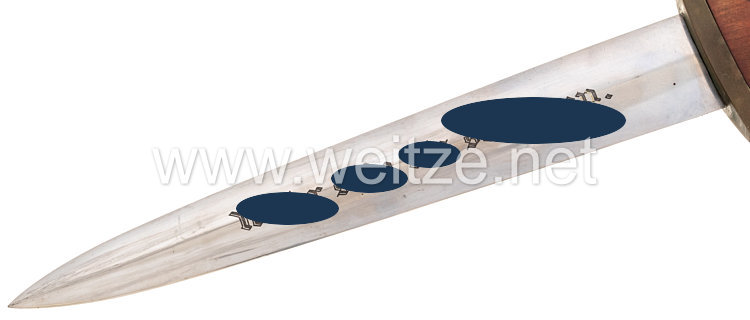
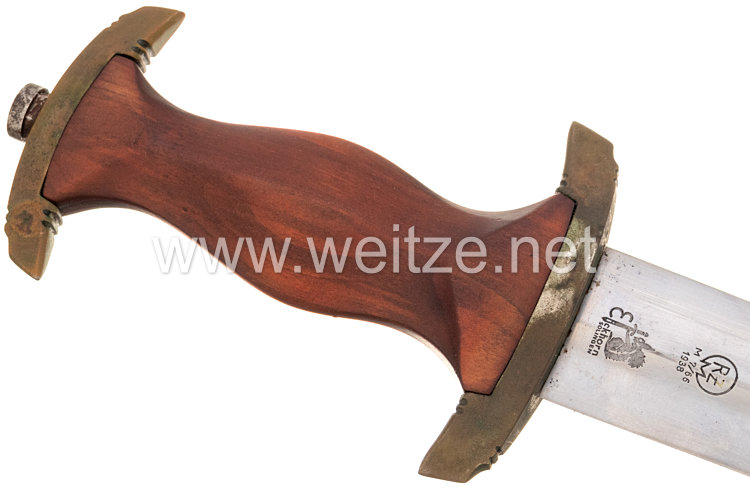
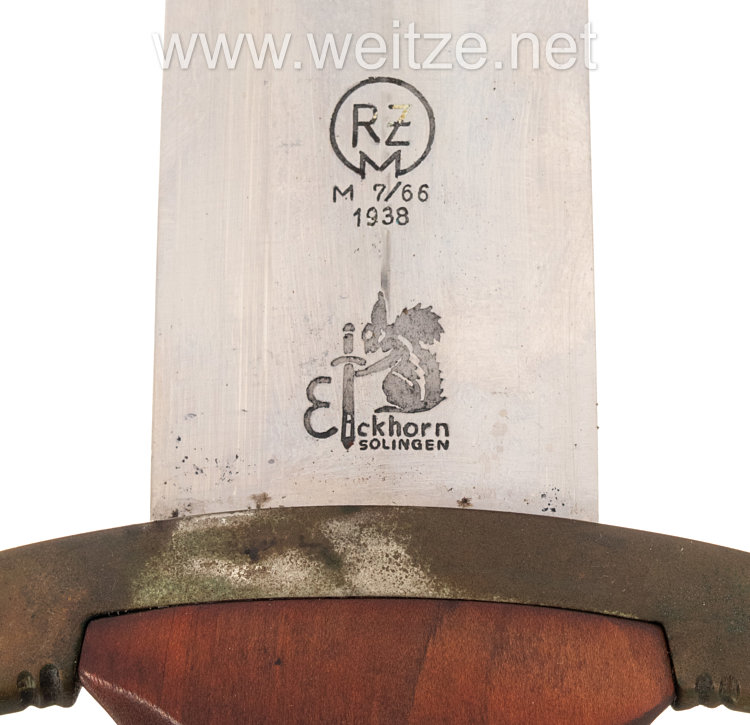
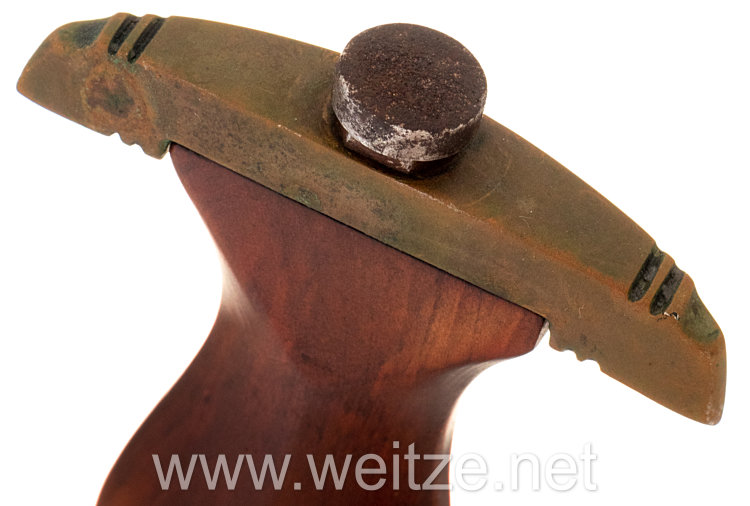
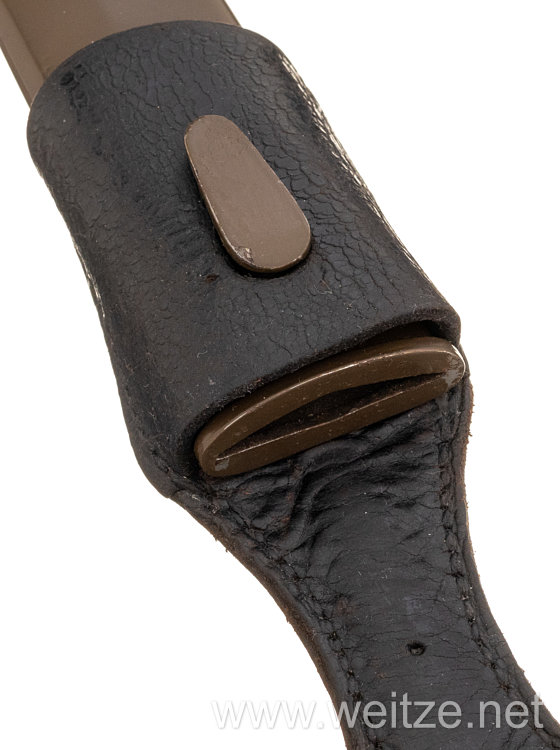
Fine manufacture by Eickhorn Solingen, circa 1938. Clean blade with motto “Mehr sein als Scheinen” (To be more than to appear) and double maker's mark “Eickhorn Solingen” and RZM code “M7/66 1938”, tarnished nickel fittings, underside of crossguard numbered “B 22”, brown wooden grip is undamaged, however the eagle was reinserted (period modification), very fine olive-green lacquered scabbard without dents or pressure marks with belt shoe. A rare dagger in good condition
366817
6.100,00

Third Reich National Political Educational Institution (NPEA) Dagger for Training Leader at the N.P.E.A. School Backnang

This dagger represents a fascinating yet deeply problematic chapter of German educational history: the Nationalpolitische Erziehungsanstalten (NPEA), also known as Napola. These institutions were elite schools of the National Socialist regime, established from 1933 onwards to cultivate the future leadership cadre of Nazi Germany.

The NPEA Backnang was founded in 1938 in the Württemberg town of Backnang and was one of approximately 40 such institutions throughout the German Reich and later occupied territories. These schools were directly subordinate to the Reich Ministry of Education and pursued the goal of molding youth in the National Socialist spirit into an elite that would be physically hardened, ideologically steadfast, and capable of leadership.

The dagger itself was manufactured by the renowned firm Eickhorn Solingen, a traditional company that had been producing high-quality edged weapons since 1865. The blade bears the motto “Mehr sein als Scheinen” (To be more than to appear), a maxim rooted in Prussian virtues originally attributed to the House of Hohenzollern. This inscription symbolized the educational ideals of the NPEA: strength of character, modesty, and inner values were to be more important than outward appearance.

The RZM marking M7/66 identifies the manufacturer according to the coding system of the Reichszeugmeisterei (Reich Equipment Master), which from 1929 served as the central procurement and inspection office for equipment of the NSDAP and its organizations. The year 1938 precisely dates the manufacture to the year of the founding of NPEA Backnang.

Particularly noteworthy is the designation as a Schulungsleiter dagger (training officer's dagger). Within the hierarchical structure of the Napola, there were various functionaries, including training officers who were responsible for ideological and political education. These functionaries received special daggers as symbols of their status and responsibility. The numbering “B 22” on the crossguard suggests individual assignment within the Backnang institution.

The construction of the dagger follows typical features of the period: a brown wooden grip with applied eagle emblem, nickel-plated fittings, and a characteristic olive-green lacquered scabbard. This color scheme differed from other dagger types of the Third Reich and was specific to NPEA versions. The belt clip allowed wearing on shoulder straps or belts during official occasions and ceremonies.

The Napola education combined traditional academic subjects with intensive physical training and National Socialist indoctrination. The students, designated as Jungmannen (young men), lived in boarding school-like structures and were organized according to military principles. Training officers played a central role in the ideological formation of the adolescents.

NPEA Backnang was located in the buildings of the former Oberrealschule and operated until the end of the war in 1945. Like all Napola institutions, it was dissolved by the Allies after the German capitulation. The institutions were classified as instruments of Nazi ideology during denazification and completely disbanded.

From today's perspective, such daggers are important historical witnesses of an era that serves as a warning about the instrumentalization of education and youth by totalitarian regimes. They document the penetration of all societal spheres with National Socialist symbolism and hierarchy. The craftsmanship quality of Eickhorn manufacture contrasts with the problematic function of these objects as status symbols in an inhumane system.

The contemporary replacement of the eagle emblem documented in this specimen could have various causes: damage, loss, or possibly post-war attempts to “defuse” or modify such objects. Such details make each surviving specimen an individual historical document with its own history.

These artifacts remain significant for historical research and education, helping us understand the comprehensive nature of Nazi indoctrination and the role of symbolism in maintaining hierarchical structures within totalitarian systems. They serve as tangible reminders of a dark period in history and the importance of vigilance against the manipulation of youth and educational institutions.

r