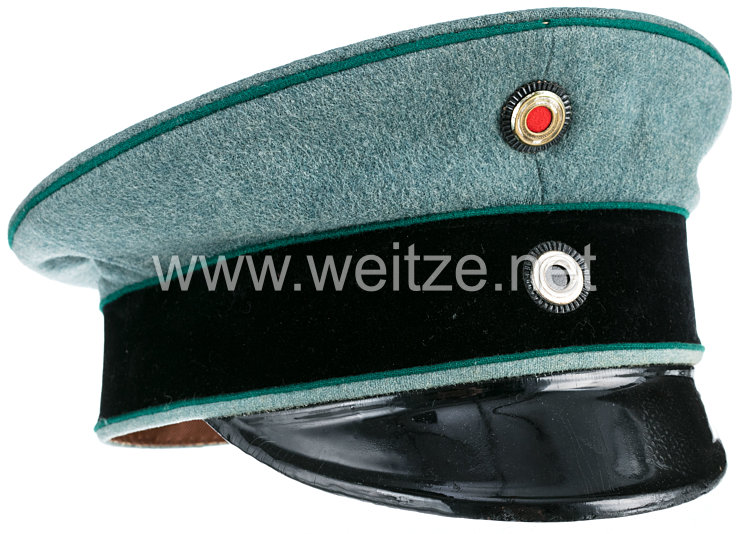
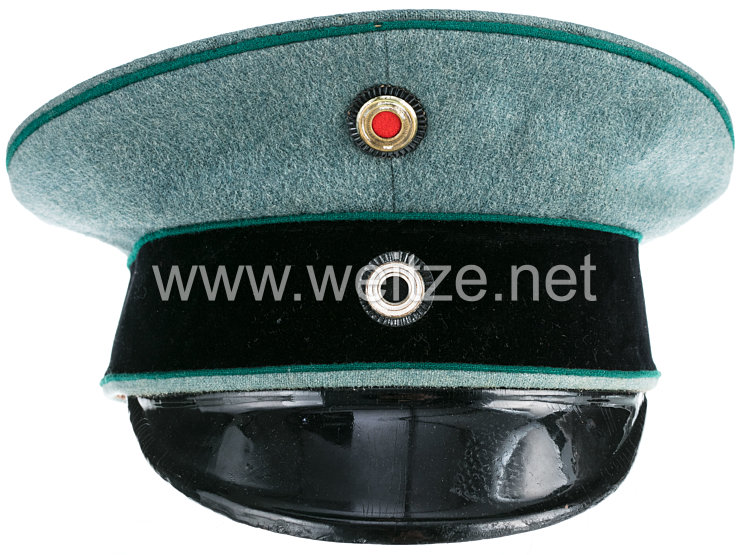
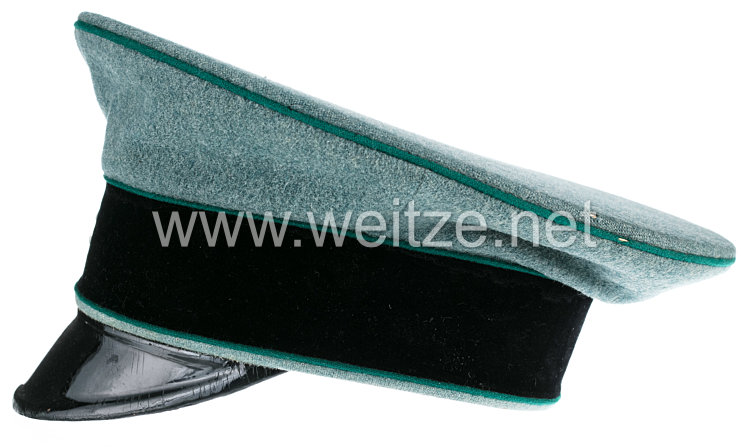
Prussian Field Gray Visor Cap for an Officer in the Garde-Schützen-Bataillon
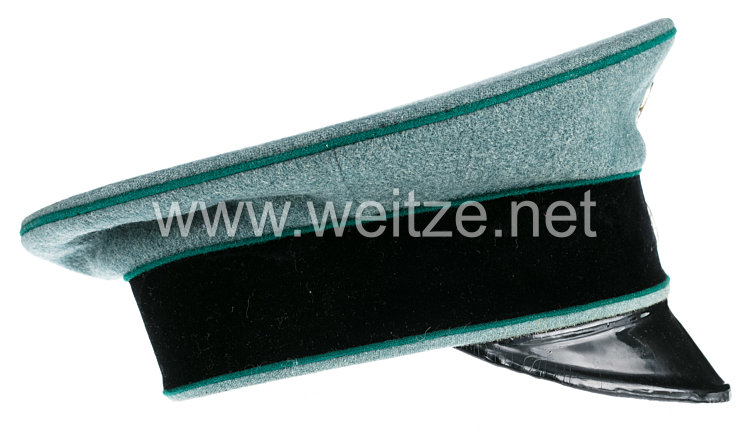
This field-gray officer's visor cap of the Garde-Schützen-Bataillon represents a significant transition in Prussian military history during World War I. This luxury-execution example, manufactured around 1915, embodies the high artisanal standards of the German military effects industry of that era while reflecting the tactical lessons learned from the first months of the war.
The Garde-Schützen-Bataillon was an elite unit of the Prussian Army, founded in 1814 with a long and glorious tradition. As part of the Guard Infantry Division, it reported directly to the Kaiser and enjoyed high prestige. The Schützen (riflemen) were originally conceived as light infantry but evolved into a highly specialized unit with special duties in reconnaissance and combat operations.
The introduction of the field-gray uniform marked a revolutionary break with the centuries-old military tradition of colorful parade uniforms. As early as 1907/1910, the Prussian Army had begun replacing the conspicuous Prussian blue with the more inconspicuous field gray. This decision was based on experiences of modern warfare, where long-range repeating rifles and machine guns dominated the battlefield. The necessity of camouflage now outweighed the traditional significance of regimental colors for identification in combat.
The officer's visor cap described here displays characteristic features of its era. The black velvet trim band was a traditional distinguishing mark of officers, while the green piping indicated the branch color of the riflemen. This color coding enabled quick identification of the troop type: green traditionally stood for Jäger and rifle units, as opposed to white (infantry), red (artillery), or yellow (cavalry).
Particularly noteworthy are the two cockades on the cap. The upper, black-and-white cockade represented Prussia, while the lower one, in the Imperial colors of black-white-red, symbolized allegiance to the German Empire. This dual symbolism reflected the federal structure of the German Reich, in which individual states retained their military contingents but served under unified supreme command.
The luxury execution of this cap is characteristic of officer pieces that did not come from military depots but were privately commissioned from renowned court suppliers. Officers were required to procure their own equipment, which led to considerable quality differences. Wealthy officers from the nobility or upper bourgeoisie could afford pieces of the highest craftsmanship, made from the finest materials with particular attention to detail.
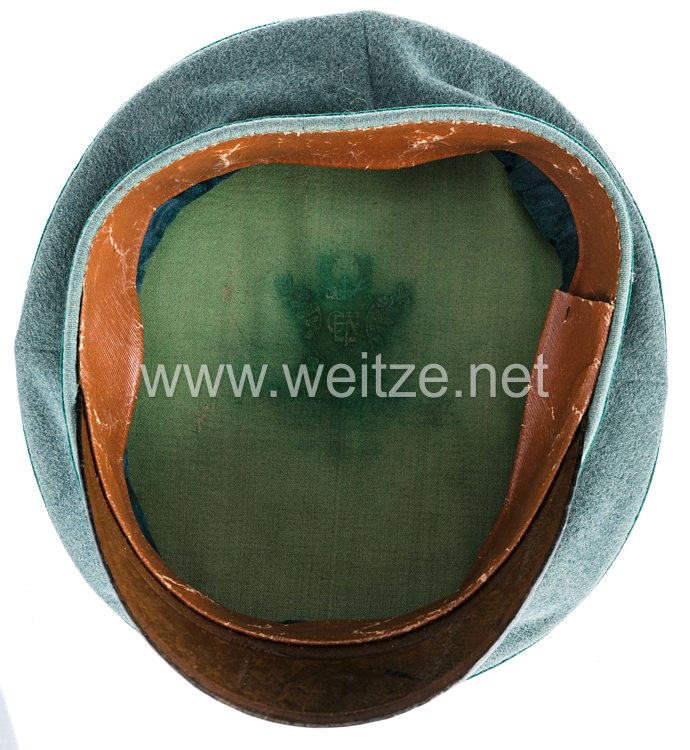
The blue-green lining and brown sweatband inside the cap correspond to the usual standards of the time. The black-lacquered visor not only provided protection from sun and rain but also reduced distracting reflections. The indication of size 56 and the manufacturer inside was common practice and today often enables attribution to specific manufactories.
The dating to around 1915 is particularly significant. By this time, World War I had already evolved from the expected short campaign into a grueling war of attrition. The initial euphoria had given way to the harsh reality of modern industrial warfare. Nevertheless, high-quality uniform pieces continued to be manufactured, as military aesthetics and class affiliation remained important elements of officer culture.
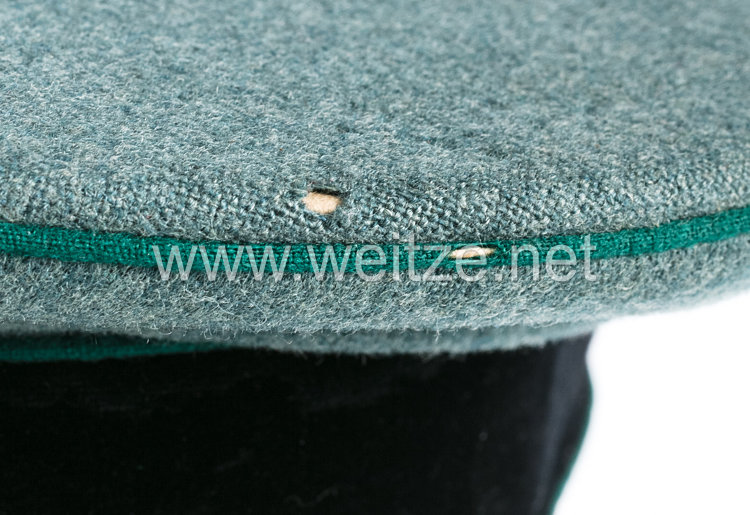
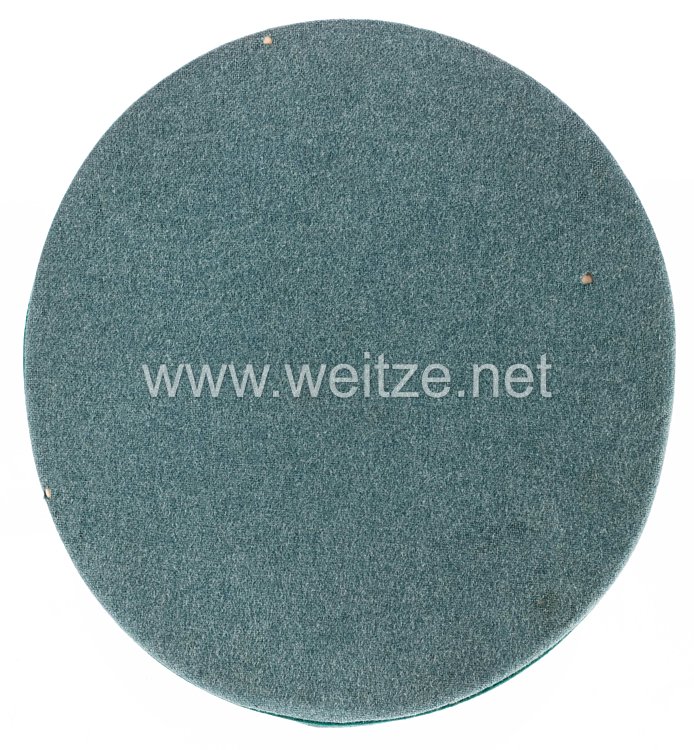
The described light signs of wear and minimal moth damage suggest that this cap was actually worn, though possibly not at the front. Many officers owned multiple caps for different occasions – more robust field caps for front-line service and finer examples for service in rear areas or for representative occasions.
Such visor caps are today significant military-historical artifacts. They document not only the artisanal craftsmanship of their time but also the social structure of the Imperial Army, the significance of tradition and class consciousness, and the transformation of military requirements. As an object of militaria research, such a cap offers insights into materials, manufacturing techniques, wearing habits, and the development of military clothing regulations during World War I.
The Garde-Schützen-Bataillon itself saw extensive action during the Great War, participating in major battles on both the Western and Eastern Fronts. Officers wearing such caps led their men through the unprecedented challenges of modern warfare, where traditional military virtues met the brutal reality of industrial-scale combat. This cap thus serves as a tangible link to that transformative period in military history.