German Order Cross 1st Class with Swords

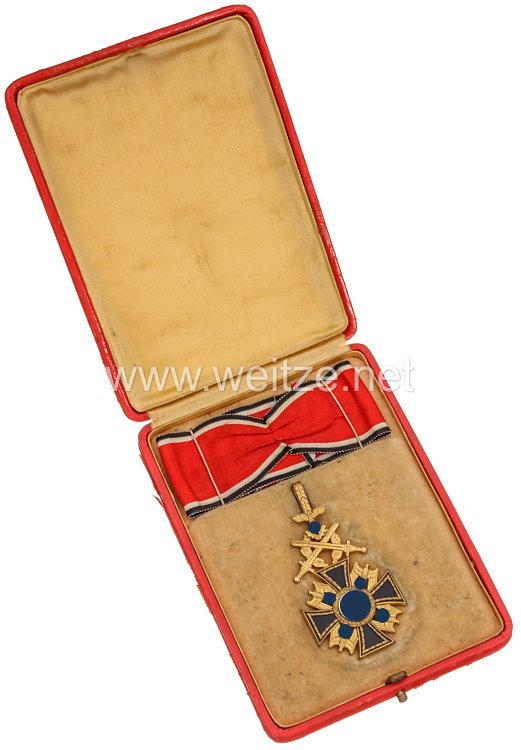
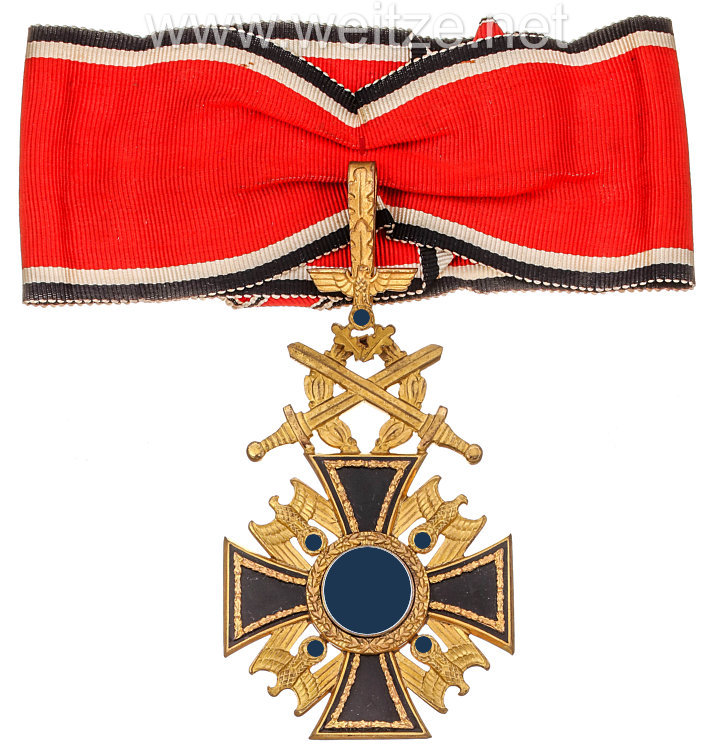
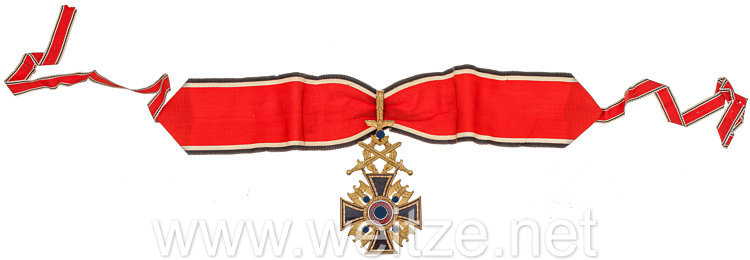
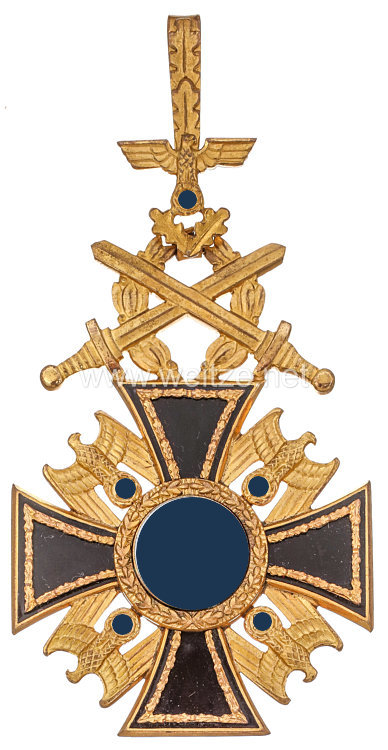
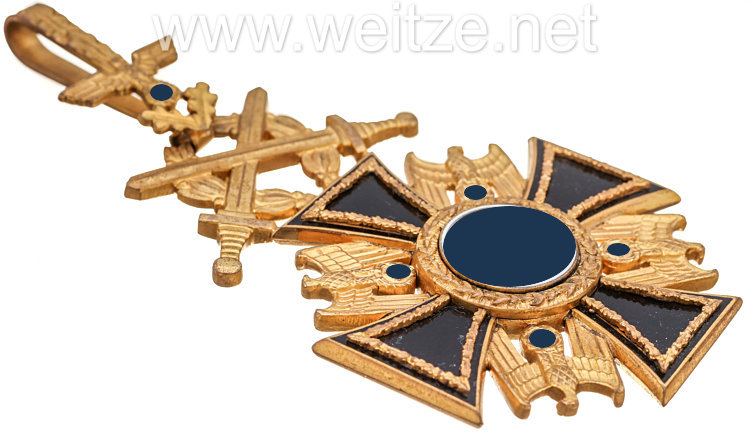
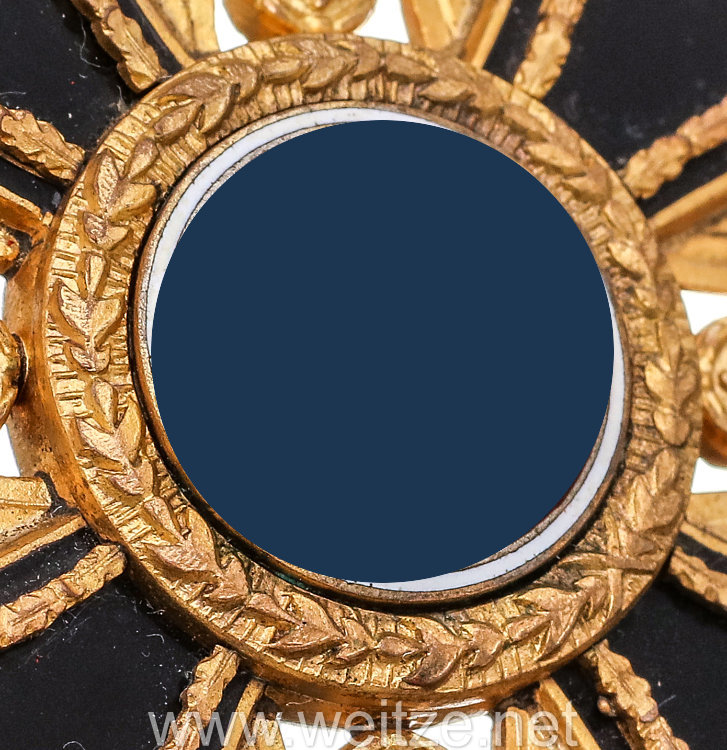
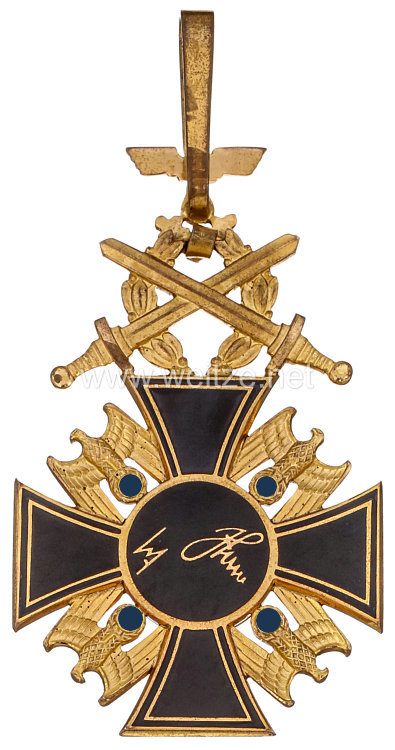
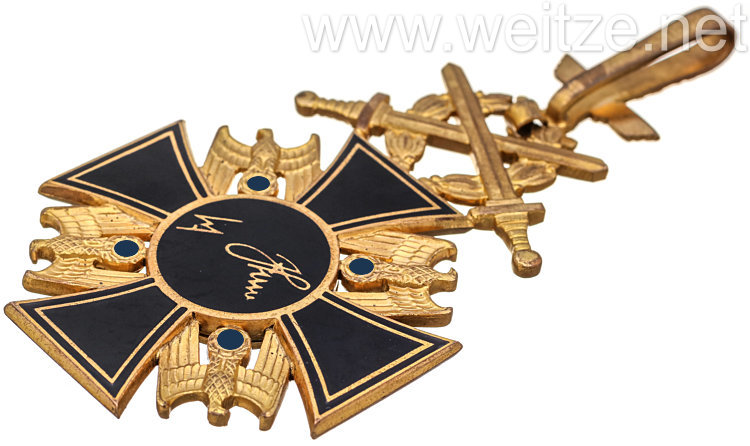
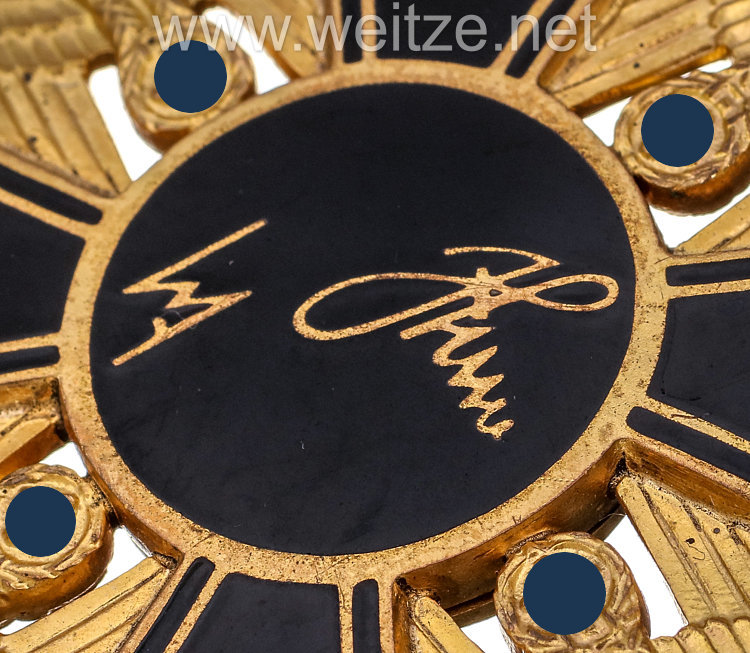
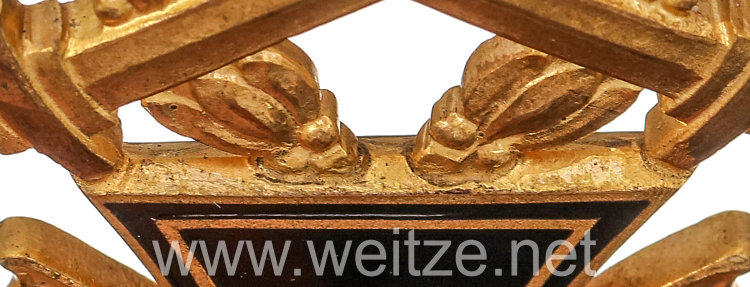
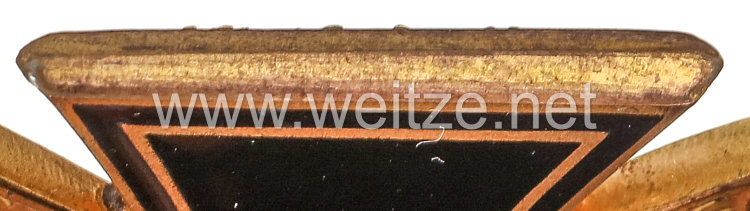
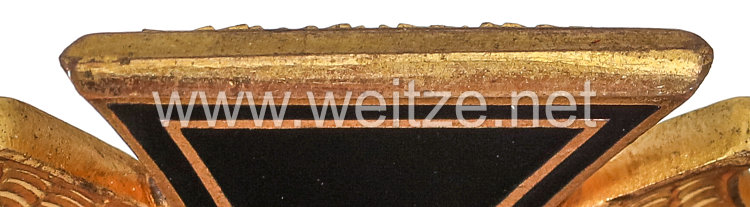
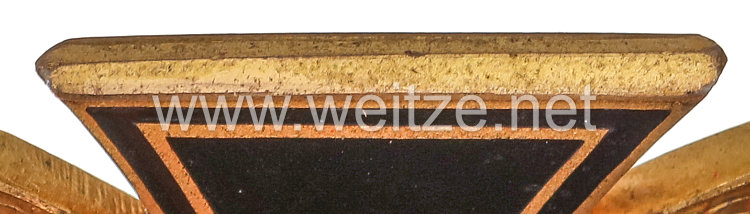
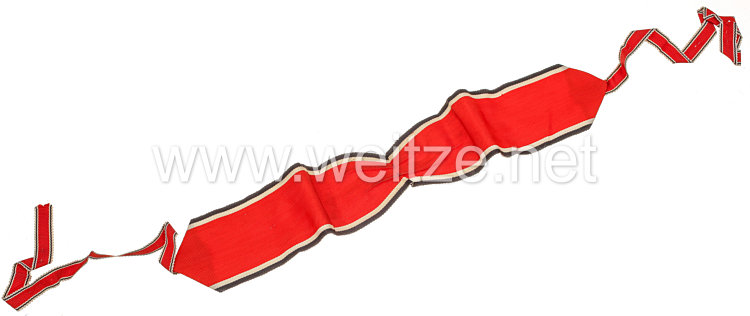
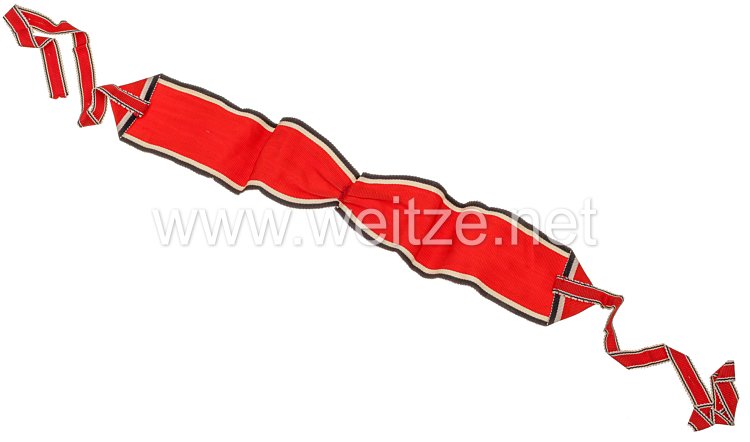
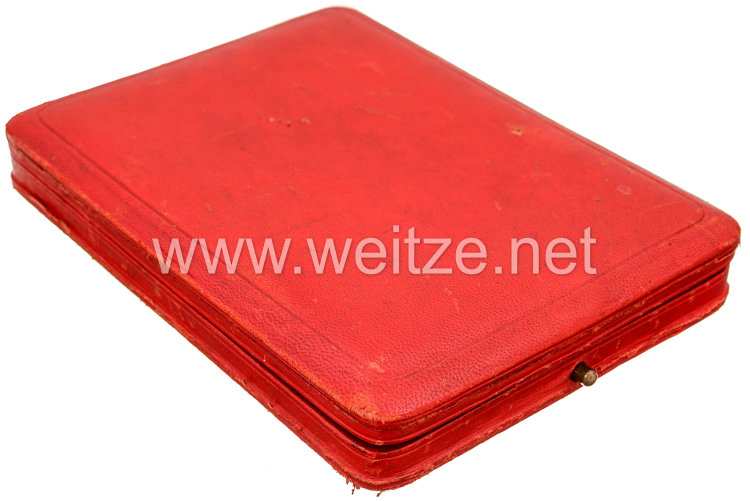
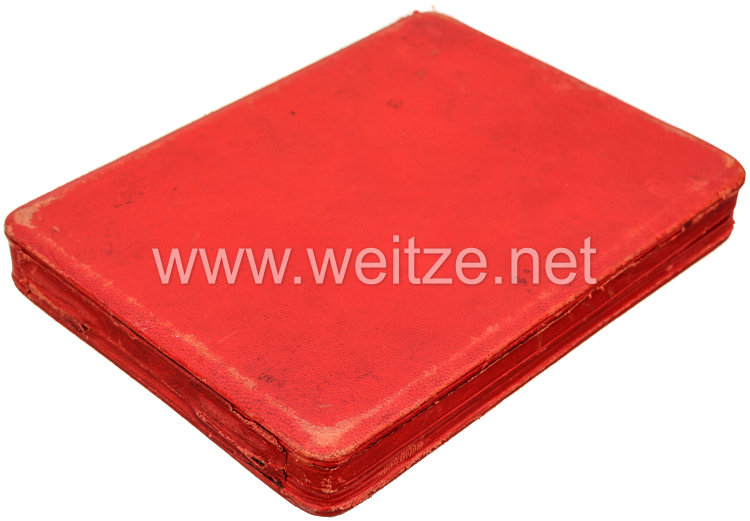
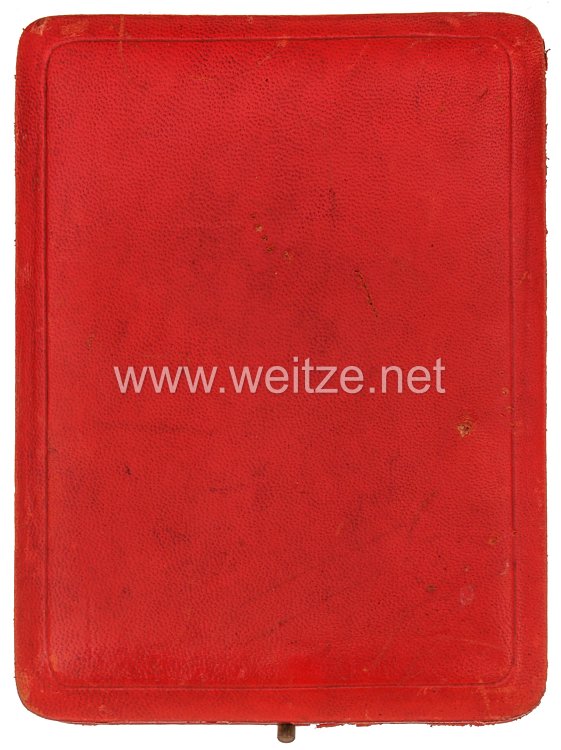
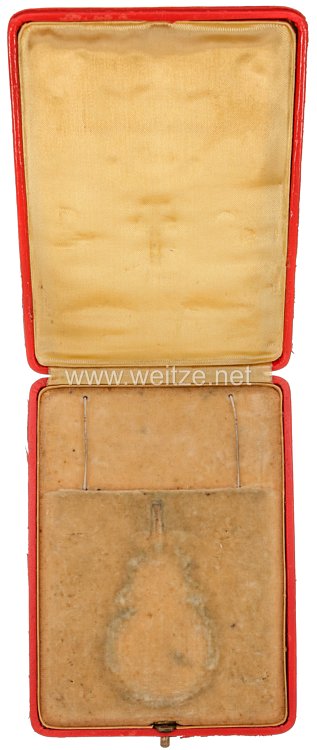
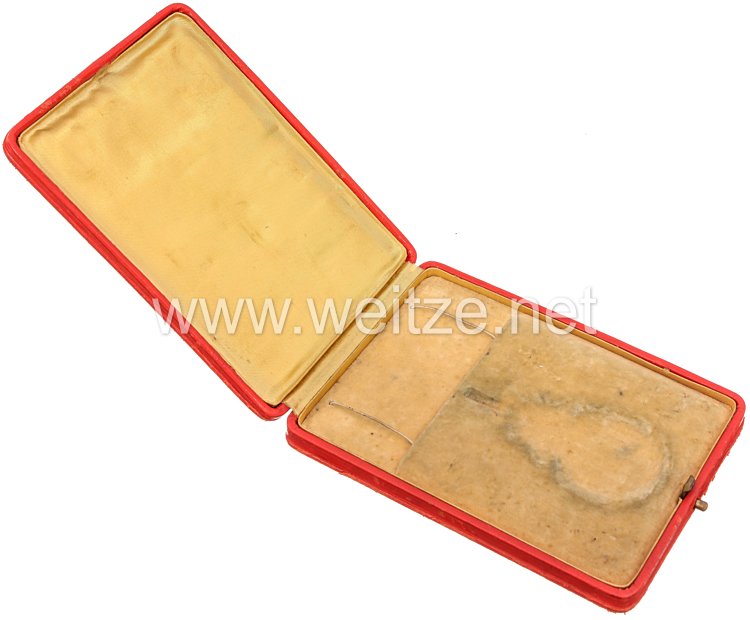
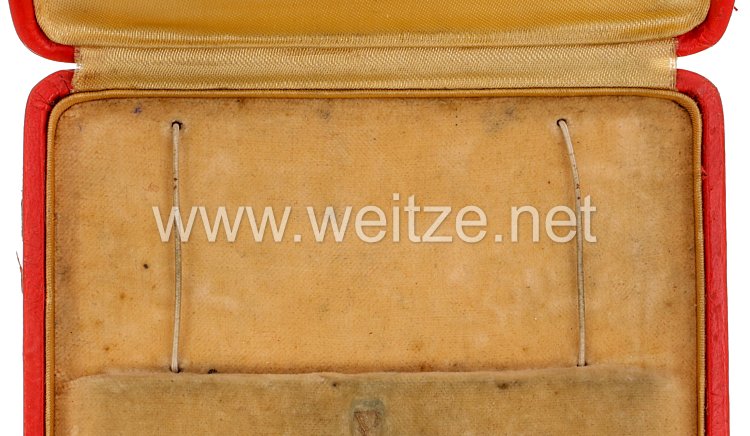
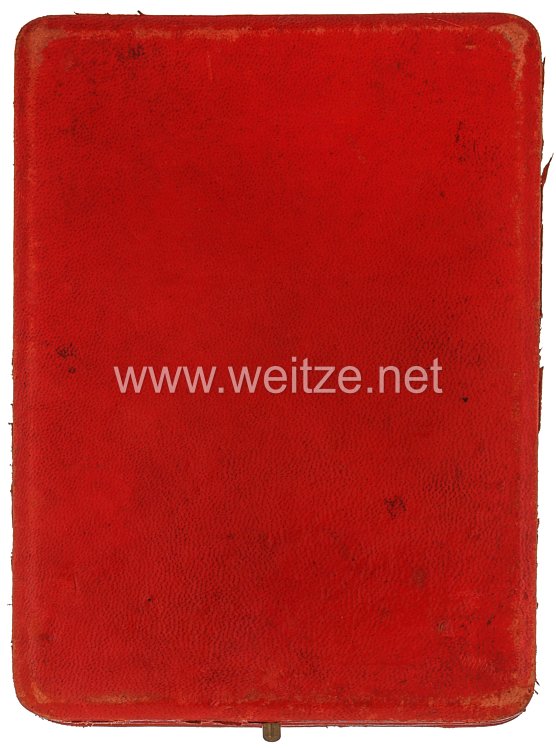
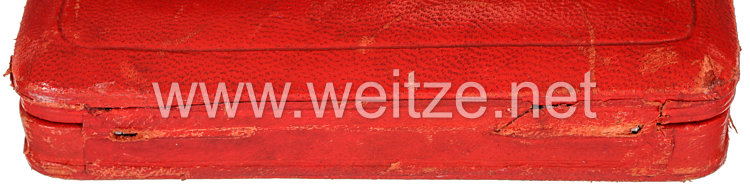
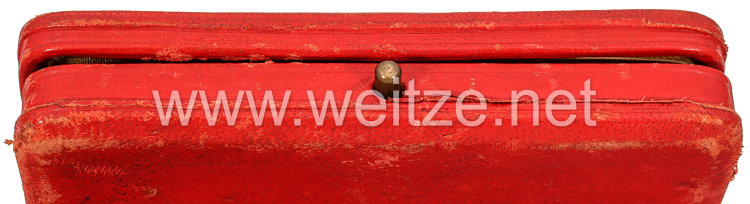
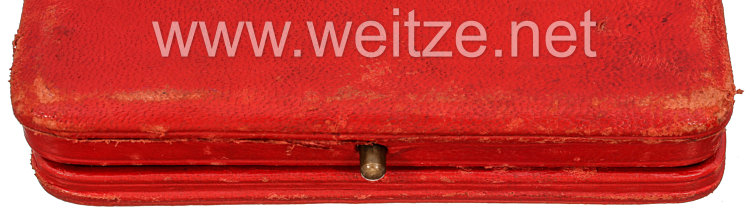
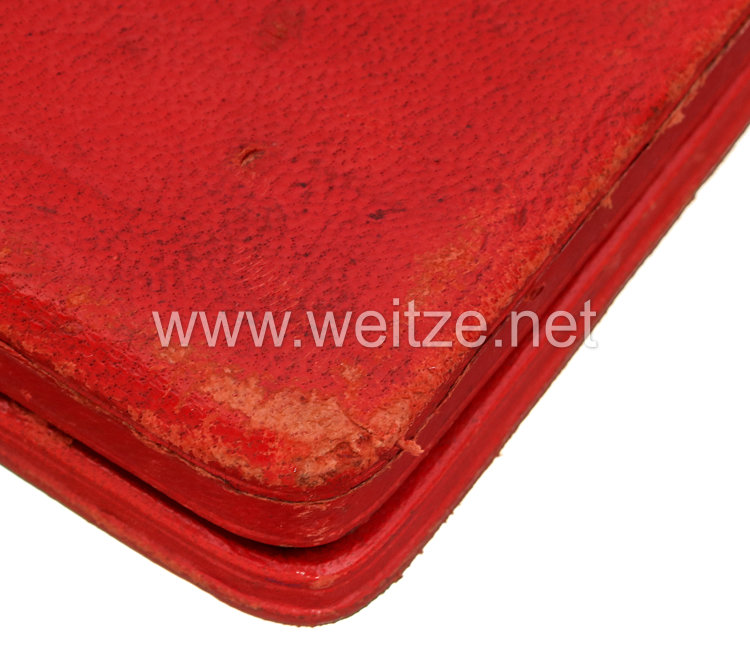
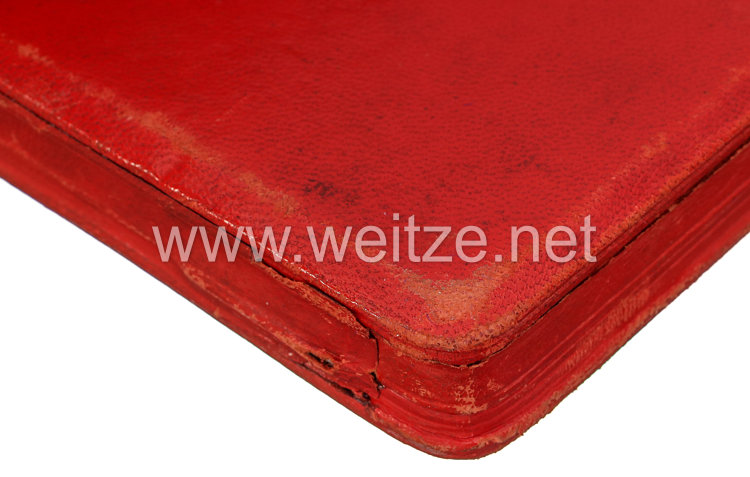
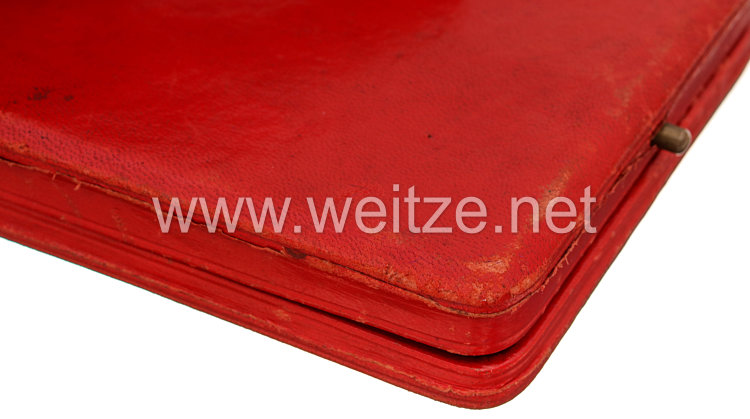
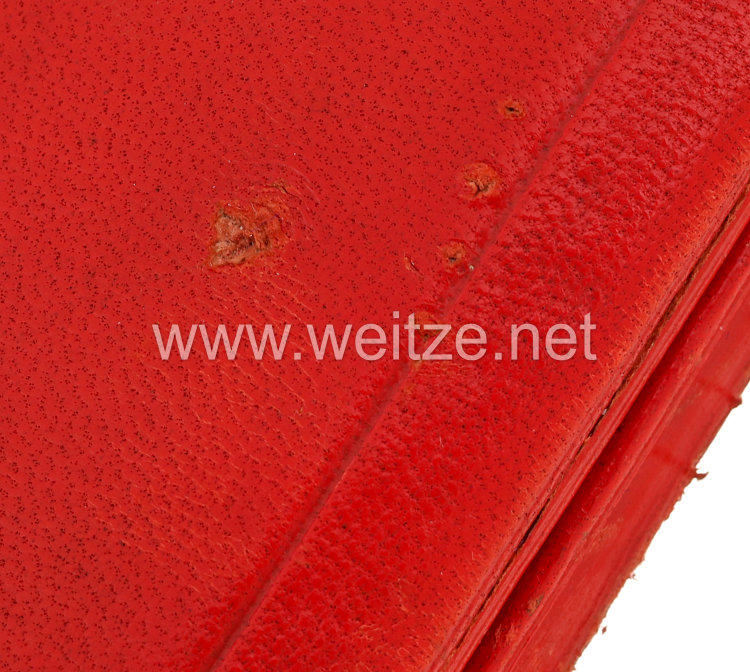
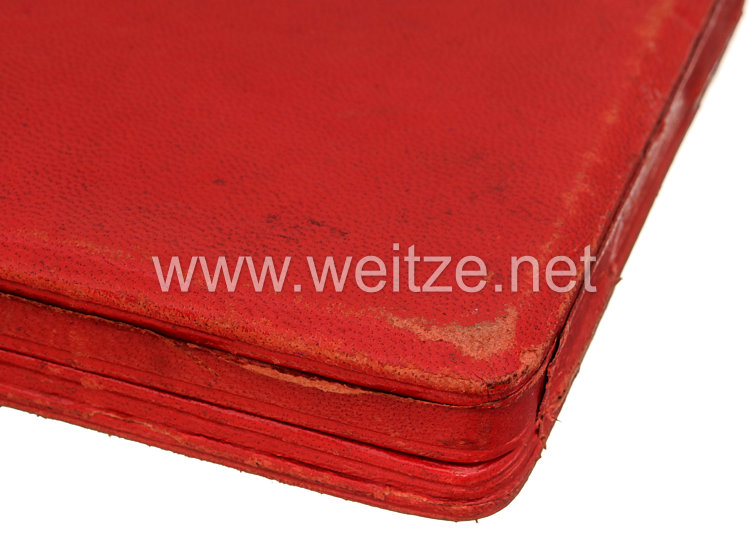
The neck cross of fire-gilt bronze, dimensions 96 x 48 mm (with suspension ring). Finely enameled on both sides, on the obverse center the golden honor badge of the NSDAP, on the reverse the facsimile signature “Adolf Hitler”. Oak leaf bands applied on both sides of the cross arms. The 1st Class with Swords features the neck suspension with the national eagle above the laurel wreath with crossed swords. Complete with long ready-made neck ribbon. Complete in original presentation case of red leather, interior with cream-colored silk lining, light velvet insert with recess for the order, upper compartment for the neck ribbon held by 2 elastic bands. The order is unworn in very good condition, the case with light signs of age, condition 2. Extremely rare.
The German Order is one of the rarest and highest decorations of the Third Reich, with only 10 awards total. The 1st Class with Swords was awarded only 2 times:
1. Dr. Fritz Todt, Reich Minister for Armaments and Munitions, on February 12, 1942 posthumously.
2. SS-Obergruppenführer Reinhard Heydrich, Deputy Reich Protector in Bohemia and Moravia, Chief of the Reich Security Main Office, on June 9, 1942 posthumously.

We assume that this piece is one of the actually awarded pieces based on the fact that this is the only known 1st Class with Swords located in its accompanying presentation case. Since only 2 badges were awarded and we know the owner of the second badge (Heydrich family), the badge offered for sale originates, according to our research, from the estate of Dr. Todt.

338115

The German Order – 1st Class Cross with Swords

The German Order (Deutscher Orden) stands as one of the rarest and most significant decorations of Nazi Germany. Conceived as the supreme distinction of the NSDAP, it was Adolf Hitler’s personal award, bestowed only upon those whose services to the state, party, and people he deemed worthy of the highest recognition. Its history is inseparable from the regime’s ideology, its deliberate invocation of medieval Germanic knighthood, and the striking fact that the overwhelming majority of its recipients received it posthumously.

Institution and Design

The German Order was instituted by Adolf Hitler on 6 November 1936 as the highest distinction of the Nazi Party, though the first award was not made until 12 February 1942. The design was the work of Benno von Arent, and the sole manufacturer was Wilhelm Deumer in Lüdenscheid. Notably, the order was never officially promulgated with formal statutes. Hitler used the posthumous award to Fritz Todt to institute it without formal ceremony.

The order drew its symbolic inspiration from the medieval Teutonic Order (Deutscher Orden), evoking Germanic knighthood and eastern conquest. This deliberate historical allusion was intended to elevate the decoration above ordinary party distinctions and imbue it with an aura of centuries-old tradition. Hitler declared it ranked above all German decorations.

Physical Description

The piece under consideration is a neck cross (Halskreuz) of the pattée or formy type, with arms curving outwards and straight ends. It is crafted from bronze, fire-gilded (feuervergoldet), and measures 96 × 48 mm including the suspension ring. The cross measures 48.5 mm across the arms, with arm ends of 21 mm, and a central medallion of 20.5 mm. Both sides are finely enameled in black opaque enamel.

The front center bears the Golden Party Badge (Goldenes Ehrenzeichen der NSDAP), while the reverse carries the facsimile signature “Adolf Hitler.” In the quarters between the cross arms, four eagles with semi-furled wings clutch oak leaf wreaths with swastikas in their talons. Oak leaf bands (Eichenlaubband) are applied to the cross arms on both sides. The eagles on the reverse bear a plain matt gilt finish.

The suspension of the 1st Class with Swords is distinguished by the national eagle (Hoheitsadler) above a laurel wreath with crossed swords. The swords measure 38 mm from pommel to blade tip. The ribbon is 45 mm wide and follows the Blood Order pattern: a 2 mm black edge stripe, a 2 mm white stripe, and a 37 mm brick-red central panel. The original presentation case (Verleihungsetui) is of red leather, lined with cream-colored silk, with a light velvet insert containing a depression for the order and an upper compartment for the neck ribbon held by two elastic bands.

Award Criteria and Classification

The German Order was reserved for “duties of the highest order to the state and party.” Hitler regarded it as his personal decoration, to be bestowed only upon those whose services he personally deemed worthy. The addition of swords denoted wartime military service or death in service. The order was originally planned in several grades: the 1st Class (Golden Cross with Laurel Wreath and Swords) as a neck order, the 2nd Class with Oak Leaves and Swords (awarded once, to Konstantin Hierl), the 2nd Class as a neck order, and the 3rd Class as a pin-on decoration.

The Two Recipients of the 1st Class with Swords

The 1st Class with Swords was awarded only twice throughout the entire existence of the Third Reich, both times posthumously:

Dr. Fritz Todt, Reichsminister for Armaments and Munitions, builder of the Autobahn, and founder of the Organisation Todt, received the order on 12 February 1942. Todt had been killed in an aircraft accident on 8 February 1942. Hitler bestowed the decoration at Todt’s state funeral in the Mosaiksaal of the New Reich Chancellery, placing it upon the funeral pillow. This constituted the very first conferral of the German Order.

SS-Obergruppenführer Reinhard Heydrich, Deputy Reich Protector in Bohemia and Moravia and Chief of the Reich Security Main Office (RSHA), received the order on 9 June 1942. Heydrich had been attacked on 27 May 1942 as part of Operation Anthropoid and succumbed to his injuries on 4 June 1942.

Other Recipients and the “Dead Hero Order”

In total, eleven individuals received the German Order in its various grades. Beyond Todt and Heydrich, the recipients included Adolf Hühnlein (22 June 1942, posthumous), Viktor Lutze (7 May 1943, posthumous), Adolf Wagner (17 April 1944, posthumous), Josef Bürckel (3 October 1944, posthumous), Rudolf Schmundt (7 October 1944, posthumous), Konstantin Hierl (24 February 1945), Karl Hanke, Karl Holz, and Artur Axmann (4 January 1944). Of these eleven, only Konstantin Hierl and Artur Axmann survived the war. This grim statistic earned the decoration the cynical nickname “the dead hero order.” Plans existed to award the German Order to Heinrich Himmler and Karl Dönitz, but Germany’s surrender intervened before conferral could take place.

A letter from Martin Bormann dated 3 May 1944 indicates that, according to Hitler’s written order, 20 pieces of each grade were to be produced.

Post-War Legacy and Collector Significance

Following the end of the Second World War, the production, public display, and distribution of the German Order were prohibited in the Federal Republic of Germany. The decoration is regarded as one of the rarest and most historically significant awards of the Nazi regime. After the National Prize for Art and Science, it is considered the second rarest decoration of Nazi Germany.

The extraordinary rarity of the 1st Class with Swords — only two awards, both to individuals who died in 1942 — renders any surviving example an object of the highest historical and numismatic significance. The presence of this piece in its original presentation case further elevates its importance for serious collectors and researchers of Third Reich militaria.

r