Luftwaffe - Small Document Group for a Woman as Reich Employee

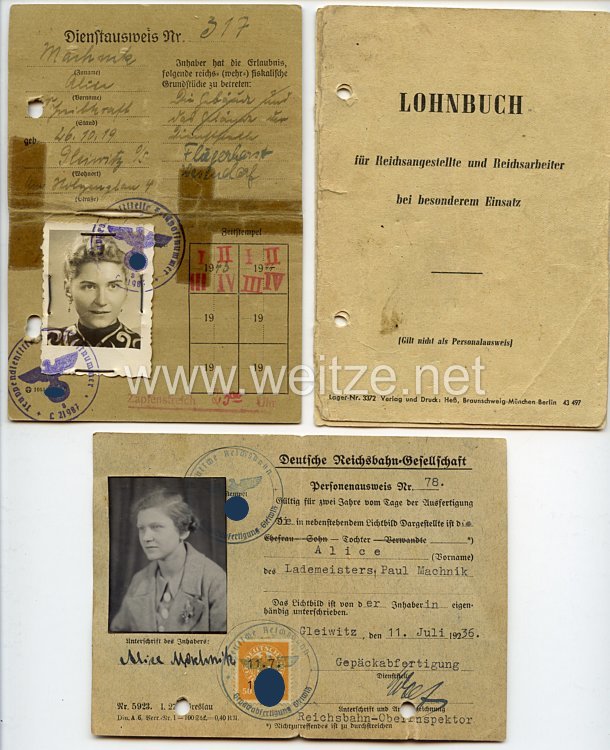
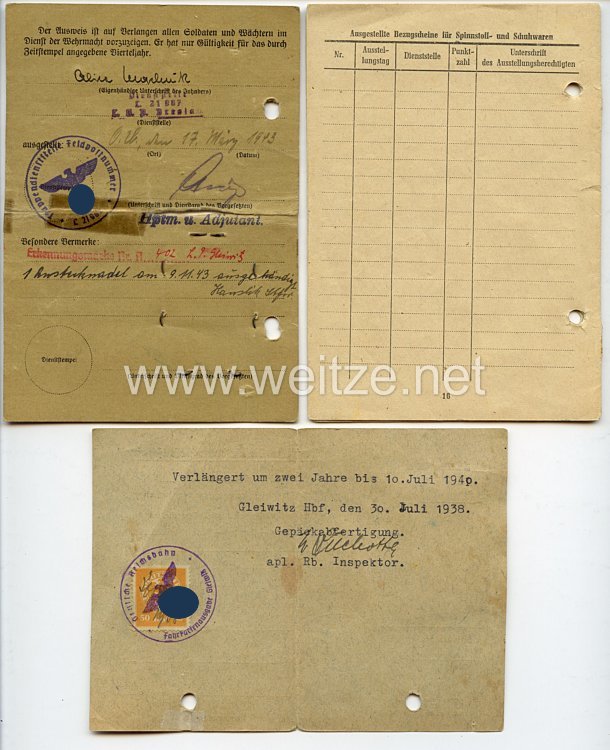
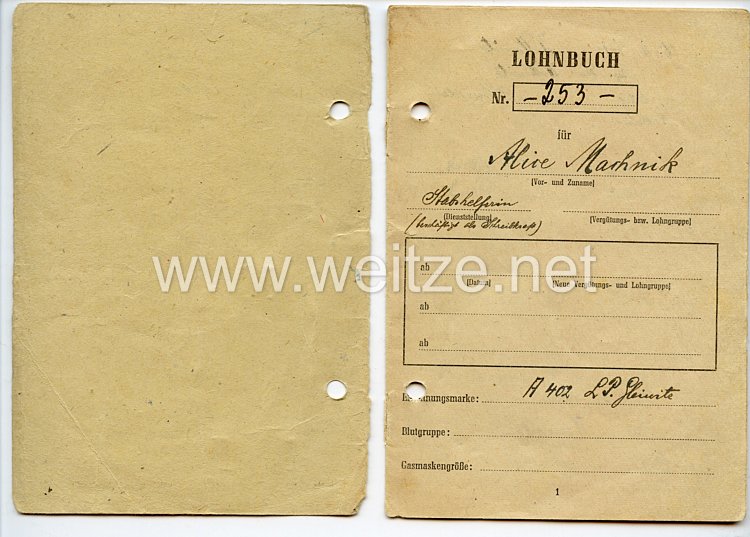
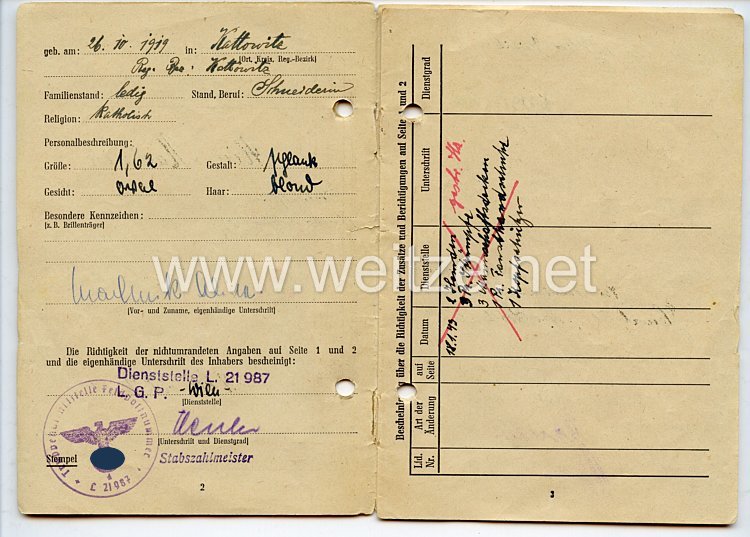
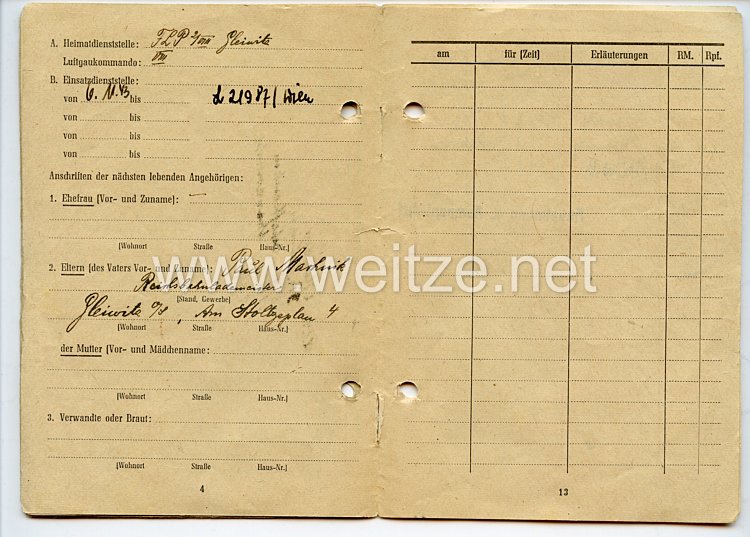
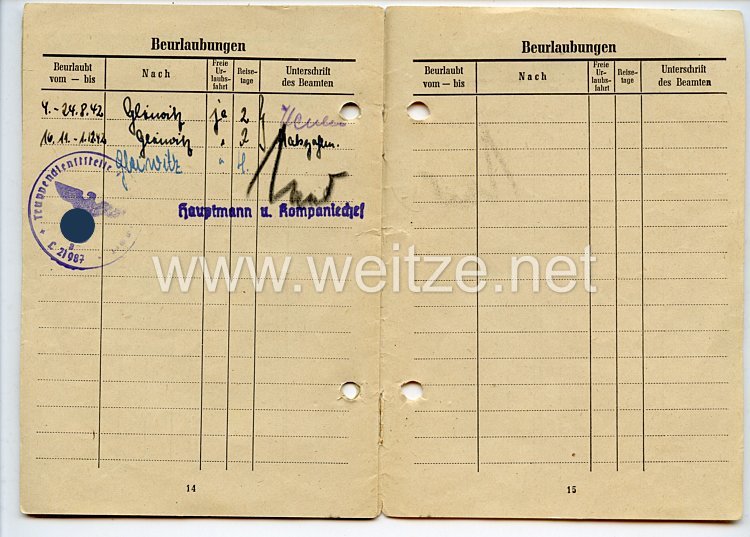
Deutsche Reichsbahn-Gesellschaft - Personal identification card, issued in Gleiwitz on 11.7.1936, with photo; Service identification card as employee at Fliegerhorst Westendorf, with photo, issued by L.P.A. Breslau on 17.3.1943, recorded is the issuance of a lapel pin on 9.11.1943; Wage book for Reich employees and Reich workers in special deployment, issued by L.G.P. Wien, as Staff Assistant (employed as typist), unfortunately only the front cover page and pages 1-4 and 13-16 are present; hole-punched used condition.
323114
160,00

Luftwaffe - Small Document Group for a Woman as Reich Employee

This collection of documents provides a fascinating insight into the working life of a female civilian employee of the Luftwaffe during World War II. This group of identification cards and work documents chronicles the career of a woman who served as a Reich employee at Fliegerhorst Westendorf, exemplifying thousands of women who worked in similar positions in Nazi Germany.

The earliest document in the collection is from the Deutsche Reichsbahn-Gesellschaft (German State Railway Company), issued on July 11, 1936, in Gleiwitz (now Gliwice, Poland). Gleiwitz was a significant city in Upper Silesia and an important railway junction. The Reichsbahn employed hundreds of thousands of workers in the 1930s and was one of the largest employers in the German Reich. This personnel card documents the holder's early career in the civilian economy before she later transferred to Luftwaffe service.

The most significant document is the service identification card issued on March 17, 1943, by the Luftzeugamt (Air Materiel Office) Breslau, abbreviated as L.P.A. The Luftzeugamt was an important administrative unit of the Luftwaffe responsible for supply, equipment, and administrative support for Luftwaffe units in its region. Fliegerhorst Westendorf, where the holder was deployed, was located in Upper Austria and served as a base for various Luftwaffe units during the war.

Particularly noteworthy is the entry recording the issuance of a badge on November 9, 1943. This date held special significance in the Nazi calendar as it commemorated the Hitler Putsch of 1923. Awards and recognitions were frequently bestowed on this day. The badge may have been a service decoration or loyalty emblem for Reich employees.

The third document, a wage book for Reich employees and Reich workers on special deployment, was issued by the Luftgaupostamt (Air District Post Office) Vienna, abbreviated as L.G.P. The designation as Stabshelferin (staff assistant) with duties as a typist was typical for female civilian employees with the Luftwaffe. The Stabshelferin system was considerably expanded during the war to release male soldiers for front-line duty.

From 1942 onward, women were increasingly employed as Luftwaffenhelferinnen (Luftwaffe auxiliaries) and in civilian positions with the Wehrmacht. These women worked in various areas: as typists, telephone operators, radio operators, in administration, and even in technical fields. The term “special deployment” in the wage book's title indicates the war-essential nature of these activities. Employment at an air base often meant working in close proximity to military operations, which entailed special risks and responsibilities.

The geographical progression of the career is remarkable: from Gleiwitz in Upper Silesia through Breslau (now Wrocław, Poland) to Upper Austria and Vienna. This mobility was typical for Reich employees during the war, when labor shortages led to frequent transfers. The move from Breslau to Westendorf may have been related to increasing threats from the Eastern Front or to organizational restructuring within the Luftwaffe.

The documents also reflect the extensive bureaucracy of the Nazi state. Identity cards, work books, and certificates were issued for every aspect of employment. These documents served not only for identification and payroll purposes but also for control and surveillance of the population. The various issuing authorities – Deutsche Reichsbahn, Luftzeugamt Breslau, Luftgaupostamt Vienna – demonstrate the complex administrative structure of the Third Reich.

The physical condition of the documents – hole-punched and used – underscores their authenticity and actual use. The fragmentary wage book with only some pages preserved is unfortunate, as these records would contain valuable information about salaries, deductions, and working conditions.

Such document groups are of considerable historical value today. They document not only individual life stories but also the comprehensive role of women in the German war economy. While women did not serve in combat units, their work in administration, communications, and logistics was indispensable to the war effort. These documents remind us that total war encompassed all of society and directly incorporated millions of civilians into the military machinery.

The trajectory from railway employment in 1936 to Luftwaffe service by 1943 reflects the broader mobilization of German society for war. As the conflict intensified and male casualties mounted, women increasingly filled positions previously held by men, becoming integral to maintaining military operations and infrastructure.