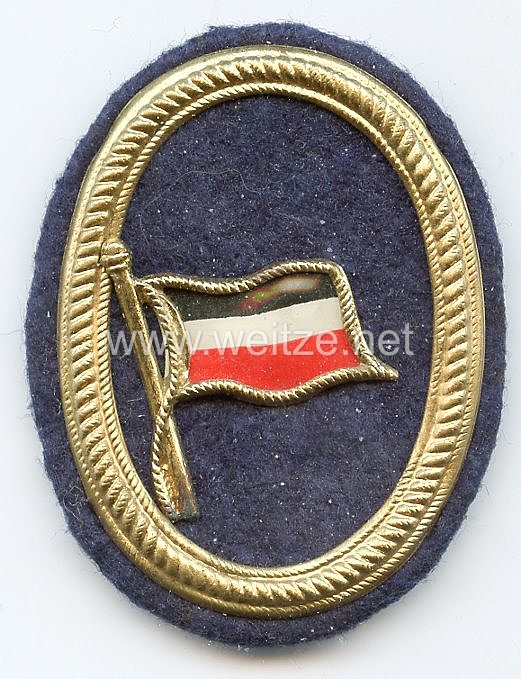
World War I Patriotic Cap Badge for a Naval Cap
The patriotic cap badge for a naval cap from World War I represents an important aspect of military uniform studies and patriotic culture in the German Empire during the years 1914-1918. Such badges served not only as identification markers but also as expressions of national solidarity and military tradition during a period of unprecedented mobilization.
The Imperial German Navy (Kaiserliche Marine) held special significance for the German Empire since its founding in 1871. Under the aegis of Grand Admiral Alfred von Tirpitz and with the enthusiastic support of Kaiser Wilhelm II, the fleet became a symbol of German ambitions for world power status. Naval uniforms and badges were accordingly regulated in detail and enjoyed high prestige among the population.
Cap badges of the Imperial Navy followed strict regulations laid down in the Uniform Regulations for the Imperial Navy (Bekleidungsvorschrift für die Kaiserliche Marine). The classic badge for enlisted men and non-commissioned officers typically displayed the imperial crown above an anchor, often surrounded by an oak leaf wreath. For officers, badges were usually made of gilded metal and more elaborately designed. The exact form and execution varied according to rank and purpose.
During World War I, a pronounced patriotic culture developed, manifesting itself in numerous objects. Besides official uniform badges, so-called patriotic badges emerged, worn by soldiers and civilians alike. These served to support war bonds, charitable organizations, or simply to express love of the fatherland. The boundaries between official military badges and patriotic commemorative pieces were often fluid.
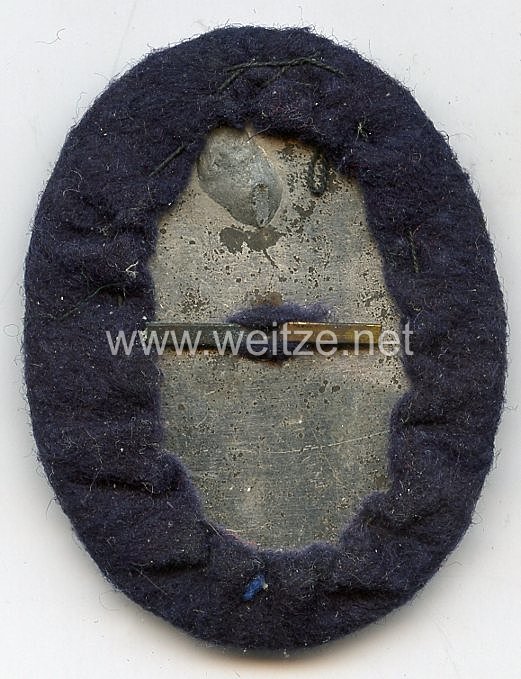
The present object shows no needle on the reverse side, which is not uncommon with historical militaria. The fastening mechanisms of this period frequently consisted of simple metal pins or needles that could be lost through age, use, or improper storage. The condition grade 2- indicates good to very good condition, with the missing needle representing the only significant defect.
The Imperial Navy played a complex role in World War I. While the great battleships of the High Seas Fleet remained largely in port after the Battle of Jutland on May 31 to June 1, 1916, submarines conducted a fierce commerce war. The unrestricted submarine warfare proclaimed from February 1917 significantly contributed to the United States' entry into the war, thereby decisively influencing its course.
Naval caps and their badges were important components of the naval uniform. The characteristic sailor's cap with its flat top and hanging ribbon bearing the ship's name was widely known and popular in the Empire. Officers wore peaked caps with corresponding rank insignia and cockades. The badges on these caps not only identified the branch of service but also conveyed pride and belonging to an elite unit.
After the end of World War I and the November Revolution of 1918, the famous Kiel Mutiny occurred, which ushered in the end of the monarchy. The imperial insignia lost their official significance but were preserved by many veterans as mementos. In the Weimar Republic and later in the Third Reich, uniform regulations changed fundamentally, turning imperial badges into historical objects.
Today, such cap badges are sought-after collector's items that provide insight into military history, uniform studies, and patriotic culture of the German Empire. They document not only military traditions but also the social significance of the navy in Wilhelmine Germany. The quality of manufacture, materials used, and iconographic elements allow conclusions about production techniques, official regulations, and the symbolic meaning of military identity in the era of a century ago.
These artifacts serve as tangible connections to a pivotal period in European history, when naval power was seen as essential to national prestige and imperial ambitions. The badges worn by sailors represented their service to Kaiser and country during one of history's most devastating conflicts, making them valuable historical documents beyond their material worth.