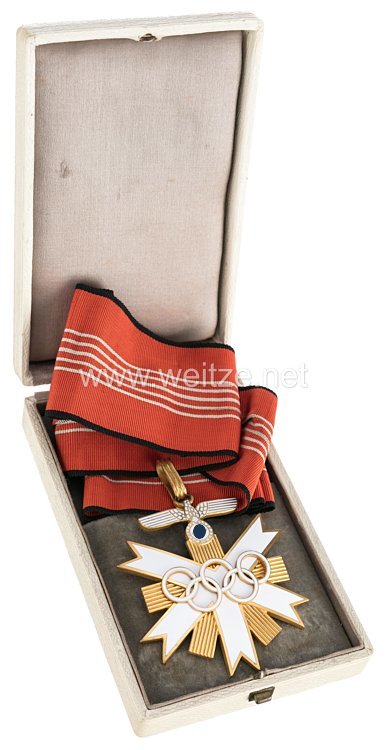
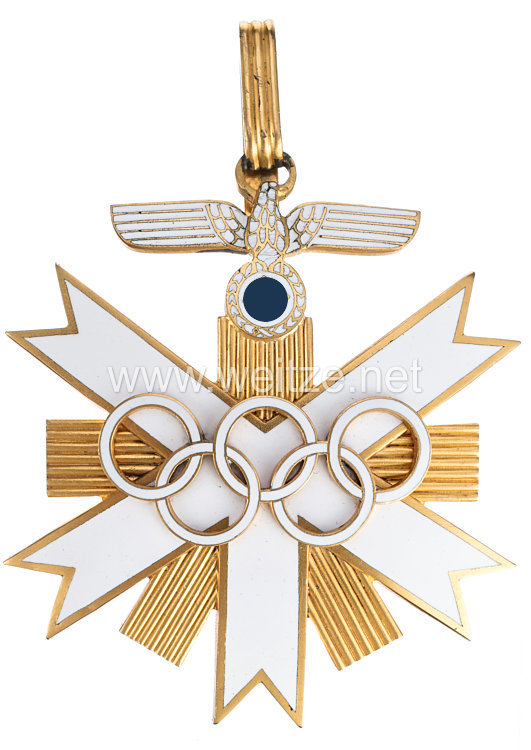
German Olympic Decoration 1st Class

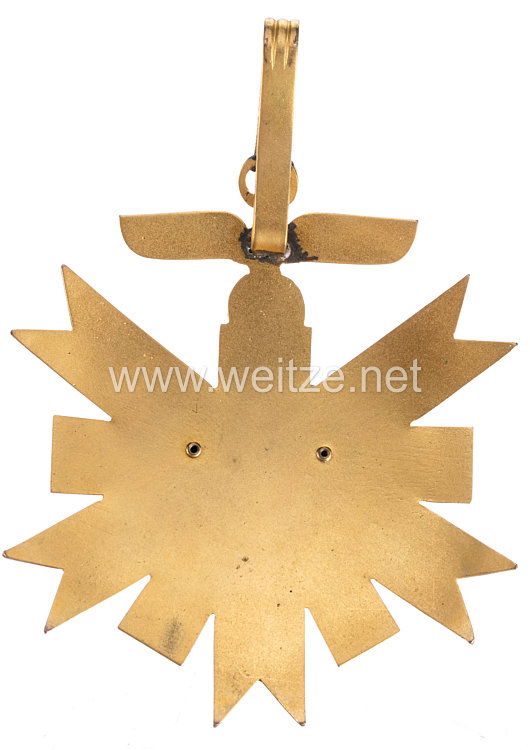
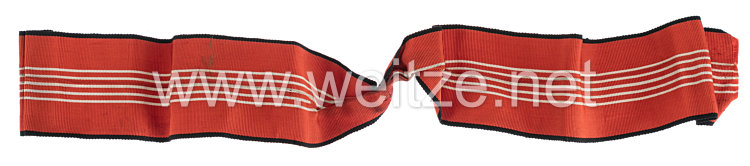
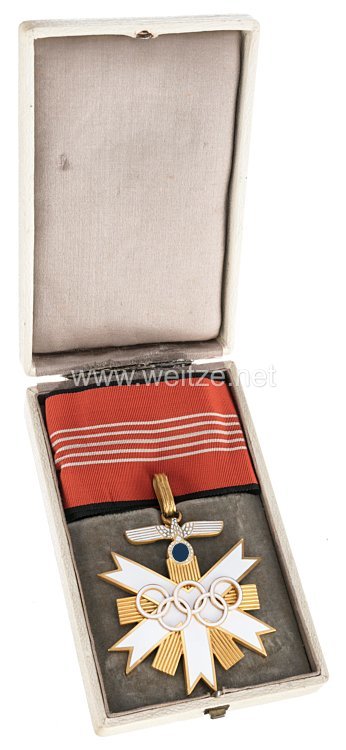
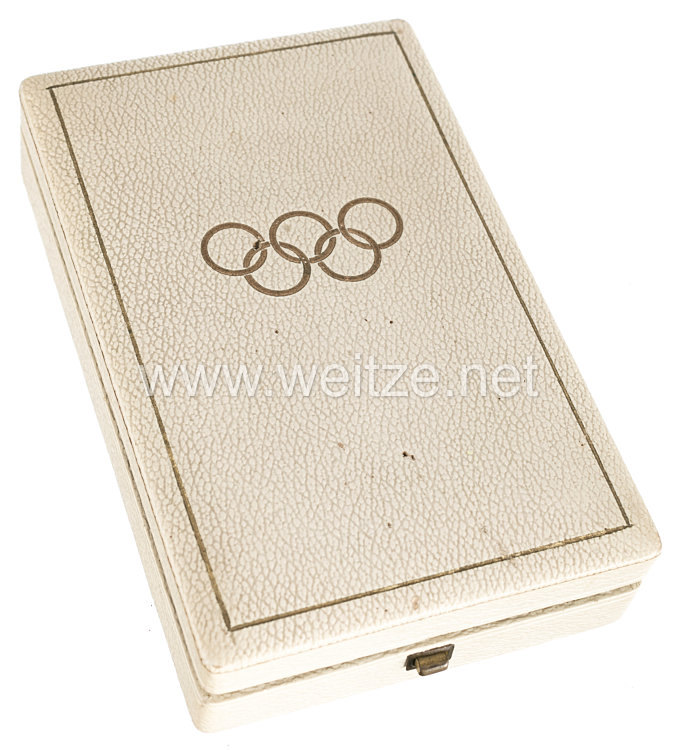
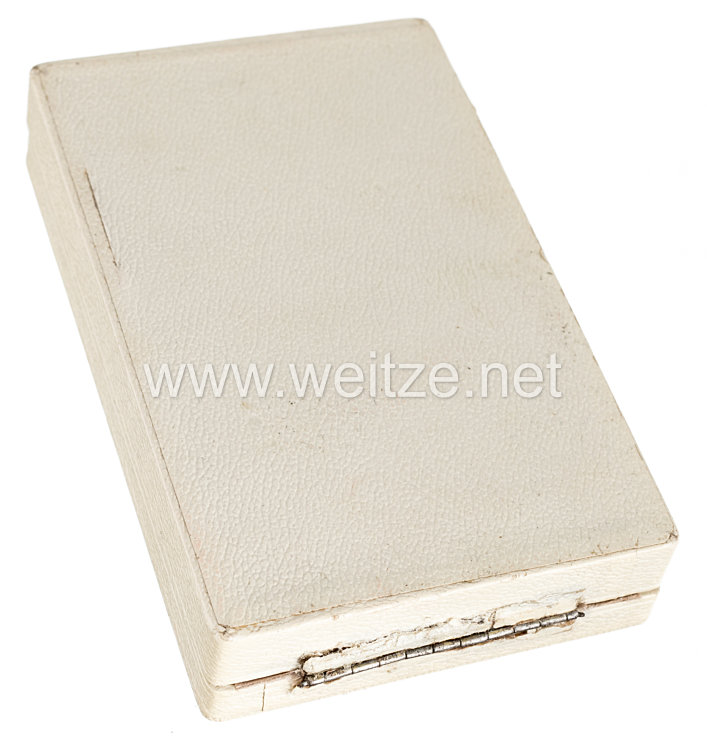
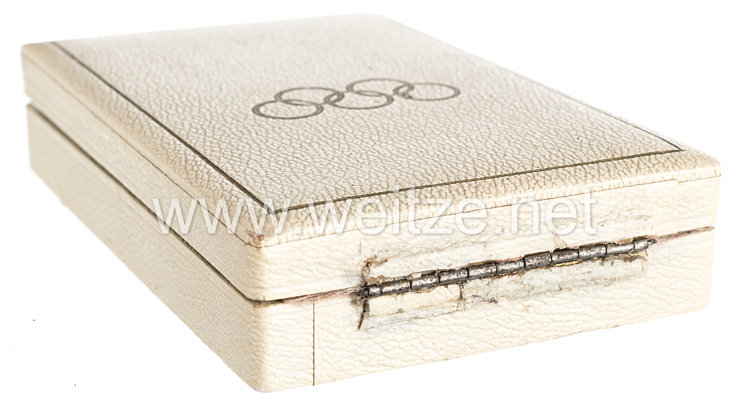
Neck cross. Gilt bronze, white enameled, the applied Olympic rings double-riveted, on 47 cm long original finished neck ribbon, the presentation case hinge restored!
A rare decoration, only 767 awards conferred.
300514

German Olympic Decoration 1st Class

The German Olympic Decoration 1st Class (Deutsches Olympia-Ehrenzeichen 1. Stufe) ranks among the rarest and most significant civil decorations of Nazi Germany. This decoration was instituted by Adolf Hitler on February 4, 1936, through a decree published in Reichsgesetzblatt 1936 Nr. 9 (RGBl. I 51), to honor those who had contributed to the organization and execution of the IV Olympic Winter Games in Garmisch-Partenkirchen and the Games of the XI Olympiad in Berlin 1936.

The historical significance of this award lies in its context within the 1936 Olympic Games, which were held from August 1 to August 16, 1936 in Berlin. Berlin won the bid to host the Games over Barcelona at the 29th International Olympic Committee meeting on April 26, 1931. Adolf Hitler had a new 100,000-seat track and field stadium built, along with six gymnasiums and other smaller arenas. The Games were the first to be televised, with radio broadcasts reaching 41 countries, making them a showcase event for the Nazi regime.

The decoration was designed by Professor Waldemar Raemisch, who served as Professor at the Staatliche Kunstschule Berlin from 1919 to 1939. The decoration exists in two classes and one commemorative medal: The 1st Class was awarded for very special services to leading personalities in the leadership of the organization of the Games, while the 2nd Class recognized special services in executive organizational activities. On July 31, 1936, an additional decree (RGBl. I 577) instituted the German Olympic Commemorative Medal for meritorious collaboration that did not meet the requirements of 1st and 2nd Class.

The physical form of the 1st Class is a neck order (Halskreuz), designed as a five-bar white enameled star with gold border, interrupted by five gold grooved rays. The center of the star bears the five Olympic rings. Above the upper ray, connected to it, is the German Reich's national emblem – an eagle with swastika – in white gold-rimmed enamel. The decoration is composed of two 5-rayed stars offset by 180 degrees; the lower star has straight rays and ends, gilded with six recessed longitudinal grooves. The piece is made of gilded non-ferrous metal, partially white enameled, with the Olympic rings separately applied and double-riveted. Two hollow rivets on the reverse attach the Olympic rings. The decoration is suspended from a 5 cm wide brick-red ribbon with black border, featuring five white stripes in the center symbolizing the five Olympic rings.

The extraordinary rarity of this decoration is evident in the award numbers: A total of only 767 of the 1st Class were awarded, compared to 3,364 of the 2nd Class and 54,915 medals. Awards continued after the Olympic Games and were completed on June 19, 1937, after the Presidential Chancellery was literally swamped with subsequent award applications following the conclusion of the Games.

Notable recipients included several members of the SS, including Reinhard Heydrich, Karl Wolff, and Heinrich Himmler, who were awarded the Olympic Games decoration for providing security during the event. Hermann Fegelein was awarded the decoration for overseeing the preparation of the courses and facilities for the equestrian events. The filmmaker Leni Riefenstahl received the decoration for her work in filming the various sports events. The 2nd Class was presented to Hiroshi Ōshima, the Japanese Ambassador to Nazi Germany, among others.

Crucially, this decoration was not intended for actual participants in the Olympic Games, but rather in recognition of those who had orchestrated the behind-the-scenes preparations and work for the events. The decoration was awarded to both Germans and foreigners. Certificates for the 1st Class were personally signed by Adolf Hitler. For foreigners, certificates bore the title “Der Deutsche Reichskanzler” (The German Reich Chancellor); for Germans, “Der Führer und Reichskanzler” (The Führer and Reich Chancellor).

In the post-war period, wearing the decoration at party events and with uniforms of NS organizations was not desired. According to the Law on Titles, Orders and Decorations of July 26, 1957, the decoration may only be worn without National Socialist emblems, specifically the Reich eagle with swastika. This regulation reflects the broader denazification policies implemented in post-war Germany, allowing recognition of Olympic organizational contributions while removing the overtly Nazi symbolism.

r