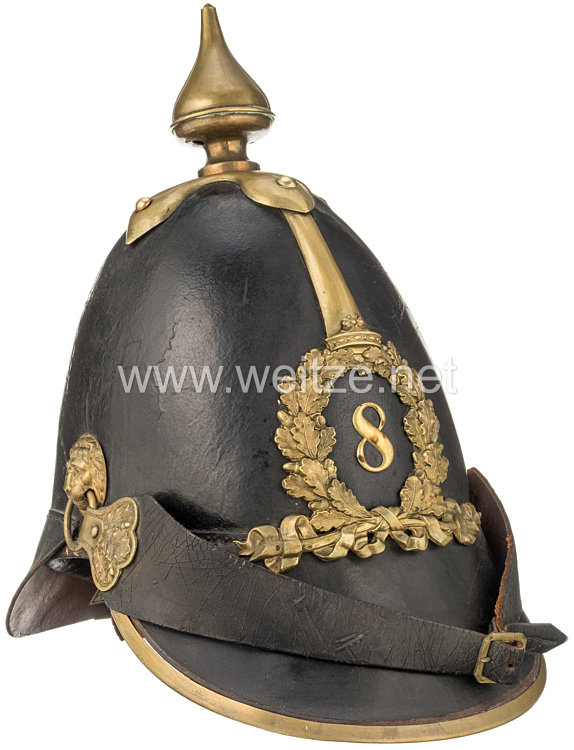
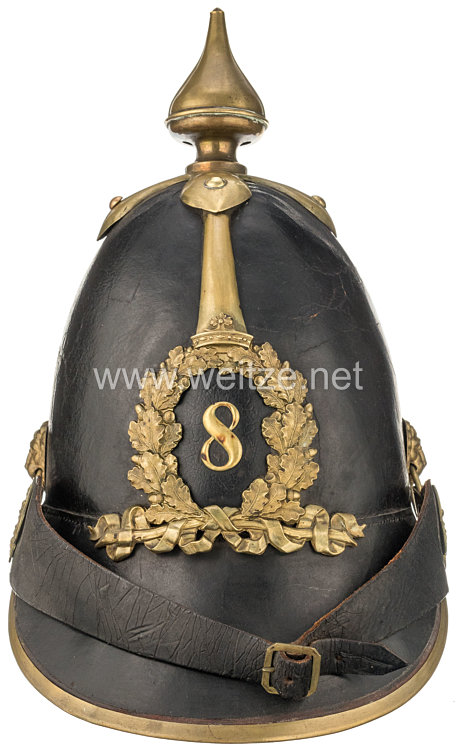
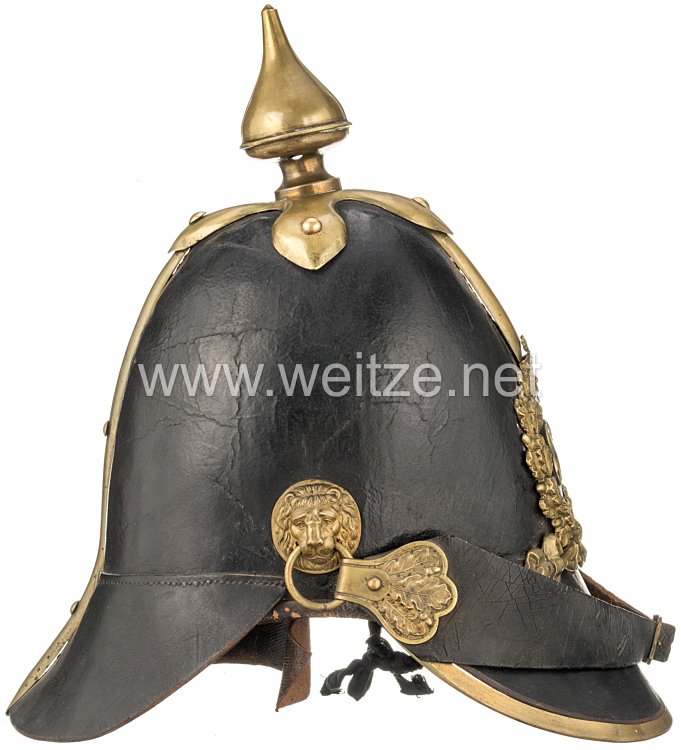
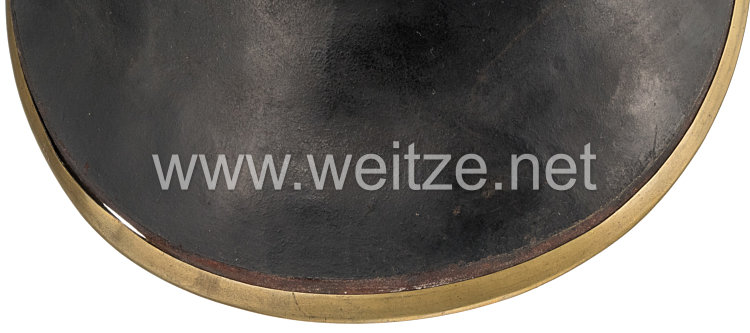
Baden Pickelhaube for Enlisted Men of the Karlsruhe Civic Guard from the Period of the Baden Revolution 1848/49
This Pickelhaube of the Karlsruhe Civic Guard from the period of the Baden Revolution of 1848/49 represents a significant testament to one of the most important democratic uprisings in 19th-century German history. This revolutionary period marked a decisive turning point in the German states, as citizens fought for constitutional rights, press freedom, and democratic reforms.
The Grand Duchy of Baden played a central role during the Revolution of 1848/49. Baden was among the most progressive German states and served as a focal point of revolutionary activities. After the outbreak of the February Revolution of 1848 in France, the revolutionary wave quickly swept through the German states. In Baden, the demands for democratic reforms led to the formation of armed civic guards (Bürgerwehren), which initially served to maintain order but later assumed an important military role in the revolutionary struggle.
The Karlsruhe Civic Guard, as the capital of the Grand Duchy, was one of the most significant of these formations. The members of the Civic Guard were recruited from the urban bourgeoisie – craftsmen, merchants, and academics – who were willing to take up arms for their political convictions. The uniforming and equipment of these units deliberately followed military models to demonstrate legitimacy and authority.
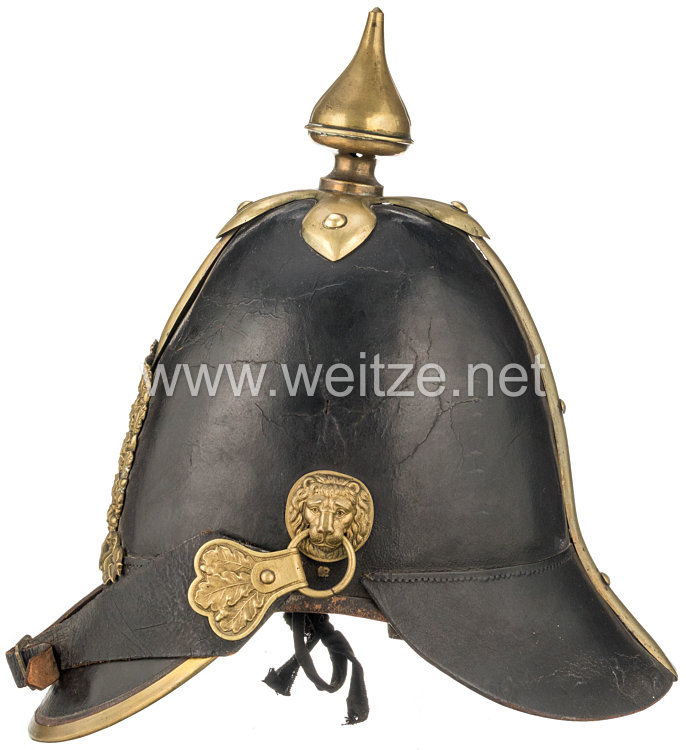
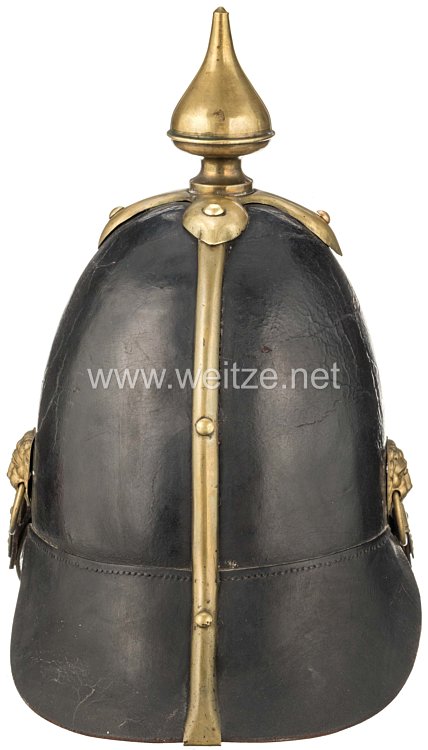
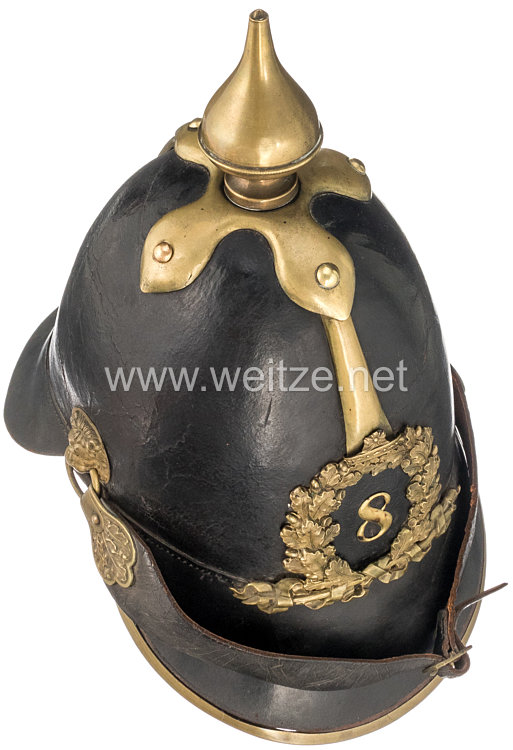
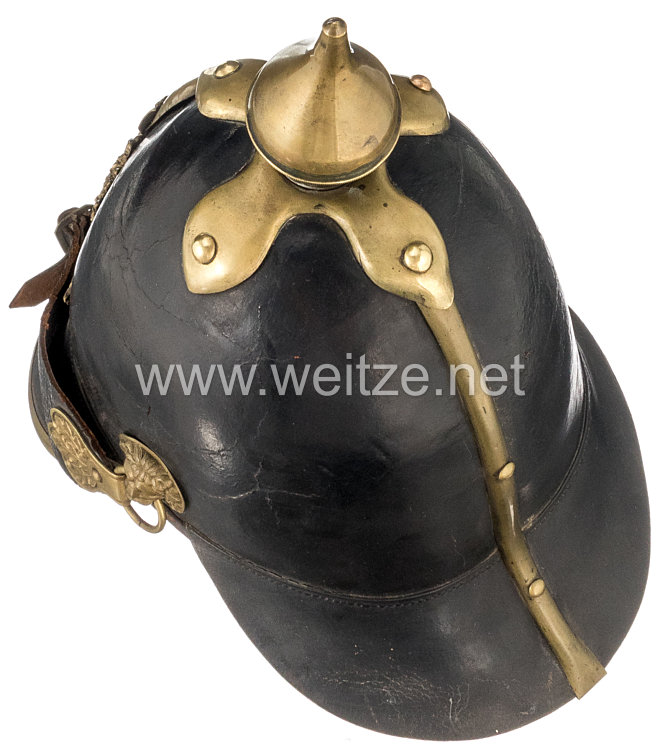
The helmet described here displays characteristic features of the early Pickelhaube, which was introduced in the German states during the 1840s. The tall leather helmet with brass fittings follows the Prussian model, officially introduced in 1842, which quickly found imitation in other German states. The spike (the eponymous “Pickel”) was originally intended as a practical element but quickly evolved into a characteristic symbol of German military tradition.
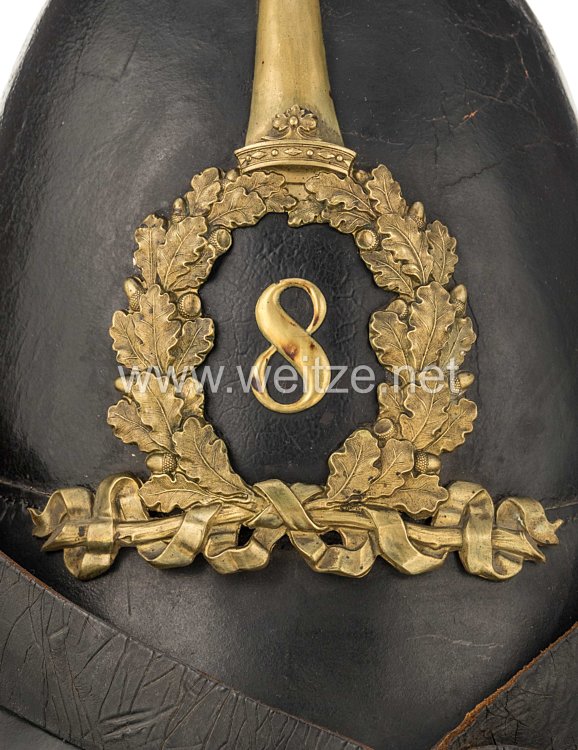
Particularly noteworthy is the emblem featuring the number "8" within an oak leaf wreath topped with a crown. This numbering indicates company affiliation within the Karlsruhe Civic Guard. The oak leaf wreath was a traditional symbol of strength and steadfastness, deeply rooted in German symbolism since Germanic times. The crown refers to monarchical tradition, which may seem paradoxical for a revolutionary formation but reflects the complex political situation: many moderate revolutionaries sought a constitutional monarchy, not its complete abolition.
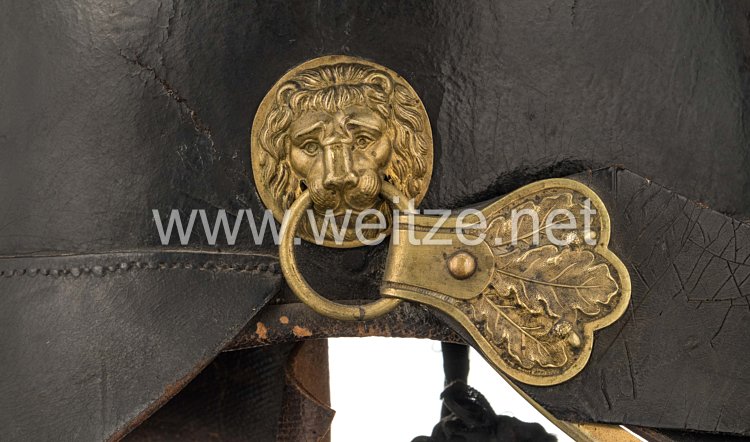
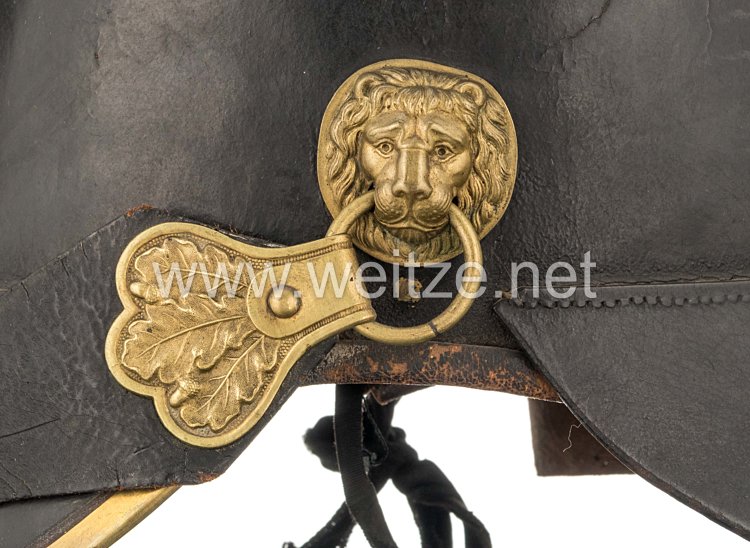
The lion head fittings for the chin strap are characteristic elements of Baden military helmets from this period. The lion was the heraldic animal of Baden and appeared in various designs on military equipment. These decorative elements underscore the representative character of the equipment.
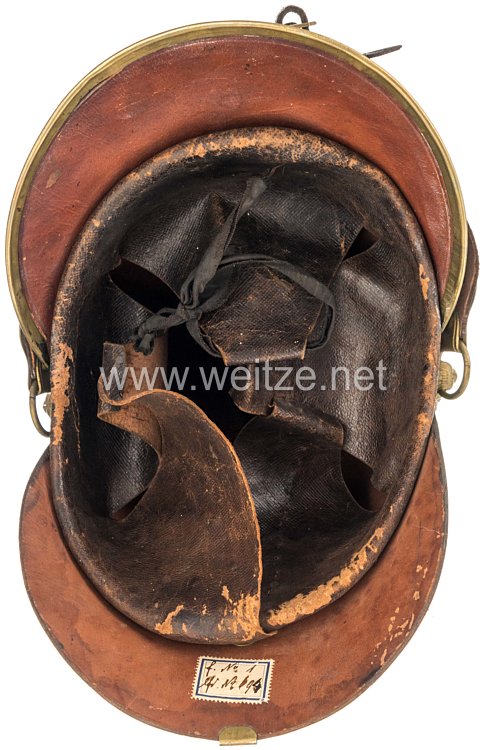
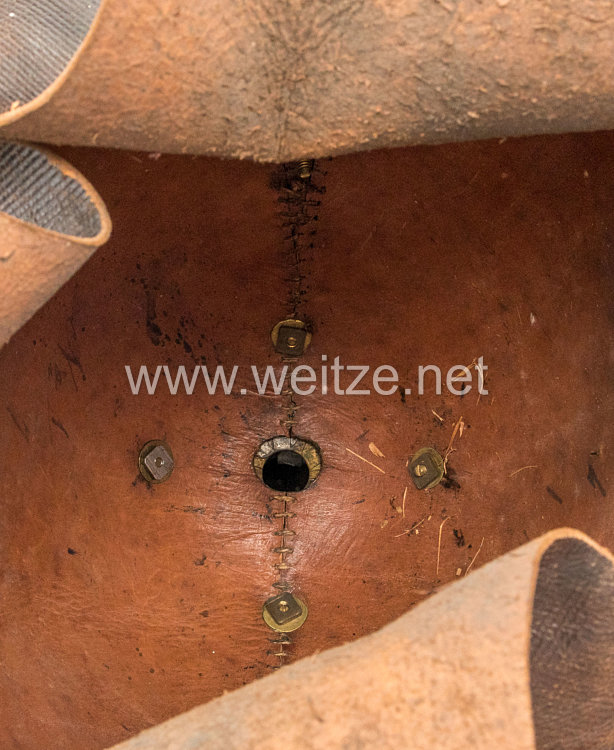
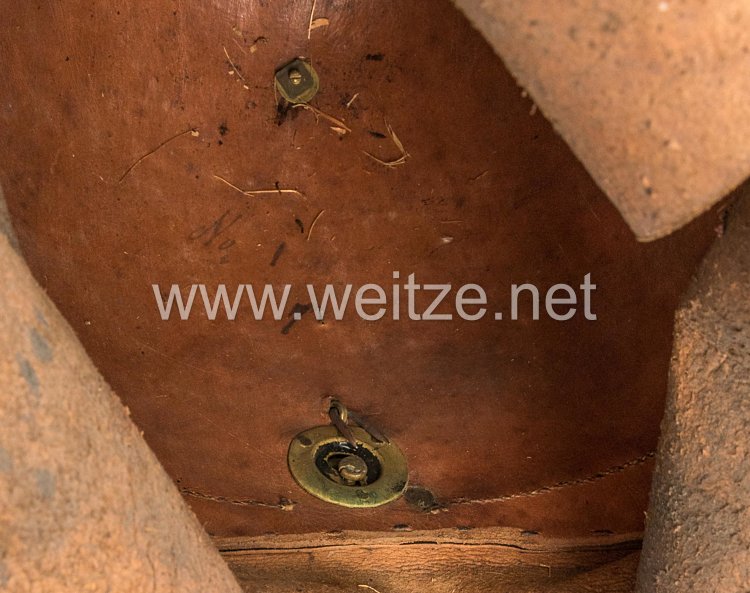
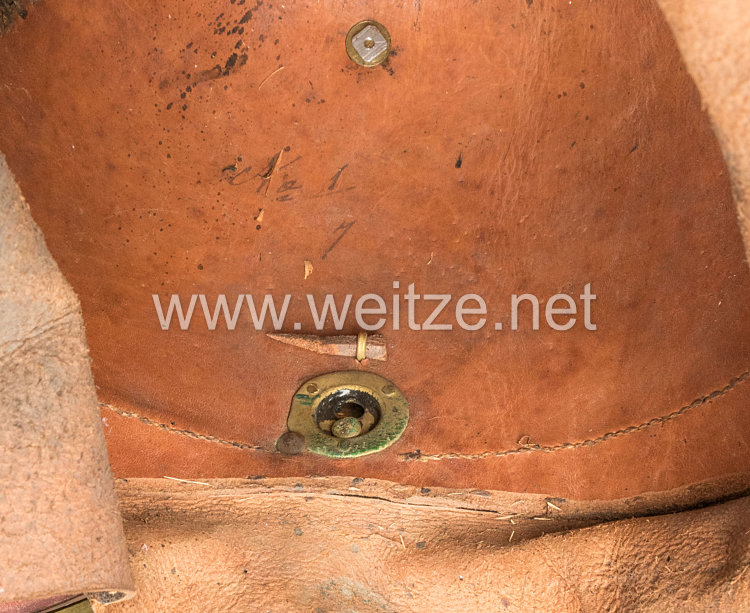
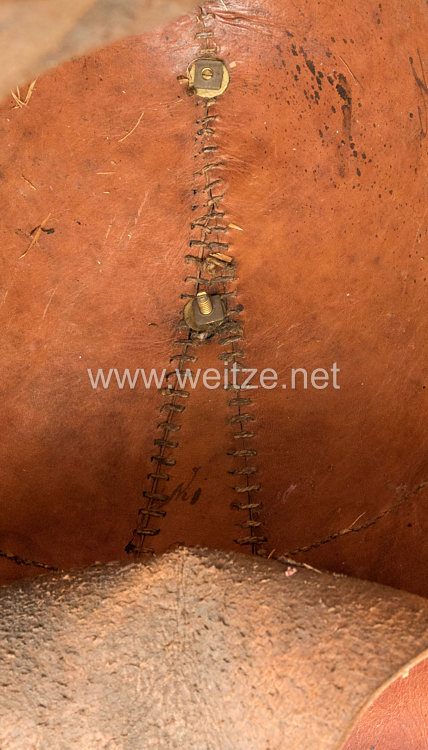
Size 60 corresponds to a head circumference of approximately 60 centimeters and falls in the upper range of standard sizes of that era. The lashed leather lining inside served comfort and shock absorption – an important function for a helmet intended to be worn at both parades and in combat.
The Revolution reached its peak in Baden in the spring of 1849, when insurgent troops, including civic guards, took over the regular Baden army and formed a provisional government. The Baden Revolutionary Army fought from May to July 1849 against Prussian intervention forces. Despite initial successes, the uprising was crushed by the military superiority of Prussian troops. The last fortress of Rastatt capitulated on July 23, 1849, marking the definitive failure of the Revolution.
Following the suppression of the Revolution, the civic guards were disbanded and their members persecuted. Many revolutionaries fled abroad, particularly to Switzerland and the United States. Equipment items were confiscated or passed into private hands, which explains the survival of such historical objects.
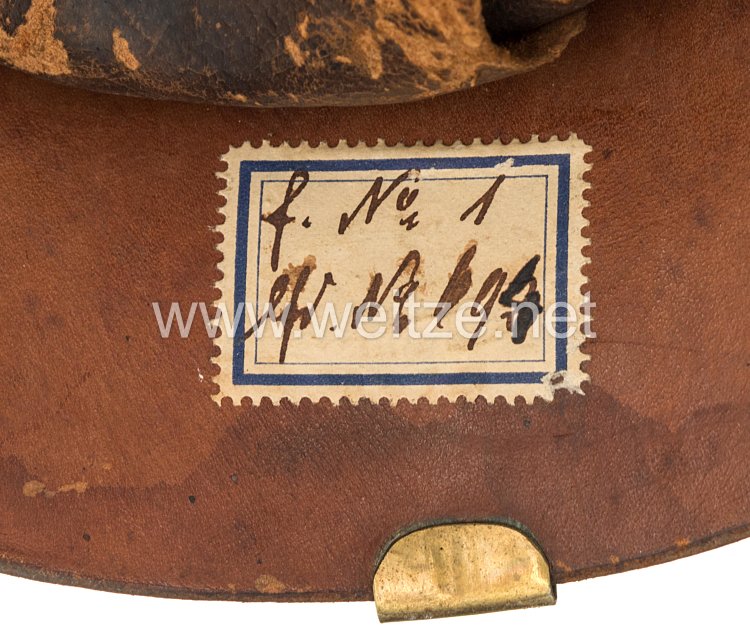
The old inventory label in the neck guard suggests later acquisition into a collection, possibly in a museum or private militaria collection. Such provenance markers are of great value for historical research.
This Pickelhaube is not merely a military-historical object but a symbol of democratic struggle in 19th-century Germany. It embodies the hopes and courage of citizens who stood up for freedom and self-determination – a legacy that, despite the military defeat of the Revolution, had long-term effects on German history and paved the way for later democratization.