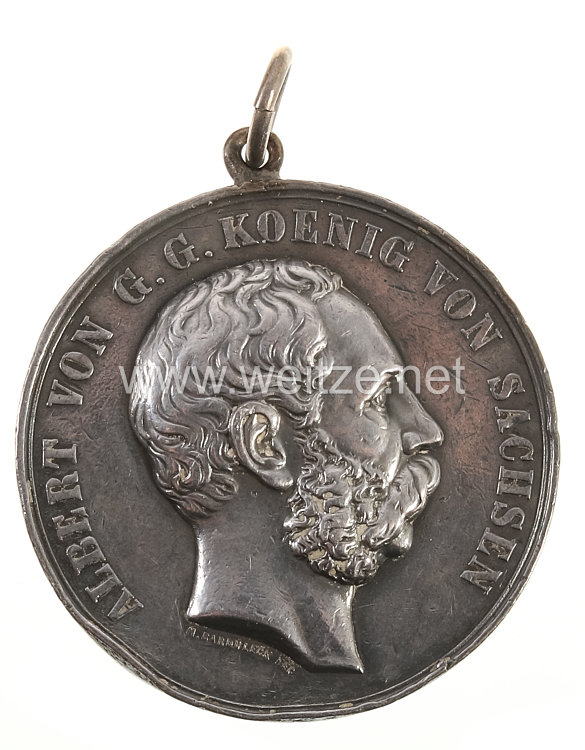
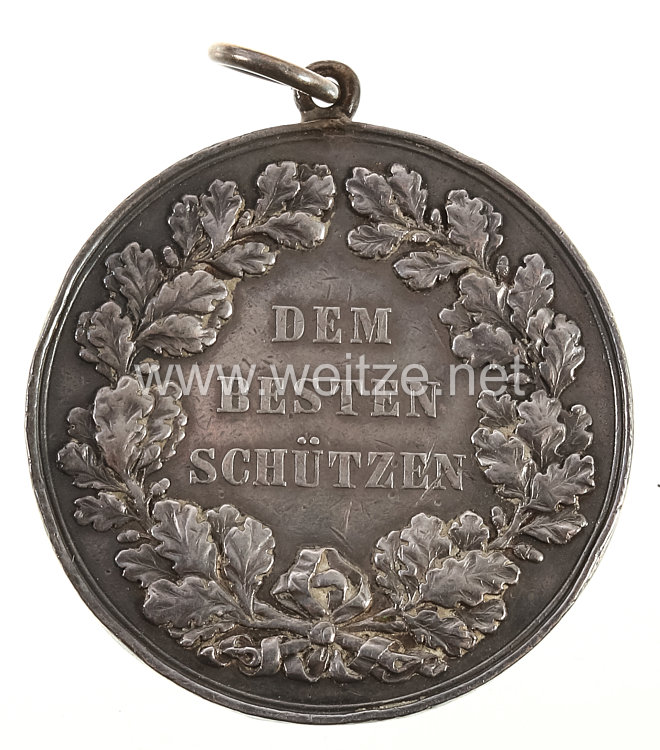
Kingdom of Saxony Medal “To the Best Marksman”

“Albert von G. G. Koenig von Sachsen”, silver, diameter approximately 42 mm, die engraver “M. Barduleck”, condition 2-.
375213
130,00

Kingdom of Saxony Medal “To the Best Marksman”

The Marksmanship Medal "To the Best Shooter" from the Kingdom of Saxony represents a significant tradition of military and civilian shooting awards in 19th and early 20th century Germany. This silver medal, measuring approximately 42 millimeters in diameter, bears the inscription "Albert von G. G. Koenig von Sachsen" (Albert by the Grace of God King of Saxony) and was crafted by the renowned die engraver M. Barduleck.

King Albert of Saxony (1828-1902) ruled the kingdom from 1873 until his death. As the last Saxon king to actively assume military leadership roles, Albert had a special connection to military affairs. He served as an army commander in the Franco-Prussian War of 1870/71 and enjoyed high esteem in military circles. During his reign, various decorations and medals were instituted that honored both military achievements and civilian merits.

The tradition of marksmanship awards in Saxony dates back centuries and was deeply rooted in German culture. Already in the Middle Ages, shooting guilds and societies formed that served both military defense purposes and social functions. In the 19th century, these associations experienced a renaissance, with shooting festivals becoming important social events. The best marksmen received medals, trophies, and other awards that documented their skill and accuracy.

Die engraver M. Barduleck was one of the recognized medalists of his time. The art of die engraving reached a particular pinnacle in the German states during the 19th century. Medalists like Barduleck often worked on behalf of royal mints or were commissioned by shooting clubs and military units. Their work required the highest precision and artistic skill, as they had to design portraits of rulers, coats of arms, and inscriptions with the finest attention to detail.

The Kingdom of Saxony was one of the most significant German federal states until 1918. After the founding of the German Empire in 1871, Saxony retained considerable autonomy in internal affairs, including military matters. The Saxon army was integrated into the German army as an independent contingent and maintained its own regiments, traditions, and awards systems. Shooting training and marksmanship were considered essential military skills that were promoted through regular competitions.

Such medals were typically awarded at shooting competitions held both within military units and at civilian shooting clubs. These competitions followed strict rules and were conducted according to standardized procedures. Winners received not only medals but also certificates and often additional honors. The medals were usually worn on ribbons in Saxon state colors.

The use of silver as a material underscores the value and significance of this award. While simpler marksmanship medals were often made of bronze, silver examples were reserved for higher-level achievements or more significant competitions. The size of 42 millimeters corresponds to the standard for important award medals of this era.

After the end of the monarchy in 1918 and the dissolution of the Kingdom of Saxony, these royal medals lost their official function. However, they remained important historical witnesses to the military and social culture of the German Empire. Today, such medals are sought-after collectibles that provide insight into the award practices and shooting traditions of the 19th century.

The condition grade of 2- (very fine to extremely fine on the numismatic grading scale) indicates a medal that was worn but nevertheless well preserved. This is typical for awards that were valued by their recipients and carefully kept, while still being in actual use.