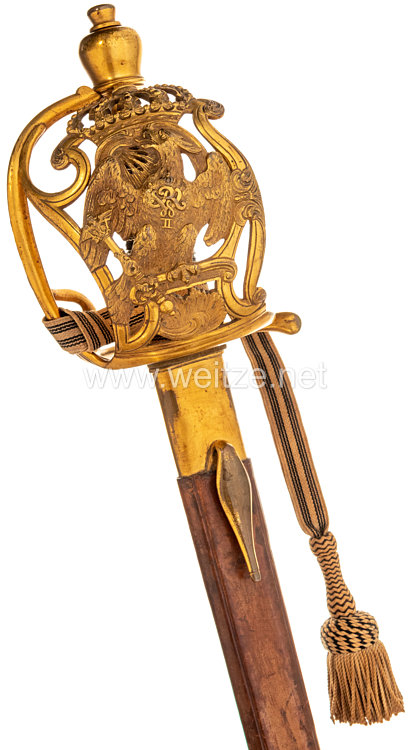
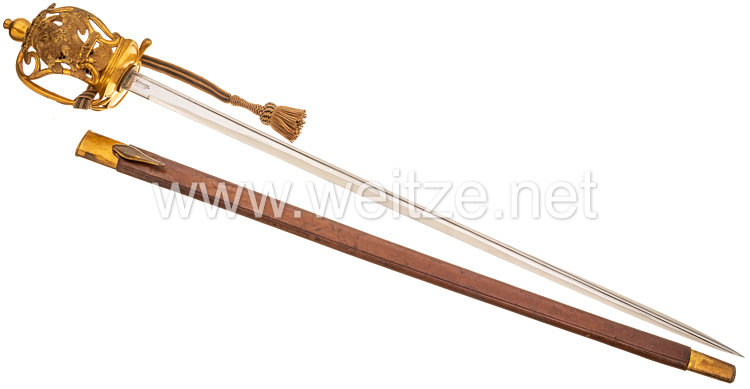
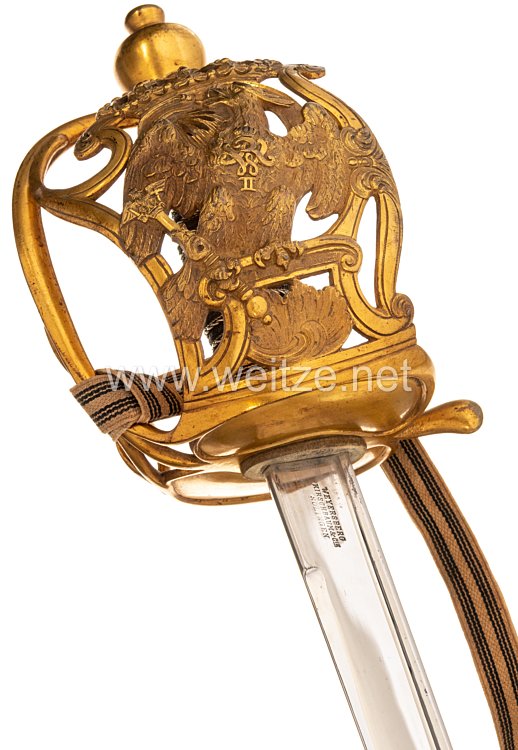
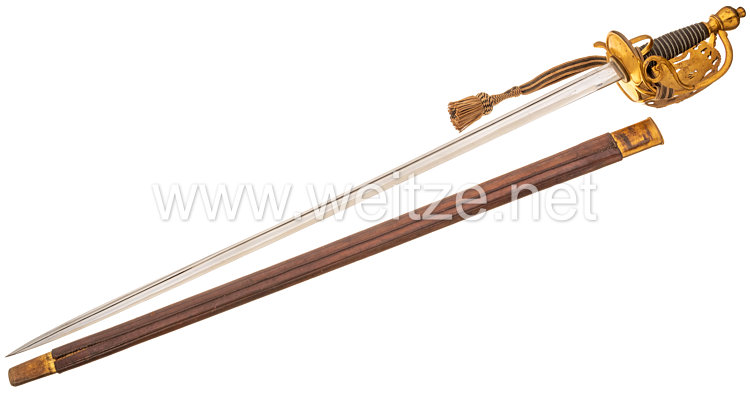
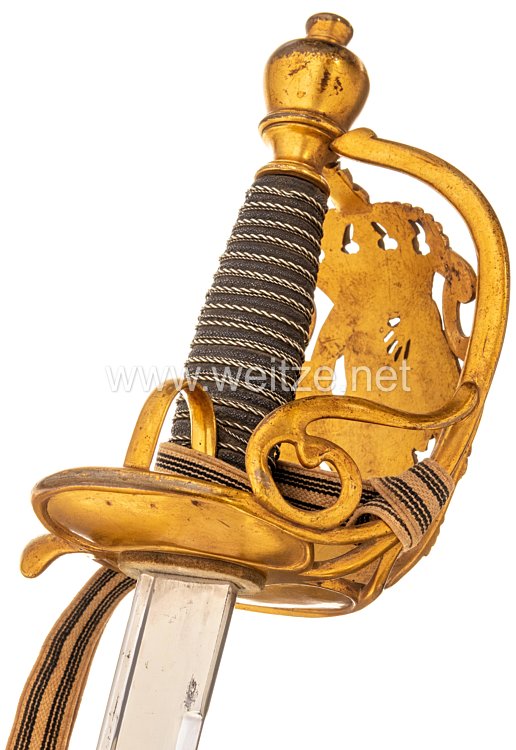
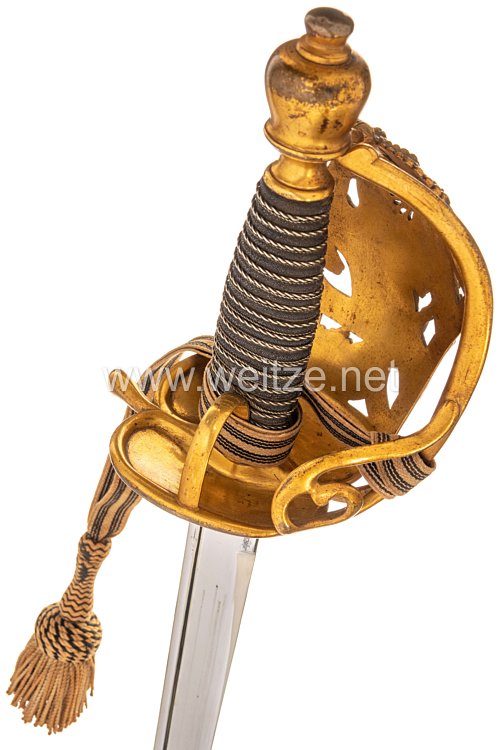
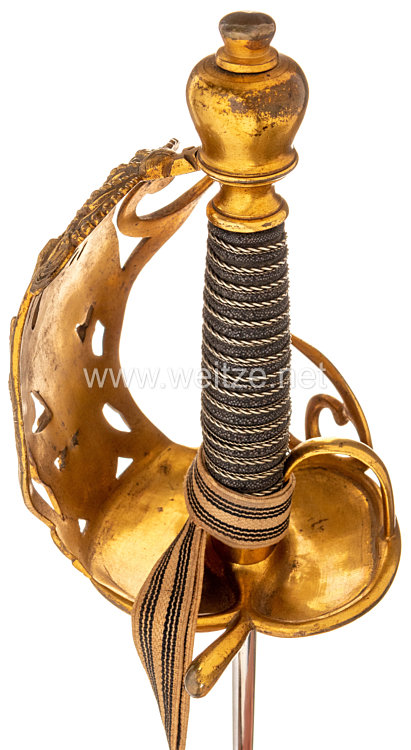
Preußen Gala-Pallasch Modell 1893 für Unteroffiziere und Offiziere des 2. Zuges der Leibgendarmerie
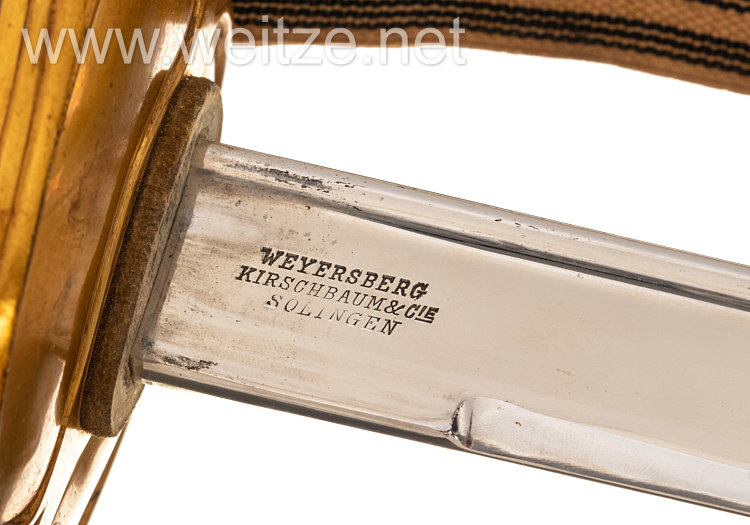
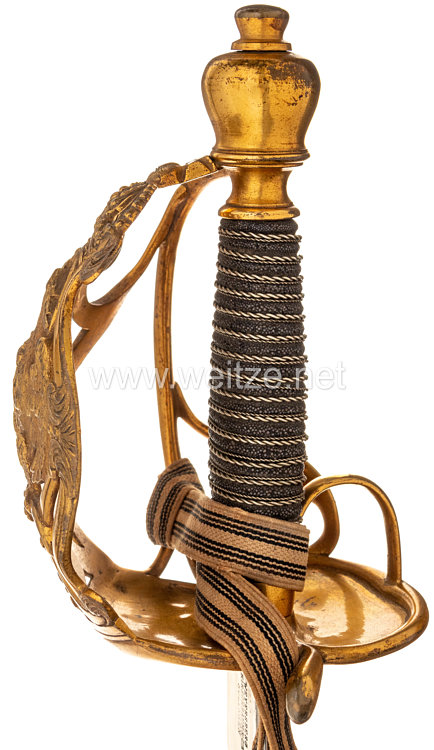
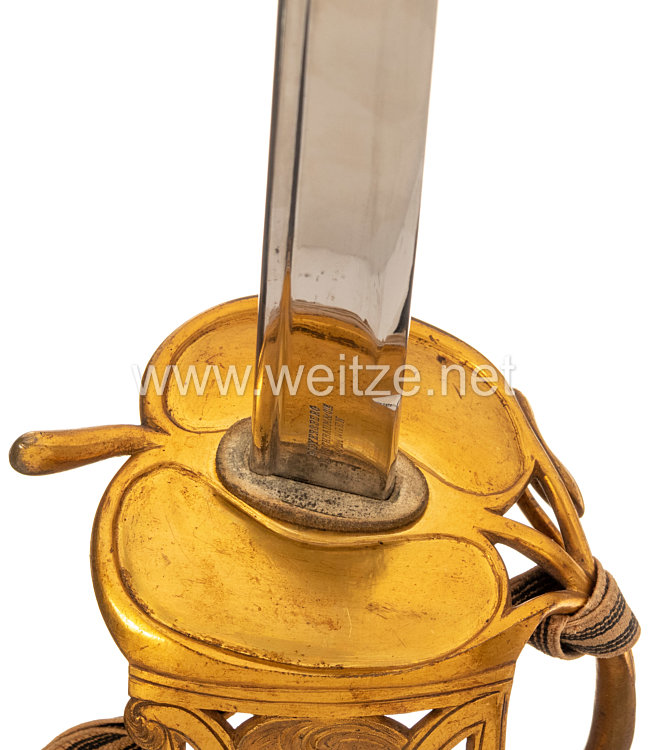
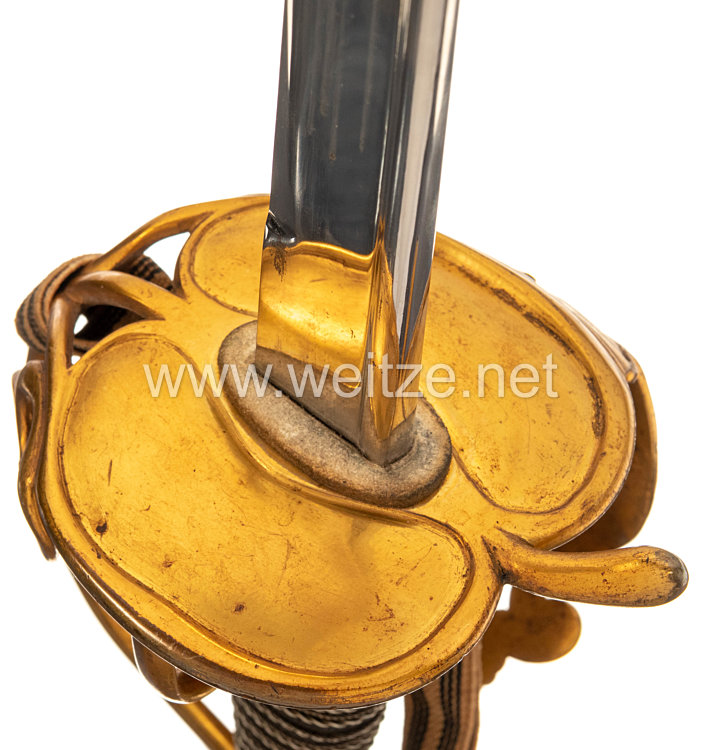
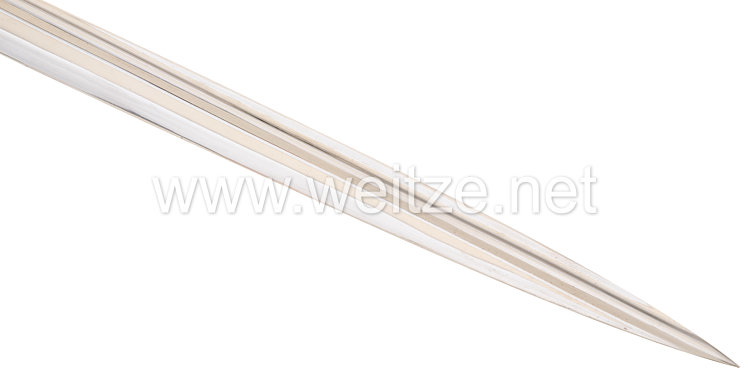
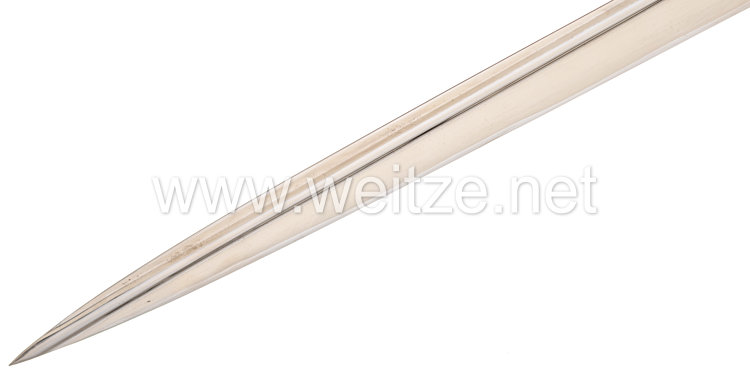
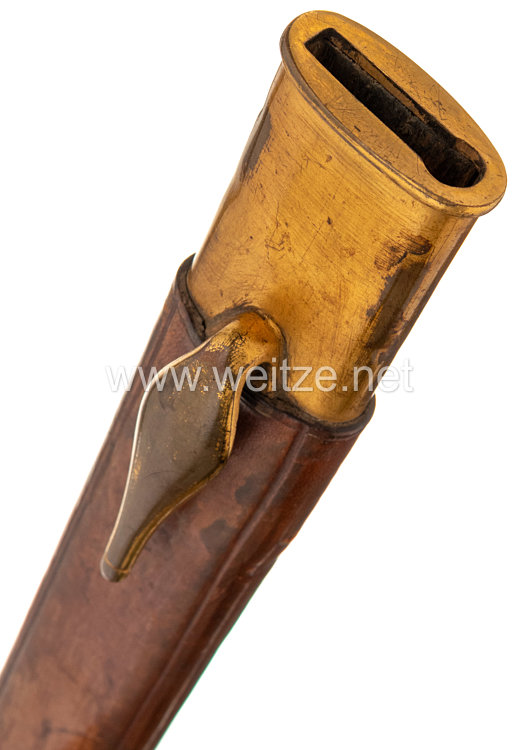
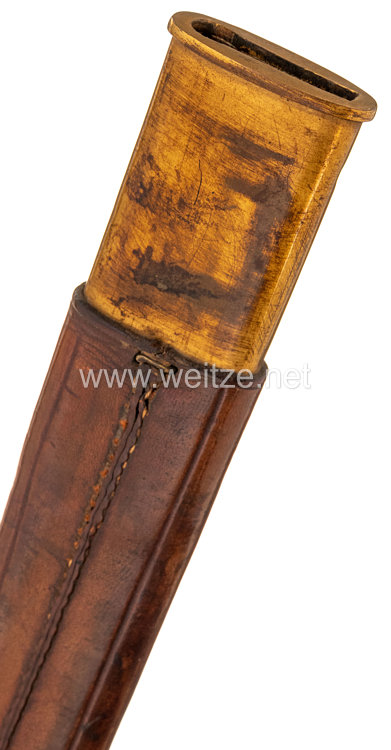
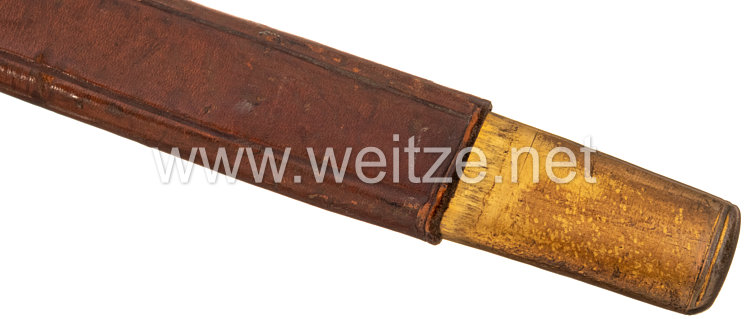
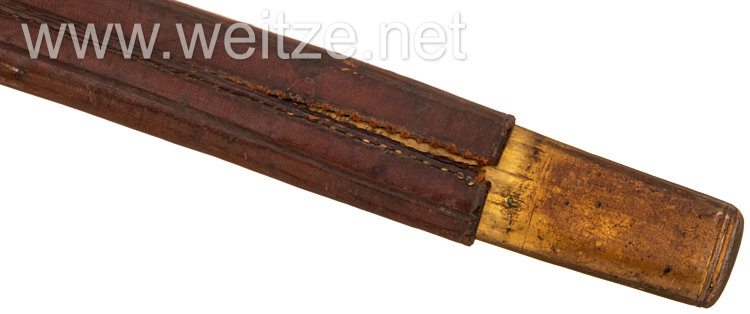
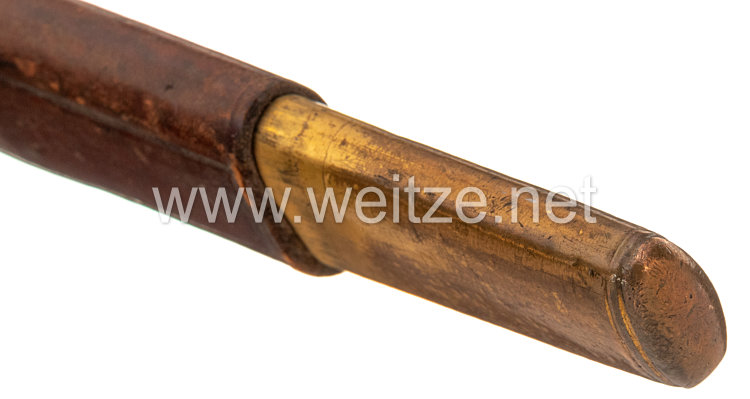
um 1900. Schwerer Pallasch, alle Beschläge aus Messing vergoldet. Großer vergoldeter Adlerkorb im Stil der altpreußischen Modell des 18. Jahrhunderts, der gekrönte Adler allerdings auf der Brust mit der gekrönten Chiffre "WR II" für Kaiser Wilhelm II., alle Details per Hand besonders fein nachgraviert. Der Griff mit Fischhaut und silberner Drahtwicklung.., großer Daumenring. Polierte Steckrückenklinge mit eingeschlagener Herstellerbezeichnung "Weyersberg Kirschbaum & Cie Solingen". Braune Lederscheide mit vergoldeten Messingbeschlägen, langer Tragehaken. Komplett mit anhängendem Portepee für Unteroffiziere. Länge 102 cm. Nur leicht getragen, mit wunderschöner Patina, Zustand 2+.
Mit AKO vom 28. Juni 1889 wurde die Leib-Gendarmerie um einen 2. Zug verstärkt, bestehend aus einem Offizier (Premier- oder Secondlieutenant) vom Kürassier-Regiment Königin" (Pommersches) Nr. 2, 2 Unteroffizieren und 24 Mann. Der 2. Zug stand zur besonderen Verfügung der Kaiserin. Der Offizier wurde immer vom Kürassier-Regiment Nr. 2 für ein Jahr abkommandiert. Wurden zu Anfang die Mannschaften aus verschiedenen Kürassier-Regimentern gestellt, so wurden später bevorzugt die "Pasewalker" herangezogen. Diesem Kürassier-Regiment "Königin" (Pommersches) Nr. 2 stand ab Anfang des 1. Jahrhunderts die jeweilige preußische Königin als Regimentschefin vor, zuletzt dann Kaiserin Auguste Viktoria.
Die Leibgendarmerie bezeichnete Ordonnanzabteilungen in der Preußischen Armee, welche dem König zur besonderen Verfügung stand. Seine Aufgaben waren Ordonnanzdienst, wie das Überbringen von Briefen und Befehlen aus dem königlichen Kabinett, das Mitführen und Bereithalten wichtiger Unterlagen sowie die Begleitung Ihrer Majestät bei Staatsbesuchen, Manövern und Reisen. Wenn fremde Herrscher am Hofe weilten, versahen sie auch dort den Ordonnanzdienst. Des Weiteren gehörte die Teilnahme der Leibgendarmerie an allen Paraden des Gardekorps und an den Kaisermanövern zu ihren Aufgaben. Dabei wurden die Standarten des Kaisers und der Kaiserin mitgeführt. Bei den alljährlich stattfindenden Kaisermanövern blies ein Trompeter der Leibgendarmerie bei Übungsende das Signal: „Das Ganze Halt!“. Die Leibgendarmerie bestand ab 1889 aus dem 1. und 2. Zug mit 2 x 24 Wachtmeistern. Der 1. Zug stand dem Kaiser zur Verfügung, der 2. Zug der Kaiserin.
Die Friedensuniformen wurden bis Kriegsende 1918 bei dieser Truppe beibehalten. Die Leibgendarmerie war die einzige deutsche Einheit, welche nicht mit einer feldgrauen Uniform ausgestattet wurde.
Mit Sicherheit handelt es sich hierbei um eine der seltensten Blankwaffen der Preußischen Armee, uns ist in über 35 Jahren kein weiteres Stück bekannt geworden.
Mit AKO vom 28. Juni 1889 wurde die Leib-Gendarmerie um einen 2. Zug verstärkt, bestehend aus einem Offizier (Premier- oder Secondlieutenant) vom Kürassier-Regiment Königin" (Pommersches) Nr. 2, 2 Unteroffizieren und 24 Mann. Der 2. Zug stand zur besonderen Verfügung der Kaiserin. Der Offizier wurde immer vom Kürassier-Regiment Nr. 2 für ein Jahr abkommandiert. Wurden zu Anfang die Mannschaften aus verschiedenen Kürassier-Regimentern gestellt, so wurden später bevorzugt die "Pasewalker" herangezogen. Diesem Kürassier-Regiment "Königin" (Pommersches) Nr. 2 stand ab Anfang des 1. Jahrhunderts die jeweilige preußische Königin als Regimentschefin vor, zuletzt dann Kaiserin Auguste Viktoria.
Die Leibgendarmerie bezeichnete Ordonnanzabteilungen in der Preußischen Armee, welche dem König zur besonderen Verfügung stand. Seine Aufgaben waren Ordonnanzdienst, wie das Überbringen von Briefen und Befehlen aus dem königlichen Kabinett, das Mitführen und Bereithalten wichtiger Unterlagen sowie die Begleitung Ihrer Majestät bei Staatsbesuchen, Manövern und Reisen. Wenn fremde Herrscher am Hofe weilten, versahen sie auch dort den Ordonnanzdienst. Des Weiteren gehörte die Teilnahme der Leibgendarmerie an allen Paraden des Gardekorps und an den Kaisermanövern zu ihren Aufgaben. Dabei wurden die Standarten des Kaisers und der Kaiserin mitgeführt. Bei den alljährlich stattfindenden Kaisermanövern blies ein Trompeter der Leibgendarmerie bei Übungsende das Signal: „Das Ganze Halt!“. Die Leibgendarmerie bestand ab 1889 aus dem 1. und 2. Zug mit 2 x 24 Wachtmeistern. Der 1. Zug stand dem Kaiser zur Verfügung, der 2. Zug der Kaiserin.
Die Friedensuniformen wurden bis Kriegsende 1918 bei dieser Truppe beibehalten. Die Leibgendarmerie war die einzige deutsche Einheit, welche nicht mit einer feldgrauen Uniform ausgestattet wurde.
Mit Sicherheit handelt es sich hierbei um eine der seltensten Blankwaffen der Preußischen Armee, uns ist in über 35 Jahren kein weiteres Stück bekannt geworden.