WHW - 1st Winterhilfswerk des Deutschen Volkes November 1933 "We Help Against Hunger and Cold"
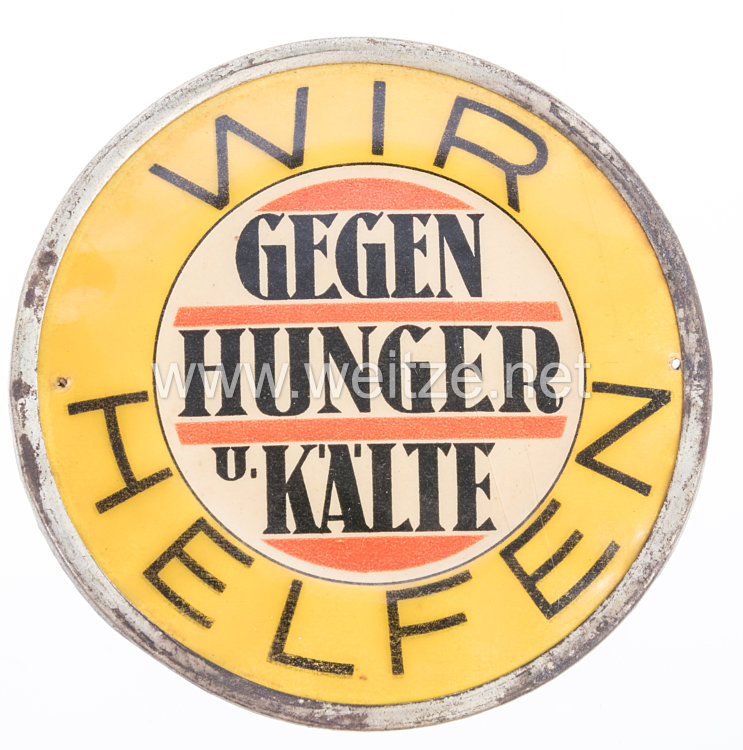
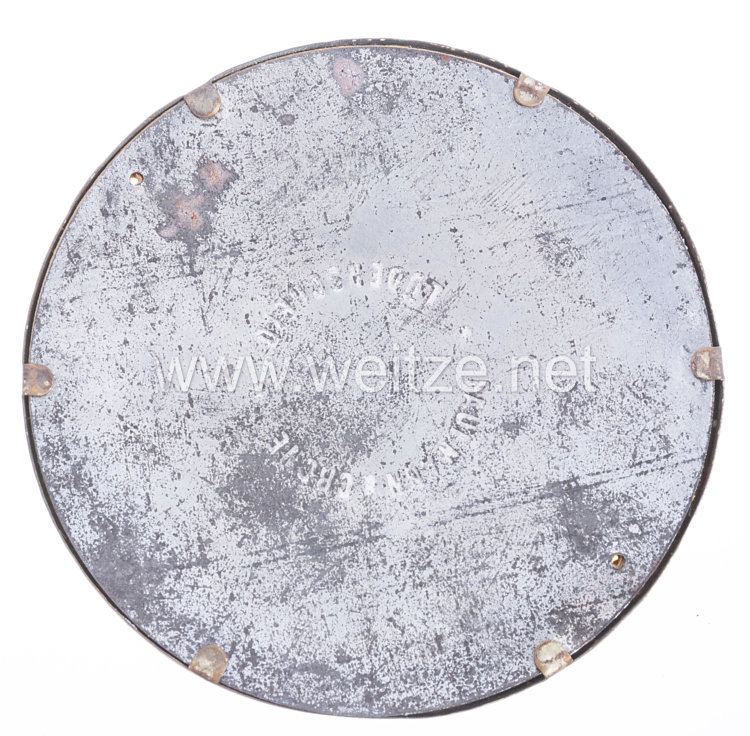
WHW Door Plaque from the Winter Relief Organization of the German People, November 1933
This door plaque made of sheet iron with a celluloid surface represents one of the earliest collectible items from the Winterhilfswerk des Deutschen Volkes (WHW), or Winter Relief Organization of the German People, a National Socialist welfare organization founded in September 1933. With a diameter of 75 mm and manufactured by the renowned firm Paulmann & Crone of Lüdenscheid, this object documents the beginning of a massive propaganda campaign that would continue until 1945.
The Winterhilfswerk was officially established on September 13, 1933, by Reich Propaganda Minister Joseph Goebbels. The organization was ostensibly created to help needy Germans during the winter months, but it primarily served as an instrument of National Socialist propaganda and social control. The slogan “We help against hunger and cold” on this plaque embodies the propagandistic rhetoric of the early Nazi period, which combined social welfare with the ideology of the Volksgemeinschaft (people's community).
WHW door plaques served a specific function in the social fabric of the Third Reich. Households that had donated received such plaques to display on their apartment doors. This served not only as a receipt for the donation made but also as a publicly visible sign of participation in the “people's community.” Households without a plaque were immediately recognizable as non-donors and thus exposed themselves to social pressure and possible reprisals. Participation in the WHW was formally voluntary but effectively compulsory.
The firm Paulmann & Crone in Lüdenscheid was among the leading manufacturers of badges, plaques, and metal collectibles during the Nazi era. Lüdenscheid had established itself as a center of the German metal goods industry since the 19th century. The city housed numerous companies that produced propaganda materials, orders, and badges during the Nazi period. The combination of sheet iron and celluloid was typical of the production techniques of that time and enabled cost-effective mass production while maintaining an attractive appearance.
November 1933 marks the first collection period of the WHW. The organization conducted intensive fundraising campaigns annually from September to March, issuing monthly changing badges, plaques, and collectible objects. The first winter relief campaign of 1933/34 was intended to establish the system and accustom the population to regular “sacrifices for the people's community.” The WHW's revenues reached considerable sums even in the first year, though the actual use of the funds often remained opaque.
The visual design of such early WHW plaques followed relatively simple design principles. The emphasis was on the direct message and recognizability as an official WHW product. In later years, the collectible objects became increasingly elaborate and thematically diverse, encompassing historical motifs, regional costumes, fairy tale figures, and other themes that are sought after by collectors today.
From a historical perspective, WHW door plaques like this one document the penetration of everyday life by National Socialist organizations. They demonstrate how the regime exercised social control while maintaining a façade of charity and community spirit. The public visibility of the plaques on apartment doors created a system of mutual surveillance in which neighbors could immediately recognize the participation or non-participation of their fellow residents.
For collectors and historians, WHW objects from 1933 are particularly interesting because they document the initial phase of National Socialist rule. They show the rapid establishment of control and propaganda mechanisms already in the first year after the seizure of power. The preservation of such objects today serves historical research and education by preserving material witnesses of an era whose mechanisms must be understood to prevent repetition.
The preservation and scholarly examination of such objects remains important for understanding the everyday history of National Socialism and the functioning of totalitarian systems.